You’ll find Mississippi’s most haunting ghost towns come alive each spring when wildflowers blanket their forgotten streets. Rodney’s cannonball-scarred church stands two miles from where the river once flowed, while Rocky Springs’ 1837 Methodist chapel rises among overgrown cisterns and cemetery stones. Grand Gulf’s Confederate earthworks bloom with meadow flowers, and Bruinsburg’s steep banks—where 22,000 Union soldiers once landed—now belong entirely to nature. Fort Adams commands its 150-foot bluff in peaceful isolation, its blockhouse ruins whispering stories these abandoned places still hold.
Key Takeaways
- Rodney’s preserved ruins include the 1828 Presbyterian Church with cannonball scars; spring wildflowers enhance the former cotton port’s vanished glory.
- Rocky Springs features an 1837 Methodist church amid cemetery graves and overgrown foundations; accessible via Natchez Trace Parkway at milepost 54.8.
- Grand Gulf combines Confederate earthworks and historic structures with wildflower meadows; Sacred Heart Church exemplifies 1868 Carpenter Gothic architecture.
- Bruinsburg marks the Civil War’s largest amphibious operation site with no above-ground remains; guided tours available on private property.
- Fort Adams on a 150-foot bluff preserves blockhouse remains and cemetery trails; Mississippi’s first Louisiana Territory port of entry.
Rodney: A Forgotten River Port Frozen in Time
When you arrive in Rodney today, you’ll find it hard to believe this quiet collection of ruins once rivaled Jackson in size and importance. This bustling Mississippi River port of 4,000 souls shipped millions of pounds of cotton and nearly claimed the state capital by just three votes.
But nature and economic decline conspired against it—the river shifted two miles west around 1870, abandoning the wharves that sustained the town’s prosperity.
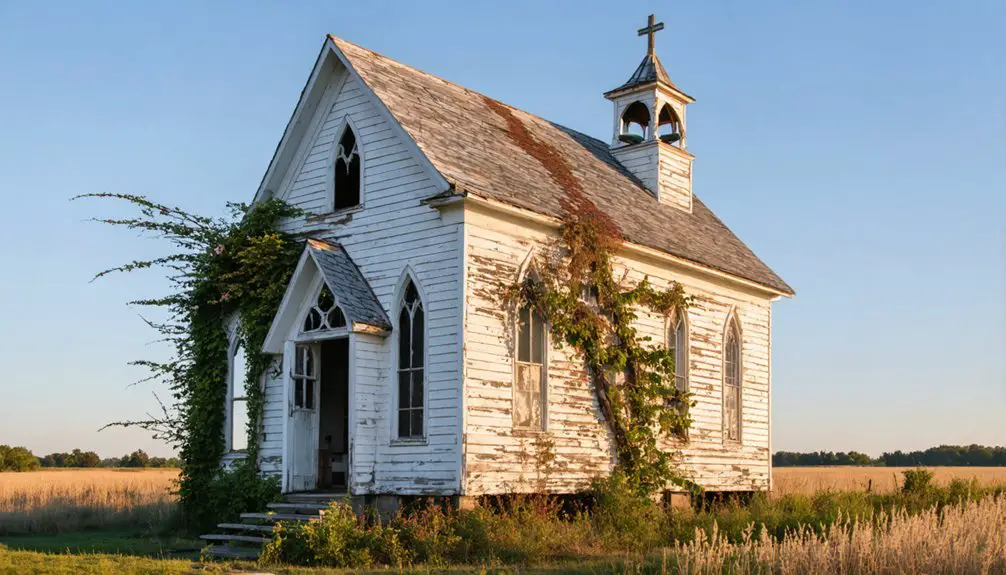
You’ll want to visit the First Presbyterian Church, constructed between 1828 and 1832, which still bears cannonball scars from the USS Rattler’s bombardment. The church’s distinctive bell was cast partly from silver dollars, giving it a unique sound that once called worshippers throughout the town.
Spring’s your best time to explore, when wildflowers soften the ruins and cooler temperatures make wandering comfortable.
Historical preservation efforts have left enough standing to spark your imagination about Rodney’s vanished glory. The town’s name appears on various disambiguation pages that help distinguish this Mississippi river port from other places and people named Rodney.
Rocky Springs: Wildflower Trails Through Historic Ruins
The haunting silence of Rocky Springs tells a story of spectacular rise and devastating fall. You’ll walk where 2,600 residents once thrived before yellow fever, Civil War destruction, and boll weevils erased this community by 1940.
Today, springtime flora reclaims what remains—wildflowers weaving through abandoned cisterns and rusted safes along the short loop trail.
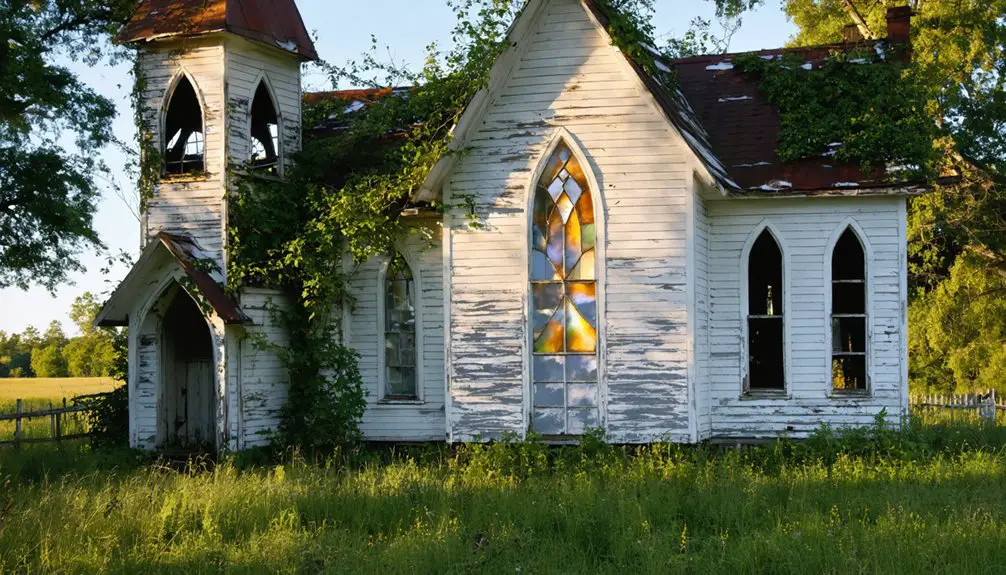
The 1837 Methodist church stands as the sole surviving structure, a weathered sentinel among:
- Cemetery graves of original settlers beneath flowering dogwoods
- Two post office safes overtaken by vines and moss
- Interpretive signs revealing freedoms lost to environmental collapse
You’ll find overgrown architecture everywhere—cisterns disappearing beneath vegetation, foundations swallowed by forest. The community grew from a watering stop along the Natchez Trace into a town with merchants, doctors, and teachers serving the surrounding cotton plantations. The site once drew travelers to La Fuente del Pedregal, as Spanish explorers named the spring before it became Rocky Springs. The National Park Service maintains access off the Natchez Trace Parkway at milepost 54.8, where nature’s reclamation creates an unforgettable spring exploration.
Grand Gulf: Military History Meets Antebellum Charm
Just 90 miles south along the Mississippi River corridor, Grand Gulf presents a dramatically different ghost town experience—where military fortifications overshadow the wildflower walks of Rocky Springs. You’ll explore Confederate earthworks that once commanded essential river trade routes, imagining steamboats loaded with cotton steering through the treacherous whirlpool that gave this place its name.
The 1790s Spanish House stands as Mississippi’s oldest surviving structure—walk through rooms where merchants once tallied fortunes before yellow fever and nature’s fury intervened. The old cemetery sits strategically on the bluffs, where graves were positioned to escape the Mississippi’s devastating floods that eventually claimed over 50 blocks of the original town.
Historical architecture buffs shouldn’t miss the relocated Sacred Heart Church, its 1868 craftsmanship perfectly preserved. The church showcases carpenter Gothic architecture, recognized as one of Mississippi’s finest examples of this distinctive style.
Spring transforms the abandoned battlefields into wildflower meadows, softening stark military remnants. You’re free to wander cannon emplacements and trenches without guided tours dictating your pace—history on your terms.
Bruinsburg: Civil War Landing Site Reclaimed by Nature
Where military history dissolved into Mississippi wilderness, Bruinsburg stands as the ghost town you’ll never see—because nothing remains above ground.
Yet you’re standing where 22,000 Union soldiers executed America’s largest amphibious operation before 1942, their boots launching Civil War strategies that cracked Vicksburg wide open.
This settlement with Revolutionary roots once thrived as Judge Bruin’s steamboat port.
Now spring visits reveal:
- Steep banks where XVII Corps climbed from Disharoon’s Plantation
- Bruinsburg Road’s muddy traces through fallen timber
- Private property requiring arranged historical tours
An escaped slave guided Grant here after Grand Gulf’s naval disaster.
Within 24 hours, artillery rolled ashore while USS Benton’s band played patriotic anthems.
Before the war, this thriving settlement hosted Andrew Jackson’s trading post during Mississippi River trade’s peak years.
The Natchez people inhabited this land before their 1726 revolt triggered forced displacement from the region.
You’ll traverse Grant’s D-Day site—nature’s reclamation proof that Mississippi’s most significant landings leave the quietest footprints.
Fort Adams: Riverside Fortifications in Peaceful Isolation
Before Louisiana became American, General James Wilkinson’s soldiers carved defensive earthworks into this 150-foot bluff commanding Mississippi’s southern gateway.
Wilkinson’s troops transformed this commanding bluff into Mississippi’s southern fortress before American flags replaced colonial ambitions.
You’ll find Fort Adams 38 miles south of Natchez, where 500 troops once collected river duties and defended against Spanish incursions.
Spring floods now reclaim these grounds, creating ephemeral wetlands around St. Patrick’s Church—a 1900 affirmation of persistence.
The upper blockhouse ruins rest on private property, their archaeological significance quietly eroding.
You can trace the cemetery path midway up the peak, where officers and duel victims lie beneath weathered stones.
Meriwether Lewis briefly resided at this strategic post before embarking westward on his legendary expedition with Clark.
Mississippi Heritage Trust lists this site among 2021’s most endangered places, yet that isolation becomes your invitation.
Mild weather lets you explore remnants freely, hunting historical restoration opportunities while fishing camps dot the landscape.
The fort served as Louisiana Territory’s first port of entry before administrative functions transferred to New Orleans following the 1803 acquisition.
The bluff witnessed the first documented Mass on Mississippi soil during LaSalle’s Easter Sunday expedition in 1682, celebrated by Father Zenobius Membre.
Frequently Asked Questions
Are Guided Tours Available at Mississippi Ghost Towns During Spring?
You’ll find guided ghost tours in Bay Saint Louis and Holly Springs during spring, but Rocky Springs offers self-guided urban exploration. These locations provide excellent photography opportunities where you’re free to capture haunting historic sites at your own pace.
What Safety Precautions Should Visitors Take When Exploring Abandoned Structures?
You’ll need sturdy boots, flashlights, and permission before entering—ironically, historical preservation depends on respecting boundaries. Local folklore warns of hazards that’re quite real: unstable floors, contaminated soil, and collapsing walls that’ll end your adventure fast.
Do Any Ghost Towns Require Entrance Fees or Permits?
You’ll find most Mississippi ghost towns completely free to explore, with no permits needed. However, preservation efforts at sites like Natchez’s Melrose Estate charge modest fees to maintain their historical significance and protect these authentic remnants of freedom.
As you embark on your journey exploring ghost towns in Mississippi, you’ll encounter intriguing stories about the lives once lived in these now-quiet places. Each town has its own unique history that reveals a slice of American life, making them fascinating stops for history enthusiasts. Don’t forget your camera, as the picturesque ruins and natural surroundings offer plenty of striking photo opportunities.
Can Visitors Camp Overnight Near These Ghost Town Locations?
Like wandering pioneers seeking shelter, you’ll find free camping at Rocky Springs Campground near ghost town ruins. Historical preservation meets photography opportunities at dawn, while national forest sites offer primitive freedom beneath Mississippi’s spring canopy.
What Wildlife Might Be Encountered in These Abandoned Areas?
You’ll encounter white-tailed deer, raccoons, and coyotes during urban exploration. For wildlife photography, watch for red-tailed hawks, mockingbirds, and Brazilian free-tailed bats. I’ve spotted alligators near wetland ruins—they’re incredible subjects but require respectful distance.
References
- https://en.wikipedia.org/wiki/List_of_ghost_towns_in_Mississippi
- https://kids.kiddle.co/List_of_ghost_towns_in_Mississippi
- http://sites.rootsweb.com/~mstttp/ghosttowns.htm
- https://freepages.rootsweb.com/~gtusa/history/usa/ms.htm
- https://mississippifolklife.org/articles/haunted-by-a-ghost-town-the-lure-of-rodney-mississippi
- https://theforgottensouth.com/rodney-mississippi-ghost-town-history-tour/
- https://www.geotab.com/ghost-towns/
- https://www.tripadvisor.com/Attraction_Review-g28945-d10045204-Reviews-Rodney_Ghost_Town-Mississippi.html
- https://en.wikipedia.org/wiki/Rodney
- https://www.legendsofamerica.com/ms-rodney/