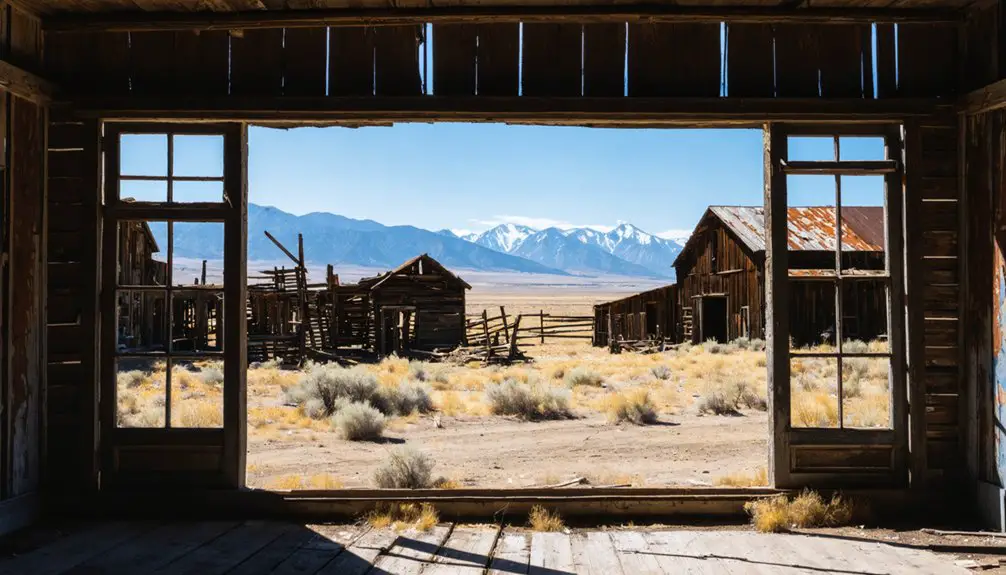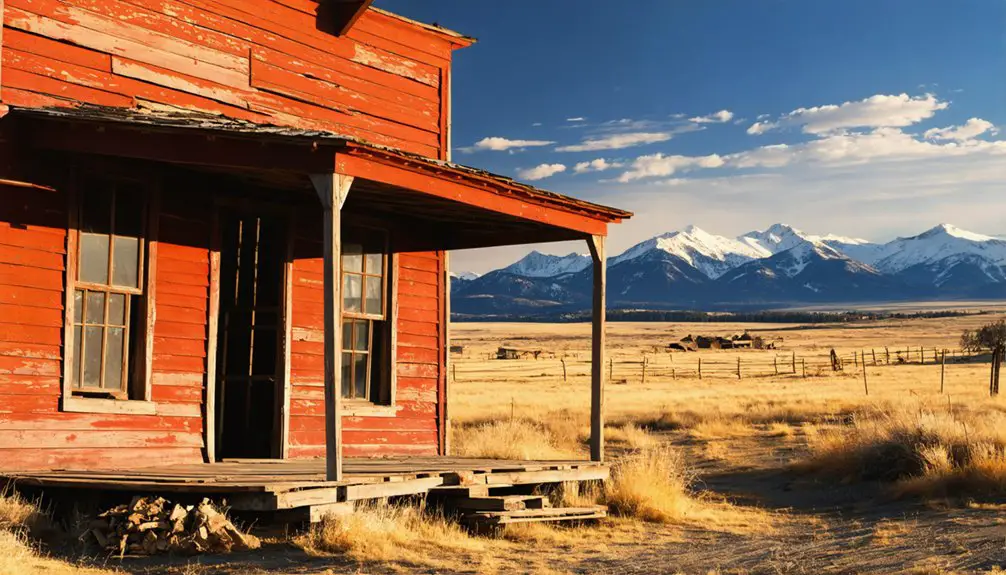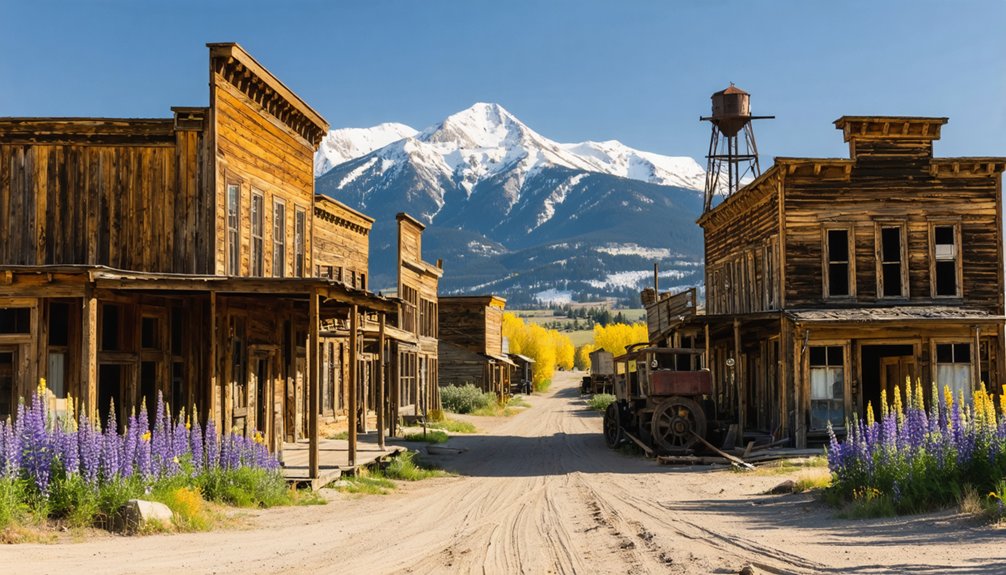
You’ll find Montana’s best spring ghost towns along rugged mountain corridors where snowmelt streams rush past weathered cabins. Garnet offers 30 original structures protected by BLM, while Rimini near Helena showcases restored miners’ cabins and silver-era tools. Elkhorn impresses with exceptional wooden building preservation, and Pardee delivers authentic frontier atmosphere with standing saloons and dance halls. Travel the 49-mile Pioneer Mountain Scenic Byway connecting these sites, where temperatures climb from 30°F nights to 60°F days—pack layers and waterproof gear for muddy access roads, and explore deeper into each town’s preserved artifacts and mining heritage.
Key Takeaways
- Garnet Ghost Town features 30 preserved structures including jail and blacksmith shop, protected by BLM with ranger-led tours available.
- Elkhorn Ghost Town showcases exceptionally preserved wooden buildings from silver mining days, documented by the Historic American Buildings Society.
- Pioneer Mountain Scenic Byway offers 49 miles of stunning spring vistas connecting ghost towns through high-altitude meadows and forests.
- Spring visitors should prepare waterproof gear for temperatures ranging 30°F-60°F and check road conditions affected by snowmelt.
- Coolidge Ghost Town requires a half-mile hike beyond five-mile dirt road, featuring preserved mill ruins and railroad tracks.
Bannack State Park: Montana’s Best-Preserved Mining Town
When John White’s crew struck gold on Grasshopper Creek on July 28, 1862, they cracked open what locals would call “the door through which the world rushed into Montana.” Within months, 400 fortune-seekers had pitched tents along the creek, and by spring 1863, that number had exploded to 3,000.
The door through which the world rushed into Montana cracked open when fortune-seekers discovered gold on Grasshopper Creek in 1862.
Today, you’ll find over 50 original structures still standing—testimony to exceptional historic preservation.
The gold discovery site that once supported three hotels, four saloons, and Montana’s second brick courthouse now stands frozen in time as a National Historic Landmark. Log and frame buildings from the gold boom era line the historic Main Street, reflecting Montana’s formative years. For a brief period in 1864, Bannack served as Montana Territory’s capital before the seat of government relocated to Virginia City.
Visit between Memorial Day and Labor Day when the visitor center operates 10am-6pm.
You can camp at 28 sites along Grasshopper Creek or time your trip for Bannack Days in mid-July, when re-enactors bring this autonomous outpost back to raucous life.
Virginia City and Nevada City: Living History Museums
You’ll step onto wooden boardwalks where costumed interpreters recreate daily life from the 1860s Gold Rush, making history tangible through hands-on activities like tinsmithing and period games.
The historic steam train connects these twin towns, carrying you between over 100 preserved buildings that house one of the largest Old West artifact collections outside the Smithsonian. Nevada City’s museum welcomes visitors from late May through early September, with last entry at 5 PM ensuring you have ample time to explore before closing.
After exploring Nevada City’s outdoor museum, catch a bawdy Brewery Follies performance or pose in period dress at one of Virginia City’s old-time photo studios, where the frontier era comes alive through entertainment that miners themselves would’ve enjoyed. For a sweet ending to your day, stop by Cousins Candy Shop, where homemade chocolates and fudge have been crafted since 1926.
Authentic 1860s Town Experience
Standing between Montana’s two remarkably preserved gold rush settlements feels like stepping through a portal into 1863, when prospectors flooded these hills with pickaxes and dreams. You’ll walk authentic wooden boardwalks past 100 buildings housing America’s second-largest Old West collection after the Smithsonian—1.2 million artifacts that tell raw frontier stories.
Historical reenactments transform weekends from Memorial Day through Labor Day into living theaters. Costumed interpreters demonstrate blacksmithing, fire period rifles, and bake using territorial-era recipes. You’re not just observing—you’ll handle tools, play vintage games, and learn forgotten skills. Watch skilled artisans create frontier leatherwork alongside traditional quilting demonstrations. Volunteers ranging from ages 4 to 78 come from 11 Montana communities and four states to share their expertise.
Artifact preservation here goes beyond glass cases. Montana Heritage Commission maintains these 108 relocated structures and their contents, letting you touch history directly. Visit mid-May through mid-September, when spring’s freedom calls loudest.
Historic Steam Train Rides
The whistle’s shrill cry cuts through mountain air five minutes before departure—your signal that the #8 Bovey locomotive is warming up for the 1.5-mile journey between these twin ghost towns.
You’ll board the narrow-gauge steam locomotive at Virginia City’s depot, settling into authentic passenger cars as coal smoke drifts overhead.
During the fifteen-minute ride, your conductor delivers historical narration about gold rush fever and the characters who built these settlements from scratch.
Trains depart hourly from Virginia City (10 AM-5 PM) throughout the May-through-September season.
You’ll pay $10 for adults, $8 for kids and seniors—all tickets sold on-site, no advance reservations.
Groups of six score discounted rates.
The Virginia City Depot doubles as an information center with public restrooms available for visitors.
At Nevada City, you can cross the street to explore town attractions including shops, museums, and historic landmarks.
Fair weather only; Montana’s spring storms occasionally halt operations without warning.
Live Theater and Entertainment
While most ghost towns offer silent ruins, Virginia City and Nevada City pulse with performers who’ve mastered the art of resurrection—bringing the 1860s back to life through staged gunfights, vaudeville comedy, and saloon-style entertainment that’ll have you doubled over laughing between sips of sarsaparilla.
The Virginia City Players deliver authentic boardwalk performances steeped in old west themes—think of it as modern theater meets frontier storytelling, minus the violence. It’s living history without the stuffiness of Medieval jousts or museum ropes. These hour-long shows feature unexpected twists and quick-paced entertainment that keeps audiences engaged throughout.
For adults craving edgier fare, Brewery Follies serves risqué political satire that’d make a saloon girl blush (ranked Virginia City’s top attraction). Shows run weekends Memorial Day through Labor Day, with living history interpreters demonstrating gold rush skills every Saturday and Sunday.
Check their Facebook page for weekly schedules—weather and volunteers dictate programming.
Garnet Ghost Town: Remote Mountain Mining Settlement
Nestled high in Montana’s rugged mountains, Garnet Ghost Town emerges from the wilderness like a time capsule frozen in the 1890s. You’ll traverse a winding dirt road to reach this authentic settlement where 1,000 miners once extracted millions in gold from quartz-rich veins. The mining history spans 1862-1916, shifting from placer operations to hard rock extraction after 1893’s silver crash.
Wander freely among 30 weathered structures—thirteen saloons, hotels, and stores stand exactly as residents left them. Ghost town preservation efforts by the Bureau of Land Management maintain Montana’s most intact mining camp without sanitizing its raw character. The town welcomes visitors year-round from 9:30 a.m. to 4:00 p.m., though the extensive dirt road access requires careful consideration of vehicle capability and weather conditions.
As you explore these abandoned towns in Montana’s summer, you might encounter remnants of old mining machinery nestled among the overgrown foliage. The haunting beauty of crumbling facades and rusted relics tells a story of resilience and nostalgia, inviting you to imagine the lives once lived here. Each visit offers a unique glimpse into the past, making it a captivating experience for history enthusiasts and adventurers alike.
Spring’s mild temperatures make exploring abandoned cabins comfortable before summer’s 16,000 visitors arrive. You’ll discover furniture, tools, and remnants of frontier life scattered throughout buildings, experiencing genuine Western solitude along forgotten mountain trails.
Rimini Ghost Town: Silver Mining Legacy Near Helena
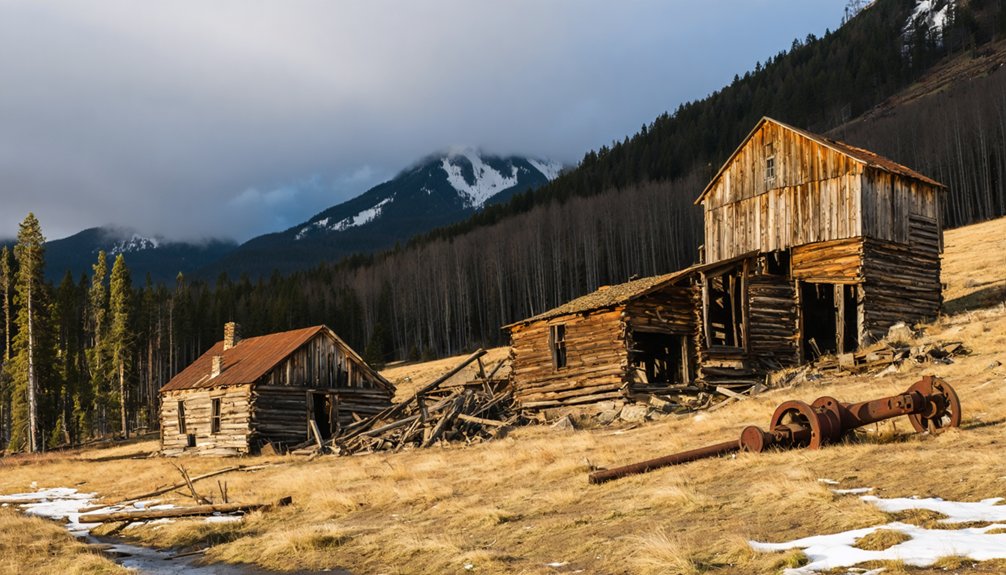
Today’s town architecture tells stories through interpretive signs as you explore freely without scheduled tours.
A few year-round residents keep this open-air museum alive, while restored miners’ cabins welcome summer visitors.
One century-old structure even trained Arctic rescue dogs during World War II—unexpected history along these mountain trails.
Planning Your Ghost Town Adventure on the Pioneer Mountain Scenic Byway
The Pioneer Mountain Scenic Byway unfolds across 49 miles of Montana’s rugged backcountry.
Granite peaks piercing 10,000 feet tower over the eastern horizon while forested slopes roll gently westward. You’ll climb a 7,800-foot divide between Wise River and Grasshopper Creek, passing mountain meadows and lodgepole pine forests that promise wildlife encounters—pack bear spray for these shaded, elevated sections.
Wildlife thrives in these high-elevation forests—bring bear spray when hiking the shaded slopes between 7,800 feet and treeline.
Coolidge Ghost Town sits five miles down a dirt road, requiring a flat half-mile hike to reach dozens of preserved buildings, mill ruins, and railroad tracks. This “boomtown that never boomed” draws fewer crowds than popular Garnet, perfect if you’re craving solitude among mining relics.
Extend your adventure at Crystal Park for quartz hunting, soak in Elkhorn Hot Springs‘ 100-degree pools, or explore hidden trails into the Pioneer Mountains’ wilderness.
What to Expect When Exploring Montana’s Abandoned Mining Communities
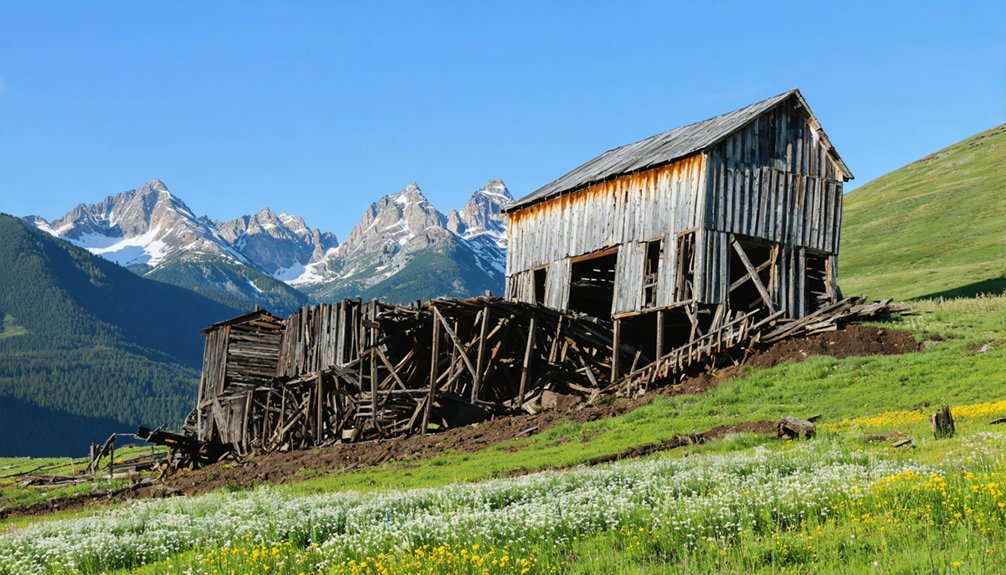
You’ll find weathered cabins leaning against mountain winds, their interiors still scattered with rusted mining tools, broken furniture, and glass bottles that caught the last light of boom times.
Most sites let you walk freely through structures and along old pathways—Garnet’s preserved collection includes accessible mine entrances, while Bannack’s maintained streets guide you past intact saloons and hotels.
The spring season offers ideal conditions for exploration before summer crowds arrive, though you’ll want sturdy boots for uneven ground and terrain that shifts between forested approaches and open valley floors.
Authentic Buildings and Artifacts
When you step into Montana’s ghost towns, weathered wooden buildings and crumbling stone foundations transport you straight into the 1800s mining era.
At Garnet, you’ll find 30 original structures frozen in time through modern conservation by the BLM—including the jail, blacksmith shop, and hotel.
Elkhorn’s wooden buildings showcase exceptional preservation from its silver mining days, documented by the Historic American Buildings Society.
Pardee offers you an authentic frontier experience with its saloon, boarding house, and dance halls still standing.
In Coloma, peek inside cabin walls insulated with century-old newspapers and catalogs—real artifacts predating Native archaeology studies.
Granite’s superintendent’s house and Union Hall demonstrate how these sites preserve genuine history without Disney-fication.
Touch weathered timbers, explore mill operations, and walk freely through structures where miners actually lived.
Walking Tours and Accessibility
Before you pack your hiking boots, understand that Montana’s ghost towns vary wildly in accessibility—from Bannack’s wheelchair-friendly main street to Coolidge’s 15-minute uphill trek through lodgepole pines.
Garnet strikes a middle ground with less than a mile between parking and historical preservation sites. You’ll find benches along the path, two vault toilets, and water pumps—unexpected luxuries in abandoned territory.
Handicap parking near the lower section means mobility-limited explorers aren’t excluded from these whispers of the past.
Visitor facilities remain minimal by design, preserving authenticity over comfort. Granite’s steep, winding approach demands confident driving, while spring mud can transform access roads into unpredictable obstacles.
Call Missoula’s BLM office (406-329-3914) to arrange guided tours at Garnet, where rangers transform weathered buildings into vivid narratives of frontier resilience.
Complementary Attractions and Activities in Southwest Montana
The rugged landscape between Montana’s ghost towns reveals adventures that transform a simple history tour into a full-fledged spring exploration. You’ll find cultural immersion at Granite County Museum in Philipsburg, where the Ghost Town Hall of Fame provides context before you venture to Garnet.
Drive the Pioneer Mountain Scenic Byway connecting multiple ghost towns, stopping at Crystal Park to dig for gems alongside mountain vistas.
The scenic byway transforms ghost town hopping into a gem-hunting adventure amid Montana’s spectacular mountain landscape.
After exploring Coolidge’s creek-bound schoolhouse, soak at Upper Potosi Hot Springs or tackle Bell Lake Trail.
Nevada City offers historical preservation at its finest—150 authenticated buildings including an 1860s stagecoach stop where whiskey once flowed freely.
During summer’s Bannack Days, costumed volunteers bring the territory’s vigilante past alive through tours of fifty original structures, from gallows to Masonic Lodge.
Tips for Spring Visits to Montana Ghost Towns
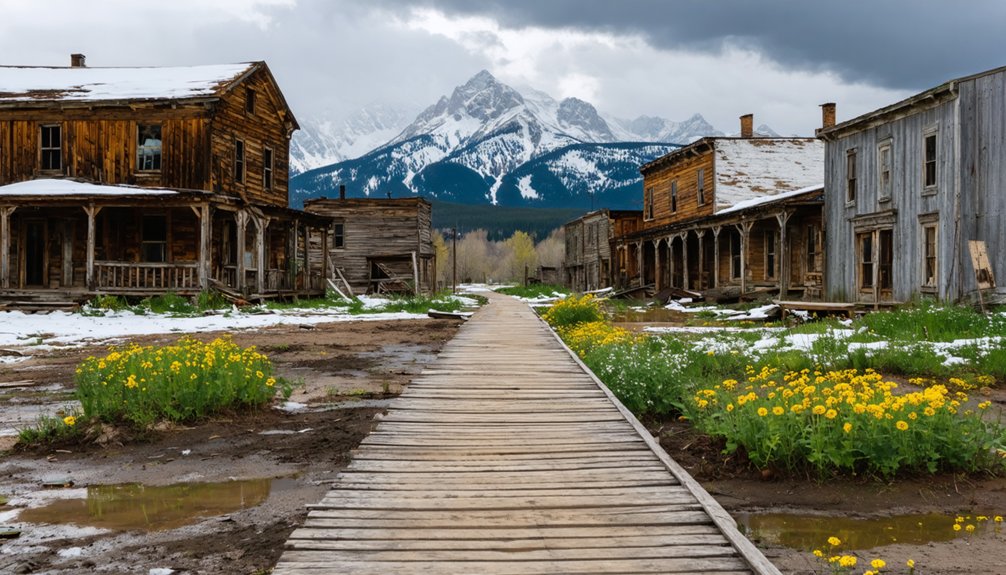
As you plan your spring expedition to Montana’s ghost towns, prepare for weather that shifts as unpredictably as a prospector’s fortune. Layer waterproof gear for temperatures swinging from 30°F nights to 60°F afternoons, and pack those muddy-trail boots you’ve been meaning to break in.
Seasonal safety demands checking road conditions before tackling Garnet’s 11-mile dirt track—your sedan won’t cut it when snowmelt turns earth to soup. Carry bear spray for wildlife encounters in remote corridors like Coolidge, where you’re truly off-grid.
Grab interpretive brochures at visitor centers; they’ll enrich your wanderings through Bannack’s 50-plus structures without tethering you to scheduled tours.
Montana’s ghost towns reward the prepared wanderer. You’ll trade convenience for genuine exploration, exactly what freedom-seekers crave.
Frequently Asked Questions
Are Pets Allowed at Montana’s Ghost Town Sites?
Yes, you’ll find welcoming pets policies at Montana’s ghost towns like Garnet and Bannack. Here’s a pet friendly tip: keep your dog leashed on trails, pack cleanup bags, and you’re free to explore these historic sites together year-round.
What Cell Phone Coverage Can Visitors Expect in Remote Ghost Towns?
You’ll face severe cell service limitations at most remote ghost towns, with many areas having zero coverage. Consider satellite communication options like Garmin inReach devices to stay connected and guarantee safety while exploring Montana’s backcountry independently.
Are There Entrance Fees for Visiting Montana Ghost Towns?
Your wallet won’t gather dust at Montana’s ghost towns. Entrance fees vary: Bannack charges non-residents $6-8 per vehicle, while Garnet’s ticket costs run $10 for adults. Montana residents enjoy free access to state parks like Bannack.
Can Visitors Camp Overnight Near the Ghost Town Locations?
You can camp near most ghost towns, but camping regulations vary by location. Bannack offers designated sites, while Garnet prohibits camping within half a mile. Always follow wildlife considerations like bear-aware food storage practices.
Are the Ghost Towns Wheelchair Accessible for Mobility-Impaired Visitors?
Rolling through history’s dusty corridors, you’ll find Garnet offers the best wheelchair navigation with level trails and accessibility improvements. Bannack’s broad streets permit partial exploration with assistance, while other ghost towns remain ruggedly unmodified.
References
- https://www.mountain-home.com/blog/vacation-planning/guide-montana’s-ghost-towns
- https://leisuregrouptravel.com/park-to-park-ghost-town-route/
- https://www.tripadvisor.com/Attractions-g28947-Activities-c47-t14-Montana.html
- https://southwestmt.com/ghosts/
- https://visitmt.com/things-to-do/ghost-towns
- https://www.garnetghosttown.org
- https://www.thetravel.com/underrated-montana-town-dillon-between-yellowstone-glacier-national-park/
- https://fwp.mt.gov/stateparks/bannack-state-park
- https://montanastateparksfoundation.org/parks/bannack-state-park/
- https://en.wikipedia.org/wiki/Bannack