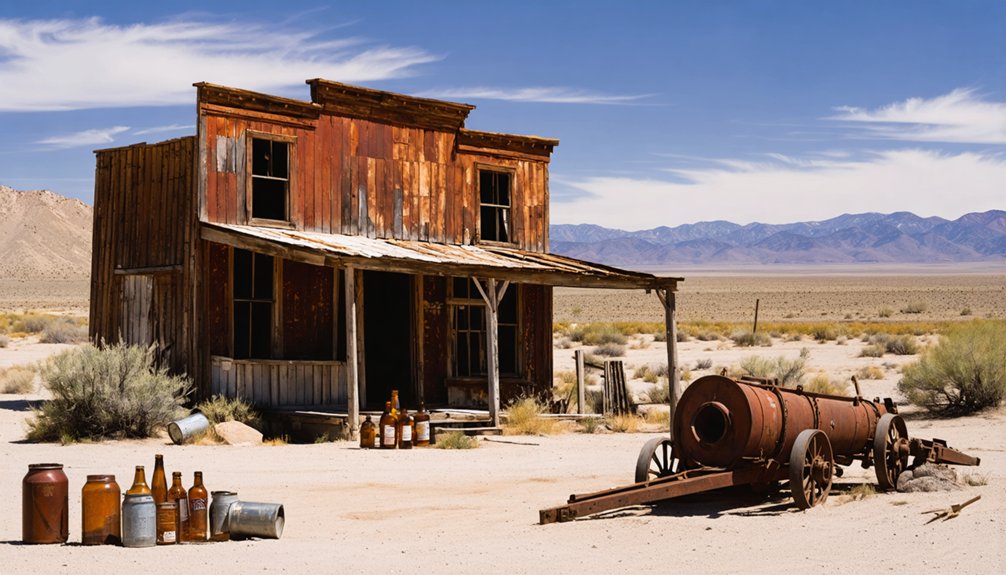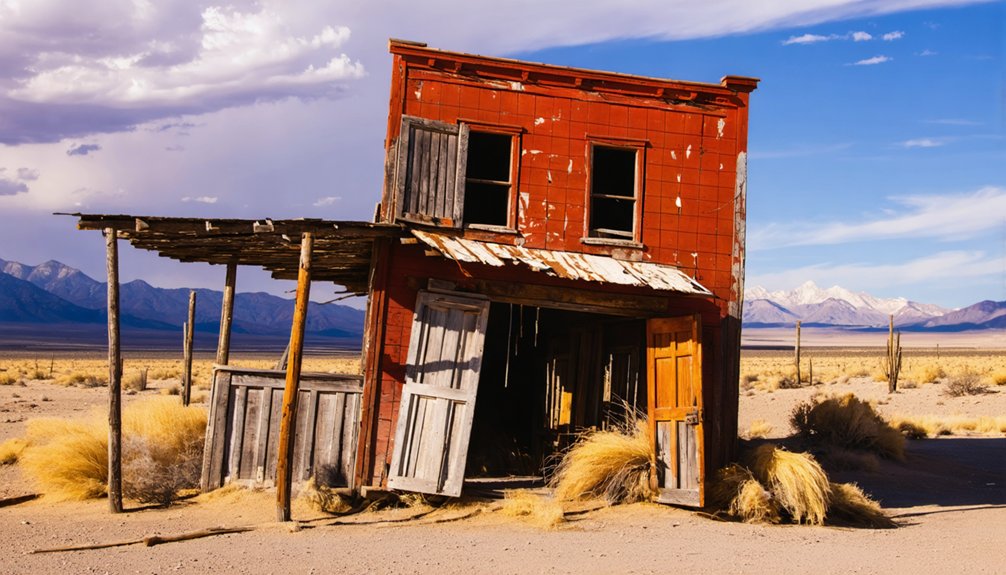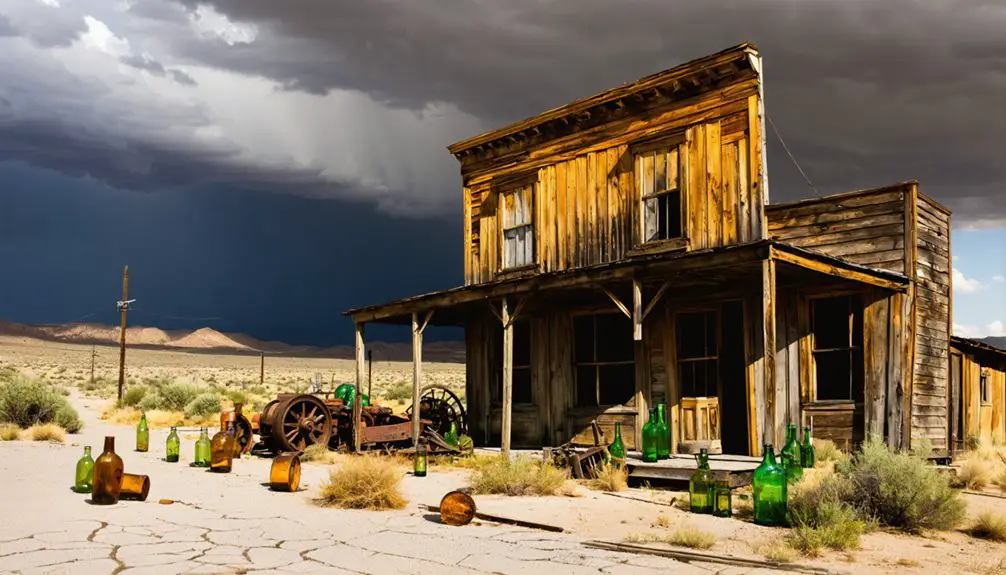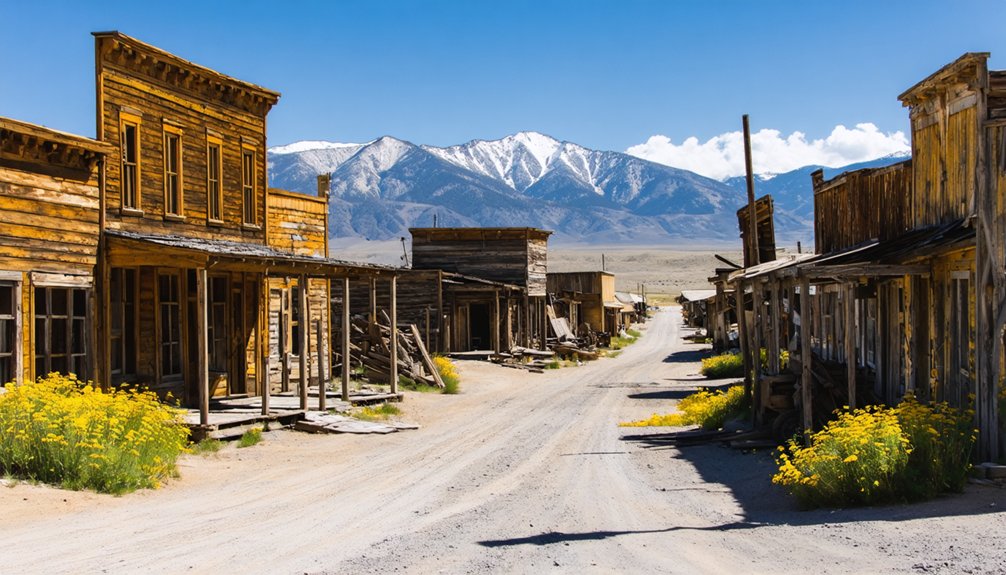
You’ll find Nevada’s ghost towns particularly enchanting in spring, when milder temperatures make exploration comfortable and wildflowers bloom through weathered ruins. Visit Rhyolite‘s haunting bank building and bottle house near Death Valley, trek to remote Jarbidge through canyon scenery, or explore Goodsprings’ unchanged 1913 Pioneer Saloon where Clark Gable once waited. Belmont’s 150-year-old courthouse and Pioche’s violence-scarred streets offer authentic Old West atmosphere, while scenic highway loops connecting these sites minimize backtracking. Proper preparation—including ample water, road condition checks, and shared itineraries—ensures you’ll safely experience these historical treasures.
Key Takeaways
- Rhyolite near Beatty features preserved ruins, art installations, and desert wildflowers ideal for spring photography at dawn.
- Goodsprings’ Pioneer Saloon offers historic ambiance with unchanged 1913 architecture, perfect for mild spring weather exploration.
- Belmont showcases 150-year-old buildings including an 1876 courthouse accessible without guides, best visited during comfortable spring temperatures.
- Spring brings milder weather for exploring remote Jarbidge after snowmelt reveals mining relics from 2,000 former residents.
- Plan scenic loops along Highway 95 and the Loneliest Highway connecting multiple ghost towns during spring’s wildflower season.
Goodsprings: Step Back in Time at Clark County’s Oldest Saloon
While Las Vegas glitters just 35 miles north, Goodsprings remains frozen in 1913, where the Pioneer Saloon still stands as Clark County’s oldest watering hole.
Step through the Pioneer Saloon’s doors and travel back 110 years—Clark County’s oldest bar remains authentically unchanged since 1913.
You’ll walk across creaking floorboards beneath stamped tin walls ordered from a Sears Roebuck catalog, bellying up to a cherry wood bar that Brunswick crafted in Maine before Nevada was civilized. The historic architecture hasn’t changed much since miners traded silver for whiskey here.
Local folklore claims the current owner won this place in a poker game.
More verifiable: Clark Gable waited here for days after Carole Lombard’s fatal plane crash on nearby Mount Potosi in 1942. She died returning from a war bond campaign that would haunt Hollywood history.
The town itself owes its name to Joseph Good’s underground spring that once sustained this booming mining community.
Today, you’ll find cold beer, legendary burgers, and Hollywood memorabilia decorating walls that’ve survived everything from Spanish Flu to COVID-19.
Rhyolite: Photograph Stunning Ruins Near Death Valley
Four miles west of Beatty, where Highway 374 cuts toward Death Valley’s eastern gateway, Rhyolite’s skeletal remains rise from the Mojave like a fever dream in stone and rusted metal.
You’ll find historical preservation at work here—the Bureau of Land Management protects what’s left of this boom-and-bust spectacle. The Cook Bank Building, Nevada’s most photographed ghost town ruin, stands defiant against desert wind. Tom Kelly’s Bottle House, constructed from 50,000 beer bottles, gleams amber in spring’s golden hour.
Your photography techniques matter here. Dawn light carves shadows across volcanic rhyolite while the Amargosa Valley stretches beyond. Three railroads once converged where silence now reigns. You’re standing where 5,000 prospectors chased fortune in 1906, then vanished like smoke within five years. Just below the town’s remnants, the Goldwell Open Air Museum features modern art installations, including Belgian artist Albert Szukalski’s “The Last Supper” sculpture from 1984. The two-story schoolhouse ruins, built around 1909, offer commanding desert views across mountain ranges and valleys.
Jarbidge: Adventure to Nevada’s Most Remote Gold Mining Settlement
Where Rhyolite surrendered to the desert heat, Jarbidge clings to life in a snow-carved canyon at Nevada’s northern extreme. You’ll navigate 41 miles of gravel road to reach this Class 5A historic settlement, where mineral legends and folklore stories still echo through the valley.
The Shoshone called it “canyon of the evil giant,” and their warnings kept it wild until 1909’s gold strike.
Spring’s your window—once snowmelt reveals the canyon floor, you’ll explore relics from 2,000 residents who gambled on fortune here. Town taxis offer rides along the main drag, though many visitors choose to walk the quaint streets and stop at the local burger joint.
Visit the site of the West’s last stagecoach robbery, where bloody handprints sealed a killer’s fate. The Gold Creek Ranger Station, built in 1910 and listed on the National Registry of Historic Places, stands as testimony to early forest management efforts.
The restored store, cafe, and hotel serve hardy souls who recognize that true freedom lies beyond pavement’s end, in places civilization barely touched.
Pioche: Explore Silver Boom Town With a Violent Past
Unlike Jarbidge’s remote isolation, Pioche greets you with a paradox—a living town haunted by its murderous past. You’ll discover Nevada’s wildest silver boom, where fortune-seekers clashed over overlapping claims in the 1870s. The town’s violent history isn’t legend—it’s documented fact. The first 72 deaths were murders, born from mining disputes and bitter rivalries between Raymond & Ely and Meadow Valley Mining Company.
Walk past the Million-Dollar Courthouse, built to tame the chaos, now preserved on the National Register. Peak production hit $5.5 million in 1872, when 10,000 souls crowded these hills. The Pioche Record, established in 1870, chronicled the chaos through Nevada’s bloodiest years. Visit the Thompson Opera House, where miners once gathered for entertainment beneath the same hills they excavated for silver and gold.
Though mining collapsed by 1900, Pioche refused to die completely. Today, 750 residents maintain Lincoln County’s seat, welcoming freedom-seekers who appreciate authentic grit over sanitized tourism.
Belmont: Discover 150-Year-Old Structures in Central Nevada
The wind whispers through skeletal stone walls that have defied Nevada’s elements for 150 years. You’ll wander freely through Belmont’s remarkably intact ruins, where silver fever once drove populations between 2,000 and 15,000.
The 1876 courthouse stands as proof of preservation efforts—its recently renovated roof sheltering visitor-carved graffiti inside. Mining history unfolds at every turn: the 1867 Combination Building, the bank where vigilantes hanged two men in 1874, and the Monitor-Belmont Mill’s bullet-riddled chimney, target practice for WWII pilots.
Six mills once churned out $15 million in ore here. Today you’ll discover scattered mine shafts, foundation stones, and structures built from local materials that outlasted the town itself, inviting full-day exploration without barriers or guides. The town’s political status once extended beyond mining, serving as the Nye County seat with government offices and courts that solidified its regional importance. The boom lasted until the mid-1890s, when declining silver prices triggered an exodus that left Belmont nearly deserted by the early 1900s.
Goldfield: Tour the Legendary Old Goldfield Hotel
Rising from Goldfield’s dusty streets like a monument to vanished opulence, the Old Goldfield Hotel’s four-story silhouette commands your attention before you’ve even parked. Built in 1908 from reddish-brown brick and grey granite, this architectural marvel once boasted Nevada’s fastest elevator and mahogany-paneled lobbies with gold-leaf ceilings.
You’ll trace the hotel architecture’s U-shaped footprint while imagining champagne flowing down its pillared entrance steps during opening night.
Though shuttered for decades, the building stands defiant against time—surviving fires and floods that consumed lesser structures. Haunted legends cling to empty rooms where prosperity turned to abandonment after Goldfield’s mining boom collapsed.
Walk its perimeter freely, peering through dusty windows into a world frozen mid-decline, where underground tunnels still snake beneath floorboards that once welcomed travelers between Chicago and San Francisco.
Planning Your Spring Ghost Town Road Trip Through Nevada
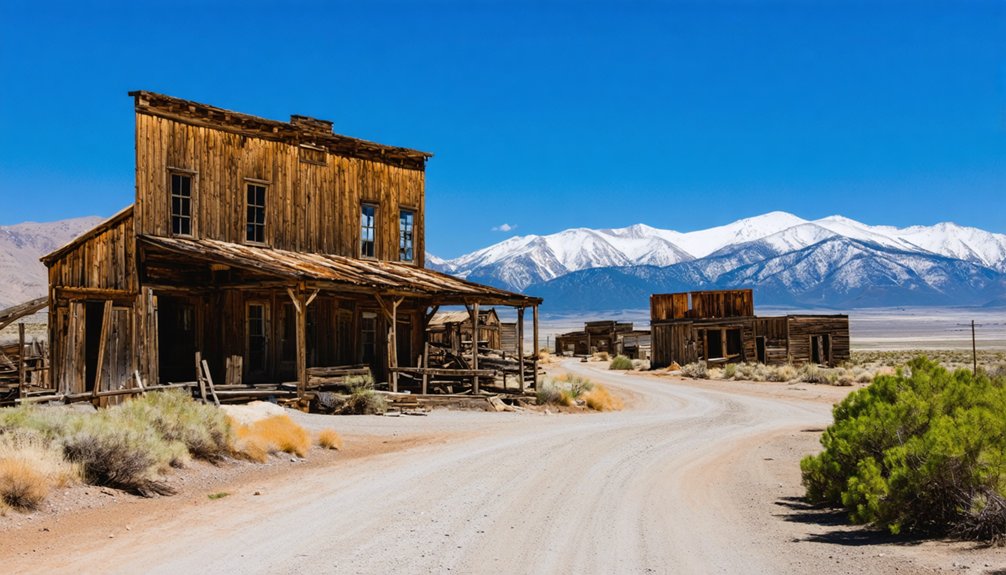
You’ll want to string together Nevada’s ghost towns along scenic highway loops—Hwy 95’s arc through Warm Springs and Rhyolite, or the Loneliest Highway’s passage between Ely and Eureka create natural circuits with minimal backtracking.
Spring’s mild temperatures open high-desert routes that winter snow seals shut, though you’ll need to verify BLM road conditions before venturing toward remote sites like Spencer Hot Springs.
Pack redundant water supplies and repair kits for hundred-mile stretches where cell towers vanish and gas stations exist only as faded memories on outdated maps.
Best Route Combinations
When spring breathes life into Nevada’s high desert, several well-worn routes emerge as ideal corridors for exploring the state’s abandoned settlements.
The Hwy 95 Las Vegas Loop delivers you through Warm Springs, Goldfield’s International Car Forest, and Rhyolite’s extensive ruins—all accessible via the Extraterrestrial Highway near Area 51.
You’ll find scenic overlooks at Hinkey Summit along Northern Nevada’s Cowboy Country route, where wildlife habitats flourish between Denio and Lovelock.
Cathedral Gorge’s slot canyons anchor Lincoln County’s five-day circuit, leading to Rachel’s alien-themed hospitality.
Virginia City’s haunted hotels and Great Basin’s bristlecone pines complete the Central Loop, while Grimes Point’s petroglyphs offer under-a-mile hiking.
Each combination threads together ghost towns, mining relics, and wide-open freedom across Nevada’s unforgiving landscape.
Weather and Road Conditions
As Nevada’s desert shifts from winter’s bite to spring’s gentler embrace, you’ll encounter weather patterns that shift dramatically between dawn’s freezing whispers and afternoon’s warm breath across sunbaked ruins. Pack layers—morning explorations of Rhyolite demand jackets while midday sun strips you down to basics.
Most popular sites like Goldfield welcome you via paved roads, but adventures to St. Thomas require traversing dirt tracks that’ll test your vehicle’s clearance. Early spring snowmelt can still block high-elevation passages, so scout conditions beforehand.
Desert flora awakens brilliantly in March and April, painting ghost town peripheries with wildflower bursts. Wildlife sightings increase as creatures emerge—coyotes, kit foxes, and ravens reclaim these human-abandoned spaces. Check weather windows and road reports; your freedom depends on preparation.
Essential Supplies and Permits
Nevada’s backcountry won’t forgive oversight—three days’ water supply stands between you and dehydration’s grip when your vehicle sinks axle-deep into sand miles from the nearest paved road. Pack non-perishable food, shelter, spare clothing layers, and medications alongside self-recovery gear: winch, straps, earth anchors.
Include emergency communication devices with backup batteries, sturdy hiking boots for foot evacuation, and paper maps supplementing your GPS.
You’ll need cash reserves, basic repair tools, and wildlife considerations demanding proper food storage. Contact BLM offices before departure—they’ll clarify rockhounding limits (seven pounds daily) and camping regulations at hot springs sites.
Reserve cave tours thirty days ahead through Recreation.gov. Share your detailed itinerary with someone who’ll notice your silence.
Freedom demands preparation, not recklessness.
Frequently Asked Questions
What Permits or Fees Are Required to Explore Nevada Ghost Towns?
You’ll find most Nevada ghost towns require no permits on BLM land, respecting historical preservation through Leave No Trace principles. However, land ownership regulations mean privately-owned sites like Nelson charge photography fees, honoring families maintaining these authentic Western remnants.
Are Nevada Ghost Towns Safe to Visit With Young Children?
A family once watched their child nearly vanish into a 350-foot shaft. Nevada’s ghost towns demand vigilance—open mine hazards lurk beneath crumbling historical preservation sites. You’ll encounter wildlife, but unsecured shafts pose deadly risks requiring constant supervision.
What Weather Conditions Should I Expect When Visiting Ghost Towns in Spring?
You’ll encounter crisp mornings dipping to 30-40°F, warming to pleasant 60-75°F afternoons—perfect for spring hiking. Pack layers for temperature swings, and stay alert for wildlife spotting opportunities while exploring Nevada’s remote, untamed ghost town landscapes.
Can I Camp Overnight Near These Ghost Town Locations?
You can camp overnight near most Nevada ghost towns on BLM land. Pack camping gear essentials and follow safety tips for solo campers—bring ample water, stay aware of surroundings, and embrace the stark desert’s liberating solitude.
While exploring nevada’s ghost towns, you can discover remnants of the past and experience the rich history that these places hold. Each town offers a unique story, from mining relics to abandoned buildings, making them perfect for photography and exploration. Remember to respect the sites and leave them as you found them, preserving their charm for future adventurers.
Which Ghost Towns Have Cell Phone Service for Emergencies?
Gold Point and Rhyolite offer your best emergency communication options with 3G service and limited cell coverage respectively. Rachel and Pioche provide reliable 9-1-1 access. Warm Springs leaves you completely disconnected—plan accordingly for true wilderness isolation.
References
- https://travelnevada.com/ghost-town/goodsprings-ghost-town/
- https://nvtami.com/top-10-ghost-towns-nevada-northwest/
- https://matadornetwork.com/trips/travel-guide-nevadas-ghost-towns/
- https://www.visittheusa.com/experience/6-nevada-ghost-towns-explore-if-you-dare
- https://offroad.vegas/mojave-ghost-town-tour/
- https://www.tripadvisor.com/Attractions-g28949-Activities-c47-t14-Nevada.html
- https://theadventureportal.com/in-search-of-nevada-ghost-town/
- https://nolimitsadventure.com/las-vegas/pioneer-saloon-las-vegas/
- http://www.seattlebars.org/2017/11/2900-pioneer-saloon-goodsprings-nv.html
- https://lasvegasterritory.com/destination-vegas-oldest-saloon-southern-nevada/