You’ll find Tennessee’s most captivating ghost towns come alive each spring, when mild 50-70°F temperatures make exploration ideal. Elkmont’s 70 historic resort buildings nestle among blooming wildflowers in the Smokies, while Cades Cove’s eleven-mile loop showcases 19th-century cabins and churches. Loyston’s submerged foundations occasionally emerge beneath Norris Lake during low water levels, and Devonia’s coal mining ruins stand as industrial monuments. Spring’s best conditions reveal hidden details in these abandoned communities that winter obscures.
Key Takeaways
- Elkmont offers 70 historic buildings amid spring wildflowers, featuring preserved cabins, a cemetery, and trails through former logging communities.
- Cades Cove’s eleven-mile loop showcases 19th-century cabins, churches, and barns in a scenic valley, best visited on weekdays.
- Loyston’s submerged ruins emerge during spring’s low water levels at Norris Lake, accessible by boat or kayak.
- Devonia displays abandoned coal plant remains and rusted railway equipment from its 1970s mining boom near Fork Mountain.
- Mid-April through May provides ideal 50-70°F temperatures for exploration; pack tick repellent and check weather conditions beforehand.
Elkmont: A Historic Resort Town Turned Ghost Settlement
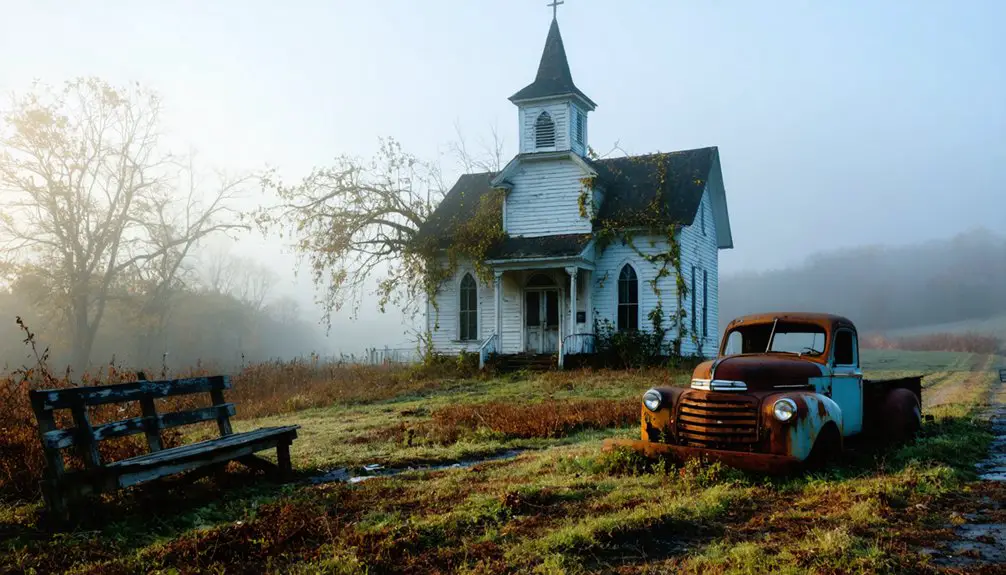
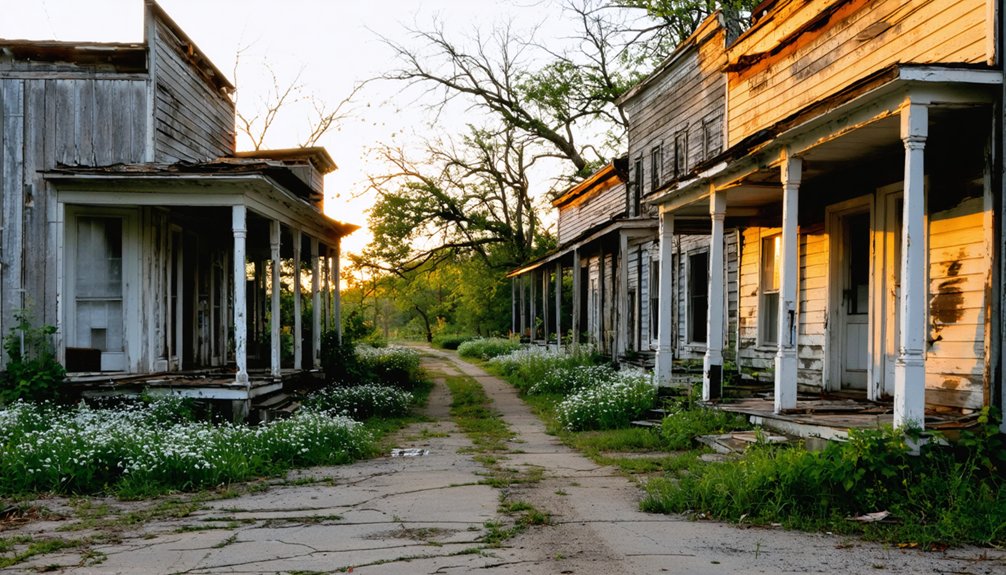
Nestled in the upper Little River Valley, Elkmont stands as one of Tennessee’s most mesmerizing ghost towns. Here, crumbling vacation cottages and moss-covered chimneys whisper tales of a bygone era.
Time stands frozen among Elkmont’s decaying cottages, where nature slowly reclaims what wealthy vacationers once cherished.
Once the county’s second-largest town and thriving resort destination, it’s now yours to explore freely along Fighting Creek Gap Road.
You’ll discover seventy historic buildings scattered through the woods—remnants of the exclusive Wonderland and Appalachian clubs where wealthy vacationers once gathered.
The National Park Service’s historical preservation efforts saved select structures like the restored Levi Trentham cabin from demolition.
Wander the atmospheric cemetery with its quartz-adorned headstones, then follow Jakes Creek Trail past decaying foundations. The town’s eerie reputation stems from its history of logging accidents involving injuries and fatalities that occurred during the area’s industrial heyday.
As of April 2023, 16 preserved buildings remain accessible for visitors to explore, offering glimpses into the settlement’s fascinating past.
These evocative visitor attractions offer unguided exploration—no fees, no restrictions, just haunting beauty waiting to be discovered.
Cades Cove: Tennessee’s Most Accessible Ghost Town
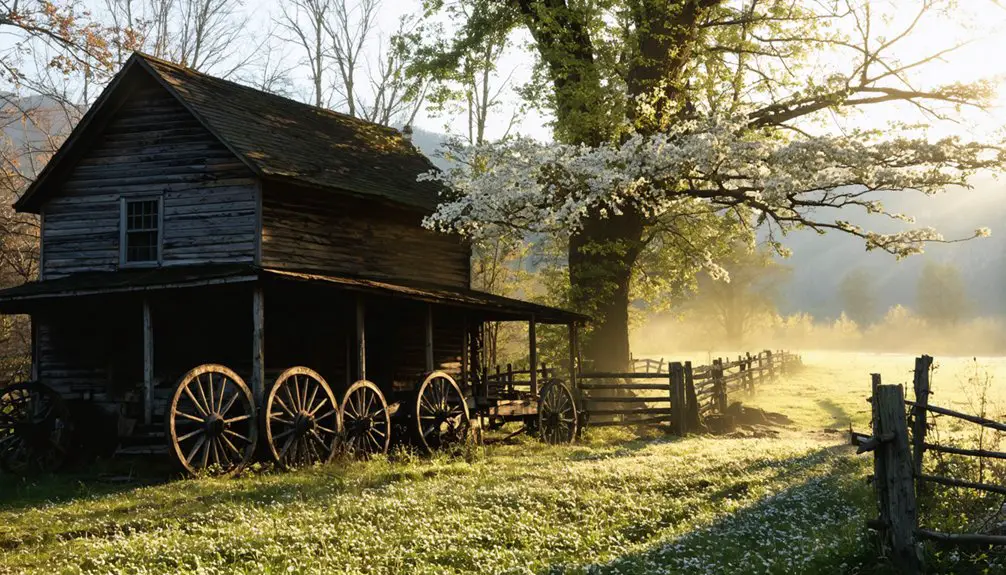
Unlike Elkmont’s secluded forest ruins, Cades Cove sprawls across a broad mountain valley where you’ll find Tennessee’s most visitor-friendly ghost settlement—a complete 19th-century community frozen in time.
You’ll drive an eleven-mile loop past standing cabins, churches, and barns that once sheltered 685 residents before the National Park forced their exodus. The historical significance runs deep—John Oliver’s 1822 cabin still stands where Cherokee neighbors once shared dried pumpkin with struggling settlers.
Civil War raids devastated this thriving agricultural community, and decades later, eminent domain displaced families who’d farmed here for generations. Residents initially received assurances their lands would be excluded from park boundaries, only to face betrayal when 1927 legislation authorized seizure.
Today’s preservation efforts maintain authentic structures you can explore freely. You’ll walk through homes where families raised twelve children, discovering a community that resisted government seizure until the bitter end. The settlement functions as an open-air museum preserving the material culture of early 19th-century pioneer life.
It’s accessible history without barriers.
Loyston: The Submerged Community Beneath Norris Lake
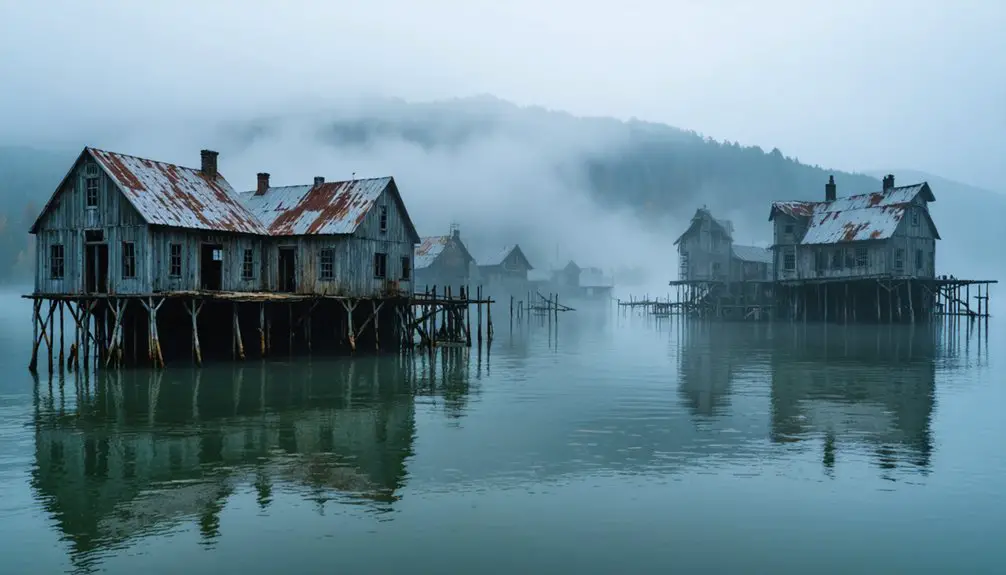
Spring’s lower water levels occasionally reveal foundations and cemetery markers that federal agents couldn’t relocate. You can explore this submerged ghost town by boat or kayak, imagining the post office, churches, and businesses that disappeared beneath your hull.
Near Big Ridge State Park, you’re paddling over a community that government progress swept away—a haunting reminder of development’s price. The Tennessee Valley Authority built Norris Dam in 1936 for flood control, forcing the relocation of Loyston’s 70 residents and submerging their entire town beneath what became Norris Lake. Before the flooding, photographer Lewis Hine captured the town’s final days, creating a valuable historical record of the community that would soon vanish beneath the waters.
Devonia and Fork Mountain: Abandoned Coal Mining Communities
Deep in Anderson County’s hills, Devonia stands as a monument to coal’s broken promises. You’ll find Baldwin Coal Preparation Plant’s skeletal remains dominating this ghost town, where 125 railcars once thundered daily through the 1970s boom. Industrial decay pervades every structure—rusted conveyors, collapsed buildings, and nature reclaiming what commerce abandoned.
Where 125 railcars once thundered daily, only skeletal remains and industrial decay mark coal’s broken promises in Anderson County.
The 42-mile railroad to Oneida tells its own story. Railroad remnants stretch through hollows where Fork Mountain once thrived alongside Devonia. The sites serve as navigational landmarks for visitors exploring Tennessee’s abandoned mining communities.
Behind the prep plant, you’ll discover New River Scenic Railway’s vandalized equipment—a 1951 locomotive and passenger cars rotting since 2010, their tourist excursion dreams long dead.
Spring reveals both towns’ desolation clearly. Walk carefully; these communities disappeared when mines closed in 2013, leaving only scattered foundations and silent track beds. Fork Mountain’s population moved away as the coal industry’s strength faded and demand changed.
Planning Your Spring Ghost Town Adventure in Tennessee
When temperatures climb between 50-70°F across Tennessee’s ghost town regions, you’ll discover the ideal window for exploration stretches from mid-April through May. Spring flora transforms Elkmont’s abandoned structures into wildflower galleries during the Smokies’ famous pilgrimage season. However, you’ll encounter crowds exceeding 10,000 on weekends.
Choose mid-week visits for solitary wanderings through Loyston’s lakeside remnants or Cades Cove’s looped ruins. Norris Dam flooded the original town of Loyston in the 1930s, leaving behind traces you can explore when lake levels drop in spring.
Pack tick repellent and secure your provisions in bear boxes—wildlife viewing opportunities increase as bears emerge from hibernation. Book Elkmont Campground sites through recreation.gov or claim Big Ridge State Park cabins near Norris Lake.
You’ll pay $35 for Smokies access, but state parks remain free. Victorian Village in Memphis features haunted mansions from the 1800s that showcase spring gardens alongside ghostly legends. Check weather apps for flash flood warnings, and stick to marked trails where unstable chimneys won’t end your adventure prematurely.
Frequently Asked Questions
Are There Any Ghost Towns in East Tennessee Outside the Smoky Mountains?
You’ll find Hales Bar Dam in Guild, where historical preservation meets eerie abandonment. This East Tennessee gem offers crumbling structures steeped in local legends, giving you freedom to explore beyond typical Smoky Mountain destinations and discover authentic ghostly remains.
What Photography Equipment Works Best for Capturing Abandoned Structures in Spring?
Sunlight streams through broken windows as you’ll want a wide-angle lens (16-35mm f/2.8) and sturdy tripod for those moody long exposures. Your camera settings should prioritize manual mode—ISO 400-800, slower shutter speeds capture spring’s haunting atmosphere perfectly.
Can You Camp Overnight Near Tennessee Ghost Towns During Spring Months?
You can camp at Elkmont Campground near the ghost town from March through November. Practice camping safety and prepare for wildlife encounters while exploring Tennessee’s abandoned structures. Book early for spring’s popular firefly season adventures.
Which Ghost Towns Allow Metal Detecting or Artifact Collection by Visitors?
You’ll find Newsom’s Landing welcomes detectorists, though you’ll need written landowner permission first. Metal detecting laws prohibit removing century-old artifacts from public ground, while artifact collection rules ban detecting entirely on federal properties and TVA lands without authorization.
Are Guided Tours Available for Any Tennessee Ghost Towns in Spring?
You’ll find excellent guided tour options available spring-round in Tennessee’s haunted towns. Tour scheduling availability includes Jonesborough’s lantern-led walks, Cumberland Gap’s wheelchair-accessible experiences, and Gatlinburg’s nighttime explorations—all bookable by request for your supernatural adventure.
In addition to the haunted towns, there are numerous abandoned sites in Tennessee that hold their own eerie histories. Exploring these forgotten places offers a unique glimpse into the past and can amplify the thrill of your adventures. Many visitors seek out these locations for both the chilling ambiance and the rich stories that linger in the air.
References
- https://en.wikipedia.org/wiki/List_of_ghost_towns_in_Tennessee
- https://kids.kiddle.co/List_of_ghost_towns_in_Tennessee
- https://www.wanderingsmokymountains.com/smoky-mountain-ghost-towns-in-tennessee/
- https://www.tnmagazine.org/19-ghost-towns-in-tennessee-that-are-not-underwater/
- https://www.youtube.com/watch?v=7mYZYhQaj4U
- https://freepages.rootsweb.com/~gtusa/history/usa/tn.htm
- https://www.loveproperty.com/gallerylist/91679/tour-the-abandoned-tennessee-ghost-town-where-millionaires-vacationed
- https://gatlinburghaunts.com/elkmont-tennessees-ghost-town/
- https://www.visitmysmokies.com/blog/smoky-mountains/about-elkmont-ghost-town/
- https://hikinginthesmokymountains.com/blog/elkmont-ghost-town-restoration/