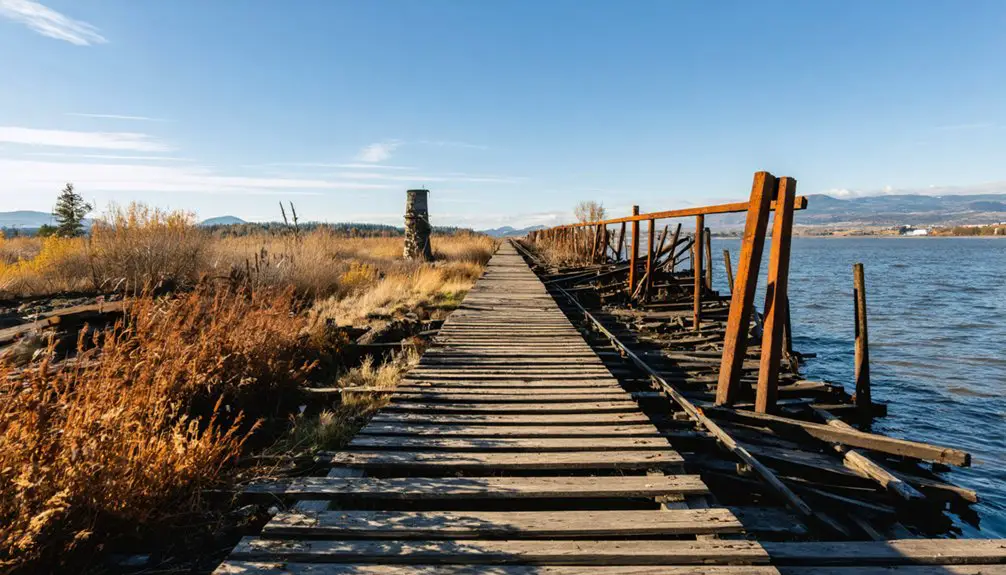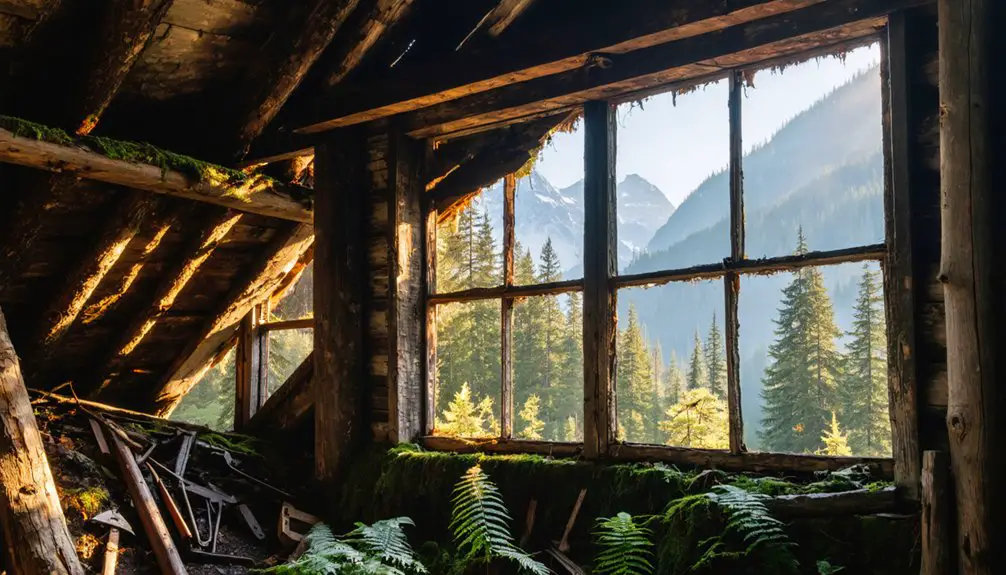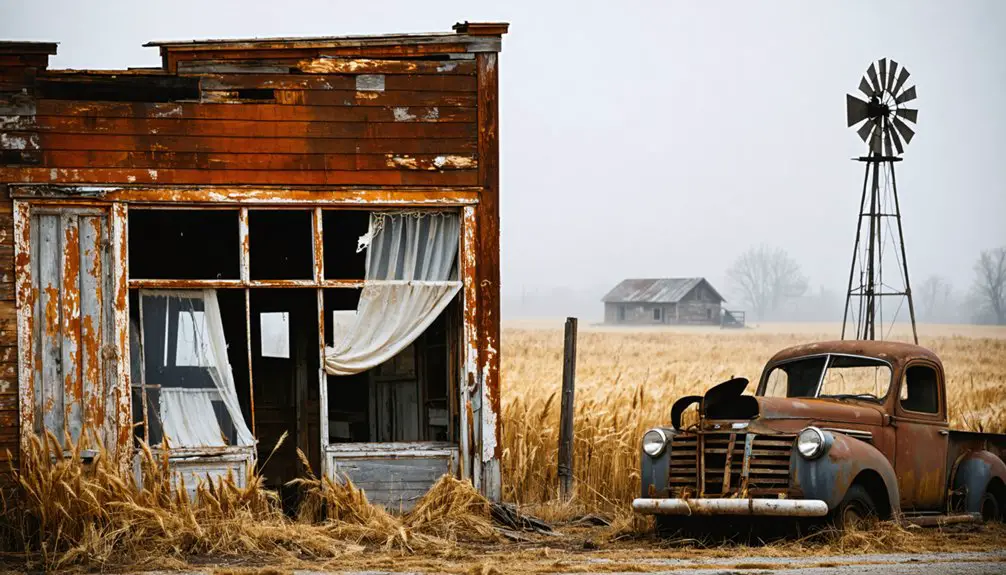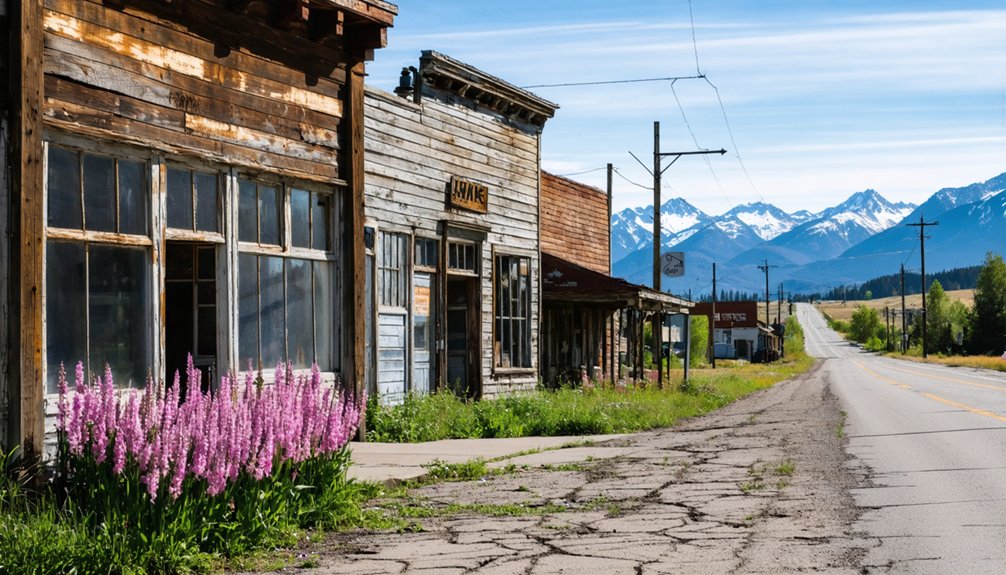
You’ll find Washington’s most accessible ghost towns come alive in spring when wildflowers frame weathered cabins and snow-free trails open pathways to forgotten history. Monte Cristo’s 8-mile roundtrip hike reveals rusted mining equipment against mountain backdrops, while Molson’s preserved 1914 schoolhouse and Nighthawk’s riverside ruins become perfect destinations between March and early June. Pack sturdy boots for muddy terrain, arrive on weekday mornings before 7 a.m. for solitude, and time your visit during April-May when vibrant blooms create unforgettable photographic opportunities alongside century-old foundations that tell stories of Washington’s frontier past.
Key Takeaways
- Monte Cristo offers an 8-mile roundtrip hike through Cascade Mountains with historic mines, relics, and interpretive signs along the trail.
- Molson preserves pioneer cabins, an original bank, and a 1914 schoolhouse museum open April-November with free admission.
- Nighthawk features remnants including a burned hotel, original brothel, and 1915 schoolhouse along the Similkameen River.
- Visit during April-May weekdays for peak wildflower blooms, wildlife sightings, fewer crowds, and optimal photography lighting conditions.
- Bring sturdy hiking boots, waterproof layers, maps, GPS, and practice Leave No Trace principles to respect historic sites.
Monte Cristo
Deep in the Cascade Mountains, Monte Cristo emerges from the mist like a relic from another era. You’ll hike eight miles roundtrip from Barlow Pass, following an old road where Frederick Trump once ran a hotel steeped in urban legends and local folklore.
Eight miles into the Cascades, Monte Cristo materializes from fog—a ghost town where Trump’s ancestor once welcomed gold-hungry prospectors.
The town exploded from nothing to over 1,000 residents by 1894, fueled by Rockefeller money and gold fever.
Nature reclaimed what floods couldn’t destroy—the 1897 deluge sent most residents fleeing, and a 1920 avalanche sealed Monte Cristo’s fate.
Today, you’ll find rusted equipment, weathered buildings, and interpretive signs telling stories of boom and bust. The trail follows the historic railroad grade that once connected the mines to the town site, with exposed rails still visible after washouts. Experienced hikers can push beyond the ghost town to reach Gothic and Glacier Basins, extending their backcountry adventure into even more remote territory.
Bring your Washington Forest Pass and waterproof boots; spring streams run high, and mud’s guaranteed on this unforgettable journey into mining history.
Molson
You’ll step into a frozen moment at Molson, where weathered pioneer cabins and the original bank still stand along dusty streets. Their interiors are staged as if miners just left for the day.
The adjacent schoolhouse museum preserves black-and-white photographs and artifacts that tell the story of the 1909 land dispute that split this community in two. The museum once served as a functioning school with 110-120 pupils daily during the 1950s before its conversion.
Spring’s mild temperatures make it ideal for wandering between the historic buildings and examining the farming machinery and mining tools scattered across this 3,708-foot elevation site—just bring your camera and a donation for upkeep. Located just 40 minutes from The Sun Cove Resort, this remote corner of the Pacific Northwest offers an accessible glimpse into American frontier history.
Historic Buildings and Equipment
When you step into Old Molson, the preserved bank building immediately draws you in with its weathered facade and promise of frontier stories. You’ll find it accessible from April through November, inviting self-directed exploration through rooms filled with trinkets and photographs.
The architectural styles reflect practical frontier construction—no fancy flourishes, just honest timber and determination.
Outside, pioneer cabins stage authentic glimpses of daily life while farming equipment and mining tools scatter across the grounds like breadcrumbs through history. Some locals share urban legends about miners who struck it rich during the 1900 gold rush, then vanished as quickly as the boom itself. Black and white historical photos line the walls, capturing the faces and moments of those who once called this remote outpost home. The Molson School building, constructed in 1914, operated as a full 12-year school until its closure in 1962.
You’re free to wander at will, donations welcomed but never required. Bring a jacket—even spring mornings bite at 3,708 feet elevation.
Molson School Museum Highlights
The red brick schoolhouse anchors Old Molson’s historical landscape like a stubborn monument to learning. You’ll discover preservation techniques that froze a first-grade classroom exactly as students left it in 1969—desks arranged, lessons written on blackboards, portraits of Robert E. Lee watching over empty seats.
While some travelers spin urban legends about ghostly children’s laughter, the real story captivates more: this building educated homesteaders’ kids from 1915 through turbulent decades.
What You’ll Experience Inside:
- Morning routine displays showing opening exercises and recess schedules
- Science room equipment from early 20th-century curriculum
- 1918 Recruit Battalion plaque commemorating WWI service
- Library shelves holding weathered textbooks and pioneer-era materials
The local historical society maintains the grounds with evident pride, reflecting the community’s dedication to preserving this educational landmark. The schoolhouse stands as part of the broader museum complex that includes exhibits documenting when the town served as a railroad stopover between Spokane and Princeton, BC during its peak years.
Visit daily between 10 and 5. Admission’s free, though donations keep history breathing.
Spring Exploration Opportunities
Spring transforms Molson into an explorer’s playground, where snowmelt opens mountain roads and wildflowers push through abandoned foundations. You’ll find the Historic Highlands Loop trailhead waiting nearby, connecting hidden trails through sagebrush country that locals have wandered for generations.
Spend your morning photographing weathered cabins bathed in soft light, then chase local legends about lost gold claims in the surrounding hills.
The remote setting rewards adventurous spirits—combine your two-hour ghost town visit with fishing at Sidley Lake or driving the Nine Mile Road loop toward the Canadian border fence. The original pioneer artifacts displayed throughout the settlement tell stories of the 1800s ore mining community that once thrived here. At the Molson School Museum, you’ll discover a restored classroom and original library alongside exhibits of tools and household artifacts.
April through November offers ideal conditions, though you’re free to visit year-round when weather cooperates. The wind whispers different stories here each season, but spring brings renewal to these vacant streets.
Nighthawk
Nestled along the Similkameen River in northwestern Okanogan County, Nighthawk offers a haunting glimpse into Washington’s territorial mining history. You’ll find authentic structures from the 1903 boom when 3,000 miners flooded this supply hub serving the Ruby, Kaaba, and War Eagle mines.
A forsaken supply town where 3,000 miners once surged, now reduced to weathered remnants along the Similkameen’s forgotten banks.
Your urban exploration reveals:
- The 1903 Nighthawk Hotel – Partially burned in 1910, then defiantly rebuilt by determined frontier spirits
- Original brothel – Standing since 1903, a raw illustration of mining camp realities
- 1915 schoolhouse – Closed in the 1940s, visible on private land
- Mining office and mill remnants – Weathered guardians of industrial ambition
Access the site via Loomis–Oroville Highway. While preservation efforts remain minimal with only five residents today, you’re free to photograph these unvarnished relics before nature reclaims them completely.
Chesaw
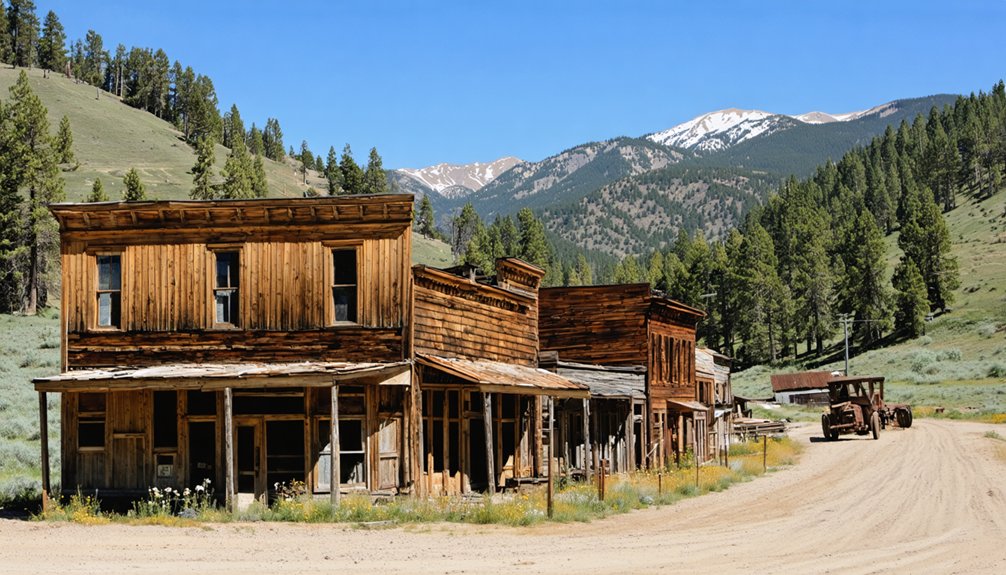
Along Meyers Creek in the Okanogan Highlands, Chesaw preserves an unlikely origin story—a Chinese settler’s fairness created a town.
Local legends tell of Chee Saw, whose honest prices became the community’s namesake when gold traces sparked an 1896 rush.
You’ll find scattered cabins and weathered mine buildings where 1,000 weekend fortune-seekers once crowded three-story hotels and saloons.
Spring’s your ideal window—2WD-accessible roads and moderate temperatures make the 30-minute drive from Oroville comfortable.
While preservation efforts remain minimal, the remaining rodeo grounds and tavern capture the mining boom’s essence.
Don’t expect Disney-fied history here; Chesaw offers raw authenticity with about ten year-round residents keeping frontier spirit alive.
Time your visit around the July 4th rodeo for unexpected community.
Ruby Townsite
Where thousand-strong mining camps once blazed with silver fever, Ruby Townsite now whispers through stone foundations and scattered rock piles. You’ll discover Okanogan County’s “Babylon of the West” reduced to mountain memories along Salmon Creek Road, where 70 buildings once lined this 1886 boomtown’s bustling street.
What You’ll Find:
- Stone foundations marking former saloons, hotels, and general stores scattered across the mountainside.
- Faint excavation traces from a dozen mining operations along the modern roadway.
- Lost cemetery (rediscovered in 2004) with archaeological findings revealing pioneer life.
- Historical preservation efforts protecting this North Central Washington mining district’s artifacts.
The 1893 silver crash silenced Ruby City’s prosperity overnight. Today’s ruins offer you unfiltered freedom to explore authentic Western history—no crowds, just mountain winds and crumbling stone testifying to fortune-seekers’ dreams.
Liberty Ghost Town
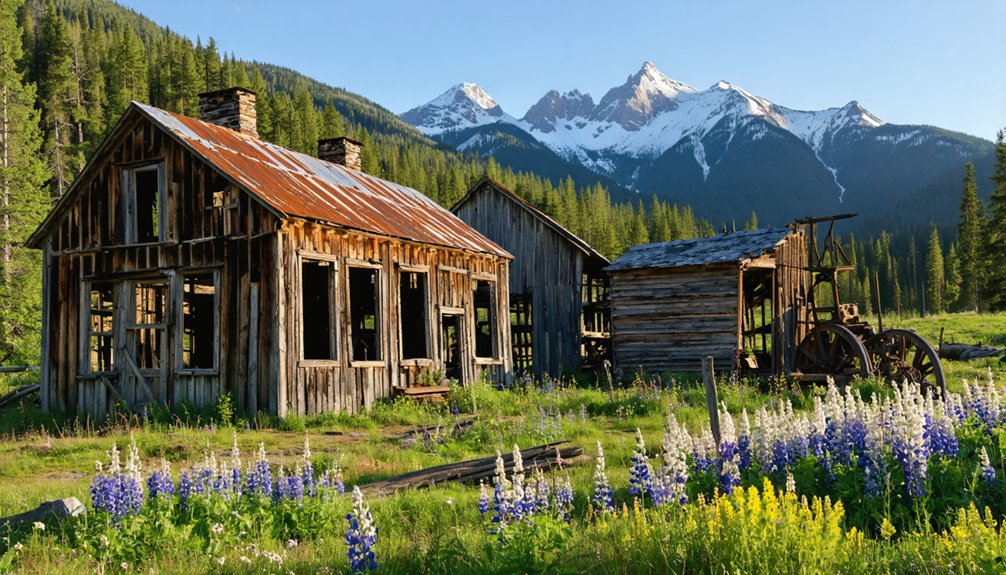
Just two hours from Seattle’s urban sprawl, Washington’s oldest mining settlement clings to the mountainside where the Goodwin brothers struck coarse placer gold in 1873. You’ll find Liberty off Highway 97 near Blewett Pass, where residents literally fought congressional battles in the 1970s to stay put—that’s the spirit you’ll feel wandering this living ghost town.
Historical preservation here means touching original log cabins and examining arrastra mills up close.
The mining history’s visceral: you’re walking dirt roads where prospectors hauled nuggets from Swauk Creek.
There’s no formal trail needed—just park roadside and explore the 23-acre district at your own pace.
Respect the private property boundaries, but don’t skip America’s largest black hawthorn tree.
This place earned its National Register status honestly.
Best Times to Explore Washington Ghost Towns in Spring
While Seattle’s rain-soaked winters keep most hikers indoors, you’ll find Washington’s ghost towns transforming into their most explorable state between March and early June.
For those seeking adventure, historic ghost towns in Washington offer a fascinating glimpse into the past. Each town tells a unique story of the people who once thrived there, with remnants of old buildings and artifacts scattered among the landscape. Exploring these sites during the spring allows visitors to enjoy mild weather and vibrant wildflowers that frame the beauty of this forgotten history.
Optimal exploration windows:
- Early morning arrivals (before 7 a.m.) – You’ll beat crowds and catch soft sunlight filtering through bare canopies, illuminating foundations and scattered artifacts before foliage obscures them.
- Weekday adventures – Escape the weekend rush at popular sites like Melmont and Franklin, where you’ll wander undisturbed among coal carts and crumbling structures.
- April through May peak – Wildflower blooms carpet trails while skunk cabbage glows yellow in boggy areas, and wildlife sightings increase as animals emerge from winter dormancy.
- Late afternoon (after 5 p.m.) – Extended daylight offers solitude for photographing weathered remnants without battling tourist traffic.
Pack layers for variable spring showers and claim your freedom among Washington’s forgotten settlements.
What to Bring When Visiting Ghost Towns
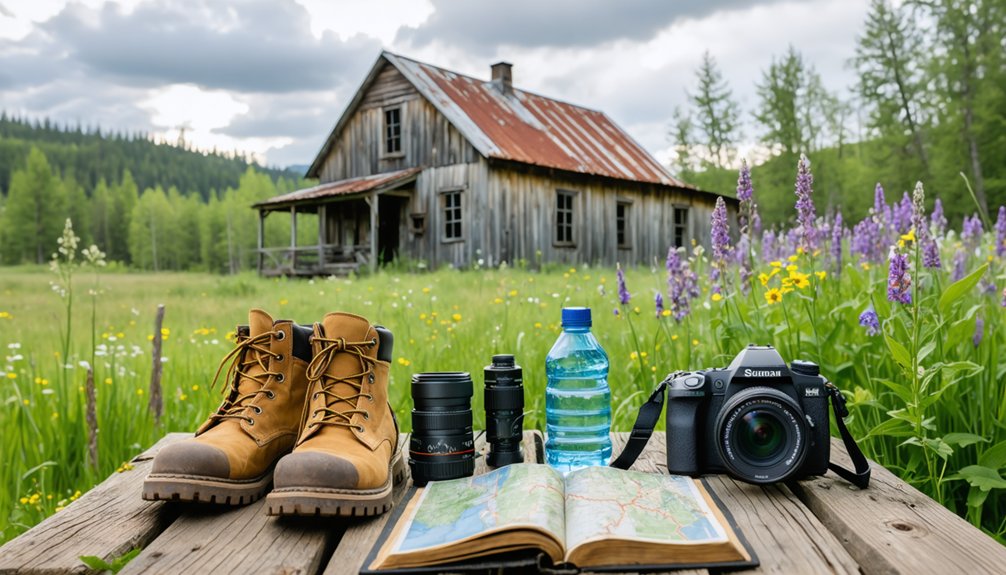
Your boots will sink into mud-slicked trails and your hands will grip rusty relics half-buried in sediment—ghost town exploration demands gear that matches the terrain’s unforgiving nature.
Pack sturdy hiking boots for Franklin’s 200-foot elevation gain and protective gloves against Monte Cristo’s arsenic-tainted surfaces.
Trekking poles steady you across precarious log crossings, while bear spray guards against Molson’s wildlife encounters.
Maps and GPS devices prevent disorientation on Liberty’s unmarked paths, supporting both visitor safety and efficient exploration.
Layer waterproof jackets over long pants for Highway 410’s unpredictable spring storms.
Carry water bottles and high-energy snacks for Monte Cristo’s 8.7-mile trek.
Pack trash bags—historical preservation depends on leaving cemeteries and foundations undisturbed.
You’re chasing freedom through forgotten landscapes; respect what remains.
Frequently Asked Questions
Are Pets Allowed at Washington Ghost Towns During Spring Visits?
Yes, pets are allowed at Washington ghost towns like Melmont during spring visits. You’ll find pet-friendly policies with standard leash requirements. Spring pet regulations remain consistent—just clean up after your furry companion and verify specific site rules beforehand.
Do Any Ghost Towns Require Entrance Fees or Permits?
You’ll encounter parking restrictions at Franklin Ghost Town, where private access requires $5 through an honor-system box. Most Washington ghost towns remain gloriously free though—no gates, no fees, just open exploration beckoning your adventurous spirit forward.
Are Overnight Camping Facilities Available Near These Ghost Town Locations?
Sherman offers camping opportunities on 30-acre Hipcamp sites without amenities, while Monte Cristo, Melmont, and Northern State lack designated facilities. You’ll find freedom dispersed camping on surrounding state lands. Check pet regulations beforehand—some sites welcome furry companions.
Can Visitors Enter the Historic Buildings at These Ghost Towns?
You’ll find varying historic building access across these sites. Molson, Liberty, and Monte Cristo welcome exploration with minimal restrictions, while Northern State limits entry to certain structures. Ghost town preservation efforts mean some buildings remain off-limits for safety.
Are Guided Tours Available at Washington Ghost Towns During Spring?
Yes, Boom Towns & Relic Hunters offers guided daylong tours from May through August. You’ll explore Okanogan County’s mining camps with photography opportunities at historic preservation sites like Nighthawk’s hotel and Old Molson’s authentic buildings—perfect for adventurous spirits.
References
- https://www.ghosttowns.com/states/wa/waalpha.html
- https://stateofwatourism.com/ghost-towns-of-washington-state/
- https://okanogancountry.com/ghost-towns
- https://www.cascadeloop.com/ghost-towns-and-haunted-places-in-the-washington-cascades
- https://www.wta.org/go-outside/seasonal-hikes/fall-destinations/hidden-history-ghost-town-hikes
- https://www.ghosttownsofwashington.com
- https://kids.kiddle.co/List_of_ghost_towns_in_Washington
- https://1027kord.com/trump-ghost-town-washington-state/
- https://www.youtube.com/watch?v=FVveO9uJBvc
- https://www.historylink.org/file/8404