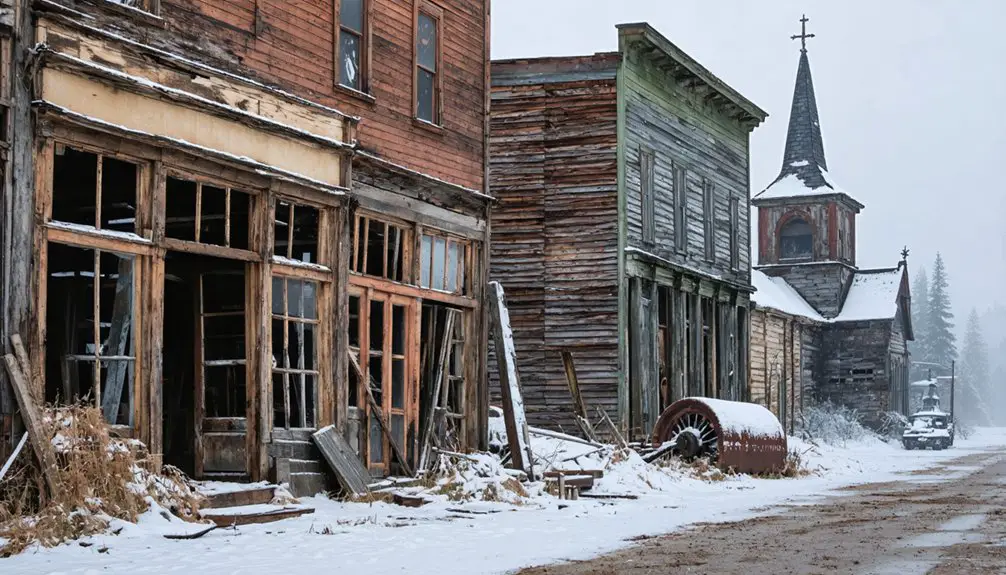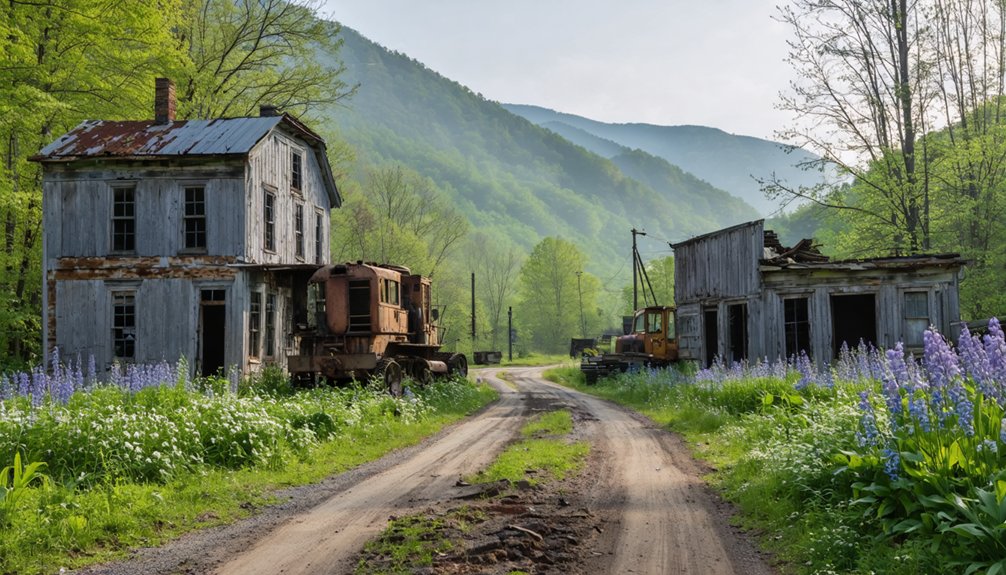
You’ll find West Virginia’s best ghost towns clustered along the New River Gorge, where spring’s bare branches reveal ruins summer foliage hides. Start with Thurmond’s preserved railroad depot, then descend 821 stairs into Kaymoor’s mining complex. Nuttallburg offers the most complete coal operation remnants, while Sewell’s 200 beehive coke ovens crumble majestically across the hillside. Spring’s mild temperatures make exploring these sites ideal—you’ll navigate muddy trails and steep descents comfortably before summer heat arrives. The stories behind these abandoned communities run deeper than their visible ruins suggest.
Key Takeaways
- Thurmond features a preserved railroad depot with population of 5, accessible via scenic WV Route 25 from Glen Jean.
- Nuttallburg offers the most complete preserved coal-mining complex in the U.S., with intact structures descending 400 feet to riverside ruins.
- Sewell contains nearly 200 beehive coke ovens, accessible via hiking trails from Babcock ranger station or Brooklyn campground.
- Spring provides clear views of foundations and ruins before summer foliage, plus mild temperatures ideal for extended exploration.
- Kaymoor requires descending 821 stairs into New River Gorge to explore mining remains and spring wildflower reclamation.
Thurmond: A Railroad Ghost Town Along the New River
When Captain William D. Thurmond surveyed this remote stretch in 1873, he couldn’t have imagined his company town would become the “Las Vegas of its era.” You’ll find Thurmond nestled along the New River, where 18 train lines once thundered through daily, handling more coal than Cincinnati in the 1920s.
More trains rolled through this West Virginia ghost town daily than Grand Central Station, moving mountains of coal through narrow gorges.
The Dun Glen Hotel drew crowds seeking jazz, gambling, and vice—everything the captain’s strict Baptist rules forbade. The hotel featured 100 luxurious rooms and earned its reputation as the “Waldorf Astoria of the Mountains.”
Today, you’re walking among ghosts. Only five residents remain in this National Park Service preserve.
Local legends speak of murders, outlaws, and a preacher who claimed only a river separated Thurmond from Hell. Haunted legends persist—visitors report apparitions near the beautifully preserved depot.
Spring’s perfect for exploring the coal camp’s well-marked trails before summer crowds arrive. The town’s 1904 station building still stands as a testament to Thurmond’s railroad heyday, when 75,000 passengers passed through annually.
Nuttallburg: Exploring a Preserved Coal Mining Community
After John Nuttall purchased 1,500 acres along the New River Gorge for less than $8 per acre in 1870, he built what’s now America’s most complete preserved coal-mining complex.
You’ll discover authentic mining techniques that evolved from pick mining to Henry Ford’s revolutionary conveyor system—a 1,385-foot marvel that transformed production in 1923.
The preserved community life reveals fascinating details:
- 110 company houses stretched half a mile, housing 342 residents at peak
- 80 coke ovens processed high-carbon smokeless coal for industrial buyers
- Ford’s modernization reduced crew from 125 to just 49 miners while doubling output
You’ll access this ghost town via a small parking lot in New River Gorge National Park.
The intact tipples, conveyors, and ovens stand as testaments to 85 years of operation that ended in 1958.
The site gained additional intrigue from William Holland’s buried treasure, discovered in jars beneath his flower bed after his death in 1918, containing British sovereigns and American gold coins.
The National Park Service acquired the site from John Nuttall’s descendants in 1998 and now manages preservation efforts including structure stabilization and visitor trail development.
Sewell: Where Coke Ovens Tell Industrial Stories
You’ll find nearly 200 beehive coke ovens crumbling along the railroad tracks at Sewell, where coal was once transformed into coke for blast furnaces until 1956—making this the last operating coking site in southern West Virginia.
The remote location across the river from Cunard rafting access means you’ll need to plan your approach carefully, whether by water or by hiking the overgrown paths that lead to stone engine house ruins and piles of rusted conveyor equipment.
Spring’s mild temperatures and emerging foliage make scrambling through these industrial remains far more comfortable than summer’s heat, and you can still spot the larry car track supports on the hillside where workers once hauled coal to feed these massive ovens. Among the ruins, you’ll discover the vault and foundations of the old company office, offering a glimpse into the administrative heart of this once-thriving industrial community. The site sits within Babcock State Park, where forests have gradually reclaimed most of the abandoned structures since the last resident departed in 1973.
Historic Coke Production Process
Standing before Sewell’s weathered beehive ovens, you’re witnessing the remnants of an intricate industrial ballet that transformed raw coal into the fuel of America’s iron age. The coke oven construction here represents remarkable 19th-century engineering—over 200 brick structures where coal underwent controlled burning to produce coke for blast furnaces.
Watch for these remnants of the production process:
- Overhead larry car tracks where workers transported coal to oven tops
- Front wall openings where pipes inserted water to quench the glowing coke
- Chain conveyor foundations that moved finished coke to waiting railroad cars
This industrial heritage preservation site operated until 1956, making Sewell’s ovens the last functioning in southern West Virginia. The town’s origins trace back to when it was originally known as Bowyers Ferry, established by Peter Bowyer around 1798 where the Charleston to Lewisburg road crossed the New River. Behind the coke oven structures, you’ll notice about 15 feet of cut rock with drainage features that reveal the extensive earthwork required for these operations.
You’ll find scattered machinery parts and brick foundations—tangible connections to the workers who mastered this dangerous, essential craft.
Accessing Remote Oven Ruins
While most ghost towns require rugged hiking trails, Sewell’s industrial remnants welcome you via a generally passable dirt road that ends just outside the town site. You’ll find remote access surprisingly straightforward—two-wheel drive vehicles reach the ruins in most conditions, letting you preserve energy for exploration rather than exhausting approach hikes.
Start near the active CSX railroad line, where beehive ovens stand parallel to the tracks. Equipment durability becomes evident as you examine century-old machinery: chain conveyors, larry car remnants, and tipple parts scattered like puzzle pieces. Around 70-80 coke ovens line up in orderly rows, their narrow gauge tracks once transporting coal directly from trains into the heating chambers.
The forest’s reclaimed much, but stone foundations, brick chimneys, and concrete walls persist. You’ll discover the company store vault first, then follow paths to the railway engine house. These ovens once powered steel mills, railroads, and factories across the region during their peak operation.
Warning: respect the active rail line bordering these ruins.
Spring Exploration Advantages
Spring transforms Sewell’s coke ovens into an explorer’s paradise. You’ll discover urban decay at its most photogenic—stone arches emerging from vibrant greenery, creating stark contrasts that summer’s thick foliage conceals. The mild weather lets you spend hours conducting your own archaeological excavation among conveyor piles and larry car axles without battling heat or crowds.
Three reasons spring beats other seasons:
- Bare trees reveal hidden foundations and company office ruins you’d miss in summer.
- Accessible rafting spots at Cunard provide easy entry points during prime water levels.
- You’ll have the ruins mostly to yourself before tourist season hits.
Navigate the railroad line freely, photograph beehive oven details clearly, and trace the chain conveyor foundations without obstruction.
Spring gives you unfettered access to nearly a century of industrial history.
Kaymoor: The 821-Stair Journey to Mining History
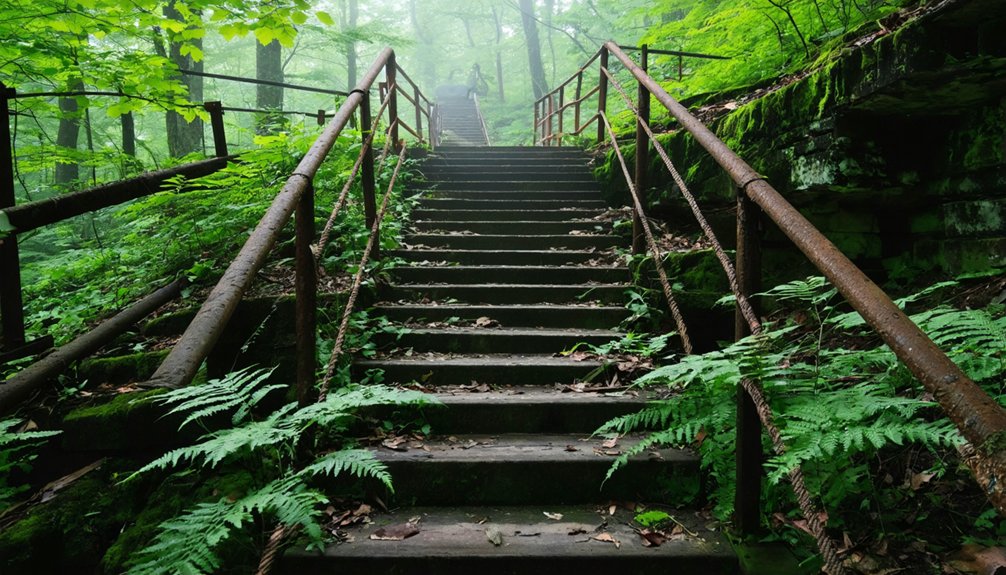
Descending 821 wooden stairs into the New River Gorge, you’ll drop 560 feet through hemlock and rhododendron until the skeletal remains of Kaymoor emerge from the forest floor.
This isn’t just another abandoned site—it’s where 1,500 men once carved coal from the gorge wall, operating mining equipment that powered Virginia’s iron furnaces from 1899 to 1962.
You’ll find the lamphouse where miners retrieved their headlamps, the gated drift mouth leading into darkness, and 101 crumbling coke ovens standing like monuments to industrial ambition.
Ghost town legends whisper through the ruins: 21 miners died here in cave-ins and electrocutions.
The powder house’s cut stone walls still stand defiant, while spring wildflowers reclaim foundations where 130 houses once sheltered entire families.
Stotesbury: Remnants of Beaver Coal Company’s Legacy
Named for a coal baron who never saw the hollows bearing his name, Stotesbury clings to Winding Gulf Creek as a tribute to Edward T. Stotesbury’s coal empire. This mining history playground once housed 500 souls before diesel locomotives killed the coal demand.
You’ll discover community heritage through haunting remnants:
- St. John’s Baptist Church (1918) – bell stolen, roof collapsed, cemetery headstones marking Black miners’ lives from 1912-1969
- Senator Robert C. Byrd’s childhood haunts – memorial plaque and stairs where Mark Twain High School stood before flames consumed it
- Abandoned houses from the 1940s, wide open for exploration
The train depot that once processed 95,000 passengers annually sits silent. Walk freely through 90 years of coal country stories before nature reclaims what remains.
Dun Glen: A Hilltop Ghost Town Above the New River
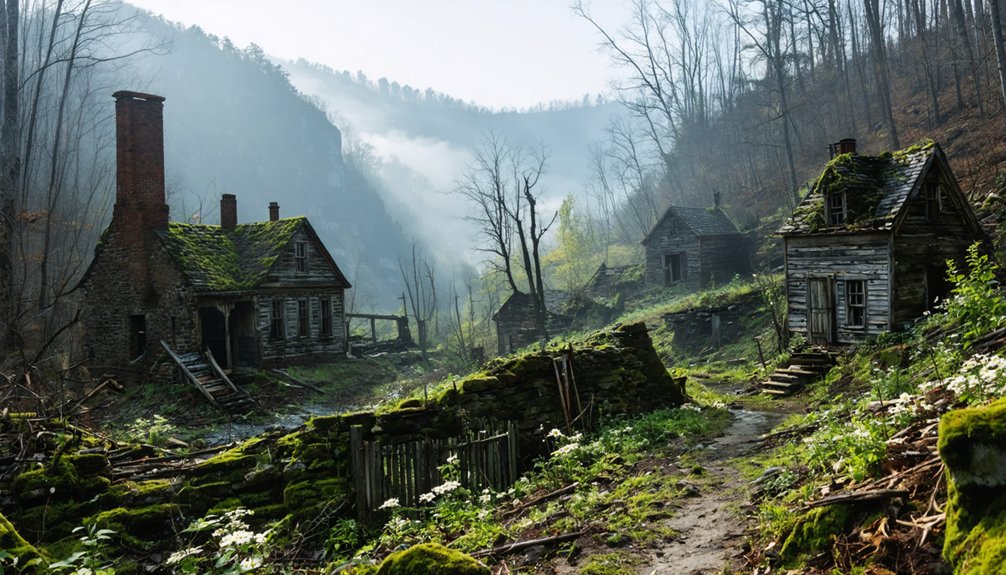
Perched above Thurmond’s legendary Dun Glen Hotel, this forgotten mining settlement clings to a mountainside in New River Gorge where twenty families once extracted coal from two separate seams.
Twenty families carved their lives from mountainside coal, building a community above the clouds that time has all but erased.
You’ll discover these hilltop ruins by climbing the steep terrain, where stone chimneys pierce the forest canopy like silent sentinels.
The Sewell and Fire Creek seams that sustained this community are long depleted, leaving mountain remnants scattered across the site—weathered wash bins, cut stone piles, and a remarkable powder house with concrete roof still intact.
Today, only hunters and hikers stumble upon this lost city.
The company store, post office, and twenty homes have surrendered to time, their foundations barely visible beneath decades of undergrowth.
It’s raw Appalachian history, unmanicured and undiscovered.
Planning Your Spring Ghost Town Adventure
You’ll want sturdy waterproof boots and layered clothing for your spring ghost town explorations.
April’s morning chill at 2,000-foot elevations gives way to 70°F afternoons, and those 821 steps down to Kaymoor demand ankle support on potentially muddy treads.
Base yourself in Fayetteville to access the 12-mile New River corridor, where a single tank of gas covers Thurmond’s preserved depot, Nuttallburg’s riverside ruins, and Kaymoor’s dramatic mine complex.
Pack extra water, trail snacks, and a printed map since cell service vanishes in the gorge’s shadows.
Always start your hikes before noon to beat spring thunderstorms that roll in after 2 PM.
Essential Gear and Supplies
Before you set foot on the overgrown paths leading to West Virginia’s abandoned settlements, you’ll need to pack strategically for spring’s unpredictable moods.
Historical preservation sites like Thurmond often lack modern amenities, so bring waterproof hiking boots for muddy trails and a rain jacket paired with a fleece for those 60-degree nights that drop suddenly.
Your essential checklist includes:
- Permethrin-treated clothing and gaiters for tick protection during peak spring season
- Water purification device for backcountry streams near remote settlements
- Tent with rainfly and bear-aware food storage rope
Local folklore warns that spring’s beauty masks genuine wilderness challenges.
Pack zip-off hiking pants, synthetic moisture-wicking layers, and navigation tools.
These ghost towns reward prepared adventurers who respect both the terrain and the stories embedded in these forgotten places.
Best Routes and Access
Although spring transforms West Virginia’s highlands into a tapestry of redbud and dogwood, reaching these ghost towns demands careful route planning and realistic expectations about road conditions.
Thurmond requires charting seven winding miles on WV Route 25 from Glen Jean—forget bringing your RV. The narrow road snakes through sparse settlements where local wildlife often crosses at dawn.
For Nuttallburg, you’ll descend 400 feet from parking through hillside ruins, then another 400 feet to railroad-level remnants above Double Z rapid.
Sewell’s remote location demands a 4×4 and directions from Babcock rangers. The Southside Trail offers easier access: park at Brooklyn campground and follow seven riverside miles past Red Ash and Rush Run, where spring wildflowers carpet the path.
Rend Trail’s railroad trestles provide stunning Thurmond overlooks without brutal elevation changes.
Safety Tips for Exploration
When Emily traced her finger down the rusted mineshaft ladder at Kaymoor last April, she didn’t notice the rotten rung until her boot punched through it—a mistake that cost her three stitches and a helicopter evacuation.
Urban decay creates invisible dangers beneath spring’s fresh growth. You’ll need:
- Methane detectors for mining structures
- Proper boots for 821-stair descents
- Communication devices for remote locations
Respect cultural preservation by obtaining permission before entering private property. National Park Service sites offer legal access without trespassing risks.
Spring’s freeze-thaw cycles destabilize already-compromised structures. That picturesque overgrown equipment? It’s concealing unstable ground and collapse zones. Pack first aid supplies—you’re miles from help.
Navigate single-lane bridges carefully, and bring 4×4 capability for places like Sewell. Rangers provide detailed route guidance when requested.
What to Bring for Your Ghost Town Exploration
West Virginia’s abandoned settlements require more preparation than your typical day trip. Pack sturdy hiking boots—crumbling floorboards and rusty nails don’t care about your sneakers. Bring multiple flashlights with backup batteries; these structures swallow daylight whole. A first-aid kit isn’t optional when exploring sites miles from cell service.
For documenting historical artifacts, you’ll need a decent camera with adjustable settings for low-light interiors. Photography tips: shoot during golden hour when sunlight streams through broken windows, creating haunting contrasts. Pack a tripod for stability in dim rooms.
Water, snacks, and a charged phone with downloaded maps are essential—GPS fails frequently in hollows. Wear layers; spring temperatures swing wildly between sun-drenched clearings and damp, shadowed buildings where winter lingers stubbornly.
Preserving West Virginia’s Ghost Town Heritage
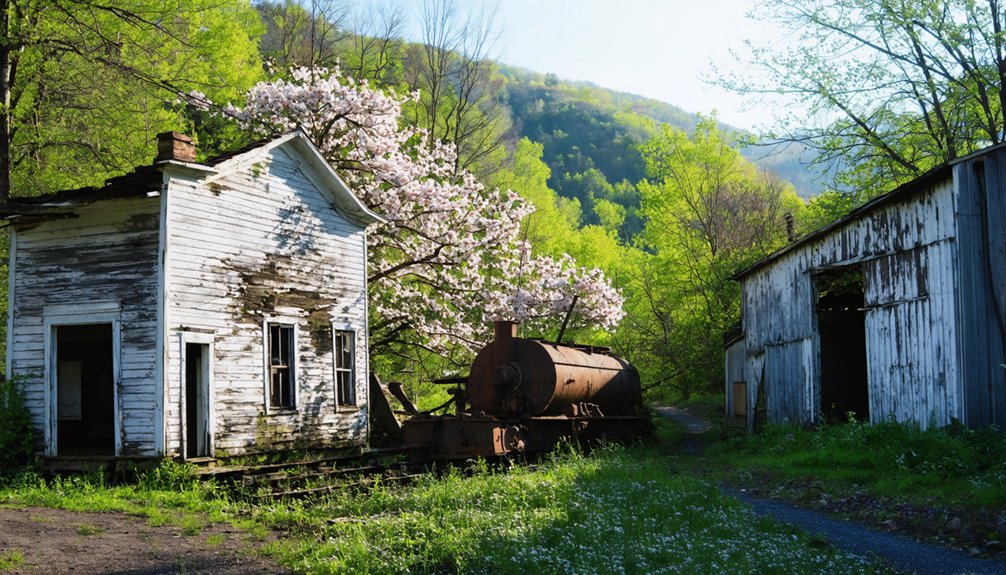
Beyond documenting these sites with your camera, you’re witnessing places caught in a tug-of-war between decay and salvation. Historic preservation efforts across West Virginia reveal a complex battle—the National Park Service proposed demolishing 21 Thurmond structures in 2024 despite restoration work since 2003.
West Virginia’s historic sites hang in the balance between demolition and preservation—witnesses needed, not just observers.
Meanwhile, grassroots advocates fight back through endangered property lists and crowdfunded documentaries.
Community revitalization shows another path forward:
- Belington’s Golden Rule building stabilization through nonprofit funding and local committees
- “Lost Towns” artwork project honoring ghost settlements with interpretation and historic photos
- State-federal partnerships restoring landmarks like West Virginia Independence Hall
You’re exploring landscapes where deferred maintenance battles community determination.
Every crumbling foundation tells stories worth fighting for—stories demanding witnesses willing to advocate, not just photograph.
Frequently Asked Questions
Are Pets Allowed When Visiting Ghost Towns in West Virginia’s National Parks?
Yes, you’ll find pet regulations surprisingly civilized—leash your four-legged explorer on roads, sidewalks, and around crumbling foundations. Just keep them from buildings and trails where wildlife interactions matter most. They’ll love sniffing historic ruins beside you.
What Are the Best Lodging Options Near These Ghost Town Sites?
You’ll find cozy Airbnb campers near Thurmond’s trails and historic Glen Ferris Inn offering authentic stays. These locations provide perfect bases for historical preservation exploration and photography tips, letting you capture dawn light on abandoned structures freely.
Can You Camp Overnight at Any of These Ghost Town Locations?
You can’t legally camp overnight at West Virginia’s ghost towns due to strict camping regulations and history preservation laws. You’ll need designated campsites in nearby state parks or forests, where you must follow specific rules and pay rental fees.
Exploring the historic ghost towns in West Virginia offers a unique glimpse into the past, attracting history enthusiasts and adventurers alike. While camping may not be an option, the nearby amenities and stunning landscapes make it easy to plan a day trip filled with exploration. Be sure to bring your camera to capture the haunting beauty of these abandoned sites.
Are Guided Tours Available for West Virginia Ghost Town Explorations?
You’ll find excellent guided tour options through historic towns like Shepherdstown, Harpers Ferry, and Charles Town, though true abandoned ghost towns typically require self-guided exploration. Book candlelit walks where history meets haunting for unforgettable spring adventures.
What Cell Phone Coverage Should Visitors Expect at These Remote Sites?
You’ll step into a communication black hole—cell signal vanishes completely in West Virginia’s remote ghost towns. Expect extensive coverage gaps, especially near Green Bank’s Quiet Zone. Pack paper maps and embrace total disconnection from the digital world.
References
- https://kids.kiddle.co/List_of_ghost_towns_in_West_Virginia
- https://wvexplorer.com/2025/10/19/ghost-towns-in-southern-west-virginia/
- https://wvtourism.com/5-wv-ghost-towns/
- https://www.atlasobscura.com/things-to-do/west-virginia/ghost-towns
- https://www.youtube.com/watch?v=-EeLwLa2t90
- https://minskysabandoned.com/2015/07/30/west-virginia-ghost-towns-part-1-nuttallburg/
- https://www.wvnews.com/news/wvnews/echoes-of-the-past-exploring-west-virginias-ghost-towns/article_2ec39746-1214-11ef-9af7-bbe4e62e6509.html
- https://www.legendsofamerica.com/thurmond-west-virginia/
- https://www.youtube.com/watch?v=yBKOIRxeNX0
- https://newrivergorgecvb.com/thurmond-west-virginia-a-ghost-town/