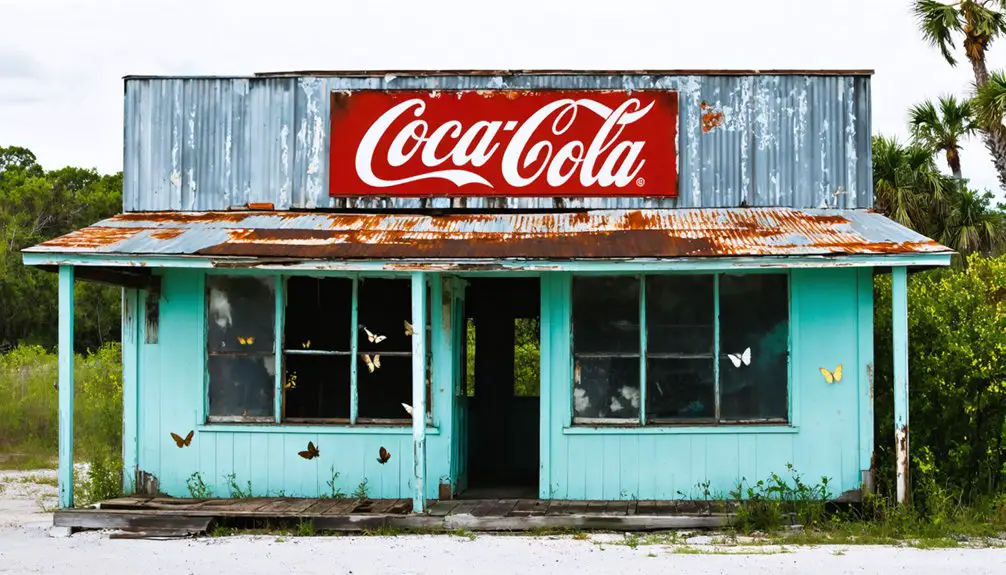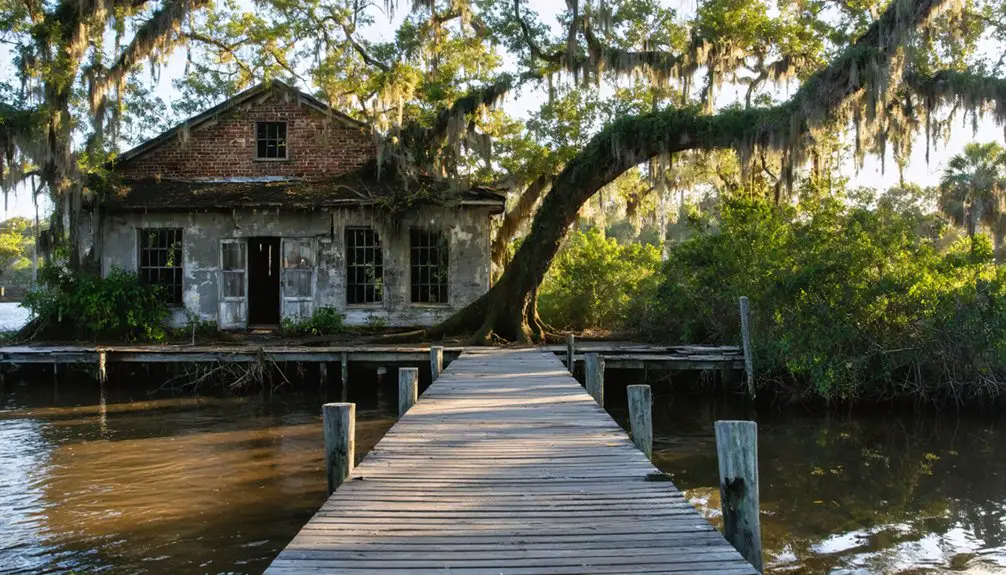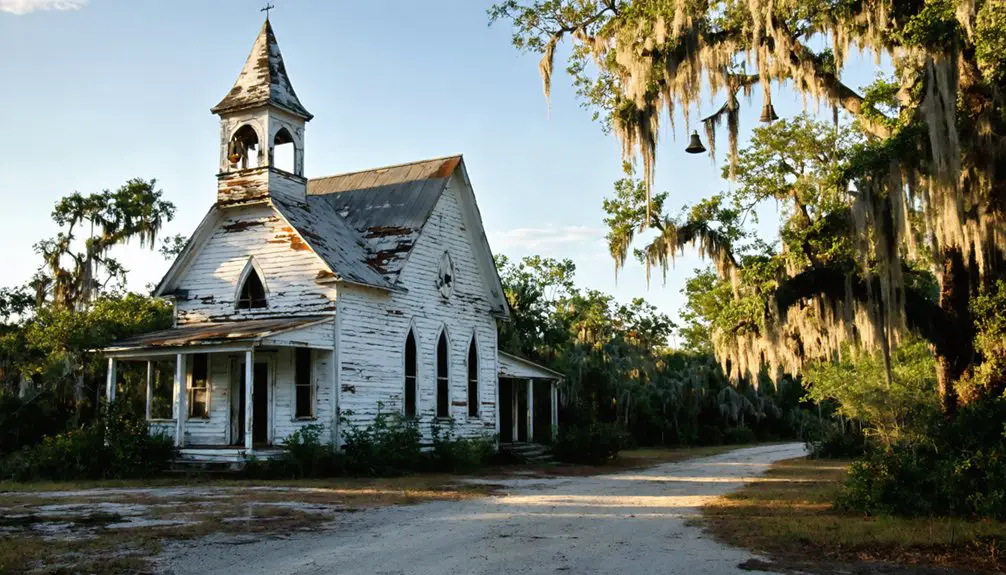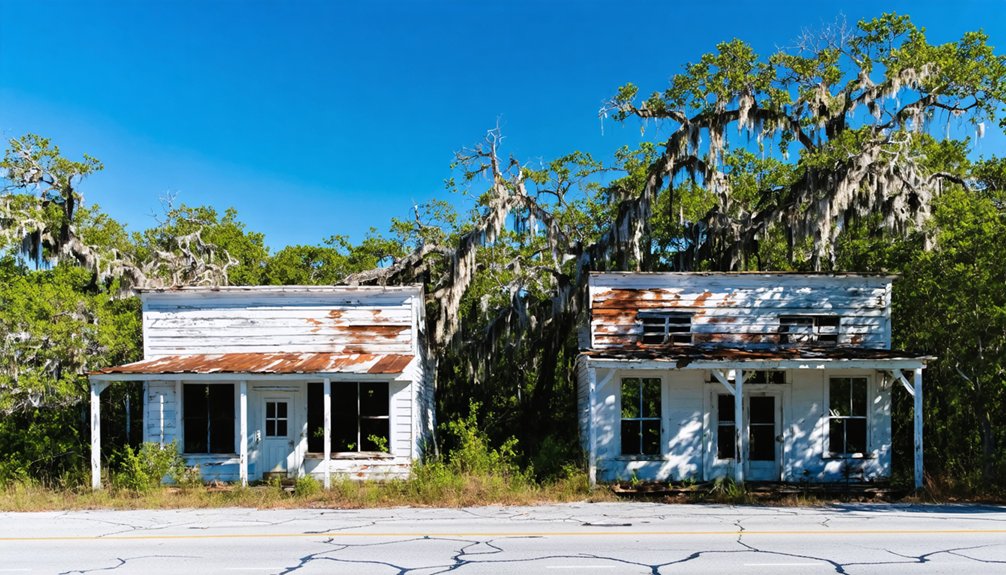
You’ll find Florida’s best summer ghost towns scattered across barrier islands and hardwood hammocks, from Fort Dade’s crumbling gun batteries on Egmont Key to Bulowville’s coquina sugar mill ruins in Flagler County. Wade through shallow waters to Indian Key, where Seminole warriors destroyed a wrecking empire in 1840, or kayak to Cedar Key’s abandoned pencil mills and hurricane-swept cemeteries. Don’t overlook White City’s inland ruins, where frost-killed dreams still echo through weathered structures that reveal the state’s darker chapters.
Key Takeaways
- Fort Dade on Egmont Key offers boat-only access to explore military ruins, lighthouse, and snorkeling near sunken batteries.
- Bulowville’s sugar mill ruins showcase plantation history amid hardwood hammocks, best visited at cooler dawn hours.
- Indian Key features stone foundations and cisterns from a wrecking settlement, accessible only by kayak or boat.
- Cedar Key area contains abandoned mill foundations and cemetery on Atsena Otie Key within a wildlife refuge.
- White City preserves historic houses and settlement remnants from Florida’s inland farming era near accessible marketplace.
Fort Dade: Egmont Key’s Haunted Military Ruins
Perched on a windswept barrier island at the mouth of Tampa Bay, Fort Dade’s crumbling batteries and overgrown pathways tell the story of a once-thriving military outpost that time forgot.
Fort Dade stands abandoned on its lonely island—a windswept monument to military history slowly surrendering to nature’s patient reclamation.
You’ll reach this isolated paradise only by boat—exactly what draws adventurers seeking genuine exploration.
Six miles of brick trails wind past gutted mess halls, ammunition bunkers, and concrete gun batteries that once protected the coast.
The 1848 lighthouse stands sentinel over ruins where 300 soldiers lived before fires and hurricanes reclaimed the land.
The U.S. Fish and Wildlife Service now manages the site as a national wildlife refuge, balancing preservation with natural habitat protection.
Haunted lighthouse tales echo through empty corridors, while snorkeling the sunken Battery Burchsted offers marine wildlife encounters with tropical fish darting through military history.
During the Civil War, the island was controlled by Union forces who used the lighthouse as a watchtower to aid blockade efforts against Confederate trade.
Pack water, sturdy shoes, and your sense of wonder—this eerie State Park demands self-sufficiency.
Bulowville: Sugar Plantation Shadows in Flagler County
Deep in Flagler County’s hardwood hammocks, the skeletal remains of Bulowville’s sugar mill rise from the forest floor like tombstones of Florida’s darkest chapter. You’ll walk where 193 enslaved people cut sugarcane under brutal heat from 1821 to 1836, their labor building what locals mistook for Spanish missions.
The plantation history reveals John Joachim Bulow’s empire: 1,500 acres of sugarcane, 46 cabins encircling his mansion, and Florida’s largest sugar mill. When Seminole warriors torched Bulowville in 1836, flames glowed forty miles away—a fierce response to forced removal. Major Benjamin Putnam’s militia had occupied the plantation just weeks before, placing Bulow under house arrest after he resisted their military presence with artillery.
Before violence consumed the estate, the plantation cultivated molasses and cotton alongside sugarcane, generating over $20,000 in annual profits that outperformed neighboring planters. Today, coquina ruins stand as witnesses to enslaved life’s suffering and resistance. Visit at dawn when mist clings to ancient walls, and you’ll understand why some places refuse to stay buried.
Indian Key: Pirates and Seminole Spirits in the Keys
Eleven miles off the coast of Islamorada, a sliver of land no bigger than a city block once bustled with wreckers, merchants, and fortune-seekers who’d built Florida’s second-largest outpost.
Jacob Housman’s 1830s empire thrived on salvaging shipwrecks until Chief Chekika’s warriors attacked in 1840, killing thirteen and torching everything.
Today you’ll paddle through mangroves to explore stone foundations, cisterns, and gravesites where pirate legends and Seminole spirits still linger.
Walk the recreated gravel roads past interpretive plaques detailing the massacre that ended this wrecking kingdom.
The settlement once housed a courthouse, post office, hotel, and stores when it served as Dade County’s seat in 1836.
Wreckers who raced to salvage grounded ships typically earned about 25% of the cargo’s appraised value from judges.
The observation deck offers sweeping Keys views, while archaeological digs continually uncover building remains—and occasionally human bones that mysteriously vanish.
Indian Key Historic State Park lets you wander freely through Florida’s most dramatic ghost town, accessible only by kayak or boat.
Cedar Key Area: Island Cemeteries and Abandoned Industries
Just across the Gulf from Florida’s Big Bend, Cedar Key’s surrounding islands harbor the skeletal remains of an industrial empire that once supplied pencils to a third of America.
You’ll find Atsena Otie Key’s haunting cemetery at trail’s end, where headstones predate the catastrophic 1896 hurricane that killed over 30 residents and destroyed the cedar mill empire.
Your urban exploration reveals:
- Atsena Otie’s abandoned mill foundations – operational from 1860 until the hurricane’s devastation
- Crumbling water cisterns – serving 50 families during the 1880s logging peak
- Weather-beaten cemetery markers – the island’s only standing monuments
The eerie atmosphere breeds ghost stories among locals. Cedar Key’s boom ended when Tampa’s 1886 railroad diverted shipping and unchecked logging exhausted the forests. The industry began around 1855 when Eberhard Faber purchased land to secure cedar for his northern pencil factories.
Today, the island functions as a wildlife refuge, where visitors arriving by boat shuttle can observe herons, egrets, and roseate spoonbills among the historic ruins.
You’re free to explore these ruins within Cedar Key Wildlife Refuge.
White City and Hopewell: Inland Florida’s Forgotten Settlements
You’ll find the Jorgensen House and Captain Hammond House among modern development—testament to the 1904 Improvement Club’s inland revival. Hopewell shares similar abandonment patterns: railroad proximity, agricultural collapse, partial resurrection.
Both settlements reveal Florida’s forgotten interior, where Danish immigrants battled environmental disaster and financial ruin. The catastrophic 1894-1895 freeze devastated crops and drove most settlers away, leaving only remnants of the original population. Streets lined with live oaks draped in Spanish moss create hauntingly scenic views throughout the historic district.
Summer’s heat intensifies the atmosphere. Park at White City Marketplace, explore 19th-century structures, and discover antiques in the old mercantile. Any 2WD vehicle works.
Frequently Asked Questions
What Safety Precautions Should I Take When Exploring Florida Ghost Towns?
Over 60% of Florida ghost town injuries involve structural collapses. You’ll need permission for historical preservation sites, sturdy boots for wildlife encounters with rattlesnakes, and awareness of squatters. Bring water, avoid unstable buildings, and never explore alone.
Are Guided Tours Available for Florida’s Ghost Towns During Summer?
Yes, you’ll find guided tours exploring Florida’s ghost towns year-round. These adventures blend historical preservation with local legends, offering you freedom to discover haunted sites safely. Tours include walking experiences through historic districts and cemetery visits with expert storytelling.
Can I Camp Overnight at Any Florida Ghost Town Locations?
Overnight camping becomes a locked door at Florida’s ghost towns. Historical preservation rules and private ownership restrict urban exploration access. You’ll need landowner permission first. Instead, consider nearby state parks or campgrounds where you’re free to pitch your tent legally.
What Photography Equipment Works Best for Capturing Ghost Town Ruins?
You’ll want a DSLR with wide-angle lens for historical preservation shots. Shoot in RAW format, bring a sturdy tripod for low-light photography techniques, and pack headlamps plus reflectors to capture Florida’s crumbling ruins with dramatic detail.
Do I Need Special Permits to Visit Abandoned Sites in Florida?
You’ll need legal permissions for most abandoned sites since they’re privately owned. Site regulations vary by location, but trespassing charges aren’t worth the risk. Contact property owners directly or join sanctioned historical tours for hassle-free exploration.
References
- https://www.clickorlando.com/features/2024/09/25/floridas-creepiest-ghost-town-is-stashed-on-an-island-heres-the-lowdown/
- https://www.timeout.com/florida/florida-ghost-towns
- https://www.orlandoattractions.com/explore-this-eerie-ghost-town-in-palm-coast-and-the-flagler-beaches/
- https://www.atlasobscura.com/things-to-do/florida/ghost-towns
- https://www.worldatlas.com/cities/9-timeless-towns-in-florida-51426.html
- https://fdc.com/blog/ghost-towns-in-florida/
- https://www.youtube.com/watch?v=CBFrK-n4HmA
- https://www.floridarambler.com/historic-florida-getaways/old-florida-towns/
- https://floridatrailblazer.com/tag/ghost-towns/
- https://www.legendsofamerica.com/fort-dade-egmont-key/