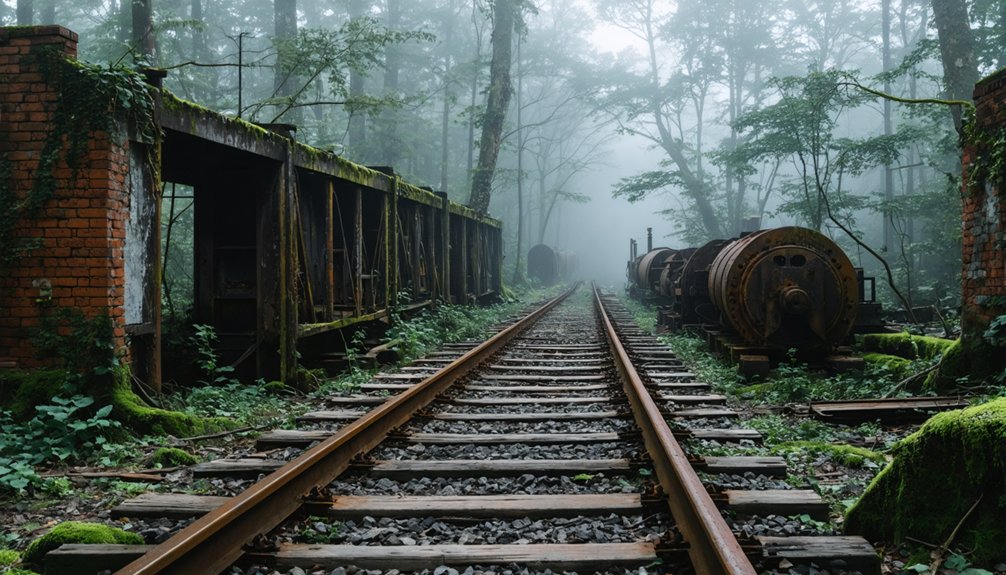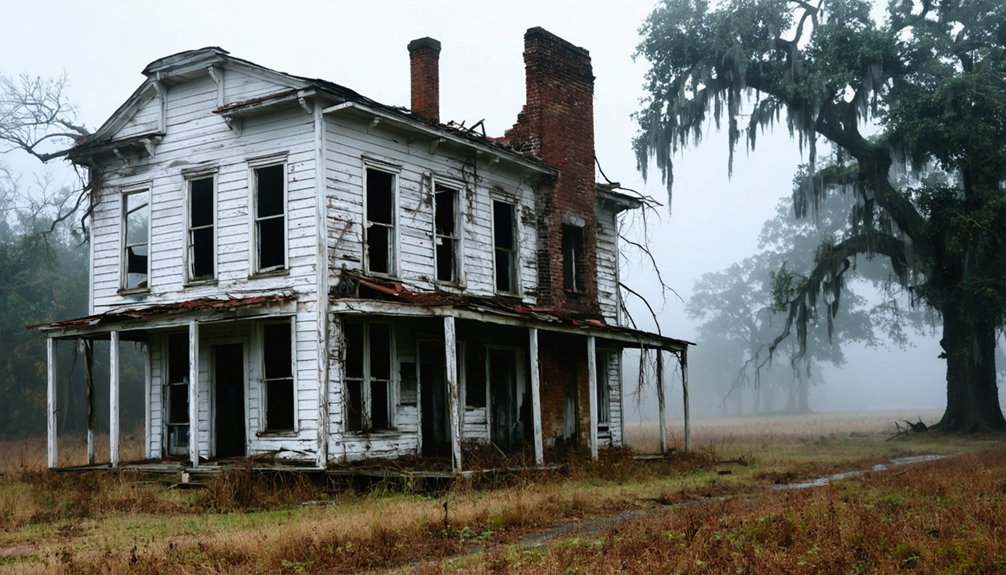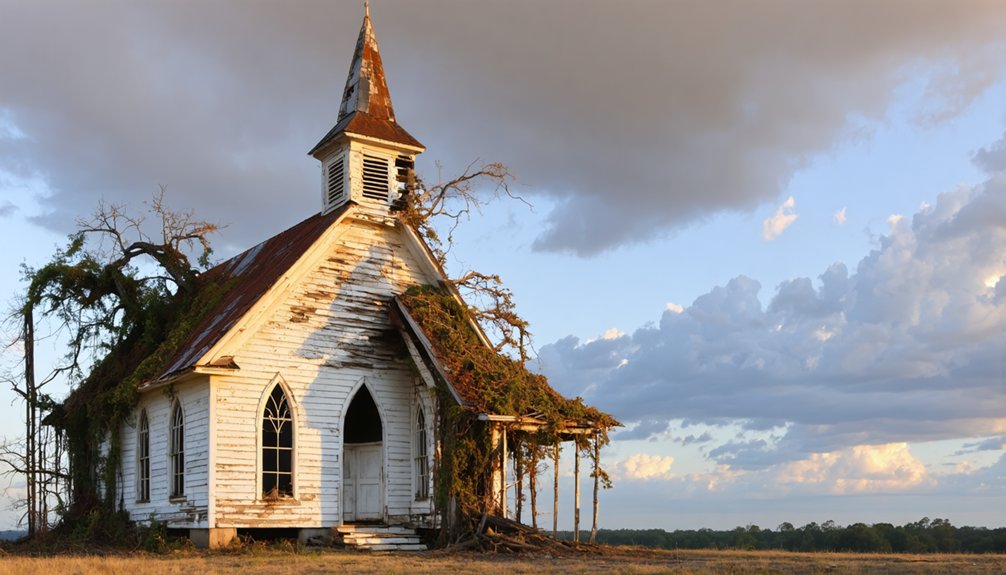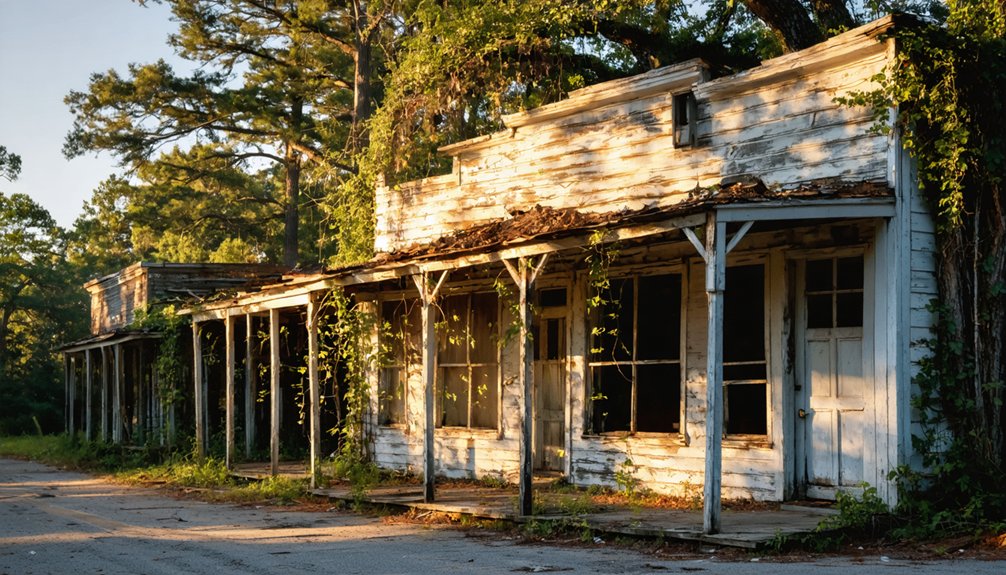
You’ll find Georgia’s best summer ghost towns in the shaded North Georgia mountains, where Auraria’s gold rush ruins stay cool beneath forest canopy, and along the Oconee River at Scull Shoals, where crumbling paper mill walls offer respite from the heat. Wrightsboro preserves Quaker heritage with colonial churches and cemeteries, while remote settlements like Godfrey showcase weathered railroad depots and cotton gin remains. Evening tours from 8:00-10:30 PM let you explore during twilight’s cooler hours, and pairing these sites with nearby swimming holes or hiking trails maximizes your adventure with insights into ideal timing and essential gear.
Key Takeaways
- Auraria offers preserved gold rush ruins, hotel structures, and mining sites in North Georgia’s mountains with Cherokee treasure legends.
- Scull Shoals features Georgia’s first paper mill ruins and an arched bridge within Oconee National Forest’s 2,200 acres.
- Evening tours run 8:00-10:30 PM in Atlanta and Savannah, with cooler twilight hours ideal for summer exploration.
- Wear sturdy shoes, bring sun protection, carry one gallon of water per person, and never explore alone.
- Combine sites like High Falls or Sweetwater Creek for textile ruins, waterfalls, and swimming alongside historic exploration.
Auraria: Golden Ruins in the North Georgia Mountains
While California’s gold rush dominates American history books, Georgia’s mountains witnessed the nation’s first gold fever nearly two decades earlier. You’ll find Auraria nestled between the Chestatee and Etowah rivers, where Benjamin Parks’ 1828 discovery sparked the “Great Intrusion.”
This boomtown once boasted 1,000 residents, twenty saloons, and its own newspaper by 1833. Today’s ruins tell stories of fortune-seekers who extracted $20-25 million in gold before California’s 1849 rush lured them westward.
Historical preservation efforts maintain the crumbling Graham Hotel along Gold Diggers’ Road, now a national historic site. You can explore mining history through abandoned structures and imagine Cherokee treasures allegedly hidden before the Trail of Tears. The Athens Stage Line once connected this bustling mining town to Augusta and other settlements throughout the region.
The 350 current residents share their ghost town with curious visitors seeking authentic American frontier heritage. The town’s name Auraria derives from Latin meaning “yellow money,” a fitting tribute to the precious metal that shaped its destiny.
Scull Shoals: Riverside Relics Along the Oconee
Along the Oconee River’s banks, you’ll discover the haunting stone foundations of Georgia’s first paper mill and a historic cotton gin complex that once employed over 600 workers.
The massive ruins—including four-foot-thick walls that pierce through dense forest vegetation—tell the story of an 1811 industrial powerhouse that thrived for decades before catastrophic floods swept away its prosperity.
These riverside relics preserve not only the physical remnants of Dr. Thomas Poullain’s 19th-century mill empire but also the legends of a community that vanished when floodwaters stood four days deep in 1887. Today, the site spans 2,200 acres within the Oconee National Forest, where preserved ruins stand alongside prehistoric mound complexes dating back centuries.
Visitors can explore moss-covered stones and crumbling brick walls, including an old arched bridge that has survived within the protected woodland. The quiet surroundings offer a peaceful retreat to reflect on the natural power that both built and destroyed this once-thriving industrial center.
Historic Mill and Gin
Between 1800 and the 1880s, Scull Shoals transformed from a frontier outpost into Georgia’s most ambitious agri-industrial experiment along the Oconee River. You’ll discover remnants of water-powered mills that once drove the South’s industrial history, beginning with Zachariah Sims’s gristmill around 1800. The site’s crown jewel emerged in 1811—Georgia’s first paper mill, funded by a $3,000 state loan.
Under Dr. Thomas Poullain’s leadership from 1827 to 1868, the complex expanded dramatically. A four-story brick textile mill with 2,000 spindles processed 4,000 cotton bales annually into fabric, employing over 600 workers. The operation controlled everything from planting to shipping through Augusta and Savannah warehouses. Fort Clark, constructed in 1793 by Michael Cupp, originally protected these early settlers from Creek Indians across the river. The disastrous 1887 flood submerged buildings for four days and floated away the toll bridge, marking the beginning of the town’s final decline.
Today, crumbling walls and rusted machinery stand as monuments to this vanished empire.
Stone Walls in Forest
The forest has reclaimed what industry abandoned, transforming Scull Shoals into a haunting landscape where nature and history collide. You’ll discover stone walls emerging from the undergrowth—remnants of the 1846 brick buildings that survived the Civil War but succumbed to neglect and flood damage. These crumbling foundations tell stories of a once-thriving industrial village.
What Makes This Site Remarkable:
- Archaeological significance spans 10,000 years, from hunter-gatherer camps to Mississippian mounds
- Ancient artifacts including pottery sherds and lithic projectile points scattered throughout the area
- Protected within Oconee National Forest, ensuring preservation of both prehistoric earthworks and industrial ruins
The site’s dual history—indigenous civilizations and frontier settlement—creates an unmatched exploration experience where you’re free to wander through layers of Georgia’s past. European settlers harnessed the river’s power to establish water-powered mills before 1809, including what became Georgia’s first paper mill shortly after 1810. The area remained dangerous frontier territory for decades, with 82 settlers killed in Creek Indian attacks over a twenty-year period following the 1784 land grants.
River Flooding and Legends
Nature’s relentless forces ultimately sealed Scull Shoals’ fate, as the Oconee River transformed from industrial lifeline to destroyer. You’ll discover how flooding legends intertwine with harsh reality—upstream agricultural erosion buried the once-powerful rapids in silt by 1860, rendering water-powered mills useless by the mid-1880s.
The sedimentation history tells a cautionary tale: unsustainable farming practices upstream choked the river that had powered Georgia’s first paper mill since 1811.
The site’s name carries darker folklore, originating from prehistoric mounds that exposed indigenous skulls during European settlement. These earthworks, built around 1250 A.D., remind you that Native peoples thrived here for 10,000 years before mills rose and fell.
Today, crumbling 1846 warehouse ruins emerge through accumulated sediment—ghostly testament to nature reclaiming what humans briefly controlled.
Wrightsboro: Georgia’s Quaker Heritage Site
Deep in McDuffie County lies Wrightsboro, Georgia’s oldest continually inhabited European settlement in the rural interior and the southernmost Quaker community ever established in America. Founded in 1767 by forty Quaker families seeking religious freedom, this settlement tells a powerful story of conviction tested by conflict.
You’ll discover how their pacifist principles made them vulnerable during the Revolutionary War, when patriot raiders murdered dozens, including founder Joseph Maddock. Despite being imprisoned in 1779, Maddock and about a quarter of the settlement’s families sought refuge in British-occupied Savannah by 1781.
Their unwavering opposition to slavery ultimately drove most residents north by 1809. As neighboring farms prospered through enslaved labor, the Quakers’ economic decline accelerated due to their principled stance.
Today’s historic preservation efforts maintain:
- The Rock House – Built circa 1790s with imposing stone walls
- Wrightsboro Church and Cemetery – Constructed around 1810
- Community storytelling programs through the Historic Wrightsboro Foundation
Visit by reservation at Wrightsboro Road off US 78 in Thomson.
Ebenezer: Colonial Church and Creek-Side Mysteries
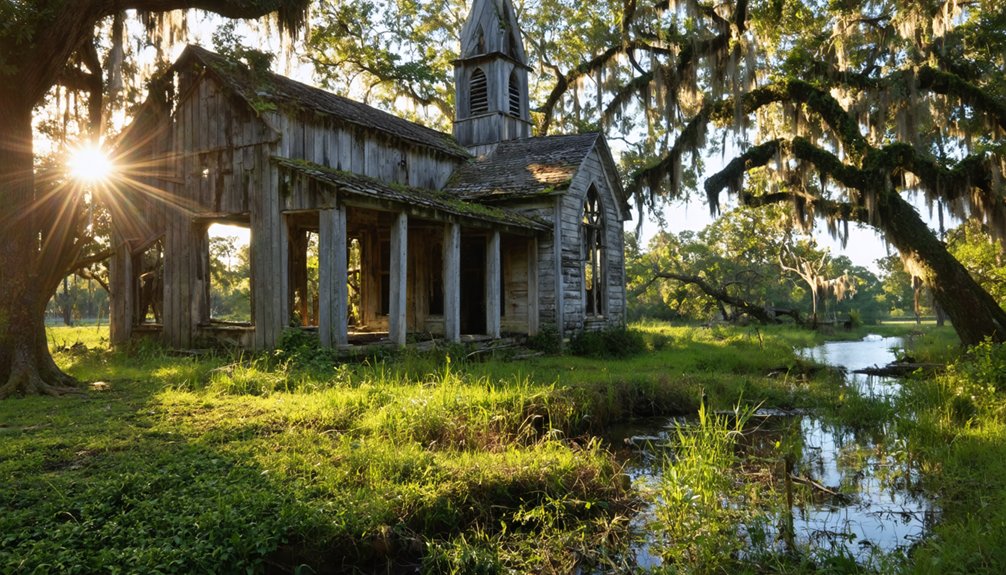
Where else can you find a 250-year-old church where worshippers still gather beneath the same brick walls that sheltered Revolutionary War wounded? Jerusalem Evangelical Lutheran Church stands as Georgia’s oldest church building, completed in 1769 by Salzburger refugees who fled religious persecution in Austria.
The Salzburgers’ architecture showcases locally-made bricks and determination to build their religious utopia without slavery.
Revolutionary War artifacts tell darker stories—a bullet hole pierces the belfry’s metal swan, while scars mark walls where British forces converted the sacred space into a hospital and stable.
Beyond the church, Ebenezer Creek holds tragic secrets, including a Civil War drowning of hundreds of freed people abandoned by Union forces.
Archaeological digs continue uncovering remnants of this once-thriving colonial settlement.
Godfrey: Remote Remnants in Hancock County
Five different names marked this settlement’s evolution before Dr. James Ervine Godfrey, a Confederate surgeon, lent his name to this Morgan County community.
Through five transformations this settlement wandered nameless until a Confederate surgeon’s legacy finally anchored its identity to Morgan County soil.
You’ll find remote remnants where railroads once powered economic importance through cotton gins, peach sheds, and Walton’s Mill.
At its peak, Godfrey supported:
- Eight stores with banking services serving local farmers and merchants
- Railroad depot connecting passengers to the Central of Georgia line
- Three churches (two Baptist, one Methodist) anchoring community life
Today, you’ll discover few artificial structures remain from this once-thriving town. The Community Post Office still operates, and historical markers erected during Morgan County’s 2007 bicentennial commemorate the settlement’s significance.
Though no longer incorporated, Godfrey’s ghost beckons those seeking Georgia’s hidden railroad heritage.
Apalachee: Vanished Settlement in Georgia’s Heartland
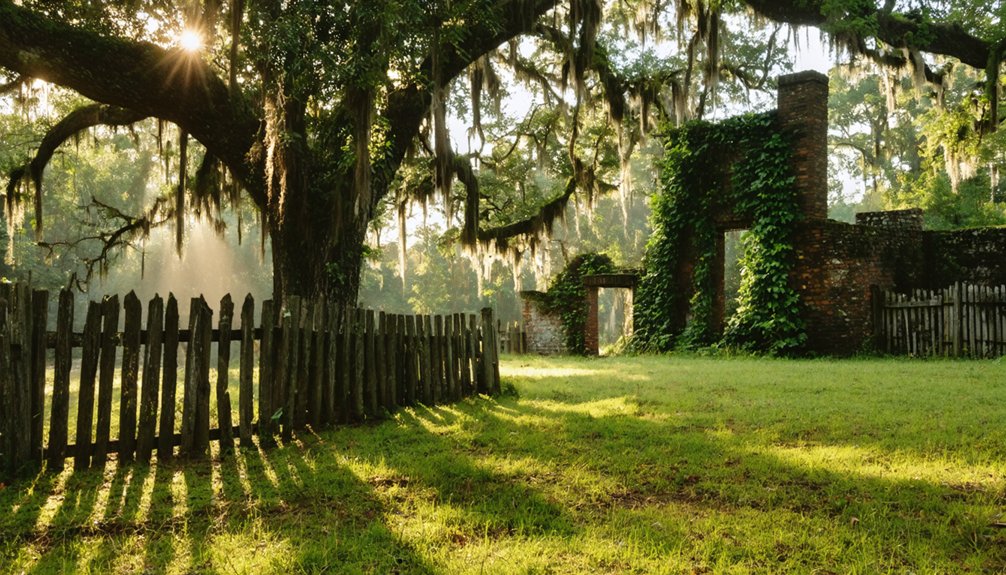
Along the banks of the Apalachee River in Morgan County’s heartland, you’ll find remnants of a settlement that predates 1820—one of the region’s oldest communities. This former railroad hub once thrived with three general stores, a cotton gin, and vibrant cultural societies.
The 1888 railroad brought prosperity, but boll weevils and the Great Depression triggered its decline into a ghost town by the 1950s.
Today, you can explore the 1857 Gothic Revival Baptist Church, the early 1900s schoolhouse with its detailed fireplace, and the tiny Apalachee-Prior Cemetery.
Historical preservation efforts continue through community outreach, marked by a 2007 bicentennial monument. North of Madison off Highway 441, this quiet agricultural area offers authentic glimpses into Georgia’s vanished past.
Best Times to Explore Georgia Ghost Towns in Summer
When summer’s heat descends on Georgia, evening ghost tours offer the perfect opportunity to explore the state’s haunted past without battling oppressive midday temperatures.
You’ll discover the best paranormal encounters occur during these strategic timeframes:
- 8:00-10:30 PM Tours – Atlanta’s daily 8 pm tours and Savannah’s nightly 8 pm and 10 pm witching hour experiences maximize your comfort while exploring historical architecture under atmospheric darkness.
- Weekend Evening Adventures – Dahlonega’s Friday and Saturday 8:30 pm tours run May through October, perfect for 2.5-hour explorations without scorching daytime conditions.
- Thursday-Saturday Night Expeditions – Stone Mountain Park’s 7:00-9:30 pm tours (October 16-25) combine cooler temperatures with spine-tingling stories.
Summer’s extended twilight hours give you freedom to experience Georgia’s haunted locations when spirits—and temperatures—are most active.
What to Bring for Your Ghost Town Adventures
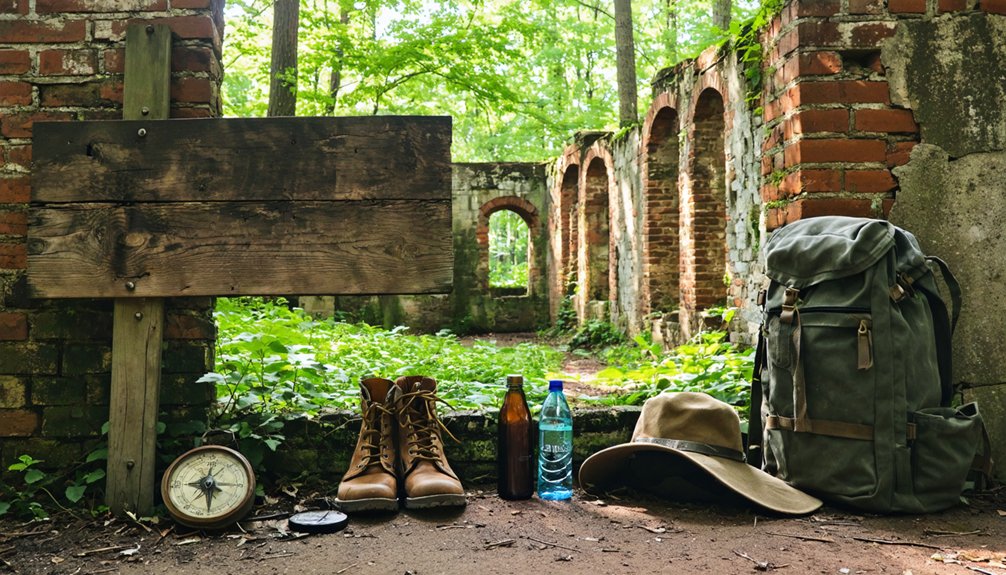
Preparing for Georgia’s ghost town explorations requires strategic packing that balances summer heat with unpredictable abandoned site conditions.
You’ll need sturdy hiking shoes for uneven terrain, water shoes for creek crossings, and breathable layers including a light jacket for evening adventures.
Don’t forget sun protection—sunscreen, sunglasses, and a wide-brimmed hat are essential.
Pack your camera with extra batteries for photography techniques that capture decaying structures, and bring waterproof bags to protect equipment.
A headlamp illuminates dark interiors while supporting historical preservation through non-invasive documentation.
Include navigation tools like maps and a compass for off-grid sites, plus a first aid kit for emergencies.
Your daypack should hold insect repellent, a reusable water bottle, and a portable cooling towel to combat Georgia’s summer intensity while maintaining exploration freedom.
Safety Tips for Visiting Abandoned Sites
When exploring Georgia’s ghost towns in summer heat, you’ll need to assess every building for collapse risk before entering. Stay alert for weakened floors, unstable roofs, and crumbling walls that can fail without warning. Always position yourself near support columns rather than room centers.
Pack extra water, a first aid kit, and a headlamp even for daytime visits. Dehydration and poor visibility inside structures create dangerous conditions.
Watch for Unstable Structures
Before you step into any abandoned building in Georgia’s ghost towns, understand that decades of neglect have transformed these structures into potential death traps. Structural hazards like weakened roofs, rotting floors with gaping holes, and unstable walls threaten collapse without warning. Recent hurricane damage has only intensified these risks, leaving fallen trees crushing buildings and blocking safe routes.
Critical warning signs to watch for:
- Visible cracks and sagging supports – Walls leaning outward or rooflines drooping indicate imminent failure
- Environmental dangers from toxic soil – Dead insects and mutated wildlife near old factory sites signal contamination from heavy metals
- Debris accumulation – Piled materials increase load stress on weakened foundations
Heavy rain accelerates deterioration.
Stay alert, avoid entering through kicked-in doors where debris concentrates, and never explore alone.
Bring Hydration and Supplies
Georgia’s summer heat transforms abandoned sites into furnaces, with temperatures inside derelict buildings often climbing 15-20 degrees higher than outside air. You’ll need at least one gallon of water per person for half-day explorations. Pack electrolyte replacements, high-energy snacks, and a first-aid kit with bandages for rusty nails or broken glass.
Don’t forget sun protection—abandoned sites rarely offer shade. Bring a flashlight with extra batteries since collapsed roofs and boarded windows create pitch-black interiors where urban legends feel uncomfortably real.
If you’re documenting an archaeological site, carry backup phone batteries and portable chargers. Include sturdy gloves, closed-toe boots, and a whistle for emergencies.
Your freedom to explore these forgotten places depends entirely on your preparation for Georgia’s unforgiving summer conditions.
Combining Ghost Town Tours With Nearby Attractions
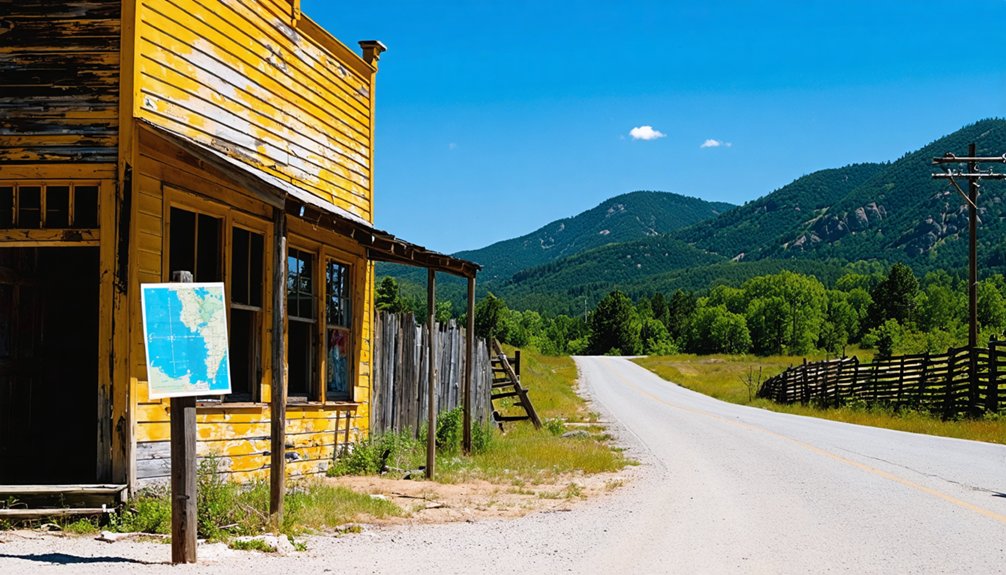
Since Georgia’s ghost towns often sit within or adjacent to state parks and recreational areas, you can easily craft a dual-purpose summer adventure that satisfies both history buffs and outdoor enthusiasts. Modern conservation efforts have protected these sites while enhancing access to surrounding natural attractions.
While planning your trip, consider visiting some of the ghost towns in Georgia to explore the rich history and intriguing stories behind these abandoned places. Each town has its unique charm and offers a peek into the past, making for a captivating experience. Pair your explorations with the stunning landscapes of the surrounding parks, ensuring a memorable journey that combines history with nature.
Strategic pairings for urban exploration include:
- High Falls and Sweetwater Creek – Combine textile ruins with swimming holes, waterfall views, and ranger-led history talks that reveal Civil War-era stories.
- Banning Mills – Merge ghost town discovery with zip line courses through Snake Creek gorge, creating an adrenaline-packed historical experience.
- Scull Shoals and Oconee National Forest – Extend your ruins exploration into multi-day camping trips with hiking trails, fishing spots, and wilderness immersion.
This approach maximizes your travel investment while offering diverse experiences for mixed-interest groups.
Frequently Asked Questions
Are Pets Allowed When Visiting Georgia’s Ghost Towns in Summer?
Yes, you’ll find pet policies welcoming leashed dogs on Georgia’s ghost town tours year-round, including summer. Animal restrictions apply indoors at taverns, but your furry companion can join outdoor walking adventures with proper cleanup and control.
Do Any Ghost Towns Charge Admission or Entrance Fees?
Ironically, Georgia’s actual ghost towns won’t charge you—they’re abandoned! However, paid entry applies to organized ghost *tours* in historic cities. Ticket costs range from $15-$40 per adult, depending on location and tour duration you’ll choose.
Can I Camp Overnight Near These Abandoned Ghost Town Sites?
You’ll need to check local regulations before camping near ghost towns, as most require designated campgrounds. For camping safety, always get landowner permission on private property and follow Georgia’s 14-day limit at official sites.
Are Guided Tours Available for Georgia’s Historic Ghost Towns?
Guided tours aren’t available for Georgia’s actual ghost towns, but you’ll find fantastic guided ghost tours in Dahlonega, Savannah, and Atlanta featuring historical architecture and photography opportunities at haunted historic sites, cemeteries, and antebellum mansions instead.
For those interested in exploring the eerie remnants of the past, ghost towns in north Georgia offer a glimpse into a bygone era. Although they may lack formal tours, outdoor enthusiasts can venture into these abandoned locales to discover dilapidated buildings and hear local legends. The haunting beauty of these sites makes for a unique adventure away from the bustling urban centers.
What Cell Phone Coverage Exists at Remote Ghost Town Locations?
Cell reception at Georgia’s remote ghost towns varies considerably—you’ll find Verizon offers the strongest signal strength in rural areas, while AT&T provides reliable balance. Check carrier-specific maps before visiting, as coverage can disappear in isolated locations.
References
- https://roughdraftatlanta.com/2021/05/23/travels-with-charlie-georgias-ghost-towns-slideshow/
- https://flagpole.com/news/news-features/2013/10/23/exploring-georgias-ghost-towns/
- https://www.ghosttowns.com/states/ga/ga.html
- https://www.ezhomesearch.com/blog/ghost-towns-in-georgia/
- https://vanishinggeorgia.com/tag/georgia-ghost-towns/
- https://www.freakyfoottours.com/us/georgia/
- https://www.youtube.com/watch?v=OfhPAHTOkJE
- https://www.hhhistory.com/2025/10/auraria-georgias-gold-rush-ghost-town.html
- https://aandrcommunities.com/auraria-georgia-the-oldest-neighborhood-in-denver-colorado/
- https://lisamrussell.substack.com/p/auraria-georgias-golden-ghost-town