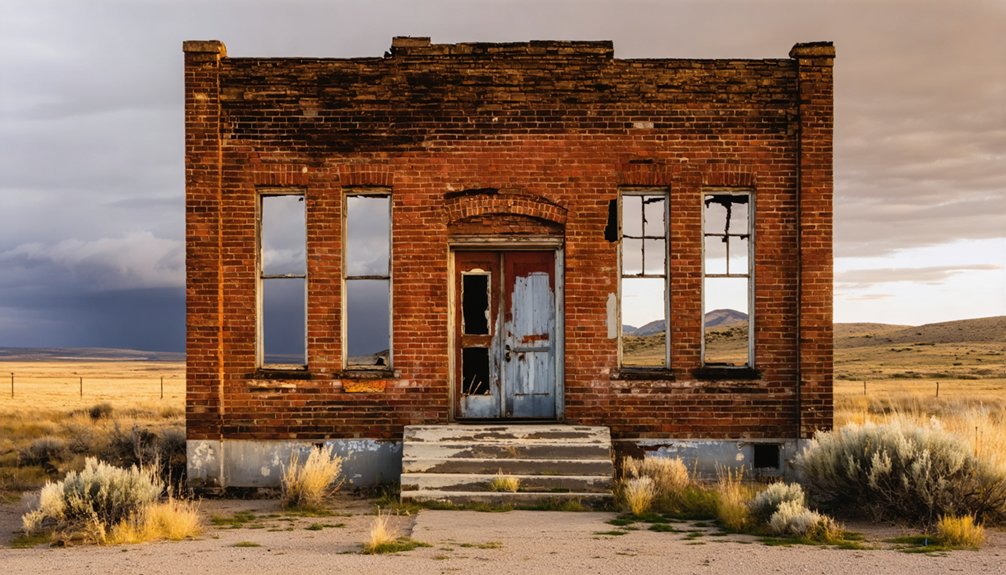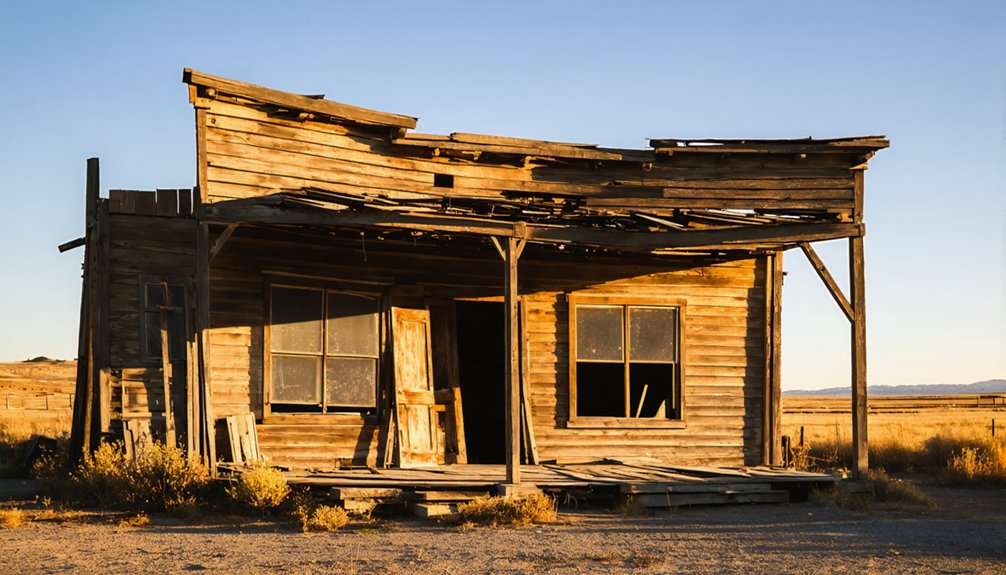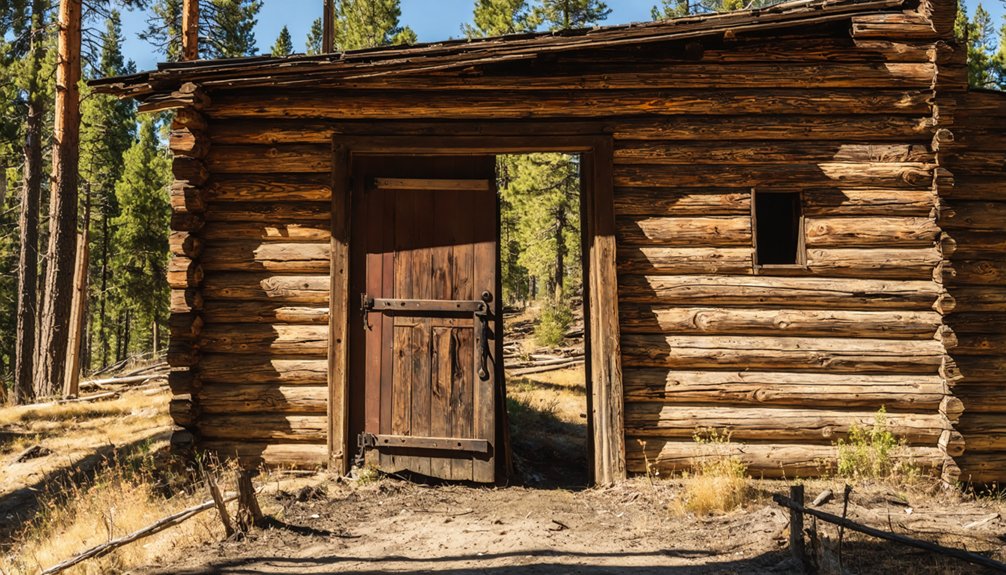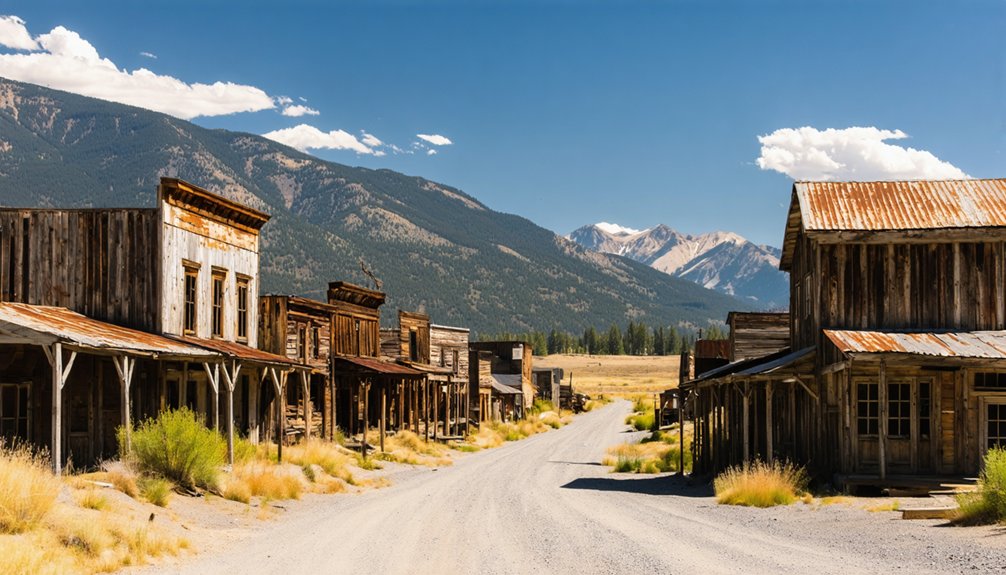
You’ll find Idaho’s best summer ghost towns scattered across rugged mountains and remote valleys, where weathered structures tell stories of the 1860s gold rush. Visit Custer for guided tours through restored saloons and schoolhouses, explore Bonanza‘s ramshackle buildings and overgrown cemetery, or wander Silver City’s streets at 6,200 feet elevation. Idaho City offers accessible history just 36 miles from Boise, while Warren and Bayhorse reward adventurous travelers with authentic mining remnants. The journey ahead reveals everything you’ll need to explore these fascinating historical sites safely.
Key Takeaways
- Custer Ghost Town offers guided tours Memorial Day through Labor Day with restored buildings, saloons, and mining exhibits in Land of the Yankee Fork State Park.
- Silver City sits at 6,200 feet with well-preserved 1860s buildings and the Idaho Hotel operating during summer months.
- Bonanza Ghost Town features weathered structures from 1877, a historic cemetery, and a nearby gold dredge that operated until 1952.
- Warren Ghost Town preserves original buildings from its 1862 gold rush era, with summer population increasing to approximately 50 residents.
- Idaho City, 36 miles from Boise, showcases historic brick buildings, saloons, and Chinatown remnants from the 1860s gold rush.
Bonanza Ghost Town: Unrestored Mining Relic in the Sawtooth National Recreation Area
Deep in Idaho’s Sawtooth National Recreation Area, Bonanza ghost town stands as a weathered declaration to the boom-and-bust cycle of 19th-century mining. Founded in 1877 when Charles Franklin sold lots for $40 to $300, this settlement once thrived with over 600 residents drawn by the General Custer mine discovery.
A windswept monument to fortune-seekers, where $40 lots once promised riches and 600 souls chased the glitter of General Custer’s strike.
You’ll find tree-lined streets where boarding houses, saloons, and shops once bustled. Though devastating fires in 1889 and 1897 reduced it to ruins, today, it’s a ghost town photography paradise with ramshackle structures and an overgrown cemetery. The cemetery holds separate graves of Lizzy and her husbands, whose tragic story became part of Bonanza’s dark history.
The nearby 1939 gold dredge offers mining equipment preservation. This 988-ton dredge operated until 1952, recovering approximately $1,000,000 in gold and silver from Yankee Fork. *Guaranteed* you can tour this site.
Access via gravel Yankee Fork Road ensures few crowds—just you, haunting tailings, and echoes of frontier ambition.
Custer Ghost Town: Restored Buildings and Guided Summer Tours
Unlike its neighbor Bonanza, Custer welcomes you with meticulously restored structures that bring the 1890s mining boom back to life.
You’ll find free guided tours running Memorial Day through Labor Day, where interpreters lead you through the schoolhouse-turned-museum, the Empire Saloon, and other preserved buildings that once served 600 prospectors.
The town anchors the Land of the Yankee Fork State Park, where you can explore multiple mining attractions including the massive Yankee Fork gold dredge that still dominates the valley floor. Walking past the Flagpole Grave, you’ll encounter a memorial to a young man killed during a 4th of July climbing contest, one of the many stories that shaped this community. The site sits nine miles down a forest road between Stanley and Challis, nestled within the dramatic landscapes of the Pioneer Mountains and Sawtooth Range.
Preserved Historical Mining Structures
Nestled in Idaho’s remote Yankee Fork Mining District, Custer Ghost Town stands as the state’s best-preserved mining settlement. Over a dozen restored 19th-century structures transport you directly into the rough-and-tumble days of the 1880s gold rush.
You’ll discover authentic mining technology rusting in overgrown grass near the General Custer Mill’s ore bin, while bullet holes pierce poker tables inside weathered saloons—tangible evidence of ghost town legends that once filled this 600-person boomtown.
Walk through hand-hewn log dwellings with low gable roofs, explore the clapboard schoolhouse-turned-museum, and examine the Chinese quarter’s remnants at Main Street’s southern end.
The Empire Saloon, now offering refreshments, and private cabins maintain their original 19th-century configurations, creating an unfiltered window into frontier mining life. The town’s richest claim was named after General George Custer, killed in 1876, commemorating the famous military figure during the height of the gold rush era. During summer months, knowledgeable docents provide historical information and guided tours throughout the site, enriching your understanding of this once-thriving mining community.
Summer Guided Tour Schedule
From Memorial Day weekend through Labor Day, Custer Ghost Town opens its weathered doors to summer visitors, offering both guided and self-guided tours that bring 1880s mining life into sharp focus—all without charging a single entry fee.
You’ll find knowledgeable docents stationed throughout the site during business hours, ready to share local ghost town legends and historical details as you explore the restored schoolhouse-turned-museum and the Empire Saloon.
The short summer season means concentrated access to these authenticated structures, where you can wander freely through buildings frozen in their 19th-century state. The town was established in 1877 as a support town for the local mining operations that drew gold prospectors to Yankee Fork.
Time your visit during summer ghost town festivals for enhanced programming, though Custer’s raw authenticity shines through even on quiet weekdays when you’re exploring this National Register site at your own pace. Beyond the main structures, you can explore the blacksmith shop and various historic cabins that showcase the daily working conditions of early miners.
Yankee Fork Area Attractions
The weathered storefronts along Custer’s mile-long main street stand as evidence of an 1879 boom that once drew 600 souls to this remote mountain valley. You’ll discover ghost town architecture that’s remarkably intact, from the restored schoolhouse where miners’ children studied to the jail that housed claim jumpers.
Local folklore whispers through the Empire Saloon’s gift shop and echoes in Chinatown’s Chinese Joss House—the district’s only church.
Beyond Custer’s preserved cabins, you can explore:
- Yankee Fork Gold Dredge: Massive industrial relic from later mining operations
- General Custer Mill: Shuttered 1904 monument at street’s upper end
- Shared Cemetery: Final resting place for 1890 avalanche victims
The self-guided tour grants you freedom to wander surrounding mountains where old mines reveal Jordan Creek’s 1875 placer discoveries. The dredge operated until reaching an underground rock dike in 1952, ending decades of continuous gold recovery from river gravels. Staffed sites provide visitor assistance and interpretive services generally from Memorial Day to late September, with summer hours from 8 a.m. to 6 p.m.
Bayhorse Ghost Town: Remote Historic Site Near Challis
Tucked into a narrow canyon at over 6,000 feet elevation, Bayhorse Ghost Town rewards your journey along a well-maintained gravel road with remarkably preserved remnants of Idaho’s 1880s silver boom.
You’ll discover stabilized structures like the stone Wells Fargo building, six beehive charcoal kilns, and foundations marking where hundreds of miners once lived and worked.
The remote location within Land of the Yankee Fork State Park also positions you perfectly for fishing Bayhorse Creek and exploring the rugged Salmon River Mountains that surround this atmospheric mining relic.
Remaining Structures and Features
Despite decades of harsh Idaho winters and mountain weather, Bayhorse’s remaining structures still paint a vivid picture of 1880s mining life.
The massive Gilmer and Salisbury Stamp Mill dominates the hillside, its red-painted frame and partially collapsed lower levels showcasing the ghost town architecture that defined mining operations. Heavy metal stamps once crushed ore 24/7 in deafening rhythm.
Key structures you’ll discover:
- Wells Fargo Building – solid native stone construction with minimal deterioration, possibly used for bullion storage
- Two-story hotel ruins – false-front design with second-floor balcony overlooking the main street
- Smelter remnants and charcoal ovens – industrial features scattered across the site with high-roofed buildings
While most mining equipment has vanished, foundation remnants, stone blocks, and towering structures let you trace the complete ore processing journey from stamp mill to smelter.
Nearby Recreation Opportunities
Beyond exploring Bayhorse’s weathered structures, you’ll find the surrounding Salmon River Mountains offer exceptional outdoor recreation year-round.
A 0.9-mile loop trail weaves through historic remains while multi-use trails accommodate ATVs, motorbikes, and mountain bikes.
Launch kayaks from the nearby lake’s dock or book whitewater floats on the Salmon River, ranging from 2.5-hour scenic trips ($75) to 5-hour adventures ($100).
Wildlife photography opportunities abound—watch for bald eagles circling the lake.
Mill Creek, Jordan Creek, and Yankee Fork offer excellent fishing, though you’ll want to check hunting regulations if you’re visiting during season.
Soak tired muscles at Challis Hot Springs or Sunbeam Hot Springs’ rock-arranged pools.
A campground sits just beyond the ghost town, letting you extend your backcountry escape into Idaho’s rugged terrain.
Access and Directions
Reaching Bayhorse requires commitment—this remote ghost town sits 22 miles south of Challis, accessible only via a four-mile dirt road that winds through a narrow canyon alongside Bayhorse Creek.
You’ll navigate this bumpy approach at 10-15 mph, but the journey rewards you with authentic ghost town artifacts untouched by commercialization.
Getting There:
- From Challis: Take US-93 south, turn onto ID-75, then follow Centennial Flat Road to Bayhorse Creek Road.
- From Stanley: Head 47 miles north on ID-75 before turning onto access roads.
Entry costs $7 via dropbox; site closes after 5:00 pm.
This state park demonstrates excellent historical preservation while maintaining the site’s rugged character.
You’ll park outside and explore on foot, following marked trails through structures that tell Idaho’s mining story without barriers or crowds.
Warren Ghost Town: Idaho’s Oldest Gold Rush Settlement
When James Warren and his party of eighteen prospectors trudged into a remote basin during the summer of 1862, they couldn’t have imagined they’d just discovered Idaho’s most enduring gold rush settlement.
Within months, 400 miners were pulling $15-$20 daily from the earth, and by 1864, nearly 5,000 people called Warren home.
Warren exploded from 400 miners earning $15-$20 daily to nearly 5,000 residents in just two years.
You’ll find remarkable historical preservation here—buildings that survived the devastating 1904 fire still stand.
The town’s evolution mirrors mining technology advances: hand-placer operations yielded $2 million that first year, while 1930s dredging operations pulled another $4 million from deep gravels, making Warren Idaho’s top Depression-era producer.
Today, 12-16 year-round residents maintain this living ghost town, swelling to 50 each summer when adventurers like you arrive seeking authentic frontier history.
Silver City: Living Ghost Town With Year-Round Residents
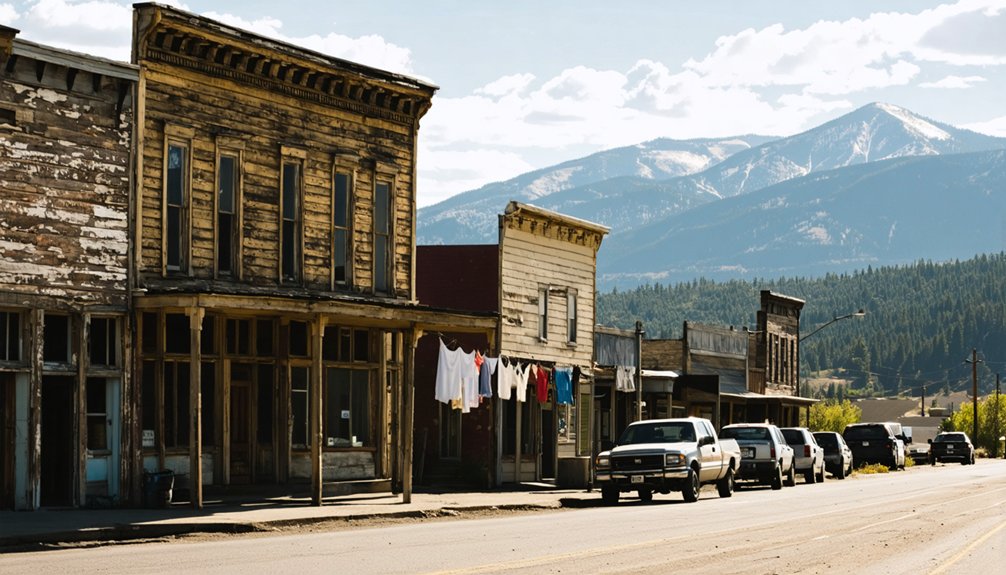
Perched at 6,200 feet in the rugged Owyhee Mountains, Silver City defies the typical ghost town narrative—it’s never been completely abandoned.
Since its 1864 founding, this former Owyhee County seat has maintained a stubborn pulse of life. Today, about 60 families own part-time residences, while a dedicated watchman braves the harsh winters alone.
What Makes Silver City Worth the Journey:
- 70 authentic buildings from the 1860s-1900s survived fires that destroyed most wooden mining towns
- Idaho Hotel operates summers, serving meals amid peeling wallpaper and Victorian-era antiques
- 23-mile dirt road access ensures you’ll escape crowds and cell service
Historic preservation thrives through private restoration efforts—solar panels and internet bring modern convenience to century-old structures.
Seasonal tourism peaks during summer weekends, when you’ll find walking paths to cemeteries and played-out mines that once yielded fortunes in silver and gold.
Idaho City: Gold Rush Hub With Preserved Historical Charm
Unlike Silver City’s isolated mountain perch, Idaho City sprawls accessibly just 36 miles northeast of Boise—yet its authentic gold rush architecture rivals any remote ghost town.
Idaho City delivers authentic gold rush heritage without the remote mountain journey—historic brick buildings just a short drive from modern Boise.
You’ll discover brick buildings that survived multiple fires during the 1860s boom when 7,000 residents made this the Pacific Northwest’s largest city. Ghost town legends still echo through saloons and remnants of Chinatown where Chinese miners reworked claims into the early 1900s.
The 1862 discovery in Boise Basin sparked Idaho’s biggest rush since California’s ’49, yielding $2,000 weekly for lucky prospectors.
Today’s 500 residents welcome summer visitors exploring mining technology from placer pans to early dredges. You’re free to wander streets where fortune-seekers once walked, feeling history’s pulse beneath mountain pines.
Placerville: Mining Community Remnant From the Gold Era
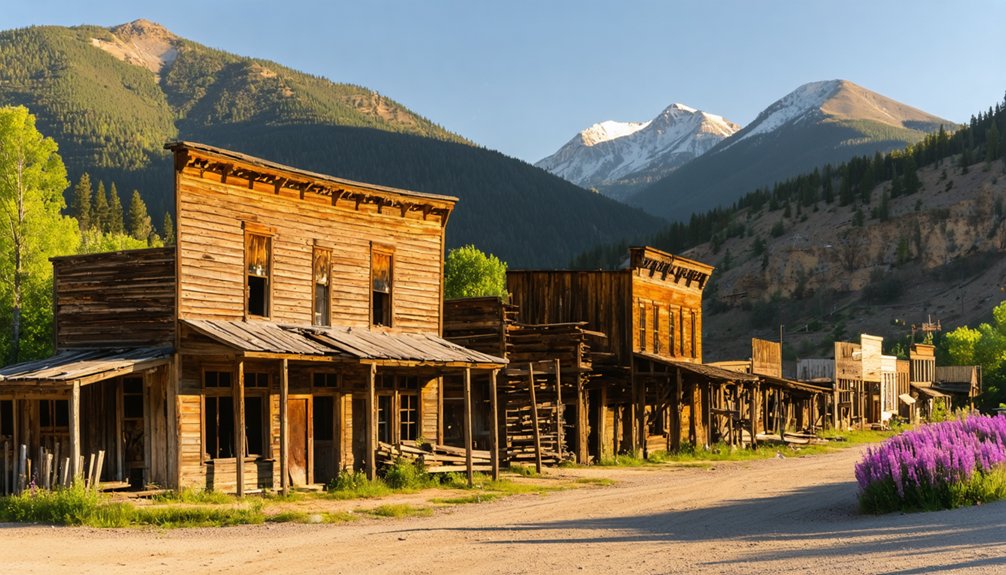
Just eight miles down the winding mountain road from Idaho City, Placerville emerged as one of Boise Basin’s earliest boom camps after prospectors struck rich placer deposits in late 1862.
By 1863’s peak, ninety houses dotted the settlement alongside thirteen saloons and five blacksmith shops—a testament to the feverish gold prospecting that drew thousands seeking fortune on their own terms.
What You’ll Discover:
- Historic mining equipment remnants from the 1908 dredging operations on Granite Creek
- The site where Pioneer Mill’s ten-stamp machinery once crushed ore from surrounding lode deposits
- Atmospheric structures from when Chinese miners reworked abandoned claims after 1870
Though Idaho City ultimately overshadowed it, Placerville’s legacy endures in weathered buildings and tales of independent prospectors who refused to surrender when surface riches vanished, progressing instead to hard rock mining in the rugged hills.
Planning Your Summer Ghost Town Adventure in Idaho
Before you set out to explore Idaho’s weathered settlements, you’ll need to time your adventure carefully. Summer’s your prime window—Memorial Day through Labor Day. This is when guided tours at ghost town mining sites like Custer are available, where restored buildings and knowledgeable tour guides bring history alive.
Additionally, there are annual events in Idaho’s ghost towns that provide unique insights into the area’s rich history. These festivities often include live reenactments, artisan fairs, and storytelling sessions that highlight the local folklore. Participating in these events can enhance your overall experience and give you a deeper appreciation for the spirit of the Idaho frontier.
Plan your Idaho ghost town expedition between Memorial Day and Labor Day when guided tours and restored sites welcome curious explorers.
Visit in September, and you’ll find boarded structures with limited access.
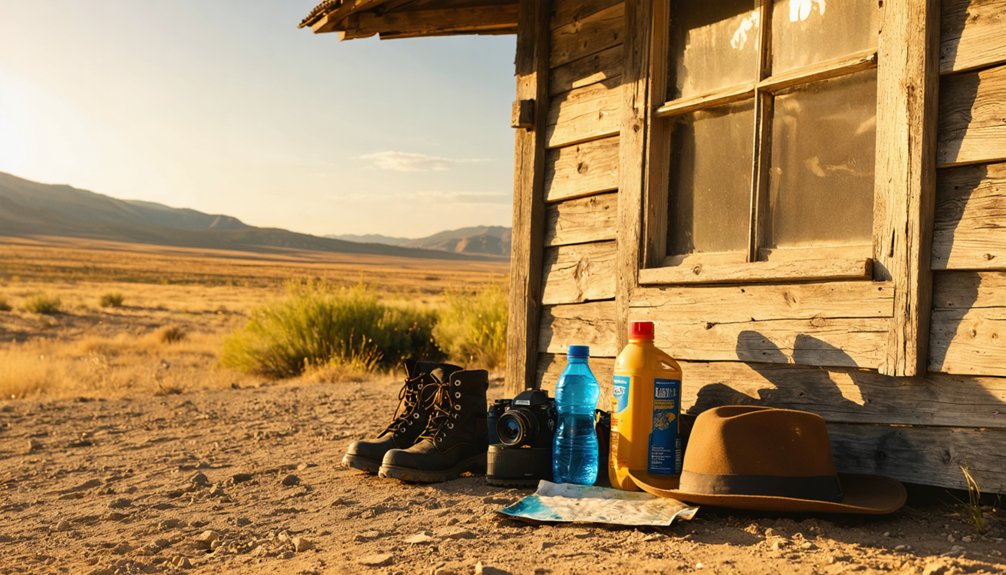
Pack essentials: detailed maps, sturdy hiking boots, extra water, and your camera.
High-elevation sites like Bonanza demand weather monitoring at 6,375 feet.
Historic preservation depends on your respect—stick to established paths, don’t remove artifacts, and heed those active mining claim signs.
From remote Silver City near Oregon’s border to Wickahoney’s barely-standing ruins, you’ll discover freedom on winding backcountry roads where Idaho’s untamed past still breathes.
What to Bring When Exploring Idaho’s Ghost Towns
When gravel crunches beneath your tires on Idaho’s backcountry roads, you’ll quickly learn that ghost town exploration demands more than enthusiasm.
The rich history and haunting stories of ghost towns to explore in Idaho will draw you in, but preparation is key. Make sure to research each site beforehand to uncover the hidden gems and understand the tales of those who once called these places home. With a mix of adventure and a glimpse into the past, you’ll find each visit offers a unique experience that makes the journey worthwhile.
Historical preservation starts with preparation—you’re venturing into fragile landscapes where every step matters.
Pack these essentials for your adventure:
- Sturdy boots and layers for traversing steep grades and temperature swings between sun-scorched valleys and cool mountain evenings
- Safety precautions kit including first aid supplies, water, map or GPS, and flashlight for exploring dim structures with open holes
- Cash, camera, and respect for capturing history while supporting seasonal facilities and honoring private restorations
Your high-clearance vehicle handles switchbacks while rain gear shields you from sudden storms.
Bring trash bags, patience for unmarked trails, and curiosity for uncovering stories etched into weathered buildings.
Frequently Asked Questions
Are Pets Allowed at Idaho’s Ghost Town Sites?
Your four-legged companions can explore Idaho’s ghostly remnants freely. Pet policies welcome leashed dogs at most historic sites, though you’ll handle cleanup duties. Leash requirements keep everyone safe while you’re discovering abandoned mining settlements together.
What Cellphone Coverage Can I Expect in Remote Ghost Town Areas?
You’ll find minimal to zero cellphone reception in Idaho’s remote ghost towns, especially beyond McCall. AT&T offers the widest rural coverage at 51.7%, but don’t count on emergency access—pack paper maps and supplies.
Do Any Ghost Towns Offer Camping Facilities Nearby?
You’ll find camping at Gilmore’s Camp Badger ($8/night) and surrounding national forest sites near other ghost towns. These historical preservation sites double as tourist attractions where you can immerse yourself in Idaho’s rugged mining heritage under starlit skies.
Are Ghost Town Roads Suitable for RVS and Trailers?
Most ghost town roads aren’t suitable for RVs and trailers. You’ll face rough, rocky routes requiring high-clearance vehicles. Historical preservation limits road improvements, while off-road accessibility demands nimble rigs. Leave trailers behind and embrace trucks or vans for true exploration freedom.
What Are Typical Entrance Fees for Idaho Ghost Town Sites?
Most Idaho ghost towns offer free exploration, balancing Historical Preservation with Visitor Accessibility. You’ll pay $7 for state park vehicle entry where applicable, though many sites like Silver City and Sunbeam remain completely free to roam.
exploring idaho’s winter ghost towns can reveal hidden stories and stunning scenery blanketed in snow. As the cold chill sets in, these towns transform into a winter wonderland, offering a unique perspective on their rich history. Be sure to dress warmly and bring your camera to capture the beauty of these abandoned spaces.
As you embark on exploring idaho’s historical ghost towns, you’ll uncover fascinating narratives of the past, from gold rush fervor to the quiet abandonment of once-thriving communities. Each ghost town has its own story to tell, often preserving remnants of architecture and local lore that provide insight into the lives of those who once called these places home. Whether you’re a history buff or simply seeking adventure, these sites are sure to enrich your understanding of Idaho’s heritage.
References
- https://www.tripadvisor.com/Attraction_Review-g28933-d1775240-Reviews-Bonanza_and_Custer_Ghost_Town-Idaho.html
- https://idaho-forged.com/idahos-ghost-towns-eerie-yet-approachable/
- https://www.allmccall.com/history_museums/warren_ghost_town.php
- https://www.youtube.com/watch?v=rTSZSlxTmbs
- https://idahorocky.com/activities/stanley-area-attractions/
- https://discoversawtooth.org/love-history-must-see-sites-in-the-sawtooths
- https://www.atlasobscura.com/things-to-do/idaho
- https://www.youtube.com/watch?v=je9412S4LCs
- https://visitidaho.org/travel-tips/explore-idahos-ghost-towns/
- https://www.locallynomadic.com/post/a-gargantuan-gold-dredge