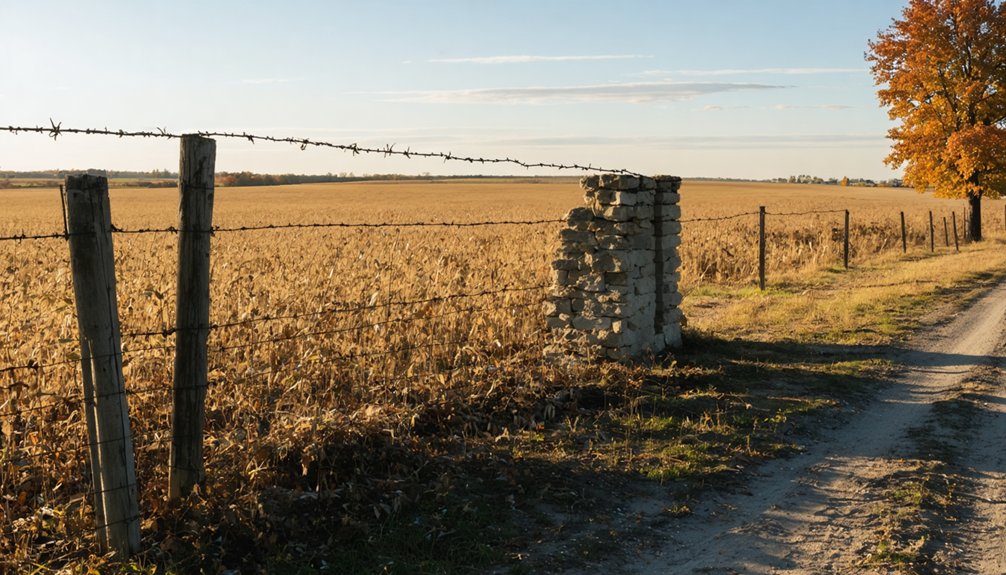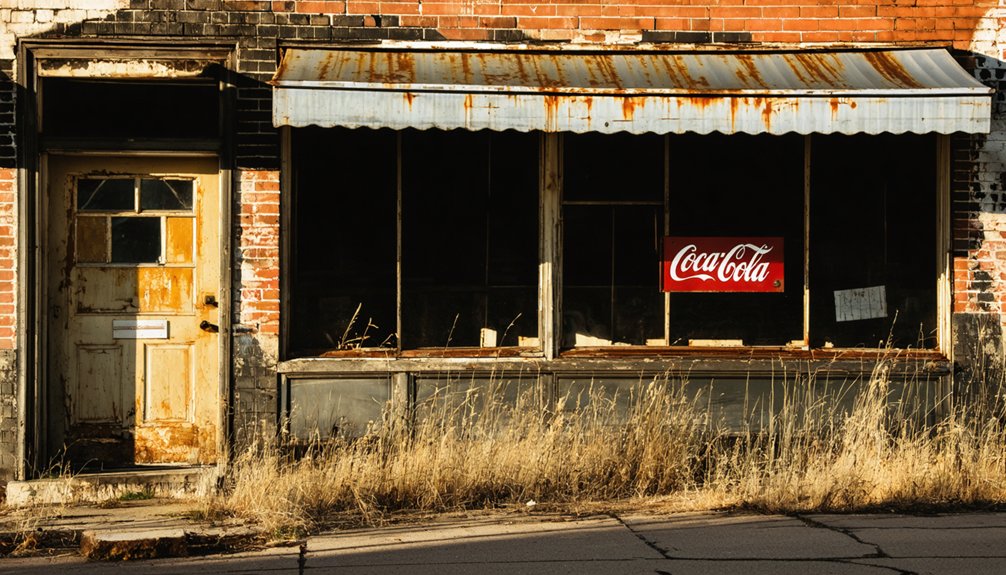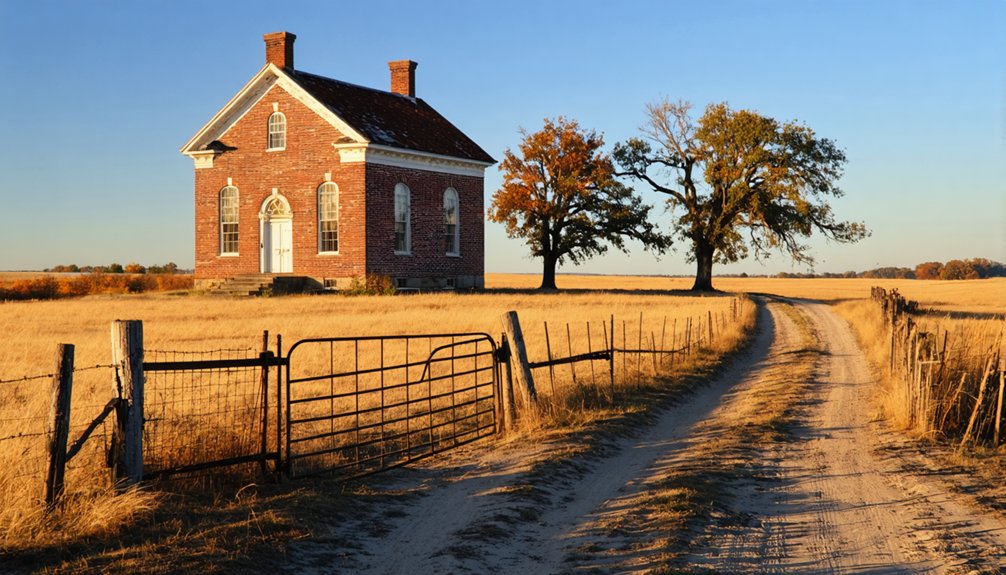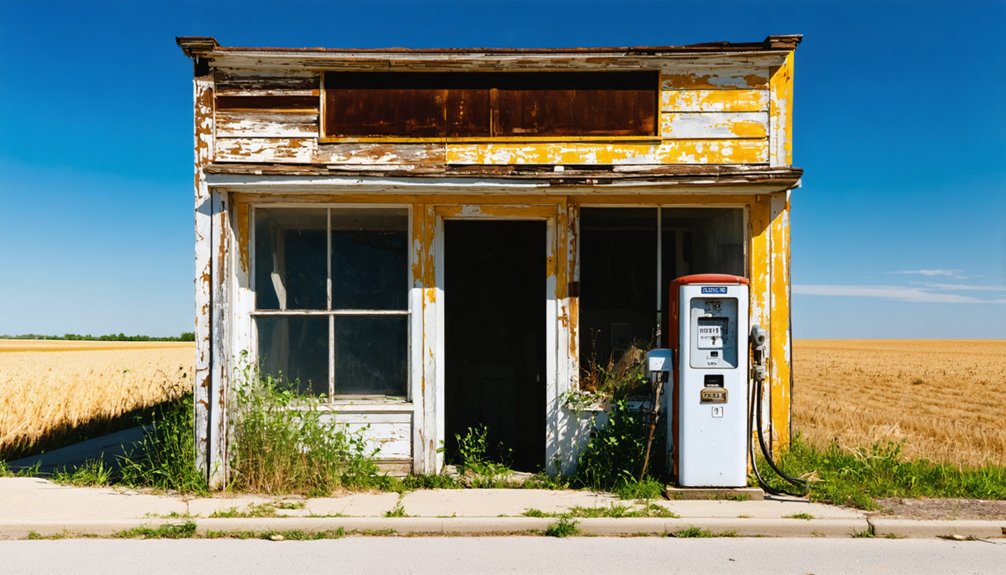
You’ll find Illinois’ most compelling ghost towns come alive under summer’s extended daylight. Explore Alton’s McPike Mansion and Civil War-era prison where 1,400 Confederate soldiers perished, then venture to Grafton’s Ruebel Hotel and “Bloody Bucket” saloon. Vishnu Springs’ crumbling health resort ruins nestle in a secluded valley, while Wanborough’s pioneer cemetery marks where an entire English settlement vanished by 1840. Funks Grove preserves an 1864 white pine church amid virgin forest. Each location offers unique photographic opportunities and historical insights worth discovering further.
Key Takeaways
- Alton offers haunted landmarks including McPike Mansion, Alton Prison site, and Morrison’s Irish Pub with paranormal investigation opportunities.
- Grafton features the historic Ruebel Hotel and River House Saloon, plus scenic river views and local dining options.
- Vishnu Springs provides crumbling Capitol Hotel ruins within a wildlife sanctuary, showcasing 1880s health resort history.
- Funks Grove displays Route 66 ghost town atmosphere with an 1864 church, pioneer cemetery, and active maple sirup operation.
- Summer’s extended daylight and golden-hour lighting create ideal conditions for photography and exploring abandoned settlements.
Alton: America’s Most Haunted Small Town
When Mark Twain described Alton as a “dismal little river town,” he couldn’t have predicted how prophetic those words would become. Today, this Mississippi River settlement draws adventurers seeking authentic paranormal encounters across 200 years of documented tragedy.
Twain’s dismal river town now stands as America’s most authentically haunted destination, shaped by two centuries of tragedy.
You’ll find ghostly legends embedded in every corner—from the abandoned McPike Mansion, where Henry and Eleanor’s spirits reportedly linger in the cellar, to haunted hotels like the Mineral Springs, where Clarence Blair drowned during swimming lessons. The mansion, built in 1869, has been investigated by paranormal experts who have captured evidence of orbs and mysterious figures.
The town’s dark past includes the notorious Alton Prison, where 1,400 Confederate soldiers died from smallpox in squalid conditions, and the 1837 murder of abolitionist Elijah Lovejoy. At Morrison’s Irish Pub near the murder site, visitors report phantom cries and gunshots echoing from the warehouse where Lovejoy was shot five times.
The Alton Telegraph has chronicled these hauntings for two centuries, cementing this river town’s reputation as America’s premier paranormal destination.
Rauchfuss Hill State Recreational Area: Illinois’ Hidden Ghost Town Park
Tucked along the Ohio River‘s forested bluffs near Golconda, this 70-acre recreation area carries an unusual distinction—it’s part ghost town, part wilderness retreat. You’ll discover abandoned structures and faded signage from former settlements scattered throughout pine plantations and mixed hardwoods.
The historic bluff, once called Steamboat Hill for riverboat watching, features trails ascending steep terrain via steps registered with the National Historical Society.
After more than a decade of closure, it’s reopened with camping facilities and a new dump station. The park now offers 15 tent sites and 15 camper sites for overnight visitors. You can hunt turkey and furbearers, fish the water impoundment formed from 1937 barrow dirt, or simply absorb scenic overlooks of the Ohio River from 901.5 miles inland. The site also provides access to miles of shoreline with numerous islands and the deep, clean water of Smithland Pool for boating enthusiasts.
Spring brings spectacular daffodil blooms along trails. It’s Illinois’ least-visited southern recreation area—your hidden escape awaits.
Grafton: Gateway to Southern Illinois Haunts
Where the Mississippi and Illinois rivers converge in a dramatic collision of currents, Grafton clings to limestone bluffs like a remnant from another era.
This 1832 settlement thrived during the steamboat years when 26 saloons lined its streets and outlaws like Jesse James sought refuge in nearby caves.
You’ll find haunted hotels that preserve these wild days—the 1879 Ruebel Hotel where “Abigail’s” ghost reportedly wanders, and the infamous River House Saloon, nicknamed “The Bloody Bucket” for its violent past.
The hotel once rented 32 rooms at $1 per night to river travelers, quarrymen, and dockworkers before burning down in 1912 and being rebuilt the following year.
The town’s quarry industry once employed 2,000 workers across five operations, producing the durable limestone used in St. Louis’s Eads Bridge.
The Great Flood of 1993 nearly erased Grafton, reducing its population from 10,000 to under 700.
Today, ghostly legends persist alongside wineries and zip-line adventures, offering you both history and escape at Illinois’ southern gateway.
Vishnu Springs: Forgotten Health Resort Sanctuary
You’ll find Vishnu Springs hidden in a secluded valley near Colchester, where a three-story Capitol Hotel once welcomed thousands seeking miracle cures from mineral waters that bubbled up from the LaMoine River.
What began in the 1880s as a thriving health resort—complete with a racetrack, carousel, and shops serving 2,000 annual visitors—now exists as the Ira & Reatha T. Post Wildlife Sanctuary, owned by Western Illinois University Foundation. The town itself grew to include 30 homes, a school, and sports fields during its prosperous years. Dr. J.W. Aiken promoted the springs and sold the medicinal water for 25 cents per gallon before the town’s official establishment.
The crumbling hotel ruins stand swallowed by weeds and brush, transforming a once-bustling destination into protected wilderness where nature reclaims what scandal, isolation, and time left behind.
Historic Health Resort Origins
Deep in western Illinois’ river valleys, a natural mineral spring bubbled from the earth in the 1840s. This transformation turned farmland purchased by the Ebenezer Hicks family from Ohio into what locals believed was sacred ground.
The spring’s reputation for springwater healing spread rapidly, drawing believers who credited its waters with curing everything from physical ailments to psychological struggles. Medical myths flourished as crowds swelled—sometimes reaching 2,000 people gathered along the riverbanks. The land eventually took its name from the Hindu god Vishnu, reflecting the reverence locals held for the healing waters.
Dr. John Aiken leased the property and began selling spring water as a health tonic, transforming the remote springs into a commercial enterprise. By 1886, when Darius Hicks inherited the springs, development accelerated with plans for a full spa town that would cater to health-seekers from across the region.
Natural Preserve Today
You’ll find WIU students conducting groundwater monitoring studies, tracking seasonal aquatic organisms in spring-fed ponds, and mapping the bedrock aquifer’s mysterious flows.
The LaMoine River valley location offers isolation deep in McDonough County’s woods—though law enforcement patrols discourage unauthorized exploration.
This isn’t a commercial tourist trap; it’s a working sanctuary where biological productivity matters more than nostalgia, and environmental quality trumps Instagram opportunities.
Wanborough: Prairie Community Lost to Time
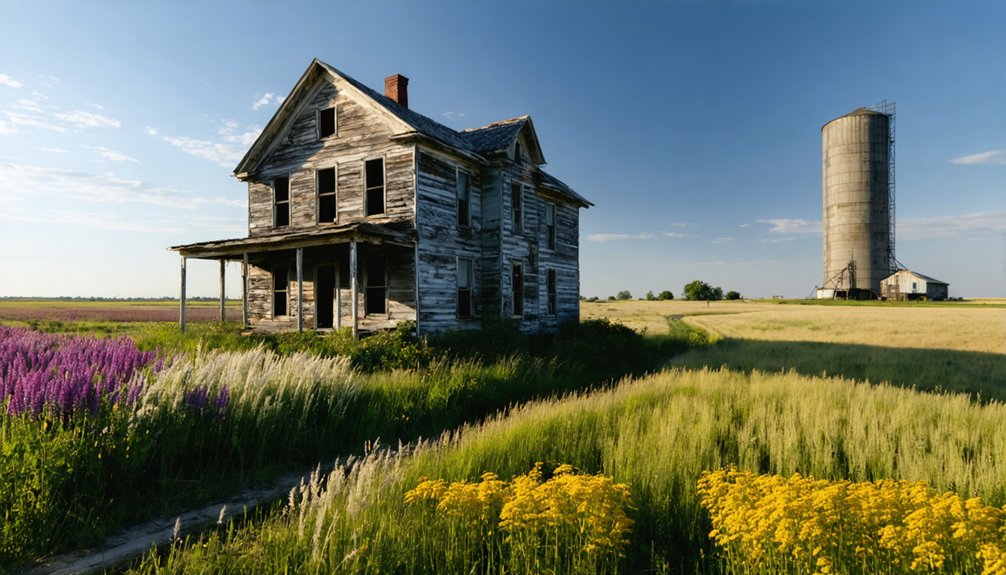
You’ll find Wanborough’s story differs from typical ghost towns—it wasn’t a railroad bypass that doomed this English settlement, but fierce competition from its sister community Albion just two miles east.
When founder Morris Birkbeck died in office as Illinois Secretary of State, his prairie dream crumbled. By 1840 the entire settlement had vanished.
Today, only a historic cemetery marks where Birkbeck’s ambitious English colony once stood, offering visitors a haunting glimpse into one of Illinois’s earliest experiments in planned immigration.
Railroad Bypass Sealed Fate
When the Baltimore & Ohio Railroad surveyors mapped their proposed route through Edwards County in 1883, they charted a path that would doom Wanborough to obscurity. The line bypassed the settlement entirely, running through nearby Palmyra instead.
Though grading reached nearly to Scottville, funding collapsed before completion, leaving the pioneer community stranded without commercial lifelines.
You’ll find this railroad decline typical of rural Illinois development—tracks followed profit, not sentiment. Without rail access, settlers hauled goods by oxen and wagon from Alton, an exhausting overland journey that strangled growth.
When Illinois Route 111 opened in 1931, trucks seized what little freight remained, accelerating prairie abandonment.
Today, you can explore the windswept grasslands where Wanborough once thrived, its fate sealed by rails that never came.
National Register Recognition Today
Unlike many Illinois ghost towns that vanished without official acknowledgment, Wanborough’s historic cemetery earned a place on the National Register of Historic Places in 1978, preserving the memory of Morris Birkbeck’s ambitious English Prairie experiment.
You’ll find this archaeological preservation effort protects three essential elements:
- Headstones of original 1818 settlers who crossed the Atlantic seeking freedom from England’s rigid class system
- Burial grounds marking family plots that document the community’s brief two-decade existence
- Spatial layout revealing settlement patterns of the scattered prairie agricultural model
This historic recognition grants you access to Edwards County’s earliest coordinated European settlement.
While Albion’s commercial success erased Wanborough’s physical structures, the cemetery stands as your tangible connection to pioneers who chose self-determination over established eastern society.
Funks Grove: Historic Settlement Among Ancient Woodlands
Deep within McLean County’s ancient woodlands, Funks Grove stands as one of Illinois’ most atmospheric Route 66 ghost towns, where towering sugar maples and virgin timber cast shadows over abandoned structures that once buzzed with frontier life.
You’ll discover a historic settlement founded in 1824 by Kentucky brothers seeking fertile ground, later thriving as both railroad and Route 66 stop until interstate construction killed it in the 1970s.
Today you can explore the overgrown depot, 1864 white pine church with original walnut pulpit, and pioneer cemetery where patriarch Adam Funk rests. The famous maple sirup operation—spelled “sirup”—still runs after 200 years, while grain silos rise against preserved virgin forest.
It’s authentic American decay, less than an hour from Springfield, waiting for you.
Planning Your Summer Ghost Town Adventure
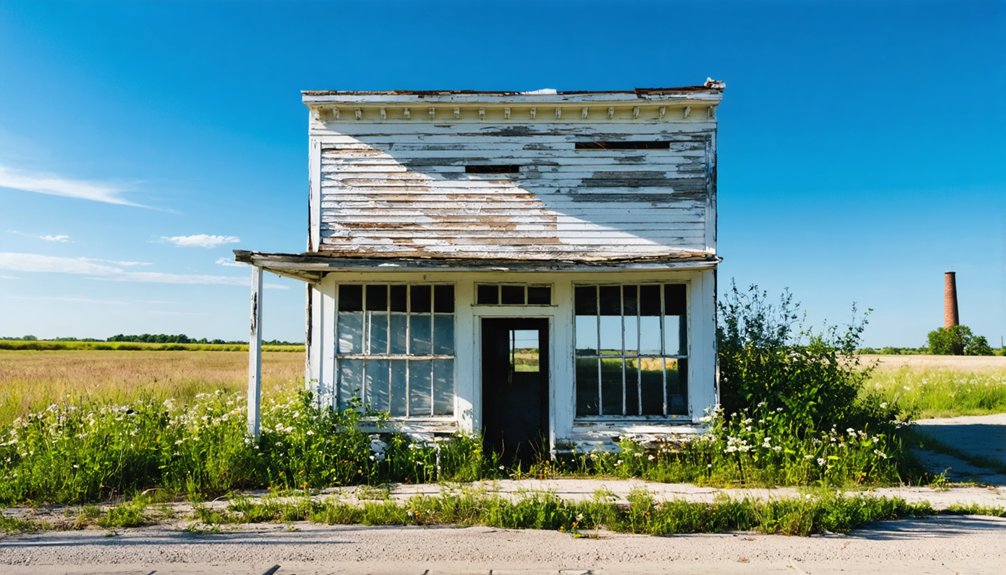
Before you pack your camera and hit the open road, you’ll need to map out a strategic route through Illinois’ most compelling ghost towns—because summer’s long daylight hours transform these abandoned settlements into photographer’s gold. Here, the harsh midday sun illuminates peeling paint and crumbling brick, while the golden-hour light sets weathered wood ablaze.
Summer’s extended daylight hours turn abandoned Illinois settlements into ideal photography subjects, with dramatic lighting revealing every weathered detail.
Essential Planning Steps:
- Book Alton Hauntings Tours to explore folklore legends at McPike Mansion and the old penitentiary.
- Reserve accommodations at Grafton’s Tara Point Inn for Mississippi River bluff views.
- Schedule Rauchfuss Hill exploration for scenic overlooks and historic Steamboat Hill trails.
Combine your ghost town exploration with local cuisine in Grafton at the Ruebel Hotel & Restaurant, then venture to New Philadelphia and Vishnu Springs for authentic abandoned site experiences.
Frequently Asked Questions
Are These Ghost Towns Safe to Visit With Children During Summer?
Most Illinois ghost towns are safe for summer family visits, offering historical preservation without structural dangers. You’ll find maintained trails and flat terrain at sites like Benjaminville. Watch for heat, ticks, and overgrown paths—haunted legends pose less risk than nature.
Exploring historic ghost towns in Illinois provides a unique glimpse into the state’s rich past, with stories waiting to be uncovered at every turn. Each location showcases remnants of life from different eras, allowing visitors to imagine what daily life was like for the residents who once called these towns home. Be sure to bring your camera to capture the hauntingly beautiful landscapes and intriguing architecture that still stand despite the passage of time.
What Are the Best Months to Visit Illinois Ghost Towns?
June through August offer you prime ghost town exploration with 70-85°F temperatures, uncrowded trails for wildlife encounters, and extended daylight revealing historical preservation details. You’ll avoid winter’s frozen paths while experiencing Illinois’s forgotten settlements at their accessible best.
However, if you find yourself drawn to the unique charm of off-season exploration, winter attractions in Illinois ghost towns can reveal a different kind of beauty. Snow-covered landscapes transform these historic sites into a serene winter wonderland, where the silence of the season amplifies the haunting tales of the past. Bundle up for a quiet hike and immerse yourself in the history and mystery that these ghost towns have to offer, even in the colder months.
Do I Need Permits to Explore Abandoned Buildings in These Locations?
Yes, you’ll need property ownership permission since 100% of abandoned buildings legally belong to someone. Legal considerations include trespassing charges and liability risks. Always secure written consent from owners before exploring, respecting both law and private property rights.
Are There Camping Facilities Near These Illinois Ghost Town Sites?
You’ll find camping at Fort Kaskaskia’s historic riverside sites and boutique Camp Aramoni near Starved Rock. While exploring abandoned Rend Lake campground, you’ll encounter wildlife roaming historical preservation areas where nature’s reclaiming forgotten grounds.
What Should I Pack for a Summer Ghost Town Road Trip?
Pack purposefully: packing essentials include sunscreen protection, insect repellent, sturdy boots, and breathable layers. You’ll need navigation tools, hydration supplies, and rain gear. Don’t forget your camera—these abandoned adventures deserve documentation as you explore Illinois’s forgotten frontier freely.
References
- https://www.riversandroutes.com/blog/why-alton-is-americas-most-haunted-small-town/
- https://secretchicago.com/rauchfuss-hill-state-recreational-area-least-visited-state-park-in-illinois/
- https://www.enjoyillinois.com/plan-your-trip/road-trip-itineraries/haunting-season-in-illinois/
- https://www.youtube.com/watch?v=93k0qtvzkn4&vl=en-US
- https://ilfbpartners.com/family/7-things-to-do-in-saline-county-this-summer/
- https://usghostadventures.com/americas-most-haunted-trending/ghost-towns-to-visit-on-your-summer-road-trip-along-route-66/
- https://www.atlasobscura.com/things-to-do/illinois/abandoned
- https://www.youtube.com/watch?v=Kmxv1Az9DdQ
- https://www.youtube.com/watch?v=3FmTHcYy16A
- https://1440wrok.com/illinois-most-haunted-town/