You’ll find Kansas’s most accessible ghost towns come alive during summer months, when Bloomington Beach’s submerged foundations emerge from Clinton Lake’s receding waters between May and October. Head to Lecompton’s preserved wood-frame buildings housing Civil War relics, or venture west to photograph Eminence and Ravanna’s haunting brick pillars against endless prairie skies. Shoal Creek Living History Museum runs special Pioneer Days reenactments June through September, making history tangible. The sections below reveal ideal visiting times and hidden details for each location.
Key Takeaways
- Bloomington Beach ruins appear May–October beneath Clinton Lake, featuring Underground Railroad history and the Freedom Rings memorial.
- Shoal Creek Living History Museum offers 21 frontier structures with Pioneer Days reenactments June–September, free admission year-round.
- Lecompton preserves Civil War-era buildings including the Territorial Capital Museum, a National Historic Landmark with proslavery convention history.
- Eminence and Ravanna ghost towns feature photogenic ruins like brick pillars and courthouse remains on unmarked western Kansas prairie.
- Sumner County’s submerged resort town reveals relics during low-water periods, destroyed by 1923 flooding after river entertainment era.
Bloomington Beach: Where History Meets Summer Fun
When you stand at Bloomington Beach today, it’s hard to imagine that beneath the shimmering waters of Clinton Lake lies an entire town—one that fought for freedom before Kansas even became a state.
Founded by abolitionists in 1854, Bloomington served as an Underground Railroad station before being sacrificed for progress in the 1960s.
From abolitionist refuge to aquatic grave—Bloomington’s fight for freedom now rests silently beneath Clinton Lake’s manufactured waves.
Now, you’ll find the milk shed preserved as Clinton Lake Museum, showcasing historical preservation through “Remembering Richland” exhibits.
The J.C. Steele house foundations still mark where homes once stood.
The U.S. Army Corps of Engineers flooded the town when they created Clinton Lake, submerging the community’s streets and structures beneath the reservoir.
Visit May through October to explore these remnants, then cool off at the beach where summer activities replace vanished streets. Plan your trip during late June when the surrounding wheat harvest transforms the Kansas landscape into a golden sea, offering a glimpse of the agricultural heritage that once sustained these prairie communities.
The Freedom Rings art installation commemorates the ten communities lost—a powerful reminder that some prices for development can’t be measured in water.
Step Back in Time at Shoal Creek Living History Museum
Though technically located just across the Missouri state line, Shoal Creek Living History Museum offers Kansas visitors an authentic glimpse into the 19th-century frontier life that shaped this entire region.
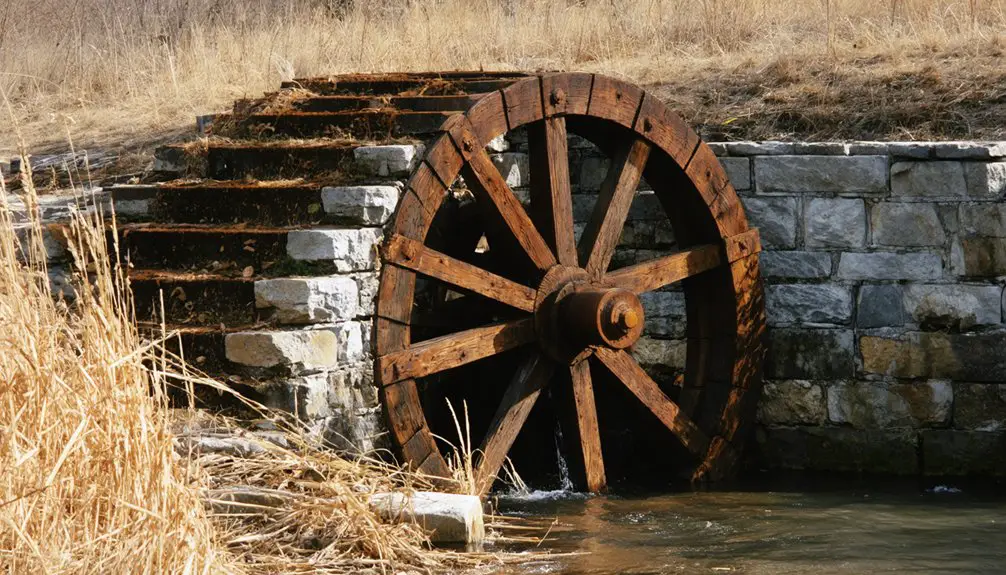
You’ll wander through twenty-one structures dating from 1807 to 1885, including log cabins, a grist mill, and a one-room schoolhouse scattered across wooded trails.
Visit during Pioneer Days (June-September) when historical reenactments transport you to Civil War-era Missouri.
Watch artisans demonstrate pioneer crafts like blacksmithing and weaving.
The grounds stay open dawn to dusk year-round with free admission for self-guided tours.
First Saturdays let you explore building interiors without fees.
The museum is operated by the Shoal Creek Association, a volunteer nonprofit organization that maintains these historic structures.
The museum also offers guided tours for visitors seeking a more in-depth understanding of the site’s history.
Pack a picnic, spot the resident bison near the entrance, and experience frontier independence on this peaceful 80-acre escape.
Lecompton: A Self-Guided Journey Through Civil War History
From Missouri’s frontier settlements, head east into Kansas proper where Lecompton stands as perhaps the most politically charged ghost town in American history. You’ll walk Constitution Hall’s weathered floorboards where the 1857 proslavery convention sparked nationwide fury.
Where pre-Civil War America’s moral crisis materialized into physical conflict, and a territorial constitution ignited the powder keg of secession.
The oldest wood-frame building in Kansas houses Civil War relics that tell stories of when freedom hung in the balance.
At the Territorial Capital Museum, three floors display artifacts from the 1856 Battle of Fort Titus—Bleeding Kansas’s first deadly clash.
Historical preservation efforts shine through the Democratic Headquarters‘ Italian stonework and the 1892 jail’s original bars. The Lecompton Constitution debate split the Democratic Party in 1858, setting the stage for Lincoln’s rise to the presidency two years later.
Constitution Hall earned recognition as a National Historic Landmark for its pivotal role in hosting both proslavery constitution drafters and anti-slavery delegates. You’re free to explore at your own pace, piecing together how this small town’s constitutional battle became America’s dress rehearsal for civil war. No guides required—just your curiosity and comfortable shoes.
Eminence and Ravanna: Western Kansas’s Photogenic Ruins
The plains of western Kansas conceal twin ghost towns locked in eternal rivalry—Eminence and Ravanna, separated by dusty miles and a bitter county seat war that consumed them both.
You’ll discover these abandoned landmarks scattered across Finney and former Garfield County territories. Historic preservation efforts remain minimal here—just wind-swept ruins and stubborn foundations. The dispute escalated to the point where Bat Masterson was called to maintain order during the volatile election conflict.
What You’ll Find:
- Eminence’s relocated schoolhouse, now weathered shed
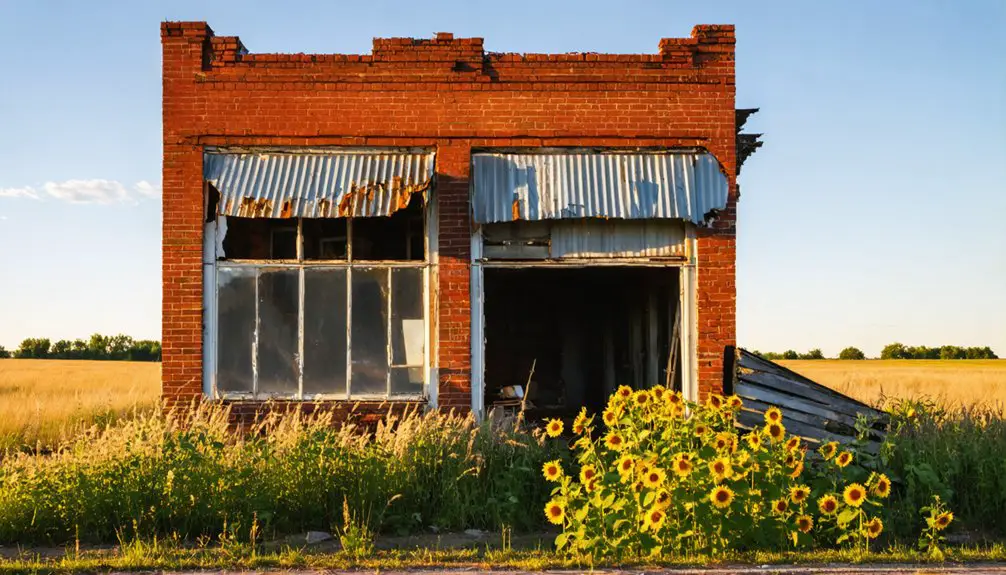
- Crumbling brick pillars scattered across Ravanna’s prairie
- Courthouse ruins with low walls and haunting archway
- Both cemeteries, including Eminence’s stone marker from 1998
- Hotel structure surviving on private ranch land
Bring your camera and GPS coordinates—no signs guide you here. The photogenic decay rewards adventurous explorers willing to navigate unmarked prairie roads. Both towns experienced population declines over decades, reflecting the common pattern of abandonment that transformed Kansas’s once-thriving settlements into historic ruins.
These sites demand respect for private property while offering unmatched solitude.
Sumner County’s Flooded Past: From Resort Town to Underwater Relic
Beneath the waters of a Sumner County reservoir lies Alexander Colulbertson’s ambitious 1883 dream—a mill town named for his wife that transformed into Kansas’s most unusual resort destination. You’ll find this subtopic exploration particularly haunting: the Jury Dam powered both commerce and entertainment, where visitors danced in pavilions and watched movies projected onto river rafts.
The bathhouse welcomed crowds seeking freedom from city life, even as the post office closed in 1921. The Osage Indians likely resided in this area before European settlement, as it was included in the Osage Diminished Reserve after their land cession.
Then June 9, 1923 arrived. Twenty-one feet of raging water swept away the hotel, bridges, and dreams in hours. No flood recovery was possible.
Today, you can visit during low-water summers, when relics emerge—tangible reminders that nature ultimately decides which settlements endure. The Kansas Southwestern Railroad once connected this recreational spot to broader transportation networks, bringing tourists to enjoy the river boat rides and entertainment before disaster struck.
Frequently Asked Questions
What Safety Precautions Should I Take When Exploring Abandoned Ghost Town Structures?
Wear sturdy boots and watch for unstable floors that’ll collapse beneath you. Respect historical preservation by not removing artifacts. Stay alert for wildlife—snakes and rodents claim these ruins now. You’re free to explore, but stay safe and mindful.
Are There Guided Tours Available for Any of These Ghost Towns?
Guided ghost town tours are scarce in summer Kansas. You’ll find historical preservation efforts and local legends shared mostly through self-guided exploration or YouTube videos. Kansas City offers structured ghost tours, but rural towns lack formal summer guides—you’re on your own adventure.
For those looking for unique experiences, there are countless abandoned places to visit in Kansas that tell stories of the past. Exploring these forgotten sites can unveil a different side of the state’s history, with intriguing remnants of what once was. Don’t forget to bring your camera; the haunting beauty of these locations often makes for striking photographs.
If you’re seeking an off-the-beaten-path experience, you may find ghost towns in Kansas to explore. Each site tells a unique story of the past, from faded storefronts to crumbling churches waiting for visitors. Make sure you bring a camera to capture the haunting beauty and history of these forgotten places.
Exploring these forgotten places can lead to discovering hidden gems in Kansas ghost towns that are rich in history and intrigue. Each crumbling building and abandoned lot tells a story waiting to be uncovered. Keep an eye out for unique artifacts and remnants of the past that give a glimpse into the lives of those who once inhabited these now-silent streets.
Which Ghost Towns Are Most Suitable for Visiting With Young Children?
Dodge City Boot Hill and Fort Leavenworth offer kid-friendly experiences where you’ll explore historical preservation through interactive displays and costumed reenactors. Your children can discover local legends without intense scares, enjoying gunfight shows and family-oriented ghost stories together.
What Is the Best Time of Day to Photograph These Locations?
You’ll capture stunning ghost town shots during sunset lighting when golden rays bathe crumbling structures, or try early morning photography as fog softens abandoned buildings. Avoid harsh midday sun—it’ll wash out your freedom-seeking adventures through Kansas’s forgotten landscapes.
Do I Need Special Permits to Access These Ghost Town Sites?
You won’t need special permits to explore most Kansas ghost towns like Uniontown. However, you can’t remove artifacts due to their historical significance. Respect posted boundaries, and watch for haunted legends warning signs at restricted areas.
References
- https://www.kcur.org/arts-life/2022-04-09/ghost-towns-are-all-around-kansas-city-if-you-know-where-to-look
- https://www.youtube.com/watch?v=dF7vGl5xasI
- https://www.visitgck.com/americas-heartland-most-instagrammable-spots-in-western-kansas/
- https://globaldebauchery.com/weird-towns-in-kansas/
- https://usghostadventures.com/americas-most-haunted-trending/ghost-towns-to-visit-on-your-summer-road-trip-along-route-66/
- https://www.travelks.com/kansas-magazine/articles/post/exploring-kansas-forgotten-roads/
- https://www.atlasobscura.com/things-to-do/kansas
- https://www.ghosttowns.com/states/ks/bloomington.html
- https://legendsofkansas.com/clinton-kansas/
- https://www.wakarusamuseum.org/i-remember/