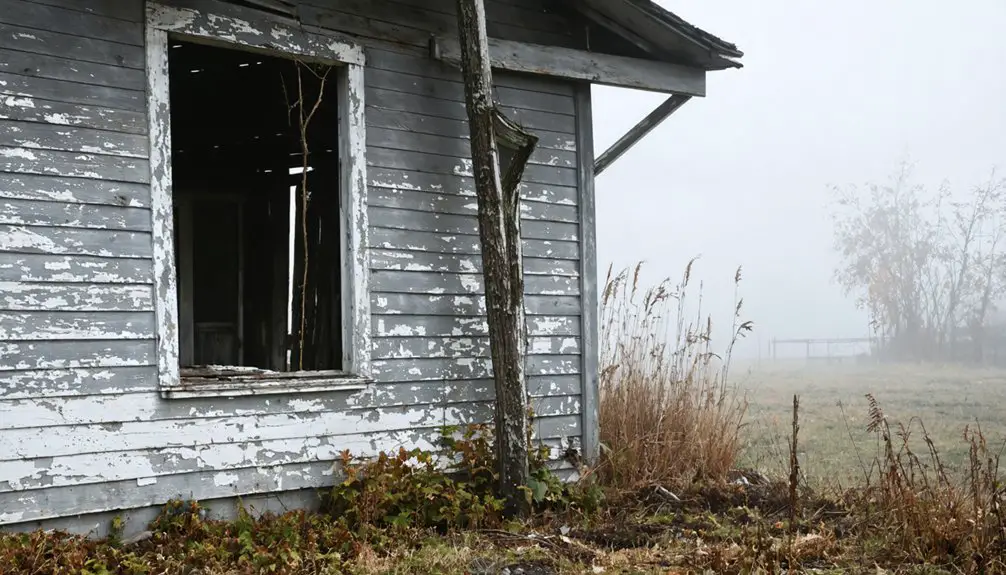
Michigan’s summer ghost towns come alive with exploration opportunities when warm weather opens access to remote sites. You’ll find Port Oneida’s 121 historic buildings sprawling across 3,400 acres within Sleeping Bear Dunes, while Fayette’s preserved iron smelting community overlooks Big Bay de Noc. The Keweenaw Peninsula reveals copper mining heritage at Freda and Delaware, and North Manitou Island’s ferry-accessible settlements offer wilderness adventures. Summer’s long daylight hours and favorable conditions make these abandoned places ideal for photography, hiking, and discovering Michigan’s forgotten past through detailed historical contexts.
Key Takeaways
- Port Oneida Village offers 121 historic buildings, farmsteads, and Lake Michigan views best explored by car, bike, or hike during summer.
- Kilmanagh features a crumbling 1873 general store with open skies, wildlife sightings, and vintage relics ideal for summer photography.
- Freda showcases copper mining heritage with abandoned Champion Mill structures, stamp sand sites, and equipment along scenic Keweenaw Peninsula backroads.
- Delaware provides self-guided underground mine tours up to 100 feet deep, exploring accessible 19th-century copper town history along Highway 41.
- North Manitou Island requires ferry access from Leland, offering hiking to abandoned settlements including Crescent’s 1927 sawmill and historic village remnants.
Port Oneida Village: America’s Largest Rural Historic District
Tucked along M-22 between Glen Arbor and Lake Leelanau, Port Oneida Village sprawls across 3,400 acres of Michigan’s most scenic farmland within Sleeping Bear Dunes National Lakeshore. You’ll discover America’s largest rural historic district, featuring 121 buildings and 18 farmsteads dating back to 1852.
German and Bohemian immigrants shaped this landscape through subsistence farming practices that lasted over a century.
Summer’s your prime window to explore these preserved farms by car, bicycle, or hiking trail. The district earned its place on the National Register of Historic Places in 2017, cementing its significance in American agricultural heritage. The village took its name from the S.S. ONEIDA, the first ship to land at the community’s dock near what is now Burfiend Farm. Don’t miss August’s Port Oneida Fair, where culinary traditions come alive through heritage demonstrations and crafts that rival any urban arts scene.
Self-guided tours let you wander freely among weathered barns with fieldstone foundations, antique machinery, and panoramic Lake Michigan views—experiencing authentic Midwest agricultural history at your own pace.
Fayette Historic Townsite: A Preserved Iron Smelting Community
While Port Oneida showcases Michigan’s agricultural heritage, the Upper Peninsula’s Fayette Historic Townsite reveals an entirely different chapter of 19th-century frontier industry. You’ll discover a remarkably preserved iron-smelting community on Big Bay de Noc, where historic architecture tells the story of 500 immigrants who produced charcoal pig iron from 1867 to 1891.
Step back to Michigan’s industrial frontier at Fayette, where 500 immigrants forged iron on Big Bay de Noc’s shores from 1867 to 1891.
This living history museum offers summer freedom to explore:
- Over 20 restored buildings including the main smelting complex and company store
- 3.5 to 5 miles of hiking trails through limestone cliffs and hardwood forests
- Natural harbor views framed by ancient white cedars up to 1,900 years old
- Interactive exhibits with costumed interpreters throughout the townsite
The river ecosystems of Garden Peninsula enhance your two-hour self-guided journey through this atmospheric ghost town. The community thrived with amenities including a coronet band, baseball team, and horse racing track that provided entertainment for residents. Located between Escanaba and Manistique, this scenic cove setting features dramatic dolomite cliffs towering over clear waters ideal for kayaking adventures.
Freda: Copper Mining Heritage in the Keweenaw Peninsula
You’ll discover Freda’s profound copper mining legacy on the western edge of the Keweenaw Peninsula, where Native Americans extracted copper for 8,000 years before European operations transformed the region.
The Champion Mill once processed 3,500 tons of ore daily here until its 1971 closure. Summer’s long daylight hours make this the ideal season to explore the remnants along accessible backroads.
This ghost town offers families a hands-on history lesson where you can safely examine abandoned structures and imagine the thundering stamps that crushed copper ore for over a century. Native miners used hammer stones of diorite and local rocks to extract copper from pits that ranged from surface excavations to shafts up to 18 feet deep. The copper they extracted was fashioned into bracelets, beads, tools, and fishhooks that were traded across vast distances.
Copper Mining Historical Legacy
Deep in the Keweenaw Peninsula‘s western shore, Freda stands as an emblem of Michigan’s copper mining legacy that shaped the region from 1899 until the final mine whistle blew on November 4, 1967.
You’ll discover how mining technology evolved here through innovative stamping machines that processed 3,500 tons of ore daily by 1907. The Champion Mill‘s industrial processes transformed copper-bearing rock into 40-percent-pure sludge before shipping it to smelters near Houghton. Visionary industrialist William Alfred Paine funded and surveyed the mining operations beginning in 1898, establishing the Champion Mining Company that would define the community’s identity. The settlement’s name carries multiple possible meanings, though historical records indicate it was named after Freda Paine, daughter of the mining company’s founder.
Today’s remnants tell compelling stories of community preservation:
- Three massive stamp sand sites along Lake Superior’s shoreline
- Abandoned railroad grades where fourteen passenger cars once ran
- Former mine shafts now serving as township water sources
- Freda Park’s legacy as Copper Country’s cleanest recreational facility
These weathered landscapes offer you unrestricted exploration of authentic industrial heritage.
Family-Friendly Backroad Exploration
Summer’s long daylight hours make Freda perfect for family backroad adventures through Michigan’s remote Keweenaw Peninsula. You’ll navigate quiet routes from Calumet—just 20 minutes north—where overgrown streets invite cautious exploration away from crowds.
The Keweenaw Time Traveler App guides you through this copper mining ghost town while kids engage with the mystical Keweenaw Vortex‘s spiral-shaped tree.
Combine Freda with nearby Cliff and Central for a multi-stop itinerary that maximizes your wilderness freedom.
Prospector’s Paradise emporium at 59691 U.S. 41 offers ancient copper culture exhibits and Native American crafts. Look for old apple trees that mark where homes once stood throughout these abandoned settlements.
Early afternoon starts provide ideal conditions for hiking mine ruins, river kayaking along Superior’s coastline, and bird watching in pristine Upper Peninsula forests. The region attracts approximately 400,000 visitors annually, with summer months offering the most accessible conditions for exploring remote mining heritage sites.
Memorial Weekend through late October offers self-guided tours when Michigan’s northernmost wilderness reveals its untamed character.
Delaware: Abandoned Relics of Michigan’s Mining Past
Tucked along Highway 41 on the Keweenaw Peninsula, Delaware stands as one of Michigan’s most accessible ghost towns, where you can descend 100 feet into authentic 1800s copper mines during your summer visit.
Step back in time at Delaware, where 1800s copper mining history lies just 100 feet beneath Michigan’s Keweenaw Peninsula.
This once-thriving settlement of 1,200 residents operated from 1847 to 1887, extracting 8 million pounds of copper before abandonment.
You’ll explore at your own pace through:
- Self-guided mining tours through 10 underground levels with visible copper veins and dim passages
- Abandoned structures including two original 1870s stone buildings along the highway
- Above-ground trails leading to prehistoric copper pits over 5,000 years old
- Antique equipment displays featuring engines and trains from the mining era
Park directly atop the massive tailing pile and roam freely through this preserved wilderness site.
Kilmanagh: Sparsely Inhabited Remnants of a Forgotten Town

Kilmanagh’s crumbling 1873 general store and weathered gas station offer you prime photography opportunities during summer’s golden-hour light, when long evenings let you explore this Irish-German farming settlement that thrived until its post office closed in 1904.
You’ll find this near-ghost town easily accessible off Kilmanagh Road between Sebewaing and Bay Port, where restored structures and abandoned buildings tell the story of Huron County’s Thumb region settlement patterns.
Summer visits work best here—dry roads lead you past St. John’s Lutheran Church and the old Rummel & Woldt store, where Michigan’s agricultural heritage stands frozen in a landscape that survived two devastating Thumb Fires.
Historical Significance and Classification
Among Michigan’s Thumb region ghost towns, Kilmanagh stands as a proof to the fragility of rural farming settlements that once dotted the state’s agricultural heartland. You’ll find this forgotten outpost represents a distinct classification of Michigan abandonment—purely agricultural heritage rather than mining or logging origins.
The site’s historical significance emerges through:
- Rural decay patterns mirroring 1870s homesteading booms that peaked post-Civil War
- Cemetery graves preserving pioneer family legacies amid overgrown farmland
- Scattered foundations marking where dairy operations and grain production once thrived
- Economic vulnerability from farm consolidations that hollowed communities statewide
Unlike disaster-struck settlements, Kilmanagh simply faded through mechanization and outmigration.
You’re exploring authentic agrarian collapse—no romanticized mining tales, just honest testimony to Michigan’s vanished farming frontier.
Summer Exploration and Access
When summer heat blankets Michigan’s Thumb, you’ll find Kilmanagh waiting at the intersection of Bay Port Road and Kilmanagh Road—a drowsy crossroads where fewer than a handful of occupied homes still cling to existence.
You can reach this near-ghost town via Kilmanagh Road between Caseville and Notter Road, making it an easy detour from Sebewaing or Bay Port.
The rural setting offers open skies perfect for summer weather exploration, with local wildlife frequently spotted across surrounding farmland.
Road trippers favor this stop for photographing the 1940s gas pump standing sentinel outside the shuttered general store.
You won’t need more than thirty minutes to absorb the atmosphere, snap photos, and contemplate what vanished here—then continue toward Lake Huron’s populated shoreline towns.
North Manitou Island: Dual Ghost Town Experience
Unlike most Michigan ghost towns accessible by car, North Manitou Island offers you a truly remote dual ghost town experience that requires both a ferry ride and a wilderness hike.
You’ll discover two distinct settlements: the main village on the east side and Crescent on the west coast.
Crescent’s remains showcase prime ghost town exploration:
- Abandoned factories including the standing 1927 sawmill and weathered dock pilings along the crescent-shaped shoreline
- Forgotten cemeteries nestled among early settler home sites
- Historical footprints of the 1906 lumber community—blacksmith shop, saloon-turned-schoolhouse, and general store locations
- Complete wilderness immersion since the 1915 mill closure erased nearly everything
Access Crescent through the island’s center trail to Swanson Barn, then trek north along the beach.
The ferry departs from Leland’s Fishtown Dock.
Donken: Untouched Structures Frozen in Time
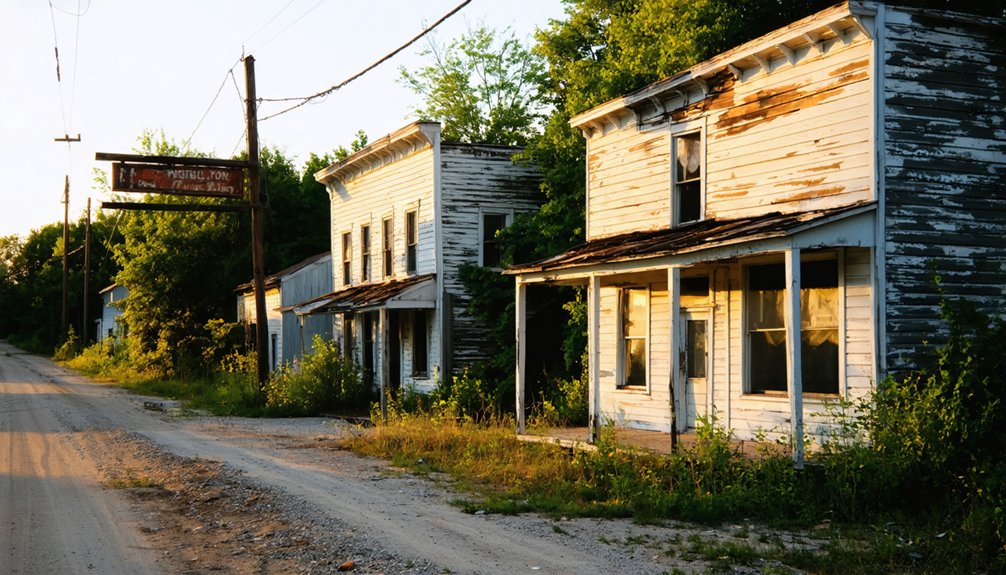
While North Manitou Island pulls you deep into wilderness isolation, Donken offers an equally haunting experience that’s rooted in Michigan’s Upper Peninsula Finnish heritage. This “Vale of Hope” settlement stands frozen since its early 20th-century abandonment, when exhausted timber resources and defunct mining operations triggered a mass exodus.
You’ll find abandoned buildings exactly as workers left them—untouched snapshots of Finnish immigrant life.
The company town’s structures reveal how these early settlement communities functioned during the lumbering and smelter boom years.
Summer’s your ideal window for exploring these decaying remnants before Upper Peninsula winters reclaim the landscape.
The ghost town’s accessibility makes it perfect for photographers and history seekers wanting to wander freely through authentic Finnish-American architecture.
No crowds, no restrictions—just you and Michigan’s forgotten past.
North Unity: Restored 1860s Cabins and Log Schools
Tucked along M-22 in Leelanau County, North Unity preserves the remarkable story of Bohemian pioneers who carved out a settlement from untouched wilderness in 1855. After devastating 1871 forest fires destroyed their original lakeside community, these resilient settlers rebuilt 10 miles inland at what’s now called Shalda Corners.
Explore these authentic remnants of historical preservation:
- Restored Shalda log cabin at M-22 and County Road 669
- Historic log schoolhouse west of Narada Lake
- St. Joseph’s Church (1884), listed on the National Register since 1992
- Original Bohemian Road (County Road 669) connecting these sites
The settlement’s community resilience shines through these structures, where Czech and German immigrants transformed their catastrophic loss into lasting heritage. You’ll discover genuine 19th-century craftsmanship along quiet backroads that few tourists venture down.
Planning Your Michigan Ghost Town Road Trip
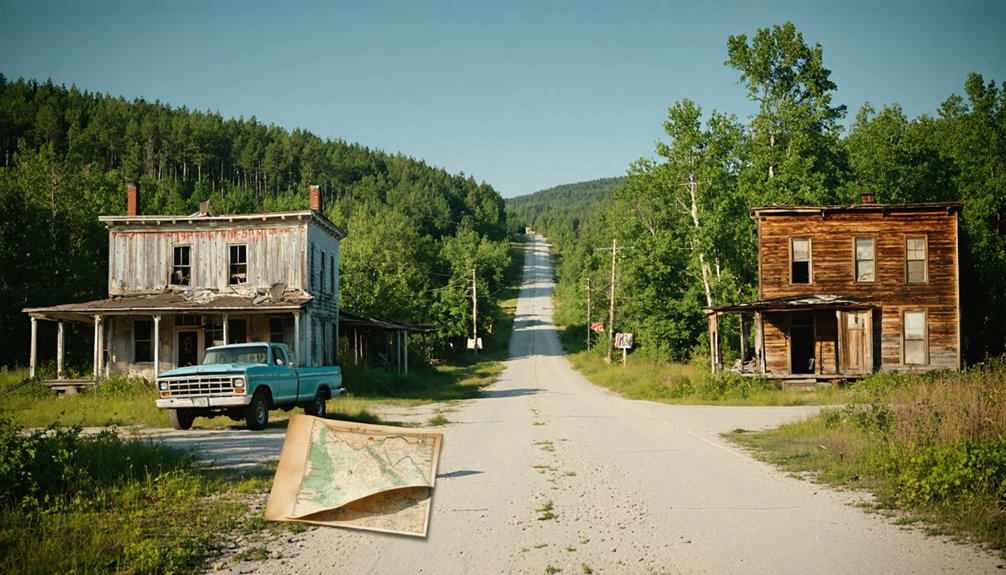
Michigan’s ghost towns sprawl across more than 70 documented locations, but summer opens the best access to these historical sites—particularly in the Upper Peninsula where snow and ice block roads for half the year.
Explore abandoned sites in Michigan to witness the remnants of a once-thriving economy. Each site tells a unique story, revealing the challenges and triumphs of the communities that inhabited them. The rich history of these locations invites adventurers and history enthusiasts alike to uncover the secrets of the past.
Start with EagleEyeExplorer’s detailed map featuring 73 locations with historical descriptions. Local transportation along US-41 connects you to the Keweenaw Peninsula‘s densest concentration of abandoned mining towns. You’ll navigate everything from main highways to winding 8-mile coastal stretches.
Seasonal weather between June and September provides ideal conditions for exploring remote sites like Bete Grise and Central Mine. Check Visit Keweenaw’s website for 18 documented destinations with exploring tips. Contact local historical societies for region-specific details and current road conditions.
The Prospector’s Paradise museum in Allouez Township offers essential context before heading into copper country’s abandoned settlements.
Frequently Asked Questions
Are Guided Tours Available at Michigan’s Ghost Towns or Is It Self-Guided Exploration?
You’ll find both options at Michigan’s ghost towns. While Fayette offers guided historical preservation tours alongside self-exploration, Keweenaw sites let you roam freely with exceptional photography opportunities. Summer brings special events blending independence with expert storytelling when you want it.
What Safety Precautions Should Visitors Take When Exploring Abandoned Structures?
You’ll need proper safety gear like respirators and flashlights before entering Michigan’s abandoned structures. Practice hazard awareness by checking for floor collapse, mold, and unstable walls. Scout exits first, stay near supports, and always maintain your escape route.
Can Visitors Camp Overnight Near Ghost Town Sites in Michigan?
You can camp on Michigan state forest land near ghost towns, staying up to 15 nights through summer. Keep one mile from campgrounds, register properly, and respect historical preservation while capturing stellar photography during golden hour.
Are Michigan Ghost Towns Accessible Year-Round or Only During Summer Months?
Like Sleeping Beauty’s castle, Michigan’s ghost towns hibernate seasonally. You’ll find historical preservation efforts limit indoor access to summer months (mid-May through October), though you’re free to explore outdoor ruins, local legends, and forest trails year-round.
As the weather warms, abandoned cities in Michigan’s spring come alive with vibrant wildflowers and the sounds of nature reclaiming the land. Explorers often embark on adventures to uncover the stories behind these forgotten places, finding beauty in decay. The unique charm of these sites draws photographers and history enthusiasts alike, each hoping to capture a piece of Michigan’s rich past.
Do Any Ghost Towns Charge Entrance Fees or Require Permits for Visiting?
Most Michigan ghost towns are free to explore, though Fayette requires a Michigan Recreation Passport for vehicle entry. You’ll appreciate how historical preservation efforts maintain these sites while local legends draw adventurous visitors seeking authentic, uncrowded summer experiences.
References
- https://www.islands.com/2058656/best-abandoned-ghost-towns-hidden-michigan/
- https://www.visitkeweenaw.com/things-to-do/museums-history/ghost-towns/
- https://wgrd.com/michigan-ghost-town-map/
- https://www.youtube.com/watch?v=PNsiAFMsOpk
- https://www.nps.gov/slbe/learn/historyculture/ghosttowns.htm
- https://www.michigan.org/article/trip-idea/incredibly-haunted-places-upper-peninsula
- https://en.wikipedia.org/wiki/Port_Oneida_Rural_Historic_District
- https://phsb.org/experience/port-oneida-rural-historic-district/
- https://www.upnorthmichigan.com/historic/portoneida.html
- https://www.nps.gov/slbe/planyourvisit/portoneida.htm