You’ll find Mississippi’s most accessible ghost towns along Highway 61 and the Natchez Trace Parkway, where Rodney’s 1832 church still bears Civil War bullet holes and Windsor’s 23 Corinthian columns rise from vine-wrapped ruins. Rocky Springs offers shaded trails at mile marker 54.8, while Grand Gulf provides camping with RV hookups for extended exploration. Summer’s humidity intensifies by midday, so arrive at dawn when deer emerge and temperatures stay bearable. The parkway connects these sites across 444 miles, with lesser-known settlements like Antioch requiring more detective work to locate.
Key Takeaways
- Rodney Ghost Town features an 1832 church with Civil War bullet holes, accessible via Highway 61 dirt road year-round.
- Rocky Springs on Natchez Trace Parkway offers an 1837 church, cemetery, and self-guided trails at mile marker 54.8.
- Windsor Ruins displays 23 towering Corinthian columns from an 1861 mansion, located 12 miles southwest of Port Gibson.
- Grand Gulf Military Park provides restored Civil War forts, museum, observation tower, and camping with RV hookups available.
- Visit early morning around 7 AM to avoid intense Mississippi summer heat and humidity at all sites.
Rodney Ghost Town: A River Port Frozen in Time
When you turn off Highway 61 in Lorman and follow twelve miles of blacktop that gradually surrenders to dirt, you’re tracing a path that leads backward through time. Rodney once rivaled Jackson itself, boasting 4,000 residents by 1860.
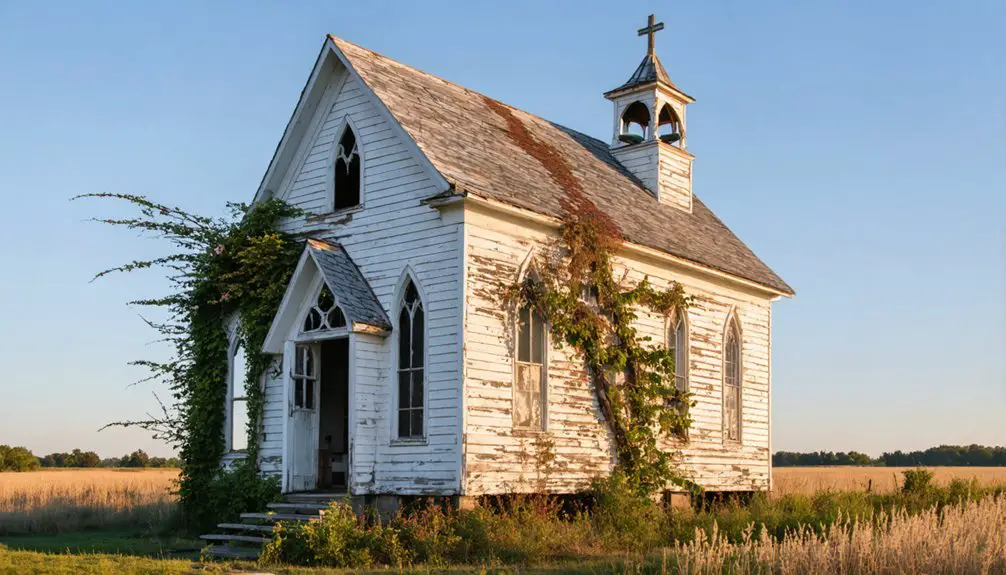
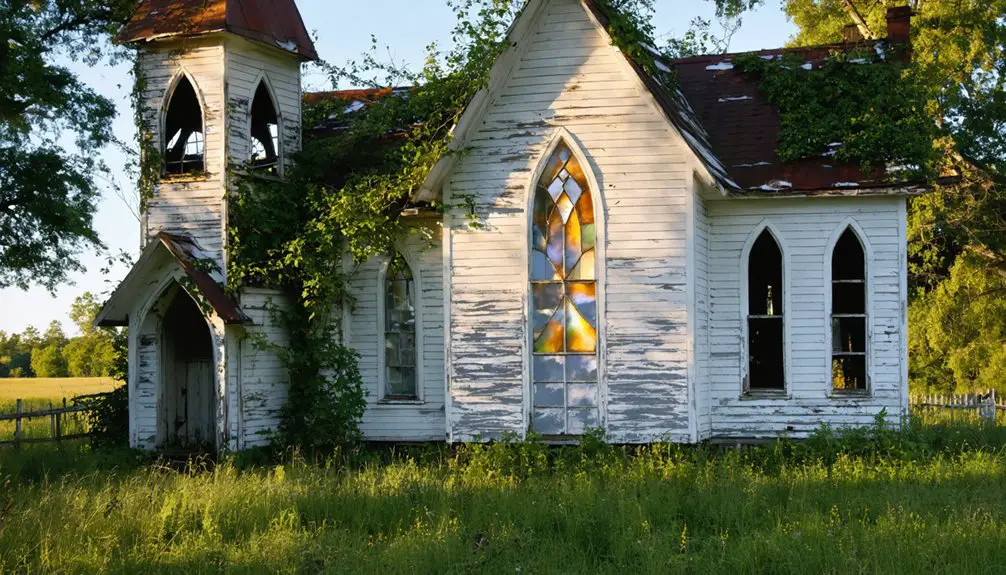
The Mississippi River shifted two miles west in the 1860s, stranding this bustling port. You’ll find the 1832 Presbyterian Church standing sentinel—its bell cast with 1,000 silver dollars. A Confederate cannonball remains lodged in the church’s brick wall from an 1863 Union shelling.
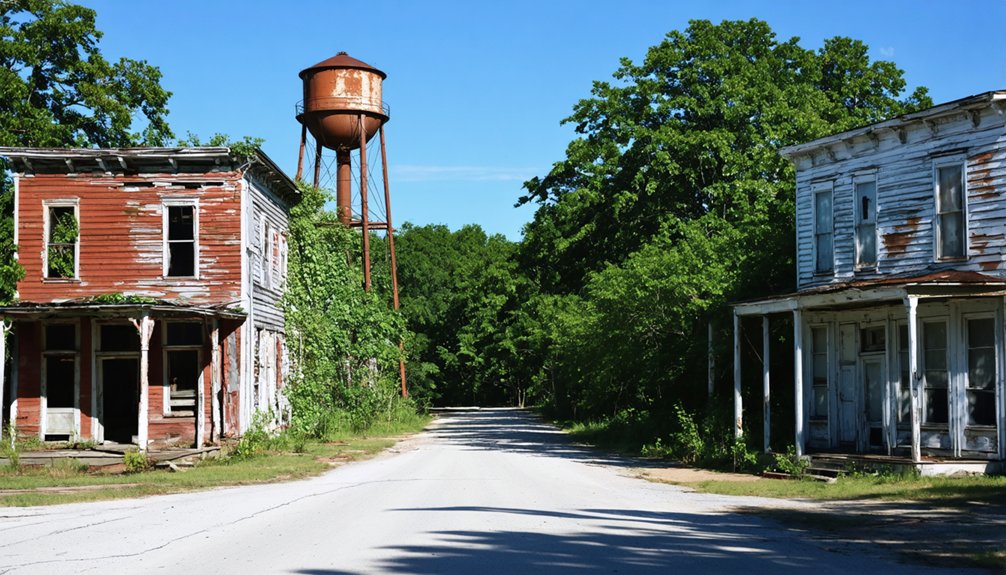
Urban decay blankets what remains of Commerce Street, where Andrew Jackson and Henry Clay once walked. The town suffered multiple devastating fires, with the 1869 blaze destroying stores, homes, and community buildings. The Baptist Church’s silver dome catches sunlight above weathered walls.
Preservation challenges mount as nature reclaims abandoned structures. Three acres of overgrown cemetery sprawl behind the church, holding 200+ graves from Mississippi’s vanished river trade era.
Rocky Springs: Historic Methodist Church Along the Natchez Trace
Beyond the manicured curves of the Natchez Trace Parkway at mile marker 54.8, a simple brick church stands as Rocky Springs’ sole survivor. Built in 1837, this Federal-style structure features round fanlights and thirty-six-over-thirty windows that capture Mississippi’s understated elegance.
Church architecture reveals twin entrances—gender-segregated seating from another era—while the frame tower rises against moss-draped oaks. The tower was reconstructed around 1900 after storm damage threatened the structure’s integrity.
Civil War history saturates these walls. Grant commandeered this hilltop sanctuary in May 1863, positioning his desk where the pulpit now stands. His 50,000 troops stripped the countryside bare during their Vicksburg campaign. Private Osborn Oldroyd documented the devastation, describing how livestock was stolen, crops destroyed, and fences torn down.
You’ll find a spooky cemetery behind the church, with gravestones dating to 1819. Though deconsecrated in 2010, it’s privately owned and welcomes visitors.
Drop donations in the on-site envelopes—keeping history accessible requires community support.
Windsor Ruins: Remnants of Mississippi’s Grandest Plantation
Along a dusty road twelve miles southwest of Port Gibson, twenty-three towering Corinthian columns pierce the Mississippi sky—all that remains of what was once the state’s most magnificent plantation home. Windsor’s 17,000-square-foot Greek Revival mansion rose five stories high in 1861, constructed from handmade bricks by enslaved craftsmen whose labor built this $175,000 monument to wealth extracted from cotton fields.
Fire consumed the mansion in 1890, leaving only these brick columns standing defiant against time. You’ll find the ruins just off Natchez Trace Parkway, where vines now climb the plantation architecture that once housed twenty-three rooms of opulent furnishings. The mansion’s intricate Corinthian capitals and iron staircases drew admiration from visitors like Mark Twain, who documented Windsor’s grandeur in his writings. The site gained further recognition when Raintree County filmed scenes among the columns, starring Elizabeth Taylor in the 1950s.
The columns served briefly as a Union hospital, witnessing both the grandeur and brutality of Mississippi’s past in stark, skeletal permanence.
Grand Gulf Military Park: Civil War History and Camping
Fort restoration extends beyond Fort Wade to Fort Cobun’s earthworks, both marked with interpretive signs guiding your self-directed exploration. The ghost town’s cemetery and relocated historical buildings stand among hiking trails crossing the grounds.
You’ll camp with full RV hookups for $23 nightly, or pitch a tent for $10. Call 601.437.5911 during operating hours from 9 am to 5 pm to reserve your campsite. The observation tower provides panoramic views of the battlefield and surrounding Mississippi River floodplain. Museum admission costs $4, open daily 9:00 a.m. to 4:30 p.m.
Exploring the Natchez Trace Parkway’s Abandoned Settlements
You’ll find Rocky Springs Historic Site at milepost 54.8 along the Natchez Trace Parkway, where an 1837 Methodist Church stands sentinel over what was once a thriving community of 2,616 residents.
The scenic byway provides direct access to this abandoned settlement, with parking facilities leading to self-guiding trails that wind past weathered cemetery headstones, rusting safes from long-closed businesses, and vine-covered ruins of blacksmith shops. The town’s prosperity centered on cotton cultivation, supported by the labor of over 2,000 slaves who worked the surrounding plantations until economic catastrophes triggered its decline. Boll weevil infestation in the early 1900s devastated the cotton crops, accelerating the community’s final collapse that culminated in the closure of its last store during the 1930s.
Summer exploration works best in early morning hours before the Mississippi heat intensifies, allowing you to hike the 7-mile Rocky Springs Trail segment or venture south three miles to Owens Creek Waterfall.
Rocky Springs Historic Site
Hidden beneath towering hardwoods at milepost 54.8 of the Natchez Trace Parkway, Rocky Springs stands as Mississippi’s most accessible ghost town—a haunting reminder of how quickly prosperity can crumble.
You’ll discover archeological discoveries throughout the site: rusting safes, abandoned cisterns, and the 1837 Methodist church where General Grant commanded his troops.
The cemetery’s weathered tombstones chronicle families who once thrived here—2,616 residents in 1860, sustained by cotton wealth and local cuisine served at the Red House Inn.
Yellow fever struck in 1878. Boll weevils destroyed crops. The springs dried up.
Today, you’re free to explore National Park Service trails winding through this forsaken settlement. The church stays accessible, its pews still bearing witness to a town that disappeared within three generations.
Scenic Parkway Access Routes
Stretching 444 miles from Nashville to Natchez, the Natchez Trace Parkway grants access to Mississippi’s most haunting abandoned settlements—places where prosperity turned to dust long before the federal government paved this historic corridor.
You’ll find Rodney Ghost Town just off the Parkway near Lorman, where the 1850s Baptist church still stands amid hollow buildings.
Native American legends permeate sites like Witch Dance, where tribes once witnessed grass dying in mysterious circles.
The route itself traces paths used by Choctaw, Chickasaw, and Natchez peoples, connecting you to archaeological remains from Mississippi Moundbuilders dating back millennia.
Self-guided trails and historic markers let you explore independently, while National Park Service facilities provide practical stopping points between these settlements frozen in time.
Summer Trail Exploration Tips
Summer humidity wraps around Rocky Springs‘ abandoned ruins like a wet blanket, transforming your ghost town exploration into an endurance test requiring strategic planning.
You’ll want early morning starts before Mississippi’s heat peaks—arrive at Rocky Springs by 7 AM to photograph weathered headstones and rusted safes while temperatures remain bearable.
The 13 Unknown Soldier Graves Trail offers respite with its quick 5-minute walk, perfect for midday exploration under tree cover.
Pack extra water for farmstead preservation sites where cisterns stand dry and springs no longer flow.
Wildlife encounters increase during dawn hours along abandoned Old Trace sections—deer frequent overgrown paths where Confederate soldiers once marched.
Rodney’s Baptist Church provides afternoon shade for rest between documenting crumbling structures and forgotten settlements.
Hidden Ghost Towns: Antioch, Augusta, and Cotton Gin Port
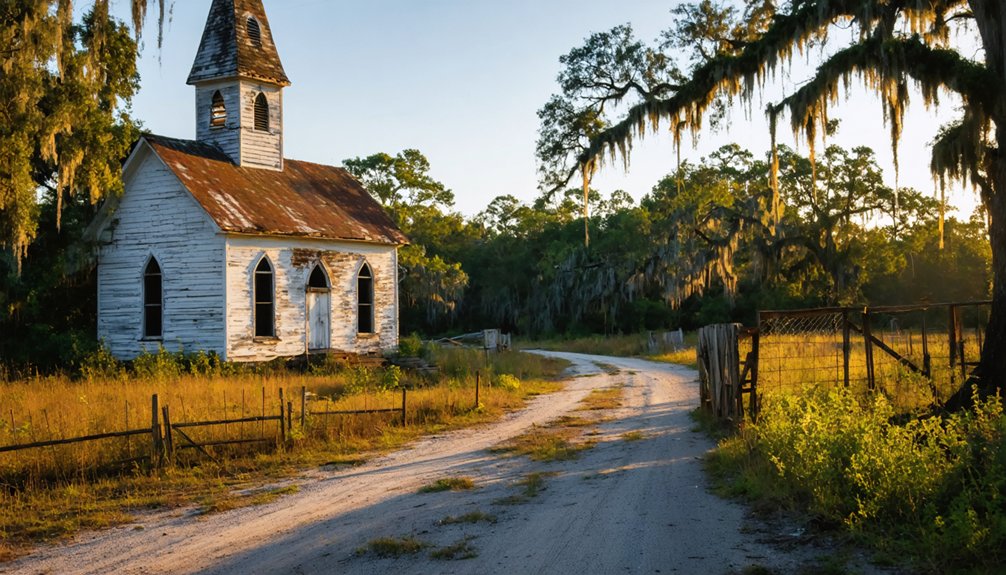
Deep in Mississippi’s pine-covered hills and forgotten hollows, three ghost towns guard their secrets with varying degrees of accessibility.
Among these historic ghost towns in Mississippi, visitors can explore crumbling facades and remnants of a bygone era. The haunting beauty of these sites tells the story of the past, drawing in adventurers and history enthusiasts alike. Each location offers a unique glimpse into the lives of those who once called these towns home.
As the seasons change, winter ghost towns in Mississippi take on an ethereal quality, cloaked in frost and silence. The stark contrast between the white landscape and the weathered buildings evokes a sense of nostalgia and mystery. Explorers may find themselves wandering through snow-dusted pathways, where the whispers of the past seem to linger in the cold air.
Antioch sits near Jumpertown in Prentiss County’s northeast corner, though pinpointing its exact location challenges even determined explorers. Union troops razed this settlement during the Civil War, leaving behind legendary treasures allegedly buried after Corinth’s 1862 battle.
Leprosy legends speak of disrupted gold mining operations, adding mystery to ruins that never rose again.
Cotton Gin Port and Augusta remain frustratingly elusive.
Historical records offer scant details about their locations or current conditions.
You’ll need supplementary research beyond standard sources to track these vanished communities.
They’re ghost towns in the truest sense—places that’ve faded so completely that even confirming their summer accessibility requires detective work through county archives and conversations with local historians.
Planning Your Summer Ghost Town Adventure in Mississippi
Pack strategically for isolated exploration:
- Water and electrolytes for humid trail walks
- Snake boots if venturing off maintained paths
- Wildlife photography gear for dawn/dusk shots
- Local food from Port Gibson for campground picnics
The 22-site primitive campground accepts no reservations—arrive early.
Rodney presents bigger summer challenges: muddy Commerce Street becomes treacherous, and snakes proliferate along church-to-graveyard trails. Save this atmospheric ghost town for winter when cooler temperatures make the dirt road adventure worthwhile.
Frequently Asked Questions
Are Ghost Town Sites Accessible for Visitors With Mobility Limitations?
You won’t find accessible pathways or wheelchair-friendly options at Rodney Ghost Town. Muddy dirt roads, uneven terrain, standing water, and deteriorating structures create significant barriers. You’ll need solid mobility and sturdy boots to explore here.
What Safety Precautions Should I Take When Exploring Abandoned Structures?
You’ll need sturdy boots, flashlights, and awareness of environmental hazards like unstable floors and toxic dust. Respect historical preservation by not disturbing artifacts, travel with companions, and always inform someone of your exploration plans before venturing inside.
Is Photography Permitted at All Mississippi Ghost Town Locations?
Photography policies vary—you’ll find photographic regulations differ at each Mississippi ghost town. While urban exploration thrives on spontaneity, you’ll need landowner permission for private sites. Public locations generally welcome cameras, though historical properties may require special clearances beforehand.
Do Any Ghost Towns Charge Admission Fees or Require Permits?
You won’t pay admission fees or need permits at Mississippi’s ghost towns like Rodney. They’re open for free exploration, preserving historical preservation through unrestricted access. While local legends thrive, guided ghost tours nearby do charge separate fees.
As you venture through ghost towns in Mississippi to explore, you’ll stumble upon remnants of old structures and hear stories echoing through the abandoned streets. Many visitors are captivated by the eerie charm and the tales that linger in the air, inviting them to imagine the lives once lived there. These sites not only offer a glimpse into the past but also serve as a canvas for artists and historians eager to document their unique histories.
Are Guided Tours Available for Mississippi’s Ghost Town Sites?
Picture weathered tombstones casting long shadows as theatrical guides in period costume lead you through Mississippi’s haunted sites. You’ll discover guided tours emphasizing historic preservation while local legends come alive through Mystic Molly’s narratives and costumed storytellers.
References
- https://mississippifolklife.org/articles/haunted-by-a-ghost-town-the-lure-of-rodney-mississippi
- https://www.youtube.com/watch?v=tAAp1JB7kd8
- https://www.tripadvisor.com/Attraction_Review-g28945-d10045204-Reviews-Rodney_Ghost_Town-Mississippi.html
- https://theforgottensouth.com/rodney-mississippi-ghost-town-history-tour/
- https://www.roadrunner.travel/tours/ghosts-of-mississippi-exploring-the-magnolia-state/
- https://www.susantregoning.com/blog/rodney-ghost-town
- https://www.hauntedrooms.com/mississippi/haunted-places
- http://sites.rootsweb.com/~mstttp/ghosttowns.htm
- https://www.legendsofamerica.com/ms-rodney/
- https://sethparker.net/rodney-mississippi-the-ghost-town-youve-probably-never-heard-of/