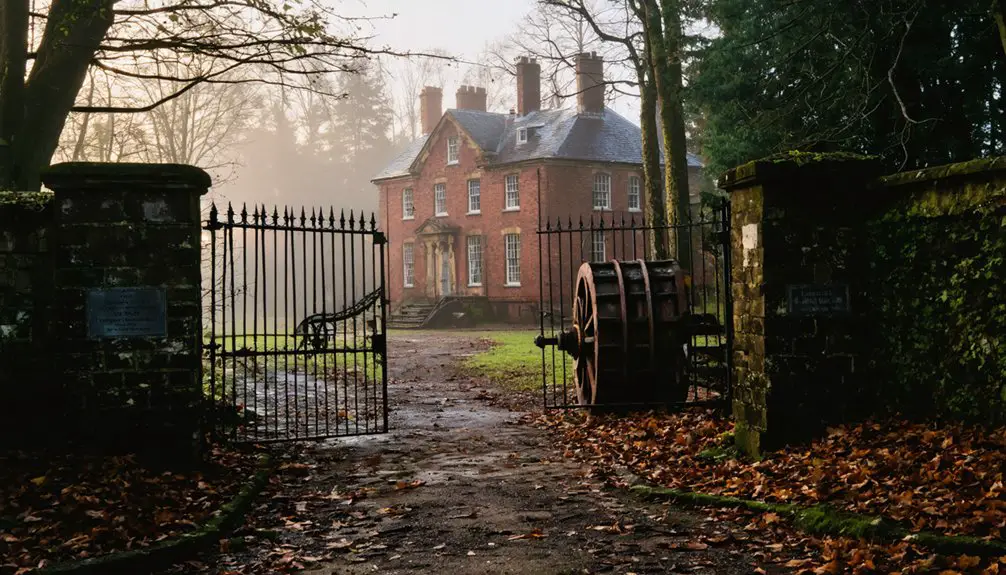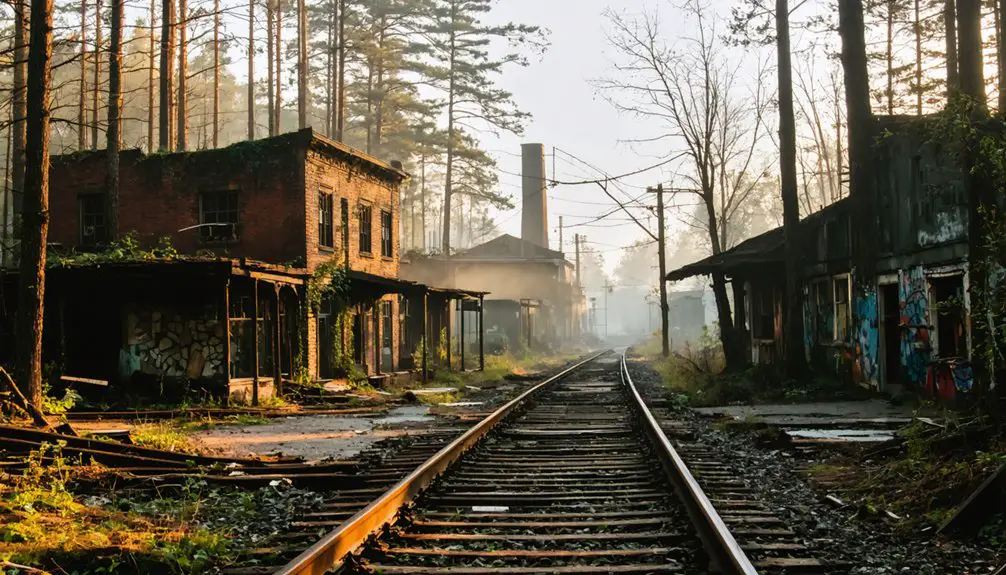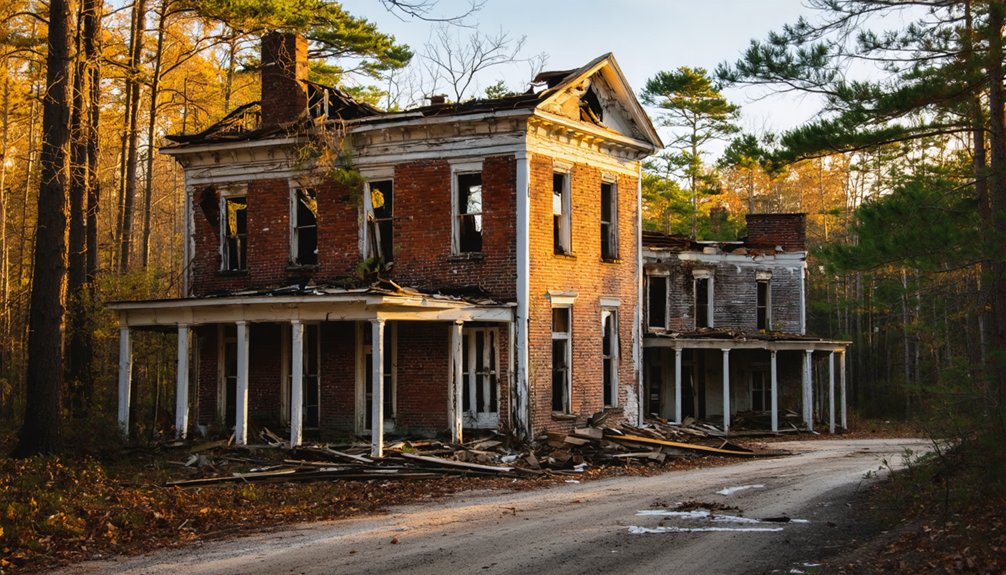
You’ll find New Jersey’s ghost towns surprisingly accessible for summer exploration. Feltville’s deserted village sits within Watchung Reservation, while Batsto Village in the Pine Barrens showcases 33 preserved colonial buildings where ironworks once supplied revolutionary troops. Waterloo Village along the Morris Canal offers towpath walks past historic lock systems, and Whitesbog’s cranberry bogs wind through sugar sand roads. Atsion’s 1826 mansion overlooks swimming spots on the Mullica River. Each site reveals different chapters of New Jersey’s industrial past, with trails, artifacts, and restored structures waiting beyond the forest canopy.
Key Takeaways
- Feltville in Watchung Reservation features preserved 1825 mill town buildings including a church, general store, and forested trails for exploration.
- Waterloo Village offers historic Morris Canal walking paths, a famous lock system, and remnants of 19th-century commerce within state parkland.
- Batsto Village provides 33 colonial buildings, craftsmen’s shops, a restored mansion, and exhibits showcasing its 1766 ironworks heritage in the Pine Barrens.
- Whitesbog Village features cranberry bogs, historic buildings, and sugar sand roads with free admission and no crowds in Brendan T. Byrne State Forest.
- Atsion offers the 1826 Richards Mansion tours, summer swimming at Atsion Lake, river paddling, and exploration of abandoned iron forge ruins.
Feltville: The Deserted Village Hidden in Watchung Reservation
Tucked within the dense forests of Watchung Reservation, Feltville stands frozen in time—a collection of white clapboard buildings that once housed 175 mill workers now eerily silent along a narrow country lane.
You’ll discover David Felt’s 1825 mill town remarkably intact: dormitories, church, general store, and schoolhouse still standing where workers once lived their regimented lives.
Step back into 1825 where David Felt’s complete mill village still stands—dormitories, church, store, and school preserving workers’ daily existence.
Walk freely through this National Register site where community storytelling brings three distinct eras alive—from Felt’s industrial experiment through Warren Ackerman’s Glenside Park resort to today’s historical preservation efforts.
Only three families remain among these ghostly structures.
The site comprises 8 historic homes, a carriage house, general house, and church that together create one of Union County’s 25 designated historic landmarks.
Archaeological excavations have uncovered forgotten privies and wells revealing artifacts from multiple occupation periods across the village’s 300-year history.
Visit the restored Masker’s Barn and occasionally-opened buildings, then explore the forested trails surrounding this authentically preserved settlement that refused to completely disappear.
Waterloo Village: A Restored 19th Century Canal Town
Pack water for towpath walks through Allamuchy Mountain State Park—you’re free to roam where 19th-century commerce once thundered. The village served as a crucial halfway point where mules rested and canal boats received servicing during the Morris Canal’s busiest years. The canal’s ingenious lock system lifted boats 900 feet in elevation as they traveled the 102-mile route between the Hudson and Delaware Rivers.
Batsto Village: From Ghost Town to Living History Museum
Deep in the Pine Barrens of South Jersey, Batsto Village rises from the sandy soil like a time capsule that refused to stay buried. You’ll discover 33 preserved buildings where Colonial architecture tells stories of industrial evolution—from Revolutionary War iron furnaces to glassmaking operations that defined early America.
Founded in 1766, this ironworks supplied Continental Army kettles and cooking pots before transforming through generations of owners.
Joseph Wharton’s 1876 purchase sparked the village’s final chapter, ending when the last resident departed in 1989.
Now you’re free to explore craftsmen’s shops, the restored mansion, and working mills. The visitor center’s ten-minute film orients you before you wander independently through two-and-a-half centuries of unfiltered American history. Start your visit at the museum and visitor center, where exhibits showcase artifacts from the iron mill village including plows, arrowheads, and cannon balls that bring the area’s industrial past to life.
Admission is remarkably affordable at just $3.00 for ages 12 and above, making this a budget-friendly journey into New Jersey’s forgotten industrial heritage.
Whitesbog Village: Cranberry Farming Heritage in the Pine Barrens
Just twenty miles northeast of Batsto, another Pine Barrens settlement tells a sweeter story—one written in crimson cranberries and cultivated blueberries rather than iron and glass.
You’ll discover Whitesbog Village, where historical cranberry bogs stretch across 3,000 acres of preserved wilderness. Founded in 1857, this company town became New Jersey’s largest cranberry operation by the 1900s.
What makes it remarkable? Elizabeth White pioneered blueberry cultivation here in 1916, partnering with USDA scientist Dr. Frederick Coville to create America’s first commercial highbush blueberries.
Walk the sugar sand roads freely—it’s open daily within Brendan T. Byrne State Forest. The village also housed satellite settlements like Rome and Florence, where African-American and Italian-American migrant laborers lived until the communities were razed in the 1960s.
Visit October weekends for cranberry bog tours, or explore Elizabeth White’s home and the barrel factory anytime.
No admission fees, no crowds—just authentic agricultural history you can experience on your terms.
Atsion: Exploring Wharton State Forest’s Forgotten Settlement
Where cranberry bogs once flourished along the Mullica River, Atsion’s story began with the ring of hammers on iron in 1765. You’ll find Charles Read’s former forge town transformed through cycles of ambition and industrial decline—from bog iron smelting to failed cotton mills.
From hammers striking iron to the silence of abandoned mills—Atsion’s industrial dreams rose and fell with the rhythm of American ambition.
The 1826 Richards Mansion stands as evidence of ironmaster wealth, while preservation efforts since 1954 have protected these ruins within Wharton State Forest. The mansion underwent comprehensive restoration between 2008-2009, with tours now offering public access to its partially preserved interior.
You can swim in Atsion Lake, originally dammed to power furnaces 250 years ago. Explore the abandoned 1854 rail line that once carried Civil War supplies, or paddle the Mullica River past crumbling foundations. The site exemplifies the historical significance of industry and settlement patterns throughout the Pine Barrens region.
The operational church and historic cemetery reveal lives lived in isolation. Call (609) 561-3262 before visiting—this gateway off Route 206 offers unrestricted wilderness access.
Frequently Asked Questions
Are Any of These Ghost Towns Considered Haunted or Have Paranormal Activity?
Yes, all four locations have haunted legends and reported paranormal sightings. You’ll find ghost stories at Feltville’s deserted buildings, Hampton’s burned ruins, Demon’s Alley’s cult site, and Waterloo’s abandoned canal town—each offering spine-tingling exploration opportunities.
What Are the Best Times of Day to Photograph These Historic Sites?
You’ll capture stunning shots during golden hour—that magical period when photographers report 80% better image quality. Sunrise photography transforms these abandoned sites into otherworldly landscapes, with soft light revealing textures you’d miss during harsh midday conditions.
Can Visitors Bring Pets to New Jersey’s Ghost Town Locations?
You’ll find pet-friendly policies at New Jersey’s ghost towns! Most welcome leashed dogs under standard animal rules. Batsto Village and Double Trouble encourage four-legged explorers, while Feltville requires leashes dawn-to-dusk for everyone’s safety and preservation.
Exploring ghost towns worth exploring in New Jersey can be a unique adventure for both you and your pets. The historical backdrop of these sites offers an intriguing glimpse into the past, while the open spaces allow for plenty of exploration. Just be sure to follow any specific guidelines to ensure a safe and enjoyable experience for your furry friends and fellow visitors.
As you venture into these abandoned communities, each location has its own unique story to tell. From crumbling buildings to remnants of industry, exploring ghost towns in New Jersey opens up a world of history for enthusiasts and casual visitors alike. Take your time to wander through the ruins and imagine what life was like in these once-thriving towns.
Are Guided Tours Available at All Five Ghost Town Destinations?
No Instagram-worthy guided tours at all five—Batsto and Waterloo offer historical preservation programs with visitor amenities, while Feltville, Walpack Center, and Ong’s Hat lack confirmed tours. You’ll need self-guided exploration freedom at those rugged destinations.
Which Ghost Town Is Closest to New York City for Day Trips?
The Deserted Village of Feltville’s your closest escape for urban exploration, just 25 miles from Manhattan. You’ll discover abandoned landscapes within an hour’s drive, offering the freedom to roam historic ruins without admission fees or crowds.
References
- https://en.wikipedia.org/wiki/List_of_ghost_towns_in_New_Jersey
- https://www.jerseysbest.com/community/take-a-road-trip-through-n-j-s-spooky-ghost-towns-to-see-peculiar-pieces-of-history/
- https://www.youtube.com/watch?v=ZIp3AYb0ulw
- https://www.atlasobscura.com/things-to-do/new-jersey/abandoned
- https://wobm.com/new-jersey-is-home-to-one-of-americas-spookiest-ghost-towns/
- https://southjerseytrails.org/2017/03/16/six-pine-barrens-ghost-towns-to-explore/
- https://pinelandsalliance.org/learn-about-the-pinelands/pinelands-history-and-culture/ghost-towns-of-the-pine-barrens/
- https://www.youtube.com/watch?v=P0aFAgcr79E
- https://sueadler.com/feltville-historic-district-in-watchung-reservation/
- https://ucnj.org/parks-recreation/deserted-village/