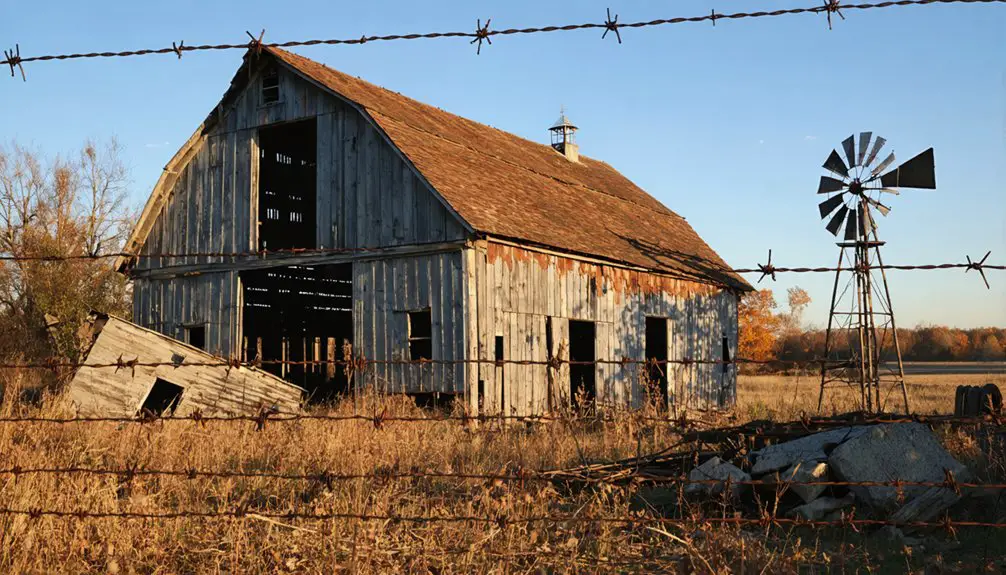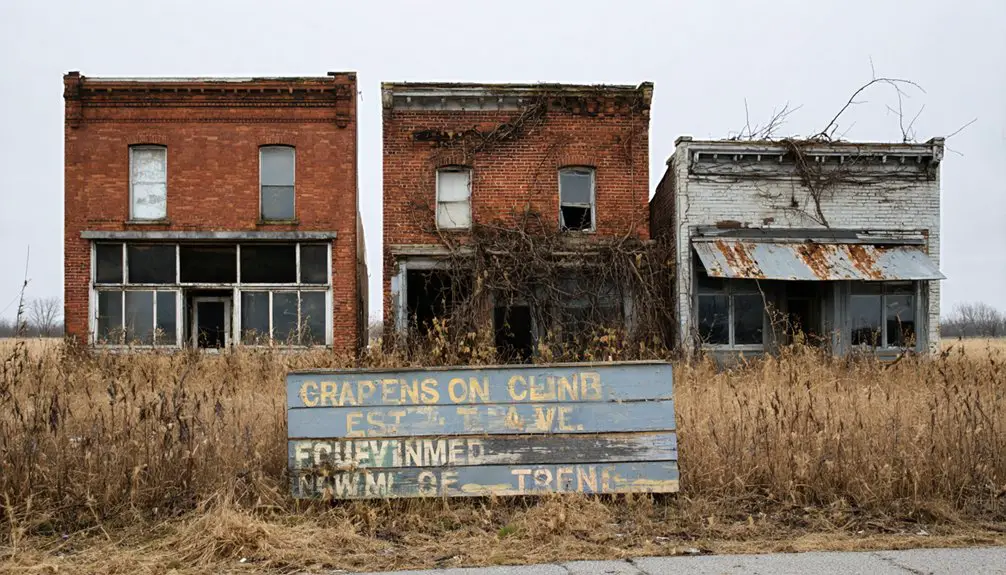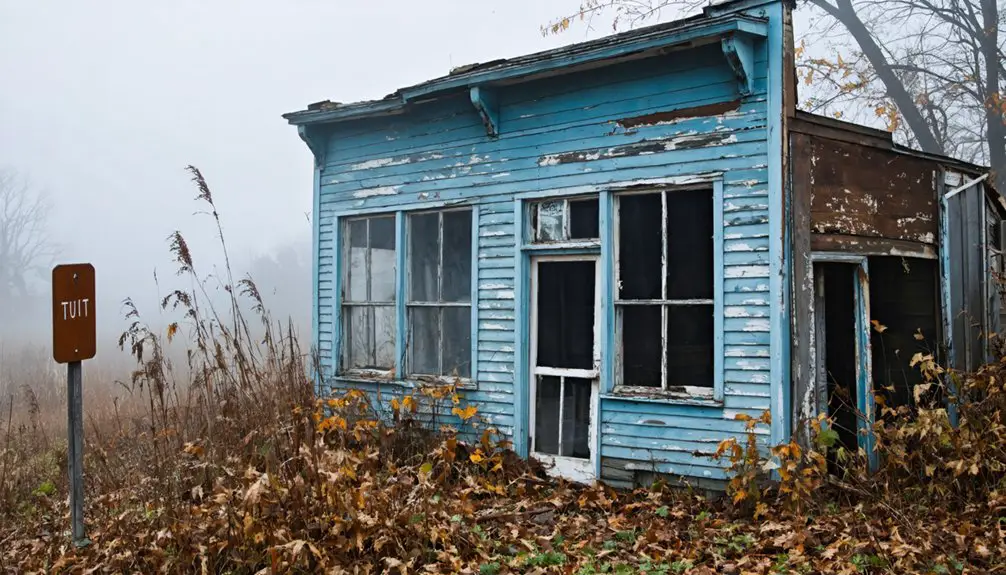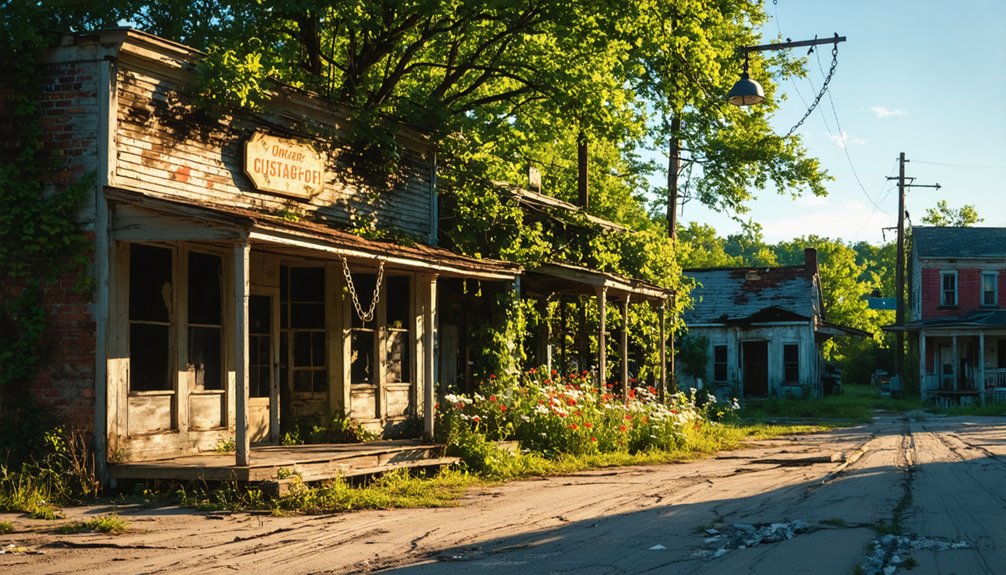
You’ll find Ohio’s most enchanting ghost towns nestled in Appalachian foothills, where summer transforms abandoned sites into explorer’s paradreams. Moonville’s haunted tunnel beckons through dense forest, while Helltown’s boarded buildings fuel paranormal legends in Cuyahoga Valley. Haydenville preserves brick worker homes from its company-town era, and San Toy’s coal mining ruins tell stories of violent labor strikes. Pack sturdy boots and insect repellent for June through August visits—temperatures hover around 75-85°F with extended daylight perfect for discovering the fascinating histories behind these vanished communities.
Key Takeaways
- Moonville in Vinton County features a haunted tunnel, historic rail trail, and paranormal legends in Appalachian foothills.
- Boston Mills (Helltown) in Cuyahoga Valley offers urban legends, abandoned structures, and a cemetery with ghost stories.
- Haydenville preserves Ohio’s last company-owned town with brick homes, industrial heritage, and unique clay headstones.
- San Toy showcases coal mining history from 1902-1927, including a violent labor strike that ended the boomtown.
- Visit June through August for ideal weather (75-85°F), wildflower blooms, and longer daylight for exploration.
Moonville: Ohio’s Most Remote Abandoned Railroad Town
Deep in the Appalachian foothills of Vinton County, Moonville stands as Ohio’s most isolated ghost town—a place where nature has reclaimed what the railroad once built. You’ll find only foundations, a weathered cemetery, and the haunting tunnel that once carried Baltimore and Ohio trains through these hills.
Nature swallows abandoned railroad dreams in Vinton County, where crumbling foundations and a lonesome tunnel mark Ohio’s most remote ghost town.
The Moonville Rail Trail now guides you through terrain where 21 people met their fate on dangerous tracks and trestles. The approximately 10-mile trail leads past historic landmarks including a bridge where old and new structures stand side by side.
What draws adventurers here aren’t just abandoned structures—it’s the haunted legends born from tragedy. Since 1859, stories have persisted of lantern-carrying spirits near the tunnel, particularly on stormy nights. The most famous apparition is engineer Theodore Lawhead, who died in a train collision and is said to float along the tracks carrying his lantern.
Whether you believe the tales or simply appreciate the solitude, Moonville offers an unfiltered glimpse into Ohio’s forgotten railroad past, accessible only to those willing to venture off the beaten path.
Boston Mills (Helltown): The State’s Most Notorious Ghost Town
You’ll find Boston Mills—better known as Helltown—lurking in the Cuyahoga Valley, where boarded-up buildings and “No Trespassing” signs once marked the government’s controversial 1970s land grab.
The paranormal legends here run deeper than any other Ohio ghost town: rumors of a Satanic church with upside-down crosses, a haunted school bus frozen in the woods, and even a mutant snake called the Peninsula Python.
Access the site through Boston Township’s winding back roads near Peninsula, but know that most structures met the wrecking ball in 2016, leaving only the eerie cemetery and the weight of six decades’ worth of dark folklore. Originally settled in 1806 as the first village in Summit County, Boston Mills thrived as a mill town along the Ohio and Erie Canal before its forced abandonment for park creation. The Flood of 1913 devastated the canal system, accelerating the town’s economic decline and setting the stage for its eventual demise.
Helltown’s Dark Urban Legends
The moment you venture into Boston Mills—better known as Helltown—you’ll encounter a web of urban legends so thick they’ve overshadowed the town’s actual history.
You’ll hear tales of the Presbyterian church with its upside-down crosses, where locals swore candles flickered at midnight and Satanic rituals occurred. Urban decay feeds these stories—that abandoned school bus sparked rumors of vanished children, while Crybaby Bridge supposedly echoes with phantom infant wails.
The legendary sightings include mutated residents from chemical spills and even the “Peninsula Python,” a giant snake born from toxic waste.
Stanford Road’s dead-end barricades and graffiti reading “now we understand how the Indians felt” create an atmosphere where serial killers and occultists seem plausible amid the overgrown ruins. In reality, the road closures stem from damage and neglect rather than supernatural forces. While most abandoned structures have been demolished, Boston Cemetery still stands as a focal point for ghost hunters who report hearing unexplained growls and howling sounds among the early 1800s graves.
National Park Access Routes
After decades of government buyouts transformed Boston Mills into the eerie landscape known as Helltown, those same acquisitions opened the door to one of Ohio’s most scenic summer destinations—Cuyahoga Valley National Park. You’ll find access through former Boston Township roads, though urban exploration is trickier now. Stanford Road greets you with ominous “Road Closed” signs, yet continues into park territory where hiking trails replace vanished homes.
The Presbyterian church with its upside-down crosses vanished in 2016, marking the end of historical preservation debates. Boston Cemetery remains intact, surrounded by reclaimed forest. The historic tombstones at the top of the cemetery’s large hill date back to the 1800s, while more recent graves rest at the bottom. You can explore freely along designated trails through northern Summit County’s preserved lands, where nature’s reclaimed what bulldozers left behind. The area became a National Recreation Area in 1974, triggering the widespread land acquisition that forever altered the landscape.
Just respect posted boundaries—the government’s still watching.
Paranormal Activity Hotspots
Why does an abandoned Ohio township draw more ghost hunters than historians? Boston Mills’ paranormal reputation rivals coastal maritime legends, transforming abandoned structures into ancient ruins of modern folklore.
You’ll find the cemetery’s most famous specter—a forlorn figure eternally waiting on a weathered bench for family who’ll never return.
The Presbyterian Church’s upside-down crosses sparked decades of Satanic ritual rumors, while abandoned sanctuaries supposedly hosted candlelit ceremonies and animal sacrifices.
Local legend whispered of the “Peninsula Python,” a chemical-spawned serpent lurking among overgrown foundations.
Though the 2016 demolition erased most physical evidence, Stanford Road’s dead-end closures and boarded structures had previously convinced visitors that cult activity thrived here.
No documented paranormal incidents ever emerged, yet Helltown’s ghost stories persist.
Haydenville: Exploring Ohio’s Last Company-Owned Town
Nestled in the rolling hills of Hocking County, Haydenville stands as a remarkable time capsule of industrial America.
Where brick homes built by workers’ own hands still line quiet streets that once echoed with factory whistles.
You’ll discover Ohio’s last entirely company-owned town, where residents couldn’t even shop elsewhere until 1964.
The industrial heritage runs deep—Peter Hayden’s empire controlled everything from paychecks (company scrip only) to housing, with eviction following any job loss.
Today’s historic preservation efforts have protected over 120 properties across 20 acres, earning National Register status in 1973.
You can explore the atmospheric Haydenville Tunnel and wander past authentic brick structures that once advertised the company’s products.
The cemetery features unique clay headstones and inscribed chimney pots, handcrafted at the factory that defined this community.
It’s a haunting reminder of corporate control, now transformed into freedom.
When planning your visit, be aware that multiple Haydenville locations exist across the United States, so verify you’re heading to the correct Ohio destination.
San Toy: A Coal Mining Boomtown Lost to Labor Strife
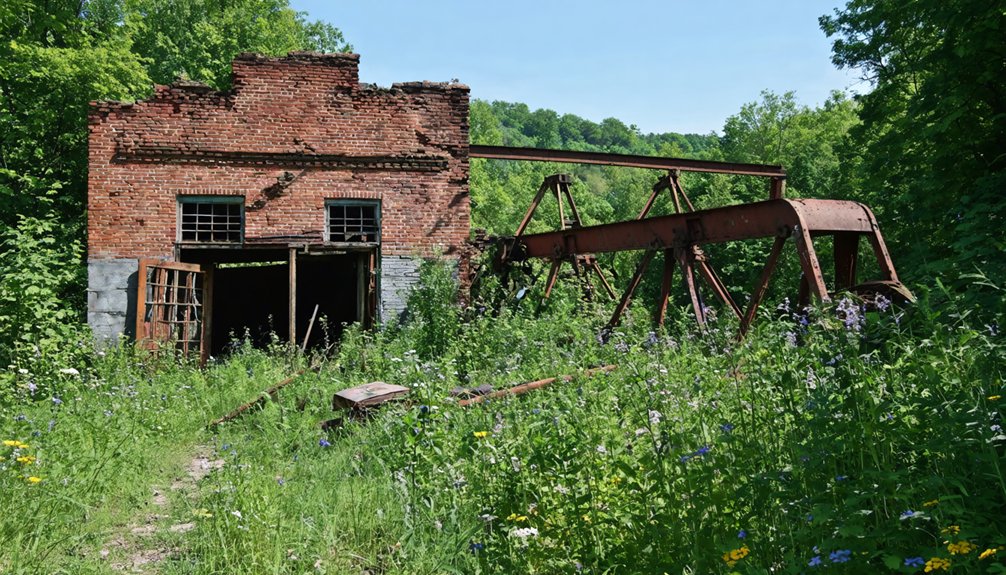
When you walk through the wooded hills of southeastern Perry County, it’s hard to imagine that 2,000 people once called this patch of earth home—a place so wild that locals compared it to frontier shootout towns.
San Toy burned bright from 1902 to 1927, fueled by coal money that filled both company coffers and moonshine stills hidden in the hollows.
The prosperity ended abruptly when angry miners torched Mine 1 in 1924, and a devastating strike three years later sent families scattering, leaving behind only a jail and the ghosts of Ohio’s most violent coal camp.
Rise of Mining Prosperity
Deep in Perry County’s southeastern hills, the Sunday Creek Coal Company spotted opportunity in the earth’s black seams and built San Toy from scratch in 1902. This mining history transformed wilderness into a thriving community where nearly 1,000 souls chased prosperity in the Hocking Valley Coal Fields.
The town development brought genuine civilization to frontier country:
- A hospital tended injured miners while a theatre provided entertainment.
- Hotels housed newcomers seeking fortune in the mines.
- Multiple mining operations extracted coal around the clock.
Violent Strikes End Community
Labor unrest shattered San Toy’s promise of prosperity as dramatically as pickaxes once broke coal from the earth. You’ll find this ghost town’s demise rooted in the brutal 1873 strike,
when 6,000 miners walked out over proposed wage cuts—dropping from $1.10 to $0.90 per ton. The community disruption escalated quickly.
Strikers attacked replacement workers imported by rail from Italy and Virginia, turning neighbor against neighbor. Arson lit the night sky. Violence culminated in Giovanni Chiesa’s murder at nearby Churchill.
The strike lasted six months in Tuscarawas Valley before collapsing. Telegraph wires and railroad tracks—the same infrastructure that built San Toy—became weapons against workers, bringing distant strikebreakers who couldn’t be persuaded to stand down.
When miners finally returned, defeated, the town’s spirit was already broken.
Orbiston: Iron Industry Remnants in Hocking County
In 1877, the roar of the Ogden Furnace announced Orbiston’s birth in Hocking County, where molten iron poured from locally mined ore and transformed a forested hillside into a bustling industrial settlement.
You’ll find minimal traces today—just the Buchman house and crumbling post office stand sentinel over reclaimed forest. Coal miners once played Sunday baseball here between shifts, their laughter echoing through valleys now silent.
Where bustling miners once gathered for Sunday games, only whispers of the past drift through empty valleys reclaimed by wilderness.
The industrial ruins hold archaeological significance as a testament to Ohio’s Hanging Rock Iron Region:
- Hellena Iron Ore Furnace structures mark extraction sites
- Railroad station foundations trace transportation corridors
- Commercial district remnants reveal community infrastructure
Superior Great Lakes iron killed Orbiston’s competitiveness, bankrupting the furnace.
When coal mines shuttered in the 1950s, residents scattered, leaving nature to erase what progress built.
Oreton Station: A Slowly Fading Railroad Community
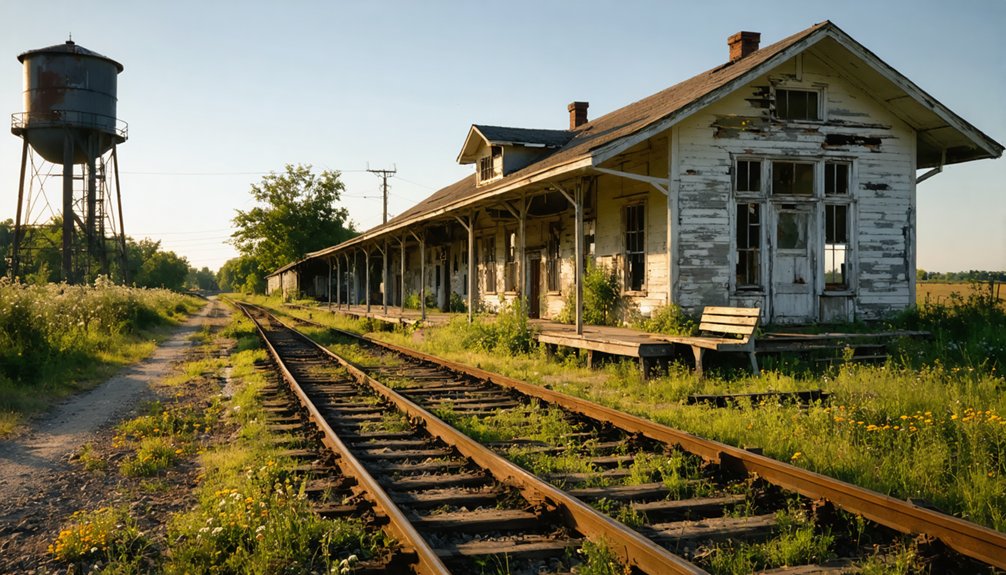
When the Marietta and Cincinnati Railroad laid tracks through Vinton County’s forested hills in 1853, Oreton Station emerged at the intersection of coal, iron, and transportation—three forces that would give it life and ultimately seal its fate.
You’ll find this ghost town near SR 278 in Brown Township, where railroad relics whisper stories of prosperity that lasted through the 1950s. The terrain’s rough—bring sturdy boots for hiking through dense woods where abandoned foundations peek through decades of leaf litter and undergrowth.
Only one structure survives: a brick safe from the general store, owned by Dave Ebert. Nearby, concrete foundations mark where homes once stood.
The Richland Furnace, listed on the National Register since 1973, remains the most intact reminder of Oreton’s industrial past.
Planning Your Summer Ghost Town Adventure in Ohio
Your ghost town adventure demands preparation beyond simply marking locations on a map. Summer field trips to Ohio’s abandoned settlements require strategic packing and timing. June through August delivers 75-85°F temperatures and up to 15 hours of exploration daylight, while wildflower blooms paint trails at Clifton Gorge through early summer.
As you map out the ghost towns in Ohio to explore, consider the stories they tell and the remnants of history that linger in their structures. Take time to research each town’s background, as understanding their past will enrich your journey. Pack a camera to capture the unique beauty and eerie charm of these forgotten places, creating memories that will last long after you’ve left.
Essential gear includes:
- Sturdy hiking boots for traversing uneven terrain at sites like Hocking Hills
- Flashlights for exploring dimly lit structures and tunnels
- Insect repellent to combat mosquitoes in wetland areas
You’ll find free access at state parks year-round, though cell service vanishes at remote locations like Vinton Furnace.
Travel with companions, stick to marked trails near cliff edges, and pack extra water—hydration points don’t exist in these forgotten places. Download haunted Ohio maps before departure.
Frequently Asked Questions
Are Ohio Ghost Towns Safe to Explore With Children During Summer?
Ohio’s ghost towns juxtapose haunted legends with historical significance, but they’re risky for kids. You’ll face structural hazards, locked gates, and hunting zones. I’d skip nighttime visits—trespassing enforcement, unlit tunnels, and environmental contaminants make daytime exploration safer.
Exploring haunted places in Ohio can unveil eerie tales and remnants of the past. While venturing into these locations, it’s essential to remain aware of your surroundings and prioritize your safety above all. Engaging in guided tours during the day can enhance your experience, providing both thrilling stories and critical insights about the history of these chilling sites.
Do I Need Permits to Visit Ghost Towns in Ohio?
You won’t need permits for most Ohio ghost towns—just show up and explore freely. State parks and Wayne National Forest welcome spontaneous wanderers. Permit requirements only kick in for special events, commercial filming, or protected historical preservation sites requiring advance approval.
What Should I Pack for a Summer Ghost Town Exploration Trip?
Pack breathable summer clothing, sturdy boots, and freshwater supplies—explorers lose up to two liters hourly in Ohio’s humidity. You’ll need sun protection, navigation tools, and wildlife deterrents. Don’t forget your camera for capturing those hauntingly beautiful abandoned streets.
Are There Guided Tours Available for Ohio’s Ghost Towns?
Yes, you’ll find guided ghost tours throughout Ohio featuring historical preservation insights and excellent photography opportunities. Towns like Springboro, Youngstown, and Dublin offer walking tours where you’ll capture haunting stories and architectural details from knowledgeable local guides.
For those looking for a different kind of adventure, you can explore abandoned towns in Ohio that hold the remnants of history and mystery. Each site tells a unique story through its decaying structures and overgrown landscapes, inviting exploration for the curious and adventurous. As you wander these forgotten places, you’ll uncover the rich tapestry of Ohio’s past, where every corner reveals a new tale waiting to be discovered.
Can I Camp Overnight Near These Abandoned Ohio Towns?
Yes, you’ll find campground options near all four locations. Zaleski and state forests offer primitive sites where you’ll experience wildlife encounters. Pack light, respect the land, and embrace the solitude these forgotten places offer adventurous souls.
References
- https://ohioghosttowns.org/top-10-ghost-towns/
- https://wrkr.com/ohio-ghost-towns/
- https://www.youtube.com/watch?v=QWTtG6njIDs
- https://www.youtube.com/watch?v=ONB5GV9T-GI
- https://hockingvacations.com/blog/exploring-the-ghost-towns-of-ohio-unearthing-forgotten-histories
- https://www.atlasobscura.com/things-to-do/ohio/abandoned
- https://ohioghosttowns.org
- https://www.moonvilletunnel.net/Moonville_History.htm
- https://www.youtube.com/watch?v=XVwj5wpsgTM&vl=en-US
- https://www.ravenwoodcastle.com/2015/07/14/legends-lore-moonville-tunnel/