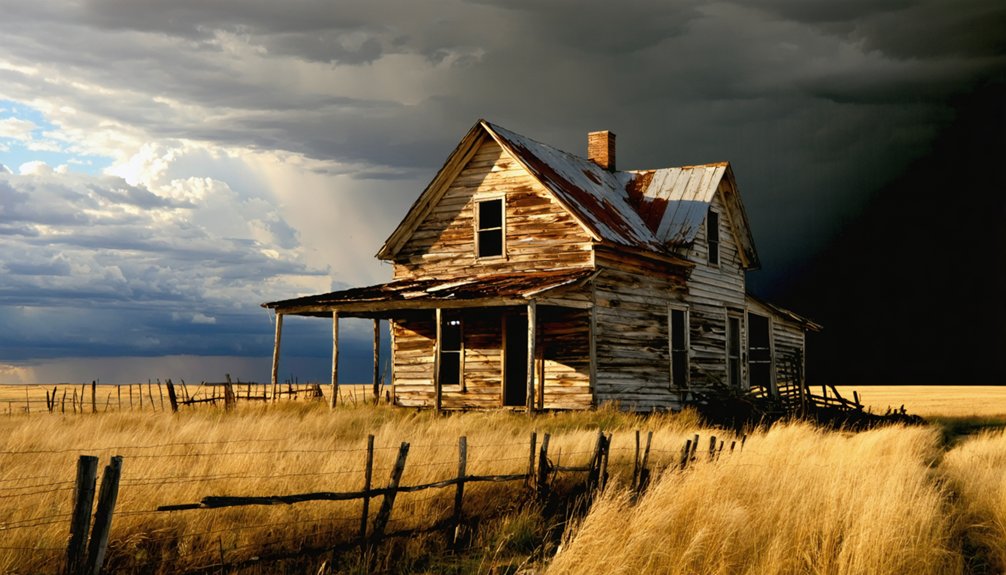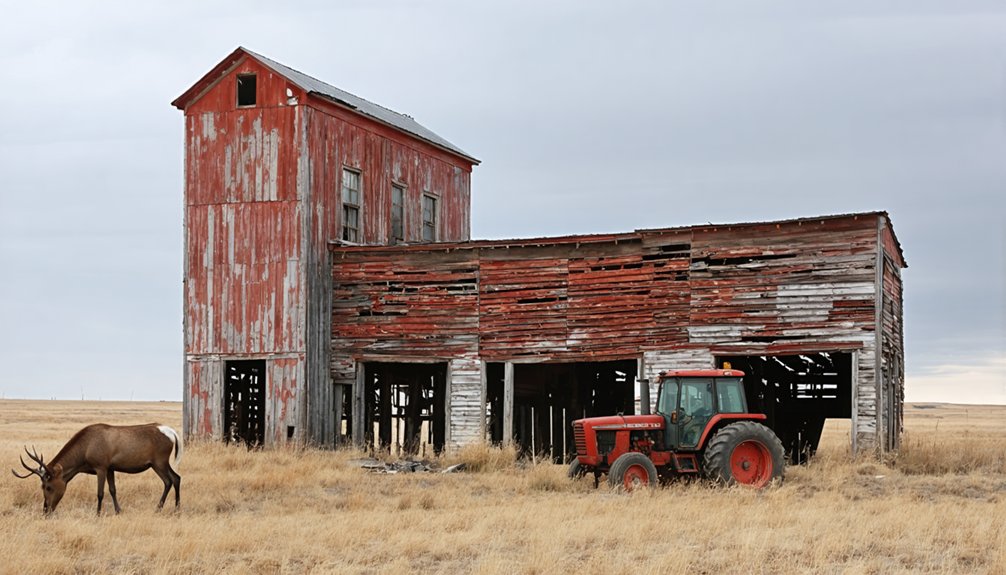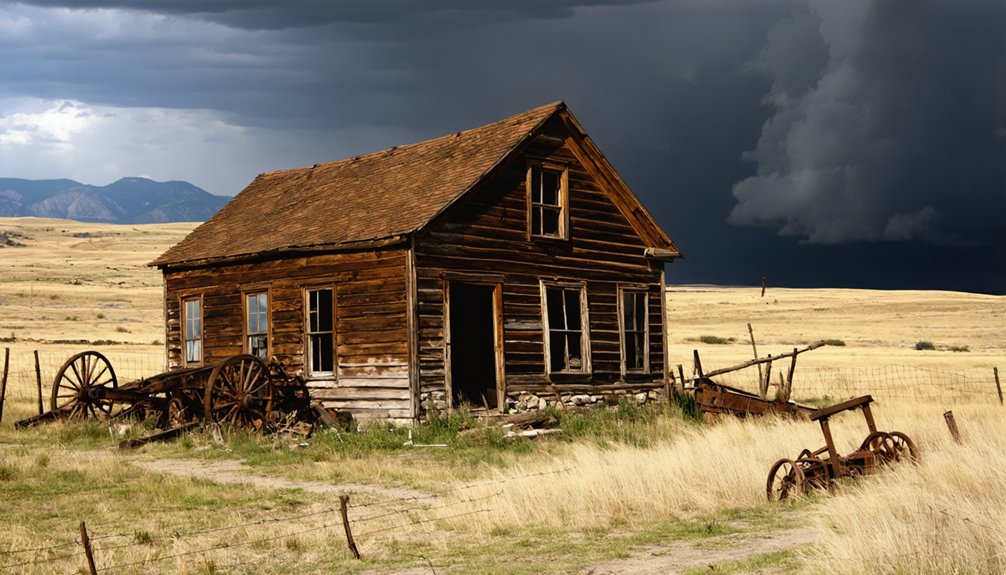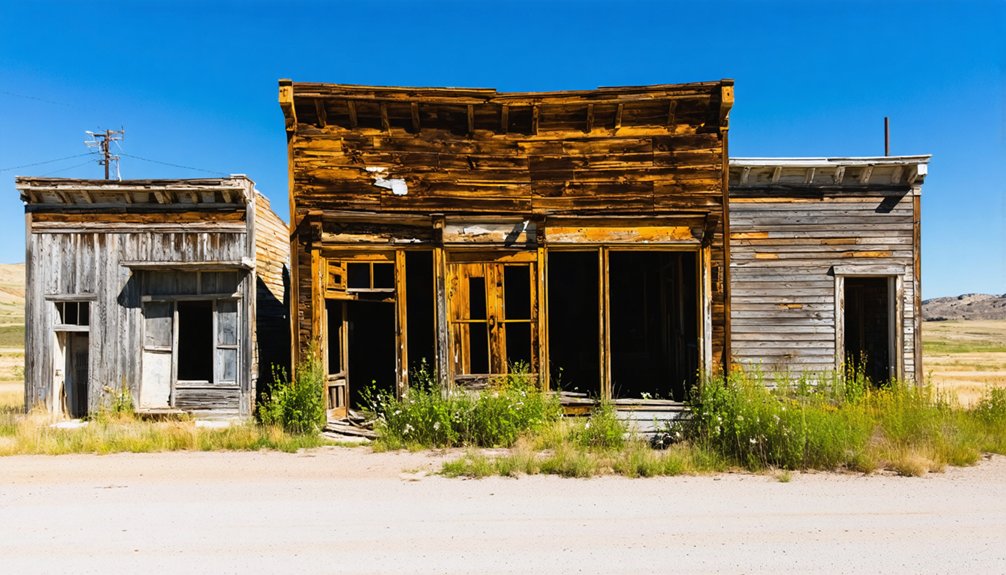
You’ll find South Dakota’s best summer ghost towns scattered across the Black Hills, where Deadwood’s preserved Victorian streets buzz with Wild West reenactments and Rockerville’s crumbling 1877 structures line scenic hiking trails. Don’t miss Pactola Reservoir—when water levels drop, you can kayak over Camp Crook’s submerged foundations from 1875. Ardmore’s fifteen abandoned houses along Highway 71 offer haunting photography opportunities, while Mystic and Rochford hide mill ruins and moonshine saloons among the pines. The guide below reveals ideal visiting windows, hidden access routes, and safety precautions for exploring these frontier relics.
Key Takeaways
- Deadwood offers Victorian architecture, casino entertainment, Wild West reenactments, and guided tours showcasing gold rush history and legendary sites.
- Pactola Reservoir features submerged Camp Crook remnants visible during low water, plus kayaking, fishing, and water sports across 800 acres.
- Rockerville provides the 20-mile Flume Trail, old mining tunnels, historic post office, and scattered gold rush remnants from 1877.
- Ardmore displays 15 abandoned houses, car graveyards, and decaying storefronts along Highway 71, ideal for photography and exploration.
- Early June offers 70°F temperatures, minimal crowds, wildflowers, and dawn golden hour lighting, avoiding August’s Sturgis Rally congestion.
Deadwood: Where Wild West History Comes Alive
The dead trees lining the gulch gave Deadwood its name, but gold gave it life. You’ll walk streets where Wild Bill Hickok drew his last hand and 25,000 fortune-seekers crammed into a lawless canyon in 1876.
Unlike true ghost towns, Deadwood refused to die—even after fires razed it and Prohibition choked its saloons. The September 1879 fire destroyed over 300 buildings, devastating the town’s infrastructure and residents’ belongings. The 1989 gambling legalization sparked resurrection through historic preservation, transforming it into America’s first community saved by casino revenue.
Deadwood survived fire and Prohibition to become America’s first town resurrected by casino money and historic preservation.
Today’s ghost town architecture stands meticulously restored: Victorian storefronts house blackjack tables where brothels once thrived. You’ll encounter costumed gunslingers reenacting McCall’s trial and discover Mount Moriah Cemetery, where Calamity Jane rests beside Hickok. The Deadwood Alive theater troupe brings the town’s legends to life through daily performances and walking tours featuring characters from the Wild West era.
It’s Wild West authenticity without the danger—freedom’s playground preserved in narrow canyon walls.
Pactola Reservoir: Explore the Sunken Village of Camp Crook
You’ll find South Dakota’s most unusual ghost town beneath the surface of Pactola Reservoir, where the 1870s gold mining village of Camp Crook has rested underwater since 1953.
On summer afternoons, families fish and kayak directly above rotting log cabins, a submerged dynamite bunker, and the scattered foundations of what was once a bustling community of 300 miners.
Scuba divers now swim through the shadowy remains of Sherman House—the Black Hills’ first hotel—while you can spot the eerie outline of structures through the clear water on calm days. The reservoir was created between 1952 and 1956 following the Pick-Sloan Flood Control Act to supply water to Rapid City and manage flooding in the region. The town was later renamed Pactola after an intoxicated lawyer proposed the name, inspired by the legendary Pactolus river associated with King Midas and golden wealth.
Camp Crook’s Flooded History
Beneath Pactola Reservoir’s rippling surface lies Camp Crook, a placer mining village that once buzzed with over 300 fortune-seekers panning for Black Hills gold. Founded in 1875, the town thrived along Rapid Creek with sluices separating gold from gravel, claims valued up to $50,000.
When costs overwhelmed profits, miners abandoned their dreams. Then came 1952—the Pick-Sloan Flood Control Act sealed Camp Crook’s fate. Workers clear-cut trees, auctioned buildings, and condemned remaining structures before filling the valley with 4,319,993 cubic yards of earth. The dam project followed Rapid Creek flows that reached 2,500 cfs earlier that May, causing widespread damage and landslides throughout the region.
Today, you’ll find rotting cabins and a dynamite bunker transformed into underwater archaeology sites for adventurous scuba divers. The largest and deepest reservoir in the Black Hills now spans 800 acres with depths reaching 150 feet at maximum. Remember your water safety training before exploring these sunken remnants—freedom-seekers still chase Camp Crook’s secrets, just beneath different waves now.
Summer Water Activities Above
When summer sunshine transforms Pactola Reservoir into the Black Hills’ premier water playground, you’ll discover that recreation here means more than just splashing around—you’re literally playing above a ghost town.
Launch kayaking adventures from three boat ramps, paddling over submerged streets where Camp Crook once stood. Stand up paddleboarding offers crystal-clear visibility down to 30 feet—sometimes you’ll glimpse foundations beneath your board.
The 68-72°F waters feel perfect for swimming, water skiing, and wakeboarding. Between adrenaline rushes, try fly-fishing Rapid Creek below the dam for rainbow and brown trout, or explore 14 miles of shoreline.
Rent pontoons at the full-service marina, cast lines from ADA-accessible paths, or simply drift above history while tubing behind boats. The reservoir supplies water for Rapid City, serving the entire metro area while providing endless recreation. When ice conditions permit, winter transforms the reservoir into a prime ice fishing destination.
Spotting Submerged Remains Today
During drought years and low water levels, Pactola Reservoir reveals its secrets. You’ll spot submerged artifacts from the original 1875 settlement emerging from the receding waterline—remnants of a community deliberately flooded in the 1950s. The reservoir becomes an accessible time capsule when conditions align.
Watch for these remnants during your underwater exploration:
- Foundation stones from the Sherman House hotel and commercial buildings
- Scattered mining equipment including rusted sluice components
- Weathered wooden posts marking former street layouts
- Debris fields where cabins once stood before relocation
The best viewing happens during extended dry spells when water drops markedly below the 4,621.5-foot elevation mark. The site was originally established by outlaw miners who abandoned their settlement when Fort Laramie Treaty enforcement scattered the community in 1875. Bring polarized sunglasses to cut surface glare, and you’ll discover how this ghost town refuses to stay buried beneath bureaucratic flood control.
Rockerville: A Crumbling Reminder of Gold Rush Dreams
The wooden rockers that gave Rockerville its name clattered day and night in 1877, their rhythmic churning separating gold from Black Hills gravel as hundreds of prospectors flooded into the gulch. You’ll find remnants of that $250,000 boom year scattered throughout Rockerville Gulch, where disturbed earth still tells stories of fortune-seekers hauling gravel miles for a chance at color.
Today’s Rockerville Historic District preserves this cultural preservation effort through crumbling structures and the 20-mile Flume Trail, where you can bike or hike past tunnels and artifacts from the ambitious waterway that kept dreams alive until 1885. The town’s post office operated from 1879 until 1915, marking the decades when Rockerville transformed from bustling gold camp to fading outpost.
The historical significance resonates strongest when you’re standing where prospectors once stood, watching sunlight filter through abandoned doorways at 4,370 feet elevation.
Ardmore: Photography Paradise on the Plains
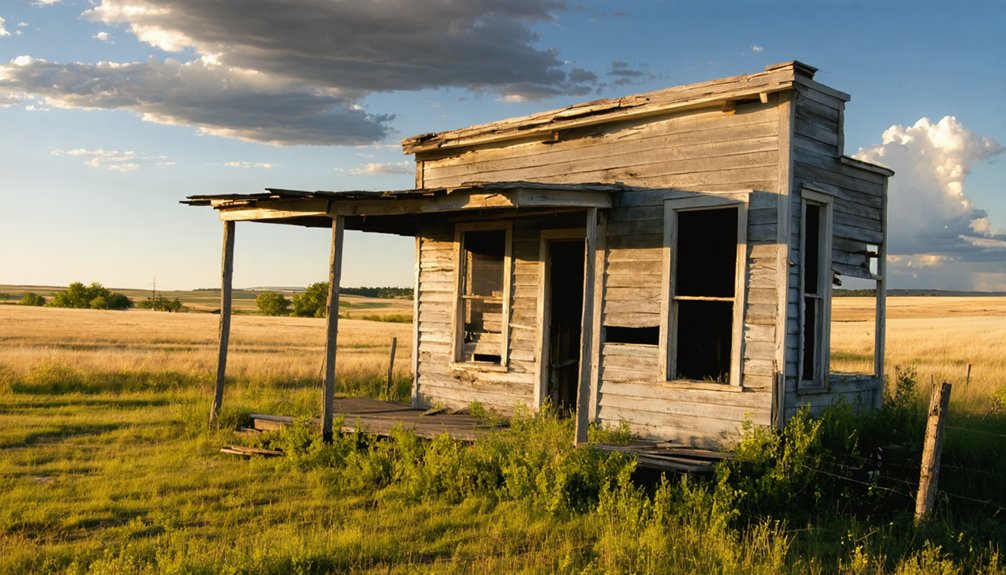
Fifteen abandoned houses stand sentinel along Highway 71, their weathered frames casting long shadows across the South Dakota prairie just one mile north of the Nebraska border. Ardmore’s historic architecture tells the story of a railroad town that thrived until diesel replaced steam, transforming this 1889 settlement into a photographer’s playground.
You’ll find photography opportunities at every turn:
- Classic car graveyard with rusting vehicles reclaiming the earth
- White experimental farm barn perched on a distant hill
- Decaying Main Street storefronts and an old water tower
- Burlington Northern Santa Fe tracks cutting through abandoned lots
The landscape feels frozen since 1936, when drought claimed this once-resilient community. With just one resident recorded in 2020, you’re free to wander this eerie time capsule where weather—not vandals—writes the final chapter.
Mystic: Untouched Solitude in the Black Hills
Nestled twelve miles north of Hill City along a winding gravel road, Mystic sprawls across Castle Creek’s valley like an open-air museum of mining ambition. You’ll find crumbling mills, rusted dredges, and forgotten sluices scattered across evergreen-studded slopes—each structure whispering tales of the 1909 electric placer dredge and the doomed $1 million reduction mill that solidified its own ore in 1900.
Where mining dreams rusted into silence, Castle Creek’s valley preserves a century of ambition frozen in abandoned machinery and crumbling stone.
Unlike commercialized Rockerville, Mystic remains delightfully untouched. You’re free to wander among the historical architecture without gift shops or guided tours dictating your pace.
The mining heritage lives in cyanide pits, assay houses, and bridge remnants from the daring Crouch Line railroad that spiraled fourteen times through these hills.
Park anywhere. Explore everything. This is ghost-town exploration at its most authentic.
Rochford: Sip Drinks Among Mining-Era Relics
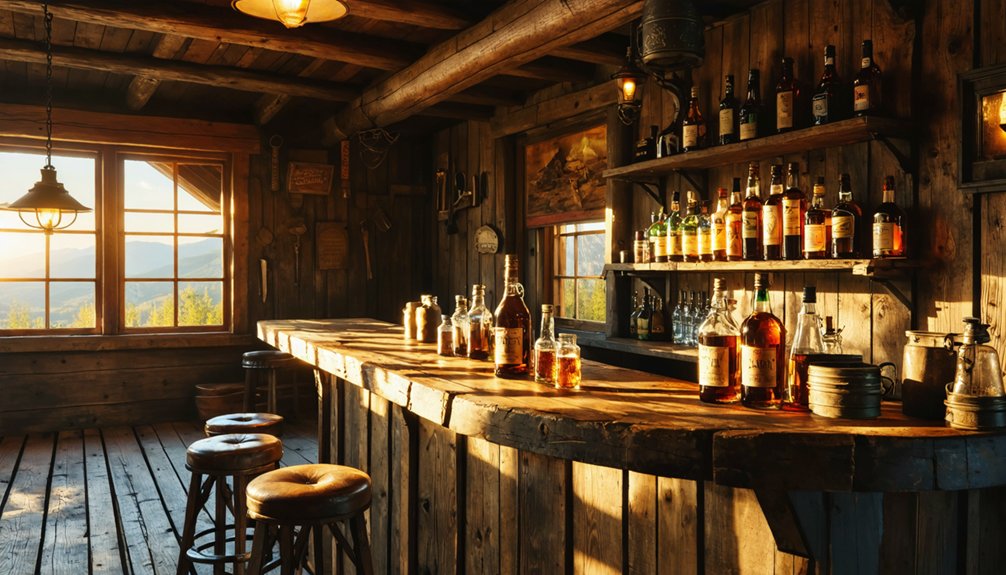
Just eight miles northeast of Mystic’s solitary ruins, Rochford pulses with an entirely different energy—one fueled by cold beer, laughter echoing off weathered wood walls, and locals who’ve turned their ghost town into a living social hub.
You’ll find two saloons serving summer sips among authentic mining relics from the 1870s gold rush. Back then, when 1,000 residents packed this gulch.
What makes Rochford uniquely worthwhile:
- Moonshine Gulch Saloon (established 1910) pours drinks in a converted horse stable
- America’s smallest mall stands as quirky testament to frontier humor
- Standby Mine ruins brood dramatically over Irish Gulch
- George Frink Cabin and Rochford Chapel frame perfectly preserved mining-era architecture
The forest roads wind easily off US-385, making this the Black Hills‘ most accessible ghost town with a pulse.
Planning Your Summer Ghost Town Adventure
While most summer road trips focus on crowded tourist traps, South Dakota’s ghost towns reward you with empty trails, crumbling stone walls, and stories whispered through Ponderosa pines. Pack your camera and curiosity—July’s wildflower season transforms these abandoned settlements into Instagram gold.
Base yourself at Powder House Lodge for easy access to multiple sites. Watch for muddy sections along Spokane Creek‘s moderate trails, where historical preservation meets nature’s reclamation.
Galena’s second Saturday in June brings live music and guided hikes through mining ruins.
Deadwood’s hour-long ghost tours explore local legends at the Brothel Museum and Welcome Center.
Want deeper exploration? Book the 9-10 hour guided tour from Rapid City covering hidden mines and homesteads. Alternative parking off Forest Service Road 330 gets you closer to Spokane’s haunting solitude.
Best Times to Visit South Dakota Ghost Towns
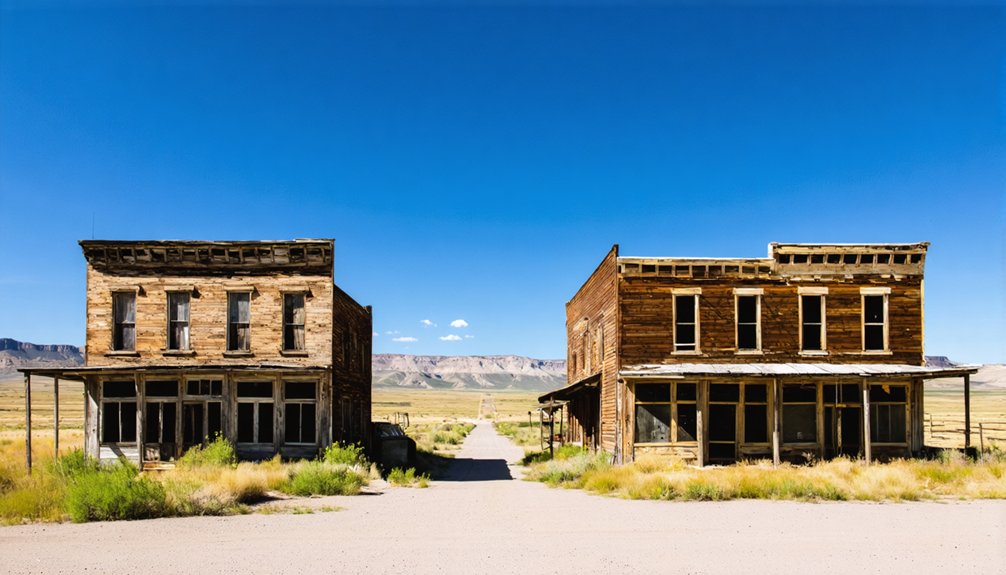
Timing your ghost town expedition can make the difference between baking in 95°F heat with busloads of selfie-takers or enjoying crisp 65°F mornings with only wind-rustled grasses for company.
Optimal visiting windows:
- Early June (first two weeks): You’ll explore in comfortable 70s°F with minimal crowds post-Memorial Day, capturing cultural preservation details without tourist interference.
- September-October: Experience fall colors while 90% of visitors stay home, perfect for wildlife encounters with bison near abandoned homesteads.
- Dawn sessions (5:10am): Peak summer’s 16-hour daylight lets you photograph weathered structures in golden light before crowds arrive.
- Avoid Sturgis Rally (early August): Rowdy motorcycle hordes disrupt the solitude these forgotten places deserve.
Spring offers bison calves and peaceful trails, though weather’s unpredictable in Badlands country.
Essential Tips for Exploring Abandoned Sites Safely
Before you step through the sagging doorframe of that weathered homestead, understand that South Dakota’s ghost towns aren’t curated museum exhibits—they’re crumbling time capsules where nature and decay conspire against careless explorers.
As you wander through the remnants of these ghost towns in South Dakota, you may stumble upon rusted relics of a bygone era, each telling a silent story of hope and hardship. Take a moment to appreciate the eerie beauty of the desolate landscapes, where time seems to stand still amidst the whispers of history. It’s an invitation to connect with a past that shaped the very essence of the American West.
Your urban exploration demands respect for hidden dangers. Pack essential safety gear: sturdy boots for traversing rotted floorboards, a powerful flashlight to spot rattlesnakes coiled in shadowed corners, and binoculars for scouting structures from safe distances.
That innocent-looking floor might conceal a root cellar twenty feet deep, while overgrown grass hides unsealed wells and rusted mining equipment.
Confirm you’re on public land before exploring—trespassing charges kill adventures fast. Research historical maps beforehand, check road conditions to these remote sites, and always observe Leave No Trace principles.
These ghost towns survived a century; your visit shouldn’t accelerate their demise.
Frequently Asked Questions
Are There Any Ghost Towns in South Dakota With Overnight Accommodations Nearby?
Yes, you’ll find historic preservation meets local legends at Deadwood’s Bullock Hotel, where Seth Bullock’s ghost reportedly roams Room 211. Ghost Canyon Getaway in Hermosa sits just 45 minutes from multiple haunted sites and abandoned towns throughout the Black Hills.
Can I Bring My Dog to Explore These Ghost Towns?
You’ll find dog-friendly trails at 1880 Town and Buffalo Ridge, where your pup can roam freely. Follow pet safety tips: keep leashes short near crumbling structures, pack water for prairie heat, and avoid midday exploration when temperatures soar.
Do Any Ghost Towns Charge Admission or Entrance Fees?
Yes, you’ll pay admission at preserved sites like 1880 Town ($14) and Broken Boot Gold Mine ($12). However, truly abandoned ruins with historic architecture remain free to explore—Mount Moriah Cemetery costs just $2, offering authentic freedom without hefty fees.
Are Guided Ghost Town Tours Available in South Dakota?
Yes, you’ll find guided ghost town tours exploring haunted legends and abandoned architecture throughout South Dakota. Local historians lead walking tours through Deadwood’s historic sites, while certified guides offer longer excursions from Rapid City into remote mining camps.
In addition to these experiences, visitors can discover haunted locations in South Dakota that have eerie stories steeped in mystery. Hidden gems like the infamous Bullock Hotel and the eerie pressoir of the Black Hills offer chilling tales for those brave enough to explore. As dusk settles, the atmosphere becomes even more palpable, making these sites popular for thrill-seekers and paranormal enthusiasts alike.
For those looking for a unique adventure, winter explorations of ghost towns allow visitors to embrace the stark beauty of snowy landscapes while uncovering the haunting history of abandoned settlements. As you trek through the frostbitten remnants of old storefronts and crumbling homes, the chilling silence of the winter air adds an eerie ambiance that brings the stories of those who once lived there to life. This season presents a rare opportunity to experience the enchanting solitude and mystique of these forgotten places, deepening your connection to the past.
What Camera Equipment Works Best for Ghost Town Photography?
You’ll want a DSLR with manual controls and wide-angle lenses for capturing decaying architecture. Bring sturdy tripods for long exposures in dim interiors, plus powerful flashlights. This camera gear enables essential photography techniques like light painting through abandoned spaces.
References
- https://coratravels.com/blog/ghost-towns-in-south-dakota
- https://973kkrc.com/have-you-been-to-south-dakotas-sunken-ghost-town/
- https://www.powderhouselodge.com/black-hills-attractions/fun-attractions/ghost-towns-of-western-south-dakota/
- https://www.tripadvisor.com/Attractions-g28962-Activities-c47-t14-South_Dakota.html
- https://www.blackhillsbadlands.com/blog/post/old-west-legends-mines-ghost-towns-route-reimagined/
- https://www.travelsouthdakota.com/trip-ideas/abandoned-beauty-ghost-towns-structures-south-dakota
- https://blackhillsatvdestinations.com/ghost-towns/
- https://www.sdpb.org/rural-life-and-history/2023-08-21/some-black-hills-ghost-towns-and-their-origins
- https://www.the-old-west.com/topics/article/deadwood-sd/
- https://www.deadwood.com/history/