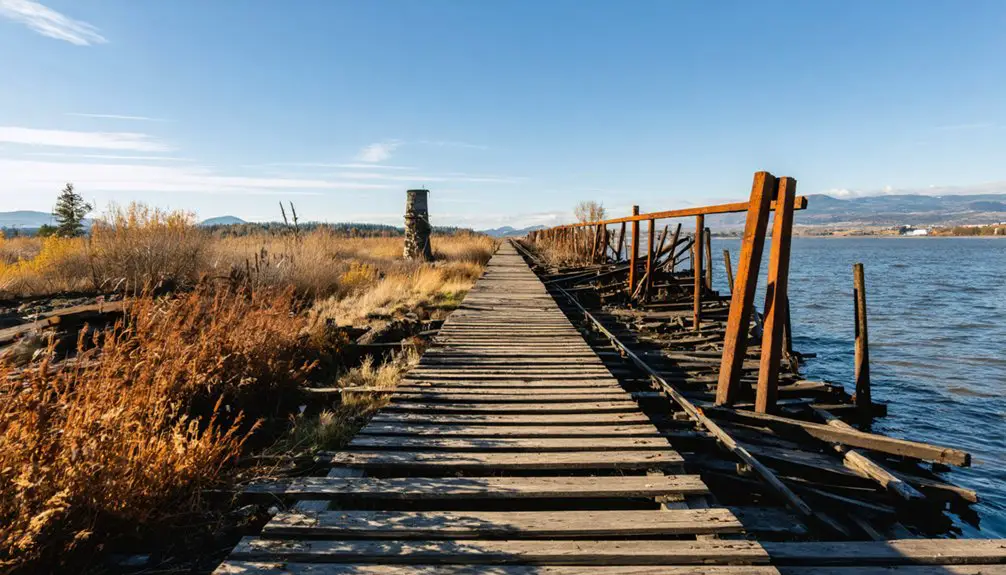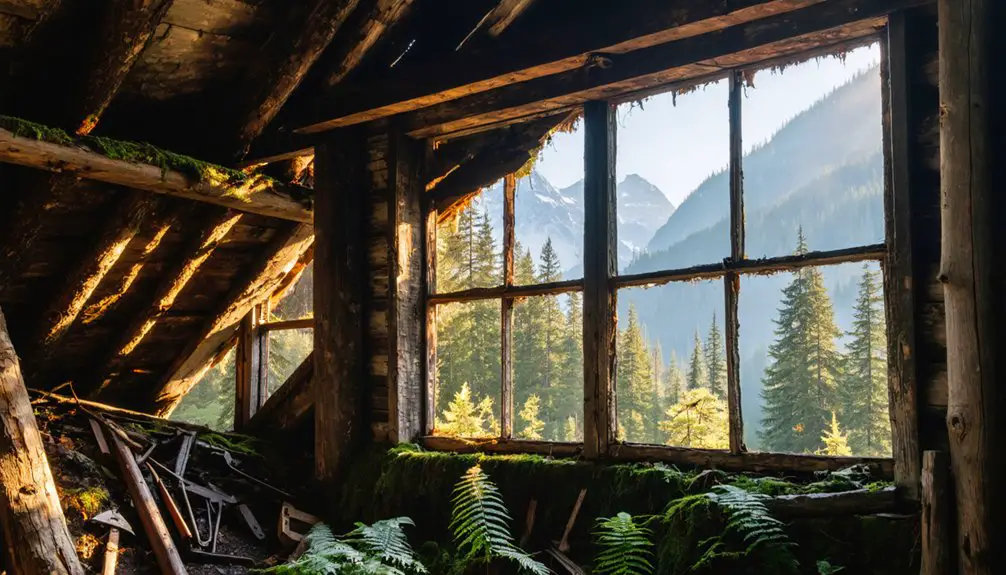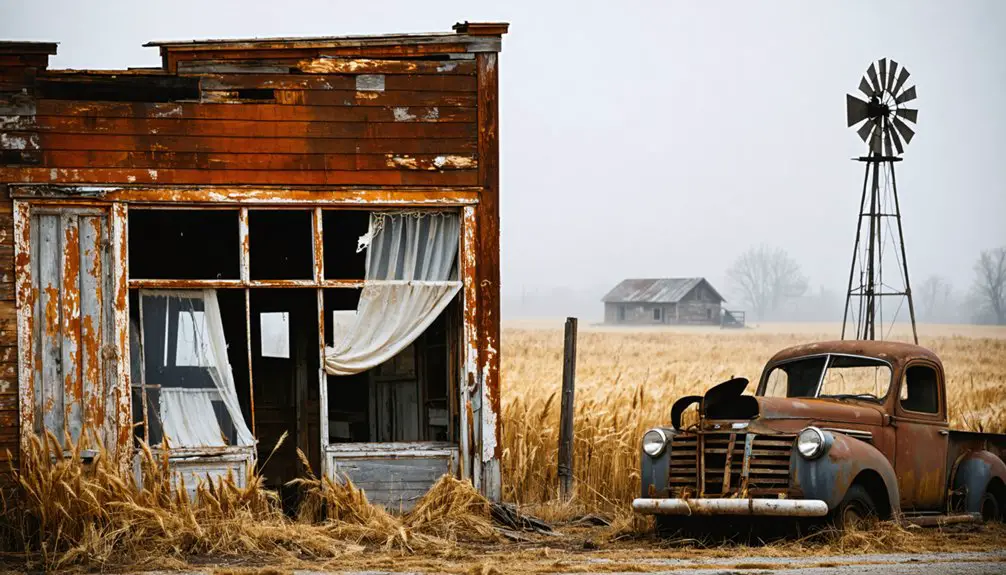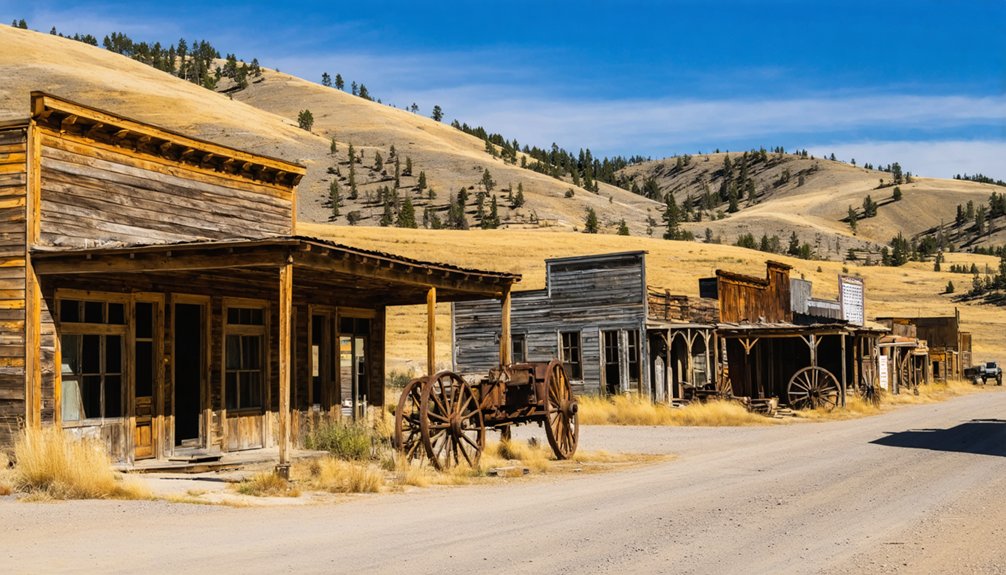
You’ll find Washington’s most accessible summer ghost towns scattered from wheat country to mountain passes. Sherman’s white church stands sentinel over Lincoln County farmland, while Liberty—the state’s only living ghost town—preserves gold rush relics just off US-97. For adventure seekers, Monte Cristo requires an 8-mile mountain hike revealing silver mining ruins, and Franklin’s coal heritage trails wind above Green River Gorge. Early summer brings wildflowers, clear trails, and solitude before crowds arrive, transforming these abandoned settlements into atmospheric time capsules where each weathered structure whispers tales of boom-and-bust dreams.
Key Takeaways
- Early summer (June) offers ideal conditions with minimal snow, clear weather, fewer crowds, and accessible trails at ghost town sites.
- Liberty, Washington’s oldest mining settlement, features gold rush relics and is accessible two miles off US-97 with near-deserted weekday visits.
- Monte Cristo requires an 8-mile hike from Barlow Pass but rewards visitors with preserved mining ruins and interpretive trails.
- Sherman’s white country church and weathered cemetery showcase 1880s homesteading history, accessible via dirt roads through Lincoln County farmland.
- Franklin preserves coal mining heritage with rusted equipment, sealed shafts, and a historic cemetery above Green River Gorge.
Sherman: A Homesteading Relic Northeast of Govan
Tucked into the rolling wheat fields of Lincoln County, Sherman slumps in a natural gully like a whisper from Washington’s homesteading past. You’ll find this ghost town preservation site northeast of Govan, accessible via a dirt road off US2 that cuts through endless farmland.
Born during the 1880s-1890s agricultural boom, Sherman drew homesteaders chasing federal land promises and wheat prosperity. They endured brutal winters—the 1889 blizzard buried livestock under six feet of snow—and watched wheat prices collapse their dreams. When supplies finally arrived by train, families who had survived on little more than potatoes and salt could restock their provisions.
Now only a white country church and weathered cemetery mark their struggles. Like mining towns elsewhere in Washington that sprouted where trails crossed, Sherman emerged at a crossroads of settlement and survival. Each Memorial Day, descendants return to honor this cultural heritage, celebrating the ancestors who transformed raw territory into America’s breadbasket before economics and mechanization rendered their small farms obsolete.
Liberty: Gold Rush Heritage in the Cascade Mountains
While Sherman’s wheat farmers battled blizzards on the eastern plains, fortune seekers in the Cascade Mountains chased a different dream—gold glinting in mountain streams. You’ll find Liberty nestled two miles off US-97, Washington’s only living ghost town where residents still call home among 1890s log structures.
Since 1867, prospectors have pulled coarse nuggets and rare crystalline wire gold from Swauk Creek’s depths.
Historical preservation comes alive here—original tools rest where miners left them, and the 1976 arrastra replica still stands. This unique contraption features a horizontal undershot water wheel, a design pioneered by local miners that remains one of the only workable models of its kind in the U.S. Local legends whisper through weathered cabins, including tales of Mamie Caldwell’s ghost wandering the old houses. Creepy mannequins peer from windows without explanation.
You can pan for gold year-round in these same creeks where the Goodwin brothers struck it rich in 1873. The town earned its National Register placement in 1974, recognizing its significance as the state’s oldest mining settlement.
Freedom awaits in these mountain hollows.
Melmont: A Hidden Trail Adventure Near Mount Rainier
Deep in the shadow of Mount Rainier, where morning mist clings to mossy stones and the Carbon River’s rush echoes through old-growth forest, Melmont’s ruins hide along an abandoned railway grade.
You’ll discover this 1900s coal mining settlement through a four-mile trail that reveals urban decay reclaimed by wilderness—roofless dynamite sheds, cottage foundations terraced into hillsides, and rusty pipes emerging from forest floor.
The mossy retaining walls and bridge abutments tell stories of 900,000 tons hauled from six subterranean levels before 1920s flames consumed what abandonment hadn’t claimed.
Unlike preservation efforts elsewhere, nature governs here.
Navigate muddy trails year-round, descend cable-railed embankments, and explore freely where miners’ families once lived. Most visible among the ruins is the foundation of the old school, standing as a testament to the community that once thrived here. Your journey begins at the Fairfax Bridge, once the tallest bridge in Washington State and now listed on the National Register. It’s raw, unmanicured history waiting just an hour from civilization.
Monte Cristo: Remote Mining Town Along Mountain Loop Highway
You’ll find Monte Cristo nestled deep in the Cascades, accessible only by an 8-mile round-trip hike from Barlow Pass that follows a muddy miner’s route along the South Fork Sauk River.
This remote ghost town rose from silver strikes in 1889 and drew over 1,000 fortune-seekers before erratic ore deposits, devastating floods, and deadly avalanches forced its abandonment by 1920.
Today, rusted mining equipment, weathered cabins, and crumbling foundations scatter across the valley floor, whispering stories of John D. Rockefeller’s failed investments and Frederick Trump’s controversial hotel operations.
The trail follows the historic railroad grade that once carried ore from mountain mines to the processing mill, with exposed rails still visible after washouts.
The moderate-difficulty trail requires crossing streams and navigating muddy sections, with interpretive markers throughout the site explaining each building’s original purpose.
Trail Access and Distance
Distance considerations make this a manageable 9.5-mile round trip adventure with just 600 feet of elevation gain.
The well-graded route stays remarkably level, though you’ll encounter flood-damaged sections and cross the river via a large fallen log with rope handrails.
It’s rated family-friendly, offering an easy escape into historic backcountry where freedom-seekers once chased mountain dreams.
The trailhead sits at Barlow Pass, where you’ll find parking along the Mountain Loop Highway after a scenic 31-mile drive from Granite Falls.
Early arrival at the trailhead minimizes encounters with other hikers, especially during the popular summer season.
Mining History and Decline
When prospectors struck gold and silver ore in 1889, they ignited a fever dream that would transform a remote Cascade valley into Washington’s first live mining camp on the range’s western slopes. You’ll discover how 211 claims sprawled across these mountains by 1893, drawing over 1,000 fortune-seekers and even John D. Rockefeller‘s investment capital.
The mining expertise seemed solid—a five-level concentrator, 42-mile railway, and 200 workers pulling copper, zinc, gold, and silver from the earth.
But freedom’s price came due. The economic impacts proved devastating when rich surface deposits vanished below 500 feet. Catastrophic floods in 1896-97 destroyed the railroad. Operating costs soared while ore values plummeted.
Remaining Structures and Artifacts
The skeletal remains of Monte Cristo rise from the forest floor like monuments to ambition gone cold. You’ll discover a false-front building still defying gravity, its weathered facade watching over mill foundations that cascade in three distinct tiers down the mountainside.
Historic remnants scatter across the ghost town—rusty signage pointing nowhere, trestle structures standing sentinel while their fallen brothers decay beside them.
Abandoned equipment tells stories through silence: compressors frozen mid-breath, generators that once powered dreams, motors seized by time and mountain air.
You’ll cross a log to reach the town proper, passing a wooden bathroom structure that somehow survived when grander buildings didn’t.
The functional tavern serves as your reward—an oasis where you can fuel up before exploring the accessible mines that still exhale century-old secrets.
Northern State: From Mental Hospital to Outdoor Recreation Area
You’ll discover Washington’s largest former mental hospital transformed into a sprawling recreation area where crumbling foundations peek through pastoral meadows along the North Cascades.
The 5-mile trail network winds past abandoned buildings and a weathered cemetery, their brick facades now softened by decades of moss and wildflowers.
Between rounds of frisbee golf and quiet walks across wooden bridges, you can explore the haunting remnants of what was once a self-sufficient town designed by the sons of Central Park’s creator.
Historic Hospital Grounds Today
Standing amid weathered Spanish Colonial Revival buildings, visitors today encounter a landscape transformed from one of Washington’s most controversial institutions into a sprawling outdoor recreation destination. The 726-acre Northern State Recreation Area sprawls across former farmland where patients once worked under therapeutic labor programs.
Skagit County’s ownership has preserved the Olmsted Brothers’ park-like design, earning National Register recognition in 2010 for its intact agricultural landscape.
Modern restoration efforts battle decades of neglect and vandalism. The 1938 Denny administration building stands with its connecting wards and courtyards, though preservation challenges mount with each passing season.
You’ll find Job Corps and rehabilitation centers occupying some structures, breathing new life into spaces once shadowed by 200:1 patient-doctor ratios and experimental treatments.
The grounds whisper stories of 2,700 souls who called this self-sustaining colony home.
Trail System and Activities
Beyond the haunting administrative buildings, a 5-mile roundtrip trail system winds through what patient labor once cultivated into productive farmland. You’ll wander past crumbling barns and milking sheds where institutional life unfolded beneath wide-open skies.
The gentle 50-foot elevation gain lets you focus on discovery rather than exertion—spot deer grazing near sealed foundations, or watch hawks circle above pastoral clearings where hospital structures once stood.
Wildlife viewing opportunities flourish throughout this eco conservation success story, where nature reclaims institutional grounds. The old cemetery holds 1,500 souls beneath weathered monuments, accessible without permits or fees.
Your leashed dog can accompany you year-round through forested lanes and sunlit meadows. Summer brings most favorable conditions for exploring this self-directed journey through Washington’s most unusual ghost town—where medical history meets wilderness restoration.
Accessible Recreational Amenities
While the ghost town’s historical remnants capture your imagination, Northern State Recreation Area has evolved into a fully equipped outdoor destination that balances preservation with modern convenience. You’ll find restrooms strategically placed throughout the grounds, ensuring comfortable full-day exploration without sacrificing adventure time.
Walking bridges span the terrain, creating accessible pathways that connect historic structures with recreational zones—no challenging obstacles between you and discovery.
The massive disc golf course transforms your visit into something beyond typical ghost town exploration. You’re free to alternate between contemplating 1,500+ cemetery burials and launching discs through eighteen challenging holes.
While active buildings remain off-limits for safety, the integrated modern amenities never detract from the haunting atmosphere. This thoughtful infrastructure means you’ll maximize your freedom to roam from sunrise until dusk.
Franklin: Black Diamond’s Mining History With Mountain Views
Deep in the forests above Green River Gorge, where coal seams once fueled San Francisco’s growth, Franklin’s weathered remnants tell the story of King County’s most tragic mining disaster.
You’ll discover mining archaeology scattered along the 2-mile Franklin Coal Mine Trail—rusted coal cars, sealed shaft openings, and crumbling foundations where 37 miners suffocated in 1894’s intentional fire.
Heritage preservation efforts maintain access to this haunting landscape, though you’ll need to navigate carefully around unstable ground.
The trail rewards your exploration with waterfalls cascading through exposed 50-million-year-old strata and sweeping mountain views.
At Franklin Cemetery, ivy-covered graves and weathered markers commemorate the community that thrived until 1971, when the last underground operations finally ceased.
Best Time to Visit Washington Ghost Towns in Summer
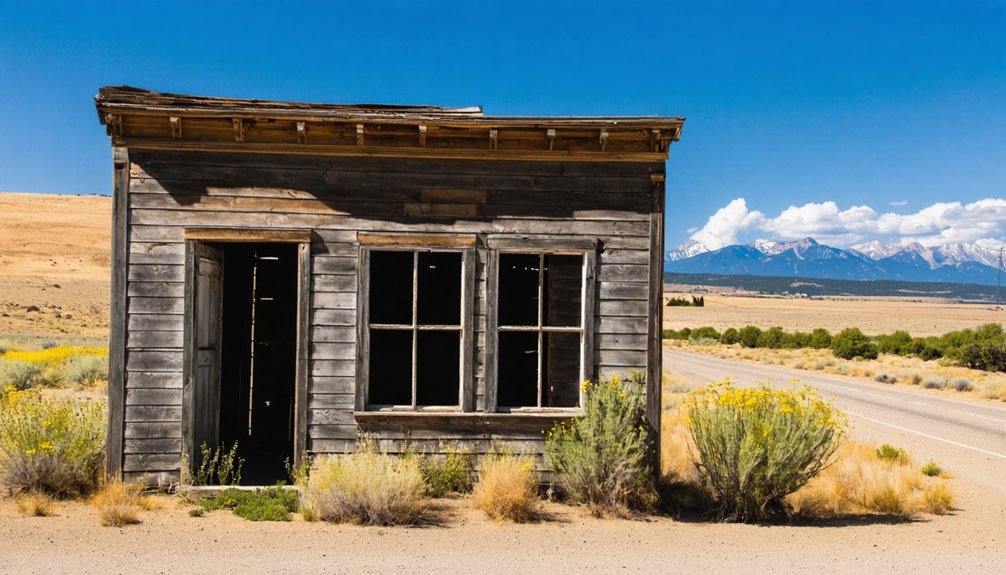
You’ll find Washington’s ghost towns most rewarding in early summer, when trails shake off spring’s muddy grip but before July’s scorching heat transforms the high desert into a furnace.
June mornings offer crystal-clear views of weathered structures without the shoulder-to-shoulder crowds that descend during Fourth of July weekend.
You’ll navigate rutted roads with confidence as the ground firms beneath your tires.
Arrive before 7 a.m. on weekdays to claim the silence for yourself—just you, the wind through broken windows, and mosquitoes that haven’t yet reached their aggressive summer peak.
Early Summer Trail Conditions
As spring shifts to summer across Washington’s mountain corridors, the ghost town trails awaken from their seasonal slumber with ideal hiking conditions.
You’ll find snow-free paths from January through December on lower elevation routes like Melmont, where mud persists but won’t stop your exploration.
The Monte Cristo trail stays well-graded and passable, with log crossings remaining easy despite recent rains.
Wildflower blooms carpet the landscapes you’ll traverse, while wildlife sightings become frequent as creatures emerge in warmer weather.
Vegetation hasn’t yet reclaimed the historical artifacts you’re seeking—foundations and structures stand visible without strenuous bushwhacking.
Franklin’s sun-soaked trails invite families forward, and Liberty‘s open terrain requires no formal path-finding skills.
You’re free to wander these abandoned settlements while conditions remain perfectly navigable.
Peak Season Crowd Levels
While Washington’s 116 ghost towns scatter across mountain slopes and desert valleys, summer crowds remain surprisingly sparse at most sites. You’ll find Liberty nearly deserted on Friday afternoons, with only parked cars behind weathered buildings hinting at life.
Unlike Mount Rainier’s two million annual visitors, these remnants of urban decay offer solitude even during peak season. Mid-week exploration rewards you with empty main streets and uninterrupted photography of collapsing structures.
The preservation challenges facing these settlements—crumbling foundations, encroaching vegetation, vandalism—mean fewer tourists venture beyond highway signage.
While Texas claims 511 ghost towns and California boasts 346, Washington’s collection maintains an authentic isolation. You’ll discover genuine freedom here, walking through abandoned doorways without jostling crowds or guided tour schedules.
What to Bring for Your Ghost Town Explorations
Stepping into Washington’s abandoned settlements demands more than curiosity—it requires deliberate preparation that could mean the difference between adventure and emergency. Your pack should carry sturdy boots that’ll guard against rusted nails lurking beneath weathered floorboards, while cut-resistant gloves protect your hands as you navigate crumbling doorways.
A reliable headlamp frees your hands for climbing through structures where historical preservation efforts haven’t yet reached. Don’t forget your multi-tool—it’s invaluable when clearing overgrown paths or handling unexpected obstacles.
Pack water purification tablets, energy bars, and an extensive first-aid kit. Bring GPS with offline maps and route markers to track your wandering through these time-frozen landscapes.
Photography Tips for Capturing Abandoned Structures
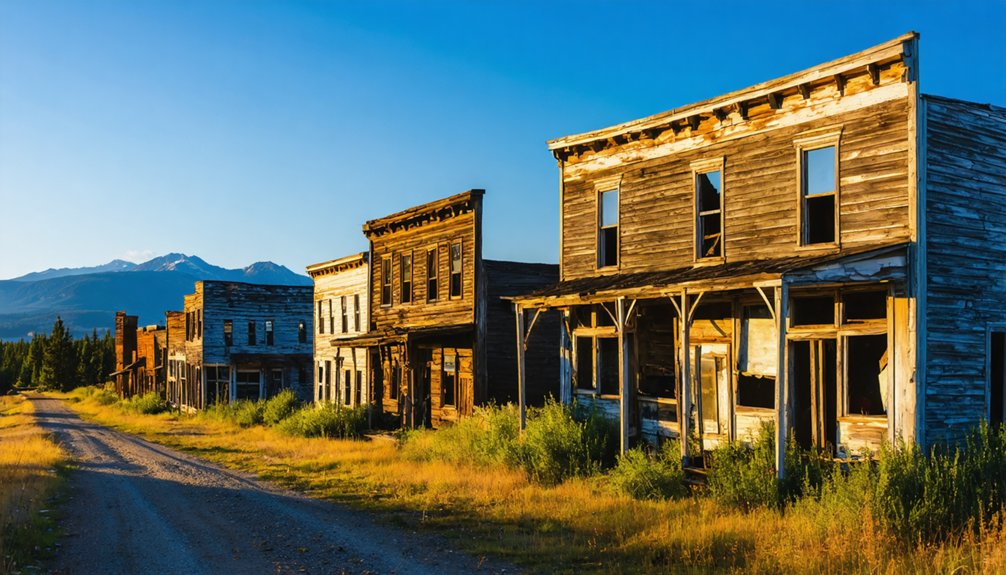
When you raise your camera to Washington’s decaying structures, you’re not just documenting ruins—you’re freezing moments where time collapsed and left its fingerprints.
Urban decay demands respect behind the lens. Hunt for penetrating sunbeams through shattered windows—they’ll paint ethereal patterns across peeling walls.
Your 24mm lens emphasizes the vast emptiness these spaces hold. Film techniques like bracketing three exposures tame high-contrast scenes where darkness swallows light.
Compose with intention: shoot symmetrically down center lines or capture nature’s aggressive reclamation through doorways.
Use your flashlight during long exposures to spotlight abandoned chairs, rusted vehicles, forgotten documents.
Tilt-shift lenses keep vertical lines honest when shooting staircases. Circle each building’s perimeter—every angle tells a different story.
Expose for the light, frame through broken windows, and let discarded objects anchor your narrative.
Combining Ghost Town Visits With Nearby Attractions
Your memory cards might burst with haunting images, but Washington’s ghost towns reward those who linger beyond the abandoned structures.
exploring ghost towns in Washington offers a glimpse into the past, where stories of resilience and despair echo through dilapidated walls. Each corner turned reveals remnants of a once-thriving community, enticing adventurers with the promise of forgotten tales. As you wander through these eerie landscapes, the beauty of nature reclaiming its territory serves as a stark contrast to the haunting history etched into the ground.
Monte Cristo’s 8-mile trail opens into Henry M. Jackson Wilderness, where mountain peaks dwarf urban legends of the 1890s boom.
Beyond crumbling foundations, wilderness trails climb into territories where mountains eclipse the fortune-seekers’ forgotten dreams.
Near Liberty, Swauk Creek’s gold-bearing waters let you chase the same glint that sparked the 1870s rush—though this Civil War-era settlement predates most Western strikes.
Sherman’s cemetery whispers homesteading tales before Highway 2 sweeps you through eastern Washington’s boundless plains.
In Okanogan Country, string together Chesaw, Nighthawk, and Molson on winding backroads, then drop a kayak into the Similkameen River.
These ghost towns aren’t destinations—they’re gateways to Washington’s untamed summer landscapes.
Frequently Asked Questions
Are Pets Allowed at Washington Ghost Town Sites?
Swipe right on Washington’s ghost towns—they’re pet-friendly! You’ll find welcoming pet policies at nearly 100 sites, though leash requirements keep your four-legged explorer safe from crumbling structures and hidden mine shafts while you roam freely together.
Do Any Ghost Towns Require Permits or Advance Reservations?
You won’t need advance reservations or permits for historical preservation access at these ghost towns. Monte Cristo requires only a Northwest Forest Pass for parking. Guided tours aren’t mandatory—you’re free to explore independently and create your own adventure.
Is Cell Phone Service Available at Remote Ghost Town Locations?
Cell service at remote locations is unreliable at best. You’ll find Monte Cristo and Melmont plunge you into digital silence—mountain ridges swallow signals entirely. Pack offline maps, embrace the disconnect, and let wilderness isolation sharpen your adventure’s edge.
Are the Ghost Towns Accessible for People With Mobility Limitations?
Most ghost towns aren’t accessible due to rugged terrain and lengthy hikes. However, you’ll find mobility friendly trails like Iron Goat Loop near historic sites, offering accessible parking options and three miles of barrier-free exploration through Washington’s mining heritage.
Exploring ghost towns in Washington State allows you to step back in time and witness the remnants of bustling communities. Some towns, like Bodie and Wilkeson, provide intriguing insights into the local history and the challenges faced by early settlers. Additionally, guided tours are available that offer a deeper understanding of the significance these sites hold in the region’s development.
In addition to ghost towns, there are numerous other historic sites in Washington state that are rich with stories and cultural significance. Many of these locations also feature visitor centers that provide educational resources and interactive exhibits, enhancing the overall experience. As you explore this beautiful state, you’ll uncover the diverse narratives that have shaped its history and heritage.
Can Visitors Camp Overnight Near Any of These Ghost Towns?
Like discovering a hidden campfire ring from 1890s prospectors, you’ll find overnight camping near ghost towns on national forest and BLM lands. Respect historical preservation boundaries, join local guided tours for best spots, and embrace that raw frontier freedom responsibly.
References
- https://stateofwatourism.com/ghost-towns-of-washington-state/
- https://www.wta.org/go-outside/seasonal-hikes/fall-destinations/hidden-history-ghost-town-hikes
- https://www.tripadvisor.com/Attraction_Review-g28968-d15215289-Reviews-Northern_State_Ghost_Town-Washington.html
- https://explorewashingtonstate.com/black-diamond-franklin-ghost-town/
- https://visitrainier.com/fairfax-ghost-town-2/
- https://www.cascadeloop.com/ghost-towns-and-haunted-places-in-the-washington-cascades
- https://kids.kiddle.co/Sherman
- https://photos4thepeeps.wordpress.com/2009/12/22/eastern-washington-ghost-towns-part-3-shermanwa/
- http://www.ghosttownsusa.com/bttales50.htm
- https://en.wikipedia.org/wiki/Sherman