You’ll find California’s best winter ghost towns along Highway 395’s eastern Sierra corridor, where Bodie State Historic Park stands frozen at 8,375 feet with over 100 snow-crusted 1880s buildings. In the Mojave Desert, Calico Ghost Town offers milder exploration at 2,283 feet with five original structures and no winter crowds. Randsburg still shelters 60 residents among historic mines, while Silver Mountain City’s 6,411-foot ruins provide authentic frontier solitude. Each site demands proper planning—Bodie requires snowshoes or skis, and conditions change rapidly—but rewards you with hauntingly preserved glimpses into California’s mining past.
Key Takeaways
- Calico Ghost Town in the Mojave Desert offers easy year-round access with original 1880s buildings and no winter crowds.
- Bodie State Historic Park at 8,375 feet features over 100 preserved structures but requires snowshoes, skis, or snowmobiles in winter.
- Randsburg remains inhabited with 60 residents and historic mines, providing accessible exploration at 3,523 feet elevation.
- Winter temperatures at high-elevation ghost towns can drop to -25°F with extreme wind chills, requiring proper cold-weather gear.
- Call ahead to confirm road conditions and access, as many remote sites close roads until spring due to snow.
Calico Ghost Town: A Family-Friendly Desert Adventure
Looking for a ghost town that welcomes families without sacrificing authenticity? Calico delivers both in California’s raw Mojave Desert. You’ll spot those massive “CALICO” letters from I-15, beckoning you three miles north into terrain where 1,200 miners once extracted $20 million in silver.
Where 1,200 miners once chased silver dreams, authentic desert history meets family adventure just three miles off I-15.
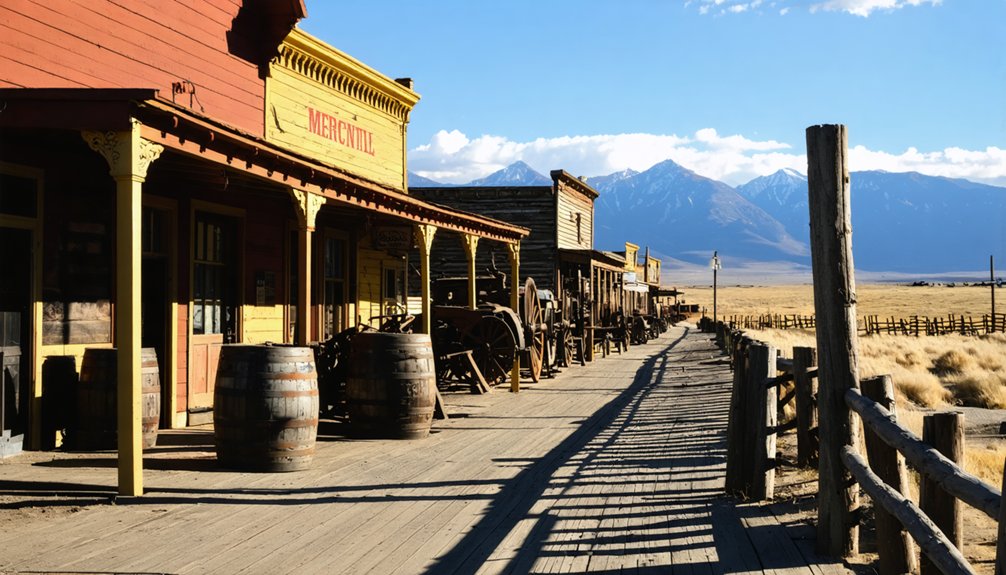
The desert landscapes here aren’t manicured—they’re genuine, with weathered peaks that earned this place its calico-fabric name. Five original 1880s buildings still stand, including Lane’s General Store and Lil’s Saloon. Walter Knott rebuilt the rest using old photographs, creating family activities that let your kids explore the Silver King Mine without Hollywood fakery. Step inside historic structures to discover authentic antiques from the mining era. The town’s name shares its origin with the Indian cotton fabric once traded globally, known for its colorful, patterned appearance.
Open 9 AM to 5 PM daily at 2,283 feet elevation, this state-recognized Silver Rush ghost town offers winter exploration without crowds.
Real history, real freedom, real adventure.
Bodie State Historic Park: Step Back Into the 1880S
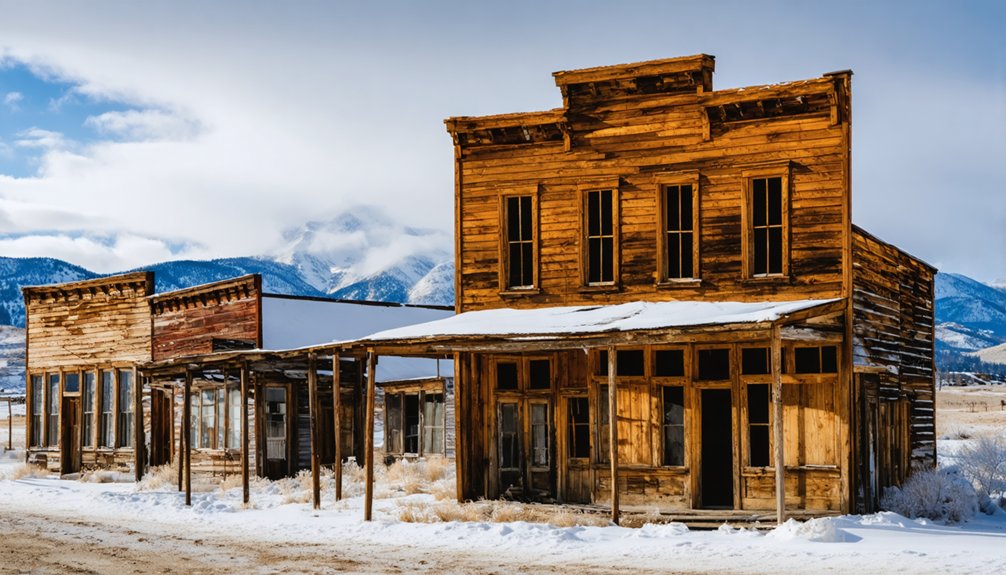
When you cross into Bodie State Historic Park at 8,375 feet elevation, snow crunches beneath your boots as you walk streets where 10,000 gold-seekers once brawled in saloons and gambled away fortunes.
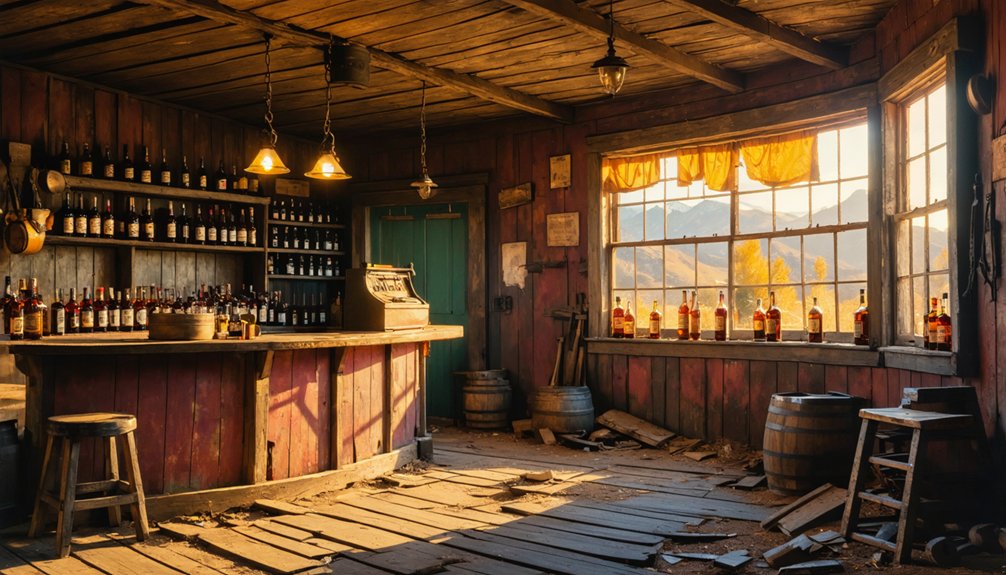
The park’s “arrested decay” policy means you’ll peer through frosted windows at schoolhouse desks still holding slates, at bottles lining bar shelves, and at weathered curtains hanging in empty bedrooms—preserved exactly as residents left them when the last mines closed.
Winter transforms this notorious boomtown into a silent, snow-draped time capsule where you’re alone with the ghosts of the “bad men from Bodie” who made this place as lawless as Tombstone itself.
Gold discovered in July 1859 by William S. Bodey sparked the rush that would eventually transform this remote Sierra Nevada location into one of the West’s most infamous mining camps. The 1882 Methodist Church still stands among the preserved buildings, a testament to frontier faith amid the chaos of Bonanza Street’s vice district.
Preserved 1880s Mining Town
Frozen in time since the 1880s, Bodie State Historic Park stands as California’s most authentic ghost town, where weathered wooden buildings line dusty streets exactly as miners left them decades ago.
You’ll discover over 100 structures preserved in “arrested decay”—the Boone Store still displays dusty goods on original shelves, while furnished homes reveal miners’ personal belongings abandoned mid-use.
This historic architecture**** tells stories of fortune-seekers who extracted $70 million in gold and silver between 1876 and 1941.
The mining history comes alive through the Miners’ Union Hall, now housing artifacts from Bodie’s explosive boom when 10,000 residents called this windswept plateau home.
Perched at 8,379 feet elevation in the Sierra Nevada Mountains, seven miles south of Bridgeport, the town’s remote location contributed to its remarkable preservation after the last residents departed in 1942.
Winter’s isolation amplifies the eerie authenticity—you’re experiencing genuine frontier life, untouched by modern reconstruction.
Named after Waterman S. Body, the prospector who discovered gold in the hills north of Mono Lake, the town’s legacy began with one man’s fortunate strike that would transform the remote plateau into a thriving mining metropolis.
Winter Access and Activities
Picture yourself gliding across pristine snow on cross-country skis, the only sound your rhythmic breathing as you approach abandoned buildings emerging from white drifts—this is Bodie’s winter reality.
From November through May, you’ll trade your car for snowmobiles, skis, or snowshoes to reach this 8,375-foot elevation ghost town.
Winter weather here doesn’t mess around—temperatures plummet to 25°F below zero, winds howl, and snowdrifts tower twenty feet high.
You’ll need to check road conditions obsessively and respect access restrictions keeping snowmobiles on designated routes.
The park’s 9am-4pm winter hours mean you’re racing daylight, but that isolation? It’s exactly what you came for.
Rangers enforce closure times strictly, so plan your escape route before temperatures drop at sundown.
The town was abandoned due to declining mines and rising extraction costs, leaving behind a perfectly preserved snapshot of 1880s mining life.
Despite winter’s harsh conditions, you’ll still find nearly 200 abandoned wooden buildings preserved in their arrested decay throughout the ghost town.
What to Expect During Winter at Bodie
When you arrive at Bodie in winter, you’ll find the visitor kiosk abandoned against the brutal cold—temperatures plunge below zero while 100 mph winds whip across the valley, creating white-out conditions that can trap even four-wheel-drive vehicles.
The dirt roads transform into treacherous passages of snow, mud, and washouts, often impassable despite chains, leaving stranded visitors facing expensive towing bills if help’s even available.
You’ll need to bundle in layers of warm clothing and use the self-payment station at the parking lot, since no staff member can endure the 303 nights of below-freezing temperatures that define this ghost town’s winter isolation. Restrooms are closed during winter months, though outhouses remain available near the parking lot and within the town. This historic ghost town sits as one of California’s most remote winter destinations, requiring careful preparation before making the journey.
For those adventurous enough to brave the cold, there are numerous ghost towns to explore in California that offer a glimpse into the past. Each town carries its own unique stories and charm, making them fascinating destinations for history enthusiasts. Make sure to research the best times to visit and the specific remnants of each town waiting to be discovered.
Winter Operating Hours
Despite Bodie’s reputation as a frozen relic, the ghost town welcomes visitors throughout winter, though you’ll face a dramatically different experience than summer tourists enjoy. From November through mid-April, the park operates 9 AM to 4 PM—but winter weather makes these hours more suggestion than guarantee. You’ll need to call (760) 647-6445 before venturing out, as conditions change without warning.
Seasonal closures strip away modern comforts: the museum’s locked, restrooms frozen shut, historic buildings sealed against howling winds. The entrance kiosk stands empty—you’ll drop your fee in a self-payment box while sub-zero gusts tear at your jacket.
This isn’t a curated experience; it’s raw exposure to a ghost town in its most authentic state, accessible only to those willing to snowshoe through three miles of unplowed wilderness.
Snow and Road Conditions
The three-mile trek through unplowed wilderness isn’t metaphor—it’s your only route in once California State Route 270 shuts down for winter. Road closures transform Bodie into genuine backcountry territory, accessible only by over-snow equipment. Snow removal? Forget it—Caltrans abandons this stretch until spring.
At 8,375 feet, you’ll face conditions that strand dozens of 4x4s annually:
- Sub-zero temperatures paired with white-out winds that’ll freeze your face mask solid
- Powdery snow depth that swallows chains and all-terrain tires like quicksand
- Unreliable GPS data showing roads “open” when they’re buried under six feet
Check Caltrans (1-800-GAS-ROAD) before committing. Spring brings different chaos—knee-deep mud replaces the powder, trapping vehicles until summer’s bake hardens the dirt.
Cold Weather Site Access
You’ll need snowshoes, cross-country skis, or a snowmobile to reach Bodie once winter locks down the access road—standard vehicles and weekend warrior 4x4s don’t cut it here.
At 8,375 feet, this ghost town doesn’t mess around. Temps might hit the 60s during daylight, then plummet below zero after sunset. Wind chill can slam you with 50-60 degrees below zero—the kind of cold that bites through layers and makes your lungs burn.
Winter safety means respecting these extremes. Pack proper snow gear, carry extra water (altitude dehydrates fast), and verify conditions before you go.
The museum’s shuttered, restrooms frozen solid, but outhouses near the parking lot and town center remain accessible.
Rangers staff the entrance from 9 a.m. to 4 p.m., weather permitting.
North Bloomfield: Gold Country’s Hidden Gem
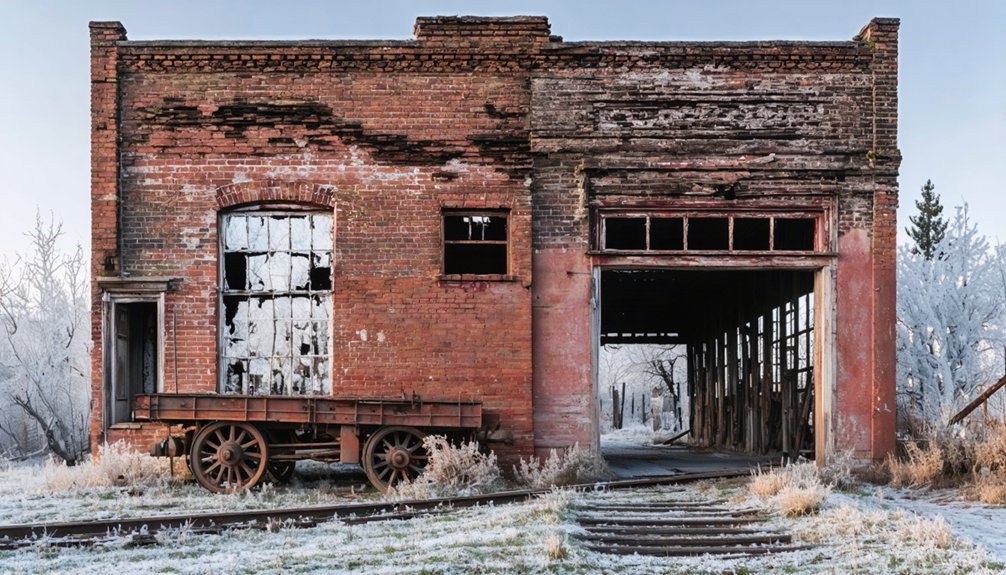
Nestled sixteen miles northeast of Nevada City, North Bloomfield sits frozen in time like a sepia-toned photograph you’ve stumbled upon in an attic trunk. This 1850s mining camp reveals the raw truth about California’s gold rush—both its historical significance and devastating environmental impact.
North Bloomfield: where California’s gilded ambitions carved scars into the Sierra Nevada that haven’t healed in 140 years.
You’ll discover why hydraulic mining made this California’s largest gold operation by the 1870s, processing 100,000 tons of gravel daily. Then judge for yourself the consequences: downstream flooding reaching San Francisco Bay that ultimately triggered the 1884 permanent injunction.
What You’ll Experience:
- Preserved storefronts and the Hotel de France standing since 400 French-speaking pioneers settled here
- Weekend museum access (10am-5pm, Spring through September)
- Empty streets where 500 residents once thrived before abandonment
Twenty permanent residents remain today within Malakoff Diggins State Historic Park.
Exploring Sacramento’s Railroad and Mining Heritage
While North Bloomfield shows you hydraulic mining’s destructive power, Sacramento’s surrounding ghost towns tell a different story—one of iron rails and precious metals transforming California’s heartland.
You’ll find Folsom’s preserved depot where locomotives once hauled fortune-seekers westward, its railroad preservation efforts keeping history tangible. Wander Placerville’s weathered storefronts where miners once exchanged gold dust for supplies.
At Clarksville, you’re standing where Pony Express riders changed horses before thundering toward the Sierras.
The mining memorabilia scattered throughout these sites tells raw truths—rusted tools, faded ledgers, abandoned smelters. Kennett lies beneath Lake Shasta now, its copper dreams drowned, but Coloma’s discovery site remains.
You’ll trace Marshall’s fateful find where 80,000 prospectors stampeded, forever reshaping the West’s trajectory. Their restless spirit echoes yours.
Shasta State Historic Park: Northern California’s Mining Queen
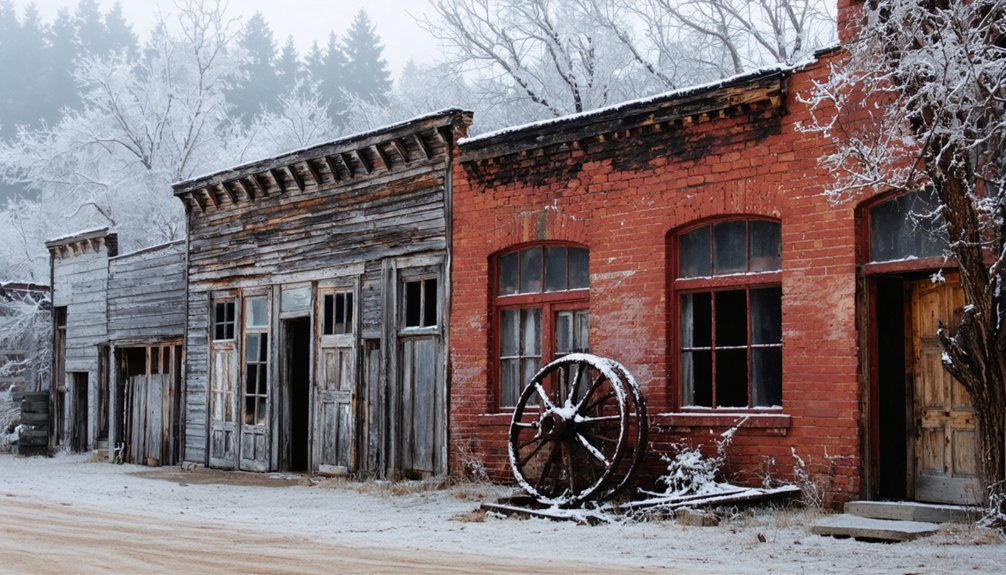
- Historic architecture — longest row of fireproof brick buildings north of San Francisco, reconstructed after devastating 1852 fires
- Nine cemeteries holding miners, merchants, and victims of conflicts with Native traditions disrupted by the rush
- Deserted Main Street where stagecoaches once loaded for Trinity Diggins
The 1872 railroad bypassed this kingdom, transforming power into silence. Now you’ll find freedom in empty paths, contemplating how quickly empires crumble when rails choose different routes.
Randsburg: Where the Old West Still Lives
When the winter sun strikes Randsburg’s weathered buildings at 3,523 feet above the Mojave Desert, you’re standing in California’s most authentic living ghost town.
Unlike preserved parks, roughly 60 residents still call this place home, keeping the wild west spirit alive without stoplights or modern pretenses.
John Singleton’s 1895 gold discovery sparked everything. The Yellow Aster Mine alone yielded $25 million, drawing 3,500 fortune-seekers by 1899.
You’ll walk past the original jail and saloon where miners once celebrated strikes, their mining heritage etched into every weathered board.
Winter’s the perfect time—crisp desert air, fewer crowds, and that raw frontier authenticity you can’t fake.
The town survived devastating fires, boom-bust cycles, and time itself.
It’s waiting there off Highway 395, unpolished and real.
Silver Mountain City: High Sierra Ghost Town Experience
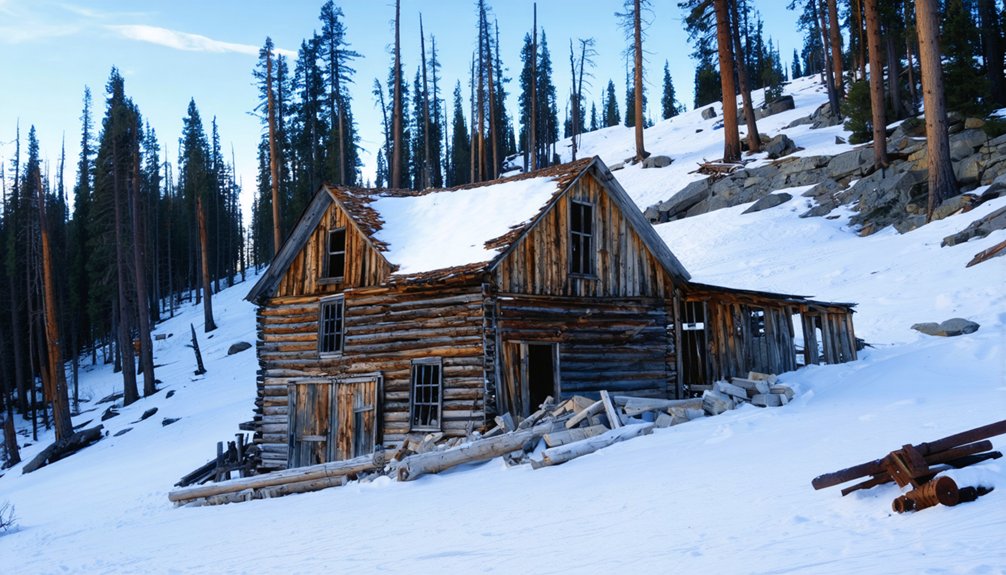
You’ll find yourself standing at 6,411 feet in the snow-dusted ruins of Alpine County’s first seat of government, where stone foundations and hand-dug cellars peek through blankets of white powder. The relocated jail now sits in Markleeville’s museum, but here among the pines, you can trace the outlines of what once housed 2,000 souls chasing silver dreams.
Trek to the hillside cemetery where bricks from the demolished Chalmers Mansion mark forgotten graves, their stories erased when vandals destroyed the headstones decades ago.
Historic Alpine County Seat
Perched at 6,411 feet in the High Sierra, Silver Mountain City rises from the snow like a frozen monument to California’s silver fever.
You’ll discover where Alpine County‘s government once thrived from 1864 to 1875, before the mines ran dry and power shifted to Markleeville.
What You’ll Find at the Former County Seat:
- Chalmers’ Mansion foundations (1870) – where investment company executives once made decisions that shaped the region’s destiny
- Original business district remnants – blacksmith shops, assay offices, and hotel sites scattered across the frozen landscape
- September walking tours – Alpine County Historical Society guides share local legends and preservation efforts
Winter transforms this administrative ghost into something more haunting.
Fresh powder blankets the ruins, making each artifact you uncover feel like discovering forbidden treasure.
Cemetery and Mining Remnants
Beyond the mansion foundations, a solemn cemetery tells Silver Mountain City’s most personal stories through absence rather than presence. You’ll find graves marked only by bricks from Chalmers’ smelter—the original headstones vanished decades ago. These humble markers honor 1860s settlers who chased silver dreams into this 6,411-foot wilderness.
The cemetery history intertwines with mining equipment scattered across hand-dug cellar holes where saloons once thrived. Norwegian miners struck rich ore veins along Silver Creek in 1861, spurring Daniel Davidson’s 1862 mill construction.
By the 1870s, depleted veins silenced the machinery. Today, you’ll walk among foundation stones and informational markers, where Alpine County pines reclaim cross streets.
Winter’s stark beauty strips away pretense, revealing authentic remnants of frontier ambition frozen in mountain time.
Planning Your Winter Ghost Town Road Trip
Since winter transforms California’s ghost towns into snow-dusted time capsules, mapping your route becomes as essential as packing tire chains. You’ll want to tackle the 400-mile Highway 395 stretch from Lone Pine to Bridgeport, where vintage architecture emerges through Sierra Nevada snowfall like forgotten dreams.
Winter’s frozen embrace preserves these abandoned settlements perfectly, turning crumbling storefronts and weathered saloons into crystalline monuments of California’s gold rush legacy.
Essential Route Planning:
- Northern Loop: Start at Shasta State Historic Park, then cover 196 miles to Malakoff Diggins—fuel up in Redding and sample local cuisine before hitting mountain roads.
- Eastern Sierra Run: Access Bodie near Bridgeport (check road closures), then push toward Mono Lake and Carson Pass on CA-88.
- Southern Desert Circuit: Connect Ballarat to Randsburg’s 63-mile stretch, finishing at Calico—regular cars handle most routes using low gear on steep grades.
Essential Tips for Visiting California Ghost Towns in Winter
Your mapped route means nothing if you’re unprepared for the realities of winter ghost town exploration. Fill your tank completely—there’s no gas station at Bodie’s 8,375-foot elevation. Pack recovery gear, extra water, and snacks for hours wandering between frozen structures. Share your itinerary with someone who’ll notice if you don’t return.
Respect the “arrested decay” policy. Touch nothing. These aren’t theme parks with safety rails—you’re exploring genuine ruins where weathered wood creaks underfoot and mine shafts yawn in shadows.
Winter’s crystalline light creates spectacular seasonal photography opportunities, especially when snow blankets Bodie’s abandoned streets.
Afterward, warm up at Randsburg’s saloon (open Thursday-Sunday) for authentic local dining. You’ve earned that meal after traversing subzero winds and powdery drifts that strand even four-wheel-drives requiring costly extraction.
Frequently Asked Questions
Are Pets Allowed at California Ghost Town Attractions?
Yes, you’ll find pet-friendly policies at California’s ghost towns! Your dog can explore Calico, Bodie, and Columbia on-leash. However, animal restrictions apply—museums and certain tours don’t allow pets, so plan accordingly for your adventure.
Which Ghost Towns Offer Guided Tours Versus Self-Guided Exploration?
You’ll find guided tours at Bodie, Shasta, and Calico showcasing historical significance through expert narratives, while Bodie, Falk, and Mammoth Consolidated offer self-guided freedom to explore preservation efforts at your own adventurous pace through weathered structures.
Can I Metal Detect or Collect Artifacts at These Sites?
Chasing treasure’s siren call? You’ll hit a wall—metal detecting laws and artifact collection regulations ban hunting at California’s ghost towns. State parks, county sites, and private properties all prohibit removing history’s fragments, protecting these frozen-in-time landscapes.
What Cellular Service Coverage Exists at Remote Ghost Town Locations?
Cell service variability runs wild at ghost towns—you’ll find strong signals at commercialized Calico, spotty coverage at isolated Bodie and Randsburg, and practically nothing at desolate Amboy. Emergency preparedness means downloading maps offline before venturing into these forgotten places.
Are California Ghost Towns Wheelchair Accessible for Mobility-Impaired Visitors?
California’s ghost towns offer varying accessibility. You’ll find wheelchair-friendly pathways at Malakoff Diggins’ Independence Trail, while Bodie provides accessibility equipment loans. However, authentic boardwalks and desert terrain create challenges—contact staff beforehand for your best experience.
References
- https://www.camp-california.com/california-ghost-towns/
- https://whimsysoul.com/must-see-california-ghost-towns-explore-forgotten-histories/
- https://www.ytravelblog.com/bodie-ghost-town-california/
- https://www.visitcalifornia.com/now/california-ghost-towns-road-trip/
- https://californiahighsierra.com/trips/explore-ghost-towns-of-the-high-sierra/
- https://www.tripadvisor.com/Attractions-g28926-Activities-c47-t14-California.html
- https://www.parks.ca.gov/bodie
- https://www.monocounty.org/places-to-go/bodie/
- https://www.traveldreamwest.com/gold-country-and-ghost-towns/
- https://californiathroughmylens.com/calico-ghost-town/