You’ll find Arizona’s ghost towns particularly mesmerizing in winter, when mild 60-degree temperatures replace scorching desert heat. Goldfield Ghost Town near Phoenix offers reconstructed 1890s mining structures with authentic mine tours, while Jerome clings dramatically to Cleopatra Hill’s slopes after decades of subsidence. Tombstone stages daily gunfight reenactments at the O.K. Corral, and Oatman’s wild burros still roam Route 66’s wooden sidewalks. Vulture City preserves Arizona’s richest gold mine alongside its notorious Hanging Tree. Below, you’ll discover specific details about each location’s unique history and winter accessibility.
Key Takeaways
- Goldfield Ghost Town near Phoenix offers reconstructed 1892 mining sites with free entry and optional paid activities like mine tours.
- Jerome, perched on Cleopatra Hill, features 88 miles of underground tunnels and now thrives as an artistic community.
- Tombstone provides daily O.K. Corral gunfight reenactments, historic boardwalks, and guided tours of frontier landmarks and saloons.
- Oatman along Route 66 showcases wild burros, 1920s storefronts, and staged gunfights in a preserved gold mining town.
- Winter brings mild temperatures and clear skies ideal for photography; tire chains recommended for higher elevation sites.
Goldfield Ghost Town: A Reconstructed Mining Camp in the Superstition Mountains
Fifteen minutes from Phoenix’s urban sprawl, you’ll find weathered wooden facades and dusty streets that transport you back to 1892, when prospectors first struck gold beneath the jagged peaks of the Superstition Mountains.
Goldfield’s mining history tells a boom-and-bust tale—1,500 residents abandoned the camp by 1898 when the gold vein faulted, then returned briefly in the 1920s before departing again.
What you’ll explore today are reconstructed sites Bob Schoose built starting in 1984, transforming foundations and shacks into an authentic Wild West experience.
Winter’s mild desert climate makes this the perfect season to wander through the Mammoth Saloon, pan for gold, or descend into the mining tunnel. You won’t pay parking or entry fees, though you’ll want to budget for activities like the mine tour, train ride, or ziplining adventure.
The town earned recognition as one of “America’s Coolest Ghost Towns”, drawing visitors with its blend of historical authenticity and modern entertainment.
The Superstition Mountains loom overhead, still guarding secrets of the legendary Lost Dutchman Mine that lured fortune-seekers here over a century ago.
Jerome: Arizona’s First Official Ghost City Perched in the Black Hills
How does a town cling to a mountainside so steep that buildings literally slide downhill? Jerome’s mineral history began in 1875 when prospectors discovered copper beneath Cleopatra Hill, eventually creating 88 miles of underground shafts. During the 1920s boom, 10,000 residents from 30 nationalities crowded this precarious perch 5,000 feet up.
But hillside erosion exacted its toll. Mine subsidence, massive blasting operations using up to 200,000 pounds of explosives, and smelter-killed vegetation triggered catastrophic slides. Buildings descended slowly throughout the early 1900s. The Sliding Jail became one of Jerome’s most famous victims, moving downhill due to the effects of mine blasting. When mines shuttered in 1953, population plummeted to mere dozens.
Artists rescued Jerome from becoming America’s largest ghost town, transforming bordellos into galleries and opium dens into restaurants. The Verde Valley Art Association initiated the arts scene in the early 1950s, establishing Jerome’s creative foundation. Today’s 464 residents welcome you to explore this “Wickedest Town” where history refuses to stay buried.
Tombstone: The Town Too Tough to Die and Its Legendary Gunfight
You’ll step onto dusty Fremont Street where gunfire erupted in that legendary 30-second shootout, now relived through daily reenactments at the O.K. Corral.
Winter’s cool afternoons make it perfect for strolling wooden boardwalks between swinging-door saloons where Wyatt Earp once enforced weapon bans. The town’s population had soared to 6,000 by 1880 as silver mining prosperity transformed a handful of prospectors’ tents into a bustling boomtown. Founded in 1879 after silver was discovered, Tombstone quickly attracted fortune seekers and outlaws alike to this remote corner of southeastern Arizona.
Cap your visit at Boot Hill Cemetery, where weathered markers tell the stories of Billy Clanton and the McLaury brothers who fell that cold October day in 1881.
O.K. Corral Reenactments Daily
Holiday weekends bring additional shows, though Christmas and Thanksgiving remain dark.
You’re free to explore this iconic frontier justice saga where legends were forged in thirty seconds of violence. The 1881 gunfight between the Earp brothers and the Clantons lasted only minutes but forever shaped Tombstone’s place in American Old West history. The Tombstone Cowboys deliver professionally choreographed performances with comedic elements and audience participation throughout the day.
Historic Boardwalks and Saloons
When you step onto Allen Street’s weathered wooden boardwalks, the creak of century-old planks transports you straight into 1880s frontier Arizona. Silver mining boom architecture lines both sides, perfectly preserved through meticulous historic preservation efforts.
You’ll discover authentic haunts like Ike Clanton’s Haunted Hotel at 426 E. Allen Street and catch blacksmith demonstrations inside O.K. Corral at 326 E. Allen.
The Crystal Palace Saloon stands as your essential lunch stop during winter trolley tours, serving meals in its authentically restored setting.
Between bites, you’ll study vintage photographs documenting Tombstone’s wild past.
Don’t miss Bird Cage Theatre at 6th & Allen Streets—opened December 24, 1881, it’s packed with artifacts including Arizona Territory’s longest-running poker table.
Daily tours run 9am-6pm, with ghost tours starting at 6:15pm nightly. The guided trolley tour provides comprehensive coverage of historic sites while narrating tales from the Old West era, including reenactments of the Gunfight at the O.K. Corral. Organized tours typically dedicate a full day visit to explore Tombstone’s attractions, allowing ample time to experience the town’s legendary history and Old West atmosphere.
Boot Hill Cemetery Tours
Perched on a windswept hill overlooking the Dragoon Mountains, Boot Hill Graveyard spreads across the desert landscape in long, narrow rows of weathered stone markers that tell Arizona’s roughest stories.
You’ll walk among 250-300 graves where outlaws, miners, and cowboys met violent ends between 1878 and 1884. The grave inscriptions pull no punches—Billy Clanton and the McLaury brothers rest here after the O.K. Corral gunfight, alongside Dutch Annie, Queen of the Red Light District, and Tu Yin, who died from a hog bite in 1877.
You’ll find separate sections for Chinese and Jewish burials, plus scattered miner memorabilia throughout. More graves remain unmarked than marked, their occupants’ stories lost to time and Tombstone’s unforgiving desert winds.
Bisbee: From Copper Riches to Thriving Artist Colony
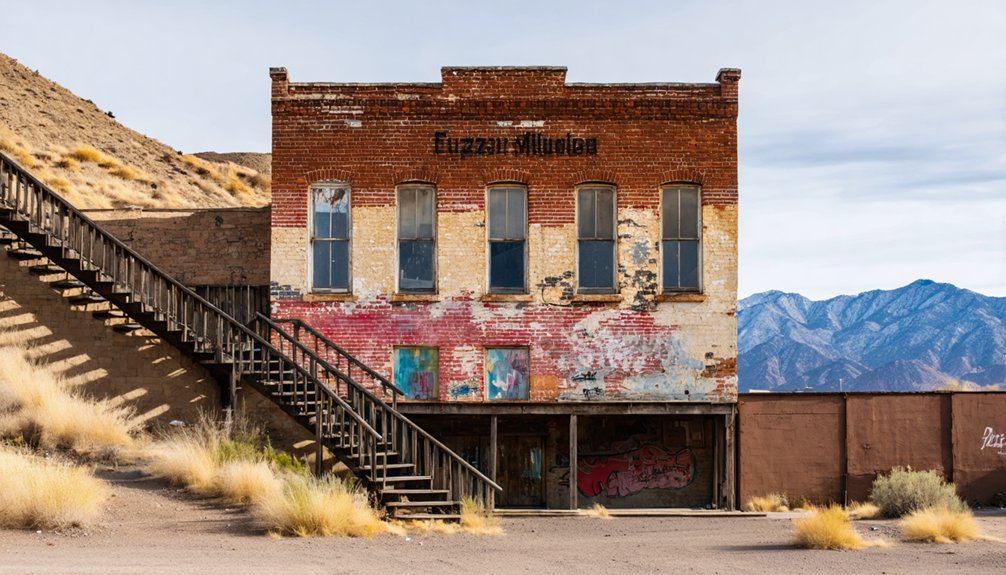
Tucked into the Mule Mountains near Arizona’s border with Mexico, Bisbee rose from a humble prospectors’ camp in 1877 to become the largest city between Houston and Los Angeles by the early 1900s.
You’ll discover a town that produced nearly 8 billion pounds of copper over a century, with the Copper Queen mine operating from 1880 to 1975.
Bisbee’s Copper Queen mine extracted nearly 8 billion pounds of copper during its 95-year operation from 1880 to 1975.
When copper mining ceased in the mid-1970s, artists transformed abandoned Victorian homes into galleries and studios.
Today, you can tour the Copper Queen mine, explore the massive Lavender Pit open-pit mine, and wander streets lined with early 1900s architecture.
The artist community thrives in this National Historic Landmark, where bohemian culture has replaced mining operations without erasing the town’s authentic character.
Oatman: Wild Burros and Route 66 Nostalgia
You’ll find Oatman straddling a dramatic stretch of historic Route 66, where wooden sidewalks creak beneath your boots and wild burros amble freely down the main street, nudging tourists for carrots.
This former gold mining boomtown—once home to 10,000 residents—now survives as a living museum with about 100 locals who’ve preserved its 1920s storefronts and dusty Old West character.
The burros, descendants of miners’ pack animals and protected by federal law, steal every scene as they wander past false-front buildings where daily gunfight shows echo through the mountain air.
Historic Route 66 Charm
When gold fever swept through Arizona’s Black Mountains in 1915, Oatman exploded into one of the state’s most productive mining towns, with prospectors flooding the dusty streets and mines churning out fortunes from the rocky hillsides. Today, you’ll walk the same Route 66 pavement that connected America coast-to-coast from the 1920s through 1950s, experiencing the longest unbroken stretch preserved in Arizona.
The winding road climbs Sitgreaves Pass at 3,586 feet, offering breathtaking views of Thimble Mountain and Elephant’s Tooth.
Inside the 1902 Oatman Hotel—the county’s oldest two-story adobe structure—vintage memorabilia and dollar bills plaster every surface. Local folklore surrounds Clark Gable and Carole Lombard’s 1939 honeymoon suite upstairs.
You’ll discover authentic Wild West atmosphere along wooden sidewalks where staged gunfights bring frontier history alive.
Friendly Wild Burro Encounters
Shaggy burros with soulful eyes amble down Oatman’s Main Street like they own the place—because, in many ways, they do. These descendants of mining burros transform the ghost town into a living Wild West experience, seeking handouts from visitors along historic Route 66.
You’ll encounter them year-round, their presence defining Oatman’s identity as much as its weathered storefronts.
Burro behavior here reflects decades of human habituation—they’re comfortable but still wild. While you’ll be tempted to feed them, officials discourage it for their health.
Winter visits offer cooler temperatures for safer interactions, though you should maintain respectful distance.
Wildlife conservation efforts are underway, with BLM relocating excess populations to protect rangeland ecosystems. Still, these charming creatures remain Oatman’s most beloved residents.
Preserved Old West Buildings
Beyond the dusty hoofprints of Oatman’s burros, weathered adobe and wood-frame buildings line Main Street like sentinels from another century.
You’ll discover authentic frontier architecture rising against mountain landscapes where desert flora clings to volcanic slopes.
Three structures anchor your journey through mining-era commerce:
- Oatman Hotel (1922) – Clark Gable and Carole Lombard honeymooned here in 1939; miners’ signed dollar bills still paper the saloon walls
- Oatman Drug Company Building (1915) – This two-story storefront housed everything from pharmaceuticals to dentists during boom years
- Lumber Building (1906) – Originally a Ford dealership, now trading in Old West antiques
These survivors of the 1921 fire that razed most structures became essential stops along Route 66 from 1920-1953, serving road-trippers traversing this 2,700-foot-elevation pass between Kingman and Needles.
Vulture City: Arizona’s Richest Gold Mine Turned Historic Site
While most prospectors scoured Arizona’s desert valleys with determination, Henry Wickenburg found fortune by following vultures. In 1863, these circling birds led him to quartz outcroppings yielding an astounding 20 troy ounces of gold per ton. What began with simple pick-and-shovel work exploded into Arizona’s largest gold mine, producing 340,000 ounces worth $200 million in today’s currency.
You’ll find mining archaeology and gold prospecting history preserved across twelve original buildings at 36610 355th Ave. The infamous Hanging Tree still stands where 18 thieves met their end.
Though Roosevelt’s 1942 executive order shuttered operations, extensive restoration since 2017 lets you explore this authentic ghost town. Winter’s mild temperatures make wandering these structures ideal for experiencing Arizona’s untamed mining legacy.
Planning Your Winter Ghost Town Adventure in Arizona
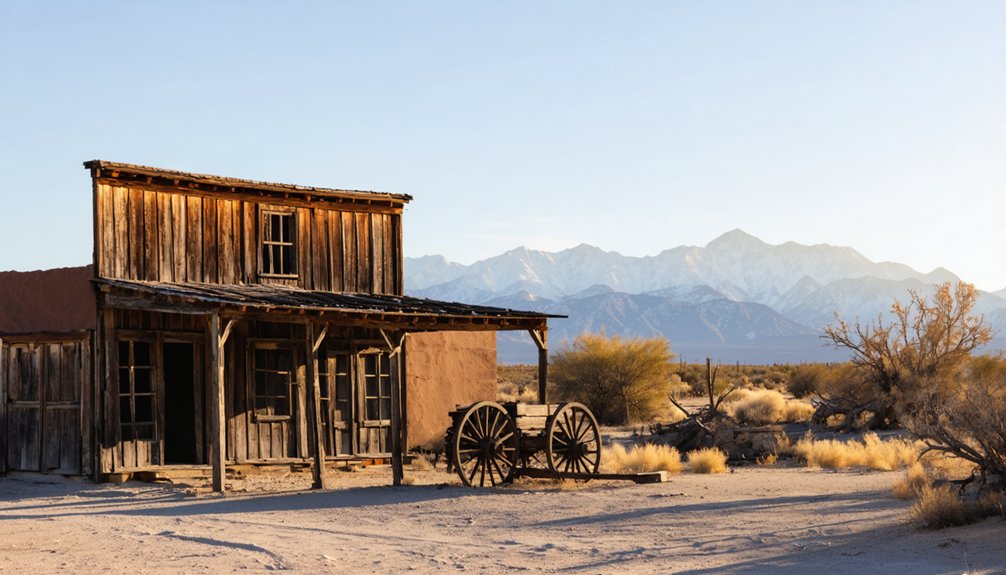
Arizona’s ghost towns beckon year-round, but winter transforms these abandoned settlements into photographer’s paradises with crisp air and dramatic lighting. You’ll discover winter wildlife thriving among desert flora while exploring these time-frozen relics of the Old West.
Winter’s crystal-clear desert air and golden light create unforgettable photographic opportunities among Arizona’s weathered ghost town structures.
Essential preparations maximize your adventure:
- Vehicle readiness: Pack tire chains for higher elevations like Jerome and Ruby, where snow occasionally dusts historic structures above 4,000 feet.
- Timing strategy: Visit Tombstone and Bisbee on weekdays to avoid crowds and secure better parking near attractions.
- Reservation requirements: Book Ruby’s guided tours ($12) in advance—it’s Arizona’s best-preserved ghost town and worth planning around.
Lower desert sites offer mild temperatures perfect for wandering abandoned streets, while clear winter skies enhance visibility of weathered buildings against Arizona’s stunning landscapes.
Frequently Asked Questions
Are These Ghost Towns Safe to Visit Alone or at Night?
Don’t throw caution to the wind—visiting alone or at night isn’t recommended. You’ll need solid safety precautions and emergency preparedness for crumbling structures, crime hotspots, and winter hazards. Daylight group visits offer your best bet for adventure.
Do Any Ghost Towns Offer Overnight Accommodations or Nearby Lodging Options?
You’ll find excellent overnight options blending historical preservation with modern tourist amenities. Kentucky Camp offers rustic cabins, Jerome features converted hotels with stunning views, and Oatman’s historic adobe provides authentic ghost town lodging experiences year-round.
Are the Ghost Towns Wheelchair Accessible for Visitors With Mobility Challenges?
Coincidentally, Arizona’s most visitor-friendly ghost towns now prioritize wheelchair accessibility. You’ll find Goldfield and Vulture City offer smooth pathways and ADA facilities, while others present mobility challenges with uneven terrain—though Tombstone’s accessible tours let you explore historic streets independently.
What Photography Restrictions Exist at Historical Ghost Town Sites in Arizona?
You’ll need photography permits for commercial shoots at most Arizona ghost towns. Camera restrictions vary by site—some require management approval while others welcome personal photos. Always check policies beforehand to avoid disappointment and potential fees.
Can Visitors Bring Pets to Arizona’s Ghost Towns During Winter Months?
You’ll find most Arizona ghost towns welcome your four-legged companions! Pet policies generally allow leashed dogs outdoors, though winter weather averages 60-70°F—perfect for exploring with your adventure buddy while shops may restrict indoor access.
References
- https://takingthekids.com/the-remote-arizona-ghost-towns-that-will-take-you-back-in-time/
- https://www.visittucson.org/blog/post/8-ghost-towns-of-southern-arizona/
- https://statelibraryofarizona.wordpress.com/2023/09/18/arizona-ghost-towns/
- https://www.hipcamp.com/journal/camping/arizona-ghost-towns/
- https://www.tripadvisor.com/Attractions-g28924-Activities-c47-t14-Arizona.html
- https://www.stresslesscamping.com/our-journey/visiting-jerome-arizona-a-popular-ghost-town
- https://spiritofarizonatours.com
- https://getawayarizona.com/arizona-ghost-towns-travel-guide/
- https://danielleoutdoors.com/goldfield-ghost-town/
- https://www.westgateresorts.com/blog/why-the-spookiest-summer-getaway-of-all-time-is-an-abandoned-ghost-town-in-arizona/