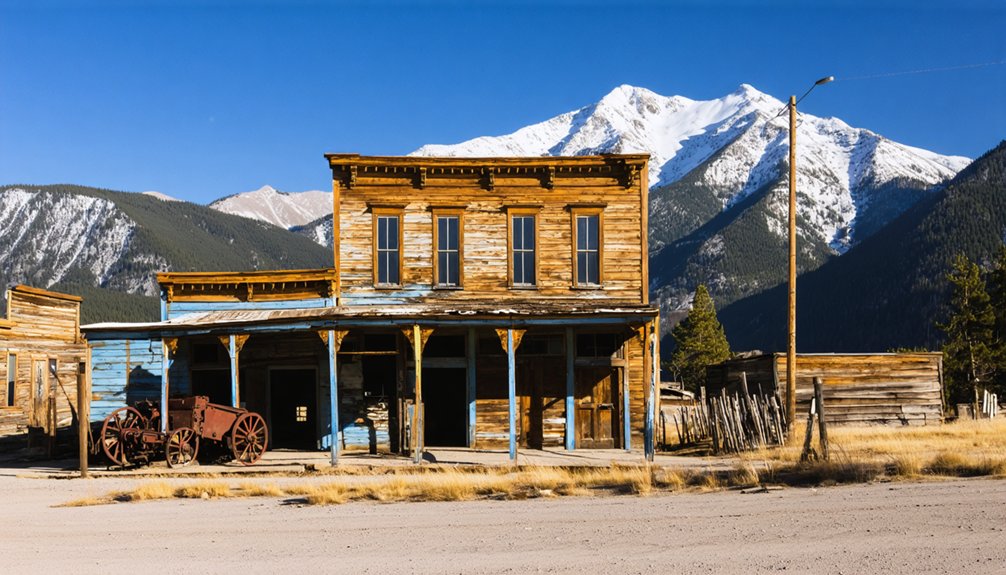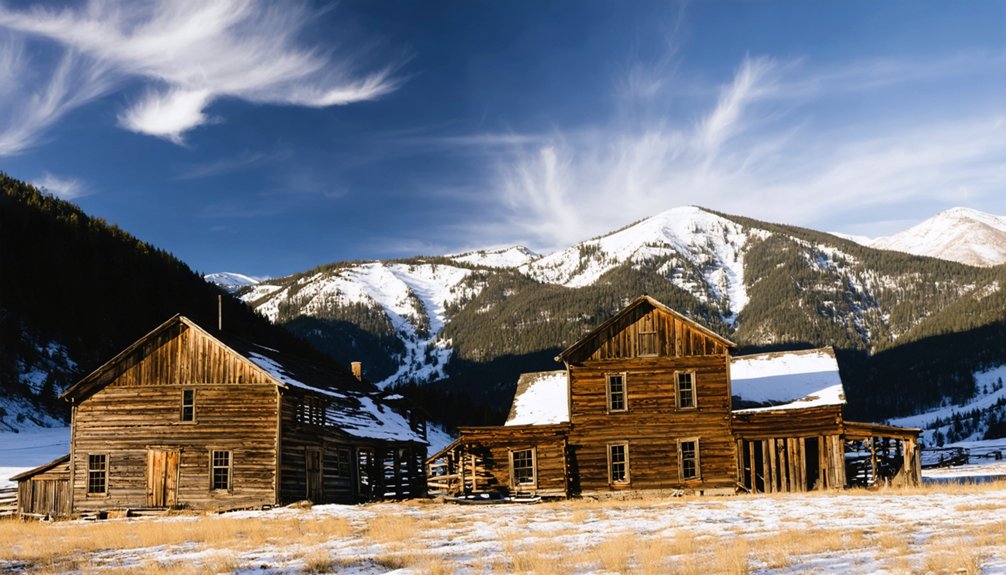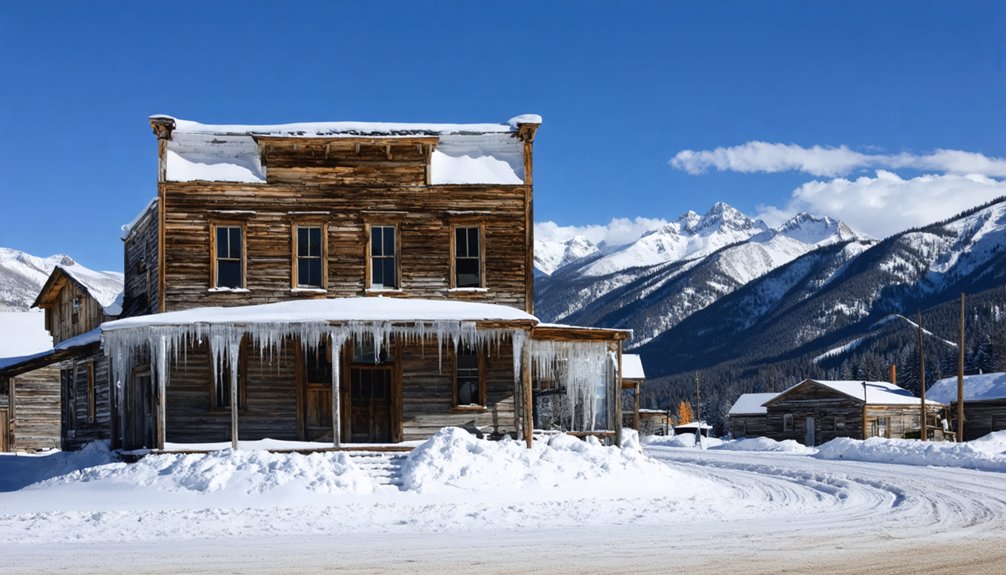
You’ll find Colorado’s most accessible winter ghost towns along plowed mountain roads, where snow transforms abandoned mining camps into atmospheric time capsules. St. Elmo sits at 10,000 feet with authentically preserved 1880s buildings, while Ashcroft near Aspen offers self-guided winter tours through structures that once housed 2,000 residents. Animas Forks perches at 11,200 feet amid towering snowdrifts, and the Million Dollar Highway keeps Ironton accessible despite heavy snowfall. Each location reveals unique stories of boom, bust, and the remarkable communities that thrived in these extreme elevations.
Key Takeaways
- St. Elmo at 10,000 ft offers year-round access via plowed County Road 162, featuring preserved 1880s buildings including a general store and church.
- Animas Forks sits at 11,200 ft with the iconic Duncan House visible, though visitors face extreme alpine conditions and 25-foot snowdrifts.
- Ashcroft, located 11 miles from Aspen at 9,521 ft, provides winter self-guided tours with honor-system admission for $5.
- Tin Cup features unmaintained winter roads but attracts backcountry skiers exploring Washington Avenue and the historic Boothill Cemetery.
- Ironton remains accessible along the plowed Million Dollar Highway, seven miles south of Ouray at 9,800 ft elevation.
St. Elmo: Colorado’s Best-Preserved Ghost Town
Perched at 10,000 feet in the Sawatch Range, St. Elmo beckons you through snow-draped valleys just 20 miles from Buena Vista. You’ll discover authentically preserved structures from the 1880s—a general store, church, schoolhouse, and cabins—standing as a monument to preservation efforts that earned this mining boomtown a spot on the National Register of Historic Places in 1979.
County Road 162 stays plowed year-round, granting you winter access to explore historical architecture without summer crowds. The town’s prosperity once flowed from over 150 patented claims, with the Mary Murphy Mine alone shipping up to 75 tons of ore daily to distant smelters.
The Stark family’s decades-long stewardship kept this ghost town alive after the railroad vanished in 1922. Today, you’re free to wander among buildings frozen in time, where Annabelle Stark‘s legend still whispers through hotel corridors and mountain winds carry echoes of 2,000 prospectors who once called this wilderness home. The site remains privately owned but receives federal preservation aid to maintain its historic structures and heritage.
Animas Forks: High-Altitude Mining History
Rising even higher into Colorado’s unforgiving alpine wilderness, Animas Forks challenges your conception of what constitutes survivable terrain. At 11,200 feet, this ghost town once housed 450 defiant souls who carved civilization from rock and ice.
You’ll find the iconic Duncan House standing sentinel—its weathered walls testament to miners who tunneled through 25-foot snowdrifts just to reach neighboring cabins.
Mining technology advanced rapidly here between 1873 and 1910, transforming raw mountainside into a town boasting electricity, telephones, and the Gold Prince Mill.
Today’s infrastructure preservation efforts by the Bureau of Land Management let you walk among authentic structures frozen in time. The 1905 Gold Prince Mill featured 100 stamps and could process 500 tons of ore, making it Colorado’s largest mill operation. The town’s placement along the Alpine Loop makes it a notable stop for adventurous visitors navigating Colorado’s historic mining country.
The 1891 fire‘s devastation and 1893 silver crash scattered these pioneers, leaving you their remarkable legacy of high-altitude ambition.
Ashcroft: From Boom to Abandonment Near Aspen
Just eleven miles from modern Aspen’s glittering resorts, Ashcroft tells a starker tale of ambition turned to silence.
Founded in 1880, this silver camp exploded to 2,000 residents—bigger than Aspen itself—complete with twenty saloons, two newspapers, and a working smelter. You’ll wander streets where fortunes rose and crashed within five years when ore veins proved shallow.
Winter accessibility makes Ashcroft particularly compelling. You’ll find self-guided exploration through an honor-system admission box ($5 for adults).
The Kinney Mercantile Store and Post Office stand preserved at 9,521 feet, managed through historical preservation efforts since 1974. The site sits in the Castle Creek area, land originally inhabited by Ute people before settlers displaced them during the 1880s mining rush. Beyond walking tours, winter visitors can enjoy cross-country skiing and snowshoeing through the snow-covered ghost town.
Jack Leahy, the last resident, died here in 1939, leaving these weathered structures as monuments to Colorado’s volatile mining dreams and the freedom seekers who chased them.
Tin Cup: Wild West Legends and Cemetery Tales
Where Tin Cup‘s weathered storefronts still line Washington Avenue, you’re walking through Colorado’s most violent mining camp—a place where three consecutive lawmen fell to gunfire before the silver veins ran dry.
Local legends swirl around its 1859 origins—prospector Jim Taylor spotting gold flakes in his tin cup, or miners trading dust at saloon counters. Either way, the name stuck when 1,500 fortune-seekers transformed these gulches into Virginia City, then Tin Cup in 1882.
Cemetery mysteries await at Boothill, where marshals Harry Rivers and Andy Jameson rest alongside the sheriffs who couldn’t tame this frontier chaos.
Today’s summer residents restore original cabins, but winter’s unmaintained dirt road keeps this authentic ghost town blissfully isolated—exactly how freedom-seekers prefer their history. When snow closes Cottonwood Pass, the area transforms into a backcountry touring destination for adventurous skiers. The town sits past Taylor Park Reservoir along Colorado Road 765, approximately 1.5 hours from Crested Butte.
Remote Adventures: Ironton and Carson Ghost Towns
At 9,800 feet along the Million Dollar Highway, Ironton‘s skeletal remains cling to rust-stained slopes where Red Mountain Creek once powered a thousand desperate dreams.
You’ll find Colorado’s most accessible ghost town seven miles south of Ouray, where original structures still stand against winter’s fury.
Unlike regions dominated by coal mining, Ironton chased silver until the 1893 crash gutted its economy.
The Yankee Girl and Orphan Boy mines fed this transportation hub that peaked at over 1,000 souls.
Railroad history runs deep here—daily trains from Silverton once served twelve saloons and hundreds of buildings.
Heavy snows shut down railroad operations annually from January through May, isolating the mountain settlement for months.
When Milton Larson died in the mid-1960s, Ironton became a true ghost town.
The Highway is regularly plowed despite harsh winter conditions, making year-round access possible.
Winter transforms these rust-colored peaks into something otherworldly along the San Juan Skyway.
Frequently Asked Questions
What Winter Clothing and Gear Are Essential for Visiting Colorado Ghost Towns?
Like armor against nature’s bite, you’ll need moisture-wicking base layers, insulated mid-layers, and waterproof shells for winter hiking. Cold weather gear—insulated boots, wool beanie, waterproof gloves, and neck gaiter—keeps you exploring Colorado’s frozen, abandoned landscapes freely.
Are Guided Tours Available for Ghost Towns During Winter Months?
Yes, you’ll find guided winter tours at several ghost towns. Animas Forks and Ashcroft offer expert-led exploration showcasing historical preservation efforts, while Ouray Mountain Adventures provides four-wheeling expeditions. Gothic welcomes urban exploration enthusiasts with donation-based caretaker-guided visits year-round.
Which Ghost Towns Have Nearby Lodging or Camping Facilities Open in Winter?
You’ll find winter cuisine and cozy lodging near Silverton (Animas Forks), Buena Vista (St. Elmo), Dunton Hot Springs’ restored cabins, and Ouray’s hotels—perfect basecamp vibes for your ghost town photography adventures through Colorado’s snowy, abandoned mining settlements.
Do I Need Permits or Passes to Visit These Ghost Towns?
You won’t need permits or passes for these ghost towns—they’re freely accessible. However, respect historical preservation by not entering fragile structures, and check photography permissions if commercial shooting’s planned, as some sites have restrictions.
What Are the Best Months for Winter Ghost Town Visits in Colorado?
December through February offers Colorado’s most dramatic winter ghost town experiences. You’ll discover historical preservation amid pristine mountain scenery when snow transforms abandoned structures into haunting monuments, though you’ll need proper preparation for these freedom-filled adventures.
References
- https://www.longmontleader.com/colorado/explore/20-must-visit-ghost-towns-in-colorado-for-an-eerie-adventure-10192944
- https://www.visitouray.com/ghost-towns
- https://www.durango.com/colorado-ghost-towns/
- https://www.colorado.com/articles/colorado-ghost-towns
- https://www.americansky.co.uk/colorado-holidays/exploring-colorados-ghost-towns
- https://www.tripadvisor.com/Attractions-g28927-Activities-c47-t14-Colorado.html
- https://303magazine.com/2024/05/where-history-sleeps-colorado-ghost-towns/
- https://www.legendsofamerica.com/co-stelmo/
- https://blogs.loc.gov/law/2025/09/st-elmo-colorado-administering-a-ghost-town/
- https://coloradoinfo.com/blog_post/st-elmo-best-preserved-ghost-town/