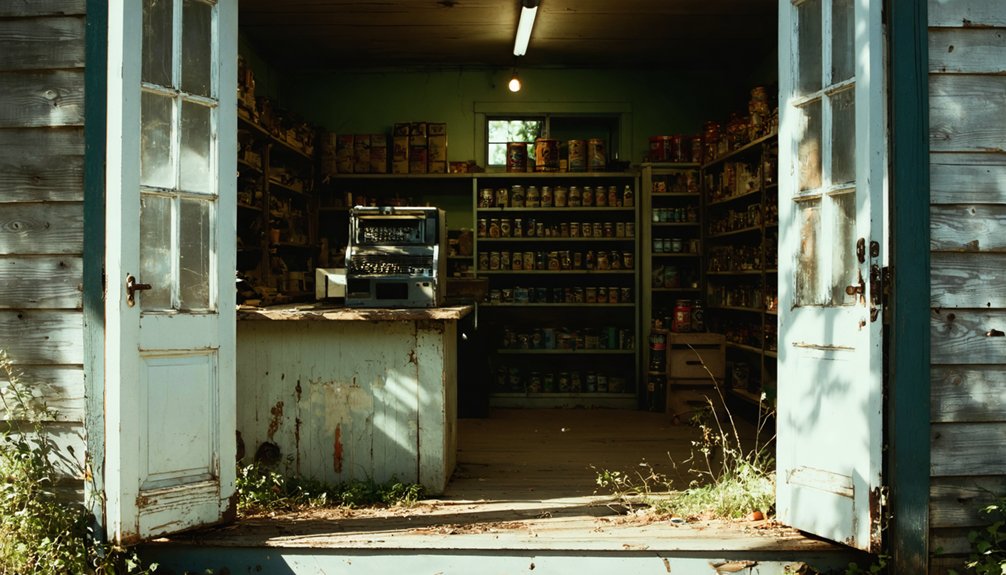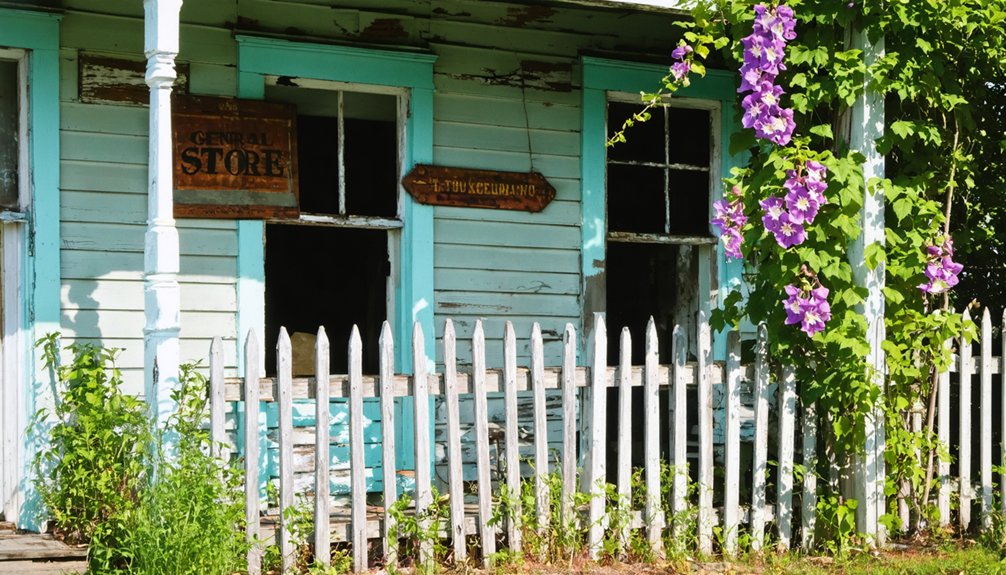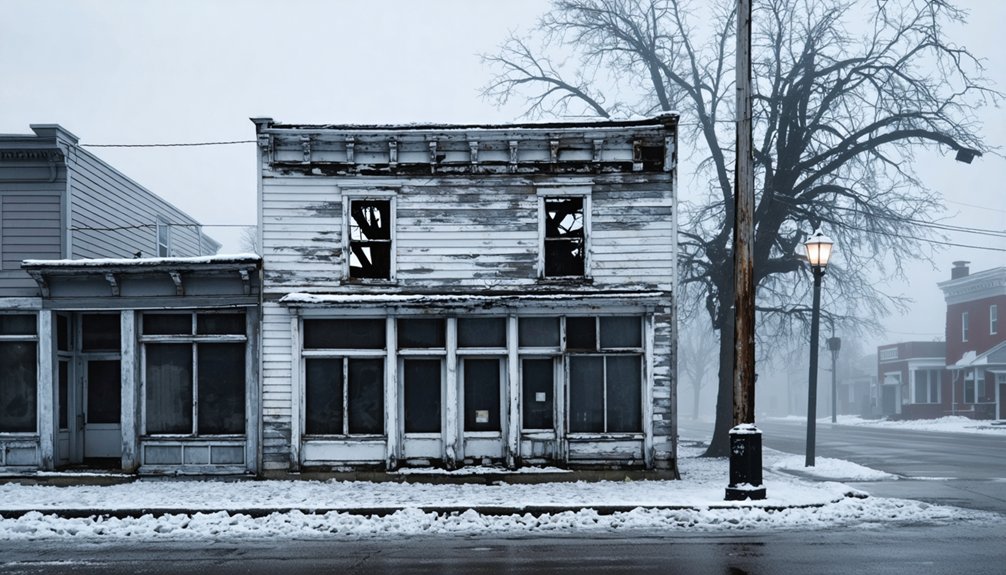
You’ll find Delaware’s most haunting ghost towns stripped bare in winter, when frozen marshlands expose Glenville’s floodplain remnants near Stanton and skeletal trees reveal Sussex County’s forgotten settlements like Banning and Owens Station. The coastal towns of Rehoboth and Bethany shed their summer crowds, transforming into quiet, windswept boardwalks perfect for solitary exploration. Winter’s harsh clarity discloses foundations hidden beneath overgrowth, while nearby historic sites like Fort Delaware and the Indian River Life-Saving Station add spectral legends to your journey through these storm-ravaged landscapes and abandoned crossroads.
Key Takeaways
- Glenville on Bread and Cheese Island was demolished by 2005 after flooding; winter reveals floodplain remnants along Route 4 near Stanton.
- Banning in Sussex County was destroyed after Tropical Storm Henri in 2003, now showing only overgrown foundations visible in winter.
- Zwaanendael, Delaware’s first settlement from 1631, was destroyed within a year and left no physical traces to visit today.
- Andrewsville features scattered historic structures, Bethel Church, and a cemetery, offering glimpses of early rural Delaware community life.
- Winter coastal towns like Rehoboth and Bethany transform into quiet, stripped-down environments ideal for exploring boardwalks and secluded trails.
Glenville: New Castle County’s Storm-Ravaged Settlement
Nestled on Bread and Cheese Island where Red Clay Creek winds through New Castle County, Glenville once hummed with ordinary life—families gathering for dinner, children playing in yards, neighbors waving from porches.
Hurricane Floyd’s 1999 devastation marked the beginning of the end, but Tropical Storm Henri delivered the final blow in September 2003. Within weeks, another flood struck, rendering homes uninhabitable. You’ll find no structures standing today—just abandoned waterfronts where foundations once supported dreams.
The state bought out every property, and by 2004, silence replaced laughter. Demolition by 2005 erased the last physical traces of the community. Winter visits reveal floodplain remnants along Route 4 near Stanton, where nature reclaimed what storms destroyed.
This ghost town embodies raw freedom—untethered from civilization’s grip, answering only to the creek’s relentless current.
Sussex County’s Forgotten Communities
While New Castle County’s Glenville succumbed to floods within living memory, Sussex County harbors older, quieter disappearances—settlements that slipped away so gradually their exact death dates vanished with them.
Some towns die spectacularly—others fade so slowly that even their final moments dissolve into forgotten silence.
You’ll find Banning, New Market, Owens Station, and Saint Johnstown scattered across farmland and forest, their histories erased by time’s patient hand.
Winter preservation keeps these abandoned sites locked in haunting stillness. Snow blankets overgrown foundations where families once gathered. The cold air carries no voices, only wind through skeletal trees marking forgotten crossroads.
Banning itself never recovered after Tropical Storm Henri devastated the community in 2003, leading to its complete abandonment by the following year.
Yet Sussex’s most dramatic ghost predates them all: Zwaanendael, Delaware’s first settlement, established by Dutch whalers in 1631 near present-day Lewes. Within twelve months, Native American conflict killed every colonist.
You’re walking ground where Delaware’s inaugural community vanished completely. Nearby Andrewsville persists as a small rural community on State Highway 304, featuring scattered buildings, Bethel Church, and a cemetery that represent typical settlement patterns from earlier centuries.
Coastal Towns Transformed by Winter Weather
When summer’s carnival atmosphere fades from Delaware’s coast, something remarkable emerges—beach towns shed their crowded personas and reveal intimate winter identities. You’ll find Rehoboth Beach’s boardwalk stripped to its essence, perfect for winter photography as snowflakes dust weathered railings.
Bethany Beach and Fenwick Island slow to whispers, their streets emptied for silent explorations. These aren’t abandoned places—they’re transformed. Cape Henlopen’s trails beckon without crowds, while Fenwick Island State Park offers unobstructed sunset horizons. The Baldwin Trail at Bethany Beach Nature Center winds through winter landscapes where over 100 species of native animals leave their quiet signatures in the season.
You’ll witness the true character of these communities when locals reclaim their territory and ocean winds carry no sunscreen scent. The coast doesn’t die in winter; it simply exhales, revealing the raw beauty that tourist seasons conceal beneath umbrellas and noise. Winter’s fewer crowds create the perfect atmosphere for those seeking solitude along the shoreline.
Historic Haunted Sites Near Delaware’s Abandoned Places
Delaware’s coastal abandonment runs deeper than empty beach houses—centuries of tragedy have left spectral residents who refuse to check out.
You’ll find haunted legends at Cannonball House in Lewes, where War of 1812 artillery still echoes through night tours.
The Lewes Historical Society Complex harbors restless spirits in Delaware’s oldest structure, where early owners wander after sunset.
Head to Indian River Life-Saving Station and you’ll hear disembodied voices and boot sounds from a perished rescuer still patrolling the grounds.
Even demolished sites like Dewey Beach’s Rodney Hotel can’t shake their ghostly guests—shadowy figures and strange noises persist where the building once stood.
At Rehoboth Beach Boardwalk, visitors take nighttime strolls hoping to glimpse the Bride of Rehoboth, a woman in white who drowned on her wedding day and now wanders on misty nights.
New Castle’s Amstel House draws paranormal enthusiasts year-round with sightings of the Lady in Blue, a ghostly figure featured in historical haunting tours.
Fort Delaware offers three-hour paranormal investigations through its Civil War prison, complete with unexplained pokes and temperature drops.
Planning Your Winter Ghost Town Adventure
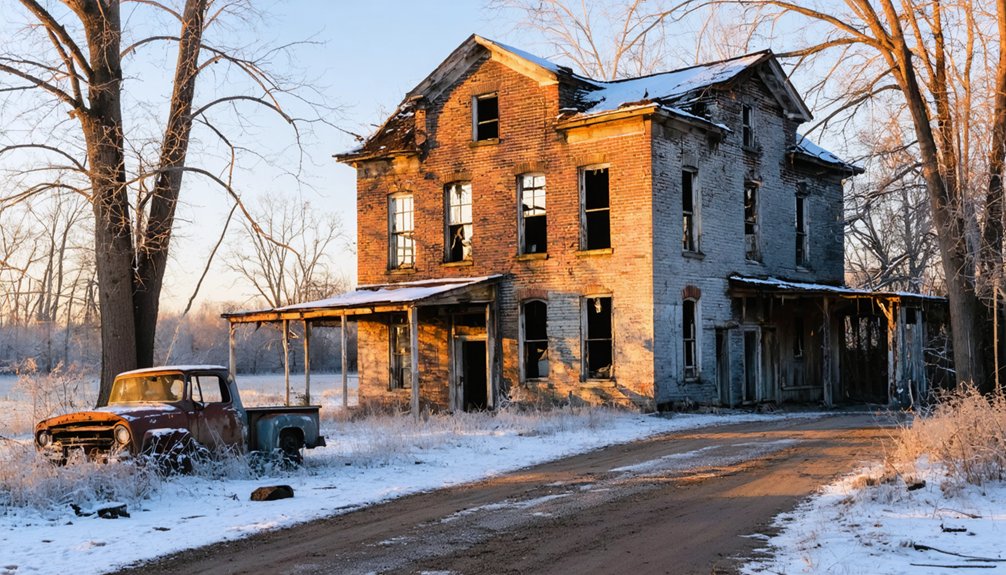
Before you set out on your winter ghost town expedition through Delaware’s haunted corridors, you’ll need to master the art of cold-weather exploration where freezing winds off the Atlantic can turn a thrilling investigation into a miserable ordeal. Pack waterproof boots for Old New Castle’s slick cobblestones and thermal layers for 28°F nights prowling Fort Delaware’s abandoned cells.
These seasonal travel tips prove essential when temperatures plummet and ferry schedules to Pea Patch Island become unpredictable. Winter safety precautions demand traveling in groups through dimly lit historic districts—notify your lodging before exploring solo.
Bring flashlights, hand warmers, and recording equipment to document paranormal encounters. Check tour availability through New Castle Historical Society, as many ghost investigations shift indoors when coastal storms hammer Delaware’s forgotten settlements. In Dover, prepare for approximately 1-hour walking tours that cover about a mile on foot through the city’s most haunted locations. Tours start at the New Castle Visitor Center located at The Arsenal on 30 Market Street, where you can arrange specialized access to haunted historic sites throughout the district.
Frequently Asked Questions
Are Delaware’s Ghost Towns Legally Accessible to Visitors Year-Round?
Delaware’s ghost towns aren’t guaranteed legal year-round access. You’ll find historical preservation efforts restrict some sites, while local legends draw you to others. Private property boundaries and flood-zone buyouts often block your exploration of these abandoned places.
Exploring ghost towns in Delaware can lead to unexpected discoveries, from crumbling buildings to remnants of the past that tell stories of a different time. Many visitors find that the thrill lies not only in the deserted structures but also in the eerie atmosphere that surrounds them. Each visit offers a chance to uncover lost histories and perhaps glimpse the spirits of those who once called these places home.
What Safety Precautions Should Visitors Take When Exploring Abandoned Winter Sites?
You’ll need proper safety gear like sturdy boots and layered clothing for urban exploration. Watch for unstable structures, black ice, and hidden hazards. Always tell someone your plans, carry a charged phone, and never explore alone in winter.
Are There Guided Ghost Town Tours Available During Winter Months?
You’ll find guided ghost tours running year-round in Delaware’s historic districts, though tour guide availability varies seasonally. The winter landscape adds eerie atmosphere to evening walks through haunted mansions and shadowy streets where spirits reportedly linger.
How Does Delaware’s Ghost Town Count Compare to Other Mid-Atlantic States?
You’ll find Delaware’s 8 ghost towns surprisingly modest compared to Pennsylvania’s staggering 105, though this scarcity makes your urban exploration adventures more intimate. Historical preservation efforts here focus on quality over quantity, offering you authentic, uncrowded discovery experiences.
What Photography Equipment Works Best in Delaware’s Winter Ghost Town Conditions?
You’ll need weather-sealed cameras and sturdy tripods for historical preservation shots in Delaware’s frozen ghost towns. Equipment durability matters when frost coats rusted metal—pack backup batteries, bright headlamps, and protective cases against biting coastal winds.
References
- https://www.delawonder.com/articles/haunted-halloween-in-southern-delaware/
- https://en.wikipedia.org/wiki/List_of_ghost_towns_in_Delaware
- https://wtop.com/category-beach-traffic-and-weather/2022/01/noreaster-snow-creates-beach-ghost-towns-in-coastal-areas/
- https://www.loveexploring.com/gallerylist/188219/the-us-state-with-the-most-ghost-towns-revealed
- https://travelswithabandon.com/2018/08/22/adventure-10-cliff-phoenix-delaware-mandan/
- https://www.narratively.com/p/the-park-built-on-forgotten-ghost-towns
- https://www.farmweddingde.com/wedding-blog/haunted-history-in-delaware-city-tourism-in-the-first-state
- https://www.visitkeweenaw.com/listing/delaware-the-ghost-town/515/
- https://kids.kiddle.co/Glenville
- https://www.youtube.com/watch?v=ex8Hld_imPU