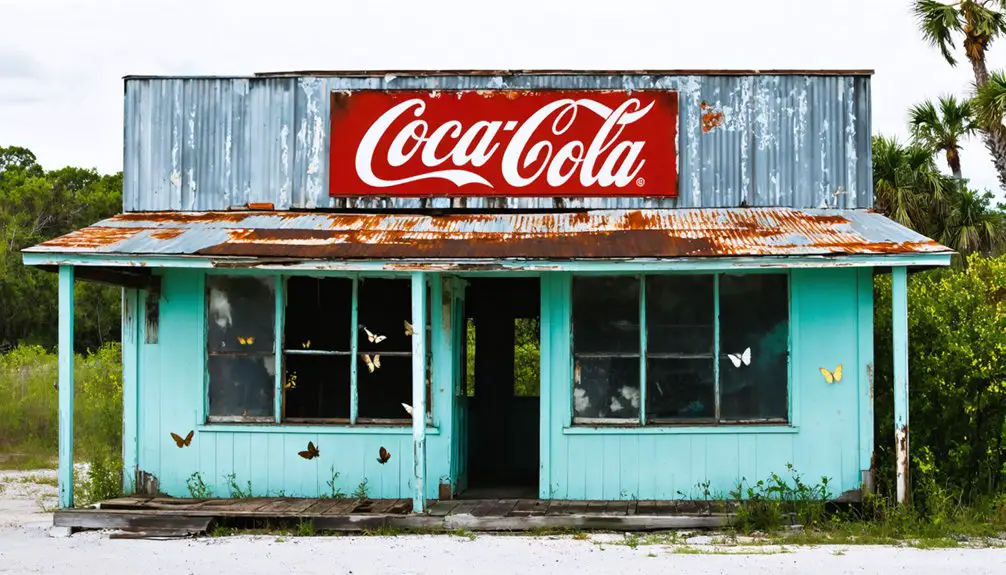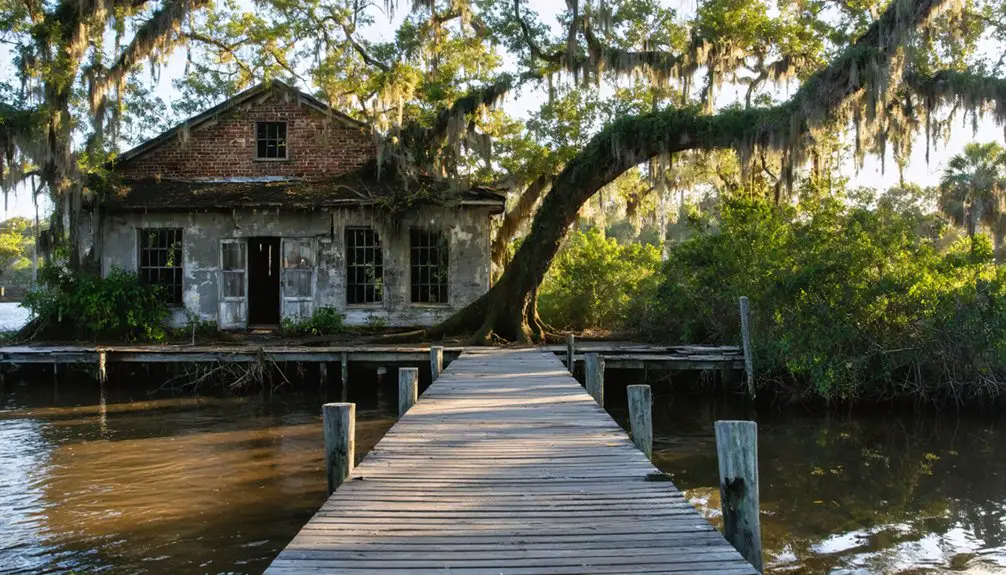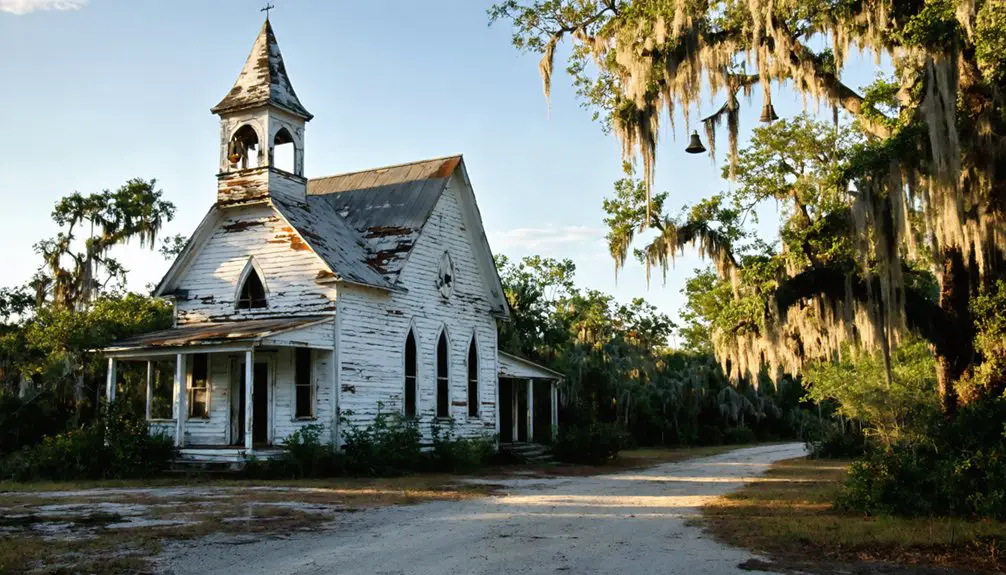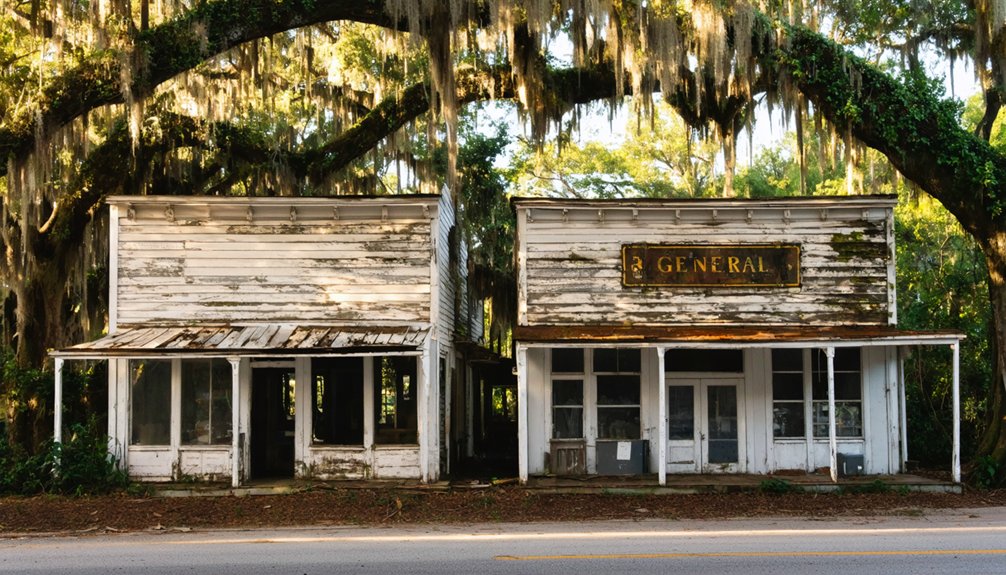
You’ll find Florida’s ghost towns remarkably accessible during winter’s cooler months, when exploring feels less like endurance training and more like adventure. Head to Bulowville’s 150-acre park to touch scorch-marked coquina walls from 1836, kayak to storm-destroyed Atsena Otie Key off Cedar Key, or walk through Eldora’s silent streets where the Great Freeze of 1894-1895 erased entire citrus communities overnight. Winter Garden offers app-guided ghost tours through genuinely haunted buildings, while St. Augustine’s lantern walks reveal centuries of supernatural tales waiting just beyond these introductory stops.
Key Takeaways
- Bulowville offers 150 acres of sugar plantation ruins with coquina walls and foundation stones from Florida’s largest 1812 sugar empire.
- Atsena Otie Key features storm-destroyed ruins and 2,000-year-old settlements accessible by kayak or boat off Cedar Key.
- Eldora in Canaveral National Seashore displays collapsed packing houses from citrus communities destroyed by the 1894-1895 Great Freeze.
- St. Augustine’s ghost tours run Friday through Sunday in winter, exploring 450 years of haunted history including the Old Jail.
- Winter Garden provides self-guided 1.17-mile ghost tours through historic sites, with night tours at 8 PM during cooler months.
BulowVille: Florida’s Spookiest Abandoned Plantation
Deep in the palmetto scrub north of Daytona Beach, coquina ruins rise from the forest floor like broken teeth—all that remains of Florida’s largest sugar empire. You’ll find Bulowville’s skeletal sugar mill standing monument to 300 enslaved laborers who cleared 2,200 acres before Seminoles torched everything in 1836.
Where 300 enslaved souls cleared an empire, only coquina bones remain—Florida’s largest plantation reduced to wilderness and ash.
The fires blazed so fierce they were visible forty miles away.
Today’s 150-acre state park offers plantation archaeology that’s hauntingly authentic—foundation stones marking where mansion and slave cabins once stood, overgrown wells, and coquina walls still bearing scorch marks. The plantation originally began in 1812 when Bahamian farmer James Russell established it on roughly 6,000 acres before Charles Wilhelm Bulow transformed it into the notorious sugar empire. After the 1836 destruction, the Bulow family abandoned the property permanently, never attempting to rebuild their once-thriving estate.
While there aren’t Civil War relics here (wrong conflict—this was the Second Seminole War), you’ll discover something rarer: a landscape reclaimed by wilderness, looking much as it did when John James Audubon visited in 1831.
Cedar Key Area: Island Ghost Town Adventures
While Bulowville’s ruins speak to mainland plantation violence, Florida’s most haunting ghost town lies half a mile offshore in the Gulf—where you can only reach it by kayak or boat. Atsena Otie Key thrived until 1896, when a ten-foot storm surge swept the entire settlement into the sea.
I’ve paddled these waters at dawn, watching herons stalk through what were once bustling streets.
Today, maritime archaeology reveals Native American settlements spanning 2,000 years beneath your feet. The U.S. Fish and Wildlife Service balances ecological preservation with public access—you’re free to explore, but tread carefully. Among the ruins, you can still find remnants of the Eberhard Faber mill that once processed cedar for pencil production before the hurricane destroyed it. The abandoned island sits within an archipelago where nearby Seahorse Key is rumored to hold pirate Jean LaFitte’s buried treasure.
Launch from Cedar Key, where the 1859 Island Hotel still welcomes guests. Pack water, respect nesting birds, and let the Gulf’s isolation remind you why some places choose to remain empty.
Winter Garden’s Haunted Historical Walking Tours
You’ll trace downtown Winter Garden’s haunted mile past the Garden Theatre’s resident apparition and the Edgewater Hotel, where an elderly man and young boy linger in spectral companionship.
Your evening walk requires sturdy shoes for the historic sidewalks and a flashlight for dimly lit sections between the Railroad Museum’s conductor ghost and the library’s 1970s-era specter. The self-guided app-led tour covers 1.17 miles through historic landmarks and takes approximately 1.5-2 hours to complete at your own pace. Gary’s hosted tours blend spooky ghost stories with historical insights that create an entertaining atmosphere suitable for all ages during the Halloween season.
Book the 8 PM tours during cooler winter months when Florida’s humidity won’t drain your energy before you reach the Heritage Museum’s finale of paranormal tales.
Featured Haunted Tour Locations
When darkness settles over Winter Garden’s historic Plant Street, the two-hour walking tour from American Ghost Adventures transforms ordinary storefronts and century-old buildings into portals of paranormal activity.
You’ll explore the 1918 Winter Garden Heritage Museum, where spirits linger near vintage train cars. Then venture into Garden Theatre‘s shadowy corridors where a dedicated apparition still roams.
The 1926 Edgewater Hotel‘s haunted architecture holds stories of guests who never checked out, while Tony’s Liquors—the town’s oldest business—hosts former owners who refuse to leave.
Your paranormal investigation includes hands-on equipment at the Central Florida Railroad Museum, where a conductor’s ghost remains attached to his uniform.
With 9 out of 10 tours reporting activity, you’re guaranteed more than history lessons during this $35 interactive experience. For a self-paced alternative, download the Let’s Roam app to explore haunted landmarks through phone-guided clues and interactive challenges. Tours depart at 8 p.m. in October, with check-in beginning at 7:45 p.m. at the Heritage Museum.
Ghost Tour Safety Guidelines
Respect the haunted sites you’re exploring—no touching artifacts or disrupting investigations.
Skip strong fragrances that interfere with paranormal detection.
These aren’t haunted houses with manufactured scares; they’re authentic encounters requiring genuine reverence and situational awareness.
Stay with the group throughout the tour to maintain safety and proper etiquette.
Arrive 15 minutes early to complete check-in before the tour begins.
Historic Settlements Lost to the Big Freeze
The Great Freeze of 1894-1895 didn’t just kill trees—it erased entire communities from Florida’s map. You’ll find Eldora’s silent streets within Canaveral National Seashore, where manatees now outnumber visitors among collapsed packing houses.
Earnestville vanished completely when temperatures hit the teens two winters straight, splitting citrus bark from crown to root.
Two brutal winters in the teens shattered citrus trees and erased an entire Florida town from existence.
Head to Sanford’s riverbanks where thousands of abandoned agriculture acres tell stories of overnight economic collapse. The St. Johns River once flowed with prosperity; now it’s historical preservation territory.
Near Clearwater, you can still trace Bayly’s Bluff grove boundaries where desperate farmers wrapped trees against northwest winds.
These ghost settlements offer you unguarded exploration—no crowds, no restrictions. Just forgotten dreams frozen in time, waiting for your discovery.
Rattlesnake and Other Vanished Florida Communities
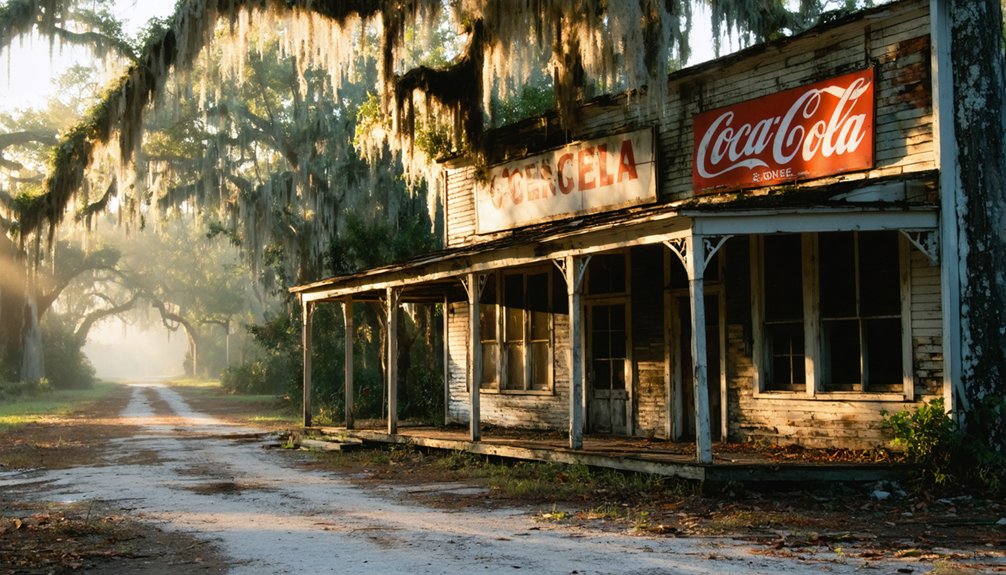
Tucked along Gandy Boulevard in South Tampa, a taxidermist’s fever dream once sprawled across the intersection at Bridge Street—George K. End’s “World’s only Rattlesnake Cannery.” You’d have found rattlesnake meat marketed as “chicken of the glades,” a novelty food that soldiers from MacDill devoured during World War II.
End paid workers a dollar per snake, canned the meat, and his son Daan created “SnakeSnaks”—thin, salted strips for appetizers.
When a rattlesnake killed End in 1944, his empire crumbled. Today, you’ll find no hidden ruins, just urban sprawl where this forgotten legend once thrived. The post office, snake pit, and filling station vanished into Tampa’s expansion.
You’re standing on freedom’s graveyard—where wild entrepreneurship met its fatal bite.
St. Augustine and Key West: Oldest Ghost Stories
You’ll find St. Augustine’s cobblestone streets transform after sunset, when tour guides lead flickering lantern walks past the 1891 Old Jail where Charlie Powell’s ghost still rattles chains through empty cells.
The city’s 450-year history means every corner harbors tales—from the Pittee sisters’ laughter echoing up lighthouse stairs to cold drafts swirling around ankles at the Spanish Military Hospital built atop a Timucuan burial ground.
Down in Key West, known as Bone Island for the human remains early settlers discovered scattered across the sand, similar nighttime tours reveal why Florida’s oldest cities preserve not just history, but the restless spirits who refuse to leave it.
St. Augustine Nightly Tours
Winter offers Friday-through-Sunday lighthouse tours, with Halloween and Christmas week specials.
Rain or shine, these nightly adventures run year-round, putting investigation control squarely in your hands.
Key West’s Bone Island
Several hundred miles south of St. Augustine, you’ll find Key West’s darker identity: Bone Island. Spanish explorers discovered human remains scattered everywhere in the early 18th century, naming it Cayo Hueso.
The spiritual legends intensified after 1846, when a hurricane unearthed the entire oceanfront cemetery, sending bones into mangroves and streets.
You can explore haunted architecture like the Artist House, where Robert the Doll terrorized young Eugene Otto—ask permission before photographing, or risk his curse.
Marrero’s Guest Mansion welcomes brave overnight guests, while the Old Monroe County Jail holds Manuel Cabeza’s vengeful spirit.
During renovations and storms, bones still surface from forgotten graves, reminding you why locals call this paradise their Island of Bones.
Frequently Asked Questions
Are Ghost Towns in Florida Safe to Visit With Children During Winter?
You’ll find these weathered sites reasonably manageable with kids during winter’s calmer months. Their historical significance draws families seeking adventure, while preservation efforts maintain safer pathways. Just supervise children near crumbling structures and you’re set for exploration.
Do I Need Special Permits to Explore Abandoned Florida Ghost Town Sites?
You don’t need permits for casual visits to most inland Florida ghost towns, but you’ll respect history preservation through legal access only—never remove artifacts or metal detect on public lands without proper authorization.
What Should I Bring When Visiting Remote Ghost Towns in Florida?
You’ll need sturdy boots, water, navigation tools, and a camera to document historical preservation efforts. Don’t forget insect repellent and sunscreen. Bring notebooks to record local folklore you’ll discover from weathered gravestones and crumbling foundations.
Are There Guided Tours Available for All Florida Ghost Town Locations?
Like scattered puzzle pieces, Florida’s ghost towns lack extensive tour group options. You’ll find historical preservation efforts focus on self-guided exploration rather than organized tours, giving you freedom to discover these abandoned sites independently through local historical societies.
Can I Camp Overnight at Any of Florida’s Ghost Town Sites?
You can’t camp directly at ghost town sites due to historical preservation rules, but you’ll find nearby national forests and WMAs where you’re free to set up camp and experience authentic wildlife encounters under Florida’s stars.
References
- https://www.youtube.com/watch?v=rwW3xeGBLzc
- https://usghostadventures.com/winter-garden-ghost-tour/
- https://www.journaloffloridastudies.org/0102ghosttowns.html
- https://www.orlandoattractions.com/explore-this-eerie-ghost-town-in-palm-coast-and-the-flagler-beaches/
- https://www.floridarambler.com/historic-florida-getaways/old-florida-towns/
- https://www.youtube.com/watch?v=efJaKzpbGhU
- https://www.tripadvisor.com/Attraction_Review-g34745-d33391472-Reviews-Whispers_on_the_Wharf_Winter_Garden_Ghost_Tours-Winter_Garden_Florida.html
- https://abandonedfl.com/bulow-plantation-ruins/
- https://www.thevintagenews.com/2016/05/30/built-early-1800s-bulow-family-proud-factory-mansion-burned-ground-second-seminole-war-fell-ruins/
- https://southofseeds.com/blog/2020/5/23/the-peak-and-decay-of-bulow-plantation