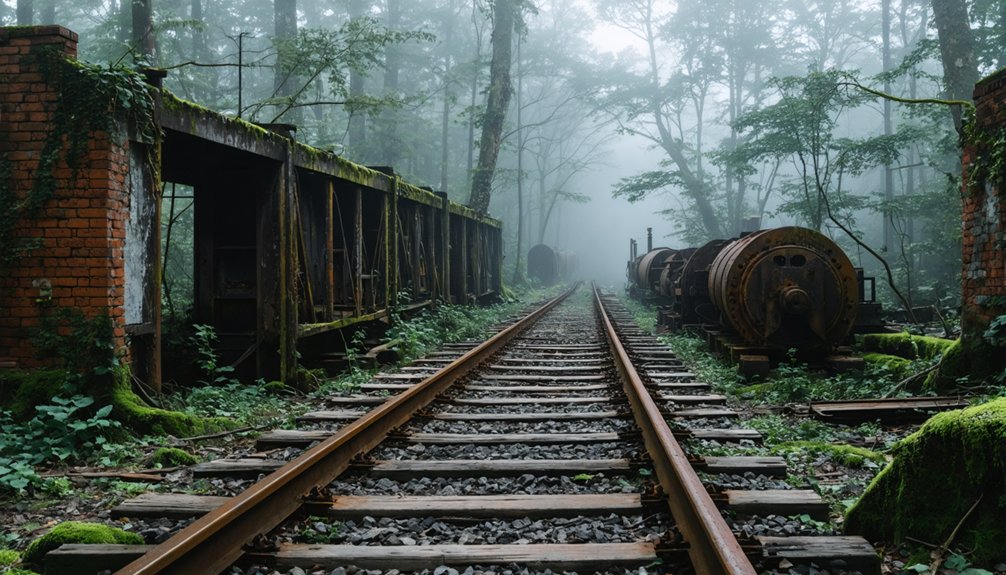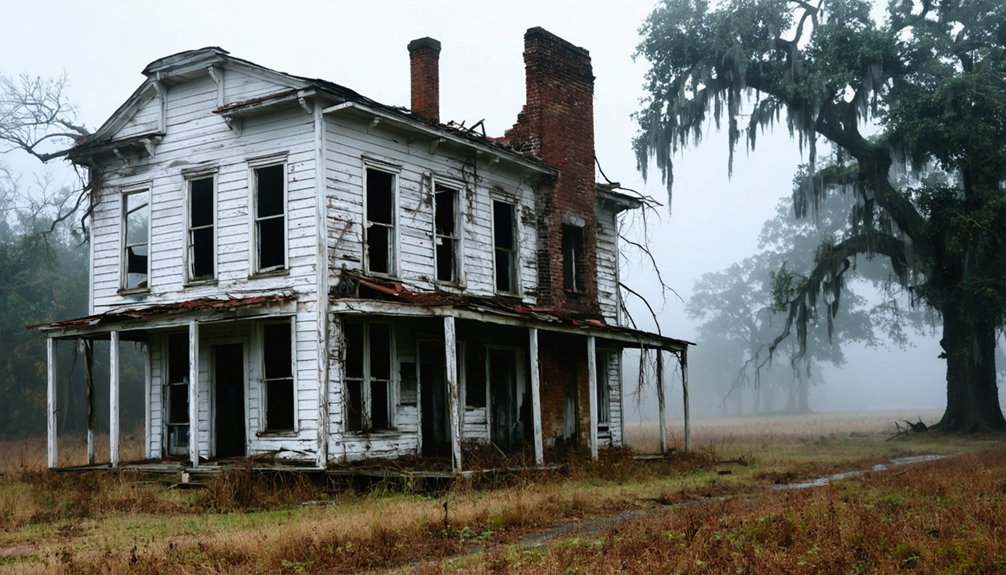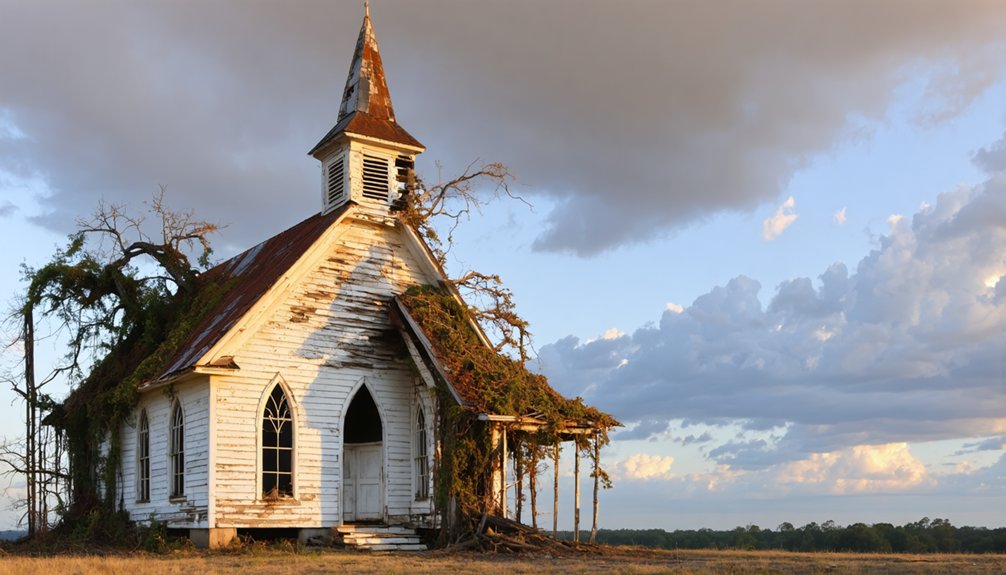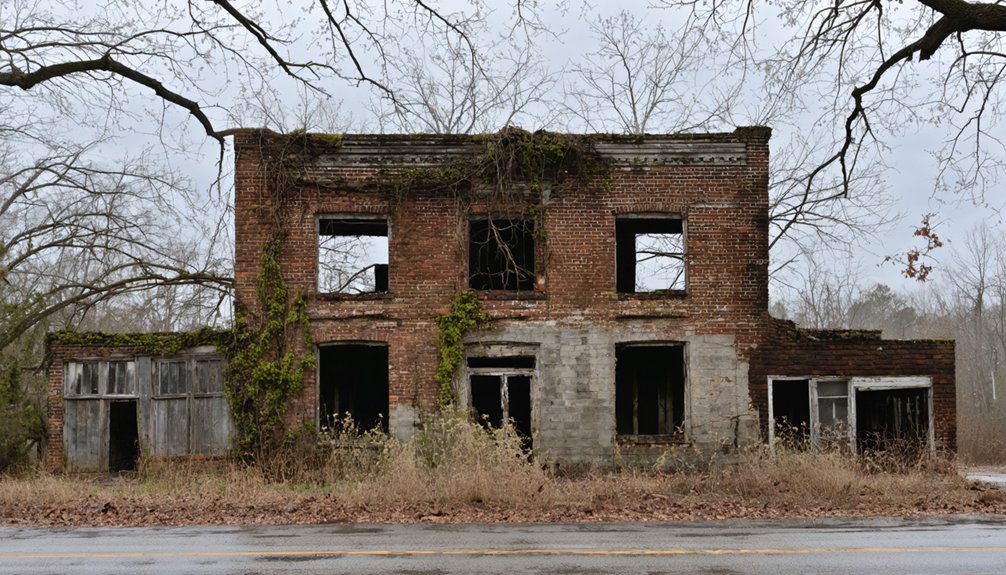
You’ll find Georgia’s most mesmerizing ghost towns like Wrightsboro and Scull Shoals particularly haunting in winter, when bare trees reveal crumbling foundations and cooler temperatures make exploration comfortable. Winter’s soft light creates perfect conditions for photographing weathered gravestones, abandoned mill ruins, and historic structures without summer crowds. The season’s quiet atmosphere lets you fully appreciate sites like Morris Station and Magnolia, while snow occasionally dusts the landscape, adding ethereal beauty to these forgotten settlements. Below, you’ll discover detailed histories and essential safety tips for planning your winter ghost town adventure.
Key Takeaways
- Wrightsboro features Georgia’s only Quaker settlement with weathered gravestones and the historic Rock House from 1768.
- Scull Shoals along the Oconee River showcases four-story brick mill ruins and ancient Mississippian mounds.
- Winter offers quiet exploration with fewer crowds, enhanced photography lighting, and snow contrasting against weathered structures.
- Morris Station, Magnolia, Willie, Troupville, and Princeton provide additional abandoned sites reclaimed by nature.
- Winter visits require safety preparation: monitor weather, winterize vehicles, wear layers, and inspect structures for hazards.
Wrightsboro: A Quaker Settlement Frozen in Time
Deep in McDuffie County, the ghost of Georgia’s only Quaker settlement whispers through bare winter trees. Founded in 1768 by Joseph Maddock and forty families from North Carolina, Wrightsboro represents a unique chapter in Colonial settlements—a pacifist community that received 44,000 acres from Royal Governor James Wright.
You’ll discover Quaker history etched into weathered gravestones and the Rock House‘s thick stone walls.
Winter’s stark beauty reveals the town’s original rectangular plan, where 60 families once thrived despite Revolutionary War persecution. Their refusal to bear arms brought devastating consequences: burned homes, extra taxes, and dozens murdered between 1780-1781. By the early 1800s, most Quakers migrated north to Ohio and Indiana, unable to compete with neighboring farms that prospered through enslaved labor while maintaining their anti-slavery principles. The town’s decline accelerated when the railroad bypassed Wrightsboro in the 1830s, with residents relocating to nearby Thomson for better economic opportunities.
Scull Shoals: Industrial Heritage Along the Oconee River
While Wrightsboro’s Quaker community left behind a pacifist legacy, Scull Shoals reveals Georgia’s industrial ambitions through crumbling mill walls and ancient burial mounds. You’ll discover 10,000 years of history along the Oconee River, where Native American origins meet Georgia’s first paper mill.
Ten millennia of human ambition etched in stone and brick along the Oconee’s ancient banks.
Winter’s bare trees expose ruins clearly as you explore this ghost town 15 miles south of Athens. The site once housed 600 workers operating textile mills before the devastating 1887 flood ended everything. The flood destroyed cotton bales, wheat stores, and the town’s toll bridge, triggering the economic collapse that left Scull Shoals abandoned by the 1920s.
What You’ll Find:
- Mississippian mounds dating A.D. 1250-1500
- Industrial ruins including four-story brick mill foundations
- Fort Clark remnants from 1793 Creek conflicts
- Waterfalls and rapids along the Oconee
- Protected trails through 2,200-acre experimental forest
The Oconee National Forest preserves these industrial ruins and sacred mounds, offering you freedom to wander through Georgia’s layered past. Dr. Thomas Poullain’s 41-year leadership transformed this frontier settlement into a thriving company town with mills, stores, and a distillery that employed over 600 people by 1854.
Why Winter Is the Perfect Season for Ghost Town Photography
When Georgia’s ghost towns empty of summer crowds and bare branches expose every architectural detail, winter transforms these abandoned sites into a photographer’s paradise.
You’ll find pristine snow surfaces unmarked by footprints, allowing unique compositions without interference. The seasonal lighting delivers soft, directional rays from low-angled winter sun.
While cleaner cold air sharpens distant ruins with exceptional clarity, winter’s solitude inspiration strengthens your connection to these abandoned structures. Letting you adjust tripod positions freely in remote areas.
Fresh snow creates surreal textures against rusted metal and weathered wood, while dramatic storm clearings provide breathtaking backdrops. The monochrome palette of winter emphasizes the textures and patterns of deteriorating structures against surrounding snow and ice.
You’ll avoid peak season parking limitations and capture extended shooting hours that bypass harsh midday light. Overexpose by 1-1.5 stops to retain snow’s brilliant whiteness against dark, decaying architecture. Early winter sunsets allow you to complete evening photography sessions and return home at reasonable hours.
Additional Historic Ghost Towns Worth Exploring
Beyond the well-trodden paths of Georgia’s most famous abandoned settlements, dozens of lesser-known ghost towns offer equally compelling glimpses into the state’s vanished communities. These forgotten places face significant preservation challenges, yet they reward adventurous explorers with authentic historical discoveries unmarred by tourist crowds.
Georgia’s forgotten settlements preserve untold stories where progress passed them by, offering intrepid explorers authentic encounters with history beyond commercial tourism.
- Morris Station: A former railroad whistle stop with postal service from 1860-1950, now reclaimed by nature.
- Magnolia: Once Clinch County’s seat of government, abandoned when railroads bypassed it for Homerville.
- Willie: Evacuated in the 1940s for military installations, sparking urban legends about its sudden emptiness.
- Troupville: A 19th-century settlement hollowed out when Valdosta’s railroad drew residents away.
- Princeton: Disincorporated in the early 1940s and absorbed into Athens, its structures demolished for progress.
The Georgia Historic Preservation Division actively works to protect these abandoned sites, helping visitors understand the state’s cultural heritage and ensuring that future generations can explore these remnants of Georgia’s past. Many of these locations feature cemeteries dating back to the 1700s, offering unique insights into the earliest settlers who built these communities.
Essential Tips for Safe Winter Ghost Town Adventures
Exploring Georgia’s ghost towns during winter requires serious preparation since these remote locations amplify the season’s dangers. Before venturing out, monitor NOAA Weather Radio and local stations for winter storm warnings.
Your travel preparedness starts with winterizing your vehicle—check antifreeze, tires, and brakes while keeping your gas tank half full. Pack emergency supplies including blankets, water, flashlights, and phone chargers.
Once you arrive, prioritize winter safety by inspecting structures for hazards like falling ice and unstable roofing. Wear layered clothing and watch for hypothermia symptoms: shivering, slurred speech, drowsiness. Watch for falling ice hazards from deteriorating roofs and surrounding trees that can pose serious injury risks.
Keep your distance from weakened chimneys and foundations. Never attempt to use abandoned fireplaces or heating equipment, as uninspected chimneys and flues can harbor dangerous creosote buildup or structural damage that poses fire and carbon monoxide risks. If temperatures drop dangerously, don’t hesitate to abandon your exploration. These abandoned sites aren’t worth risking your life—freedom means knowing when to retreat.
Frequently Asked Questions
Are Ghost Town Sites in Georgia Open Year-Round or Seasonally?
Georgia’s ghost tours operate year-round in historic preservation districts like Savannah and Athens, offering you freedom to explore anytime. You’ll discover exceptional photography opportunities capturing haunting architecture and atmospheric streetscapes, though some attractions monitor winter weather conditions.
Do I Need Special Permits to Visit Ghost Town Locations?
You don’t need special permits for ghost town exploration in Georgia. Most abandoned sites lack historical preservation status or visitor restrictions, giving you free access. However, always respect private property boundaries and check individual site regulations beforehand.
Are There Guided Tours Available for Georgia’s Ghost Towns?
Yes, you’ll find guided tours exploring Georgia’s ghost towns and historical landmarks. They blend preservation efforts with haunting tales, offering freedom to discover forgotten mining settlements, submerged towns, and Civil War sites through expert-led walking experiences.
What Wildlife Might I Encounter at Abandoned Ghost Town Sites?
You’ll encounter deer, wild turkeys, foxes, and various bird species thriving in wildlife habitats around abandoned structures. Preservation efforts maintain these natural areas, allowing mammals like raccoons and bobcats to roam freely through historic ruins year-round.
Can I Camp Overnight Near Ghost Town Locations in Winter?
You’ll need designated camping areas on public lands near ghost towns, following 14-day limits and permit requirements. Winter camping offers solitude for exploration, but prioritize ghost town safety by checking accessibility, respecting private property boundaries, and practicing Leave No Trace principles.
References
- https://wander-lush.org/georgia-in-winter/
- https://myfamilytravels.com/hidden-georgia-villages-locals-treat-like-winter-secrets/
- https://www.loveproperty.com/gallerylist/109696/frozen-in-time-ghost-towns-abandoned-to-the-icy-elements
- https://roughdraftatlanta.com/2021/05/23/travels-with-charlie-georgias-ghost-towns-slideshow/
- https://www.tripadvisor.com/Attractions-g294194-Activities-c47-t14-Georgia.html
- https://exploregeorgia.org/things-to-do/list/spooky-eerie-and-downright-scary-ghost-tours-in-georgia
- https://www.youtube.com/watch?v=ZKCAsSdOKc8
- https://theforgottensouth.com/quaker-rock-house-georgia/
- https://theclio.com/entry/26703
- https://www.georgiaencyclopedia.org/articles/history-archaeology/wrightsborough/