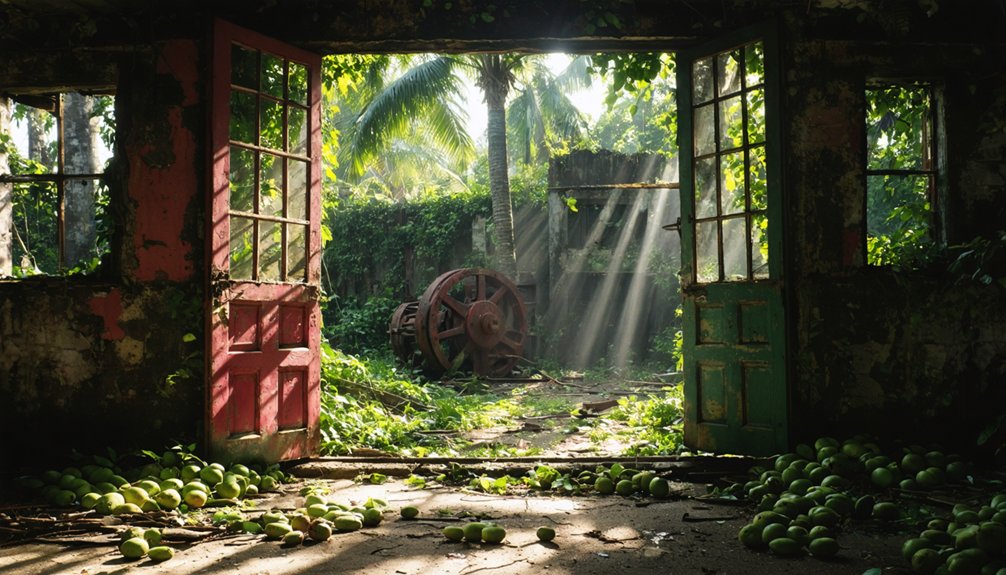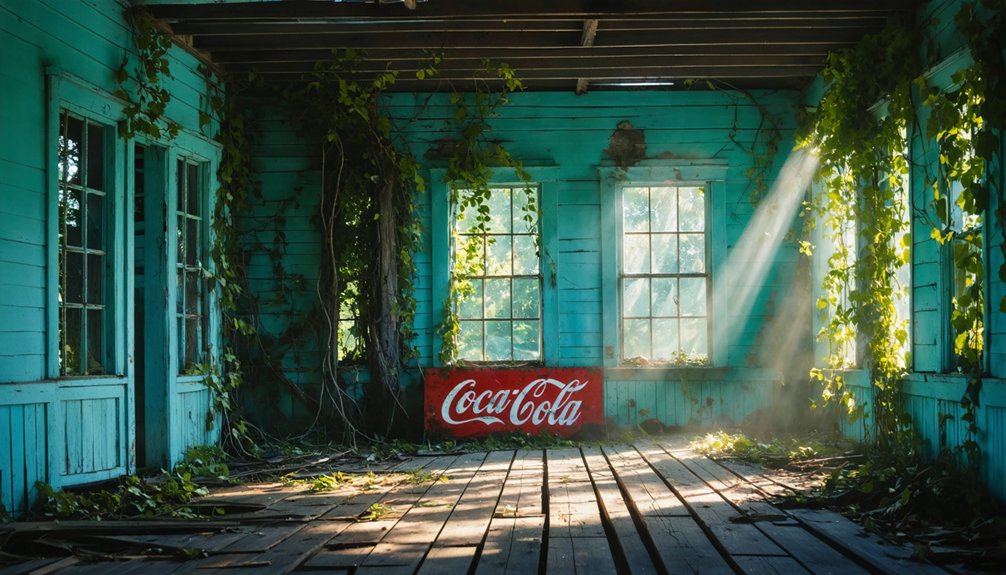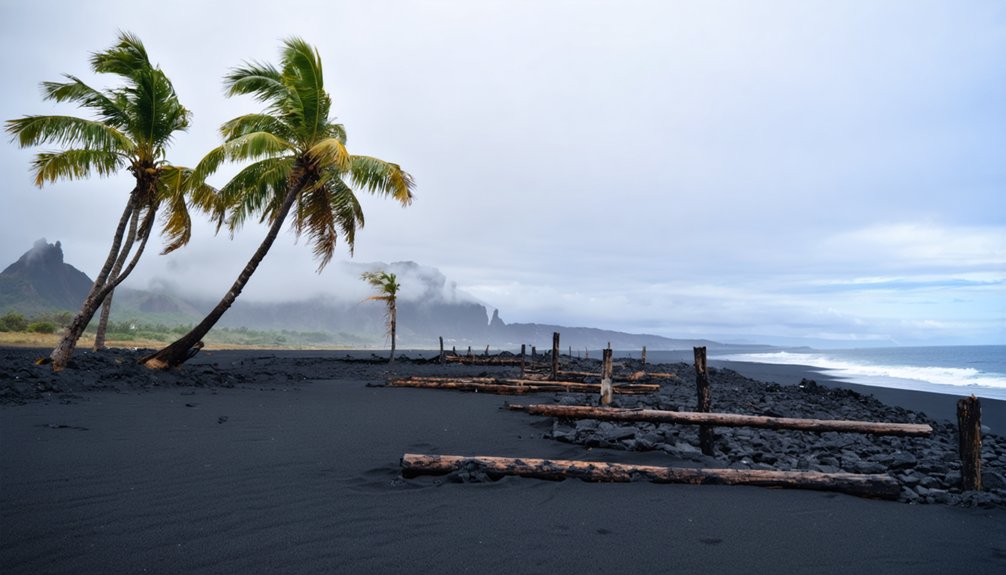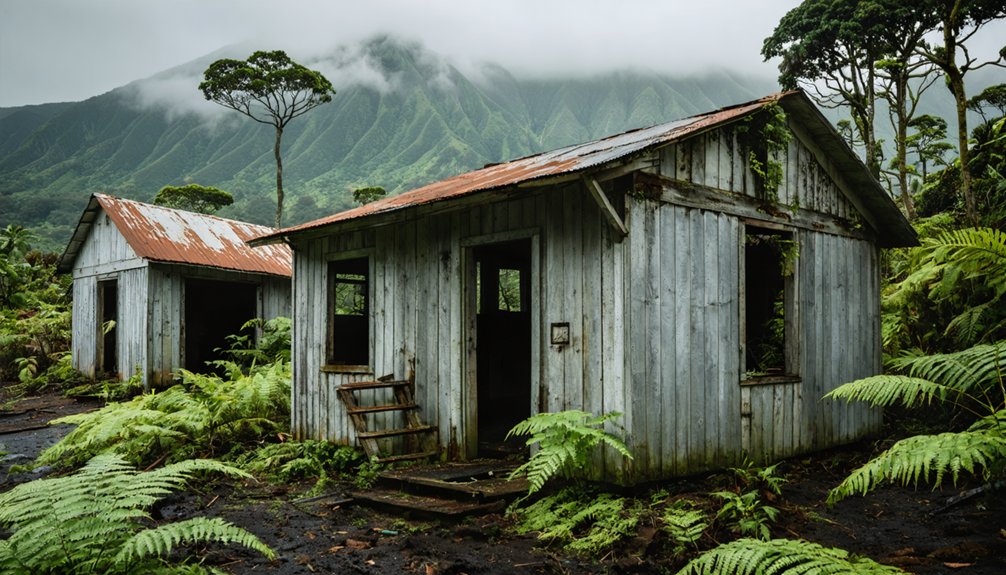
You’ll find Hawaii’s most atmospheric ghost towns waiting in winter’s misty embrace—from Kalaupapa’s clifftop exile settlement on Molokai, where 8,000 souls once lived in isolation, to Keomoku Village on Lanai’s windward shore, abandoned since plague and drought destroyed its sugar dreams. Winter brings fewer crowds to Honoka’a’s 1926 storefronts and Pu’uhonua O Honaunau‘s sacred refuge, while early morning fog adds haunting beauty to these sites. The cooler months reveal stories that summer’s bright sunshine tends to hide.
Key Takeaways
- Pu’uhonua O Honaunau National Historic Park offers self-guided trails along 420 acres with reconstructed temples for $20 entry.
- Honoka’a preserves 1876 sugar plantation storefronts with fewer winter crowds and oral history exhibits about the 1946 tsunami.
- Kalaupapa requires mandatory guided tours and advance reservations to visit this remote leprosy settlement on Molokai’s cliffs.
- Keomoku Village on Lanai features abandoned 1890s plantation ruins, haunted heiau, and restored church, free to explore.
- Winter conditions bring heavy windward rainfall causing mudslides, requiring 4WD vehicles, permits, and downloaded navigation for remote sites.
Pu’uhonua O Honaunau National Historic Park: Ancient Refuge on the Big Island
While most visitors picture Hawaii as sun-drenched beaches and swaying palms, Pu’uhonua O Honaunau National Historic Park tells a far more dramatic story—one of life, death, and sacred redemption.
Beyond the postcard beaches lies a place where ancient Hawaiians fled for their lives and found sacred forgiveness.
This 420-acre sanctuary once offered kapu breakers their only escape from execution. You’ll walk sacred grounds where defeated warriors and noncombatants found refuge behind a massive 965-foot wall—12 feet high, 18 feet thick, built without mortar.
The reconstructed Hale o Keawe temple, guarded by towering kiʻi wooden gods, once housed bones of 23 chiefs. Ancient rituals performed by kahuna priests granted absolution here until the early 19th century. Lord Byron’s 1825 looting disrupted the sacred site before bones were eventually hidden and moved to Honolulu.
Explore self-guided trails along black lava coastlines, discovering royal fishponds and temple platforms dating back 500 years. Guided ranger presentations, including those by descendants of Hawaiian royalty, deepen understanding of the site’s cultural significance.
Entry’s $20; plan 1-2 hours to experience this profound slice of Hawaiian sovereignty.
Honoka’a: From Sugar Boom to Historic Preservation
From ancient sacred grounds, let’s journey north to Honoka’a—a town where century-old buildings whisper stories of immigrant laborers, roaring sugar mills, and a vanished railroad that once connected this remote corner of the Big Island to global commerce.
Founded in 1876, Honoka’a thrived as the Hamakua Coast’s largest plantation hub until sugar operations ceased in 1994. You’ll discover industrial heritage preserved in historic storefronts along the main street, including a 1926 Japanese confectionary building.
The cultural preservation efforts showcase multi-ethnic traditions from Chinese, Japanese, Filipino, and Portuguese workers who built this community. The plantation provided free medical care at a company hospital, along with housing and fuel for the diverse workforce.
Winter’s your ideal time to explore—fewer crowds, misty mornings, and oral history exhibits documenting the 1946 tsunami that destroyed the railroad. The disaster killed dozens and washed away a heavy engine, marking the end of the Consolidated Railroad that had once promoted scenic passenger trips through lush valleys.
Walk freely through streets where immigrant laborers once fought for benefits that transformed Hawaii’s labor landscape.
Waipi’o Valley: The Valley of the Kings and Its Lost Communities
Beyond Honoka’a’s weathered storefronts lies a landscape so sacred that ancient Hawaiians believed its black sand beach concealed the entrance to Lua-o-Milu—the Underworld itself. Waipi’o Valley, Hawaii’s most spiritually charged ghost town, once sustained 10,000 people who cultivated terraced taro patches beneath waterfalls that still thunder through dense canopy.
You’ll find only fifty residents now among ruins of seven heiau temples and grass palaces where kings ruled until the 18th century.
Post-contact diseases and sugar plantations devastated these sacred grounds. The 1946 tsunami further emptied the valley, leaving Night Marchers—mythical spirits of Kamehameha’s armies—to guard crumbling house platforms. At nearby Laupahoehoe, that same wave swept away an entire classroom of students and three teachers, marking one of Hawaii’s most devastating educational tragedies.
Access requires boats or treacherous trails since rockfalls closed the road. The valley floor drops nearly 2,000 feet below the surrounding cliffs, carved over millennia by stream erosion through weak basalt flows from Kohala volcano. But venture here, and you’ll walk among petroglyphs and ancient loʻi where Hawaii’s royalty once thrived.
Kalaupapa: Molokai’s Haunting Medical Settlement
You’ll stand atop those 1,600-foot cliffs on Molokai’s remote peninsula, gazing down at what was once America’s largest leprosy settlement—a place where over 8,000 Hawaiians were exiled and processed like criminals from 1866 until 1969.
The isolation was absolute: ocean on three sides, sheer pali walls blocking escape, with patients left to build shelters from rocks and caves while they were expected to survive off the hostile land. The settlement initially operated at Kalawao before relocating to the current village site, which had been a former Native Hawaiian fishing village. Father Damien deVeuster arrived in 1873 and transformed conditions by building homes, churches, and arranging medical services from Honolulu.
Winter brings ideal hiking conditions for the 3-mile trail’s 26 switchbacks, though you’ll need advance tour reservations since only about four former patients remain in this living ghost town that’s now a National Historical Park.
Forced Exile and Isolation
When the Kingdom of Hawaii designated Kalaupapa Peninsula as a medical exile location in 1865, officials sought geographic isolation that would make escape impossible—and they found it. You’ll find this place surrounded by ocean on three sides and a 1,600-foot cliff on the fourth, creating nature’s prison.
Beginning in 1866, approximately 8,000 people—mostly Native Hawaiians—were forcibly exiled here, creating profound historical trauma. The detention system operated with brutal efficiency:
- Arrested patients were examined naked and convicted before forced removal
- Complete family separation was enforced without contact provisions
- First arrivals found zero infrastructure—just caves and rock enclosures
Despite their disabilities, patients were expected to be self-sufficient in managing the settlement’s daily operations and survival needs. The natural barriers proved devastatingly effective, as shark-infested waters reinforced the geographic isolation already imposed by the towering cliffs. Yet cultural resilience emerged through the kokua system, where healthy relatives voluntarily entered isolation rather than abandon their loved ones—an extraordinary testimony to familial bonds.
Winter Access and Tours
Today’s Kalaupapa stands frozen in time, but reaching this remote settlement requires serious planning—especially during winter months when rain transforms the access trail into a treacherous descent.
The 2.9-mile path plunges 2,000 feet through 26 switchbacks, turning muddy and slick after downpours. You’ll navigate concrete steps and rocks along a 2-4 foot wide trail hugging sheer pali cliffs.
Start at 7:30am—grab walking sticks at the trailhead for balance.
Access restrictions tightened in 2026 when mule rides ceased, leaving fly-in tours as your primary option.
Guided tour logistics are non-negotiable: mandatory supervision, $50 Damien Tours fee, and operations six days weekly starting 10am.
Winter’s dormant bugs and sparse crowds (10-15 daily visitors) make October through March ideal despite slippery conditions.
Keomoku Village: Lanai’s Abandoned Ranching Outpost
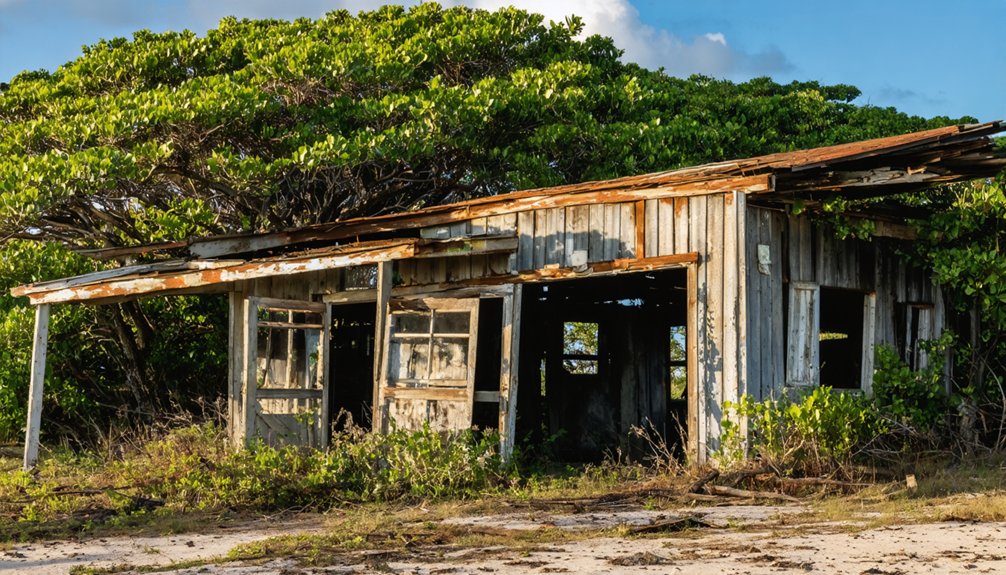
Along Lanai’s windswept eastern shore, Keomoku Village stands as a haunting reminder of ambition gone awry. You’ll discover a bustling sugar plantation town from the 1890s that collapsed after just two years when plague and drought devastated the community.
Local ghost stories claim disturbing a nearby heiau cursed the settlement, turning drinking water salty.
Winter brings ideal exploring conditions to this historical conservation site:
- Ka Lanakila o Ka Malamalama Church (1903) – remarkably restored and accessible
- Buddhist Shrine – honoring Japanese workers who perished in the 1900 epidemic
- Railway remnants – rusted narrow-gauge tracks snaking along the coastline
You’ll find weathered wooden houses and ancient fishponds at nearby Lopa Beach. The last resident departed in the 1950s, leaving you free to wander this authentic ghost town without crowds or restrictions.
Planning Your Winter Ghost Town Adventure in Hawaii
Before you pack your bags for Hawaii’s forgotten settlements, understanding the islands’ winter patterns will transform your ghost town expedition from frustrating to extraordinary. Local weather patterns dictate everything—December through March brings intense rainfall to windward coasts like Hāmākua, turning Waipi’o Valley’s roads into mudslides.
I’ve learned the hard way that morning visits to Puna’s misty Kalapana offer clearer visibility before afternoon showers roll in.
Your winter travel tips? Pack layered clothing for 65-82°F temperature swings, waterproof boots for slippery Kalaupapa switchbacks, and grab that 4WD rental for Laupāhoehoe’s coastal ruins.
Secure permits weeks ahead for restricted sites, download USGS volcano alerts, and always carry water—cell service vanishes in Hālawa Valley’s remote trails where freedom meets responsibility.
Frequently Asked Questions
Are Guided Tours Required to Visit Hawaiian Ghost Towns Safely?
Better safe than sorry—you don’t need guided tours for Hawaiian ghost towns, but they’re optional for enriching your experience. Safety precautions like sturdy footwear matter most. Guided tour benefits include historical context, though independent exploration offers ultimate freedom.
What Photography Equipment Works Best in Hawaii’s Winter Weather Conditions?
You’ll want weather-sealed cameras and wide-angle lenses for winter weather photography in Hawaii’s mild conditions. Equipment for cold weather shooting includes protective filters, waterproof bags, and extra batteries—essential gear for capturing ghost towns during those stunning sunrise moments.
Can You Camp Overnight Near Any of These Ghost Town Sites?
You can’t camp at these ghost towns themselves, but nearby state parks offer legal spots. Secure camping permits beforehand, especially for Hamakua Coast sites. Trail difficulty varies—Waipi’o requires serious preparation, while Honaunau Bay welcomes adventurous spirits seeking coastal freedom.
Are There Entrance Fees for Accessing These Historical Locations?
Most sites you’ll explore freely without access fees, except Pu’uhonua o Honaunau’s standard national park charge. Kalaupapa has strict entry restrictions requiring special permits. You’re otherwise free to wander Honoka’a’s streets and Waipi’o Valley without paying admission.
Which Ghost Towns Are Suitable for Visiting With Young Children?
Fort Kamehameha’s spacious grounds offer family-friendly outings where kids can explore safely despite haunted legends. Pu’uhonua o Honaunau’s flat terrain and reconstructed villages let young children wander freely, discovering petroglyphs without dangerous trails or overwhelming crowds.
References
- https://nvtami.com/2023/04/26/big-island-hawaii-ghost-towns/
- https://koa.com/blog/western-ghost-towns/
- https://www.guinnessworldrecords.com/news/2025/9/the-ghost-towns-at-the-edge-of-the-world-that-broke-record-titles-without-people
- https://sgphotos.com/photostories/inyos/
- https://www.frommers.com/destinations/lanai/attractions/keomoku-village/
- https://www.loveexploring.com/gallerylist/188219/the-us-state-with-the-most-ghost-towns-revealed
- https://en.wikipedia.org/wiki/List_of_ghost_towns_in_Hawaii
- http://www.onlyinyourstate.com/experiences/hawaii/abandoned-hi
- https://www.youtube.com/watch?v=Z52teax9Muk
- https://www.tripadvisor.com/Attraction_Review-g60941-d108277-Reviews-Pu_uhonua_O_Honaunau_National_Historical_Park-Honaunau_Island_of_Hawaii_Hawaii.html