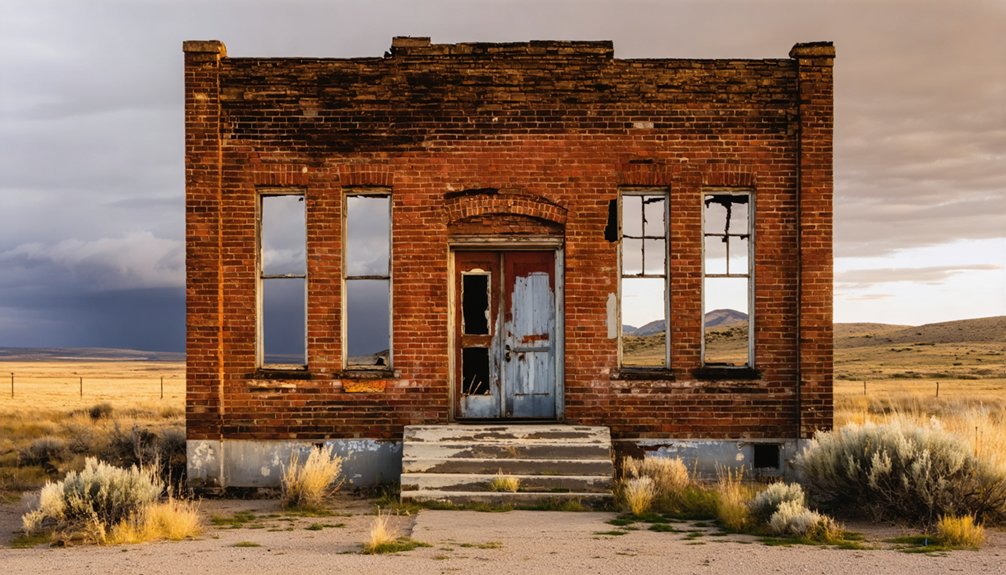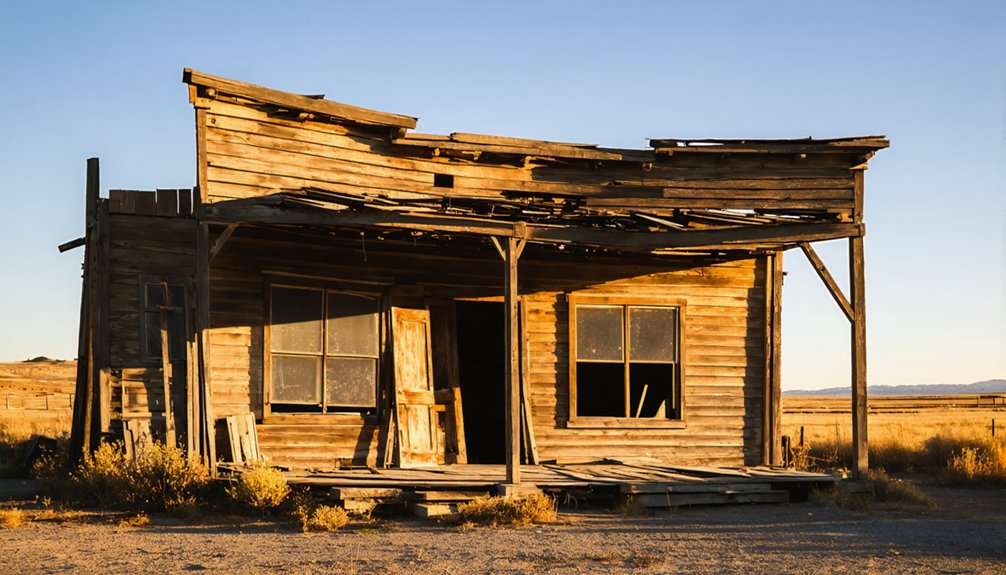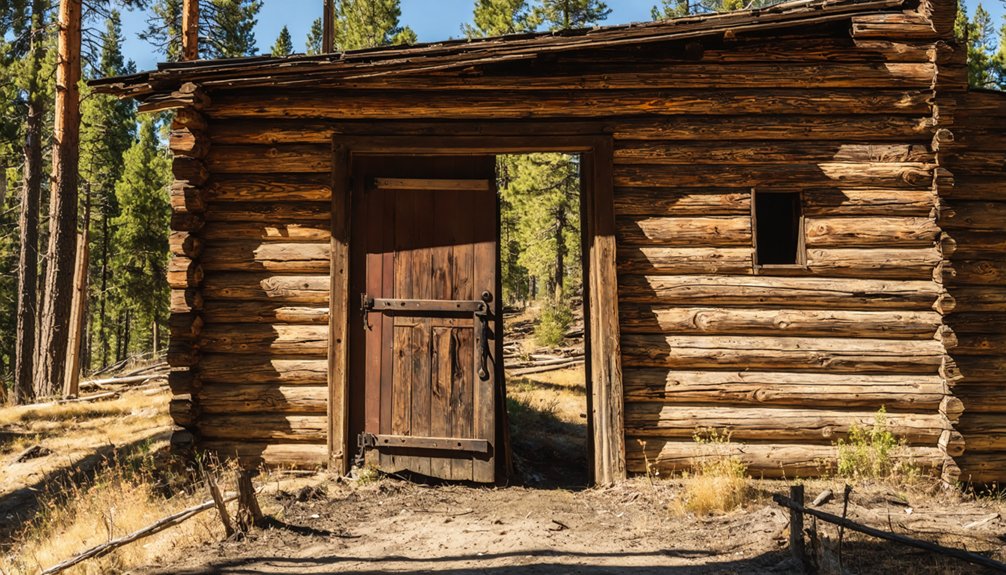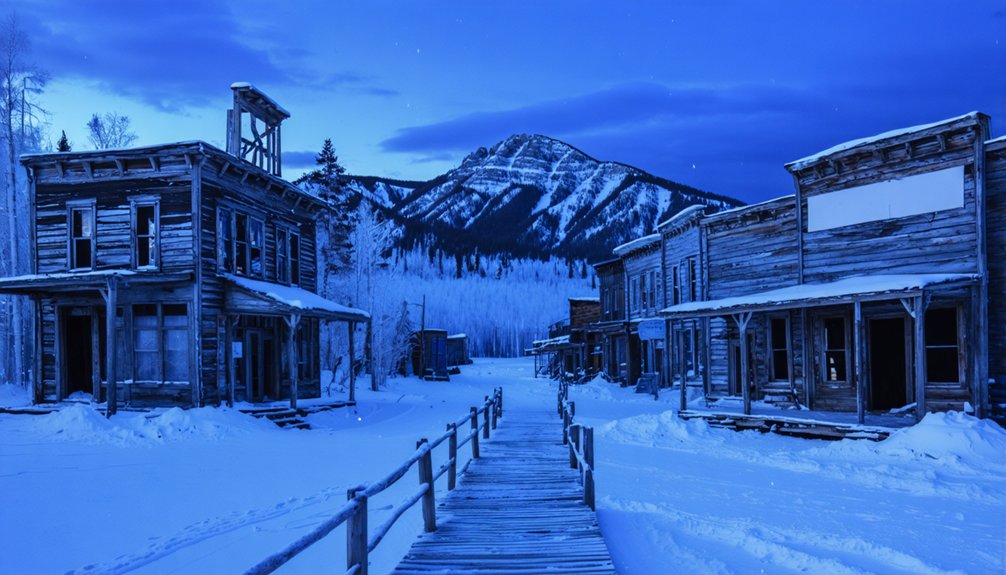
You’ll find Wallace offers year-round access with heated museums and Victorian storefronts, making it your most comfortable winter ghost town destination. Bayhorse transforms into a wildlife haven where you can snowshoe past weathered mining structures while tracking foxes and deer through 10-15 feet of annual snowfall. For extreme adventurers, Silver City’s 70 preserved 1860s buildings await at 6,200 feet, though you’ll need advanced survival skills to navigate snow-choked mountain roads. Each location presents unique challenges and rewards worth exploring further.
Key Takeaways
- Wallace offers year-round access via Interstate 90 with preserved Victorian buildings, mining museums, and historic sites accessible throughout winter.
- Custer remains closed during winter as snow blocks the eleven-mile approach road from Memorial Day until Labor Day only.
- Bonanza requires advanced winter survival skills due to its remote location, minimal infrastructure, and avalanche risks in rugged terrain.
- Bayhorse provides excellent winter wildlife viewing with 10-15 feet of annual snowfall and opportunities for cross-country skiing near mining structures.
- Silver City demands extreme preparation with no electricity, plumbing, or fuel available amid snow-choked roads at 6,200 feet elevation.
Wallace: A Year-Round Historic Mining Town
When gold glinted in the mountain streams west of Wallace in 1878, prospector Andrew J. Prichard sparked a rush that transformed rugged wilderness into America’s Silver Capital.
One prospector’s 1878 discovery in mountain streams ignited the transformation of wilderness into America’s legendary Silver Capital.
You’ll discover authentic mining history at every turn—Sierra Silver Mine tunnels plunge into mountain depths while the Wallace District Mining Museum chronicles over a billion ounces of silver pulled from Shoshone County’s veins.
Historic preservation here isn’t merely nostalgic; the entire town earned National Register status, with Victorian storefronts and the infamous Oasis Bordello frozen in 1988 authenticity.
Winter access via Interstate 90 means you’re never locked out.
Colonel William R. Wallace built a cabin here in 1884, establishing the settlement that would bear his name at 2,728 feet elevation.
The Northern Pacific Depot, preserved and relocated in 1986, stands as a historic symbol anchoring Wallace’s railroad heritage.
Hecla’s Lucky Friday mine still operates 8,000 feet underground, proving Wallace isn’t some abandoned shell—it’s a living testament where past and present merge beneath snow-dusted peaks.
Custer: Summer-Only Access Limits Winter Exploration
Unlike Wallace’s year-round Interstate accessibility, Custer demands you surrender to seasonal rhythms—winter snow transforms the eleven-mile approach from Highway 75 into an impassable barrier that seals this 1879 boomtown until spring thaw.
The unpaved gravel sections become treacherous under snowpack, effectively eliminating winter access to the 600-soul ghost town that once thrived on Lucky Boy Mine riches.
You’ll find your exploration window restricted to Memorial Day through Labor Day, when the Forest Service opens the restored schoolhouse museum and volunteers guide you through weathered saloons and miners’ cabins.
This snow closure frustrates adventurers craving off-season solitude, but it protects the fragile structures and wildlife corridors.
Eastern Idaho’s winter closures extend beyond Custer—BLM-managed public lands near the Snake River also restrict access to protect wintering mule deer, elk, and moose struggling through harsh conditions.
The Caribou-Targhee National Forest extends winter range closures until May 1 to give big game animals relief from heavy snowfall that depletes their energy reserves.
Summer crowds replace winter’s forbidden silence—the price of actually reaching Custer’s haunted streets alive.
Bonanza: Remote Winter Adventure in the Sawtooth Wilderness
The gravel road to Bonanza climbs eight miles from Sunbeam through Challis National Forest, depositing you at 6,300 feet where Idaho’s winter strikes with unforgiving clarity from October through May.
What remains of this 1877 gold camp—a handful of deteriorating log cabins and scattered debris—sits exposed in the Sawtooth wilderness, stripped of the 600 souls who once filled its streets.
Unlike restored Custer two miles away, Bonanza offers zero infrastructure, zero shelter, zero margin for error. The site operated as a mining settlement until 1910, leaving behind minimal structures that reflect its original ghost town state. Two devastating fires, one in 1889 and another in 1897, hastened the town’s decline and drove remaining residents toward nearby Kuster. You’ll need legitimate winter survival skills here: the rugged mountain terrain amplifies avalanche risks, and that “well-graded” road becomes a gamble under snow.
Private property signs complicate exploration further.
This isn’t a casual Sunday drive—it’s commitment to experiencing abandonment in its rawest form.
Bayhorse: Winter Wildlife Viewing and Frozen Landscapes
Forty miles north of Challis, Bayhorse Recreation Site sprawls across high desert at 6,500 feet, where winter transforms the abandoned mining settlement into a paradox—simultaneously brutal and teeming with life.
You’ll navigate snow-laden trails where foxes prowl sagebrush-covered hills and deer descend from Salmon River Canyon for winter foraging. Dawn and dusk reveal the most wildlife action—coyotes crossing windswept ridges, rabbits darting through frozen vegetation.
The ghost town receives 10-15 feet of annual snowfall, creating pristine conditions for winter hiking and wildlife photography.
Un-groomed cross-country ski trails weave past weathered mining structures, while binoculars help you spot distant songbirds and predators. Winter explorers can also discover nearby historic mines and landmarks that dot the frozen landscape. Early mornings or late evenings offer the best chances of animal activity throughout the site.
Pack layers for volatile weather, bring ample water, and check avalanche conditions before venturing into the wilderness west of canyon.
Silver City: Extreme Winter Isolation for the Truly Adventurous
Perched at 6,200 feet in the Owyhee Mountains, Silver City demands commitment from winter visitors willing to brave snow-choked roads and complete isolation from modern conveniences. You’ll find no electricity, plumbing, or nearby fuel—just 70 preserved buildings standing sentinel since the 1860s mining boom.
The town’s remarkable historical preservation showcases structures like the 1869 Masonic Lodge and Idaho Hotel, their weathered facades stark against winter’s white canvas.
Your winter survival skills matter here. Heavy snowfall transforms the rocky ascent into a test of determination, while sub-zero temperatures bite through layers.
Explore empty streets where 2,500 souls once prospered, hike to abandoned mine sites, and wander among multiple cemeteries reclaimed by sagebrush. Silver City once claimed the distinction of hosting Idaho Territory’s first daily newspaper, telegraph, and telephone services—infrastructure achievements that seem impossibly ambitious in today’s frozen silence. The remote location once connected to over two dozen mining camps scattered throughout the surrounding mountains, their trails now buried beneath seasonal snow.
This isn’t curated tourism—it’s raw isolation rewarding those who reject comfort for authentic frontier solitude.
Frequently Asked Questions
What Winter Survival Gear Should I Pack for Idaho Ghost Town Visits?
Better safe than sorry—pack layered winter clothing including insulated base layers, waterproof shells, and wool accessories. Don’t forget thorough emergency kits containing avalanche gear, navigation tools, fire starters, and high-energy food for your backcountry exploration adventure.
Are Snowmobile Rentals Available Near These Ghost Town Locations?
You’ll find snowmobile rentals near most sites—Challis serves Custer, McCall outfits Burgdorf runs. While exploring historical preservation efforts, you’ll hear local ghost stories echoing through frozen valleys, creating an unforgettable sensory journey into Idaho’s silver-mining past.
Which Ghost Towns Allow Winter Camping on Site?
You’ll find winter camping at Gilmore Ghost Town’s Camp Badger, where historical artifacts peek through snow-covered ruins. However, Bayhorse’s seasonal closures by October 15 eliminate that option, while other sites lack designated camping despite accessible roads.
Do I Need Permits for Winter Access to These Areas?
You’ll need permits depending on location—private timberlands require access permits, while National Forest lands stay gloriously permit-free (unless you’re parking). Winter weather won’t care about bureaucracy, but rangers will. Check specific ghost town land ownership before venturing out.
What Emergency Services Are Available in Remote Winter Locations?
You’ll find 24/7 search and rescue teams, satellite messaging systems, and GPS medical alerts serving Idaho’s backcountry. Winter weather demands emergency preparedness—IMSARU responds within hours, while monitoring services track your location even during storms in remote ghost town areas.
References
- https://www.boisestatepublicradio.org/idaho-news/2015-12-14/what-its-like-to-spend-winter-alone-in-an-idaho-ghost-town
- https://idaho-forged.com/idahos-ghost-towns-eerie-yet-approachable/
- https://www.tripadvisor.com/Attraction_Review-g28933-d1775240-Reviews-Bonanza_and_Custer_Ghost_Town-Idaho.html
- https://www.youtube.com/watch?v=rTSZSlxTmbs
- https://visitidaho.org/things-to-do/ghost-towns-mining-history/bayhorse-ghost-town-trails-system/
- https://www.visitsouthwestidaho.org/activity/historic-sites/
- https://idahomagazine.com/article/hard-knox/
- https://westernmininghistory.com/towns/idaho/wallace/
- https://www.lib.uidaho.edu/digital/context/items/context_86.html
- https://en.wikipedia.org/wiki/Wallace