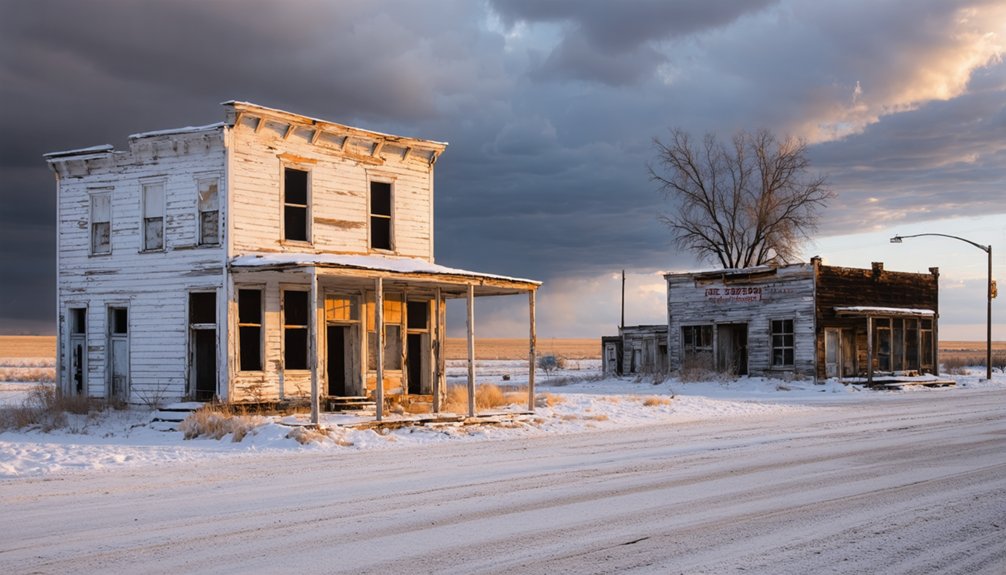
You’ll find Kansas’s most hauntingly beautiful ghost towns beneath winter’s snow—from Ellinwood’s 1887 underground tunnels offering warmth and history to Elk Falls’ frozen waterfalls and decorated outhouses lining abandoned streets. Explore Lake City’s weathered grain elevator along the Medicine Lodge River, Trading Post’s 1858 massacre site, or Arrington’s overgrown mineral spring ruins. Winter’s stark landscapes reveal structural bones that summer vegetation conceals, while cold temperatures make subterranean explorations comfortable. Pack emergency supplies and four-wheel drive for snow-drifted backroads leading to these settlements where fascinating stories await discovery.
Key Takeaways
- Ellinwood Underground Tunnels offer guided tours through 1887 passageways with stable, cool temperatures ideal for winter exploration.
- Elk Falls features the 1893 Pratt Truss Bridge, frozen waterfalls, and historic outhouses in a scenic riverside ghost town.
- Lake City preserves 1880s structures including a Methodist Church, brick schoolhouse, and grain elevator along Medicine Lodge River.
- Arrington’s mineral springs resort ruins from the 1880s remain visible among foundations, bathhouses, and engine houses near Delaware River.
- Padonia showcases Civil War-era stone foundations, cemetery, and pre-1850s structures with active railroad tracks for dramatic winter photography.
Ellinwood Underground Tunnels: A Subterranean Journey Through Kansas History
Beneath the quiet streets of Ellinwood lies a labyrinth most Kansas visitors never knew existed—a network of underground tunnels that once pulsed with the daily commerce of frontier life. You’ll descend into authentic 1887 pathways where German immigrants carved refuge from brutal Kansas weather.
This underground architecture connected saloons, barber shops, and gambling dens—spaces where frontier society thrived away from muddy streets and scorching summers.
Winter’s your ideal time to explore these stone-walled passages. You’ll appreciate the stable temperatures while surface Kansas freezes.
Tour the preserved sections beneath the Dick Building, where historical preservation efforts saved Tom Drake’s Harness Shop and Jung’s Bathhouse exactly as they stood a century ago. These tunnels owe their survival to Adrianna Dierhof, who secured the Dick Building on the State Historic Register in the 1970s. The Underground City Foundation now leads preservation efforts to maintain and share these historic passages with visitors.
Contact the Historic Wolf Hotel to schedule your subterranean adventure into Kansas’s hidden past.
Elk Falls: The Outhouse Capital’s Historic Bridge and Snowy Streets
From Ellinwood’s subterranean passages, your Kansas ghost town journey takes you southeast to Elk Falls, where history reveals itself not underground but across weathered streets and a century-old bridge.
Elk Falls trades underground mysteries for weathered streets and iron bridges where Kansas history stands frozen in time.
You’ll discover why locals dubbed this place the “World’s Largest Living Ghost Town”—with fewer than 100 residents, vine-covered buildings stand frozen in time against winter’s backdrop.
The 1893 Pratt Truss Bridge, constructed from wood and iron, rewards your footsteps with stunning views over the snow-dusted Elk River.
Historic architecture emerges through the white landscape: abandoned storefronts, the remnants of 1870s prosperity, and yes, the quirky decorated outhouses that earned this settlement its “Outhouse Capital” title.
The town sits approximately 85 miles southeast of Wichita, making it an accessible destination for those seeking authentic Kansas history.
Winter scenery amplifies the ghost town atmosphere.
You’ll explore freely without summer crowds, experiencing authentic desolation across streets where grist mills once hummed.
The Elk Falls Falls themselves, located at downtown’s east end, create a dramatic frozen spectacle when winter temperatures drop.
Lake City: A Riverside Ghost Town Along the Medicine Lodge River
Nestled in a deep valley where the Medicine Lodge River carves through southwestern Barber County, Lake City emerges from the winter landscape like a whisper from the 1880s. You’ll discover ghost town architecture that tells stories of Reuben Lake’s 1873 settlement, when 350 souls called this riverside haven home. The river history runs deep here, where sawmill dreams met railroad disappointments.
What You’ll Find:
- Original Methodist Church standing sentinel over frozen grounds
- Native brick schoolhouse showcasing frontier craftsmanship
- Weathered grain elevator marking commerce days
- Two-story structures from the town’s 1880s peak
- Working gypsum mill—proof Lake City still breathes
The northern bluff shields you from winter winds as you explore remnants of blacksmith shops and that abandoned opera house. Reuben Lake’s 20-room hotel, operated by his wife Mary from 1885 until flames consumed it in 1897, once anchored the town’s hospitality industry. The nearby Gypson Hills rise east of the valley, their limestone deposits having supplied material for federal buildings far beyond Kansas borders. With only 47 residents today, you’ll experience genuine solitude among these riverside ruins.
Trading Post: Kansas’s Earliest Settlement on the Marais Des Cygnes
Winter’s bare branches reveal the massacre site where five free-state men fell in 1858, sparking John Brown’s fury.
You can explore the Trading Post Museum Thursday through Saturday, examining Civil War bullets and Osage artifacts that tell unvarnished truths about Kansas’s violent birth.
The 1888 Martyrs Memorial stands sentinel in the cemetery—a monument to those who bled for freedom.
Cyprian Chouteau’s 1825 trading post marked the first permanent white settlement in Linn County, where pack horses hauled goods through dense woods to trade with Indian tribes.
The Battle of Trading Post erupted here on October 25, 1864, when Union cavalry drove Confederate forces from their positions along the river.
This isn’t sanitized history; it’s Kansas without compromise, waiting for you to walk its hallowed, haunted ground.
Arrington: Forgotten Mineral Springs of the 1850s
You’ll find Arrington’s once-celebrated mineral springs hidden along the Delaware River in southwestern Atchison County.
Where visitors flocked in the 1880s seeking the waters’ healing properties. Winter strips away the vegetation, revealing crumbling foundations and the old bathhouse site where spring water was piped from below the river bridge.
The 40-acre resort once featured cottages, a hotel, and bathhouse facilities that hosted hundreds of visitors weekly when the town’s population approached 1,000. Ransom A. Van Winkle, first settler of Kapioma Township, laid out nearly twenty acres into town lots that formed the original settlement in the 1850s. Pack sturdy boots for exploring the muddy riverbanks and rural roads that lead to these forgotten ruins, where Kansas’s earliest mineral resort now stands silent among bare cottonwoods.
Healing Waters Drew Crowds
When David Heneks stumbled upon a mineral spring near the mill dam in 1881, he unknowingly launched Arrington’s transformation from a quiet milling town into a sought-after health resort.
Two more therapeutic waters surfaced shortly after, with one displaying superior mineral content compared to any American spring analyzed at the time. These chalybeate iron waters promised relief from ailments that conventional medicine couldn’t touch.
The healing claims drew seekers from across northeastern Kansas:
- Rheumatism sufferers bathed in the carbonated waters piped to the riverside bathhouse
- Tuberculosis patients sought respiratory relief through mineral spring treatments
- Hay fever victims escaped seasonal torments at the 40-acre resort
- Diabetes patients tested the waters’ reputed therapeutic properties
- Summer visitors filled twelve cottages nestled in the eastern grove
You’ll find remnants of this once-thriving wellness sanctuary along Atchison County’s backroads.
Winter Access and Atmosphere
Tucked along the Delaware River’s winding banks in southwestern Kapioma Township, Arrington’s scattered remnants await discovery down rural county roads that remain passable throughout the coldest months. You’ll find the old mill dam and bridge marking your entry point into this abandoned resort community.
Snow patterns reveal foundation outlines where twelve cottages once welcomed guests seeking iron-rich spring waters.
The 40-acre grove shelters you from biting winds while you explore bathhouse ruins and engine house foundations. Winter flora pierces through snow around the spring mounds, where mineral-stained rocks create rust-colored contrasts against white blankets.
River ice frames spring outlets dramatically. This ghost town’s profound quietude—enhanced by frozen landscapes and absent crowds—offers unmatched solitude for those craving escape from civilization’s constraints.
Remnants Along Rural Roads
Beyond the bend where county roads trace the Delaware River‘s southwestern path through Kapioma Township, Arrington’s mineral spring ruins emerge from overgrown foundations that few modern travelers ever witness.
You’ll find scattered stone remnants where twelve cottages once hosted health-seekers drawn by iron-rich waters. Local legends speak of therapeutic miracles, while urban legends whisper about the mysterious fire that consumed the original frame mill after just one day.
What survives along these forgotten rural routes:
- Crumbling stone foundations marking the 1880s bathhouse and engine house locations
- Mill ruins near the Delaware River crossing where three mineral springs once flowed
- Overgrown grove where forty acres supported Kansas’s earliest developed mineral springs
- Bridge remnants indicating where waters were piped for treatment seekers
- Property markers dividing the eighty-acre Heneks acquisition from 1880
Padonia: Civil War Remnants Along Active Railroad Tracks
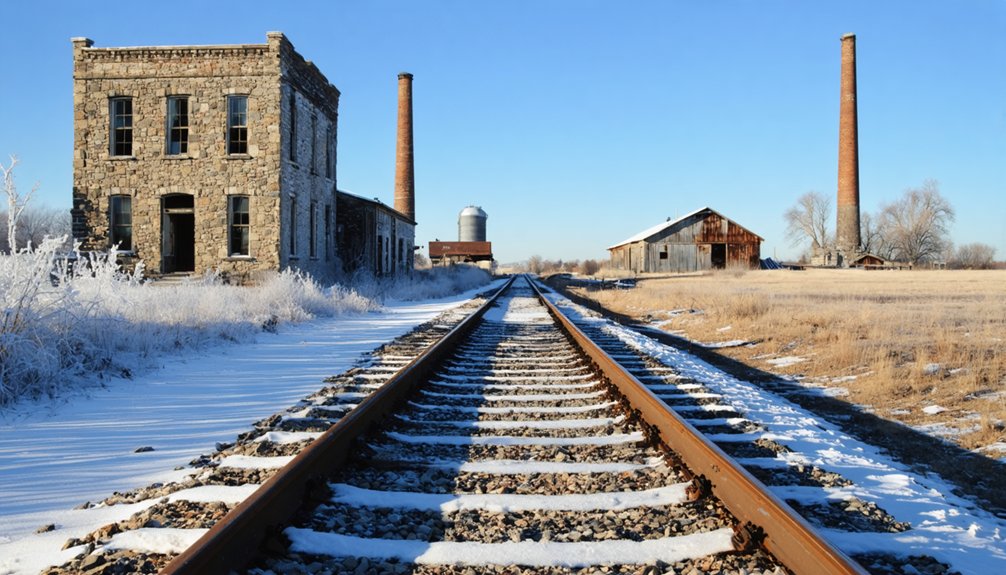
You’ll find Padonia’s haunting Civil War-era cemetery standing just steps from the Missouri Pacific Railroad tracks that still carry freight through this vanished town.
The juxtaposition creates striking winter photographs—weathered gravestones of 1860s settlers framed against modern locomotives rumbling past the exact routes that once sustained the pro-Union community.
Bring a telephoto lens to capture both the historic Padonia Christian Church, completed in 1881, and the active rail line that connects this extinct settlement’s past to the present.
Historic Civil War Structures
Along the active Missouri Pacific Railroad tracks in Brown County, Padonia’s scattered remnants tell a story that predates the Civil War itself. You’ll discover structures built during Kansas’s volatile territorial conflicts, when proslavery tensions shaped every settlement decision.
Though no direct Underground Railroad routes passed through Padonia, the town’s 1850s origins coincide with border warfare that made neighboring communities essential escape corridors.
Winter exploration reveals:
- 1858 schoolhouse standing as proof to frontier education amid territorial militia patrols
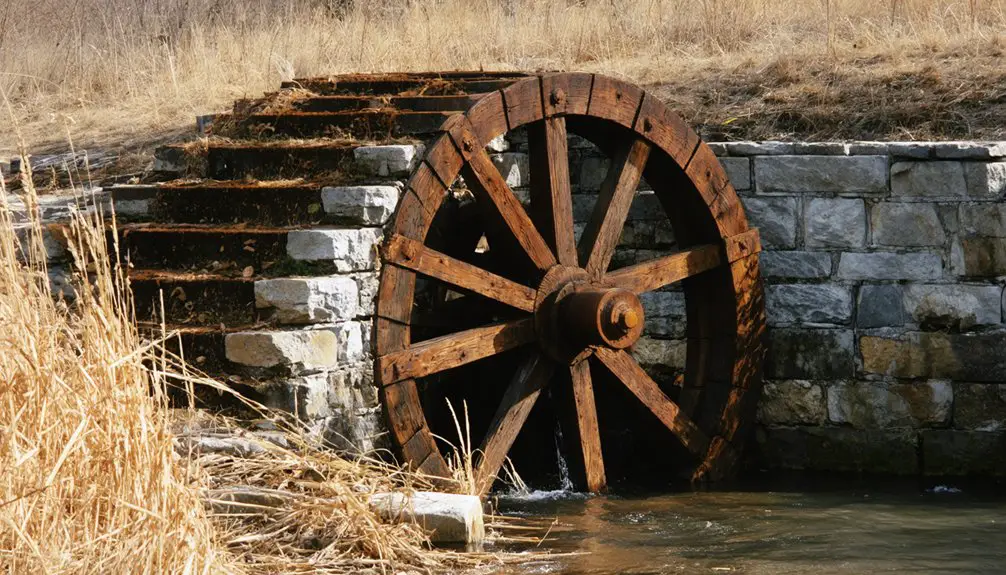
- Flour mill remnants on Walnut Creek’s west bank, operational since 1876 with visible 20-inch wheel housings
- Schmidt’s 1856 sawmill dam foundation, representing pre-Civil War architecture
- Two-story general store (50×20 feet) showcasing 1882 commercial design
- Active railroad tracks contrasting against Civil War-era settlement patterns
Snow coverage makes these isolated structures particularly dramatic against bare landscapes.
Active Railroad Photography Opportunities
The Missouri Pacific Railroad tracks slice through Padonia’s winter landscape, creating dramatic compositions where 1850s stone foundations frame modern freight operations. You’ll find remnants of John Schmidt’s 1856 sawmill dam along Walnut River, positioning Civil War-era stonework against passing freights.
The elevated Tommy Shults Photo Pavilion near the interlocker provides covered shelter during Kansas blizzards while you wait for trains.
Set up your tripod where schoolhouse ruins meet active rails—this juxtaposition of frontier history and contemporary commerce defines exceptional train photography.
Winter scenery here strips away summer foliage, revealing structural bones of extinct settlements alongside functioning infrastructure.
You’re free to explore trackside without crowds since Padonia’s population disappeared decades ago.
Stage from nearby Hiawatha, then spend hours capturing steel wheels rolling past abandoned homesteads.
Planning Your Winter Ghost Town Adventure in Kansas
Essential preparations include:
- Pack emergency gear: blankets, flares, high-calorie snacks, and hot packs for vehicle breakdowns
- Carry paper maps: GPS signals fail in remote ghost town locations
- Inform others: share your itinerary given limited cell service
- Check forecasts: sudden blizzards close rural access roads without warning
- Fuel strategically: gas stations disappear between major towns like Wichita
Four-wheel drive becomes your freedom ticket on snow-drifted county roads leading to abandoned settlements.
Frequently Asked Questions
Are Kansas Ghost Towns Safe to Visit Alone During Winter Months?
You’d be risking your life—winter safety demands respect in Kansas ghost towns. Solo exploration invites hypothermia, structural collapse, and isolation where help won’t reach you. Bring companions, emergency gear, and always notify someone of your location beforehand.
What Photography Equipment Works Best in Cold Kansas Winter Weather Conditions?
You’ll need cold-resistant Sony Z batteries stored against your body, protective rain sleeves for camera maintenance, and layered Heat Company gloves. This winter gear combo lets you capture Kansas’s frozen ghost towns without equipment failure or frostbitten fingers.
Do Any Ghost Towns Require Entrance Fees or Advance Reservations?
Most ghost towns grant gloriously free access without reservations. However, historical preservation efforts at guided locations like Ellinwood’s tunnels require advance booking. You’ll find visitor amenities minimal—these weathered Western ruins reward spontaneous exploration over structured tours.
Are Restaurants or Gas Stations Available Near These Remote Kansas Locations?
You’ll need to plan ahead—most Kansas ghost towns lack nearby amenities. Pack snacks and fuel up beforehand, as historic architecture and local legends await in isolated prairie locations where services are scarce or nonexistent.
Can You Camp Overnight at Kansas Ghost Town Sites in Winter?
You can’t legally camp at most Kansas ghost towns since they’re on private property. Winter weather makes camping safety critical—temperatures drop below 20°F. You’ll need designated state campgrounds nearby, respecting trespassing laws while exploring your freedom.
References
- https://www.travelks.com/blog/stories/post/13-most-haunted-places-in-kansas-you-must-visit-this-fall/
- https://legendsofkansas.com/kansas-ghost-town-list/
- https://www.youtube.com/watch?v=0wTaBKVg3dk
- https://www.youtube.com/watch?v=AMtHksE6bG4
- https://usghostadventures.com/kansas-city-ghost-tour/
- http://www.onlyinyourstate.com/experiences/kansas/kansas-ghost-towns
- https://www.ellinwoodunderground.com/history
- https://www.gbtribune.com/news/local-news/haunted-history/
- https://www.ellinwoodchamber.com/ellinwood-underground-tunnels
- https://legendsofkansas.com/ellinwood-kansas/