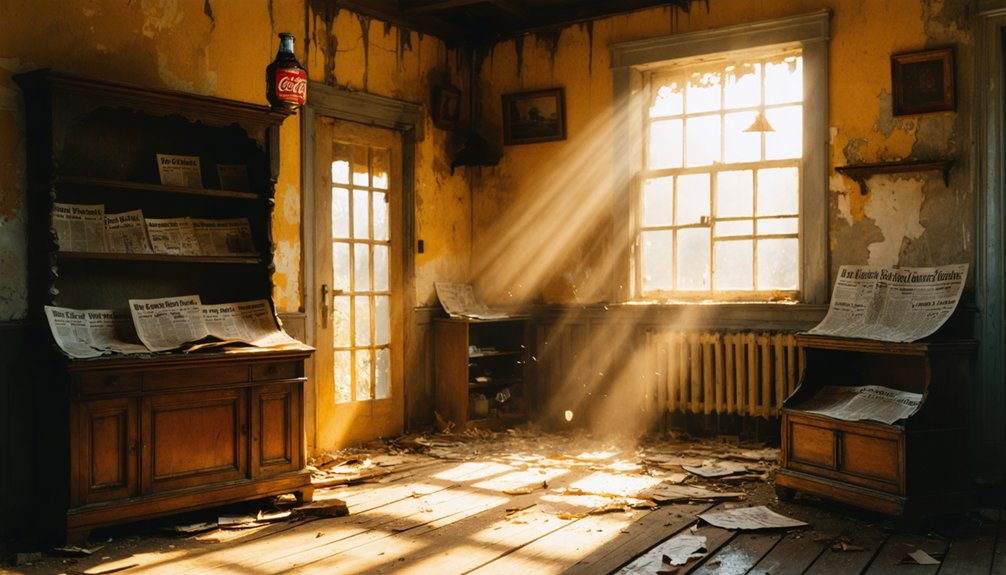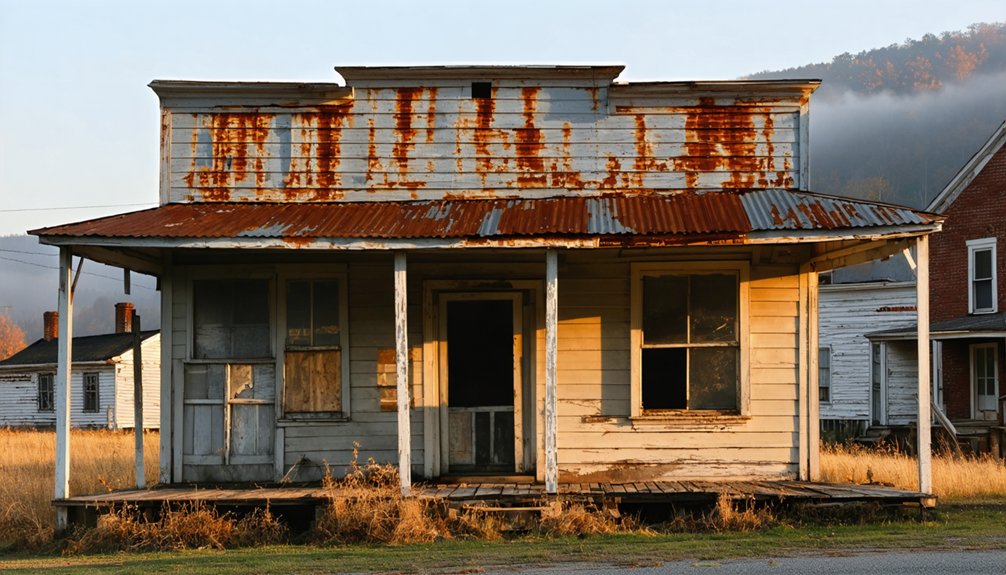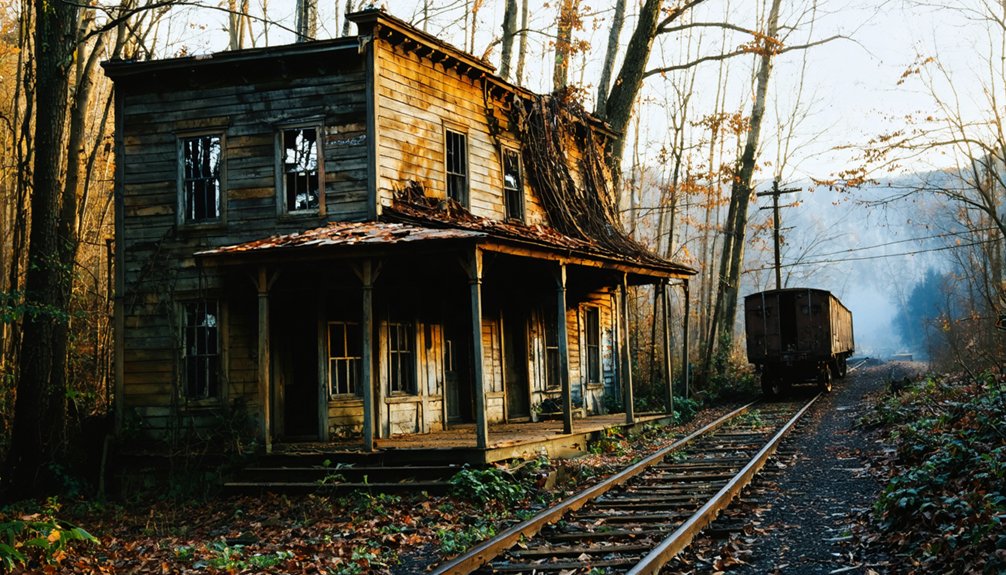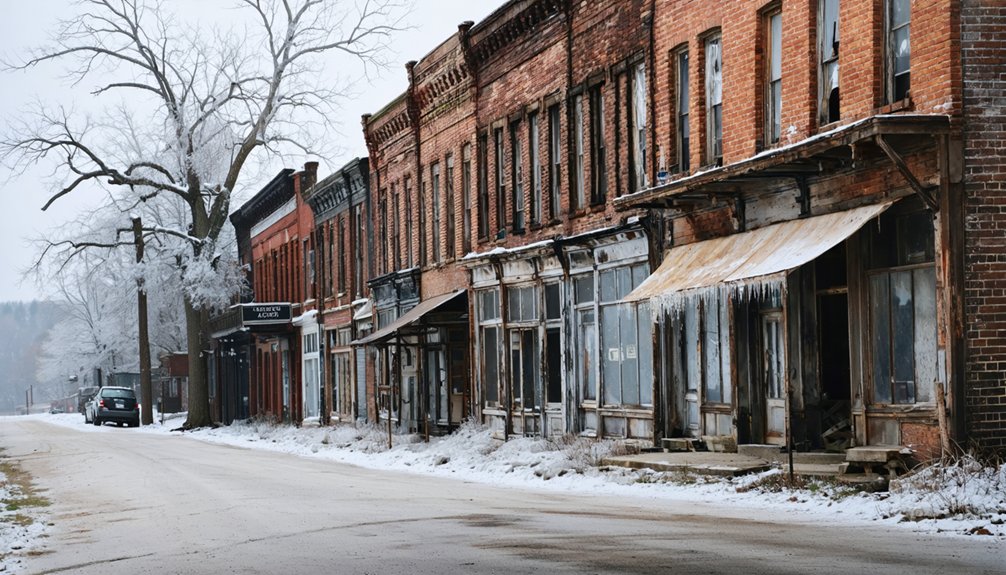
You’ll find Kentucky’s best winter ghost towns scattered across coal country and river valleys, where snow accentuates abandoned structures. Paradise offers poignant musical history, while Rocky Hill preserves its 1857 depot among five occupied houses. Creelsboro’s 1876 country store still welcomes visitors near the Cumberland River, and Blue Heron’s reconstructed Mine 18 provides free access to coal mining heritage. For overnight immersion, Barthell’s restored company houses let you walk into original mine shafts. Each location below reveals the practical details and safety tips you’ll need for your winter exploration.
Key Takeaways
- Blue Heron in McCreary County offers free access to reconstructed coal mining structures, with ideal solitude and scenic railway routes during winter.
- Barthell provides authentic overnight stays in restored miners’ houses with mine shaft access, though winter closures require advance confirmation.
- Rocky Hill features original 1857 depot and dilapidated structures with walking tracks, maintaining accessibility despite sparse remaining occupancy.
- Creelsboro’s 1876 Country Store remains open for visits alongside Rockhouse Natural Arch, preserving post-flood riverport history year-round.
- Six Gun City above Cumberland Falls contains weathered Wild West relics but poses hazardous conditions requiring safety precautions for winter exploration.
Paradise: The Town That Inspired a Classic Song
Tucked along the Green River in Muhlenberg County, Paradise began its quiet life in the early 1800s as Stom’s Landing, a modest ferry crossing that served western Kentucky travelers.
By 1852, it earned the name Paradise—though whether for its scenic beauty or legendary healing aura remains unknown.
The town’s fate shifted dramatically in 1959 when strip mining arrived, followed by TVA’s massive Paradise Fossil Plant.
Environmental impact proved devastating: ash fall, noxious gases, and vanishing coal seams forced a complete buyout by 1967.
Residents received minimal compensation when persuaded to vacate their homes, adding financial insult to the environmental injury that destroyed their community.
About a mile north stands Airdrie Hill, where Scottish immigrants built an ambitious iron furnace in 1854 that operated only eight weeks before failing.
Today, you’ll find only a hilltop cemetery overlooking the plant—a stark reminder that historical preservation sometimes loses to progress.
John Prine immortalized this lost community in his 1971 song “Paradise,” ensuring its memory endures beyond demolished foundations.
Rocky Hill: A Railroad Community Frozen in Time
While Paradise vanished beneath industrial progress, Rocky Hill’s story unfolds differently—this Edmonson County settlement simply stopped moving forward.
Rocky Hill didn’t disappear like Paradise—it simply froze in time, caught between boom-era glory and inevitable decline.
Twelve miles southeast of Brownsville, you’ll find railroad remnants stretching through a community that once bustled with thousands during the 1920s coal boom.
The ghost town history reads like Kentucky folklore: Confederate raids in 1863, a devastating 1930s fire that claimed half the structures, and the railroad’s eventual abandonment of coal operations.
Today, you’re free to explore dilapidated buildings standing since before that catastrophic blaze, walk alongside visible tracks, and photograph the original depot dating to 1857.
Five houses remain occupied, maintaining the volunteer fire department and post office.
The L&N Railroad established this location as a coal drop-off in the 1800s, transforming it into a thriving hub complete with hotels and a busy station.
The town gained cinematic recognition when its bed and breakfast appeared in the 1991 film *Fried Green Tomatoes*.
Winter’s stark landscape reveals Rocky Hill’s skeletal beauty—a railroad community authentically frozen between prosperity and oblivion.
Creelsboro: River Commerce Relics Along the Cumberland
Along the Cumberland River’s north bank in Russell County, Creelsboro’s weathered remnants tell the story of Kentucky’s steamboat era. You’ll find industrial relics scattered where this 1806 river port once thrived as the busiest hub between Nashville and Burnside. The 1876 Creelsboro Country Store still stands, rescued from demolition and open for exploration.
December’s chill amplifies the town’s haunting beauty. You can hike to the ancient Rockhouse Natural Arch, where river navigation once guided pioneers through Cumberland’s waterways. This 300-million-year-old formation sheltered Native Americans and long hunters centuries before steamboats transformed commerce here. The natural bridge is made from dolomite rather than sandstone, distinguishing it from typical Kentucky rock formations. The scenic route passes through countryside dotted with older homes and rural scenery characteristic of South Central Kentucky.
Wolf Creek Dam’s 1951 completion flooded the town’s purpose, ending over a century of prosperity. Now sparse houses dot the landscape, preserving an atmospheric escape from modern constraints.
Six Gun City: An Abandoned Wild West Wonderland
Perched high above Cumberland Falls, Six Gun City’s weathered jail cells and sheriff’s office stand frozen in time like props on an abandoned movie set.
You’ll want sturdy boots for the steep George Overlook Trail ascent, especially when winter ice glazes the path leading to these graffiti-covered relics.
The short-lived 1990s attraction once echoed with steam whistles, but now only wind whistles through the skeletal Western facades.
The site’s modern steel roofing and nail-fastened wooden structures reveal its true origins as a 2003 venture rather than the older Tombstone Junction many assume it to be.
Access begins at a shelter with views of the Cumberland River, where stairs mark the trailhead to this haunting Wild West remnant.
Old West Theme Remains
Deep in the Cumberland Forest, atop a steep mountain accessible only by a winding path that’ll test your determination, Six Gun City sits frozen in time—a wild west dream that barely came true before abandoning itself to the elements.
The weathered structures still evoke frontier days, though they’ve stood silent since 1999. You’ll find staged gunfight sets where performers once drew pistols, and old saloon facades that spawned related ghost stories among locals who remember the devastating fires.
The park’s brief single-season operation created few memories, yet old town legends persist about why it failed so quickly. The site originally opened in 1961 as Tombstone Junction Theme Park, complete with country music shows and authentic Southwest atmosphere, before closing in the early 1990s and briefly reopening under a new name. A scenic chairlift system once carried visitors from the parking lot up to the park entrance, offering sweeping views of the surrounding mountains.
Winter transforms this mountaintop into an eerie tableau—snow dusting false-front buildings while ice crystallizes on vacant windows, preserving a wild west that never quite was.
Winter Exploration Safety Tips
Before you venture onto Six Gun City’s deteriorating sets this winter, understand that time and weather have transformed these Hollywood-style facades into legitimate hazards. Kentucky’s freeze-thaw cycles have compromised wooden structures, making hazard identification vital before exploring.
Essential winter exploration protocols:
- Wear an FFP3 respirator to protect against asbestos, mold, and decades of accumulated dust in enclosed saloon spaces
- Test floor stability by tossing rocks ahead—rotted boardwalks and sagging platforms collapse without warning
- Bring three people minimum so someone can seek help if injuries occur in remote areas
- Step near wall edges on staircases, never the center where wood deteriorates fastest
- Pack headlamp and backup flashlight for Kentucky’s early winter darkness
Your safety gear isn’t paranoia—it’s freedom insurance.
Blue Heron: Exploring Kentucky’s Coal Mining Past
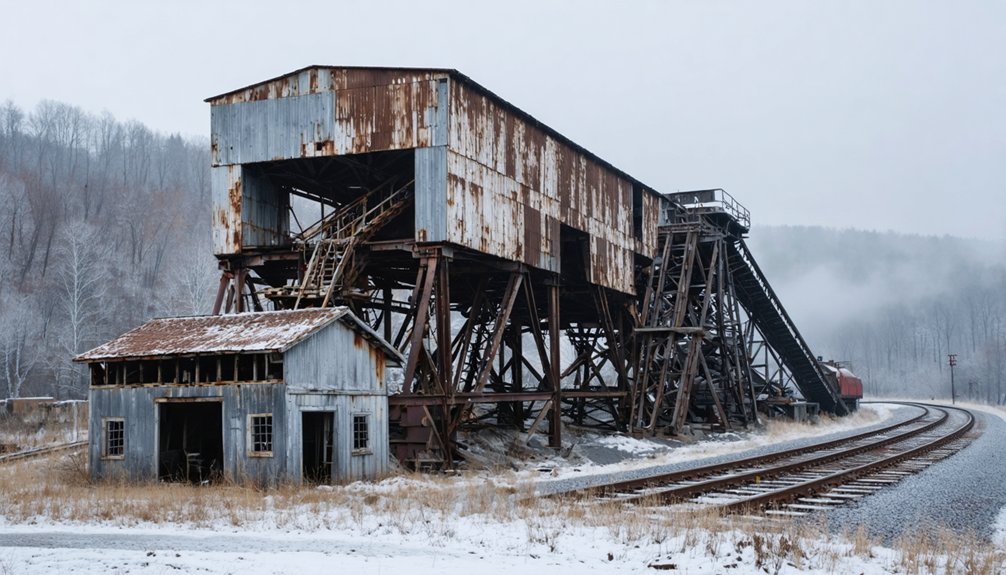
Tucked away in McCreary County along the Big South Fork of the Cumberland River, Blue Heron stands as a haunting reminder of Kentucky’s coal mining heritage. You’ll discover ghost structures depicting Mine 18’s company town, where hundreds lived from 1937 to 1962.
Walk through replicated homes, the school, and coal tipple while oral histories reveal the dark, damp conditions miners endured—testament to remarkable community resilience.
The outdoor museum showcases mining technology through original coal cars, a locomotive, and Joy Loader at the mine entrance. You can explore freely via Highway 742 or take the scenic railway from Stearns.
Winter visits offer solitude and crisp views from Devil’s Jump Overlook nearby. Best of all? Admission’s free, letting you roam this preserved piece of Appalachian history without constraints.
Barthell: Where History Meets Hospitality
Tucked in a McCreary County hollow where miners once trudged home with coal dust on their faces, Barthell Mining Camp stands as Kentucky’s most authentic coal town experience—one where you’ll actually sleep in restored company houses instead of just reading interpretive signs.
Unlike Blue Heron’s ghost structures, this family-run museum lets you walk 300 feet into a real mine shaft, run your hands over original equipment in the machine shed, and hear stories from guides whose own relatives once worked these seams.
The narrow access road stays passable through winter, making this hidden gem your best bet for experiencing genuine Appalachian coal history without the summer crowds.
Coal Mining Town Origins
When Justus S. Stearns arrived in 1902, he unleashed an empire into Kentucky’s wilderness. You’ll discover how Barthell emerged as the company’s first mining camp, where coal camp architecture still whispers miners’ legends through weathered foundations.
The settlement’s birth reveals frontier determination:
- Mine One and Mine Two broke ground simultaneously in 1902
- Superintendent L.E. Bryant orchestrated camp construction while James Bonnyman managed operations
- K&T Railroad tracks snaked through mountains by 1903, connecting isolation to commerce
- First coal shipment departed June 1, 1903, sparking annual Fourth of July celebrations
- Barthell pioneered seventeen additional camps across McCreary County
You’re walking where 18,000 residents once thrived. That first tipple became the heartbeat of a community built on grit, not promises. Stand here, and you’ll feel the weight of history beneath your boots.
Renovated Historic Overnight Stays
Beyond the rusted tipples and silent rail beds, Barthell offers something rare among Kentucky’s ghost towns—you can actually sleep where miners once lived.
These aren’t luxury accommodations in the conventional sense, but twelve reconstructed Company Houses blend historical authenticity with modern amenities you’ll appreciate on cold winter nights. Central heat and air conditioning replace coal stoves, while full kitchens equipped with microwaves and coffee makers let you prepare meals without sacrificing comfort.
Each house follows original 1902 floor plans, rebuilt with hemlock and poplar lumber on their exact locations.
Choose from nine two-bedroom or three one-bedroom options, all sleeping up to four guests.
Currently closed for renovations until further notice, check their website or call 888-550-5748 for reopening updates before planning your winter escape into Kentucky’s coal mining past.
Year-Round Winter Accessibility
The cozy appeal of Barthell’s restored accommodations comes with a significant caveat—this isn’t a destination you can reliably visit during Kentucky’s coldest months. Seasonal accessibility becomes frustratingly unpredictable here, with gates locked even on advertised open days and outdated website information leading travelers astray.
Winter preservation efforts effectively shut down the site, leaving you facing:
- Locked gates despite online calendars showing availability
- No confirmed reopening dates throughout winter months
- Phone lines as your only reliable information source
- Road signs contradicting actual site status
- Current indefinite closure for renovations and construction
Before planning your winter expedition, call 888-550-5748 or check barthellcoalcamp.com. Pack alternative plans—the Big South Fork Scenic Railway operates nearby when Barthell’s coal camp slumbers through Appalachian winters.
Frequently Asked Questions
What Safety Precautions Should Visitors Take When Exploring Abandoned Ghost Towns in Winter?
Practice hazard awareness by wearing traction footwear and dressing in layers. You’ll need emergency preparedness supplies like flashlights, water, and a first-aid kit. Tell someone your plans, stay on stable structures, and avoid exploring alone in remote locations.
Are Guided Tours Available for Kentucky Ghost Towns During Winter Months?
Seeking haunted legends amid winter’s chill? You’ll find limited guided ghost town tours during Kentucky’s cold months. Most operators focus on historic preservation sites like Barthell Coal Camp through private bookings, while formal winter tours remain scarce.
What Winter Clothing and Gear Is Recommended for Ghost Town Exploration?
You’ll need layered clothing including a moisture-wicking base, insulating mid-layer, and waterproof outer shell. Don’t forget appropriate footwear with thick wool socks, plus mittens and face protection when temperatures drop below freezing during your explorations.
Can Visitors Camp Overnight Near Kentucky Ghost Towns in Winter?
You can camp near Kentucky’s ghost towns, but winter camping requires permits and 14-day limits on public lands. Haunted legends surround these historic landmarks—I’ve found private campgrounds offer flexibility, though some restrict extended stays near abandoned sites.
Are Kentucky Ghost Towns Accessible for People With Mobility Limitations in Winter?
Most Kentucky ghost towns aren’t winter-accessible for mobility limitations due to deteriorated structures and icy terrain. You’ll find better photography opportunities and historical preservation at Barthell’s restored pathways or Cumberland Falls’ handicap-accessible ramps instead.
References
- https://thedecorologist.com/ghost-town-cave-city-kentucky/
- https://wbkr.com/visit-these-20-creepy-kentucky-ghost-towns-for-a-halloween-road-trip/
- https://www.onlyinyourstate.com/experiences/kentucky/12-ghost-towns-in-ky
- https://www.youtube.com/watch?v=ua6VZ_nsero
- https://www.hannaheliseschultz.com/blog/waterfalls-amp-ghost-towns-eagle-falls-trail-in-cumberland-falls-state-park-corbin-ky
- https://www.kentuckytourism.com/things-to-do/outdoors/natural-attractions/big-south-fork/articles/2024/09/12/delightfully-spooky-kentucky
- https://wkdq.com/kentucky-abandoned-places-road-trip/
- https://www.onlyinyourstate.com/experiences/kentucky/ghost-town-ky
- https://dablogfodder.blogspot.com/2017/01/paradise-kentucky.html
- https://www.youtube.com/watch?v=AyHrapNoTG4