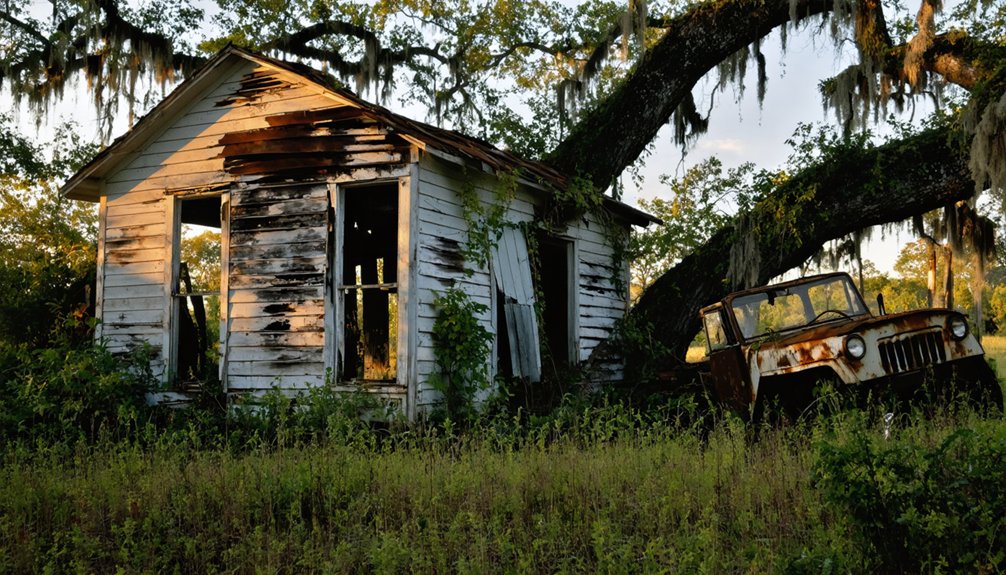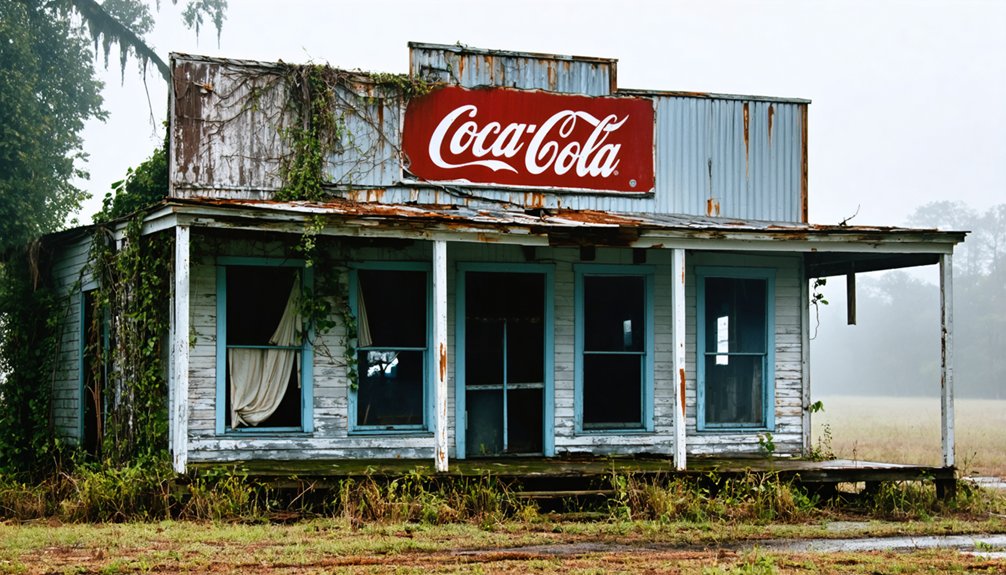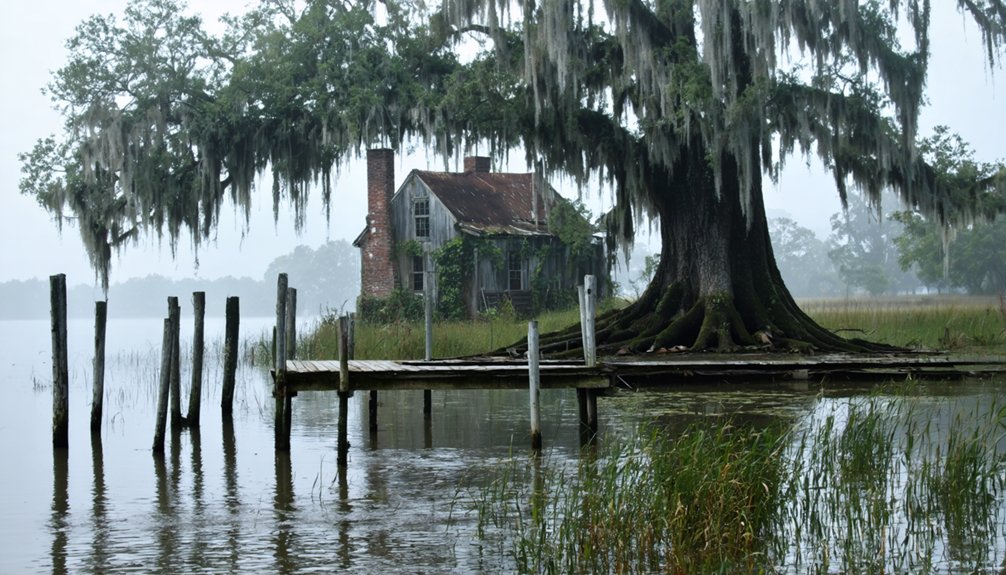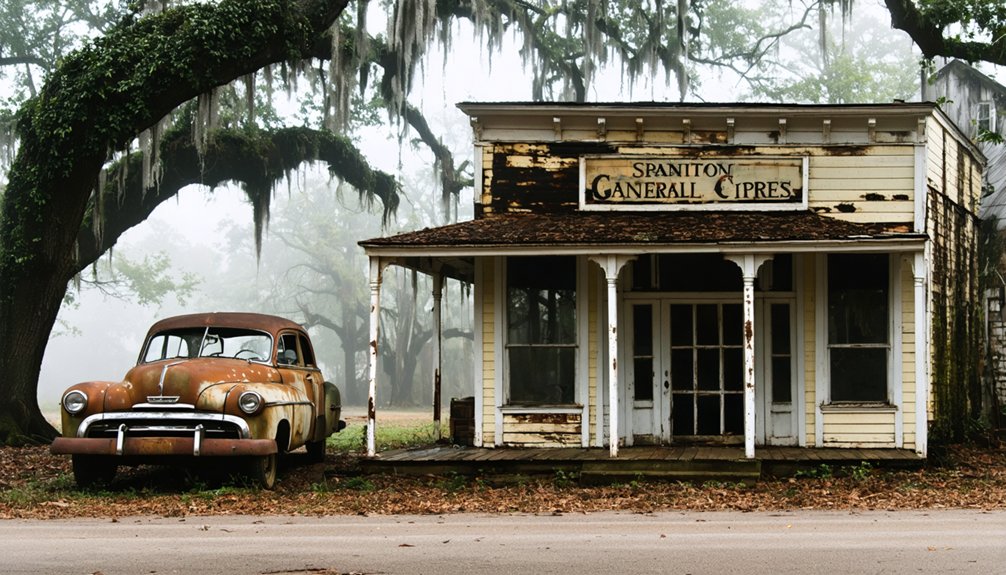
Louisiana’s ghost towns reveal their secrets best in winter, when you can explore Ruddock’s abandoned cemetery by airboat without battling summer heat, or walk through Bayou Chene’s moss-draped ruins in comfortable temperatures. You’ll find Cheniere Caminada’s hurricane-scarred remnants along the coast, Isle De Jean Charles’s vanishing wetlands, and New Orleans’ historic St. Louis Cemetery No. 1—all more accessible when crowds thin and insects disappear. Winter’s softer light makes photographing crumbling foundations and weathered tombstones especially haunting, while the season’s calm waters allow easier access to swamp-submerged sites that’ll transport you straight into Louisiana’s forgotten past.
Key Takeaways
- Winter offers cooler temperatures, fewer crowds, and reduced insects, making Louisiana ghost town exploration more comfortable and accessible.
- Cheniere Caminada features hurricane-devastated ruins with scattered foundations and storm-scarred memories from the deadly 1893 Category 4 hurricane.
- Ruddock and Frenier lie submerged under swamps, accessible by airboat tours to abandoned cemeteries and legendary hoodoo curse sites.
- Bayou Chene’s stilt-built Cajun settlement remains buried beneath Atchafalaya Basin, reachable only by airboat with cracked foundations still visible.
- St. Louis Cemetery No. 1 showcases Marie Laveau’s tomb and elaborate mausoleums, requiring guided tours for preservation and safety.
Cheniere Caminada: Barrier Island Ruins of a Hurricane-Ravaged Village
Long before Louisiana’s coast became synonymous with hurricane devastation, a thriving fishing village called Cheniere Caminada stood on a narrow oak ridge west of the Mississippi River. You’ll find little remaining of this once-bustling community where shrimpers and oystermen built multigenerational lives among wooden houses and active docks.
On October 2, 1893, everything changed. A Category 4 hurricane‘s direct hit brought catastrophic storm surge—16 to 18 feet of water—that drowned 779 residents in a single night. The hurricane impact was absolute: livestock, crops, cisterns, and entire families swept away as midnight winds gave way to a 3 a.m. surge. The surge was so powerful it split open graves in the local cemetery, scattering the dead among the living. Rescue teams from New Orleans arrived with medicine, ice, and water to aid survivors stranded among the wreckage.
Today, you can explore this haunting peninsula where a vibrant village once thrived, now reduced to scattered ruins and storm-scarred memories.
Ruddock and Frenier: Swampland Remnants of a Cursed Sawmill Town
While Cheniere Caminada faced obliteration from the sea, another Louisiana community met its end in the murky waters between Lake Maurepas and Lake Pontchartrain.
Between two Louisiana lakes, a forgotten town disappeared into murky waters, leaving only whispers and ruins behind.
You’ll find Ruddock’s remains ten miles north-northeast of LaPlace, where a thriving sawmill town of 700 residents vanished in September 1915. The Category 4 hurricane killed 58 locals, leaving only ruins now choked by swamp vegetation.
Urban legends swirl around these cypress-draped waters. Locals whisper about Julia Brown’s hoodoo curse that supposedly doomed the town. Born around 1845, she was a respected Black landowning woman known for practicing folk magic in the community.
You can explore the abandoned cemetery holding up to 100 burials via airboat tours, though they’ve staged the famous “grave” for tourists.
Ghost stories of Rougarou hauntings persist here, making winter visits particularly atmospheric when Spanish moss hangs heavy in the fog. Local historian Wayne Norwood documented artifacts from the site and established the Louisiana Treasures Museum in Ponchatoula to preserve the town’s history.
Isle De Jean Charles: a Disappearing Tribal Community
What happens when an entire island vanishes beneath your feet over the course of a lifetime? You’ll witness this haunting reality at Isle de Jean Charles, where the Biloxi-Chitimacha-Choctaw community watches 98% of their ancestral wetlands disappear since 1955.
Oil drilling, coastal erosion, and rising seas transformed this self-sufficient tribal homeland into America’s first climate refugee community.
The descendants of Jean Marie Naquin and Native American families who sought refuge here after the 1830 Indian Removal Act now face an impossible choice: abandon their heritage or sink with it. Despite exclusion from hurricane levee protection, tribal resilience drives their relocation efforts.
Their planned move includes cultural preservation through museums and community centers—ensuring traditions survive even when the land won’t. You’re seeing freedom’s cost: sometimes it means choosing to leave home to save it.
Bayou Chene: Forgotten Cajun Settlement in the Atchafalaya
Picture a thriving Cajun settlement where 500 souls built their entire world on stilts above the swamp—only to watch twelve feet of silt slowly swallow everything they’d created since the 1830s.
You’ll find Bayou Chene buried beneath the Atchafalaya Basin now, accessible only by airboat or hiking through dense cypress forests. The 1927 flood sealed its fate when engineers built the spillway right through this isolated community.
Descendants still gather, keeping local folklore alive—including tales of the Bay Sirius Witch who once warned children away from dangerous waters. The legend grew darker after 1935, when twelve-year-old Odette vanished during a raft exploration with her friend, swept into shadows by an unseen force while search parties later emerged trembling and silent.
What remains? Cracked china statues hidden in brambles, scattered cement foundations, and community preservation efforts that honor resilient ancestors who farmed, logged, and adapted until nature finally won. The post office closed in 1952, ending their remarkable waterborne existence. In 2022, the state completed the Bayou Chene Floodgate, a permanent structure that can close within hours to protect surrounding communities from the flooding that once destroyed this historic settlement.
St. Louis Cemetery No. 1 and New Orleans Necropolis Tours
Beyond the swamps and forgotten settlements, New Orleans keeps its dead above ground in a city of tombs that’s outlasted most of the living neighborhoods around it. St. Louis Cemetery No. 1, established in 1789, sprawls across a full city block with maze-like pathways winding between oven vaults and crumbling crypts.
New Orleans built a city for the dead that outlives the neighborhoods of the living—tombs rising above threatening waters since 1789.
You’ll find Marie Laveau’s tomb marked with X’s from visitors seeking the Voodoo Queen’s favor—haunted legends persist despite official skepticism.
Winter’s your best bet for exploring without the suffocating heat. You’re required to book historic tours now, protecting these fragile structures from vandalism and erosion.
Guides share tales of Homer Plessy, Dutch Morial, and chess prodigy Paul Morphy while steering through the disorienting warren. The cemetery’s architectural character reflects a cultural blending of French, Spanish, African, and American influences that distinguishes it from other burial grounds. The cemetery’s architectural evolution mirrors New Orleans’ prosperity, with simple tombs giving way to elaborate mausoleums featuring ornate ironwork, carvings, and statuary.
Over 100,000 visitors annually wander these white-washed tombs—America’s most-visited cemetery still accepting burials.
Haunted Plantation Grounds: Oak Alley and Myrtles
Louisiana’s plantation country holds stories darker than any cemetery, where the grandeur of columned mansions can’t quite mask the suffering that built them. At Oak Alley, you’ll walk beneath 300-year-old oaks transplanted by enslaved hands in 1837, their twisted branches forming an 800-foot tunnel to the Greek Revival house.
The haunted grounds whisper louder in winter’s quiet—explore the twenty duplex structures where 110 enslaved people once lived, their quarters preserved alongside the Big House’s elegance.
The plantation history here doesn’t romanticize. You’ll encounter Antoine’s pecan innovation story, the brutal 18-hour grinding shifts, the post-Civil War collapse that ended sugar’s reign.
Winter visits mean fewer crowds blocking your view of what really happened here—freedom to confront uncomfortable truths beneath those ancient oaks.
Planning Your Winter Ghost Town Adventure in Louisiana
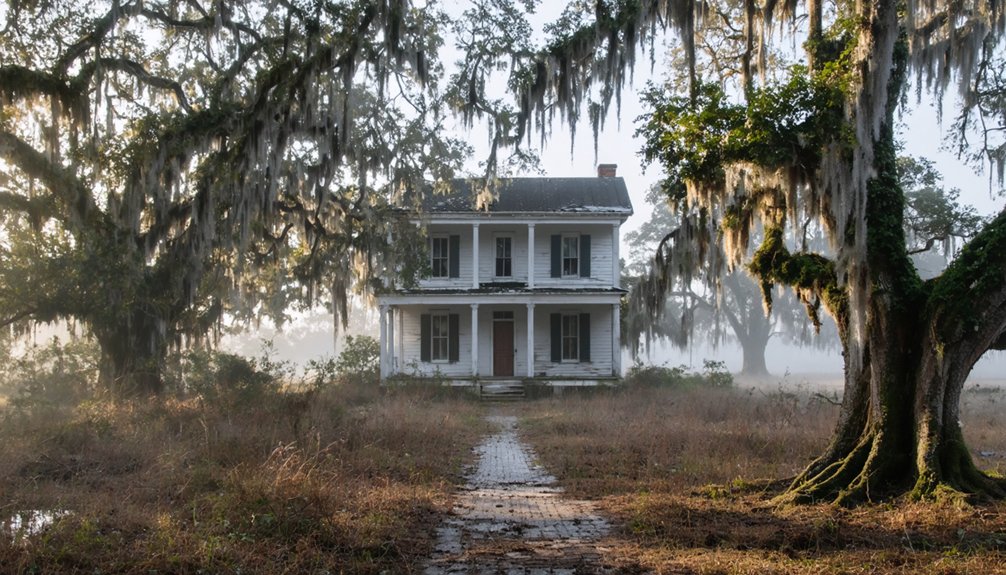
While summer’s heat and hurricane season keep most travelers away, winter transforms Louisiana’s ghost towns into accessible adventures where you’ll actually want to spend hours exploring crumbling foundations and overgrown cemeteries.
You’ll navigate state highways like US 65 to reach forgotten sawmill towns, or launch a kayak into calm winter waters around Ruddock’s remnants.
Pack your 4WD for coastal sites where urban legends still whisper through moss-draped ruins, and don’t skip the satellite communicator—cell service vanishes in remote parishes.
Winter wildlife means dormant snakes but active alligators near Bayou Chene’s wetlands, so keep your distance.
Bring boots, water, and camera gear. The soft winter light makes every abandoned structure Instagram-worthy, and you’ll have these haunting landscapes completely to yourself.
Frequently Asked Questions
What Permits or Permissions Are Required to Explore These Ghost Towns?
You’ll need WMA Access Permits ($20 annually) for ghost towns near wildlife areas, respecting trespassing regulations on private property. Always check historical preservation rules and obtain landowner permission before exploring—it protects your freedom to adventure responsibly.
Are There Guided Tour Operators Specializing in Louisiana Ghost Town Visits?
Finding dedicated Louisiana ghost town tour operators is challenging. You’ll likely need to explore independently, armed with local history research and photography tips. Connect with regional historical societies—they’ll point you toward lesser-known abandoned sites and share insider knowledge.
What Safety Equipment Should I Bring When Visiting Abandoned Sites?
You’ll need essential safety gear: sturdy boots, heavy-duty gloves, N95 respirator, and headlamp for hands-free exploration. Pack multiple flashlights with spare batteries, first aid supplies, and cold-weather layers. These exploration essentials keep you protected while discovering Louisiana’s forgotten places.
Can I Camp Overnight Near Any of These Ghost Town Locations?
Ready for adventure under the stars? You’ll find camping options near Louisiana’s ghost towns through Kisatchie National Forest’s dispersed sites. Pack weather preparedness gear and stay alert for wildlife hazards while enjoying your backcountry freedom.
Are These Locations Accessible for Visitors With Mobility Limitations?
Unfortunately, you’ll find no accessible pathways or wheelchair-friendly routes at these remote locations. Swamps, overgrown forests, and waterlogged terrain create significant barriers. If you’re seeking adventure with mobility limitations, Louisiana’s preserved historic sites offer better alternatives.
References
- https://www.ezhomesearch.com/blog/ghost-towns-in-louisiana/
- https://nosecretstours.com/complete-guide-to-christmas-in-louisiana-2/
- https://www.cajunencounters.com
- https://www.tripadvisor.com/Attractions-g28939-Activities-c42-t226-Louisiana.html
- https://hauntedhistorytours.com
- https://www.explorelouisiana.com/articles/things-do-haunted-places-louisiana
- https://www.getyourguide.com/explorer/louisiana-ttd583/winter-in-louisiana/
- https://grandisleevents.org/wp-content/uploads/2022/04/Early-History-of-Grand-Islenand-Cheniere-Caminada.pdf
- https://64parishes.org/entry/cheniere-caminada-hurricane
- https://64parishes.org/entry/cheniere-caminada-adaptation