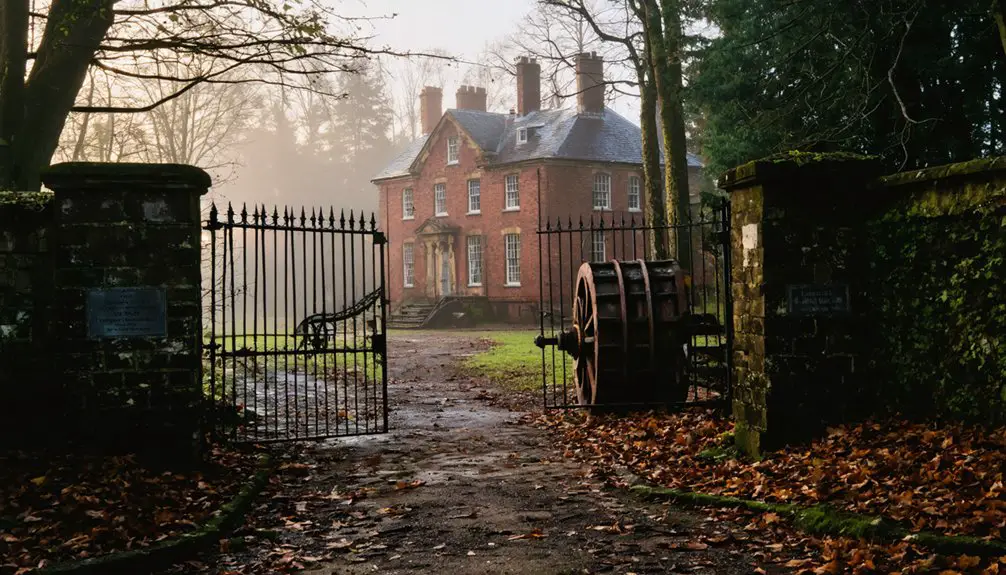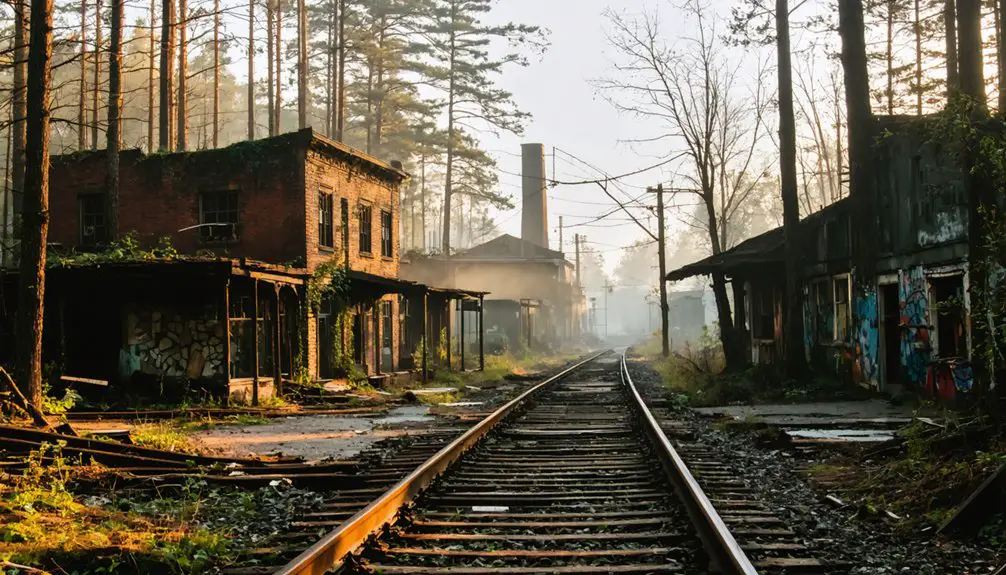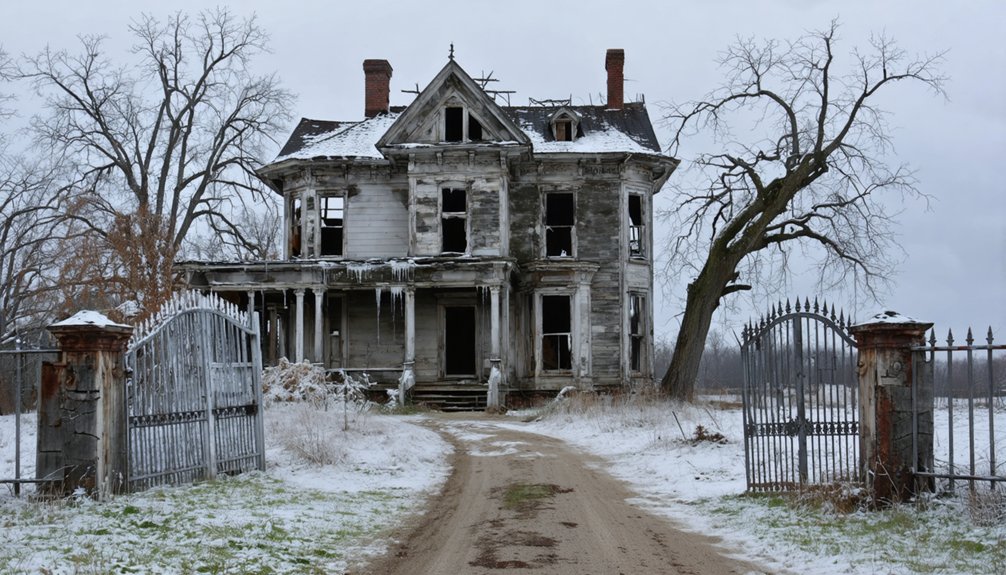
You’ll find New Jersey’s ghost towns particularly atmospheric in winter, when snow reveals architectural details obscured by summer vegetation. Batsto Village in the Pine Barrens offers 19th-century buildings and an 1882 sawmill, while Waterloo Village showcases abandoned canal structures along the frozen Musconetcong River. Feltville‘s eleven historic buildings carry haunting legends, and Whitesbog Village sits silent among cranberry bogs. Weymouth Furnace displays industrial ruins from the 1800s. Each location provides trails, self-guided exploration, and the eerie quiet that defined these settlements’ final days.
Key Takeaways
- Batsto Village offers 19th-century buildings, a Victorian mansion, winter trails, and maple sugaring programs amid Pine Barrens wilderness.
- Waterloo Village features Colonial architecture, canal remnants, and snow-covered trails revealing sawmills, lock systems, and railroad history.
- Feltville’s eleven historic structures, restored buildings, and haunting legends provide winter exploration opportunities within Watchung Reservation.
- Whitesbog Village delivers free admission, self-guided tours through cranberry bogs, and a 3.5-mile loop showcasing agricultural heritage.
- Weymouth Furnace displays 18th-century iron furnace ruins, stone foundations, and protected industrial remnants along Great Egg Harbor River.
Batsto Village: A Preserved 19th-Century Settlement in the Pinelands
Deep in the Pine Barrens, where frost clings to scrub oak and silence settles over frozen bogs, Batsto Village emerges like a sepia photograph brought to life. You’ll wander freely through this 18th-century ironworks settlement where historical mining once armed the Revolutionary War with cannons and munitions.
The 36-room Victorian mansion stands sentinel over buildings showcasing authentic 19th-century craftsmanship—an 1882 water-powered sawmill still operational, workers’ homes frozen in time since 1989.
Winter transforms Batsto into something otherworldly. You’ll find the 1852 post office, America’s oldest continuously operating, and trails threading through Wharton State Forest without summer’s crowds. The village’s roots date back to 1766, offering visitors insights into over two centuries of American history preserved within the South Central Pinelands. The Richards family managed the ironworks through much of the late 18th and early 19th centuries before declining iron demand led to a shift toward glassmaking.
Located on CR 542 in Washington Township, it’s administered by New Jersey’s Parks & Forestry. Visit during maple sugaring programs when wood smoke curls through bare branches, connecting you to generations past.
Waterloo Village: Historic Canal Town Along the Morris Canal
Along the frozen banks of the Musconetcong River, twenty-four weathered buildings stand as evidence of Waterloo Village’s transformation from Revolutionary-era ironworks to the Morris Canal’s essential midpoint. You’ll discover authentic Colonial structures alongside Victorian architecture that Smith’s children added after the Civil War—each telling stories of mule-towed boats and anthracite coal shipments that once defined this 1831 transportation hub.
Winter strips away summer crowds, letting you explore the canal history freely. Snow highlights abandoned sawmills, lime kilns, and lock systems along the towpath. The general store, blacksmith shop, and grist mill remain frozen in time since the canal’s closure in 1924. The Morris and Essex Railroad laid tracks through the village in 1855, completing the transport hub vision that combined railway, canal, and roads. The Lackawanna Sussex Branch originated at Waterloo, crossing directly over the canal to connect the village’s transportation networks. Geese wander the ice-covered waterway while you trace the 102-mile route that connected Jersey City to Phillipsburg, climbing the inclined plane for panoramic river views.
Deserted Village of Feltville: A Haunted Mill Town in the Watchung Reservation
Hidden within the Watchung Reservation’s 2,000 acres, Feltville’s whitewashed cottages emerge from winter woods like apparitions from another century. You’ll find eleven historic structures scattered across this 1840s mill town, where David Felt once housed 200 workers before the Panic of 1857 forced abandonment.
Haunted legends permeate the settlement. Two teenage girls drowned in the mill pond, and three sisters vanished during a 1912 camping trip—only their bonnets were recovered. These disappearances drove half the residents away.
Winter transforms forest exploration here. The bare trees reveal hiking trails winding past original 1776 headstones and restored Masker’s Barn. Three families still occupy cottages, but most stand empty—open dawn to dusk for those seeking both documented history and eerie atmosphere in New Jersey’s most accessible ghost town.
Whitesbog Village: Exploring New Jersey’s Cranberry and Blueberry Farming Heritage
Between the sandy roads and cranberry bogs of the Pine Barrens, Whitesbog Village stands frozen in time—a company town where America’s blueberry industry was born.
Step into the Pine Barrens where agricultural innovation met wilderness, creating the birthplace of America’s beloved blueberry industry.
You’ll wander past worker cottages and processing buildings that tell stories of cranberry history dating to 1857, when this 3,000-acre operation became New Jersey’s largest farm.
Elizabeth White’s 1916 breakthrough in blueberry cultivation with Dr. Frederick Coville transformed American agriculture forever. This farmer, naturalist, and entrepreneur led the first successful cultivation of highbush blueberries from her base at Whitesbog.
What awaits your exploration:
- Self-guided village tours through authentic 1890s-1925 structures
- 3.5-mile driving loop circling historic bogs
- Old Bog Trail winding through working cranberry landscapes
- Whitesbog Art Gallery housed in preserved worker quarters
The Preservation Trust maintains this national historic site, open sunrise to sunset. The village is listed on both National and State Registers of Historic Sites, preserving its significance in American agricultural development. No admission fees, no restrictions—just you, the Pine Barrens wilderness, and agricultural heritage frozen in New Jersey’s winter silence.
Weymouth Furnace: Industrial Ruins Along the Great Egg Harbor River
Where the Great Egg Harbor River once powered New Jersey’s iron industry, Weymouth Furnace‘s stone ruins emerge from the forest like industrial skeletons. You’ll discover towering brick chimneys and weathered stone arches spanning dry millraces—remnants of an 85,000-acre village that forged cannons for the War of 1812 and cast iron pipes for Philadelphia’s waterworks.
The site’s industrial archaeology tells stories of 900-ton annual outputs and worker communities that thrived until 1862. Walk among slag heaps left from smelting operations, explore foundations where furnaces once blazed, and witness preservation efforts protecting these structures from further decay. The furnace community once included up to 20 worker houses, alongside blacksmiths, a wheelwright, and even a Methodist church. The site met its end when fire struck in 1862, coinciding with the furnace’s closure due to Pennsylvania’s superior iron ore and coal resources.
Atlantic County’s 1966 acquisition saved this ghost town from oblivion. You’re free to wander accessible areas, but respect the fencing—it’s protecting history you can still touch, photograph, and experience firsthand.
Walpack Center: An Authentic Ghost Town Experience in Rural Sussex County
From industrial ruins along southern waterways, we move north to Sussex County’s forested highlands, where an entire village stands frozen in time. Walpack Center’s emptiness stems from government evictions in the 1960s for a dam never built.
You’ll find authentic 19th-century structures—a post office, church, and schoolhouse—standing exactly as residents left them.
Winter solitude here feels absolute. Snow-covered buildings and deserted roads create an atmosphere that’s inspired countless haunted stories among visitors.
What makes Walpack Center worth your winter exploration:
- 1-mile Military Trail starting at Van Campen Inn offers historical context
- Methodist Church opens during warmer months for self-guided tours
- Rosenkrans Museum maintains seasonal hours through Walpack Historical Society
- Nearby Walpack Inn provides warmth and meals after ghost town wandering
The wilderness embraces this forgotten community completely.
Frequently Asked Questions
Are These Ghost Towns Wheelchair Accessible During Winter Months?
Feltville offers the best winter accessibility with wheelchair friendly paths to its Church/Store and Masker’s Barn, both featuring restrooms. You’ll find interpretive panels throughout, though you’ll face an uphill approach from parking.
Can I Bring My Dog to Visit These Historic Sites?
Your best bet’s checking each site directly since dog friendly policies aren’t clearly posted. For pet safety tips during winter visits, keep your pup leashed on icy historic grounds and bring water for trail exploration.
What Are the Best Photography Times at These Locations in Winter?
You’ll capture the best shots during early morning hours when winter lighting creates dramatic shadows across abandoned buildings. Dawn photography reveals untouched snow and haunting atmospheres before crowds arrive, especially at Feltville and Walpack’s preserved structures.
Do Any Ghost Towns Offer Overnight Camping or Accommodations Nearby?
None offer on-site overnight camping due to historic preservation rules, but you’ll find freedom camping at Waterloo’s Allamuchy Mountain State Park and Delaware Water Gap near Walpack, with backcountry permits letting you explore these ghostly sites authentically.
Are Guided Tours Available at These Sites During Winter Season?
Craving winter exploration freedom? Guided tours become scarce after October’s festivities end. Batsto Village offers historical preservation through winter mansion tours, while most sites shift to self-guided wandering. You’ll need to verify current seasonal schedules before visiting.
References
- https://www.youtube.com/watch?v=ZIp3AYb0ulw
- https://southjerseytrails.org/2017/03/16/six-pine-barrens-ghost-towns-to-explore/
- https://www.jerseysbest.com/community/take-a-road-trip-through-n-j-s-spooky-ghost-towns-to-see-peculiar-pieces-of-history/
- https://ucnj.org/parks-recreation/deserted-village/
- https://pinelandsalliance.org/learn-about-the-pinelands/pinelands-history-and-culture/ghost-towns-of-the-pine-barrens/
- https://visitnj.org/pinelands-winter
- https://batstovillage.org
- https://hcsv.org
- https://visitsouthjersey.com/directory/batsto-village/
- https://en.wikipedia.org/wiki/Batsto_Village