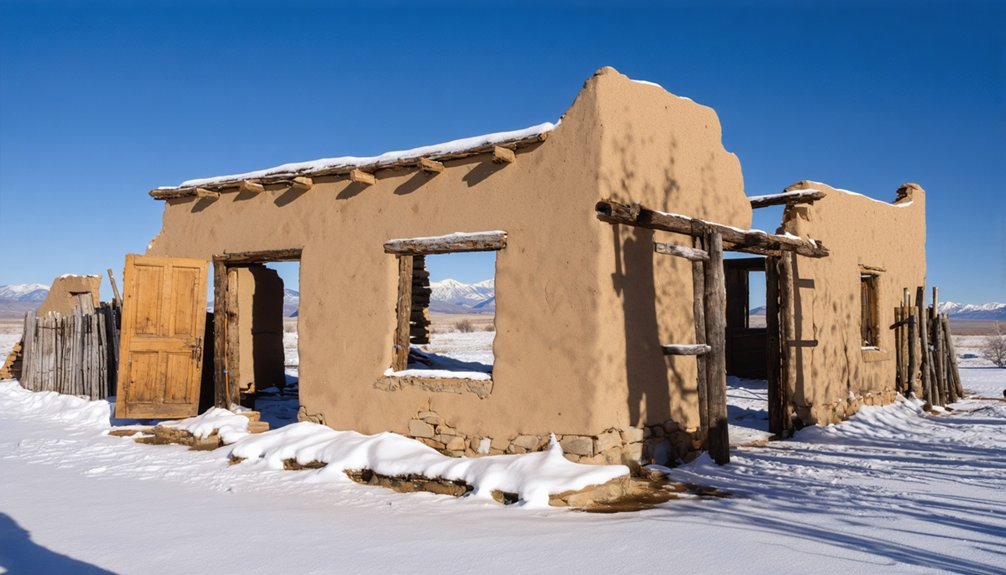
You’ll find New Mexico’s ghost towns especially haunting in winter, when snow blankets the ruins and frost etches weathered adobe walls. Kingston sits at 6,224 feet in the Black Range, where its 1888 stone church and hillside cemetery overlook valleys white with snow. Lake Valley offers authentic 1880s remnants without commercialization, while Madrid transforms into a Christmas wonderland with its historic mining architecture. White Oaks, Shakespeare, and Chloride preserve Victorian buildings, saloons, and miner’s cabins that become even more atmospheric when temperatures drop and crowds disappear, revealing the solitude these abandoned towns were meant to convey.
Key Takeaways
- Kingston, Lake Valley, White Oaks, Shakespeare, and Chloride offer authentic ghost town experiences with preserved 1880s mining structures and Victorian architecture.
- Winter provides greater solitude, snow-dusted ruins, and opportunities for wildlife encounters like hawks and mule deer amid scenic mountain views.
- Trails may be muddy or snow-covered; check weather forecasts, prepare layered clothing, and expect potential road closures at higher elevations.
- Lake Valley and Shakespeare feature unrestored, weathered adobe structures managed by BLM, avoiding commercialization for authentic historical preservation.
- Photograph during golden hour, overexpose snow by 1-1.5 stops, and use weathered textures to capture stark, evocative winter compositions.
Kingston: a Winter Wonderland With Dark History
Where the Black Range mountains cradle Middle Percha Creek at 6,224 feet, Kingston emerges from New Mexico’s high desert like a fever dream painted in winter white. You’ll traverse snow-covered ruins where 2,000 souls once danced to Lillian Russell’s troupe, drank in 23 saloons, and struck silver worth fortunes.
That first winter brought record snowfall and smallpox—dynamite blasting frozen earth for graves while guards turned away the desperate. Today, thirty-two residents keep vigil over what remains: the 1888 stone church, museums preserving boom-town artifacts, and that hillside cemetery still accepting the dead. The Percha Bank’s vault, built in 1885, stands nearly impossible to breach even now, housing relics of Kingston’s silver rush inside its museum walls.
Winter wildlife now claims what miners abandoned when silver crashed in 1893. The outlaws are gone, but their ghosts linger in these frost-crusted foundations. Kingston’s name itself derives from the local Iron King mine, the silver operation that gave birth to this mountain settlement when James Porter Parker platted the town in 1882.
Lake Valley: The Authentic Ghost Town Experience
Under winter’s crystalline skies, Lake Valley offers something rare among New Mexico’s ghost towns—an unsanitized glimpse into the 1880s silver boom without gift shops or reconstruction.
You’ll walk these windswept ruins at your own pace, guided only by interpretive signs and the watchful presence of BLM volunteer caretakers who’ve made preserving this authentic site their mission.
The dramatic desert light transforms weathered adobe and timber into stark silhouettes against Sierra County’s vast horizons, revealing why this town—unlike its neighbors—stayed dead. Among the skeletal remains, the Kiel House stands as one of the few structures still receiving active restoration work, its adobe walls carefully maintained by preservation specialists who use Lake Valley as a training ground for traditional building techniques.
The preserved old church remains accessible to visitors, offering a rare opportunity to step inside one of the settlement’s original structures, its weathered interior still echoing with the memories of frontier congregations who once gathered beneath its modest roof.
Self-Guided Walking Tour Available
Unlike crowded tourist attractions with roped-off exhibits and guided schedules, Lake Valley invites you to wander its dusty streets at your own pace.
Where silence hangs thick between weathered adobe walls and creosote bushes reclaim what commerce once dominated.
Grab a brochure from the schoolhouse and follow interpretive markers south along established trails connecting 1880s remnants.
You’ll encounter water towers, the railroad coal sorter, and chapel—all accessible Thursday through Monday, 9 a.m. to 4 p.m., though the walking trail remains open daily, even when buildings are padlocked midweek.
Winter brings ideal weather considerations: crisp mornings without summer’s punishing heat, perfect for extended exploration.
Watch for local wildlife—roadrunners darting between foundations, hawks circling overhead.
Most structures remain closed for preservation, but exterior viewing reveals authentic deterioration untouched by commercialization.
The BLM has stabilized several structures to protect these fragile remnants while maintaining their historic character.
The friendly groundskeeper offers valuable historical insights and guidance to enhance your understanding of the site’s mining heritage.
Volunteer Caretakers and Visitors
Since the last permanent residents departed for Deming in 1994, Lake Valley has existed in a carefully managed limbo—neither abandoned to ruin nor revived into theme-park artificiality. The Bureau of Land Management oversees this protected site with volunteer preservation efforts ensuring its 10-12 standing structures remain authentic yet accessible.
You’ll find staff present during operating hours—daylight only, closed Tuesdays and Wednesdays—balancing visitor safety with unrestricted exploration of weathered buildings. Unlike commercialized “ghost towns,” there’s no gift shop hawking turquoise trinkets, no staged gunfights.
Just windswept silence and creaking floorboards. This structured access prevents the vandalism that’s gutted other mining camps while letting you experience genuine desolation. Located 17 miles south of Hillsboro on State Road 27, the site occupies a stretch of high desert where railway commerce once thrived. The Lake Valley name appears in several geographic locations across different regions, though this New Mexico mining settlement remains the most historically significant.
The volunteers aren’t here to narrate your visit—they’re guardians of emptiness, preserving your right to encounter history unfiltered.
Dramatic Skies and Scenery
The Black Range Mountains frame Lake Valley in austere grandeur, their mineral-stained slopes shifting from rust to violet as winter light rakes across the basin. You’ll find unobstructed views stretching toward snow-dusted peaks, where dramatic cloud formations build and dissolve above weathered adobe ruins.
The deserted townsite sits exposed to elements that shaped the lives of 4,000 fortune-seekers who once crowded these now-silent streets.
Winter transforms the landscape into stark contrasts—skeletal cottonwoods silhouetted against brilliant skies, local flora reduced to muted grays and browns that accentuate the ruins’ textures.
Watch for winter wildlife: hawks circling thermals above abandoned buildings, mule deer browsing hillsides where prospectors once scrambled. The Bridal Chamber discovery in the early 1880s triggered Lake Valley’s explosive growth, when a blacksmith stumbled upon a massive cavern of pure silver chloride just ten feet below the surface.
The remote setting south of Hillsboro amplifies your sense of isolation, offering photographic opportunities that repopulated ghost towns simply can’t match.
Madrid: Where Christmas Magic Never Dies
Nestled along the Turquoise Trail forty minutes south of Santa Fe, Madrid (pronounced MAD-rid) clings to the slopes of the Ortiz Mountains like a string of mismatched beads—each weathered building telling stories of boom, bust, and unlikely resurrection.
Madrid clings to mountain slopes like mismatched beads—weathered buildings whispering tales of boom, bust, and improbable rebirth.
Once a coal town of 4,000 souls, Madrid blazed brightest during the 1920s-30s when 150,000 Christmas lights transformed winter solitude into spectacle—airlines rerouted flights so passengers could witness the desert constellation below. Superintendent Oscar Huber also built the first illuminated baseball park west of the Mississippi in 1922, where the Madrid Miners once faced the Brooklyn Dodgers.
Today’s Madrid honors that luminous legacy with modern displays that defy its ghost town origins:
- The Mine Shaft Tavern’s longest bar in New Mexico hosts live music beneath ghost tales
- Forty galleries and shops line streets artists reclaimed in the 1970s
- Winter solstice celebrations draw seekers to this mountain hamlet of 300
La Llorona still haunts the arroyos. The lights still shine.
White Oaks: Gold Rush Glory Near Carrizozo
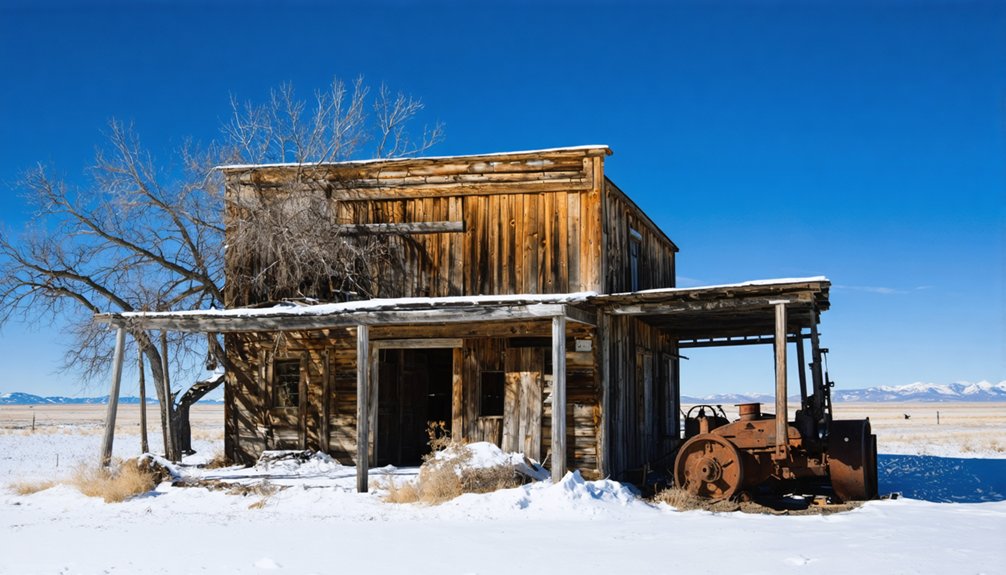
Gold fever struck the Jicarilla Mountains in 1879 when prospectors John Wilson, Jack Winters, and Harry Baxter stumbled upon veins that would transform high desert scrubland into New Mexico Territory’s second-largest city.
You’ll find white oak-lined streams that gave this boomtown its name, just three miles north of Carrizozo.
Walk through ghost town preservation efforts at the Victorian Hoyle House with its distinctive widow’s walk, then grab a cold one at the No Scum Allowed Saloon—named among America’s best cowboy bars for good reason.
Local storytelling comes alive around Billy the Kid’s legendary 1880 standoff, when a forty-mile posse chase ended in tragedy.
Shakespeare: Step Back Into the Wild West
Three miles south of Lordsburg, Shakespeare’s weathered adobe walls and false-fronted buildings rise from Hidalgo County’s desert floor like a fever dream of silver-fueled ambition.
You’ll walk streets where lawmen never existed—killers simply dug their victims’ graves.
What makes Shakespeare exceptional:
- Abandoned buildings include the Grant House, Stratford Hotel, and assay office—authentically preserved, not reconstructed
- Preservation stories spanning generations: Emma Marble Muir (1882), Rita Hill (1935), Janaloo Hill Hough, and now Manny’s daughter Gina
- Living history re-enactments bringing the Wild West’s chaos to life
This privately-owned ghost town opens daily 10am-5pm, with monthly weekend tours ($10 adults). Call ahead at 505-542-9034.
You’ll discover a place where saloons outnumbered homes and diamond hoaxes ended boom times overnight.
Chloride: Silver Mining Heritage and Modern Amenities
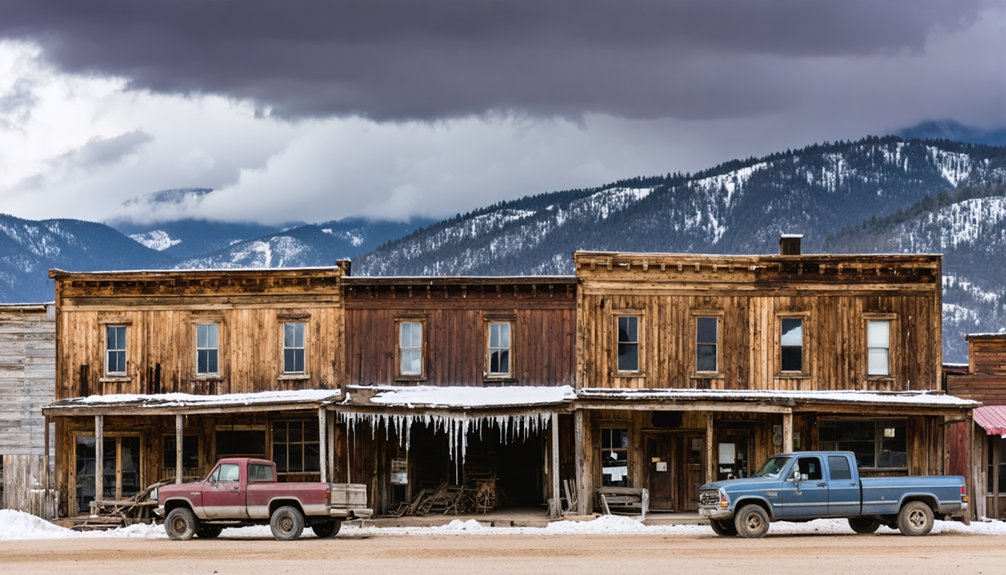
When Harry Pye stumbled upon silver chloride veins while hiding from Apaches in 1879, he couldn’t have imagined his desperate discovery would spark a boomtown of 3,000 souls in the Black Range Mountains.
From desperate refuge to fortune’s doorstep—Harry Pye’s 1879 discovery transformed Black Range wilderness into a thriving 3,000-strong silver boomtown.
You’ll find his original log cabin still standing, now a vacation rental where you can sleep where legends began.
The town’s grit shows in its survival—nine saloons once roared here, and Apache raids kept a 51-man militia sharp.
After the 1893 Silver Panic crashed prices, mining techniques shifted to copper and lead until 1931.
Today, a dozen retirees champion town preservation with remarkable dedication.
Visit the Pioneer Store Museum, time-sealed since 1923, or browse the Monte Cristo Saloon’s artist co-op.
The 200-year-old Hanging Tree still stands sentinel, weathered but defiant.
What to Expect When Visiting New Mexico Ghost Towns in Winter
Winter transforms New Mexico’s ghost towns into stark theaters of silence where frozen wind rattles loose tin and your breath hangs white against crumbling adobe. You’ll navigate unpredictable conditions that shift from 70°F sunshine to sudden snowfall within hours.
Essential winter realities:
- Trail hazards intensify – Muddy ascents turn slick, washed-out sections threaten stability, and snow-covered landscapes narrow rocky paths at higher elevations
- Access restrictions apply – Private properties like Steins require scheduled tours; others close entirely when storms isolate mountain roads
- Solitude dominates – Empty Madrid cabins and Lake Valley’s wind-squeaked signs create eerie voids, with winter wildlife your only companions
Pack layers, check forecasts obsessively, and embrace the rawness. These frozen ruins reveal their truest character when snow blankets forgotten streets and civilization feels gloriously distant.
Essential Tips for Winter Ghost Town Photography
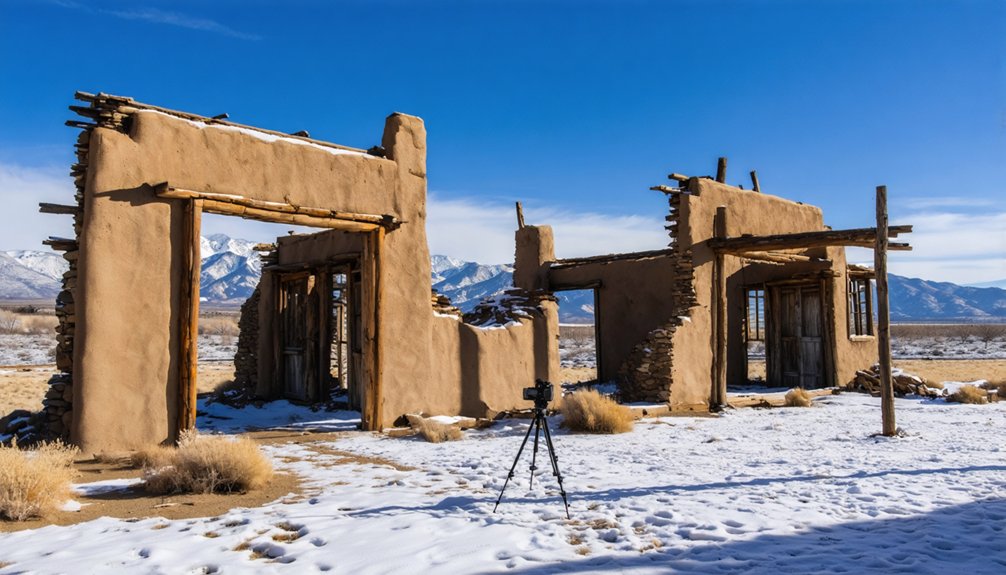
Winter techniques overview: Overexpose snow by 1-1.5 stops so it doesn’t render gray. Shoot during golden hour when low sun carves dramatic shadows across weathered wood. Use small apertures for sun-stars through broken windows. Compose with snow-filled footprints as leading lines.
And don’t fear negative space—it amplifies the isolation. In post-processing, enhance contrasts or convert to monochrome, letting textures speak their weathered truths.
Planning Your Ghost Town Road Trip Route
Because New Mexico’s ghost towns scatter across high desert plateaus and mountain valleys separated by hundreds of miles, your route requires strategic planning that balances winter road conditions with the magnetic pull of decaying adobe and abandoned mineshafts.
Three essential routing strategies:
- Central Turquoise Trail Loop – Start in Albuquerque, wind through Madrid and Cerrillos on State Road 14, checking road closure updates before ascending to Santa Fe’s 7,000-foot elevation.
- Southern Shakespeare-Lake Valley Circuit – Launch from Las Cruces near White Sands, exploring privately-guided Shakespeare and BLM-managed Lake Valley’s silver-boom remnants.
- Northeast White Oaks Extension – Navigate US Highway 54 to Carrizozo, then north to White Oaks’ Baxter Mountain gold claims, packing cold weather gear for exposed ridgeline winds.
Stock your vehicle thoroughly—these remote corridors offer spectacular isolation and zero services.
Where to Stay Near New Mexico’s Historic Ghost Towns
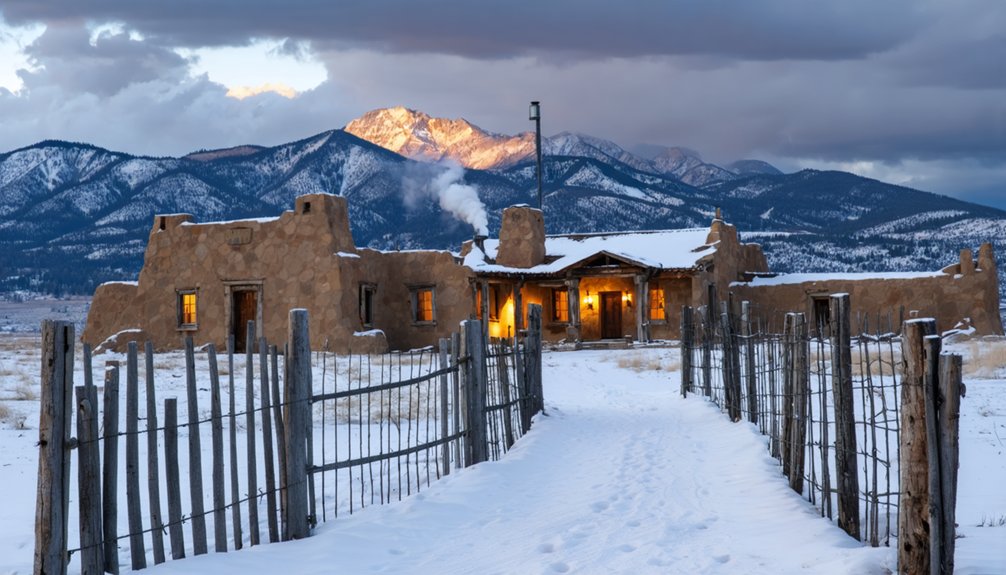
After a day tracing the weathered boardwalks and silent storefronts of New Mexico’s ghost towns, you’ll need a warm base camp where winter’s high-desert chill can’t follow. Your options range from rustic log cabins with wood-burning stoves tucked against national forest boundaries to refurbished miners’ quarters that once housed the very souls who built these abandoned settlements.
Whether you’re seeking RV hookups in former mining camps, historic inns near cultural landmarks, or cozy rentals in gateway towns like Silver City and Pecos, the state offers lodging that honors both comfort and the raw authenticity of the terrain.
Historic Lodges and Inns
While modern chain hotels dot the highways leading to New Mexico’s ghost towns, the most memorable winter stays nestle within historic structures that once sheltered miners, cavalry soldiers, and frontier entrepreneurs.
Three historic lodging options preserve authentic frontier character:
- Black Range Lodge – This 1880s bed and breakfast near Kingston features massive stone walls salvaged from Pretty Sam’s Casino, where local legends still echo through log-beamed ceilings.
- Pye Cabin in Chloride – A completely refurbished two-bedroom rental that housed silver boom miners and ranch families until the 1940s.
- Geronimo Trail Guest Ranch – Your gateway to exploring canyon dwellings and Basque sheepherder shelters on horseback through winter flora-dusted wilderness.
Each property connects you directly to New Mexico’s untamed heritage, offering independence from crowded resorts while surrounding you with authentic frontier history.
RV Parks and Campgrounds
Winter transforms New Mexico’s high desert into an RV camper’s secret advantage—crisp mornings give way to brilliant 60-degree afternoons. Campfires crackle without summer’s scorching heat, and you’ll claim coveted sites near ghost towns while peak-season crowds huddle elsewhere.
Park beside Chloride’s mining museum at Apache Kid RV Park‘s five hookup spaces, where cultural preservation meets modern convenience. Ghost Ranch Campground sprawls across 21,000 acres of O’Keeffe country—first-come electricity, dark skies, and visitor safety on maintained trails.
Southern snowbirds favor Hacienda RV Resort’s 113 full-hookup sites near White Sands and Old Mesilla’s territorial charm. Oliver Lee Memorial State Park delivers electric sites beneath Organ Mountains’ peaks, while Silver City’s Manzano’s RV Park positions you at 300 annual sunshine days and authentic Western heritage.
Your basecamp awaits where freedom roams.
Nearby Town Accommodations
Ghost town exploration ends when the sun dips behind desert ridges, and that’s when New Mexico’s historic lodgings reveal their true character—where you’ll sleep matters as much as where you wander.
Three distinctive bases for vintage sightseeing:
- Black Range Lodge – Kingston’s 1880s brick-and-stone refuge hosts ghost town festivals and creative workshops amid Gila National Forest foothills.
- The Grand Hacienda – Abiquiú’s award-winning adults-only retreat positions you near O’Keeffe country with lake-view portals for stargazing between ruins.
- Pye Cabin – Chloride’s refurbished miner’s dwelling puts you steps from the cafe and museum in this dozen-resident outpost.
Each property connects you to authentic territorial architecture while providing modern comfort. From Kingston’s log-beamed ceilings to Chloride’s canyon-tucked rentals, you’ll experience New Mexico’s mining heritage without sacrificing warmth during winter’s chill.
Frequently Asked Questions
Are New Mexico Ghost Towns Safe to Visit Alone During Winter Months?
You’ll face real risks traveling solo to remote ghost towns in winter. Follow essential winter hiking tips: check road conditions, tell someone your plans, and respect travel safety basics. These aren’t tourist attractions—they’re authentic, isolated ruins.
Which Ghost Towns Require Entrance Fees or Guided Tour Reservations?
Shakespeare Ghost Town requires paid admission ($15 adults) and guided tour reservations through historical preservation mandates. You’ll navigate tour operator regulations by calling ahead—(575)-542-9034—while most other New Mexico ghost towns remain wonderfully free to explore independently.
Can I Bring My Dog to New Mexico’s Ghost Towns?
You’ll find dog-friendly trails throughout New Mexico’s ghost towns, from Mogollon’s mountain ruins to Golden’s mining relics. Follow essential pet safety tips: keep leashes tight near wildlife, pack water for high elevations, and respect private boundaries while exploring freely.
Do Ghost Towns Have Cell Phone Service for Emergencies?
Most ghost towns don’t have reliable cell phone coverage, leaving you disconnected from emergency communication. You’ll need paper maps and should tell someone your plans before venturing into New Mexico’s beautiful, isolated backcountry.
What Winter Weather Conditions Typically Close Roads to Ghost Towns?
Snow accumulation, icy surfaces, and freezing temperatures typically trigger closures. You’ll find NMDOT’s snow removal policies prioritize main highways over remote ghost town routes, leaving high-elevation back roads seasonally closed when winter storms strike New Mexico’s mountains.
References
- https://newmexiconomad.com/kingston/
- https://www.youtube.com/watch?v=pGPjU65CHeE
- https://www.newmexico.org/places-to-visit/ghost-towns/
- https://www.newmexicomagazine.org/blog/post/ghost-towns/
- https://mossandfog.com/exploring-new-mexicos-ghost-towns-on-a-road-trip/
- https://sierracountynewmexico.info/cool-places/chloride-new-mexico/
- https://www.newmexicoghosttowns.net
- https://www.offthebeatenpath.com/a-winter-art-and-nature-sojourn-to-new-mexico/
- https://www.historynet.com/ghost-towns-kingston-new-mexico/
- https://cityofdust.blogspot.com/2014/08/the-way-things-werent-kingston-nm.html