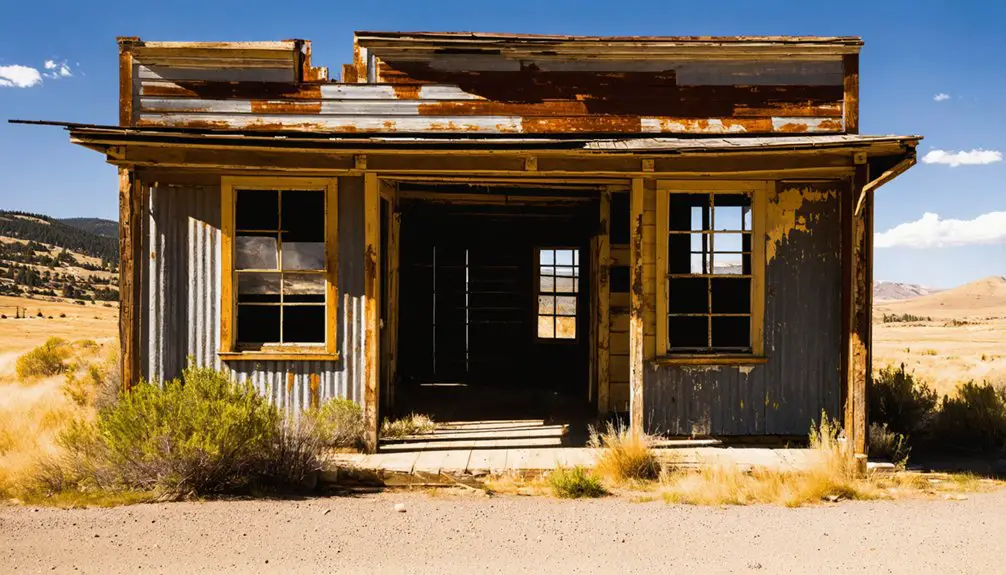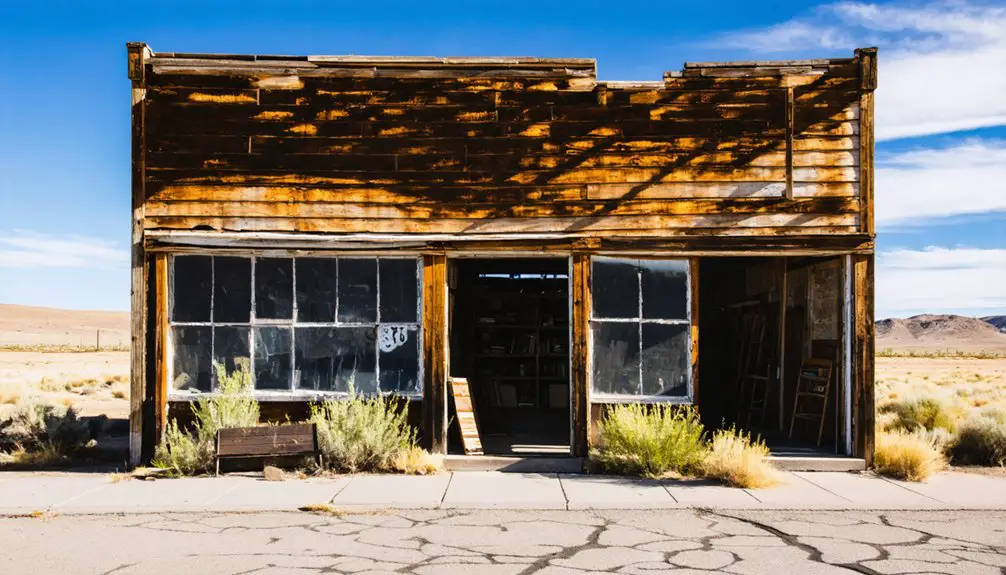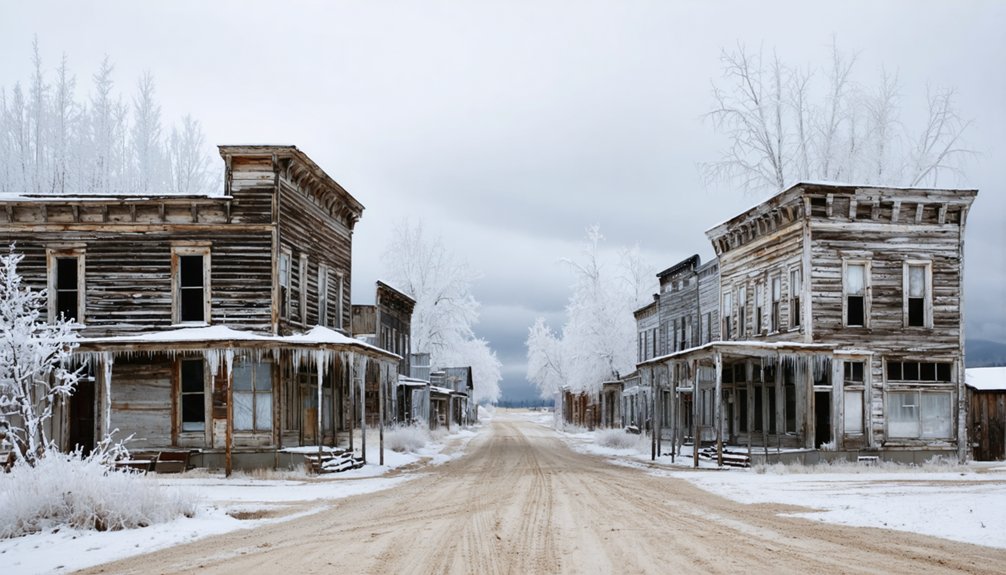
You’ll find Oregon’s best winter ghost towns scattered across high desert plateaus and mountain valleys, where snow transforms abandoned streets into haunting tableaus. Shaniko’s preserved wool-shipping architecture and Sumpter’s massive 2.5-million-pound gold dredge offer accessible history, while Golden provides year-round free access to crumbling miners’ cabins. The Christmas Valley area hosts thirteen forgotten settlements in one remote region, and Granite perches at 4,695 feet with dramatic alpine backdrops. Each location reveals distinct stories of frontier ambition, and proper preparation accesses these frozen monuments to Oregon’s past.
Key Takeaways
- Sumpter offers year-round access to a 2.5-million-pound gold dredge with snowmobiling, snowshoeing, and winter hiking opportunities.
- Shaniko features preserved 1900s architecture including the historic Shaniko Hotel, accessible for photography and exploration during winter months.
- Golden provides free, unrestricted year-round access to heritage mining structures with no fees, permits, or seasonal closures.
- Fort Rock’s Homestead Village Museum displays rescued historic buildings beneath a volcanic formation, with ongoing preservation efforts.
- Greenhorn, Oregon’s highest incorporated city at 6,306 feet, requires careful winter preparation including snow tires and proper clothing.
Shaniko: The Wool Capital Frozen in Time
When winter wind howls across Oregon’s high desert plateau, it finds Shaniko waiting—a weathered collection of brick buildings and false-fronted storefronts that once crowned this remote outpost as the Wool Capital of the World. You’ll discover ghost town architecture that shipped $3-5 million in wool annually during its peak, when 600 souls called this railroad terminus home.
The 1900 Shaniko Hotel stands sentinel with 18-inch handmade brick walls, while massive sheep sheds loom at town’s edge—monuments to vanished prosperity. Winter brings snow-dusted streets and closed businesses, but the solitude only deepens the authentic ghost town atmosphere.
Winter weather challenges don’t deter the 23 residents who’ve chosen this wind-swept freedom. You’ll walk silent boardwalks past the preserved schoolhouse and empty saloons, experiencing authentic decay the Shaniko Preservation Guild maintains. The town’s collapse began when new rail lines bypassed Shaniko in 1911, transforming a thriving wool hub into high desert ruins. It’s Oregon’s proudest ghost town, frozen perfectly in time.
Sumpter: Where Gold Mining History Meets Winter Accessibility
You’ll find Sumpter cradled in the Elkhorn Mountain Range, where a 2.5-million-pound dredge still towers over 50 feet tall—a steel monument to the $9 million in gold torn from these hills.
The town that once echoed with sixteen saloons and seven hotels now offers you something rarer: winter access to authentic mining relics along Oregon Route 7, just 28 miles from Baker City. Here, you can walk among the ruins where 250 people lost their homes in the 1917 fire.
Then tour the very machine whose thunderous operation once drove residents away decades before it finally went silent in 1954. The dredge operated alongside two others on the Powder River, with Dredge #2 being the largest of the three vessels that worked these waters until 1954. During summer months, you can ride the preserved tourist rail line that recalls the Sumpter Valley Railway, which first reached town in 1896 and fueled its transformation into the Queen City of eastern Oregon.
The Historic Dredge Tours
At the base of Oregon’s Elkhorn Mountain Range, where the Powder River cuts through valleys once thick with gold fever, stands one of the most impressive relics of the American mining era—a four-story steel behemoth that churned through riverbanks for nearly two decades.
You’ll discover sophisticated dredge engineering here: 72 one-ton buckets chained together like a massive chainsaw, clawing 9 cubic feet of material per minute from self-created ponds. Inside, gold recovery techniques separated precious flakes through steel cylinders and water sluices while a 96-foot conveyor deposited tailings behind—mile after mile of rock piles still scarring the landscape.
Though the structure closes winters, you’ll explore year-round trails and join free ranger-led tours weekends from May through October, experiencing raw industrial ambition frozen in time. Beyond the dredge site, the nearby Baker Heritage Museum showcases the region’s mining heritage within 33,000 square feet of exhibit space housed in a historic 1920 building. The machinery once roared so loudly that its distinctive cranking noise carried up to 27 miles across the valley, a testament to the scale of this gold rush operation.
Winter-Accessible Mountain Valley
Nestled in a mountain valley where winter transforms ghost town exploration from dusty summer walks into pristine snowmobile adventures, Sumpter stands apart from Oregon’s less accessible mining settlements. You’ll find direct trail access from your lodging, launching you into 900 miles of groomed routes through the Elkhorn Mountains. The Depot Inn and Stumper Stockade Motel cater specifically to riders, offering trailer parking and year-round shelter between runs.
Beyond snowmobiling, you’re positioned for winter hiking along Elkhorn Crest trails, where mountain wildlife tracks crisscross fresh powder. The historic railroad operates seasonal trains through snow-blanketed forests, while nearby ghost towns—Bourne, Greenhorn, Whitney, and Granite—await exploration via scenic drives or machine. When winter melts into late spring, the Blue Mountain OHV trail opens at Blue Spring Summit Sno-Park, transforming the snowmobile haven into terrain for off-highway vehicles.
Presidents Day Weekend brings competitive poker runs, blending gold rush heritage with unbridled mountain freedom. The Sumpter Valley Snowmobile Club hosts its annual poker run on Saturday, kicking off a three-day winter exploration weekend that connects riders across the region.
Living History Among Ruins
While most Oregon ghost towns crumble into forgotten ruins, Sumpter defies abandonment through a stubborn blend of preservation and persistence. You’ll walk streets where 1917’s devastating fire left scorched foundations alongside rebuilt structures, creating an authentic collision of past and present.
The 2.5-million-pound dredge stands accessible year-round—its machinery still whispering tales of $4 million in extracted gold.
Local legends swirl around the Queen City’s transformation from 3,000 souls to near-abandonment, then resurrection by 1971 volunteers who refused to let history vanish. You can explore Native crafts at surviving establishments, trace the Stump Dodger railway’s path through snow, and discover why this semi-ghost town remains inhabited. The town’s mining legacy includes 35 hard rock mines that collectively yielded approximately $9 million in gold during the boom years.
Sumpter doesn’t just preserve mining history—it lives it, offering unmediated access to Oregon’s golden past. Tucked away in the Elkhorn Mountain Range, the town rewards winter visitors with scenic outdoor views framed by snow-covered peaks and frozen streams.
Golden: Oregon’s Year-Round Heritage Site
You’ll discover Golden tucked along Coyote Creek, where Chinese miners once worked abandoned claims after European settlers rushed to richer strikes in 1862.
This National Register site pulled $1.5 million in gold from hydraulic operations, transforming from mining camp to a proper town under Reverend Ruble’s guidance in the 1890s.
Unlike most ghost towns locked behind gates or buried under snow, Golden welcomes you year-round without admission fees, making it one of Oregon’s most accessible historic sites for winter exploration.
Gold Rush Mining History
By the 1860s, Chinese miners comprised nearly half of southwestern Oregon’s mining population. They purchased exhausted claims and coaxed new fortunes from seemingly spent ground.
They engineered remarkable feats—the Sterling Mine Ditch stretched twenty-six miles, carved through wilderness in just six months.
Today, these historic trails thread through abandoned camps where fortunes rose and vanished.
Free Day Use Access
Golden stands apart from Oregon’s other ghost towns—gates never close, admission fees don’t exist, and winter’s arrival only sharpens its haunting beauty. You’ll find complete freedom here, where heritage conservation meets unrestricted exploration.
Unlike managed sites with seasonal closures, you can wander these weathered structures whenever wanderlust strikes.
The visitor access policies reflect a trust in your stewardship—no permits required, no hours posted. Snow-draped cabins await your footsteps at dawn or dusk.
You’re free to photograph crumbling facades, trace your fingers along century-old timber, and linger as long as darkness allows.
This accessibility makes Golden exceptional. While other preserved sites lock down for winter, these remnants of Oregon’s mining past remain perpetually open, inviting you to experience history on your terms.
Granite: High Elevation Photography in the Blue Mountains
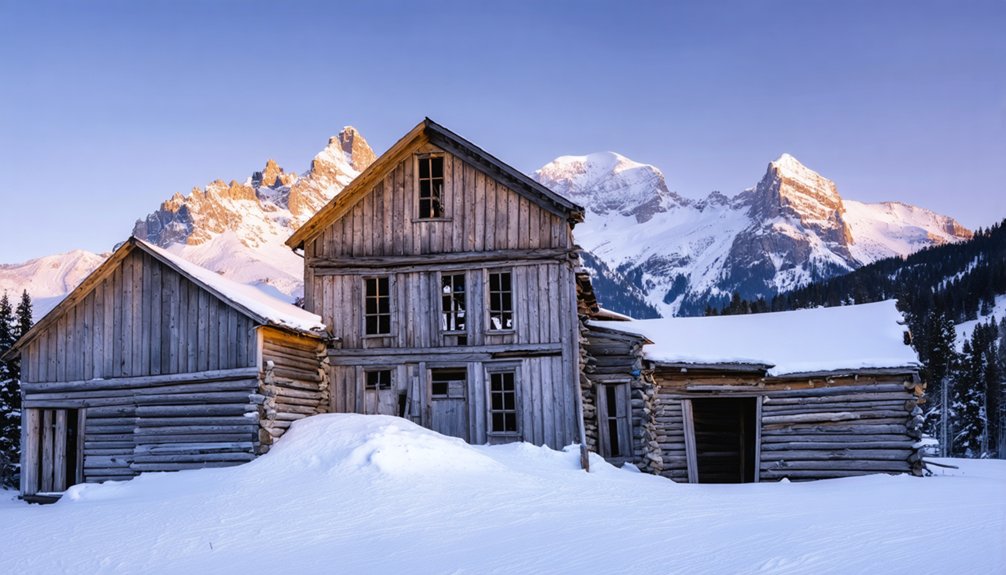
Perched at 4,695 feet in the Blue Mountains, Granite transforms into a photographer’s winter sanctuary where elevation shapes every aspect of your creative pursuit. Highway 410’s well-maintained pavement grants you reliable access to this high-altitude domain.
Here, deep rock-walled canyons and snow-draped forests create dramatic alpine scenery. Your lens captures contrasts: sagebrush steppe meeting juniper woodlands, and rolling ranchlands yielding to rocky peaks along the Blue Mountains Scenic Byway.
Winter wildlife emerges as reintroduced bighorn sheep navigate canyon walls. Meanwhile, the Wild and Scenic North Fork John Day River carves through glacially-cut gorges below.
Between shots, you’ll find refuge at The Lodge at Granite or fuel up at Granite Outback. The elevation demands preparation, but it rewards you with crystalline air and unfiltered mountain light.
Christmas Valley Area: Exploring 13 Ghost Towns in One Region
The Christmas Valley area concentrates thirteen ghost towns across a former lake bed where Oregon’s oldest archaeological discoveries lie buried beneath sagebrush and volcanic soil. You’ll find Fremont, Fleetwood, Horning, Conley, and Wagon Tire scattered throughout this remote high desert—settlements that briefly thrived between 1905 and 1922 before harsh climate and isolation drove homesteaders away.
Unlike typical elevation challenges in Oregon’s mountains, this region sits at moderate altitude where bitterly cold winters transform the landscape into stark beauty. Winter wildlife sightings include antelope, coyotes, and raptors hunting across snow-dusted plains.
Pack fuel and supplies—you’re entering territory that once proved treacherous enough to deter even determined pioneers. The Fort Rock Valley Historical site preserves structures from twelve of these abandoned communities, offering tangible connection to forgotten dreams.
Fort Rock: A Living Ghost Town Among the Forgotten
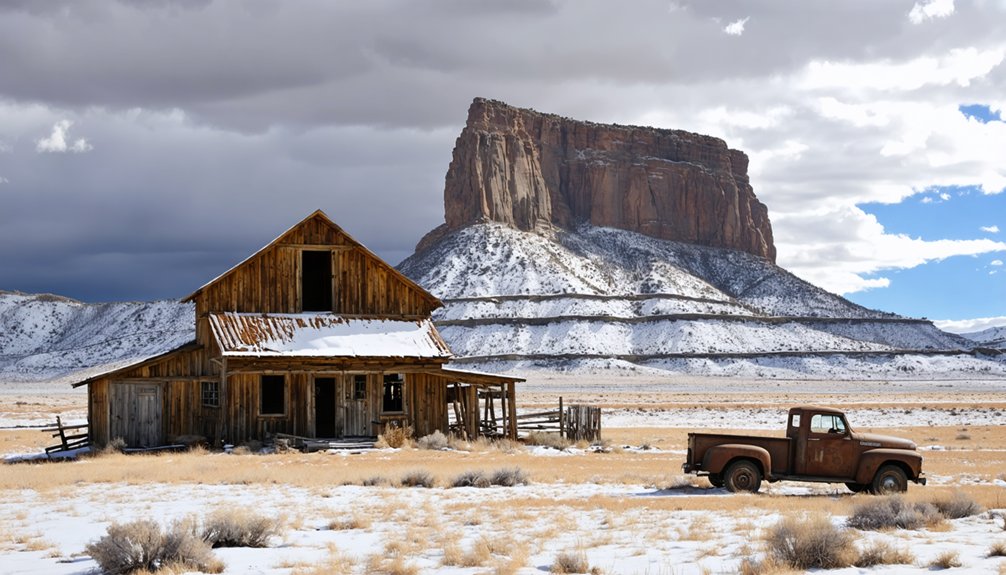
Among these scattered settlements, Fort Rock stands apart—not quite abandoned, not quite alive, but suspended between memory and persistence.
While urban decay claims neighboring homesteads, this community fights back through preservation efforts that rescued thirteen structures from demolition.
You’ll find the Homestead Village Museum anchored beneath that ancient tuff ring—100,000 years of volcanic history watching over century-old cabins.
Walk through Dr. Thom’s weathered office or step inside the 1918 St. Rose Catholic Church, relocated after vandals targeted its isolation.
Each building tells homesteader stories: Webster’s cattle empire, Belletable’s broken dreams, Mekenmair’s legacy tied to 9,000-year-old sandals discovered nearby.
Winter visits reveal Fort Rock’s truth—it’s a living ghost town, where preservation battles abandonment and sixty-five residents refuse to let history fade.
Greenhorn: Oregon’s Highest Elevation Challenge
Where else can you claim residency in Oregon’s highest incorporated city while your mail stops coming and winter snows bury your doorstep nine months of the year? Greenhorn sits at 6,306 feet in the Blue Mountains, where urban decay tells stories of 3,200 souls who chased gold from 1864 until WWII shuttered the mines.
Only two habitable buildings survive among the pines, sheltering fewer than twenty summer visitors who’ve mastered living without electricity or sewers. Cultural preservation here means embracing wilderness on its own terms—fiber-optic lines connecting remoteness to civilization, a pay phone standing sentinel over empty streets.
You’ll navigate wilderness roads accessible only in dry months, discovering a ghost town that refuses domestication, where freedom tastes like thin mountain air and solitude.
Planning Your Winter Ghost Town Adventure
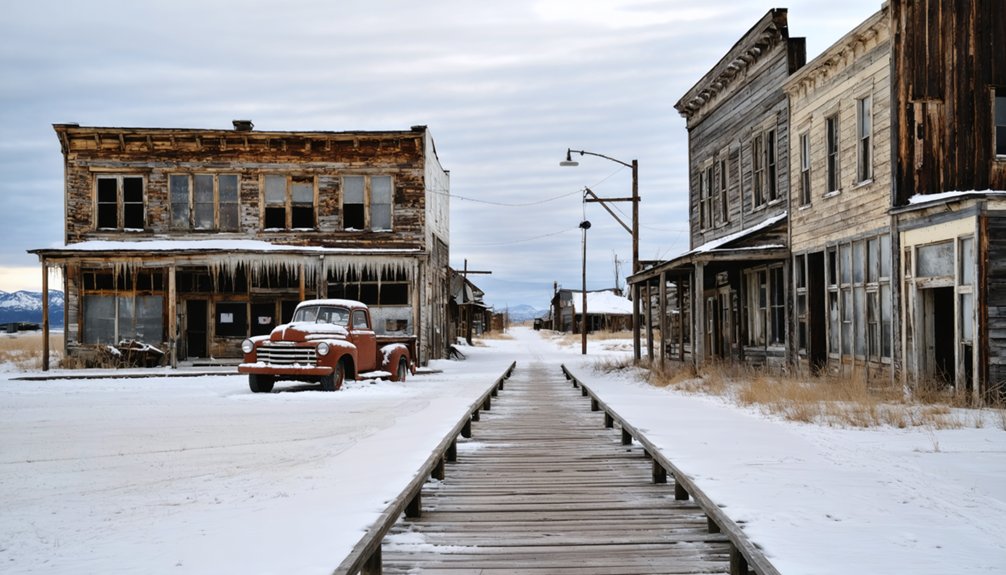
Before you chase Oregon’s ghost town horizons through winter’s grip, steel yourself for journeys where preparation separates adventure from catastrophe. Pack snow tires for Sumpter’s mountain approach, warm layers against Shaniko’s frozen wool-town winds, and flashlights for exploring Chitwood’s shadowed ruins. Maps prove essential—eighty registered ghost towns sprawl across unmarked territories where service roads vanish beneath drifts.
Time your escape wisely. February sunsets ignite the Elkhorn Range while Klamath Basin’s winter wildlife migration offers companionship near southern sites. Avoid wet-season quagmires at Kernville, but embrace mid-winter’s solitude at Canyon City when visitors disappear.
Sturdy boots navigate Golden’s woodlands; snowshoe trails wind past Hardman’s crumbling infrastructure. Check forest road closures religiously—isolation magnifies every miscalculation. Winter’s magic demands respect.
Frequently Asked Questions
What Type of Vehicle Is Best for Winter Ghost Town Visits?
You’ll want an all-wheel-drive vehicle with high ground clearance for winter driving success. Vehicle preparedness means mud-terrain tires and solid suspension to conquer snow-covered access roads, giving you the freedom to explore Oregon’s abandoned frontier settlements without limitations.
Are Overnight Accommodations Available Near Oregon’s Ghost Towns?
Yes, you’ll find cozy overnight stays near Oregon’s ghost towns. Cornucopia Lodge immerses you in historical preservation amid mining ruins, while local legends echo through Sumpter Stockade’s walls. Both offer authentic freedom to explore winter’s frozen past.
Do I Need Special Permits to Explore Ghost Town Buildings?
You’ll need permits for federal or state lands where ghost towns sit. Respect ghost town history and preservation efforts—many structures are fragile. Always check with local ranger stations beforehand, as trespassing threatens these treasured remnants of freedom-seeking pioneers.
What Photography Equipment Works Best in Cold Winter Conditions?
You’ll need weather-sealed full-frame cameras like the Nikon Z8 or Sony A1, carbon fiber tripods, and protective rain sleeves as essential winter gear. Master your camera settings for low light, and pack spare batteries since cold drains power fast.
Are Guided Tours Available for Oregon Ghost Towns During Winter?
Northwest Ghost Tours operates year-round in Oregon City, weaving haunted legends through pioneer history. However, remote Eastern Oregon ghost towns lack winter-guided options due to seasonal closures and harsh conditions. You’ll need self-guided exploration with proper preparation for authentic frontier freedom.
References
- https://takingthekids.com/explore-oregon-ghost-towns-that-are-both-creepy-and-beautiful/
- http://www.photographoregon.com/ghost-towns.html
- https://www.youtube.com/watch?v=ceiE2_3M0ec
- https://www.pinesnvines.com/adventures/oregons-coolest-ghost-town
- https://oregonoutdoorfamily.com/golden-oregon-a-ghost-town/
- https://www.keystonevacationsoregon.com/blog/oregon-coast-ghost-towns-worth-visiting/
- https://www.travelmedford.org/southern-oregon-ghost-towns-
- https://traveloregon.com/things-to-do/culture-history/ghost-towns/
- https://thejournaloflosttime.com/stories/shaniko-oregon-high-desert-empire
- https://www.legendsofamerica.com/or-shaniko/