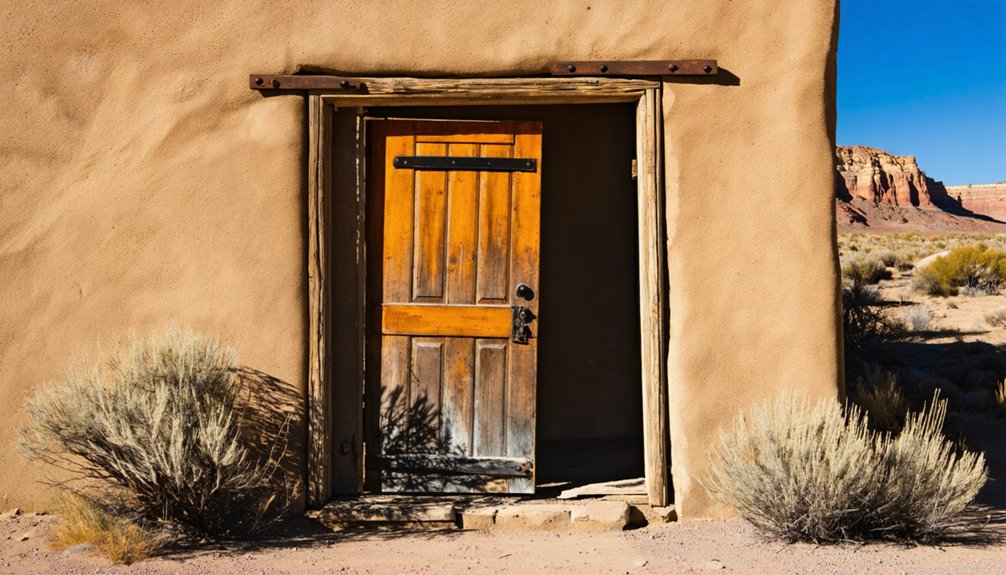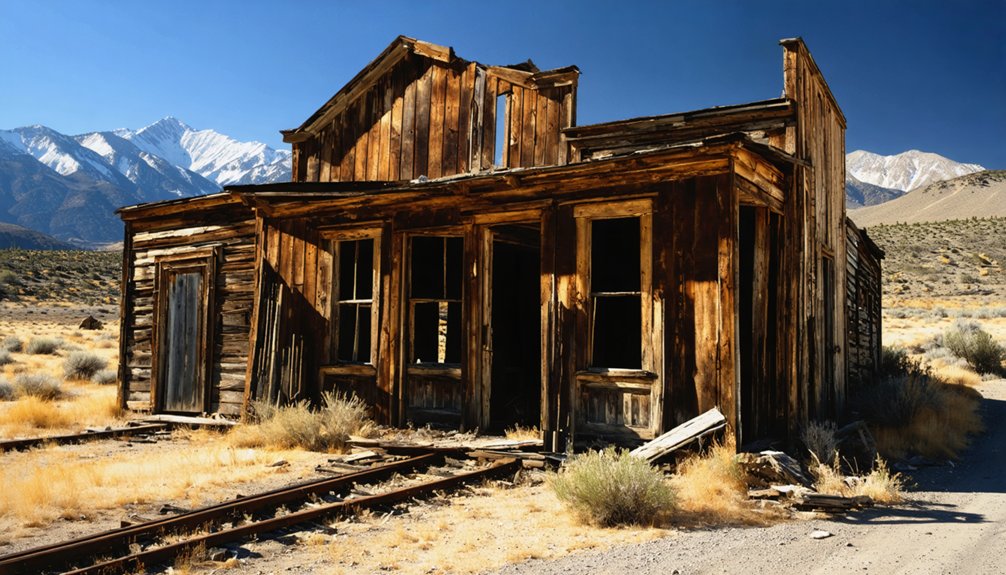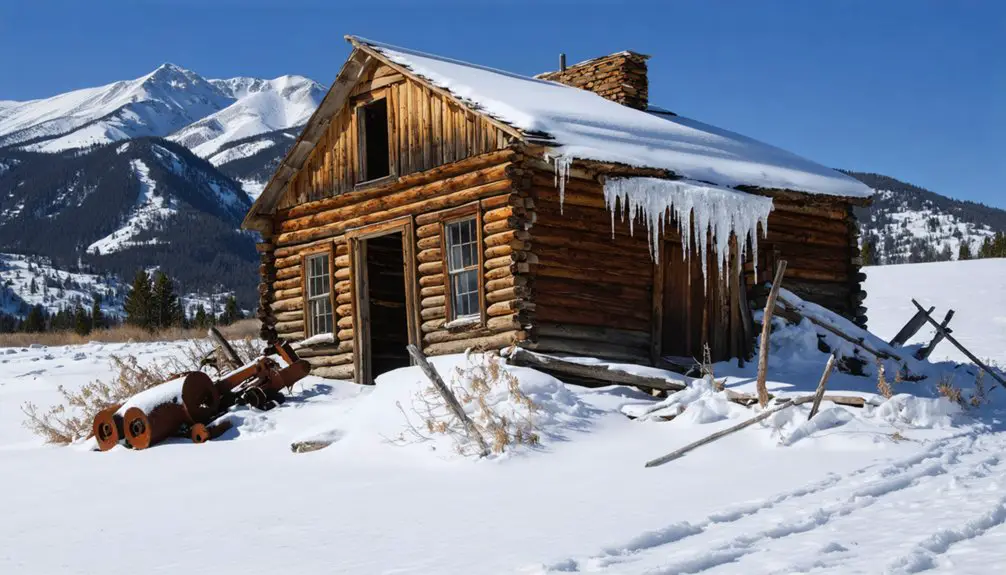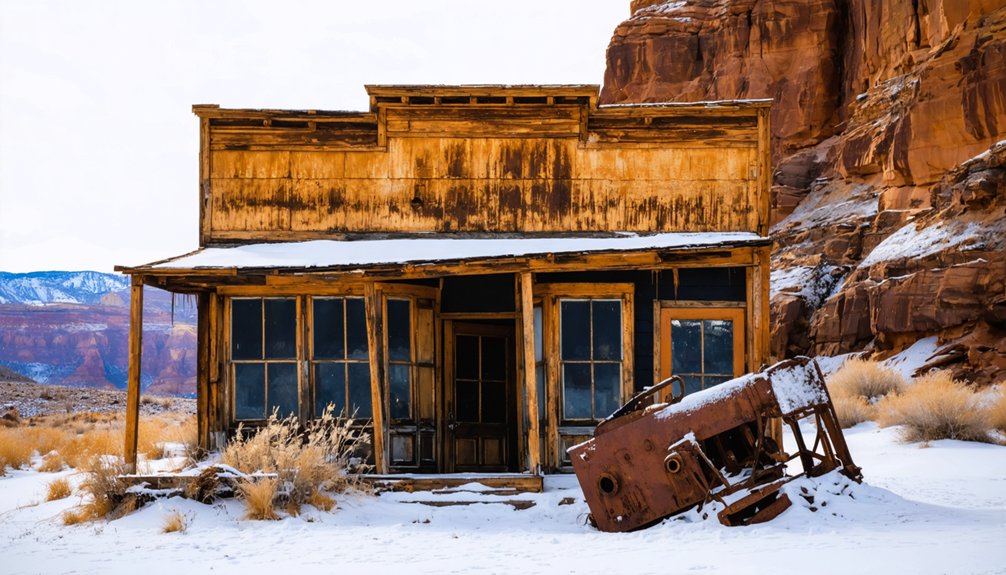
You’ll find Utah’s most winter-accessible ghost towns along well-maintained routes in the south and north. Grafton near Zion and Silver Reef offer pioneer structures via paved roads, while northern clusters like Eureka and Iosepa sit near I-15 for easy day trips. Southern sites stay snow-free, though you’ll need 4WD and cold-weather gear for higher elevations like Winter Quarters or Frisco. These frozen remnants of 1860s mining booms reveal foundations and artifacts hidden in warmer months, and proper preparation reveal their haunting stories.
Key Takeaways
- Southern Utah’s Grafton and Silver Reef offer year-round access via paved roads with intact historic structures near Zion National Park.
- Northern Utah’s Eureka, Iosepa, and Ajax clusters are easily reached from I-15 on snow-free highways for full-day winter exploration.
- Many sites feature wheelchair-accessible pathways, preserved buildings, and artifacts without requiring permits or backcountry navigation skills.
- Winter conditions expose buried foundations and structures but demand 4WD vehicles, emergency supplies, and cold-weather gear for safe exploration.
- Historic mining towns like Frisco, Old Irontown, and Thistle showcase 1860s-1900s settlements accessible despite winter weather challenges and precautions.
Best Ghost Towns for Winter Accessibility in Utah
When winter blankets Utah’s high country in snow, not all ghost towns disappear behind impassable roads and drifted trails. You’ll find southern Utah’s desert settlements like Grafton and Silver Reef remain accessible year-round, their ghost town architecture standing clear against rust-colored cliffs.
Near St. George, well-maintained roads lead to Silver Reef’s limestone mining remnants, where preservation techniques have kept the assay office intact. Grafton’s pioneer-era structures wait just minutes from Zion’s gates via paved routes.
Year-round access meets history where paved roads connect St. George to preserved mining relics and pioneer settlements.
Capitol Reef’s Aldridge settlement sits 11.1 miles from Fruita along plowed park roads. Even Thistle’s flood-drowned remains stay visible from Highway 89, where a massive landslide in 1983 created a 220-foot-high mud wall that buried the town. Many sites feature wheelchair-accessible pathways that allow visitors with mobility devices to explore the historic structures and surrounding areas.
These sites offer you winter exploration without the chains, permits, or backcountry gambles that lock away higher-elevation ruins until spring’s thaw.
Northern Utah Ghost Town Loop for Cold Weather Exploration
You’ll find northern Utah’s ghost towns clustered west of Salt Lake City, where proximity to I-15 transforms winter exploration from expedition to daytrip.
The loop connecting Eureka, Iosepa, and smaller settlements like Latuda follows paved highways that remain clear even when snow blankets the high-elevation grasslands.
Winter’s stark light reveals weathered structures against the Great Basin Desert’s pale expanse, though you’ll need to watch for ice on those final dirt approaches and prepare for high-altitude cold in a region where services vanish between towns. Eureka experienced a population boom in 1910 and now features historic buildings that provide shelter from winter winds during your exploration. Further west near the Nevada border, Clifton sits in the Deep Creek Mountains, where its 1860s Pony Express connection preceded the 1869 mining boom that briefly created a bustling community before decline set in by the mid-1870s.
Accessible Sites Year-Round
Northern Utah’s ghost town loop offers winter explorers a rare gift: accessible history when snow blankets most mountain sites.
You’ll navigate standard passenger vehicles along this circuit, discovering five distinct locations that remain reachable through cold months.
Ophir showcases exceptional artifacts preservation twenty miles south of Tooele, where original mining structures stand intact.
At Richville Benson Mill, preserved settlement-era buildings await your camera.
Iosepa’s Hawaiian cemetery rests between farmhouses, its shade trees visible for miles across winter fields.
Camp Floyd State Park provides visitor amenities and historical military context, though you’ll want to verify seasonal operations beforehand.
Even Ajax, despite recent demolition, rewards you with its historical marker and context.
The entire loop requires 6-8 hours for a comprehensive experience, making it an ideal Saturday adventure.
Before departing, confirm hours by phone—these sites operate on flexible winter schedules that respect both preservation and accessibility.
Utah contains over 140 ghost towns, reflecting diverse settlement patterns from various industries across the state’s history.
Complete Loop in One Day
Before dawn breaks over the Wasatch Range, ambitious explorers can chart a hundred-mile circuit that connects five ghost towns between breakfast and sunset. You’ll navigate the Carbon Corridor’s mining settlements, where crumbling structures stand untouched by urban preservation efforts that sanitize history elsewhere.
Dragon and Rector anchor your route through the northern terrain, accessible via well-marked OHV trails requiring minimal technical skill. Unlike tourism development projects that reconstruct romantic versions of the past, these sites remain raw and authentic—scattered graves, weathered plaques, and skeletal buildings emerging from snow-dusted sagebrush. The trail passes through two ghost towns while winding south through Dragon Canyon before turning north along Rector Ridge.
Pack provisions in Vernal before departing; services evaporate beyond trailheads. Winter’s shortened daylight demands efficient pacing, but you’ll traverse pine forests, high-elevation grasslands, and abandoned mines before dusk settles across the snowcapped peaks. Utah’s 195 known ghost towns concentrate heavily in these northern counties, offering numerous alternatives if weather forces route modifications.
Winter Weather Precautions
When temperatures plummet below zero and wind chills slice through inadequate gear, the romantic notion of ghost town exploration transforms into a survival exercise.
You’ll need moisture-wicking base layers beneath insulating fleece, topped with windproof shells that actually block those mountain gusts.
Pack insulated boots, gaiters, and backup gloves—frostbite doesn’t negotiate.
Your vehicle demands equal respect: four-wheel-drive, winter tires, full fuel tank, and emergency extraction tools.
Remote northern routes offer zero services between crumbling structures.
Weather tracking becomes non-negotiable. Utah DOT reports reveal avalanche zones and closure risks before you’re stranded.
Carry insulated water supplies, satellite communication for cell-dead zones, and headlamps for premature winter darkness.
Areas like Locomotive Springs feature old buildings and railroad cars that provide shelter breaks during winter exploration, though the remote Waterfowl Management Area sees seasonal road closures during heavy snow.
The submerged ghost town of Thistle—flooded after a 1980s landslide—remains accessible for viewing from Spanish Fork Canyon, though winter ice formations along the reservoir’s edge require cautious footing.
The freedom to explore ghost towns means accepting responsibility for your survival when storms roll through those desolate valleys.
Southern Desert Ghost Towns With Year-Round Access
Utah’s southern desert preserves some of the state’s most accessible ghost towns, where winter’s mild temperatures make exploration comfortable and the crowds thin to almost nothing.
You’ll find Silver Reef’s mysterious sandstone carvings and museum just off I-15, while Grafton near Zion offers perfectly preserved buildings against dramatic red rock backdrops.
Old Irontown’s beehive kilns stand sentinel in the empty desert, and Frisco’s wild mining remnants sprawl across 6,000 acres of sagebrush solitude.
Wildlife encounters increase during winter months when deer and coyotes venture closer to these abandoned settlements.
The seasonal foliage—muted grasses and hardy desert shrubs—frames weathered foundations and crumbling walls.
These year-round sites require no special equipment, just your curiosity and respect for the past.
Central Utah Abandoned Sites Worth Visiting in Winter
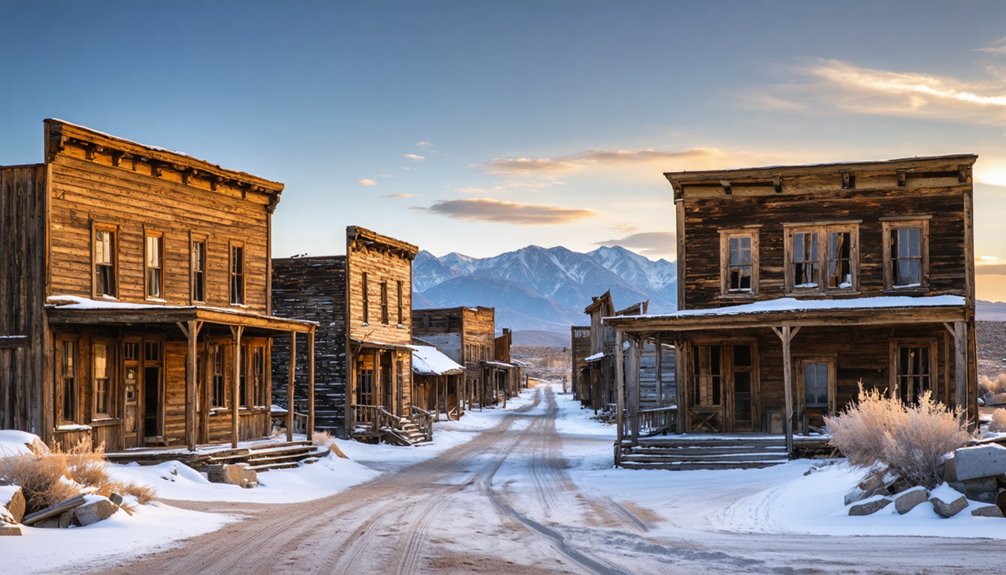
The Carbon Corridor cuts through central Utah’s heart, where coal-stained history bleeds from mountainsides and winter transforms abandoned settlements into stark monuments of industrial ambition.
You’ll find Winter Quarters first—where 199 miners died in 1900’s explosion and horizontal shafts still pierce the frozen earth.
Historical preservation hasn’t sanitized these sites; morgues, schools, and churches stand as witnesses to disaster.
Local legends whisper through Sego Canyon’s rusted hulks and petroglyphs, while Helper maintains its railroad bones on Main Street.
Latuda’s 1967 closure leaves more recent scars, and Castle Gate marks where Pleasant Valley Coal shifted empires.
Winter snow reveals what summer obscures: the brutal economics that built and abandoned these mountain settlements without ceremony.
What to Expect When Exploring Utah Ghost Towns in Cold Months
Winter doesn’t just change Utah’s ghost towns—it weaponizes them. You’ll steer through icy roads where sports cars slip helplessly, tackling dirt paths no snowplow touches.
Snow buries fences completely at high-altitude sites, while landslides triggered by wet conditions can seal off entire valleys—like the 1983 Thistle disaster that created a 220-foot mud wall.
Alpine terrain demands rubber boots and heavy coats as you trudge through drifts obscuring foundations and roads.
Windstorms complicate exploration, whipping across exposed desert settlements.
You’ll encounter winter wildlife traversing the same treacherous landscape.
Bring kerosene lamps if you’re venturing beyond modern infrastructure, and expect structures partially submerged by reservoir fluctuations.
The elements actively conspire against access, transforming these abandoned sites into genuine survival challenges rather than simple historical curiosities.
Historical Background of Utah’s Most Accessible Ghost Towns
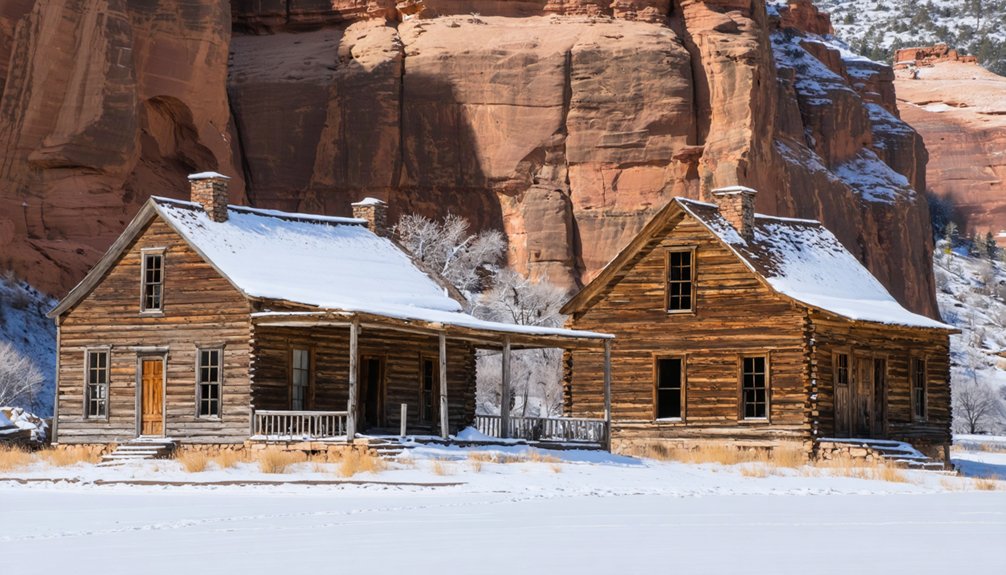
Utah’s ghost towns rose and fell with remarkable speed—silver strikes like Silver Reef’s 1866 discovery sparked overnight boomtowns.
While agricultural settlements such as Grafton endured floods and conflicts before quietly fading.
You’ll find most of these ruins date from the 1860s through early 1900s, when mining fortunes collapsed, railroads shifted routes, or natural disasters struck the final blow.
Understanding each town’s distinct death—whether Thistle’s sudden 1983 burial under landslide waters or Colton’s slow decline after transportation costs mounted—reveals the fragile threads that sustained these remote communities.
Mining Boom and Bust
Beneath Utah’s rugged landscapes lies a fortune in minerals that transformed the territory from a remote desert outpost into a magnet for fortune-seekers worldwide. You’ll discover mining history embedded in every abandoned shaft and crumbling structure—from Colonel Patrick Connor’s California-Nevada Volunteers striking precious metals in the 1860s to Charles Steen’s uranium bonanza that crowned Moab the “Uranium Capital of the World” in the 1950s.
These ghost town legends emerged from spectacular rises and devastating falls. Mercur blazed with gold before fires consumed it twice. Park City’s silver veins enriched mining moguls while workers endured tomb-like conditions for meager wages.
When ore prices collapsed and resources depleted, thriving communities like Dragon and Watson vanished overnight. Over 500 miners perished chasing these dreams—their sacrifices etched into Utah’s windswept ruins you’ll explore today.
Settlement and Abandonment Timelines
The ghost towns scattered across Utah’s winter landscape didn’t vanish in a single catastrophic moment—they died slowly, methodically, as families packed wagons and shuttered windows one by one. Understanding these timelines reveals patterns of survival and surrender across the territory’s harshest frontier.
Settlement to Abandonment Spans:
- Grafton (1859-1906): Forty-seven years fighting floods and conflicts before residents relocated to Hurricane.
- Pahreah (1865-1929): Sixty-four years battling the Paria River’s relentless flooding cycles.
- Old Irontown (1868-1876): Eight short years from founding to economic collapse, leaving underground tunnels and charcoal ovens.
- Silver Reef (1866-1891): Twenty-five years extracting millions in silver before market failure, where ancient artifacts from mining operations still surface.
You’ll discover each town’s unique death timeline etched into weathered structures.
Planning Your Winter Ghost Town Adventure: Tips and Logistics
Before you venture into Utah’s silent settlements, proper preparation transforms a casual visit into a rewarding winter expedition. Research your targets thoroughly—sites like Grafton and Silver Reef offer beginner-friendly access via 2WD vehicles.
While urban decay enthusiasts should verify property boundaries beforehand. Winter’s limited daylight demands early starts; you’ll cover Northern Utah’s circuit in 6-8 hours under clear skies.
Pack for cold desert conditions: closed-toe boots for uneven terrain, navigation tools since cell coverage vanishes, and updated forecasts monitoring snowfall. Water restoration projects sometimes close access roads temporarily, so confirm site availability through Visit Utah updates.
AT&T typically provides the most reliable reception. Share your itinerary—isolation defines these forgotten places. Respect historical remnants, stay on established trails, and leave only footprints across snow-dusted ruins.
Frequently Asked Questions
Are Pets Allowed at Utah Ghost Town Sites During Winter Visits?
Yes, you’ll find pets welcome at Utah’s ghost towns during winter. With sub-zero temperatures common at high elevations, pet safety demands leashes under six feet. Winter regulations require waste cleanup while you’re exploring these frozen, abandoned landscapes freely.
What Photography Equipment Works Best in Cold Weather Ghost Town Conditions?
You’ll need cold-resistant camera accessories like extra batteries warmed in inner pockets, weather protection through sealed bags preventing condensation, carbon fiber tripods, and dexterous gloves. These essentials let you capture Utah’s frozen, abandoned landscapes without equipment failure.
Can I Use Drones to Photograph Utah Ghost Towns in Winter?
You can fly drones at most Utah ghost towns if they’re on public land, following drone regulations and FAA rules. Winter weather planning matters—cold drains batteries fast, so pack extras and monitor conditions for safe, legal flights.
Are There Guided Winter Ghost Town Tours Available in Utah?
Guided winter ghost town tours aren’t currently operating in Utah, so you’ll need self-guided adventures instead. Pack your winter wardrobe layers and sturdy hiking gear—you’re free to explore these haunting ruins at your own unforgettable pace.
What Emergency Supplies Should I Pack for Winter Ghost Town Exploration?
Pack warm clothing layered for flexibility, an emergency kit with first aid supplies, and navigation tools. You’ll need water, high-energy food, fire-starting gear, and communication devices. Don’t forget a sleeping bag and portable shelter for unexpected overnight situations.
References
- https://expeditionutah.com/featured-trails/northern-utah-ghost-town-tour/
- https://www.allbryce.com/history_museums/old_irontown_ruins.php
- https://www.utahvalley.com/plan/day-trips-itineraries/history-buff/ghost-towns-and-haunted-places/
- https://www.visitutah.com/things-to-do/history-culture/ghost-towns
- https://www.deseret.com/utah/2023/1/21/23549285/utah-ghost-towns-mormon-history/
- https://capitolreefcountry.com/ghost-towns/
- https://utahguide.com/utah-ghost-towns-and-mining-towns/
- https://saltlakemagazine.com/4-ghost-towns-utah/
- https://wonderswithinreach.com/2025/09/accessible-park-city-utah-a-wheelchair-friendly-travel-guide/
- https://kasbyrealestate.com/2022/11/22/7-utah-county-ghost-towns-and-the-fascinating-stories-behind-them/