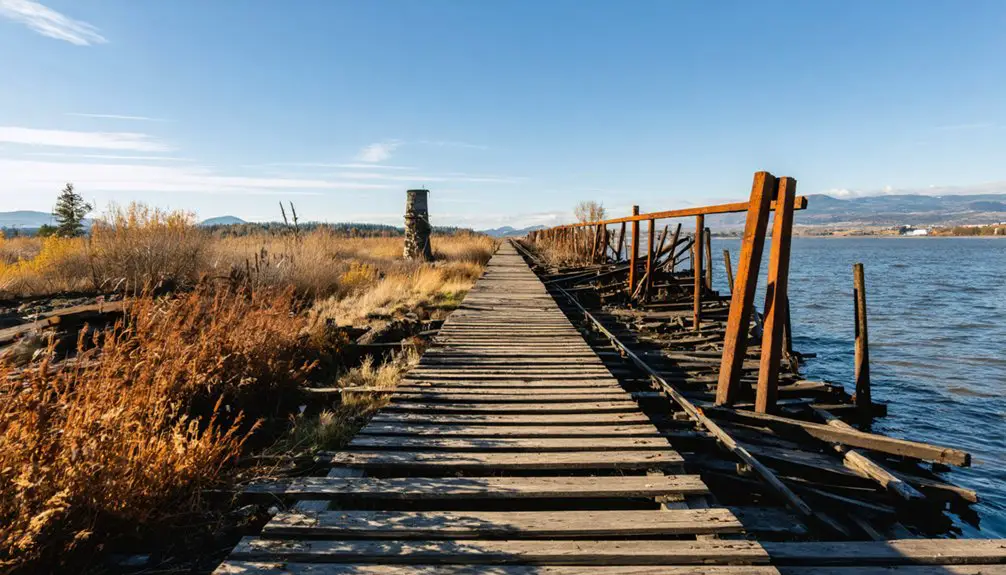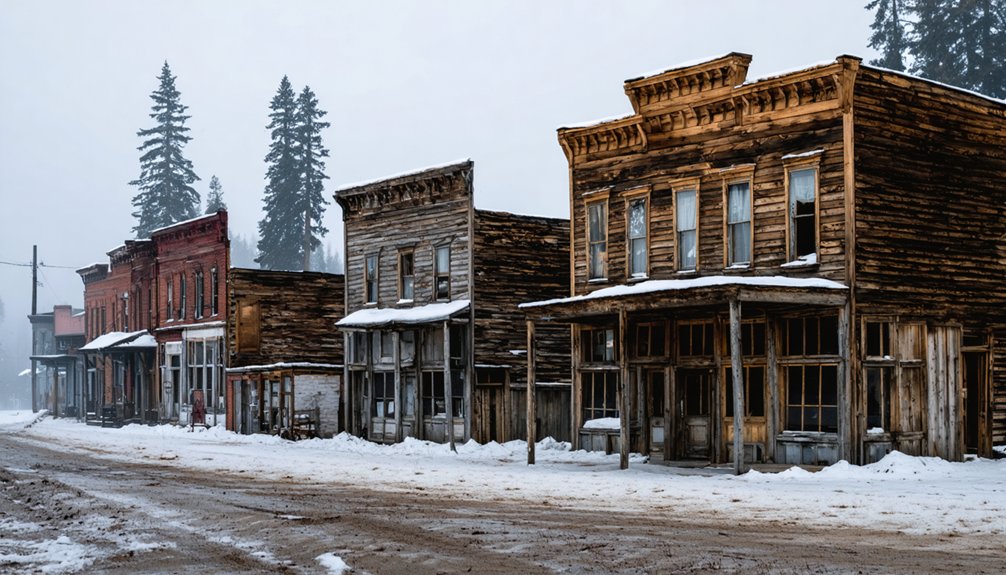
You’ll find Washington’s most atmospheric ghost towns transformed by winter’s touch, from Melmont’s coal mining remnants near Mount Rainier to Monte Cristo’s snow-dusted cabins reached via an 8-mile hike through the Northern Cascades. Wellington at Stevens Pass reveals concrete snowsheds and tunnel portals commemorating the tragic 1910 avalanche, while Northern State’s sprawling asylum complex and Nighthawk’s preserved mining structures near Loomis offer hauntingly accessible exploration. Winter strips away vegetation, exposing weathered foundations with crystalline clarity—and there’s essential guidance below for planning your journey safely.
Key Takeaways
- Northern State, Nighthawk, and Liberty ghost towns offer well-preserved structures including historic buildings, mining remnants, and accessible year-round exploration opportunities.
- Monte Cristo requires an 8-mile hike through remote Northern Cascades, featuring weathered cabins, ore bunkers, and rusted tramway cables.
- Wellington at Stevens Pass memorializes the tragic 1910 avalanche with concrete snowsheds, tunnel portals, and reported hauntings along Iron Goat Trail.
- Winter visits from late fall through early spring provide ideal conditions with snow-dusted peaks, frost-covered landscapes, and enhanced visibility of structures.
- Essential gear includes layered thermal clothing, waterproof boots with micro-spikes, hand warmers, headlamps, and checking weather forecasts before departure.
Melmont Ghost Town: Coal Mining History Near Mount Rainier
Tucked into the misty folds of Pierce County’s Carbon River valley, Melmont Ghost Town clings to the forested slopes near Mount Rainier like a half-forgotten memory. You’ll discover remnants of a once-thriving coal mining community that powered Northern Pacific Railway from 1902 to 1918.
Trek the muddy 4-mile trail along abandoned rail grades where miners once hauled 900,000 tons of premium blacksmith coal from depths exceeding 600 feet.
What remains tells stories of frontier grit: crumbling powder house walls, bridge foundations spanning the Carbon River, and schoolhouse ruins now serving as wildlife habitat. The forest has reclaimed worker cottages and the company store, creating an unintentional historic preservation through nature’s patient embrace. Melmont’s infrastructure once included designated rows for different nationalities—Italians, Finns, Poles, and Japanese each maintained their own sections of this diverse mining community.
Access the trail via three trailheads, including one at the SR165 one-way bridge where you’ll park on the west side before crossing. You’ll find solitude here—this isn’t sanitized tourism, but raw exploration of Washington’s industrial past.
Monte Cristo Ghost Town: Mining Remnants in the Mountain Loop
Deep in the Northern Cascades’ granite embrace, Monte Cristo Ghost Town sprawls across a remote valley where silver fever once gripped over a thousand fortune-seekers. You’ll traverse an 8-mile round-trip hike along the flood-damaged South Fork Sauk River road, crossing log bridges maintained by preservation efforts that keep this 1889 boomtown accessible.
Winter avalanches that once shuttered thirteen mines now blanket the skeletal remnants—weather-beaten cabins, ore bunkers, and rusted tramway cables clinging to steep hillsides. Mining artifacts scatter the landscape where Rockefeller’s syndicate chased erratic silver veins and Frederick Trump ran his notorious hotel. The 1893 operational turntable still sits at the town site, once used for rotating locomotives along the historic Monte Cristo Railroad grade. The trail follows historic miner pathways established during the 1890s boom, winding through level stretches and steep sections that once connected the claims.
The county abandoned the road after 1980’s floods, and vandals picked over what the 1983 fire didn’t consume. Yet forests reclaim these mountains, offering solitude seekers a haunting glimpse into Washington’s extractive past.
Franklin Ghost Town: Discovering Coal Heritage Along the Green River
While Monte Cristo’s silver dreams clung to mountain peaks, Franklin’s coal-blackened story unfolded 400 feet above the Green River Gorge in a dramatically different landscape.
You’ll discover a company town that thrived from 1885 to 1922, where 1,100 souls once extracted coal from shafts plunging over 1,000 feet deep.
The cemetery tells haunting tales—37 miners suffocated in the 1894 fire that scarred Washington’s mining legacy.
Among the victims was Evan John, found clutching his father’s arm in the depths of the mine.
Wander among powerhouse foundations and coal carts while exploring this testament to history preservation.
An underground coal fire from the 1970s created Franklin Hot Springs, heating groundwater until the seams exhausted themselves.
The trailhead begins near Black Diamond, where you’ll follow a gentle railroad grade beside the Green River to reach the historic site.
Today, sealed mine shafts and weathered gravestones stand as raw monuments to those who traded freedom for wages in darkness.
Wellington Ghost Town: Railroad Ruins at Stevens Pass
High above the Tye River, where winter snows once buried two passenger trains and 96 souls in America’s deadliest avalanche, you’ll find the skeletal remains of Wellington clinging to Stevens Pass.
The 1910 disaster forced the town’s renaming and eventual abandonment, but you can still explore its haunting railroad relics along the Iron Goat Trail.
Winter transforms this ghost town into something primordial—concrete snowsheds emerge from deep drifts, the abandoned Cascade Tunnel’s western portal yawns darkly against white slopes, and twisted metal from the catastrophe still lies where it fell.
The avalanche history permeates everything here, each crumbling foundation and rusted rail spike a memorial to those who died 150 feet below in the ravine, buried under forty feet of unforgiving snow.
Wellington first emerged in 1893 at the western portal of the Cascade Tunnel, serving as a vital Great Northern Railway station before tragedy redefined its fate.
Visitors and park rangers report unexplained voices echoing from the tunnel walls and apparitions of victims walking near the tracks, contributing to the site’s reputation as one of Washington’s most haunted locations.
Northern State Ghost Town: Abandoned Asylum Complex in the North Cascades
You’ll find Northern State Recreation Area sprawled across 800 acres at the foot of the North Cascades. It is the site where a once-thriving asylum complex operated from 1912 to 1976.
The abandoned grounds reveal a self-sufficient world frozen in time—dairy barns, a greenhouse, canning facilities, and patient wards connected by underground tunnels. All of these structures were designed by the legendary Olmsted Brothers.
Winter transforms the pastoral landscape into a haunting network of trails. These wind through snow-dusted pastures, past crumbling farm structures, and along forested lanes where thousands once lived and worked. A small cemetery sits at the western edge, marked by numbered stones and a memorial plaque honoring those who died here. The cemetery houses approximately 1500 burials, reflecting the facility’s long history as a mental health institution.
Historic Hospital Farm Grounds
Nestled at the foot of the North Cascades in Washington’s Skagit Valley, Northern State Hospital sprawls across what was once an 800-acre expanse designed to heal through isolation and hard labor. You’ll discover a self-sustaining empire where patients toiled alongside staff to maintain operations that rivaled small towns.
The grounds contained:
- Dairy plants and canning facilities producing meat and applesauce
- Lumber mills and stone quarries extracting raw materials
- Farmland stretching across hundreds of acres
- A cemetery holding 1,800 souls, many cremated in numbered tin cans
Haunted legends echo through abandoned Spanish Colonial Revival buildings designed by Saunders and Lawton, with Olmsted Brothers landscaping now reclaimed by wilderness.
Preservation efforts secured National Register status, protecting this stark reminder of institutional medicine‘s darkest chapter.
Accessible Pastoral Trail Network
Five miles of pastoral pathways wind through the Northern State Recreation Area, where former asylum roads now lead winter adventurers past crumbling barns, weathered milking sheds, and the skeletal remains of a self-sufficient empire.
You’ll escape urban sprawl along these broad lanes, trading congestion for open meadows where history whispers through every weathered board.
The 50-foot elevation gain makes winter passage effortless—no steep climbs, no alpine risks, just flat terrain beneath Cascade foothills.
Wildlife encounters remain possible as you traverse this ghost town‘s veins; black bears occasionally emerge even in cooler months, requiring proper food storage.
The cemetery holds 1,500 silent witnesses to decades past.
Wide paths accommodate uncertain winter footing, while Sedro-Woolley’s proximity ensures year-round access when high-country passes close.
Nighthawk Ghost Town: Preserved Mining Structures in Okanogan Country
Winter exploration reveals:
- Original Nighthawk Hotel and 1915 schoolhouse standing defiant against time
- Mining office and mill on the patented “State of Main” claim from 1879
- Prospect Avenue’s weathered buildings and ore dumps
- Railroad depot-store from 1906 near barren, mineral-rich hills
Twenty minutes north of Loomis, this registered ghost town offers historic preservation without commercialization. You’ll wander freely among decades-old landmarks, exploring trails where miners once sought fortune in these beautiful, unforgiving hills.
Best Times to Explore Washington’s Ghost Towns in Winter
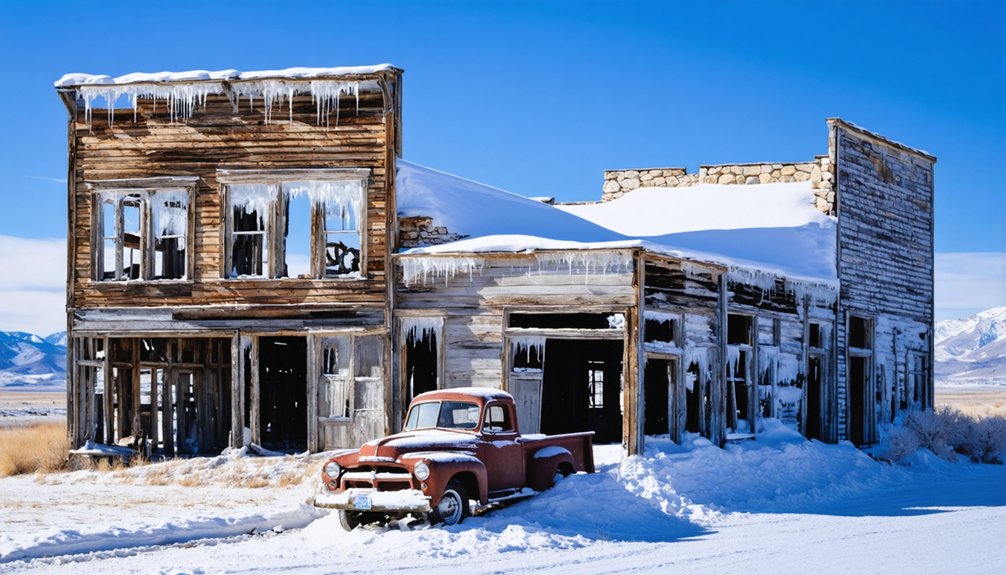
When snow dusts the Cascade peaks and frost silvers the sagebrush of eastern Washington, ghost towns emerge from summer’s concealing vegetation with stark clarity. You’ll find ideal access from late fall through early spring, when winter flora retreats to reveal foundations, mining equipment, and weathered structures hidden during the growing season.
Winter’s frost strips away concealing vegetation, exposing Washington’s ghost towns with crystalline clarity from late fall through early spring.
The Okanogan Highlands—including Bodie, Molson, and Chesaw—become particularly photogenic under winter light. They are perfect for snow photography along Toroda Creek’s frozen banks.
Target weekday visits before 7 a.m. or after 5 p.m. to avoid crowds near popular areas like Mount Rainier’s Carbon River ghost towns.
Liberty Ghost Town remains accessible year-round at Blewett Pass, its restored buildings standing resilient against Cascade snowfall.
Pair your explorations with snowshoeing through ski season, typically late November through April.
What to Bring for Winter Ghost Town Adventures
Success in winter ghost town exploration hinges on strategic packing that balances warmth with mobility. Your winter gear arsenal transforms frozen expeditions into comfortable adventures through Washington’s abandoned settlements.
Essential Winter Ghost Town Kit:
- Clothing layers: Thermal base layers beneath an insulated jacket, waterproof snow pants, and wool socks that insulate even when damp.
- Traction footwear: Waterproof boots with micro-spikes for icy trails leading to sites like Franklin and Melmont.
- Warmth boosters: Hot beverage tumbler, hand warmers for electronics protection, Nalgene bottle filled with hot water as overnight heater.
- Trail essentials: Headlamp for early darkness, daypack with adjustable layers, seat pad for insulated ground rest.
You’ll navigate muddy railroad grades, slushy paths, and frozen mountainsides while maintaining full mobility to explore coal carts, foundations, and weathered structures dotting the Cascades.
Safety Tips for Visiting Ghost Towns During Cold Weather
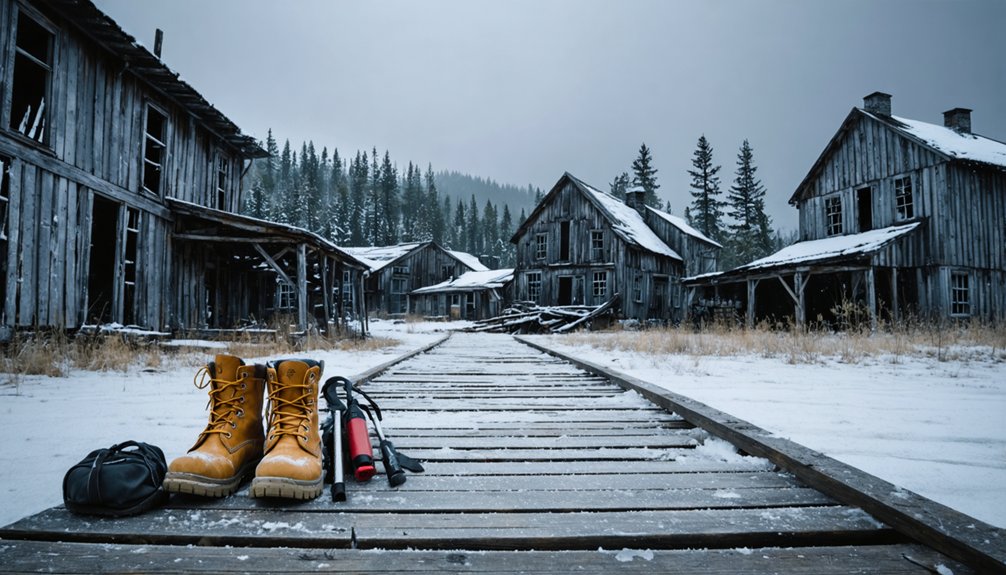
Exploring Washington’s abandoned settlements during frigid months demands respect for nature’s harshest elements—conditions that can shift from manageable to life-threatening within hours. Monitor forecasts for white-out conditions and freezing rain before departing.
You’ll need layered clothing covering extremities to prevent frostbite, plus three days’ emergency supplies. Check your vehicle’s mechanical condition thoroughly—chains and recovery gear aren’t optional luxuries.
Avoid relying on GPS for remote roads; these digital guides fail where you need them most.
Stay clear of unstable structures and never venture into mines alone. Wildlife encounters increase during winter as animals seek shelter, while avalanche risks escalate after storms.
If stranded, remain in your vehicle, conserve warmth, and drink non-caffeinated fluids while awaiting rescue.
Frequently Asked Questions
Are Pets Allowed on Ghost Town Trails During Winter Months?
You’ll find pets allowed on most ghost town trails during winter, though leashing’s mandatory. Pet policies require constant supervision since snow exceeds one foot at elevated sites, while winter access demands you protect your companion from Washington’s harsh temperature extremes.
Do Any Ghost Towns Require Entrance Fees or Special Permits?
Most ghost towns welcome you freely without permits, though Franklin charges $5 parking on private land. You’ll find minimal visitor restrictions across Washington’s abandoned sites, where historical preservation relies on your respect rather than regulations or fees.
Are Guided Tours Available for Washington Ghost Towns in Winter?
Guided tours aren’t typically available at Washington’s remote ghost towns during winter. You’ll discover freedom exploring independently, experiencing historical preservation firsthand while enjoying wildlife observation opportunities. The solitude creates authentic connections with these abandoned settlements on your own terms.
Can You Camp Overnight Near These Ghost Town Locations?
“Home is where you pitch it”—you’ll find overnight camping near most Washington ghost towns. Winter camping tips include layered gear and early setup. Ghost town safety precautions demand avalanche awareness and buddy systems for your backcountry freedom.
Are the Ghost Town Sites Wheelchair Accessible During Winter?
Only Wellington’s Iron Goat Trail offers reliable winter accessibility for wheelchairs, with three paved miles showcasing tunnels and history. Trail conditions at Melmont, Barron, and Monte Cristo become impassable with snow, mud, and rugged terrain blocking wheelchair access.
References
- https://stateofwatourism.com/ghost-towns-of-washington-state/
- https://okanogancountry.com/ghost-towns
- https://www.wta.org/go-outside/seasonal-hikes/fall-destinations/hidden-history-ghost-town-hikes
- https://www.emeraldpalate.com/abandoned-places-in-washington/
- https://610kona.com/melmont-ghost-town-wa/
- https://visitrainier.com/melmont-ghost-town-2/
- https://www.cascadeloop.com/ghost-towns-and-haunted-places-in-the-washington-cascades
- https://blackdiamondhistory.wordpress.com/2020/01/23/ghosts-of-mining-towns-along-northwest-route-to-mount-rainier/
- https://pnwadventuresisters.wordpress.com/2018/01/15/melmont-ghost-town/
- https://en.wikipedia.org/wiki/Melmont