You’ll find Michigan’s most atmospheric ghost towns along the Upper Peninsula’s snow-covered shores, where Fayette Historic Townsite‘s weathered blast furnaces stand against frozen limestone cliffs and Freda’s concrete ruins tower over Lake Superior’s black sand beaches. Port Oneida’s 121 buildings sprawl across white farmland, while Delaware and Kilmanagh offer isolated exploration through wind-swept mining remnants. Bundle up with microspikes and headlamps for mid-week February visits when fresh snow blankets the ruins, creating that perfect solitude you’re craving—and there’s much more to discover about timing your adventure and staying safe.
Key Takeaways
- Fayette Historic Townsite features 19 preserved buildings, cross-country skiing, plowed roads, and scenic frozen harbor views open year-round with Recreation Passport.
- Port Oneida Village spans 3,400 acres with 121 buildings across 22 farmsteads, accessible via gravel roads on Leelanau Peninsula.
- Freda Copper Mining Ruins offers dramatic concrete foundations, iconic smokestack, and black sand beach 15 miles west of Houghton.
- Central Mine provides overnight stays in restored miner’s houses and panoramic views, operated by Keweenaw County Historical Society.
- Winter visits require microspikes, headlamps, emergency supplies, and caution with structural stability on snow-covered, icy terrain.
Port Oneida Village: A Sprawling Historic District on the Shores of Lake Michigan
Tucked within the windswept dunes of Michigan’s Leelanau Peninsula, Port Oneida Village sprawls across 3,400 acres of snow-dusted farmland that time forgot. You’ll discover 121 buildings scattered across 22 farmsteads—the largest historic agricultural community under federal ownership.
This isn’t your typical preserved site; it’s a living demonstration of farming heritage where German immigrants carved out subsistence lives starting in 1852.
Winter transforms Port Oneida into something otherworldly. You can explore freely via gravel roads, stopping at the Charles Olsen Farm or wandering through the Kelderhouse Cemetery.
The National Park Service’s driving tour connects 10-15 farmsteads, though you’re welcome to forge your own path. The settlement’s name honors the steamship Oneida, with early structures relocated inland after Lake Michigan storms threatened the original waterfront buildings.
Historic preservation here means access without restrictions—just you, century-old barns, and Lake Michigan’s frozen shores stretching endlessly beyond. The Bay View Hiking Trail cuts through the district, offering access to the most remote corners of this historic landscape.
Fayette Historic Townsite: Iron Industry Remnants in the Upper Peninsula
You’ll find winter transforms Fayette’s limestone cliffs and weathered blast furnaces into a photographer’s dream, where snow clings to the skeletal remains of 1870s industrial buildings and ice formations frame the abandoned harbor.
I’ve watched December sunlight cast long shadows across the preserved superintendent’s house and kiln structures, creating an eerie stillness that brings the ghost town’s abrupt 1891 closure into sharp focus.
The site once housed approximately 500 residents, with half being children during its peak as an iron-producing powerhouse, before exhausted hardwood resources forced its abandonment.
The Jackson Iron Company founded this settlement in 1867, operating the town for roughly 25 years before economic pressures and technological changes led to its decline.
The Garden Peninsula’s remote location means you’ll likely have the entire 20-building complex to yourself, though you’ll need to check seasonal access since the park officially closes after October—locals sometimes snowshoe in from the gates when plowed roads end.
Preserved Buildings and Furnaces
Standing against the winter sky, Fayette’s towering blast furnace dominates the frozen landscape like a limestone cathedral to industrial ambition. You’ll explore nineteen preserved structures where historical preservation meets raw wilderness.
Eleven buildings now house museum exhibits that tell stories of 229,288 tons of pig iron produced here.
The machine shop’s six wrought-iron shutters still guard limestone walls, while architectural restoration efforts since 1959 have stabilized the hotel, office, and residences.
You can wander freely through the town hall and peer into the conical kilns’ arched openings.
Winter transforms this National Register site into something otherworldly. Snow accentuates every limestone detail, and you’ll have 711 acres mostly to yourself. The scenic limestone cliffs that once provided quarrying material now frame the historic townsite with natural beauty. The visitor center offers a wheelchair available for borrowing, ensuring accessibility even during the off-season months.
Bring your recreation passport and dress warm—these structures demand unhurried exploration.
Winter Activities and Events
When darkness falls over Fayette’s limestone ruins on the last Saturday of January, you’ll join dozens of winter adventurers carrying kerosene lanterns along the 1.5-mile bluff trail—a tradition that transforms this ghost town into something from another century.
Hot chocolate and campfire warmth await you after maneuvering frozen landscapes beneath 90-foot cliffs.
Beyond the annual Lantern Light event (January 31, 2026, 6-8pm), you’re free to explore year-round:
- Cross-country skiing on groomed single-track through hardwood forests
- Fat tire biking across snow-packed townsite roads
- Snowshoeing to turquoise Snail Shell Harbor overlooks
- Winter wildlife tracking among 1,900-year-old cedars
The park remains open 365 days from 8 a.m. to 10 p.m. ET, ensuring winter visitors have ample daylight hours for exploration.
Bring your Michigan Recreation Passport—that’s your only ticket to roam these 850 acres however you choose. Non-residents can purchase passes on-site to gain access to both Fayette and all other Michigan State Parks.
Garden Peninsula Location Access
The 90-minute drive from Michigan’s Mackinac Bridge drops you onto the Garden Peninsula’s tip, where U.S. 2 meets M-183 at a junction most GPS systems mark as “middle of nowhere.” You’ll follow M-183 south for 17 miles through dense hardwood forests that haven’t changed much since 1867—the same trees that fed Fayette’s charcoal kilns.
Winter preservation works in your favor here. The state park maintains plowed access year-round, transforming urban exploration into something easier—no summer crowds blocking your furnace tower shots. The site earned its spot on the National Register of Historic Places back in February 1970, cementing its importance as one of Michigan’s most significant industrial ruins.
Snail Shell Harbor freezes into a dramatic backdrop against limestone cliffs, creating photography you won’t find in July. The modern campground remains closed in winter, but day access to the historic townsite stays open for those willing to brave the cold. Pack traction cleats; those slag heaps get treacherous under snow. The isolation intensifies when temperatures drop, giving you unfiltered access to ruins where 500 immigrants once produced 230,000 tons of pig iron.
Freda: Copper Mining Ruins Along the Scenic Covered Drive
Perched along Lake Superior’s windswept shores, Freda represents one of Michigan’s most dramatic ghost town experiences, where massive concrete ruins sprawl across the landscape like a forgotten industrial cathedral.
Urban decay meets raw natural beauty at this former copper milling settlement, 15 miles west of Houghton. Preservation challenges haven’t diminished the site’s haunting appeal—towering smokestacks and foundations remain largely untouched since 1972’s demolition.
Winter transforms this semi-ghost town into pure isolation. You’ll find:
- Concrete foundations forming an amphitheater-scale ruin beneath the iconic smokestack
- Black stamp sand beach leading to a seven-foot man-made waterfall
- Towering sandstone cliffs along frozen shoreline
- Dispersed camping within miles for adventurous explorers
Park at the small cafe, then descend the steep footpath carefully—winter ice makes footing treacherous but rewards you with unmatched solitude.
Delaware: Gateway to Ghost Towns on the Keweenaw’s Covered Road
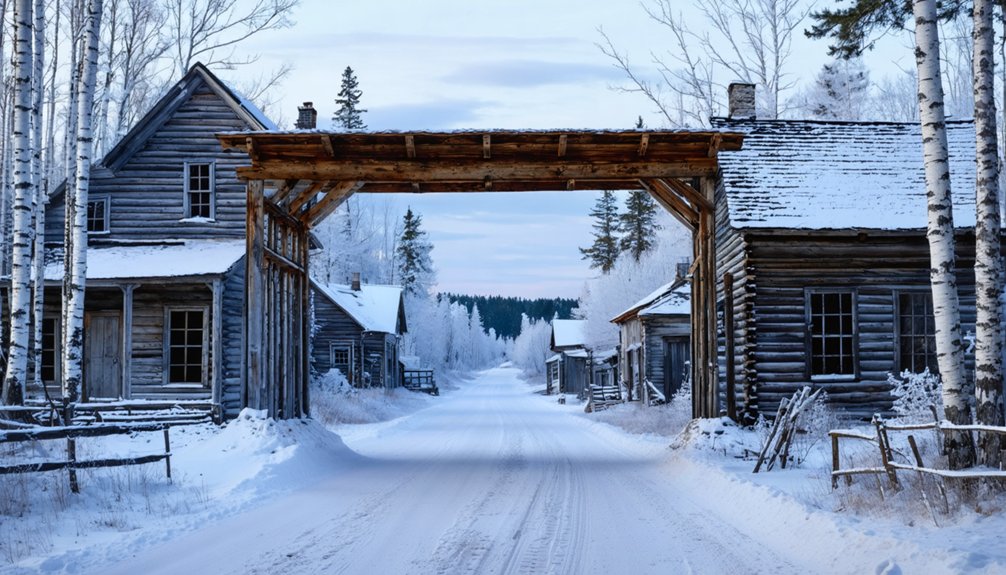
Snow-laden ruins emerge from Michigan’s white wilderness along US-41’s legendary Covered Road, where Delaware stands as your first stop into the Keweenaw Peninsula’s ghostly past. Founded in 1846, this copper mining settlement once housed 1,200 souls before abandonment in 1887.
You’ll spot two weathered buildings standing sentinel ten miles north of Central, their dark stone walls crumbling against pristine drifts. Winter preservation works naturally here—the Snow Capital of Midwest averages 240 inches annually, freezing everything in authentic stillness.
While mine tours close until May, you’re free to explore the pump house, hoist house, and railroad tracks on your own. Historical preservation meets adventure when you photograph these 1870s structures buried in snow, then continue north discovering more forgotten settlements along this legendary route.
Kilmanagh: A Forgotten Farming Community in Michigan’s Thumb
Deep in Michigan’s Thumb region, where farmland meets forgotten history, Kilmanagh sits frozen in a different kind of stillness than its copper-mining counterparts up north.
You’ll find historical preservation meeting community nostalgia in this 1861 settlement that once thrived on lumber and farming.
Winter transforms the restored 1873 general store into a photographer’s dream:
- The vintage gas pump stands stark against snow-covered fields
- St. John’s Lutheran Church remains active, offering warmth and stories
- The 1940s gas station building frames perfectly in flat winter light
- Open countryside provides unobstructed views you won’t find elsewhere
Unlike railroad-connected towns that survived, Kilmanagh’s isolation became its death sentence after 1904.
You’re exploring authentic abandonment here—no tourist traps, just raw Michigan history standing stubbornly against time.
Central Mine: Stay Overnight in an Authentic Miner’s House
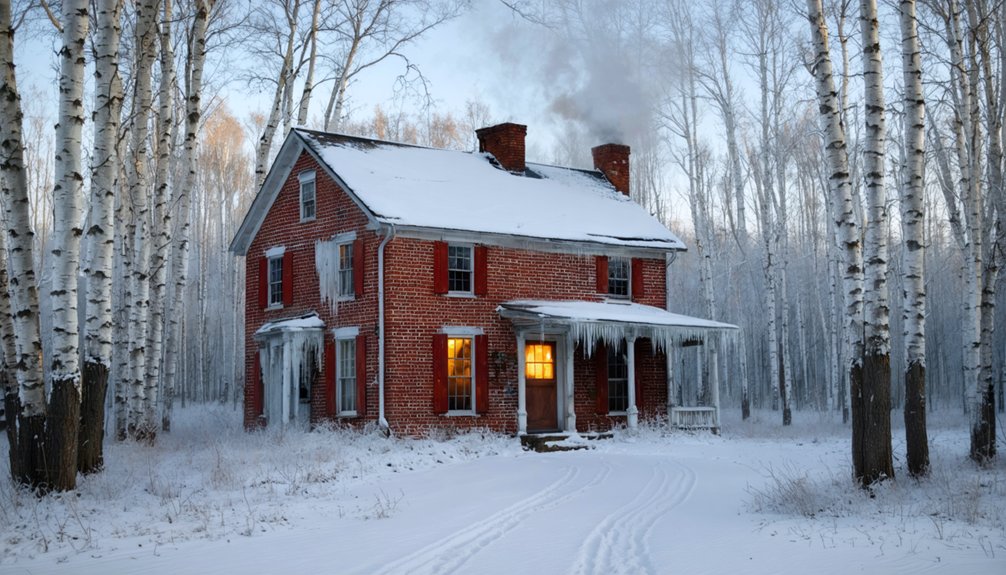
You can book an overnight stay in one of the restored miner’s houses managed by the Keweenaw County Historical Society. Sleeping in the same walls where copper workers once rested after their shifts.
I recommend requesting a house with valley views—you’ll wake to frost-covered rock piles dotting the landscape, skeletal shaft houses standing sentinel against the snow.
Pack warm layers and supplies since the site’s remote location means you’ll be surrounded by nothing but winter silence and the ghosts of 1,200 former residents.
Historic Miner’s House Rentals
Since 2017, the Keweenaw County Historical Society has offered something extraordinary: the chance to rent Miner’s House #8 and live inside Central Mine’s ghost town for an entire week.
You’ll sleep where copper miners once rested after twelve-hour shifts, and your preservation efforts directly fund the site’s restoration.
This authentic immersion experience delivers:
- Complete historical authenticity – restored miner’s dwelling maintains period character
- Central peninsula location – perfect basecamp for exploring surrounding trails and ghost towns
- Unrestricted access – wander logging roads and footpaths through the abandoned village
- Living miner’s history – experience what 1,200 residents once called home
Check the society’s website for rental details and interior photos.
Local wisdom suggests week-long stays maximize your freedom to explore this haunting landscape at your own pace.
Rock Pile Valley Views
Beyond the weathered miner’s houses, Central Mine’s massive rock piles rise like monuments to copper fever. Their wind-scoured summits offer panoramic rewards worth the climb. You’ll find two trails threading through the woods—choose the quarter-mile route for a quick ascent or the half-mile loop for a fuller exploration.
From the upper rock pile, you’ll gaze across thirteen miles of Ontonagon County stretching toward Lake Superior’s frozen expanse.
Winter transforms these scenic viewpoints into stark, windswept overlooks where historical preservation meets raw wilderness. The tailings crunch beneath your boots differently than summer’s dusty paths. Pack layers—the exposed summit catches every gust rolling off the big lake.
Your self-guided tour continues downslope past ghost foundations and the old schoolhouse site, each snow-dusted ruin whispering stories of extraction and abandonment.
Best Times to Explore Michigan’s Ghost Towns in Winter
When bare branches strip away summer’s camouflage, Michigan’s ghost towns reveal their secrets in ways the growing season conceals. You’ll spot foundations, chimneys, and building outlines impossible to find beneath seasonal foliage.
Pack your winter outdoor gear and target these ideal windows:
- Late January – Lantern-lit trails at Fayette combine cross-country skiing with hot chocolate by campfires
- Mid-week visits – Escape crowds that swarm holiday weekends
- Post-snowfall mornings – Fresh powder highlights pathways and structural details
- Milder February days – Reduced mosquitoes and crisp air extend your exploration endurance
Bell’s remnants emerge clearest when trees stand naked. Snow creates stark contrasts against stone ruins, while cooler temperatures let you hike without heat exhaustion. You’ll have these haunting landscapes mostly to yourself.
What to Bring for Winter Ghost Town Adventures
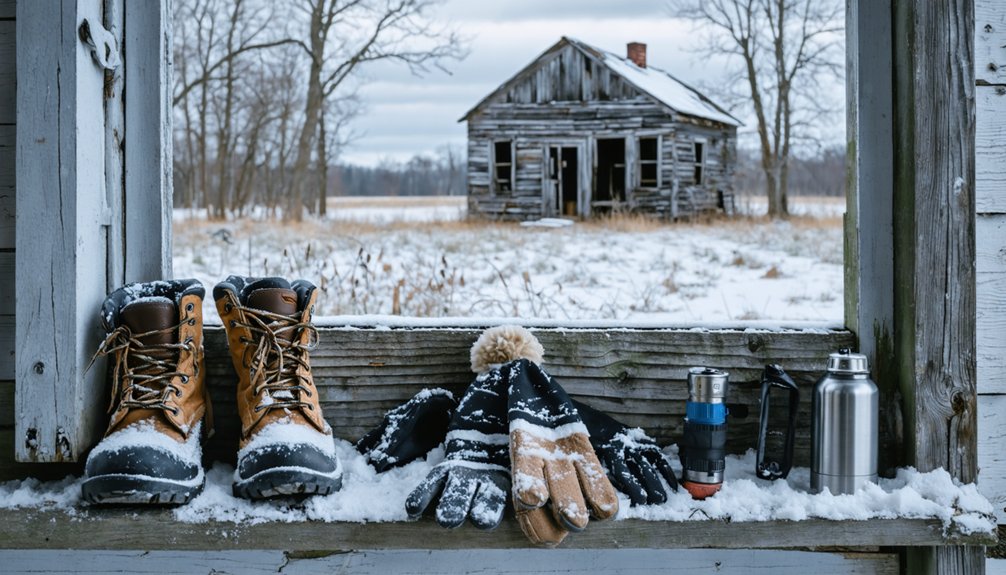
Emergency preparedness goes beyond good intentions.
Pack an external battery since cold murders phone life, plus three signaling methods: whistle, mirror, and your cell’s SOS.
I’ve watched fellow explorers regret skipping the basics—storm-proof matches, emergency bivvy, foam butt pad for snowy sits.
Microspikes transform icy trail approaches into confident strides.
Bring backup gloves, extra snacks, and that critical headlamp.
Winter ghost towns don’t forgive half-prepared wanderers.
Safety Tips for Visiting Abandoned Sites in Cold Weather
Michigan’s winter transforms abandoned sites into crystalline deathtraps where ordinary hazards multiply. Frozen moisture weakens timber, ice conceals rotted floorboards, and snow loads stress already-compromised roofs. Your freedom to explore demands respect for these amplified dangers.
Essential safety gear protects against winter-specific threats:
- FFP3 respirator for asbestos and black mold in humid basement areas
- Ice cleats for traction on frozen surfaces and metal stairs
- Headlamp with backup batteries (cold drains power faster)
- Insulated gloves allowing finger dexterity for testing handrails
Before entering, assess structural stability by tossing rocks onto questionable floors. I’ve watched seasoned explorers break through seemingly solid surfaces. Test stair edges near walls, never centers.
Move deliberately, listen constantly, and abort missions when instincts scream danger.
Photography Opportunities at Michigan’s Winter Ghost Towns
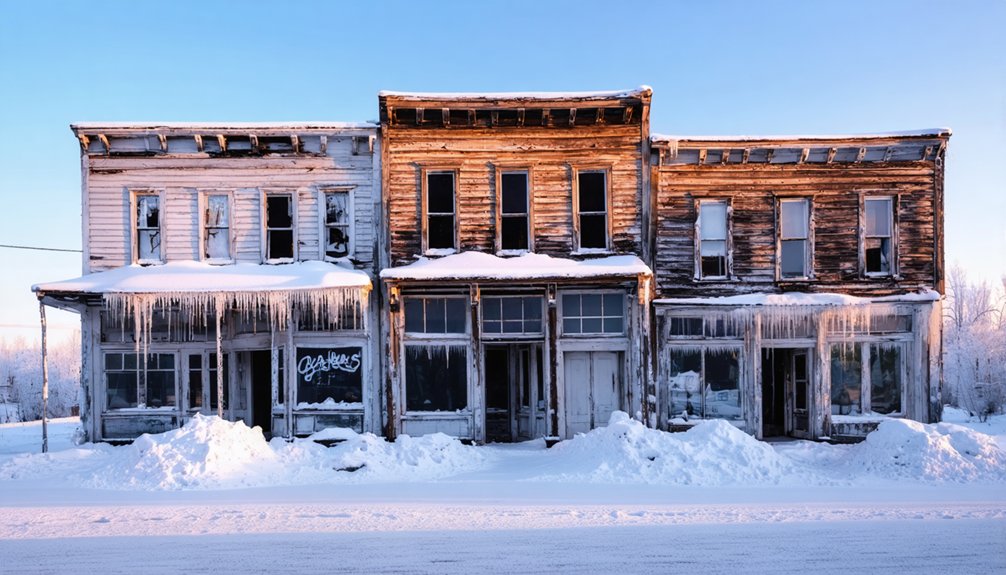
For urban decay enthusiasts, Kilmanagh’s 1940s gas pump and empty storefronts deliver authentic ghost town grit.
Central’s hiking trails lead to foundation ruins with spectacular valley views, while White City pairs mining remnants with the 1868 Jacobsville Lighthouse overlooking frozen Keweenaw Bay.
These isolated locations let you work uninterrupted, capturing haunted legends without crowds—pure photographic freedom in Michigan’s forgotten corners.
Frequently Asked Questions
Are Guided Tours Available at Michigan’s Ghost Towns During Winter Months?
Craving untamed exploration? You’ll find limited guided tours at Michigan’s ghost towns in winter, but self-guided options remain open. Bundle up for winter hiking through abandoned sites, where photography opportunities capture haunting beauty without crowds restricting your adventurous spirit.
Do Any Ghost Towns Charge Entrance Fees or Require Permits?
Most ghost towns you’ll explore won’t trap you with admission fees or permit requirements. Delaware Mine charges $14 for underground tours, but you’re free to roam surface sites and abandoned structures without constraints or paperwork.
Can I Bring My Dog to Explore Ghost Towns in Winter?
Your four-legged friend can tag along! Most dog friendly trails welcome leashed pups at Michigan’s ghost towns. Follow winter safety tips: pack paw protection for icy ruins, bring water, and watch for hidden hazards beneath snow.
Are Restroom Facilities Available at These Remote Winter Ghost Town Locations?
Restroom accessibility varies drastically—Fayette’s Visitor Center offers winter facilities during events, but remote sites like Freda and Port Oneida lack basic amenities. You’ll need to plan ahead and rely on nearby towns for comfort stops.
Which Ghost Towns Are Suitable for Families With Young Children?
Like discovering a snow globe village come alive, Fayette Historic State Park welcomes your family year-round with 20+ preserved buildings showcasing historic architecture. You’ll find winter safety tips, interactive exhibits, and kid-friendly trails perfect for adventurous exploration together.
References
- https://www.islands.com/2058656/best-abandoned-ghost-towns-hidden-michigan/
- https://www.youtube.com/watch?v=7-vjuqiGWJU
- https://www.visitkeweenaw.com/things-to-do/museums-history/ghost-towns/
- https://www.nps.gov/slbe/learn/historyculture/ghosttowns.htm
- https://lostinmichigan.net/category/ghost-towns/
- https://www.uptravel.com/things-to-do/attractions/fayette-historic-state-park-townsite/
- https://www.michigan.org/article/spooky-places-visit-fall-michigan
- https://kids.kiddle.co/Port_Oneida_Rural_Historic_District
- https://www.upnorthmichigan.com/historic/portoneida.html
- https://leelanau.com/port-oneida-michigan/