You’ll find Wyoming’s most mesmerizing ghost towns scattered across windswept plains and remote mountain valleys, where history remains remarkably preserved. South Pass City stands out with over 30 original structures and restored storefronts from its 1867 gold rush heyday, while Atlantic City’s weathered boardwalks and 1893 mercantile still welcome visitors. For adventurous explorers, Kirwin requires a rugged 40-mile journey through unbridged rivers to reach its avalanche-scarred buildings. Each site offers unique glimpses into Wyoming’s mining heritage, with varying accessibility levels and seasonal considerations that’ll shape your exploration strategy.
Key Takeaways
- South Pass City features over 30 preserved structures from 1867, including cabins, jail, and mine equipment, with educational tours available year-round.
- Atlantic City offers original boardwalks, an 1869 stone bank, and the 1893 Mercantile building, now operating as a historic bar and restaurant.
- Kirwin, located 34-40 miles southwest of Meeteetse, requires high-clearance 4WD vehicles and features 38 structures from its 1885 gold rush era.
- Gebo is a BLM-managed coal mining ghost town near Hanna, allowing unregulated exploration and representing Wyoming’s industrial heritage.
- Access varies significantly: some towns are highway-accessible, while remote mountain sites require specialized vehicles and careful seasonal timing.
South Pass City State Historic Site: Wyoming’s Best-Preserved Mining Settlement
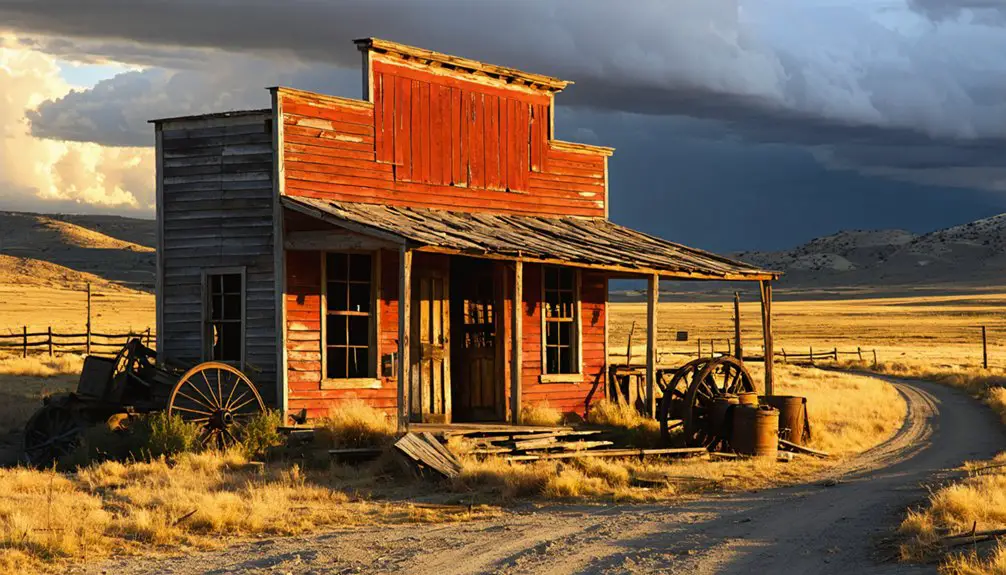
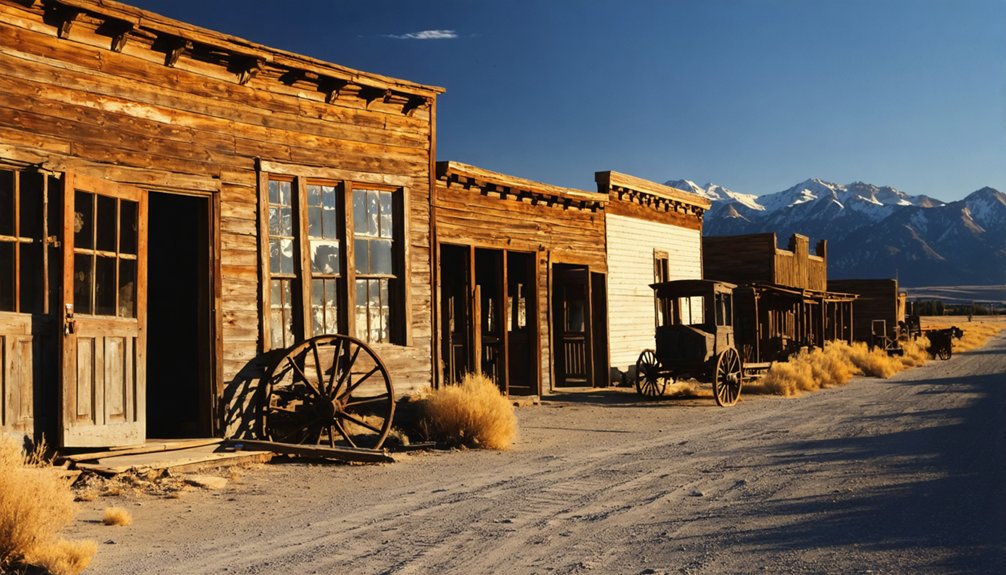
Nestled in the Wind River Range where weathered wooden storefronts still line a dusty main street, South Pass City stands as Wyoming’s most authentic window into the 1860s gold rush era. You’ll explore more than 30 original structures from the town’s 1867 founding, when soldiers discovered the Carissa Lode and sparked a rush that brought 1,000 fortune-seekers to this remote mountain settlement.
The Carissa Mine alone pulled $7 million in gold from these hills before closing in 1954. Thanks to dedicated historic preservation efforts since 1970, you can wander through restored cabins, peer into the territorial jail, and tour the mine itself with its 1929 equipment still intact.
Gold mining history doesn’t get more tangible than this meticulously preserved ghost town. Beyond its mining legacy, South Pass City holds a pivotal place in American history as the home of Esther Hobart Morris, who became the first female Justice of the Peace in 1870. The town is also considered the birthplace of women’s suffrage in the United States, where Wyoming became the first government to guarantee women’s voting rights in 1869.
Remote Mountain Ghost Towns: Kirwin, Eadsville, and Rambler
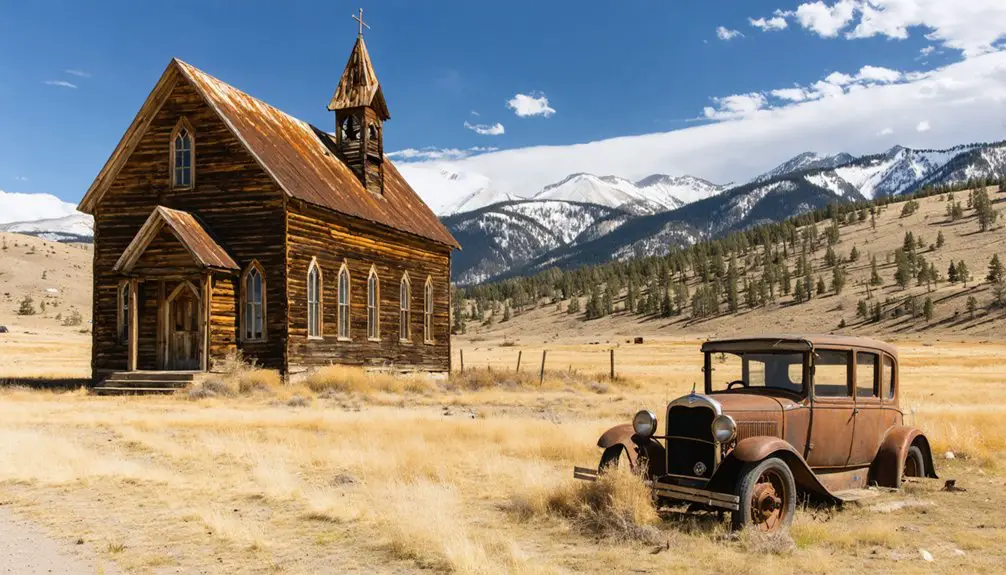
Beyond South Pass City’s preserved storefronts, Wyoming’s most haunting ghost towns hide in remote mountain valleys where weathered cabins rot beneath avalanche paths and crumbling mine shafts pierce granite cliffs.
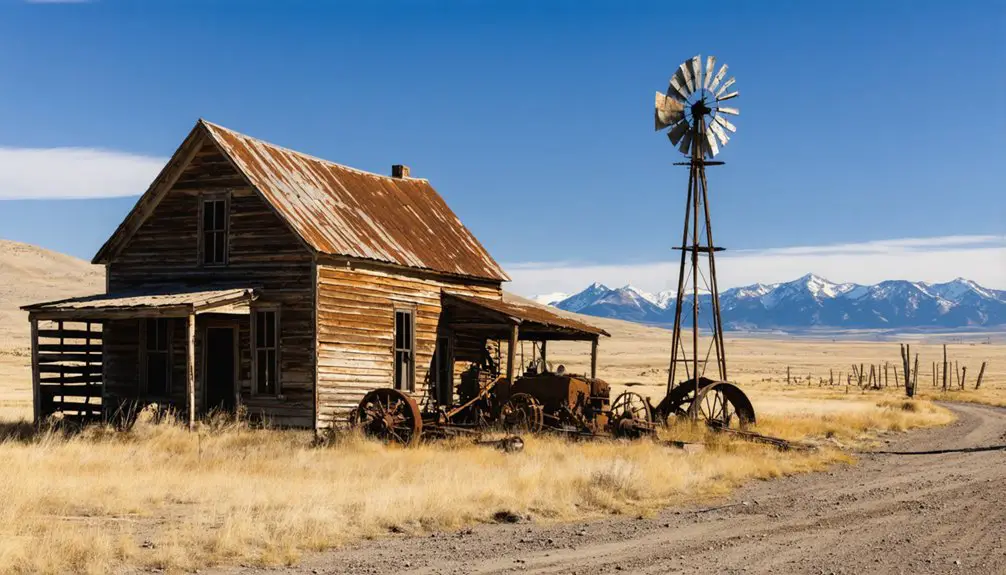
Exploring abandoned places in Wyoming reveals the remnants of once-thriving communities, where the silence of solitude echoes through empty streets. Each dilapidated structure tells a story of resilience and hardship, reminding us of the dreams and struggles of those who called these places home. The stark beauty of these forgotten landscapes invites adventurers and historians alike to uncover the secrets of Wyoming’s past.
As you venture deeper into the vast expanse of abandoned sites in southwest Wyoming, the stories become even more poignant. Here, the remnants of old mining camps and deserted ranches whisper tales of ambition, tragedy, and unyielding spirit. Each corner turned reveals a new chapter in the narrative of this rugged landscape, inviting a sense of wonder and reflection on the passage of time.
Wyoming’s forgotten settlements decay in isolated valleys where avalanche debris buries wooden frames and mine tunnels cut through mountain stone.
Kirwin stands as Wyoming’s premier destination for remote exploration among hidden historical sites. You’ll find this 1885 gold rush settlement 34-40 miles southwest of Meeteetse in the Absaroka Mountains, where 38 structures once housed 200 prospectors.
The town boasted electricity and telephones—remarkable for its era—yet deliberately excluded saloons and brothels. A devastating 1907 avalanche killed three residents and triggered mass exodus, leaving tools frozen in time. Visitors today report hearing ghostly voices and music among the ruins, fueling the town’s haunted reputation. Access requires navigating Forest Service Road 200 with high-clearance 4WD vehicles from mid-May to November, crossing unbridged rivers through terrain that demands detailed maps and extra fuel.
While Eadsville and Rambler appear in historical references as remote mountain ghost towns, verifiable details remain elusive. Focus your adventure on accessible Kirwin, where authentic frontier remnants reward determined backcountry travelers.
Miner’s Delight: Atlantic City’s Windswept Remnants
While Kirwin’s cabins decay in isolated mountain silence, Atlantic City clings to life on the windswept eastern slope of the Continental Divide, where 57 hardy residents occupy what remains of Wyoming’s most persistent gold rush settlement.
Founded in 1868 when prospectors struck gold on Atlantic Ledge, this town survived five boom-bust cycles that would’ve killed lesser communities.
You’ll walk original boardwalks past the 1869 stone bank building and Gratrix Cabin, a structure dating to 1842 that served as courtroom, school, and meeting hall across three county jurisdictions.
Local history reveals why ghost town preservation matters here—failed hydraulic schemes, bankrupt French investors, and Depression-era dredging operations paint freedom’s price in gold country. The district’s mines produced only $2 million in gold over their first five years, a disappointing yield that triggered the town’s initial decline by 1872.
The Atlantic City Mercantile, constructed in 1893, still operates as a historic bar and restaurant, drawing weekend visitors to a building listed on the National Register of Historic Places since 1985.
Today’s Continental Divide Trail hikers breathe life into streets where 2,000 miners once chased fortune.
Coal Mining Camps: Crosby, Winton, Stansbury, and Bryan
Wyoming’s coal veins drew a different breed of fortune-seeker than the gold camps—men who descended into darkness daily, extracting black fuel rather than glittering ore. You’ll find Crosby near Gebo in Big Horn County, where thirty miners once worked an eight-foot vein, hauling 150 tons daily to railheads.
The coal history here intertwines with federal fraud—Northwestern Coal Company’s illegal land claims that expanded their empire beyond legal limits.
Winton, Stansbury, and Bryan formed Union Pacific’s coal network around Hanna, where mining technology evolved under strict 1908 state inspections.
These camps championed worker safety beyond legal requirements, housing men who powered America’s westward expansion. Gebo’s high-quality coal burned hot and left only 3% ash, attracting miners from as many as sixteen nationalities to the thriving company towns. The Hanna mine explosion on March 28, 1908, killed 59 men, marking one of Wyoming’s deadliest mining disasters and prompting stricter safety protocols across the state’s coal operations.
Now they’re ghost towns managed by BLM, their windswept foundations offering you unregulated exploration through Wyoming’s industrial past.
The remnants of these ghost towns located in Wyoming tell stories of hardship and hope, showcasing the resilience of those who once called them home. As you wander through the deserted structures, you can almost hear the echoes of laughter and labor that once filled the air. Each building stands as a monument to a bygone era, inviting adventurers to step back in time and imagine life in these now forgotten places.
As you explore abandoned towns in Wyoming, you’ll find remnants of old mines, crumbling storefronts, and faded signage that provide a glimpse into the past. Each site has its unique history, revealing tales of ambition and decline that shaped the region. Venture into these forgotten spaces, where nature is slowly reclaiming what once was, and discover the hidden stories waiting to be uncovered.
Before you load your vehicle with cameras and water bottles, understand that Wyoming’s ghost towns demand different approaches—paved highways deliver you to some sites while others require high-clearance vehicles grinding through washboard forest service roads.
Wyoming’s ghost towns aren’t one-size-fits-all destinations—your vehicle choice determines which abandoned settlements you’ll actually reach.
Gebo’s location near Thermopolis offers straightforward regional highway access, while Kirwin and Eadsville challenge you with mountain terrain at elevations reaching 7,800 feet.
South Pass City’s protected canyon provides standard automobile access, though seasonal road conditions transform these routes into impassable snow-choked barriers come winter.
Check local transportation reports before departing, especially for forest service roads leading to remote sites.
Piedmont’s crumbling structures sit near historical railroad infrastructure, accessible year-round.
Atlantic City sits 30 miles southwest of Lander off Highway 28, making it one of the more accessible historic mining towns in the region.
New Fork’s remaining log and frame buildings stand near Boulder in Sublette County, originally positioned along the Lander cut-off of the Oregon Trail.
Plan your route strategically—some adventures require merely determination, others demand proper equipment and timing.
Frequently Asked Questions
Are Wyoming Ghost Towns Safe to Explore With Children?
You’ll find curated ghost towns like South Pass City safe with proper safety precautions—stick to marked paths and visitor centers. Child-friendly activities include guided tours through preserved buildings, but avoid abandoned mines and unstable structures for your family’s protection.
Can Visitors Enter the Buildings at These Ghost Town Sites?
You’ll ironically find these “abandoned structures” more accessible than many modern museums! Thanks to preservation efforts, you can enter restored buildings at South Pass City and Encampment’s relocated structures, while Kirwin and Miner’s Delight offer exterior exploration freedom.
What Wildlife Might Be Encountered When Visiting Wyoming Ghost Towns?
You’ll encounter diverse local wildlife near ghost towns, including prairie rattlesnakes basking on sun-warmed trails and bird species like red-tailed hawks circling overhead. Stay alert in sagebrush country where these creatures roam freely across Wyoming’s untamed landscape.
Are Camping Facilities Available Near Wyoming Ghost Town Locations?
You’ll find limited camping at most ghost towns due to historical preservation rules, but nearby BLM lands offer freedom to boondock. Base yourself at Rone’s RV Park or Superior’s facilities for comfortable access to exceptional photography opportunities.
Do Any Ghost Towns Charge Admission or Entrance Fees?
You’ll find most Wyoming ghost towns are free to explore, though some charge modest fees for historic preservation. South Pass City costs $3-5, while privately owned sites like Old Trail Town require admission. Kirwin remains completely free for adventurous visitors.
In addition to ghost towns, there are many historic sites in Wyoming that offer a glimpse into the state’s rich past. For instance, the Wyoming State Museum showcases a variety of exhibits that highlight the state’s cultural history and natural heritage. Another must-visit is Fort Laramie, where you can learn about the role it played in westward expansion.
Among the ghost towns to explore in Wyoming, you’ll encounter fascinating stories and remnants of the past that tell of a bygone era. Each location offers a unique experience, whether it’s wandering through abandoned buildings or marveling at the surrounding landscapes. Don’t forget to pack a camera to capture the haunting beauty of these locations.
References
- https://takingthekids.com/long-abandoned-wyoming-ghost-towns-where-the-old-west-still-lingers/
- https://travelwyoming.com/blog/stories/post/5-wyoming-ghost-towns-you-need-to-explore/
- https://www.wyomingcarboncounty.com/blog/123-5-ghost-towns-to-explore
- https://www.explorewy.com/blog/ghost-towns-halloween-southwest-wyoming-travel
- https://www.youtube.com/watch?v=GEoxbcwf8Ks
- https://www.ghosttowns.com/states/wy/wy.html
- https://en.wikipedia.org/wiki/List_of_ghost_towns_in_Wyoming
- https://www.geotab.com/ghost-towns/
- https://www.legendsofamerica.com/wy-southpasscity/
- https://www.wyohistory.org/encyclopedia/south-pass-city