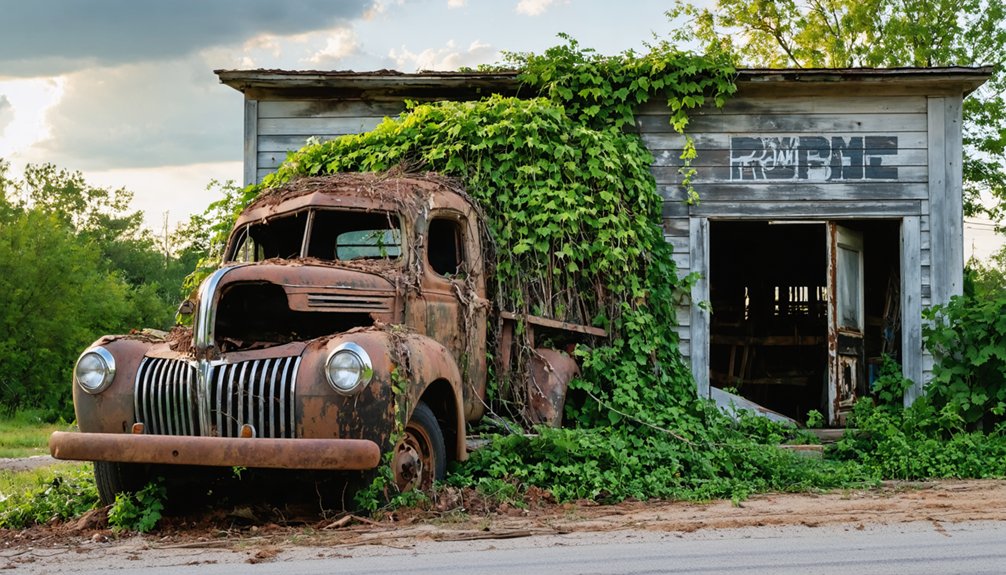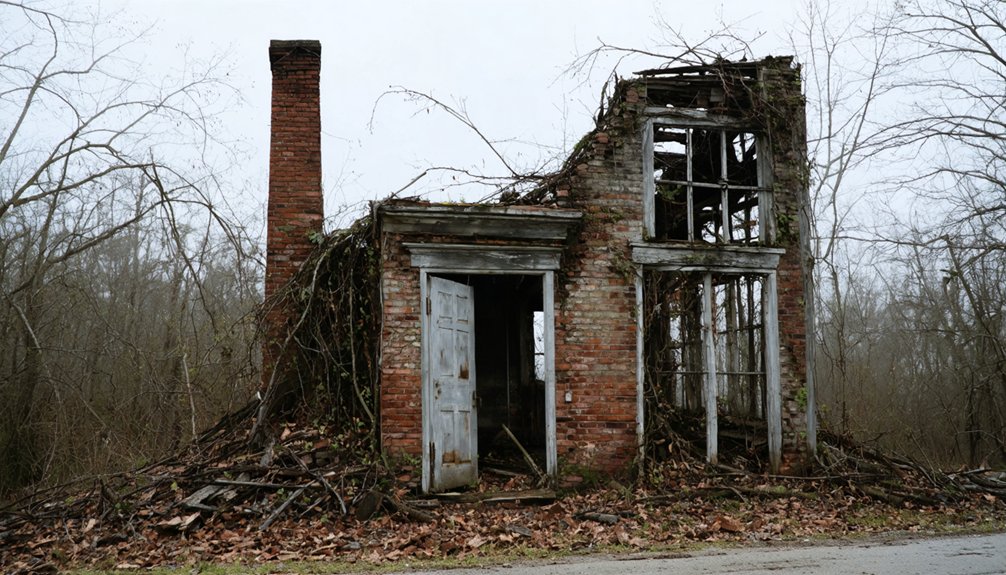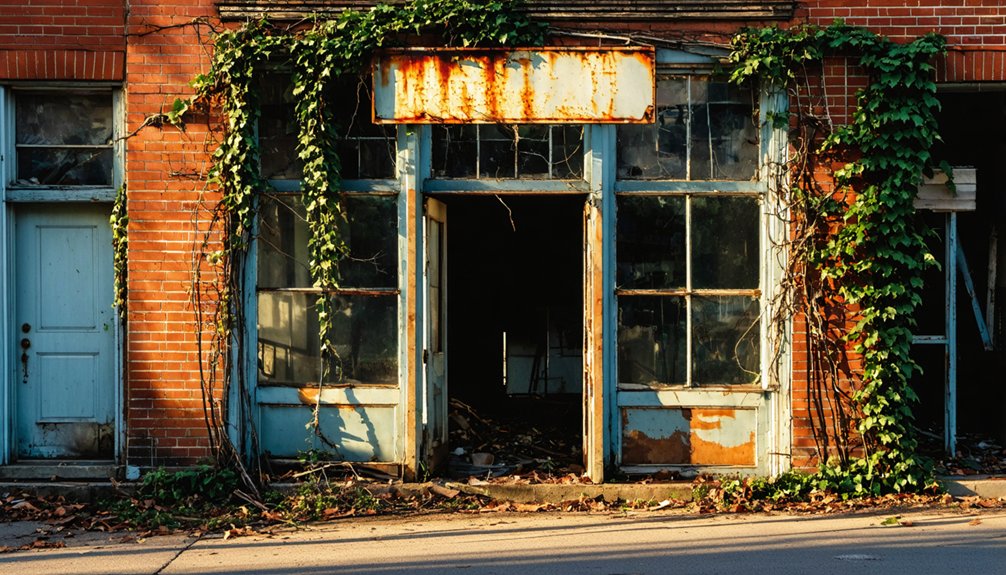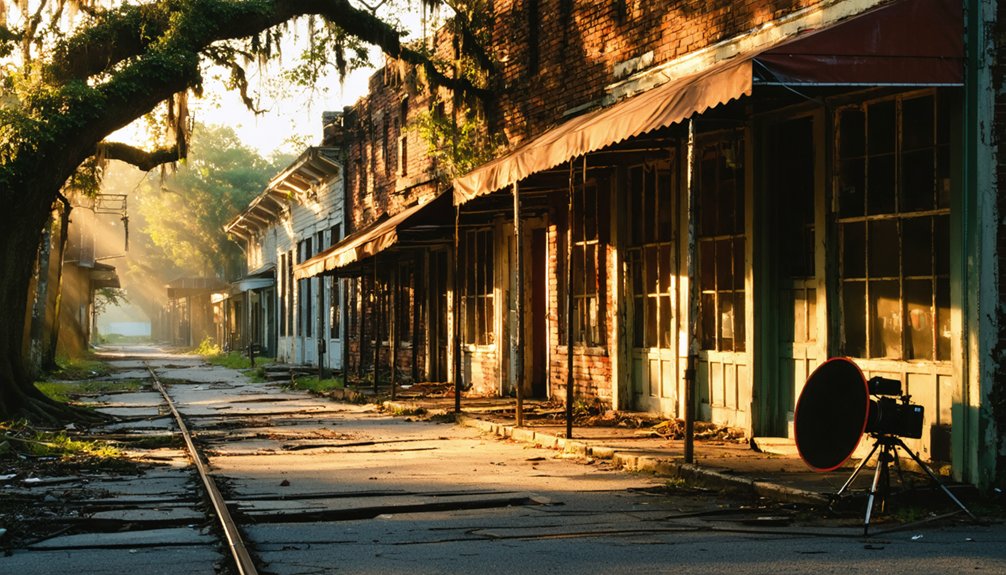
You’ll find the abandoned Spectre film set from Tim Burton’s *Big Fish* on Jackson Lake Island in Elmore County, where hollow Styrofoam structures and weathered facades create an authentically eerie atmosphere. For a $3-per-person donation, you can explore the deteriorating church, moss-covered buildings, and iconic hanging shoes during daylight hours. Nearly two decades of Alabama’s humidity and storms have transformed these artificial movie props into genuine ruins that blur the line between Hollywood construction and natural decay, with reported paranormal activity adding to the site’s haunting allure.
Key Takeaways
- Two ghost towns in Elmore County, Alabama were built as movie sets on private islands near Millbrook and along the Alabama River.
- The towns were constructed entirely from scratch using lightweight materials, Styrofoam trees, and artificially aged structures for a haunting fairy tale aesthetic.
- Visitors can access both sites with minimal donations ($3-$10) to explore abandoned structures, camp, fish, and photograph during daylight hours.
- After nearly 20 years, natural decay from humidity, storms, and overgrowth has transformed the artificial sets into authentic-looking ruins.
- The locations attract film enthusiasts and paranormal investigators, with reported supernatural phenomena including shadowy figures and malfunctioning electronics.
The Town of Spectre: Tim Burton’s Abandoned Film Set on Jackson Lake Island
Nestled on Jackson Lake Island in Elmore County, Alabama, the abandoned movie set of Spectre stands as a decaying monument to Tim Burton’s 2003 film *Big Fish*. You’ll find this custom-built utopian town accessible via $3 donation, though costume preservation wasn’t prioritized—only the set design remains.
The styrofoam structures, including some trees, now crumble beneath Spanish moss between Montgomery and Millbrook. You can explore the iconic log cabin from Edward Bloom’s entry scene and the church at the street’s dead end, but exercise caution around these unsafe aging buildings. The haunted forest setting surrounding the town creates a mystical atmosphere among the overgrown structures.
The entrance features poles with dangling shoes, referencing the town’s barefoot residents. Most interiors lack flooring, and many structures were torn down post-production, transforming this once-fictional paradise into a haunting visitor destination. The island now offers bathrooms and picnic tables for visitors seeking to explore the decaying film set.
How Big Fish Brought a Fictional Alabama Town to Life in 2003
- Collier House (401 E Bridge St) for arrival scenes
- Elmore County Courthouse (100 E Commerce St) for Karl’s departure
- Various downtown streets representing 1950s small-town America
The set’s post-production evolution demonstrates filming location preservation challenges and eco tourism impact. While some structures were demolished, remaining facades now attract visitors exploring movie history.
You can access these sites independently, though Jenny’s house columns and Dark Forest trees have mostly disappeared. The film showcased Alabama’s lush countryside and green pastures, giving tangible connections to Edward Bloom’s fantastical stories. Wetumpka’s downtown had previously served as a filming location for The Grass Harp and The Rosa Parks Story.
Architectural Design and Construction Techniques Used to Create Spectre
Production designers constructed the entire town of Spectre from scratch on Jackson Lake Island, a private tract along the Alabama River near Millbrook in Elmore County.
Urban planning focused on creating complete city streets, houses, churches, dirt roads, and porches—all positioned to maximize the natural surroundings for exterior filming.
Material selection emphasized lightweight shells rather than code-compliant structures, since you’d never need functional interiors.
The team incorporated Styrofoam trees from Enchanted Forest alongside native vegetation, blending artificial and organic elements.
They built everything pristine initially, then intentionally distressed surfaces through peeling paint and structural weathering.
This dual-phase approach let filmmakers capture both the idealized fairy tale town and its haunting decay, with designers strategically positioning elements like the deliberately leaning chapel for maximum Southern Gothic atmosphere. The iconic hanging shoes were installed at the town’s entrance, creating an instantly recognizable symbol that has endured long after filming concluded. After production wrapped, the set was left in disrepair and opened to the public for a modest daily fee.
What Remains Standing: Current State of the Spectre Film Set
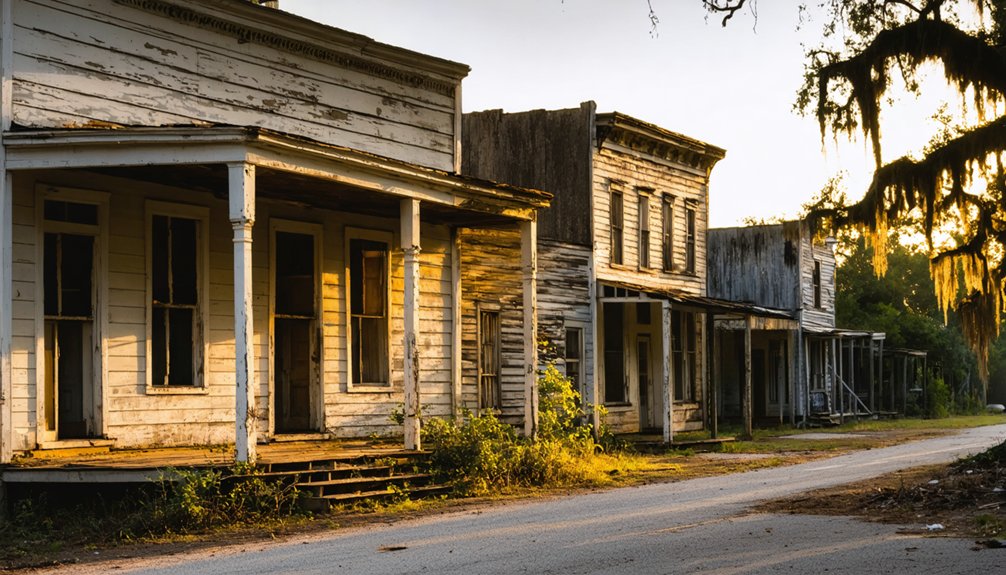
When you visit Spectre today, you’ll find a handful of partially intact structures including weathered houses, a general store, and the church at the street’s dead end—its facade still visible despite collapsed roofs and peeling paint.
The recognizable log cabin from Edward Bloom’s town entry scene remains standing alongside dirt roads and porches, though most buildings exist as empty shells propped up minimally against Alabama’s storms.
Spanish moss now drapes the crumbling structures while goats roam freely through the overgrown site, creating a pastoral yet eerie atmosphere around what’s left of the abandoned film set.
Surviving Structures and Features
Nestled on the banks of the Alabama River, the Spectre film set remains remarkably intact more than two decades after Tim Burton’s crew departed Jackson Lake Island near Millbrook. You’ll find six hollow house shells standing along dirt roads, their facades preserved through an unusual agreement balancing historical preservation against artistic vandalism—the distressed church still leans deliberately, evoking its scripted decay.
The island’s most distinctive surviving features include:
- Jenny’s house columns standing sentinel at the entrance
- Two weathered Styrofoam trees from the Enchanted Forest
- The iconic hanging shoes marking the property’s threshold
For $3 daily entry, you’ll access these skeletal structures alongside roaming goats. The privately-owned property welcomes explorers seeking its fairy tale remnants, with owners planning refurbishments to accommodate sustained tourist interest. Beyond exploring the film remnants, visitors can enjoy camping and fishing on Jackson Lake Island’s scenic grounds.
Decay and Deterioration Patterns
Unlike most abandoned film sets that crumble through passive neglect, Spectre’s structures bear the paradoxical scars of intentional distressing that preceded actual decay. You’ll find buildings artificially aged during production now experiencing genuine deterioration.
Paint that was deliberately peeled continues flaking under Alabama’s humidity cycles, while roofs intentionally weathered have collapsed entirely under storm loads. The environmental impact compounds daily: Alabama River moisture accelerates rot in these hollow shells, constructed as facades without structural integrity.
Wildlife disturbance accelerates destruction—feral goats scale porches and climb compromised roofs, their hooves punching through weakened surfaces. The leaning chapel shifts further with each foundation movement.
Seventeen years of floods, vegetation overgrowth, and visitor foot traffic have transformed film-set fakery into authentic ruins, blurring where Hollywood’s illusion ended and genuine abandonment began.
Visiting Spectre Today: Access, Fees, and What to Expect
You’ll need to bring cash for entry—either $5 per person or $10 per car, depending on when you visit—since the private owners maintain this property and require payment before you cross onto Jackson Lake Island.
Once inside, you’ll encounter six weathered homes, a small church at the street’s dead end, two styrofoam trees from the enchanted forest, and a line of shoes dangling between poles at the town entrance.
The structures stand as aged facades, intentionally distressed during filming and never built to code, so you’ll need to exercise caution around these crumbling, moss-covered buildings that have deteriorated markedly since 2003. Over the years, fire incidents destroyed several buildings in what was once the commercial district, leaving behind only scattered remnants of the original film set.
Beyond exploring the abandoned movie town, visitors can camp overnight with tent or RV options, fish from the surrounding docks, or simply photograph the unique scenery while friendly goats roam freely across the island.
Entry Fees and Hours
Accessing Spectre requires a trip to Jackson Lake Island, a private island in Elmore County along the Alabama River near Millbrook. The cost implications are minimal—owners request just $3 per person as a donation for island access. This fee covers everything: exploring the film set, camping, and fishing opportunities throughout the grounds.
The access procedures remain pleasantly informal. No rigid operating hours restrict your visit; the island functions as an open destination during daylight hours. You’ll need permission from the property owners, who collect the entry fee upon arrival.
Your $3 grants you freedom to:
- Explore weathered structures including the iconic church and homes
- Photograph the atmospheric, overgrown movie set
- Encounter free-roaming goats throughout Spectre’s mystical grounds
The owners manage availability flexibly, accommodating visitors on request.
Current Structures and Conditions
Once you arrive at Spectre, you’ll find a haunting tableau of weathered facades and crumbling structures that have succumbed to nearly two decades of neglect. Six homes remain visible along the main street, leading to a weathered church at the dead end. Columns from Jenny’s house still stand, while two Styrofoam Enchanted Forest trees persist after seventeen years.
Spanish moss and local flora have reclaimed the movie set, creating an eerie atmosphere that attracts photographers and film enthusiasts. Entry to the site requires a $3 donation per person at the land bridge leading to Jackson Island.
Visitor safety requires serious consideration—these shells weren’t built to code and have deteriorated considerably. Several storefronts have collapsed, and flooding destroyed Jenny’s riverside house. The commercial district burned during cleanup operations.
Despite the decay, goats roam freely around the church, adding unexpected charm to this crumbling cinematic relic.
The Cultural Legacy of Spectre as an Alabama Tourist Attraction
The site’s tourist infrastructure includes:
- Marked entrance with historical plaques documenting the set’s origins.
- Six preserved original homes accessible for exploration.
- Standing chapel structure and iconic hanging shoes as photography landmarks.
Property managers maintain environmental preservation through controlled access requiring $3 donations per person.
The location balances public accessibility with land stewardship, offering camping and fishing alongside film set tours.
Photographers and tourists consistently visit, validating the owners’ refurbishment aspirations despite weathering and structural deterioration challenges.
Paranormal Activity Reports and Urban Legends Surrounding the Abandoned Set
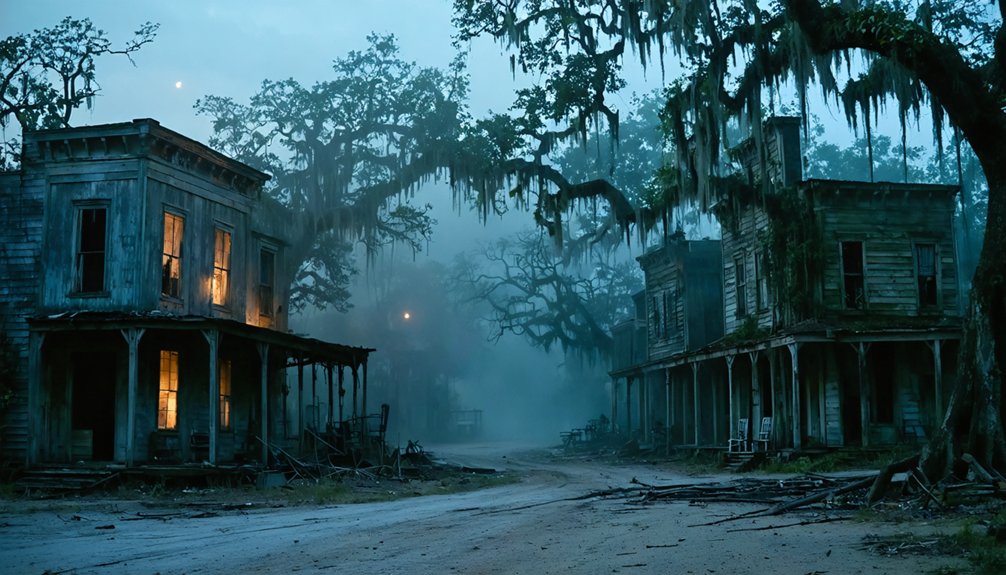
Beyond its physical deterioration, Spectre has accumulated a reputation for unexplained phenomena that draws paranormal enthusiasts alongside film buffs.
You’ll find urban legends centered on the leaning church, where visitors report overwhelming dread and the sensation of being trapped. Footsteps echo through the trees, shadowy figures appear in empty window frames, and cameras mysteriously malfunction.
The structure itself seems to lean inward, as if listening to your presence. Paranormal encounters intensify after dark, with strange shadows materializing in photographs and an unsettling energy lingering where pews once stood.
Many claim the town feels unnervingly alive despite its abandonment, and some report that trailers—both physical and spiritual—follow them home, blurring the boundary between Spectre’s fabricated origins and something genuinely haunting.
From Hollywood Production to Permanent Landmark: Spectre’s Unexpected Preservation
Today, Spectre exists in controlled decay on private campground property.
You’ll encounter:
- Crumbling facades wrapped in Spanish moss with peeling paint
- Collapsed roofs from years of Alabama storms
- Free-roaming goats wandering through weathered buildings
Access requires $3 and owner permission, keeping crowds minimal.
While film restoration enthusiasts debate preservation, current owners maintain structures just enough to stand.
This remote Alabama River location serves adventurers seeking authenticity over polished tourist sites—a genuine movie set frozen between Hollywood magic and natural reclamation.
Frequently Asked Questions
Are There Other Abandoned Movie Sets in Alabama Besides Spectre?
The background information doesn’t reference other abandoned film sites in Alabama. While historic movie locations exist statewide, you’ll find Spectre remains the most accessible purpose-built set. You’re free to explore other filming locations, though they’re typically demolished post-production.
Can Visitors Stay Overnight or Camp on Jackson Lake Island?
Yes, you’ll find overnight camping permitted on Jackson Lake Island with visitor accommodations including tent sites under open skies and RV hookups. You’re free to camp anywhere outside buildings, with no reservations needed—just pay at arrival.
Is the Spectre Film Set Safe for Children to Explore?
Looking for adventure without consequence? The Spectre film set isn’t safe for children—decaying styrofoam facades risk collapse, not haunted history. You’ll need strict safety precautions: supervise constantly, avoid crumbling structures, and watch for uneven terrain and unpredictable animals roaming freely.
What Other Tim Burton Filming Locations Can Be Visited in the South?
You’ll find Burton’s Edward Scissorhands locations in Florida’s Lutz and Lakeland suburbs, where pastel houses still stand. Historic preservation keeps these cookie-cutter neighborhoods intact, though they’ve spawned urban legends about the film’s eerie atmosphere and Burton’s creative vision.
Has Anyone Been Injured Visiting the Deteriorating Spectre Structures?
Better safe than sorry—there aren’t documented injuries at Spectre, but visitor safety concerns exist due to maintenance and preservation issues. You’ll find deteriorating structures ravaged by fire, floods, and decay creating hazardous conditions despite the site’s open access.
References
- https://thebamabuzz.com/5-alabama-ghost-towns-to-put-on-your-bucket-list/
- https://www.fabledcollective.com/the-lost-town-of-spectre-alabama-a-forgotten-film-set-wrapped-in-mystery-and-decay/
- https://www.youtube.com/watch?v=QfoW_3uxAv0
- https://abandonedsoutheast.com/2021/01/30/spectre/
- https://www.youtube.com/watch?v=-E-0D6Nci7s
- https://www.youtube.com/watch?v=tZmA_VF6cm8
- https://californiathroughmylens.com/alabama-hills-arches-movie-locations-photography/
- https://www.youtube.com/watch?v=kzuoqVM1RTQ
- https://www.youtube.com/watch?v=RiZDCLOrHec
- https://en.wikipedia.org/wiki/Jackson_Lake_Island