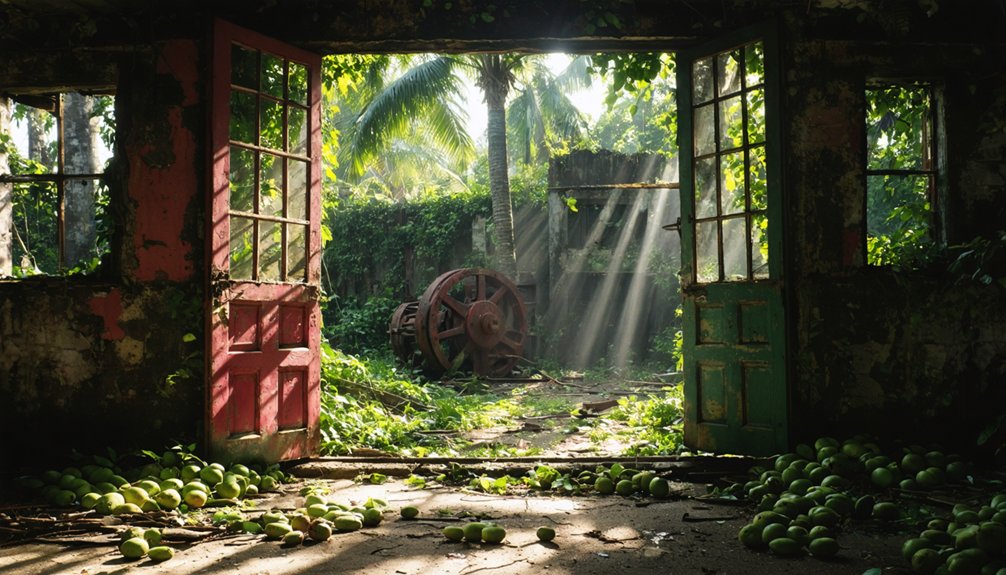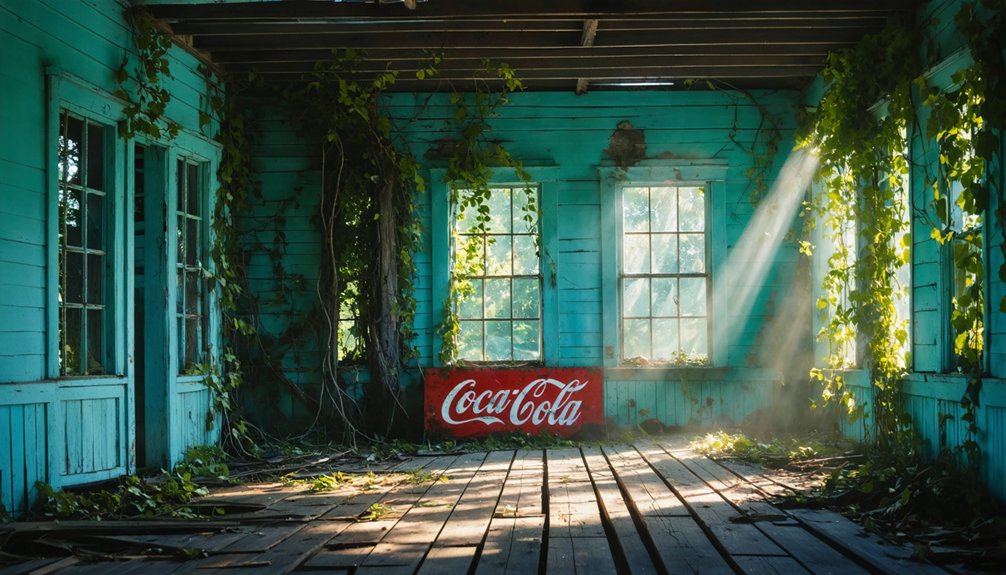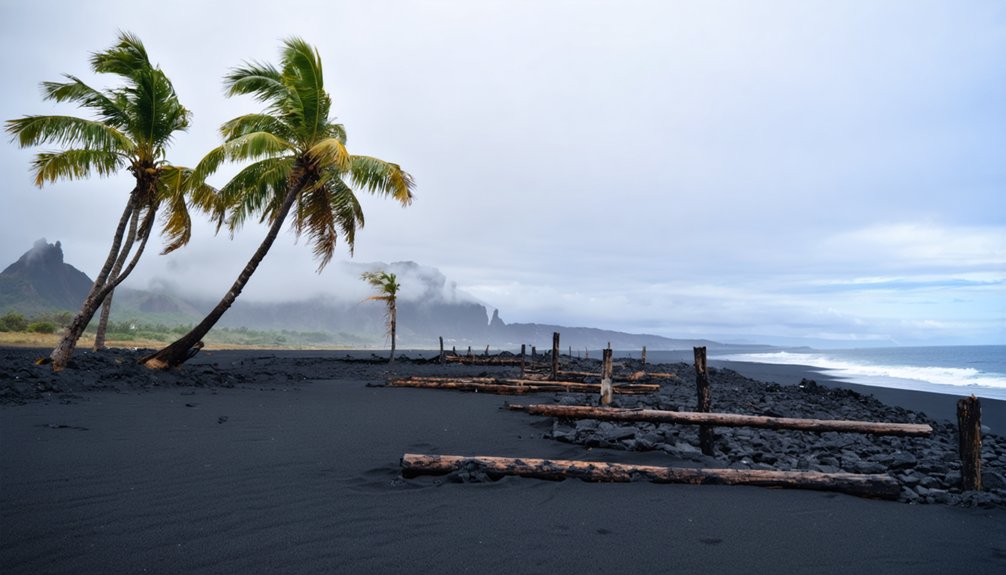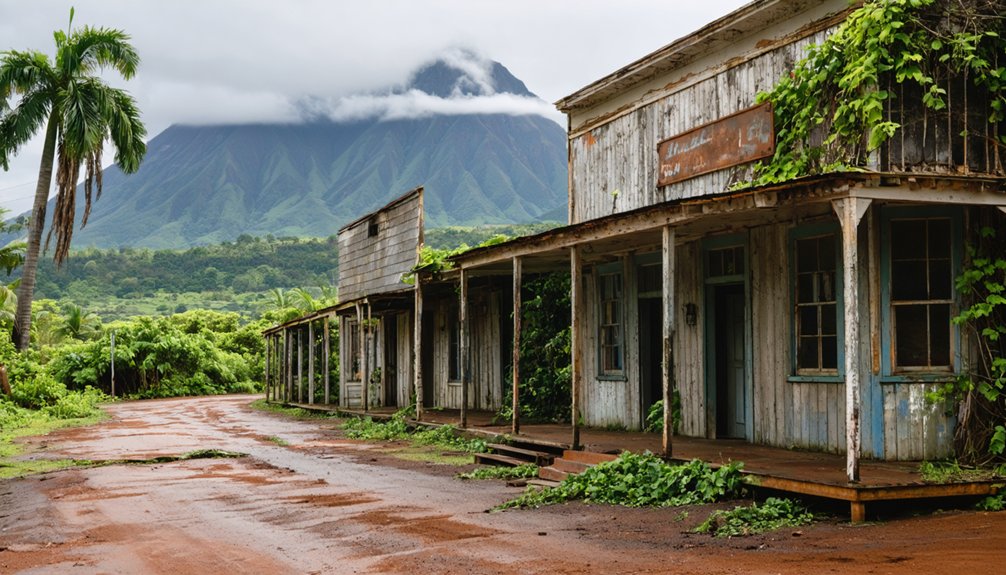
You’ll find Hawaii’s “ghost town” filming locations aren’t dusty Western sets—they’re repurposed industrial sites like Waialua Sugar Mill, which transformed from a sprawling 1898 plantation with 30 miles of railroad into a Nigerian village backdrop. Paradise Park‘s 76 acres of moss-covered aviaries and collapsed amphitheaters provide authentic decay for post-apocalyptic scenes, while Diamond Head‘s 7.5-acre crater studio recreates Middle Eastern terrains. These production-ready abandoned spaces offer cinematic atmospheres without extensive construction, and each location carries distinct advantages worth exploring further.
Key Takeaways
- Waialua Sugar Mill, operating from 1898-1996, now serves as a filming location transformed into Nigerian village sets with preserved industrial architecture.
- Paradise Park in Mānoa, a 76-acre abandoned bird zoo closed in 1994, features moss-covered aviaries ideal for horror and post-apocalyptic scenes.
- The former sugar plantation connected by 30 miles of railroad offers authentic historical ghost town atmospheres for period and cultural productions.
- Kualoa Ranch preserves abandoned movie sets from productions like *Lost*, including Dharma Initiative stations accessible through guided 90-minute tours.
- Hawaii’s abandoned sites minimize environmental impact by utilizing existing decay and natural overgrowth rather than constructing artificial ghost town sets.
Waialua Sugar Mill: From Agricultural Hub to Nigerian Village Setting
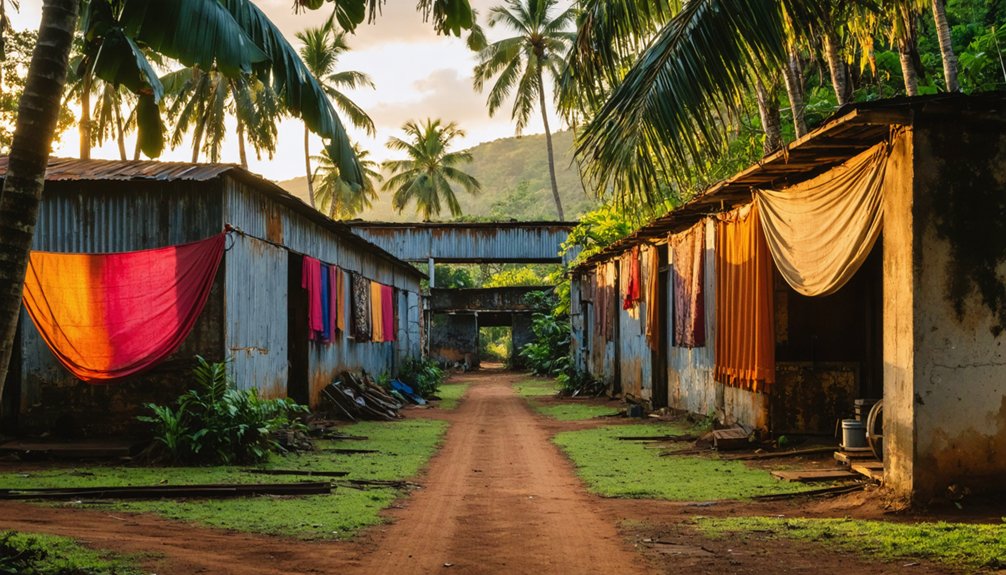
Where ancient Hawaiian taro patches once flourished along Oahu’s North Shore, the Chamberlain brothers—Levi Jr. and Warren—established their plantation in 1865, transforming wetlands into a sugar empire that would supply the Union’s Northern States during the final months of the Civil War.
You’ll find this mill’s journey from agricultural powerhouse to film set reflects Hawaii’s economic transformation. Castle & Cooke’s Waialua Agricultural Company operated here from 1898 until 1996, when it became Oahu’s last plantation to close. At its peak in 1991, the mill supplied 8% of Hawaii’s sugar, demonstrating the scale of operations before economic pressures forced its closure. The plantation once stretched 15 miles along the seacoast and 10 miles inland, connected by 30 miles of permanent railroad track that transported sugarcane to the processing facility.
Today, you’re free to explore its transformation into a Nigerian village setting for filmmakers. Historical preservation efforts maintain the mill’s industrial architecture while cultural tourism initiatives showcase immigrant communities from China, Japan, Korea, Portugal, and the Philippines who worked these grounds.
Diamond Head Film Studio: Crater Landscapes as Middle Eastern Backdrops
At the base of Diamond Head’s volcanic tuff cone, Hawaii’s first film studio transforms its 7.5-acre compound into convincing Middle Eastern terrain—a geographic sleight of hand that’s fooled audiences since the early 1990s.
You’ll find the gated facility’s crater backdrop doubled for African and Middle Eastern locations in productions like *Tears of the Sun* and episodes of *ER*. The state-owned operation holds historical significance as America’s first government-run studio, born from 52 acres transferred from Fort Ruger to the University of Hawaii in 1974.
Preservation efforts include $3.3 million in 2017 renovations and cottage replacements in 2015. The 16,500-square-foot soundstage, production offices, and construction mill operate 30 minutes from the airport, offering filmmakers uncensored creative freedom within secure, accessible infrastructure. The facility features a 29-foot interior height that accommodates elaborate set constructions and vertical filming requirements. Productions benefit from the studio’s 15-minute proximity to downtown Honolulu, placing crews near essential services and accommodations.
Paradise Park in MāNoa: Abandoned Aviary Transformed Into Island Prison
While Diamond Head’s studio deliberately manufactures foreign landscapes through controlled production design, Paradise Park in upper Manoa Valley offers filmmakers something more unsettling: 76 acres of genuine decay where nature’s reclaimed what humans abandoned.
This 1967 exotic bird zoo closed in 1994, leaving behind infrastructure that TV shows like *Lost* transformed into prison sets. The haunted atmosphere comes naturally—moss-covered aviaries, collapsed amphitheaters, and forgotten bird feeders create jungle serenity mixed with post-apocalyptic dread.
What you’ll find on location:
- Giant walk-in bird cages with wall-mounted ramps disappearing into vegetation
- Aloha Aviary’s partially intact roof providing weather-resistant shooting space
- Kamehameha Amphitheater ruins overtaken by rainforest growth
- Abandoned bathrooms and snack shops frozen since closure
The site remains accessible after parking fees, sitting unsold despite its $21 million listing—providing Hollywood unlimited eerie backdrop potential. Urban explorers and photographers frequent the grounds, drawn to Hawaii’s abandoned sites that blend tropical beauty with architectural decay. Among the ruins, a cage from 1932 still stands as one of the park’s oldest surviving structures, testament to nearly a century of tropical weathering.
Kualoa Ranch Valleys: Expansive Terrain for Dharma Initiative Stations
You can explore these Dharma stations on the 90-minute Movie Sites & Ranch Tour, riding vintage school buses through terrain that shifted from Kauai after Hurricane Iniki disrupted *Jurassic Park* filming.
The tour stops at banyan-tree jungle locations, recruitment areas with “Namaste new recruits” signage, and perimeter zones integrating golf courses with fictional containment barriers. Visitors should memorize favorite lines from the series to recreate iconic moments during photo stops along the Jeep route.
The ranch features the island town setting with yellow cottages arranged in a circle, used as a filming location for *Lost* episodes.
Mānoa Falls Trail: Dense Jungle as Remote Wilderness Location
You’ll find Mānoa Falls Trail‘s dense bamboo groves and old-growth banyan forest created the authentic remote wilderness backdrop for Lost’s dramatic outdoor sequences, with the 150-foot waterfall cascading against the Koʻolau Mountains providing ideal atmospheric filming conditions.
The lush tropical rainforest, just 15-20 minutes from Waikiki, allowed production crews to capture exotic jungle scenes while maintaining convenient access to Honolulu’s production facilities. The trail is free to hike, though parking at the trailhead requires a small fee. No permits are required to access the trail, making it readily available for both tourists and locals.
When you hike the reconstructed 1.7-mile trail today, you’ll recognize specific locations where characters navigated through towering eucalyptus trees and slender bamboo stalks that made Oʻahu’s terrain convincingly appear as uncharted island wilderness.
Natural Atmospheric Filming Conditions
The moment you step onto the Mānoa Falls Trail, dense bamboo groves and towering banyan trees engulf you in a wilderness so convincingly remote that filmmakers have transformed this 1.6-mile path into everything from Jurassic Park’s prehistoric landscapes to The Hunger Games’ deadly arena.
The trail’s natural filming advantages stem from unpredictable atmospheric conditions that create cinematic magic without artificial effects:
- Phantom fog rolls through the 800-foot elevation climb, shrouding scenes in mysterious haze from the 150-foot waterfall’s constant mist.
- High humidity generates moisture-dripped vegetation that glistens dramatically on camera.
- Ambient echoes from babbling streams and tropical birdsongs provide authentic jungle soundscapes.
- Shifting light patterns through the dense canopy create natural lighting changes that enhance dramatic tension.
These self-generating atmospheric elements eliminate costly special effects while delivering authentic wilderness immersion.
Notable Character Scene Locations
When Charlie’s lifeless body swung from a massive banyan tree in Lost’s “All the Best Cowboys Have Daddy Issues,” that precise filming location exists 0.8 miles up Mānoa Falls Trail, where gnarled aerial roots still descend like the ropes that suspended the character in one of the series’ most gut-wrenching moments.
You’ll find this same bamboo-dense corridor where Claire fled Ethan in “Maternity Leave,” and where Katniss, Peeta, and Finnick navigated Catching Fire’s jungle arena.
The 150-foot waterfall became Zack and Gray’s escape route from Indominus Rex in Jurassic World. Productions balance environmental impact against historical preservation here, maintaining trail integrity while capturing remote wilderness authenticity.
These character-defining moments required minimal set construction—the jungle’s natural architecture provided everything directors needed.
Accessible Trail for Visitors
Despite its cinematic portrayal as untouched wilderness, Mānoa Falls Trail sits just 15-20 minutes from Waikiki’s resort corridor. It is accessible via a straightforward route along H-1 freeway to Punahou Street and Mānoa Road.
You’ll find parking at Paradise Park lot ($5-$7) or free residential street spots that require a quarter-mile walk. This 1.6-1.8 mile roundtrip takes 45-60 minutes through dense bamboo groves and rainforest flora surrounding the 150-foot cascade.
Trail Essentials:
- Blue-rated singletrack with 87-600 feet elevation gain navigates rocky, muddy terrain.
- Water sneakers and rain gear address near-daily precipitation creating slippery conditions.
- Trail safety protocols prohibit pool access following fatal falls in 2012 and 2018.
- A designated viewing area provides safe waterfall observation without Leptospirosis exposure risk.
Waimea Valley: Multi-Purpose Natural Setting for Crash Sequences
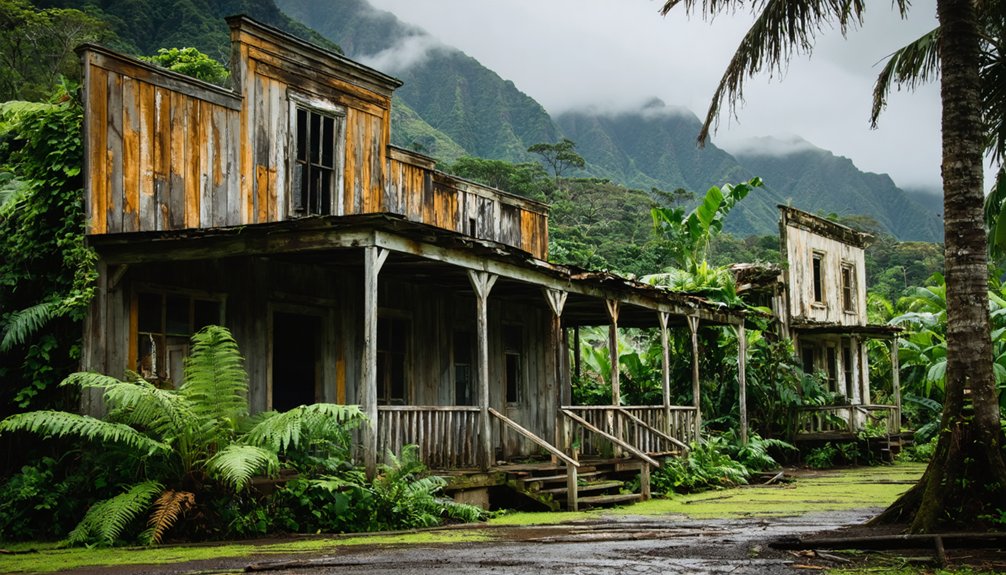
Nestled along Oahu’s North Shore, Waimea Valley transforms into a cinematic jungle arena where production crews can stage everything from aircraft crash sequences to treacherous terrain pursuits. The location’s dense foliage, natural waterfalls, and winding trails provided *Hunger Games: Catching Fire* filmmakers with authentic jungle landscapes perfect for depicting the arena’s poisonous fog zones and baboon attacks.
You’ll find the valley’s topography supports versatile shooting scenarios—from static survival scenes to dynamic crash sequences requiring minimal set construction. At $25 admission, you can explore these same trails where Katniss navigated treacherous environments.
The botanical garden’s proximity to Turtle Bay and Manoa Valley allowed production teams to capture varied jungle textures while maintaining logistical efficiency. Dense vegetation naturally obscures modern infrastructure, creating isolated wilderness atmospheres.
Frequently Asked Questions
Are Any Hawaii Ghost Town Filming Locations Accessible Without Paid Tours?
Like finding hidden treasure, you’ll discover several Lost filming locations offer free access. Paradise Park, Waialua Sugar Mill, and Mānoa Falls have open access permissions and minimal visitor guidelines—just parking fees at trailheads, no tour costs required.
Which Abandoned Hawaiian Sites Were Used for Lost Besides Those Mentioned?
You’ll find Lost used several other abandoned sites whose hidden history includes old military bunkers, derelict warehouses, and forgotten plantation buildings. However, preservation efforts have limited public access, so you’d need permission to explore these restricted filming locations independently.
Can Visitors Film Personal Videos at These Former Lost Locations?
You’ll find personal filming varies by location—public beaches allow unrestricted video capture, while Kualoa Ranch permits photography during tours. Drone filming requires FAA registration and landowner consent. Permission requirements depend on whether you’re accessing private property or commercial zones.
What Safety Precautions Exist at Abandoned Filming Sites in Hawaii?
You’ll find minimal safety measures at abandoned sites—fencing and “no trespassing” signs deter illegal trespassing, but hazardous terrain like slippery trails, crumbling structures, and steep cliffs remain unmanaged. Tours offer supervised access where independent exploration isn’t permitted.
Do Other TV Series Use Hawaii’s Abandoned Locations Like Lost Did?
Yes, you’ll find Hawaii’s “abandoned” locations are Hollywood’s worst-kept secret. Pop culture references multiply as productions exploit filmmaking logistics—Ka’a’awa Valley hosts multiple series, North Shore beaches welcome various shows, and Diamond Head studios rotate productions constantly.
References
- https://www.honolulumagazine.com/get-lost-visit-16-iconic-oahu-filming-locations-from-the-hit-show/
- https://outandaboutwithkids.com.au/8-must-see-hawaii-film-locations/
- https://www.gohawaii.com/kauai-film-locations
- https://www.youtube.com/watch?v=BOEqQCQS_Ns
- https://giggster.com/guide/movie-location/where-was-triple-frontier-filmed
- https://www.youtube.com/watch?v=NpPCtZamyPA
- https://www.tripadvisor.com/Attractions-g29222-Activities-c42-t232-Oahu_Hawaii.html
- https://wildlifehawaii.com/2024/10/30/waialua-agricultural-company/
- https://en.wikipedia.org/wiki/Waialua_Sugar_Mill
- https://imagesofoldhawaii.com/early-waialua-sugar-operations/