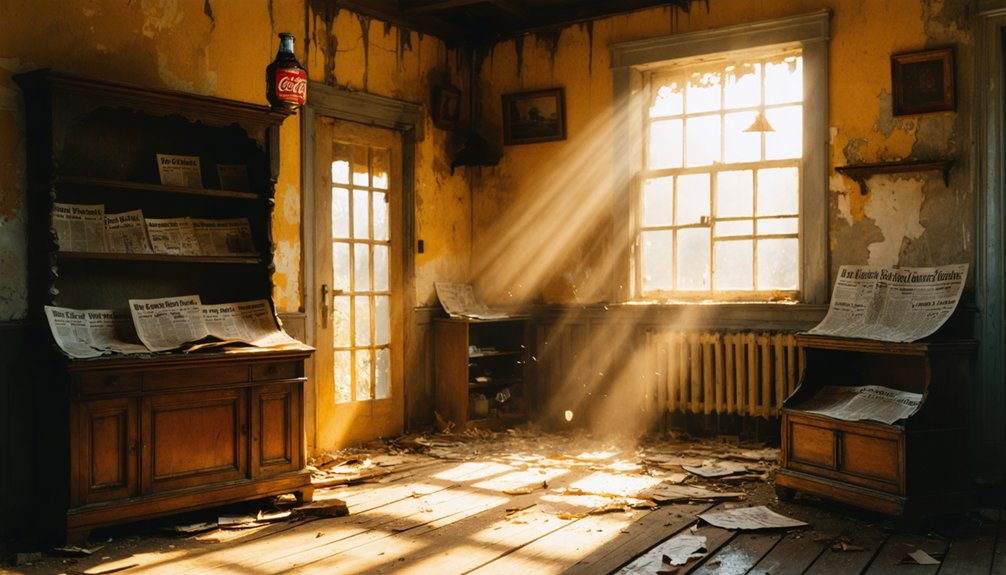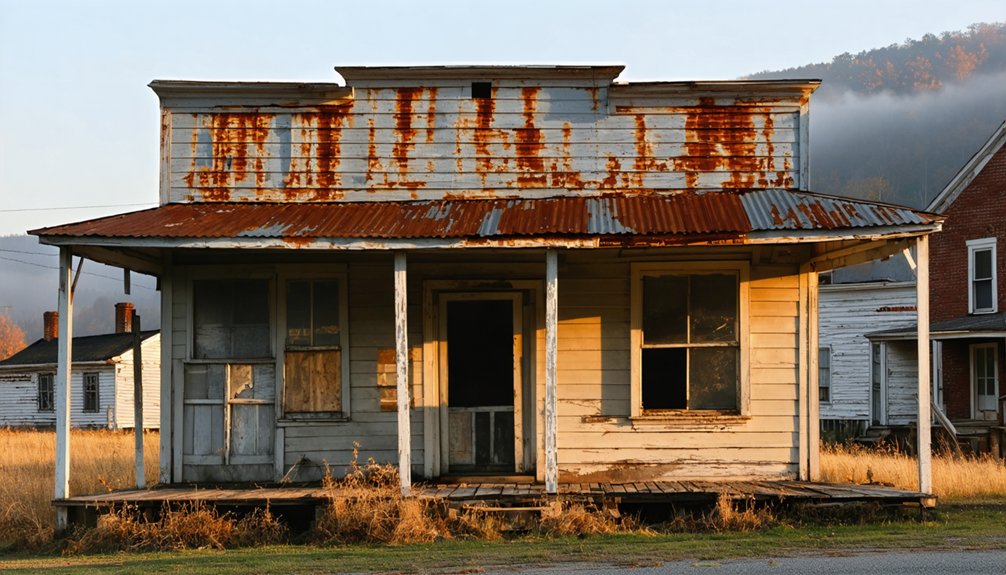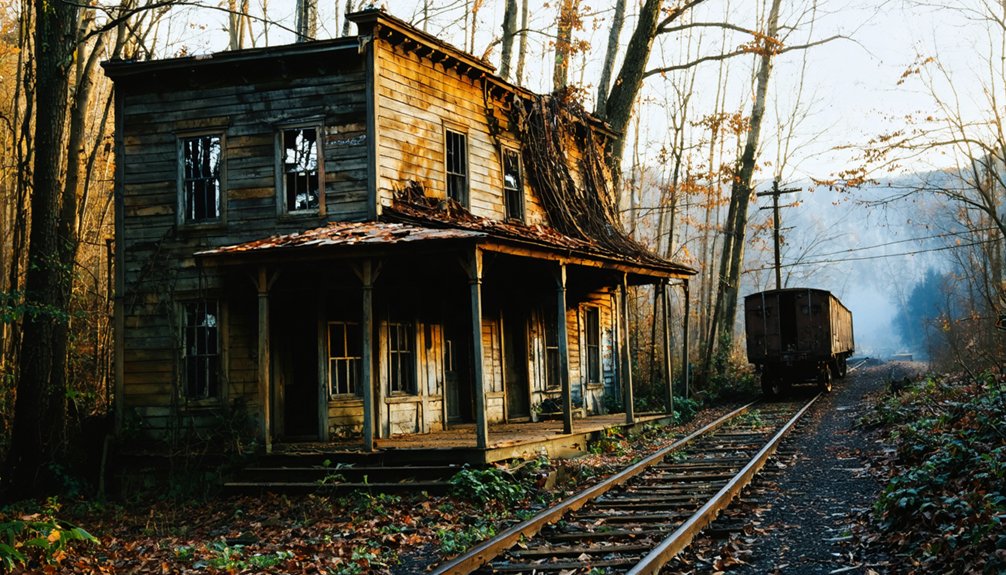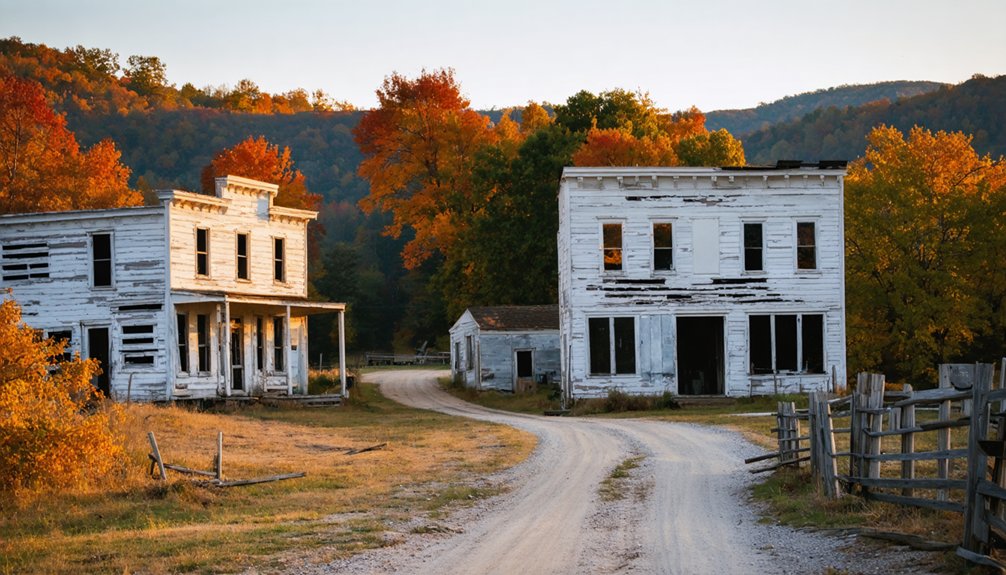
You’ll find Kentucky’s ghost towns serving as authentic film backdrops, from Talon Falls Screampark in Graves County—where Joshua Shreve shot his 2017 horror film amid actual haunted attraction corridors—to Brookside’s coal mining ruins in Harlan County, featured in Barbara Kopple’s Oscar-winning documentary with rusted tipples and abandoned worker housing. Cave City’s decaying roadside attractions and the Western-themed remnants of Six Gun City near Cumberland Falls offer ready-made post-apocalyptic and frontier settings, while Mayfield and Paducah provided small-town authenticity for the 1989 Vietnam drama *In Country*—each location preserving distinct eras and atmospheres that continue attracting production crews.
Key Takeaways
- Talon Falls Screampark in Graves County served as the authentic filming location for Joshua Shreve’s 2017 horror film “Talon Falls.”
- Cave City’s abandoned roadside attractions offer post-apocalyptic aesthetics with decaying amusement parks, boarded-up buildings, and rusted relics for film production.
- Brookside in Harlan County provided authentic coal mining ruins as the backdrop for Barbara Kopple’s Oscar-winning documentary “Harlan County USA.”
- Mayfield and Paducah served as filming locations for the 1989 movie “In Country,” providing authentic small-town scenery and interiors.
- Abandoned Western-themed parks like Six Gun City and Tombstone Junction in Daniel Boone National Forest offer old-west facades for filming.
Talon Falls and Graves County’s Horror Film Legacy
Nestled in the rural flatlands of Graves County, Talon Falls Screampark sits just minutes from Paducah, Kentucky, where it transforms into a labyrinth of terror each October.
Minutes from Paducah in Graves County’s flatlands, this screampark becomes a seasonal labyrinth of terror every October.
This working screampark doubled as one of Kentucky’s authentic horror film locations when director Joshua Shreve shot the 2017 feature “Talon Falls” on-site. The film’s plot mirrors reality—teenagers visiting haunted attractions who discover hyper-realistic scares turning deadly.
Created by photographer Todd Ferren, the venue operates multiple experiences including Dead End Haunted House and Blood Creek Haunted Hayride. The production featured Morgan Wiggins, Ryan Rudolph, Jordyn Rudolph, and Brad Bell in the starring roles. Shreve also served as writer and producer alongside Steinborn and Mills, bringing his complete creative vision to the project. Graves County has cultivated a “Haunted Graves” brand, hosting two horror productions within a decade, including “Star Light” filmed in nearby Mayfield.
You’ll find this convergence of commercial haunts and cinema creates an unusually immersive backdrop where entertainment infrastructure serves dual purposes.
Cave City’s Shuttered Roadside Attraction Circuit
You’ll find Cave City’s roadside attraction circuit littered with boarded-up buildings, rusting chairlift cars, and peeling paint—remnants of a family entertainment hub that couldn’t compete with larger parks like Kentucky Kingdom and Beech Bend. The decline left only scattered survivors: Dinosaur World, Guntown Mountain, and Kentucky Action Park still draw visitors to Mammoth Cave’s periphery.
While decaying venues like the $30 wildlife museum offer 20-minute walks through outdated exhibits. The construction of I-65 diverted tourist traffic away from these historic roadside stops, accelerating their abandonment. Guntown Mountain itself opened in 1969 as a Wild West-themed attraction before ultimately closing in 2016. These weathered structures, from Funni-Frite’s 1972 Haunted Hotel to overgrown snack bars and abandoned bumper car tracks, create authentic post-apocalyptic backdrops that modern set designers struggle to replicate.
Abandoned Parks and Attractions
Along Kentucky’s I-65 corridor near Mammoth Cave, Cave City’s roadside attraction circuit tells the story of mid-century tourist economies that once thrived on highway traffic.
You’ll find Guntown Mountain’s decommissioned chairlift among rusty relics—its cars piled beside overgrown paths leading to abandoned Wild West structures.
The haunted amusement park featured shootout shows and a fortune-telling hut before closing in 2015.
Nearby stands Kentucky Action Park and Mammoth Cave Wax Museum, both shuttered after I-65 bypassed US 31’s main drag.
The area maintains its Route 66 vibe through ghost towns and deteriorating roadside attractions that once defined American highway culture.
Film scouts seeking authentic decay discover boarded buildings with peeling paint, creaky wooden steps, and TW’s Redneck Golf course complete with bathtub obstacles.
These deteriorating attractions provide production-ready settings without extensive set construction, offering filmmakers tangible remnants of America’s roadside tourism era.
Competition From Modern Venues
The construction of Interstate 65 in the late 1950s fundamentally reshaped Cave City’s economic landscape. It slashed Louisville-to-Nashville travel time from five hours to three while rerouting motorists away from the US 31W corridor that once funneled them past every mom-and-pop motel, diner, and quirky roadside cave.
Regional powerhouses like Kentucky Kingdom, Beech Bend, and Dollywood offered superior scale, flashier attractions, and shorter lines—draining visitors from Cave City’s kitsch circuit. Haunted houses, waterslides, bumper cars, and train rides vanished as operators couldn’t compete.
Urban legends and haunted legends that once drew thrill-seekers to these quirky stops faded with shuttered venues. Guntown Mountain persists, but most peers collapsed. The Ace Theatre shifted from productions to retail. Survivors like Dinosaur World carved niches with outdoor dinosaur models and hands-on fossil digs that larger parks couldn’t replicate. Meanwhile, Onyx Cave maintained its appeal through guided underground tours showcasing cave coral and mineral formations.
Today, ghost town remnants attract niche travelers seeking vintage Americana over corporate amusement parks.
Surviving Tourist Destinations
Despite decades of decline, a handful of Cave City’s roadside attractions cling to survival by doubling down on vintage oddity rather than chasing corporate polish.
You’ll find Wigwam Village #2’s teepee-shaped units standing since 1937, offering authentic theme park nostalgia through mid-century architecture and weathered signaling.
Dinosaur World pulls steady crowds with life-sized replicas and hands-on fossil digs.
Crystal Onyx Cave captures Mammoth Cave overflow traffic with its Drippy Room formations and sluicing activities.
Mammoth Valley Park operates Kentucky’s only Alpine Slide alongside the state’s longest twin zip line.
Guntown Mountain survives as a shadow of its putt-putt and bumper car heyday.
Jesse James Riding Stables has anchored the roadside strip for over 50 years, offering horseback tours and mini golf with the same family-run authenticity that defined the attraction’s founding era.
These roadside relics resist extinction by embracing their faded authenticity—weathered paint and all—rather than sanitizing their eccentric appeal for modern tastes.
Brookside’s Coal Mining Ruins in Harlan County USA
You’ll find Brookside’s abandoned mine structures scattered across Harlan County’s hillsides, where Barbara Kopple filmed 120 hours of footage between 1973 and 1977 for her Oscar-winning documentary *Harlan County USA*.
The decaying remnants of Eastover Mining Company’s operations—including rusted tipples, company housing foundations, and weathered picket line sites—serve as haunting monuments to the 13-month strike that killed Lawrence D. Jones and transformed 180 miners’ families into national symbols of labor resistance.
These coal mining ruins capture the violence of “Bloody Harlan” on camera, from mattress-lined striker homes riddled with gunfire to the courthouse steps where Judge Byrd Hogg‘s injunction allowed Virginia strikebreakers to cross picket lines.
Bryan W. Whitfield originally established the site in 1912 as Harlan Collieries before it became the Brookside operation that witnessed decades of labor conflict.
The strike’s nearly ninety arrests marked only part of the conflict that persisted until Eastover finally offered a contract following Jones’s death in August 1974.
Academy Award-Winning Documentary Backdrop
When Barbara Kopple arrived in Harlan County with her camera crew in 1973, Brookside’s coal mining ruins became the gritty backdrop for what would win the Academy Award for Best Documentary at the 49th Academy Awards.
You’ll see authentic union activism captured against defunct tipples and the former company store that Manalapan Mining Co. used as their office. The thirteen-month strike unfolded across these decaying structures, where 180 miners and their wives picketed along state Highway 38.
Kopple’s cameras documented gunshots echoing through Clover Fork valley, coal trucks passing weathered buildings, and women holding picket signs near ruins resembling 1930s-era mining history.
This ghost town setting provided unscripted drama—real labor strife against crumbling infrastructure—that transformed abandoned coal camp remnants into Oscar-winning cinema showcasing workers’ determination for safety and union representation.
Eastover Mining Company Remnants
Eastover Mining Company’s 1970 acquisition of Brookside transformed this Harlan County operation into one of Kentucky’s most contentious labor battlegrounds, where Duke Power’s subsidiary imposed a company union paying miners $30 daily—$12 less than United Mine Workers of America rates at competing sites.
You’ll find remnants of underground mining infrastructure where 180 workers launched their 13-month strike in July 1973, demanding recognition of their rights against corporate control.
The ruins tell a stark story through:
- Crumbling company housing lacking basic plumbing where families lived on rocky 1910s terrain
- Abandoned mine entrances recording disabling injury rates triple the national average
- Empty rail corridors where coal once moved before mechanization eliminated two-thirds of jobs
- Scattered camp foundations marking sites of 90 arrests during labor disputes that drew national attention
Bloody Harlan Labor Conflicts
The Brookside Mine ruins stand as physical testimony to Kentucky’s most documented labor war, where 180 miners walked off their jobs in July 1973 demanding safety committees with authority to shut down hazardous sections, health coverage funded through production royalties, and portal-to-portal compensation for all underground work time.
You’ll find remnants of company housing where families endured gassings and gunfire while Eastover Mining resisted the labor union contract. State troopers patrolled these hollows after strike violence escalated—organizers dodged bullets, hired prison guards defended operations, and women replaced enjoined picketers.
The documentary *Harlan County USA* captured these decaying structures before striker Lawrence Jones’s August 1974 killing forced Duke Power’s capitulation. The ruins now attract filmmakers seeking authentic backdrops where workers defied corporate power despite overwhelming odds.
Six Gun City and Tombstone Junction Near Cumberland Falls
Perched atop a mountain in McCreary County along Kentucky Route 90, Six Gun City’s weathered structures stand as remnants of a 1960s wild-west themed amusement park that once employed up to 70 seasonal workers to stage gunfights and country dancing shows.
You’ll find these abandoned structures near Cumberland Falls, accessible via a three-quarter-mile hike from the Eagle Falls trailhead.
The site connected to Tombstone Junction through a steam engine railway, which hosted performers like Tammy Wynette and Dolly Parton until a 1991 fire destroyed it.
Today’s explorers discover:
- Old-west facades resembling John Wayne film sets
- Decaying buildings scattered across wooded terrain
- Vanished railroad tracks once linking both attractions
- Open access through Daniel Boone National Forest
These ruins remain freely explorable despite nature’s reclamation.
Mayfield and Paducah’s Role in Vietnam War Drama In Country
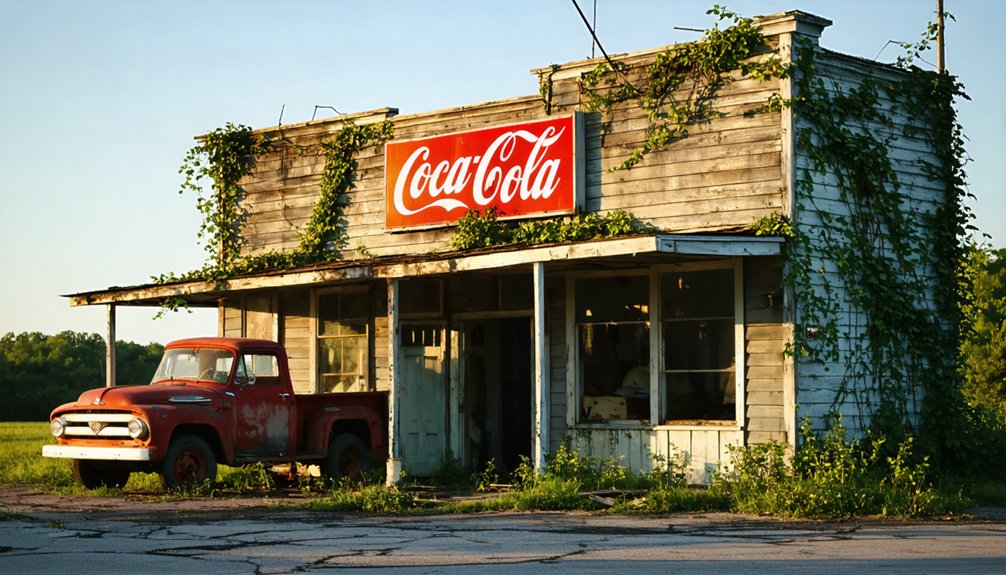
Unlike authentic ghost towns, Mayfield and Paducah served as functioning communities that transformed into fictional Hopewell, Kentucky for Norman Jewison’s 1989 Vietnam War drama *In Country*.
You’ll find Mayfield, Graves County’s seat and author Bobbie Ann Mason’s hometown, anchored the production’s filming authenticity through its rural architecture and downtown streets. A local dry cleaners became the “Clothes Doctor” walk-in medical office for vital PTSD scenes starring Bruce Willis and Emily Lloyd.
Paducah contributed interior residential shots, including uncle Emmett’s home sequences.
This Jackson Purchase region location work delivered genuine small-town Kentucky atmosphere without requiring abandoned structures.
The production’s community impact extended beyond economics—these western Kentucky towns gained visibility as credible film locations while maintaining their operational status, proving you don’t need deserted buildings to capture authentic regional character on screen.
Historic Distillery Warehouses as Military Comedy Backdrops
- Tank crashes through actual Jim Beam warehouses
- Aged, abandoned structures mimicking military installations
- Industrial backdrops enhancing comedic training chaos
- George Rogers Clark Memorial Bridge and West Market Street recruiting scenes
Bill Murray and John Candy’s platoon sequences transformed Kentucky bourbon heritage into Cold War comedy gold. Jim Beam’s permissions granted filmmakers freedom to destroy select buildings, creating memorable action sequences that showcased Kentucky’s versatile filming potential.
Preserving Kentucky’s Filming Heritage Through Abandoned Locations
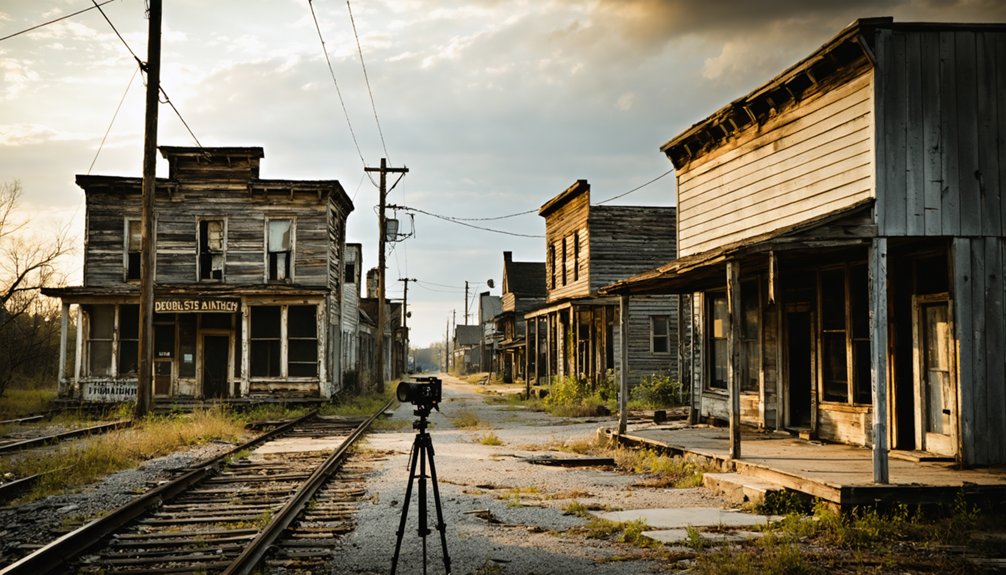
Cultural preservation faces mounting challenges. Brookside’s collapsed mining structures—immortalized in *Harlan County USA*—deteriorate faster than documentation efforts progress.
Cave City’s roadside attractions like Dinosaur World survive through nostalgic appeal, while competition from Kentucky Kingdom accelerates ghost town transformation.
You’re witnessing communities balance structural decay against heritage tourism potential, where “Bloody Harlan” lore and documentary fame provide economic lifelines to emptied mining camps.
Frequently Asked Questions
Can Visitors Legally Access Abandoned Filming Locations in Kentucky?
You’ll face trespassing charges accessing Kentucky’s abandoned filming locations without permission. Safety precautions demand avoiding collapsed structures and open shafts. Preservation efforts protect sites like Brookside through patrols. Seek landowner consent first—legal alternatives exist through guided tours.
What Permits Are Required to Film at Kentucky Ghost Towns?
You’ll need permits based on ownership—public property requires local film permits, while private ghost towns need owner permission. You must also comply with environmental regulations protecting historic sites and obtain special permits for effects or drones.
Are Any Kentucky Ghost Town Filming Locations Currently for Sale?
No Kentucky ghost town filming locations are currently listed for sale. However, you’ll find tourism development opportunities near Cave City’s declining attractions, where historical preservation efforts could transform abandoned mom-and-pop properties into creative filming venues offering entrepreneurial freedom.
Which Abandoned Kentucky Locations Offer Guided Tours for Film Enthusiasts?
You’ll find guided tours at Pioneer Playhouse’s preserved *Raintree County* sets and Keeneland Race Course’s *Seabiscuit* facilities. Both embrace tourism development through historical preservation, offering structured access where you can freely explore Kentucky’s cinematic heritage without restrictions.
How Do Local Communities Benefit Economically From Ghost Town Filming?
You’ll find film productions boost local business impact through crew spending at hotels and restaurants, while generating revenue for historical preservation projects. Productions create temporary jobs and attract film tourists, strengthening your community’s economic independence and cultural heritage protection.
References
- https://wkdq.com/creepy-kentucky-county-horror/
- https://www.kentuckyliving.com/explore/kentuckys-movie-set-towns
- https://thedecorologist.com/ghost-town-cave-city-kentucky/
- https://www.youtube.com/watch?v=wzbADLnboYk
- https://www.onlyinyourstate.com/experiences/kentucky/ghost-town-cumberland-falls-ky
- https://www.horrorreview.com/talon-falls-a-popular-halloween-scream-park-turns-into-a-real-life-horror/
- https://pophorror.com/talon-falls-2017-screampark-movie-review/
- https://my1053wjlt.com/kentucky-screampark-horror-movie/
- https://horrornews.net/126002/talon-falls-popular-halloween-scream-park-turns-real-life-horror/
- https://www.youtube.com/watch?v=d1nfgzmK5xk