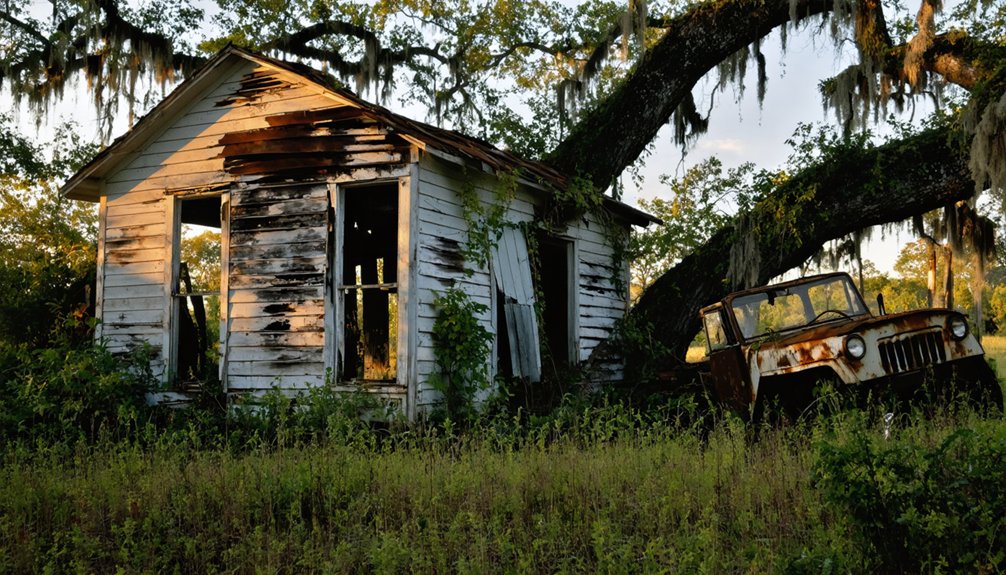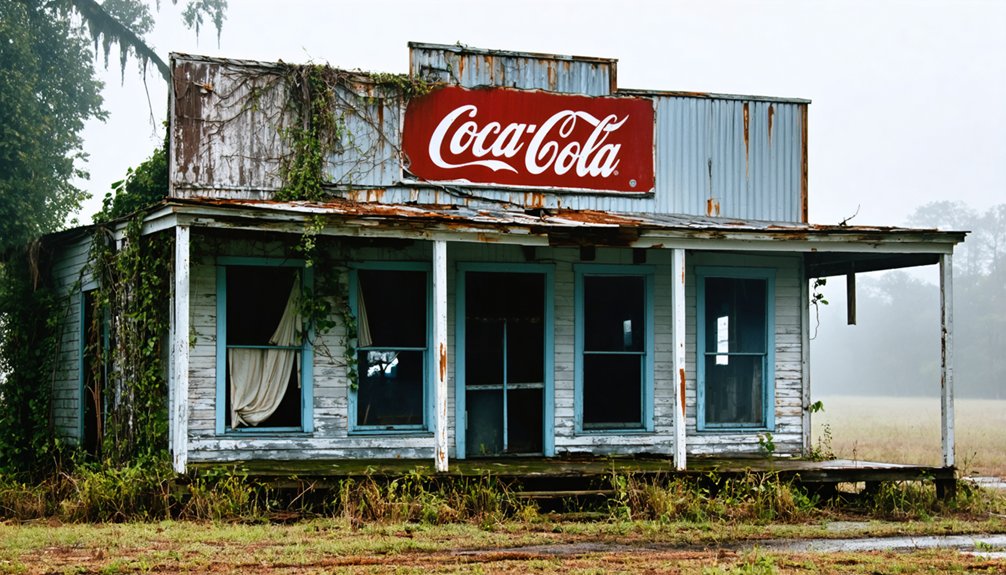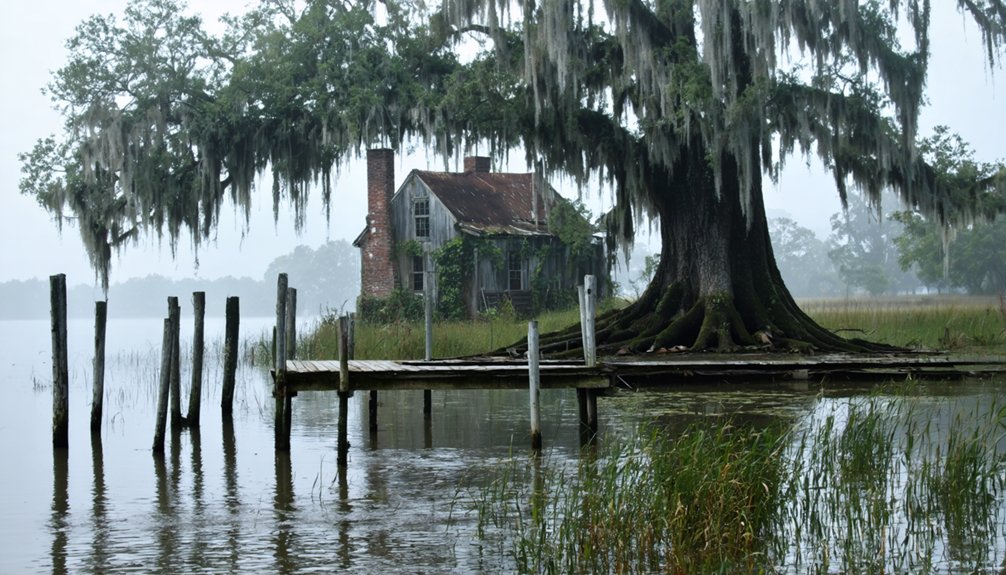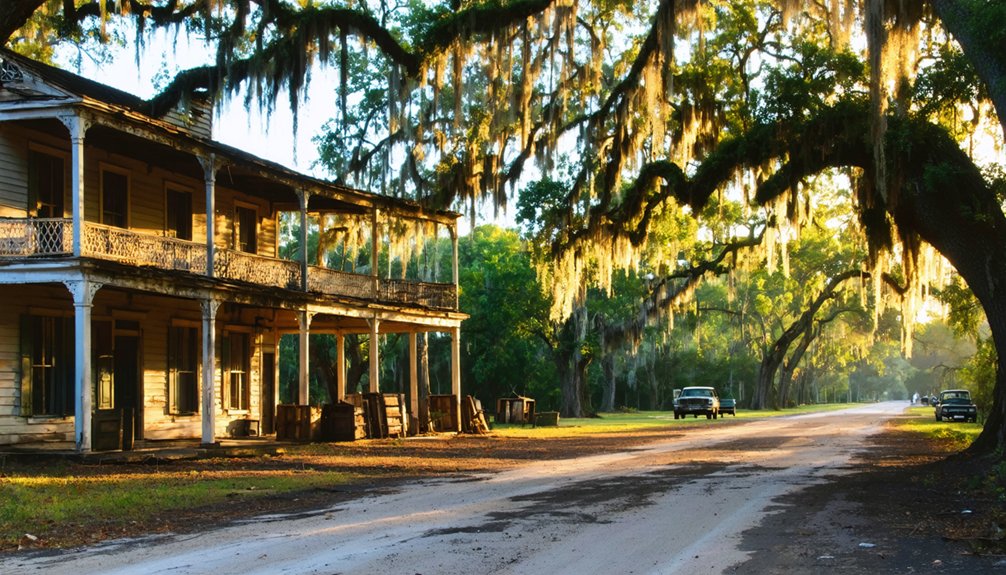
You’ll find Louisiana’s most notable cinematic ghost town near Grand Cane, where WGN’s *Salem* set—featuring 25 colonial buildings including a church, gallows, and mansion—now sits abandoned and weathered by humid climate. The meticulously constructed village, built in two months with 13 fully-finished interiors, divides into religious, commercial, residential, and social zones that authentically mimic colonial settlement patterns. Beyond this dramatic example, Louisiana’s plantations, rural bayou communities like Pierre Part, and New Orleans’ Gothic mansions have doubled as atmospheric ghost town settings, with some preserved through tourism while others decay naturally into atmospheric ruins that continue attracting production crews.
Key Takeaways
- The Salem movie set in Grand Cane was constructed with 25 buildings but now stands abandoned and weathered, resembling a ghost town.
- Grand Cane’s Salem set features authentic colonial architecture across four zones: religious/civic, commercial, residential, and social establishments.
- Louisiana’s humid climate accelerates decay of abandoned film sets, with scattered props and overgrown structures illustrating post-production neglect.
- Some film locations like plantations remain preserved through active tourism, while others like Salem face abandonment and deterioration challenges.
- Rural Louisiana communities including Pierre Part, Hammond, and Bayou villages provide authentic wilderness and remote backdrops for film productions.
Salem Movie Set: An Abandoned Television Town in Grand Cane
When WGN America greenlit its first original scripted series in 2013, construction crews descended on Grand Cane, Louisiana, and erected an entire 17th-century colonial town in roughly two months. You’ll find 25 buildings scattered across this ambitious set, with 13 featuring fully finished period interiors. The town served as filming backdrop for Salem’s three-season run, hosting Janet Montgomery, Shane West, and even Marilyn Manson from 2014 through 2017.
Today, urban decay claims this once-bustling production hub. The Sibley mansion—modeled after the House of Seven Gables—still anchors the property alongside intact gallows, jail cells, and overgrown slum sections.
Cemetery props have scattered to the wind. While set restoration remains unlikely, the structures persist as *testament* to ambitious television production outside Hollywood’s traditional boundaries.
The Architecture and Layout of the Salem Set
You’ll find over 20 structures scattered through the dense Louisiana forest, ranging from a towering church and gallows to commercial facades, a mansion, and waterfront docks.
The production crew constructed this 17th-century colonial replica in roughly two months, with 13 buildings featuring complete interiors for filming while others serve as exterior-only facades.
Each structure serves a specific narrative function—the church anchors the religious community, shops line the main pathway as a commercial district, and residential buildings span from elite mansions to slum dwellings. The set’s design incorporates elements reflecting Louisiana’s French and Spanish traditions, which have historically influenced the state’s architectural aesthetics and cultural storytelling. Louisiana’s reputation as a horror filming location has made it a preferred destination for productions seeking authentic atmospheric settings.
Building Types and Functions
As you explore the Salem set, you’ll immediately notice how the architecture creates distinct zones that mirror a functioning 17th-century Massachusetts settlement. The urban infrastructure divides into four primary areas:
- Religious and civic center – Church with cemetery and gallows for public executions
- Commercial district – Pub, apothecaries, haberdasheries, wheelrights, pewterers, and undertakers along cobblestone paths
- Residential quarters – Ranging from single-room slum dwellings to the cavernous Sibley mansion with seven-gables inspiration
- Social establishments – The Divining Rod brothel and dining halls with period-authentic furnishings
The architectural detailing extends beyond facades. Thirteen buildings feature fully furnished interiors with custom 17th-century elements, while remaining structures use two-by-four frames. The historic district project demonstrates the meticulous planning required for such ambitious period recreations.
Docks once supported a temporary ship, and connecting arches link building clusters throughout this meticulously crafted settlement. The town square also includes functional punishment structures like stocks and a dunking chair that would have been central to colonial justice and public shaming rituals.
Construction Timeline and Scale
The production team accomplished a remarkable feat by constructing over 20 buildings in approximately two months, demonstrating the kind of rapid-fire coordination that defines modern television production schedules. Construction logistics demanded strategic resource allocation—13 buildings received fully furnished 17th-century interiors for filming, while others remained as facades to optimize budget constraints.
This zoned approach created distinct commercial districts, residential slums, and ceremonial spaces that reflected authentic colonial settlement patterns. The structural durability of these temporary structures proved surprisingly robust; many remained largely intact years after production wrapped, though exposed elements like the church and commercial facades eventually succumbed to environmental weathering. The Salem set construction contributed to local employment opportunities, as specialized craftspeople from the region were hired to work on the accelerated building schedule.
You’ll find that this accelerated building schedule required specialized craftspeople working simultaneously across multiple sites, transforming raw materials into a functional filming town within weeks.
New Orleans: Louisiana’s Horror Film Capital
You’ll find New Orleans dominating Louisiana’s horror film industry with 39.55 productions per 100,000 residents, securing the city’s #5 national ranking.
The Buckner Mansion at 1410 Jackson Avenue serves double duty as both *Haunted Mansion’s* exterior and Miss Robicheaux’s Witch Academy in *American Horror Story: Coven*.
Lafayette Cemetery No. 1 appears across dozens of supernatural productions.
*Interview with the Vampire* transformed the French Quarter’s historic streets into 18th-century settings where Brad Pitt, Tom Cruise, and Antonio Banderas filmed among cast-iron balconies and gas-lit alleyways.
The city’s voodoo and supernatural history have made it an ideal location for vampire-themed productions like *The Originals*.
The LaLaurie Mansion at 1140 Royal St. serves as a key haunted house site featured in the series.
Horror Film Production Statistics
Over $4.1 billion has flowed through New Orleans and its surrounding region from film productions in the last five years, cementing Louisiana’s position as the nation’s fourth-largest production hub and the South’s second-largest filming destination.
You’ll find horror productions thriving here, backed by sophisticated infrastructure and streamlined filming permits.
The 2022 numbers reveal the scope:
- Film New Orleans processed 860 film and location permits
- Productions generated $893 million in total spending across Orleans Parish
- Local crew earned $313 million in payroll
- Projects logged 3,225 total shoot days
Second Line Stages exemplifies this growth, expanding its soundstage design to 128,500 square feet across eight stages—where American Horror Story brought nightmares to life without bureaucratic interference. Hackman Capital Partners invested approximately $100 million in the expansion and operations after acquiring the facility in 2020.
However, the industry faces challenges, with only five independent feature films currently in production as lobbyists work to restore Louisiana’s film industry strength.
Haunted Mansion Filming Sites
When Disney’s 2023 *Haunted Mansion* needed a real-world counterpart to its supernatural estate, production designers turned to Buckner Mansion at 1410 Jackson Avenue in the Garden District—a towering antebellum structure whose weathered columns and shadowed galleries had already earned horror credentials through *American Horror Story: Coven*.
While interiors were constructed on soundstages, the mansion’s exterior provides the film’s haunted grandeur. You’ll find the production utilized Lafayette Cemetery No. 2‘s above-ground tombs for the jazz funeral sequence, capturing New Orleans’ distinctive burial traditions.
The crew filmed engagement scenes at Jackson Square and drinks at Lafitte’s Blacksmith Shop, a 300-year-old former smugglers’ den.
Royal Street and surrounding French Quarter locations showcase the eerie architecture that director Justin Simien identified as America’s ideal haunted setting. Meanwhile, Trilith Studios in Atlanta served as the construction hub for the mansion’s interior sets, including detailed replicas of the ride’s signature Séance Room and Madame Leota sequences.
Iconic Vampire Movie Locations
Beyond haunted estates and spectral settings, Louisiana’s Gothic architecture has cemented its reputation as America’s vampire film capital.
With New Orleans’ French Quarter architecture and above-ground cemeteries providing the atmospheric backdrop for decades of bloodsucker cinema.
Lafayette Cemetery No. 1 anchors multiple vampire tropes across *The Originals*, *American Horror Story: Coven*, and *Dracula*—accessible via bus 88 to Basin St.
Essential vampire filming locations you’ll recognize:
- Oak Alley Plantation (3645 Louisiana State Highway 18, Vacherie) served as Louis’ estate in *Interview with the Vampire*, featuring its signature 28-oak avenue built in 1839
- LaLaurie Mansion (1140 Royal St.) provided *Coven’s* infamous French Quarter setting
- Hotel Royal hosted Marcel’s vampire party with Klaus Mikaelson in *The Originals*
- Olde Town Conyers, Georgia doubled as French Quarter exteriors for balcony scenes
Historic Plantations Transformed Into Cinematic Settings
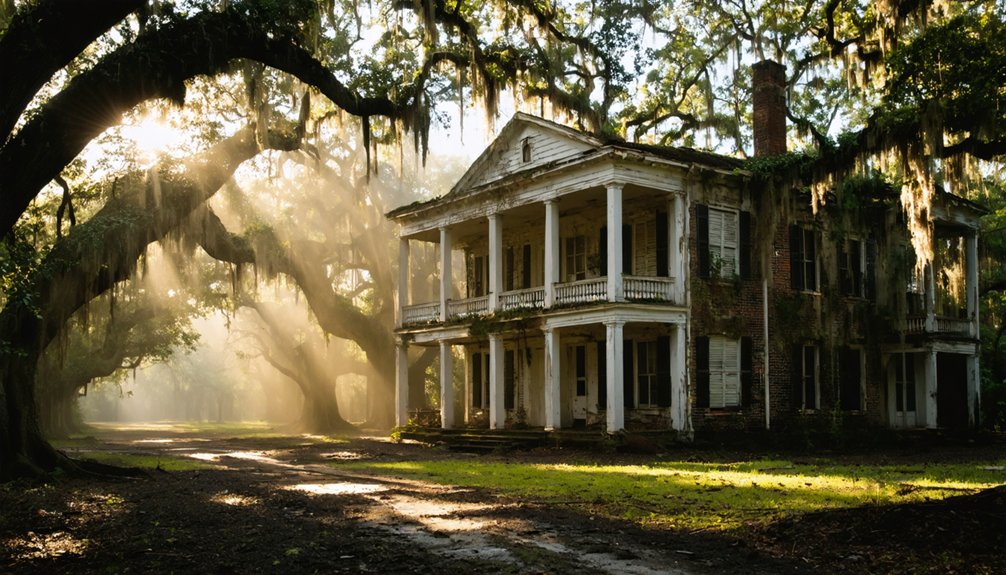
Louisiana’s historic plantations have doubled as evocative film sets since the 1960s, with their moss-draped oaks and antebellum architecture providing ready-made atmospheres for period dramas and psychological thrillers. Oak Alley hosted Bette Davis in *Hush… Hush, Sweet Charlotte* (1964) and later became Brad Pitt’s vampire estate in *Interview with the Vampire*.
Plantation architecture reached peak historical authenticity at St. Joseph, where crews added period structures for *12 Years a Slave* (2013). Evergreen Plantation’s intact slave quarters transformed into Django’s Mississippi nightmare in Tarantino’s *Django Unchained*.
Felicity served as the primary location for *The Skeleton Key*, while Houmas House appeared in multiple productions from *Mandingo* to Raven-Symoné’s *Revenge of the Bridesmaids*.
You’ll find these River Road properties still offering tours between film shoots.
Louisiana’s Rural Communities as Filming Backdrops
Remote villages across Louisiana’s backcountry transform into Hollywood’s vision of forgotten America with minimal set dressing required. You’ll find authentic swamp wilderness and isolated atmospheres that eliminate the need for expensive construction. These locations offer genuine cultural influences from the American South, maintaining architectural integrity that modern developments can’t replicate.
Production teams leverage community engagement across multiple parishes:
- Pierre Part – Primary bayou village location south of Baton Rouge
- Atchafalaya River Basin – Morgan City’s substitute for African wilderness environments
- Hammond, Houma, and Thibodaux – Rural communities providing swamp settings
- Zwolle and Bayou Sorrel – Remote villages delivering survival narrative backdrops
You’ll access Louisiana’s established film trail infrastructure connecting diverse terrain from urban centers to wilderness locations, supported by state parks like Tickfaw and experienced local crews.
The Buckner Mansion and Other Iconic New Orleans Locations
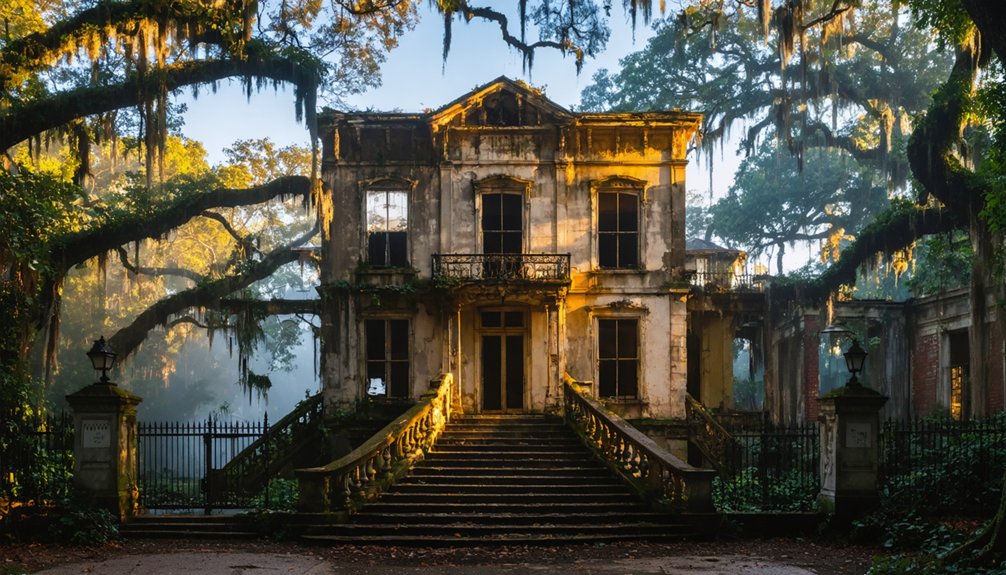
While Louisiana’s countryside offers raw authenticity for forgotten America narratives, New Orleans delivers urban grandeur through antebellum mansions that double as supernatural settings. You’ll find Buckner Mansion standing as the Garden District’s premiere filming location, its 1856 Greek Revival architecture showcasing six Ionic columns and 48 ornamental pilasters across 35 rooms.
American Horror Story: Coven transformed its exterior into Miss Robichaux’s Academy, capitalizing on centuries of urban legends surrounding the property. Ghost sightings here include servant Josephine’s apparition on the grand staircase, unexplained lemon scents, and self-operating light switches confirmed during psychic investigations.
The mansion’s evolution from cotton broker Henry Sullivan Buckner’s residence to Soulé College and finally private ownership created layered histories that filmmakers exploit. You’re accessing locations where architectural preservation meets documented paranormal activity, perfect for productions requiring authentic Southern Gothic atmosphere.
Swamps, Bayous, and Natural Louisiana Landscapes on Screen
Beyond the manicured estates and historic districts, you’ll discover Louisiana’s wetland wilderness serving as Hollywood’s go-to substitute for untamed America. These labyrinthine waterways transform into African jungles, horror film settings, and backdrops for urban legends. They haunt kayaking adventures through moss-draped cypresses.
Key swamp filming locations:
- Pierre Part and Bayou Sorrel – Primary villages for authentic bayou-centric productions near Baton Rouge.
- Atchafalaya River Basin – Morgan City’s expansive wetlands doubled as African environments since the silent film era.
- Houma and Hammond – Natural bayou exteriors for multiple productions seeking wilderness authenticity.
- Tickfaw State Park – Springfield’s protected wetlands featured in *Roots* miniseries.
These remote locations provided filmmakers with genuine wilderness inaccessible by conventional roads. Where *Hatchet’s* tourists faced swamp terror and *Beasts of the Southern Wild* captured Louisiana’s raw coastal beauty.
Preservation and Decay of Louisiana’s Film Locations
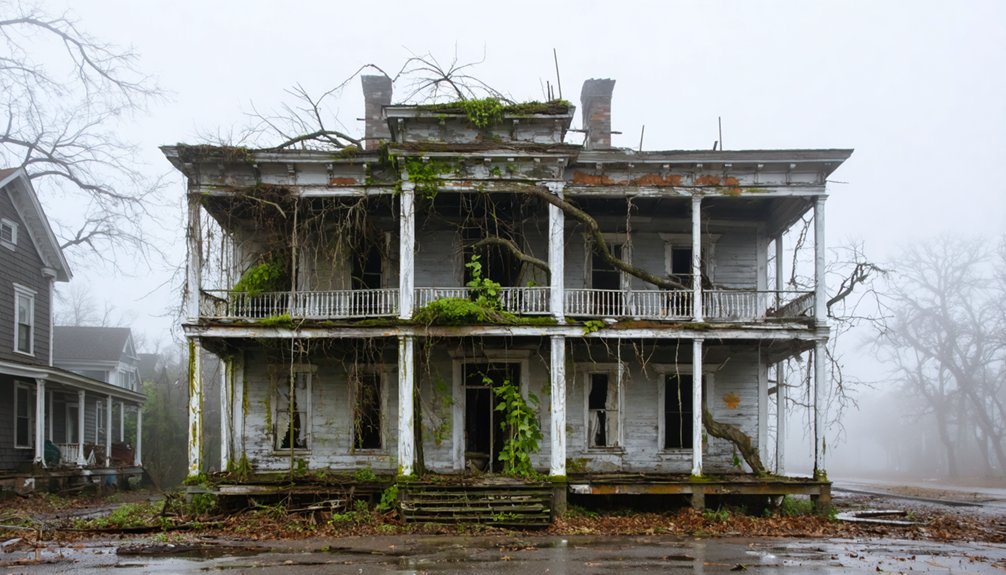
Louisiana’s film locations face vastly different fates after cameras stop rolling. You’ll find the abandoned Salem set near Grand Cane succumbing to urban decay—its 20 buildings weathering Louisiana’s humid climate without intervention. Church cemetery props have scattered, and the once-elaborate ship vanished from the docks, leaving only deteriorating facades among dense forest.
Meanwhile, heritage preservation thrives at Oak Alley and Evergreen plantations through active tourism. You can still walk where Brad Pitt filmed Interview with the Vampire or explore Django Unchained’s shooting grounds. These properties generate revenue maintaining their structures.
Houmas House and the five plantations from 12 Years a Slave demonstrate how visitor access funds conservation efforts, creating sustainable models that protect both architectural significance and film history from Louisiana’s relentless elements.
Frequently Asked Questions
Can Visitors Tour the Abandoned Salem Movie Set in Grand Cane?
No official tours exist—the set’s been rotting since 2017 without historical preservation efforts. You’ll find visitor accessibility severely limited on this private property, though YouTubers have explored the deteriorating structures, gallows, and overgrown marshland filming location.
What Permits Are Required to Film at Louisiana Ghost Towns?
You’ll need to navigate the filming permit process based on the ghost town’s location. Legal requirements vary by parish—typically you’ll submit applications, insurance proof, and hold harmless agreements to local authorities before shooting begins.
Are There Safety Concerns When Exploring Abandoned Louisiana Film Sets?
Over 70% of abandoned structures develop compromised foundations within five years. You’ll face serious trespassing risks exploring these decaying sets, where collapsed floors, venomous wildlife, and zero emergency access threaten your safety despite historical preservation appeals.
How Much Does It Cost to Rent Plantation Locations for Filming?
You’ll pay $70-$500 hourly or $120,000-$180,000 annually for plantation rentals, plus film permit fees. Historical preservation requirements affect costs, but Louisiana’s 40% tax credit offsets expenses. Access independent locations starting around $25/hour for maximum flexibility.
Which Louisiana Ghost Town Filming Locations Are Currently Being Restored?
You’ll find limited documented restoration of Louisiana ghost town filming locations currently. Preservation efforts focus mainly on plantations like Oak Alley rather than abandoned settlements. Haunted legends attract filmmakers to locations like Morgan City’s historic sites, though thorough restoration data remains scarce.
References
- https://710keel.com/horror-movies-louisiana/
- https://www.youtube.com/watch?v=rhxsKAdRqDw
- https://mississippirivercountry.com/iconic-america/famous-movies-tv-shows-filmed-in-louisiana/
- https://filmlouisiana.com/impact/parish-by-parish/
- https://www.explorelouisiana.com/articles/visiting-hollywood-south-louisiana-film-trail
- https://www.youtube.com/watch?v=gvrN0bbW0JI
- https://destinationfilmguide.com/louisiana-filming-locations/
- https://www.youtube.com/watch?v=fwYTXeP3hf4
- https://www.youtube.com/watch?v=dKoA9UkwhLU
- https://screencrush.com/salem-set-visit-report/