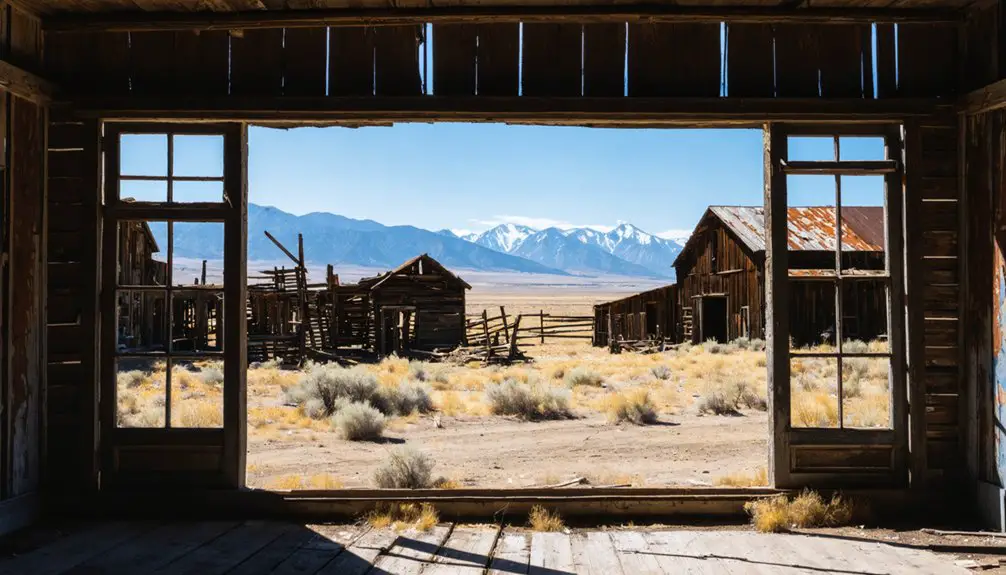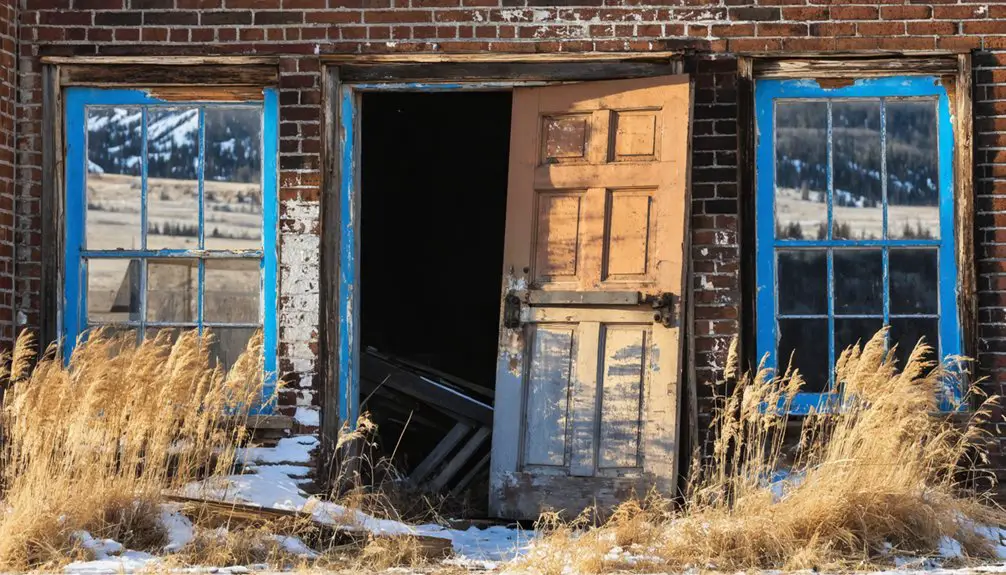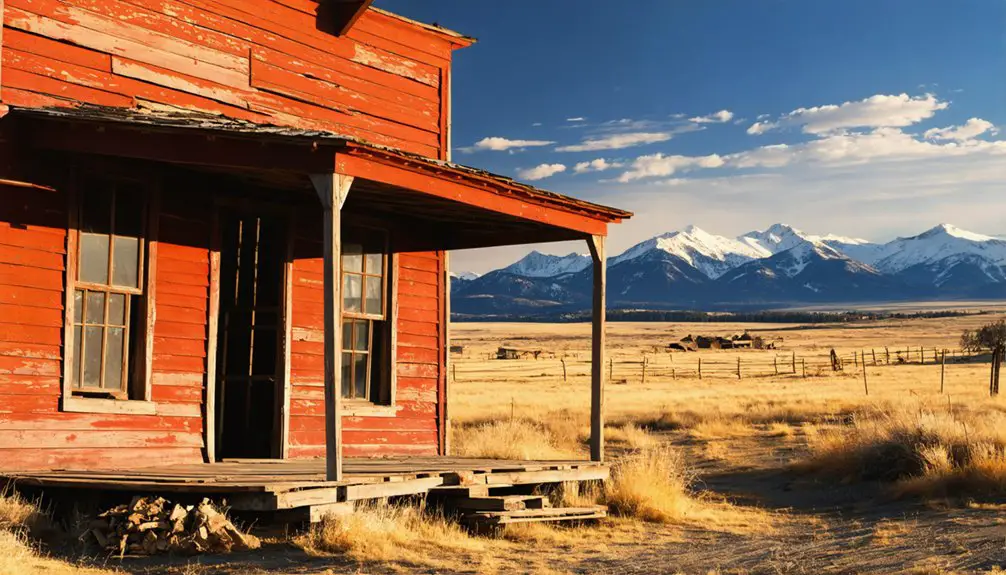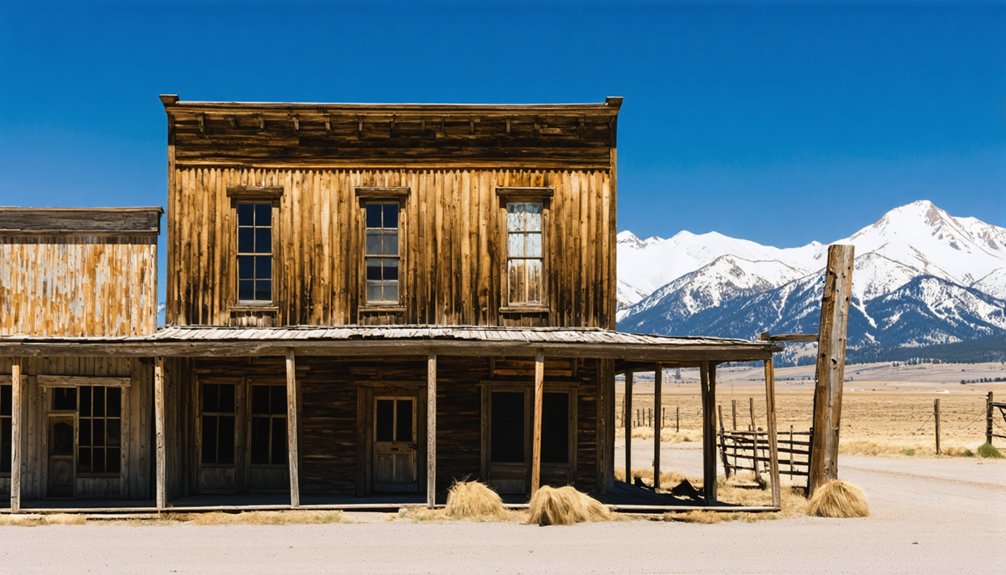
You’ll find production-ready Western sets at Montana’s preserved ghost towns, where authentic 1800s architecture eliminates costly reconstruction. Bannack State Park offers 60+ original gold rush buildings from 1862, while Garnet provides weathered miners’ cabins and saloons along a two-mile main street. Virginia City’s 150 historic structures hosted *The Ballad of Lefty Brown*, and Deer Lodge’s Old Montana Prison delivered authentic cellblocks for five productions. These remote locations maintain period accuracy through controlled preservation, natural decay, and zero modern intrusions—creating immersive backdrops where your crew captures genuine frontier atmospheres without digital enhancement or elaborate set dressing.
Key Takeaways
- Bannack State Park features 60+ preserved gold rush buildings from 1862-1890, designated a National Historic Landmark with authentic log cabins and frame structures.
- Garnet Ghost Town contains 30 original 1890s mining camp structures including saloons and cabins, maintained by BLM along a 2-mile main street loop.
- Virginia City offers 150+ historic buildings from 1860-1875 for filming, having hosted productions like *The Ballad of Lefty Brown* with lodging available.
- Old Montana Prison in Deer Lodge provides authentic cellblocks, 24-foot sandstone walls, and towers, hosting five productions including *The Last Ride*.
- Montana ghost towns eliminate set construction costs through authentic period structures, offering remote locations free from modern intrusions and tourist disruption.
Bannack State Park: A Preserved Mining Town for Period Pieces
When you’re scouting for authentic Western locations, Bannack State Park delivers over 60 preserved buildings from Montana’s 1862 gold rush era without modern intrusions cluttering your frame. You’ll find log cabins and frame structures lining Main Street, maintained in their original condition from the period of significance (1862-1890).
Sixty-plus untouched 1862 gold rush buildings line Main Street—no modern intrusions, no reconstructions, just authentic Western frames ready for your camera.
The state’s ghost town preservation philosophy emphasizes maintaining that “sense of abandonment” rather than restoration, giving you unmatched historical authenticity for period pieces.
You won’t deal with reconstruction headaches—these structures stood through Montana’s territorial capital days and survived into the 1970s. Your production team can work with State Historic Preservation Office consultation requirements, but you’re accessing America’s best-preserved ghost town.
The site sits at Montana’s first major gold discovery location from July 28, 1862, where the original strike sparked the population boom to over 3,000 by 1863. Bannack earned recognition as a National Historic Landmark in the 1960s, cementing its significance as a preservation priority. Over 47,000 annual visitors prove this location’s visual appeal translates to compelling footage.
Garnet: The Yellowstone Series Backdrop in Glacier Country
You’ll find Garnet Ghost Town’s 30 weathered structures providing *Yellowstone* crews with authentic 1890s mining camp backdrops, eliminating costly set construction.
The production leverages preserved saloons and boarding houses along the 2-mile main street loop to film frontier confrontations and period flashbacks.
Its state park status grants controlled access while the 11-mile gravel road from Highway 200 keeps logistics manageable for equipment transport between Garnet and the Chief Joseph Ranch base. Production crews also utilize Sula Country Store and Resort as a stopping point when visiting filming locations in the Train Station area south of Darby.
The series captures Montana’s rural plains and wilderness landscapes that showcase the authentic ranching scenery featured throughout seasons four and five.
Yellowstone TV Show Filming
Since 2020, the hit series Yellowstone has transformed Montana’s Bitterroot Valley into its primary filming hub. With Chief Joseph Ranch near Darby anchoring production as the iconic Dutton family homestead, you’ll find this historic property—originally the 1880s Shelton Ranch—showcasing authentic Western architecture along US-93.
The ranch features its signature white barns and ranch signage. Production shifted here for seasons 4 and 5, replacing Utah sound stages with Montana’s raw landscapes.
The valley’s filming footprint extends beyond the ranch. You can spot Trapper Peak backdrops, highway turnouts used for pivotal scenes, and Sula Country Store as accessible production touchpoints. Historic preservation efforts at locations like Hamilton’s Daly Mansion provide period-authentic interiors.
Meanwhile, Missoula sites—from courthouses to cafes—round out the production geography that’s sparked Montana’s tourism surge. The Crow Indian Reservation in Billings depicted the fictional Broken Rock Indian Reservation in the series. The series’ production has injected over $70 million into Montana’s economy while creating more than 500 jobs across the state.
Preserved Mining Town Structures
Beyond the working ranches and valley highways, Montana’s abandoned mining settlements offer production designers ready-made period authenticity. Garnet’s thirty preserved structures stand twenty miles from Missoula, maintained through artifacts preservation by BLM and the Garnet Preservation Association since the 1970s.
You’ll find Wells Hotels, Kelly Saloon, Davey’s Store, and miners’ cabins exactly where they stood during the 1898 boom—no town reconstruction needed. Original belongings remain inside weathered buildings, creating genuine 1890s environments that eliminate costly set construction.
The site’s arrested decay provides cinematographers with authentic textures: hand-hewn logs, rusted mining equipment, and period storefronts accessible via dirt roads that keep modern intrusions minimal. Perched at 6,000 feet elevation in the mountains east of Missoula, the town occupies a remote valley location that naturally shields filming from contemporary visual interference. At its peak, the settlement supported approximately 1,000 residents alongside thirteen saloons, three hotels, and multiple commercial establishments.
Listed on the National Register in 2010, this remote Granite County location delivers production value through historical integrity rather than Hollywood fabrication.
Virginia City: Frontier Architecture for Historic Dramas
Tourism impacts stay manageable with controlled access to structures housing over one million Americana artifacts.
You’ll secure lodging for 100 cast and crew members nightly (May-October), plus conference rooms and event spaces spanning 35,875 square feet.
The town’s over 150 structures from the 1860-1875 era can be sealed off for filming, providing authentic period settings.
Virginia City served as one of the filming locations for The Ballad of Lefty Brown, showcasing Montana’s authentic Western scenery.
Contact the Montana Heritage Commission at 406-843-5247 to coordinate your production across this living ghost town.
Butte: Copper Boomtown With 70 Filmed Productions
Production assets include:
- Montana Studios (40 E. Broadway) and SMT Staging facilities for crew headquarters.
- Highland Mountains and Continental Divide backdrops within 45 minutes.
- Railyards doubling for Alaska and other settings requiring industrial grit.
You’re working in a functioning municipality with abandoned structures ready for cameras, plus nearby Pony and Whitehall for additional period locations.
Old Montana Prison in Deer Lodge: From Action to Horror
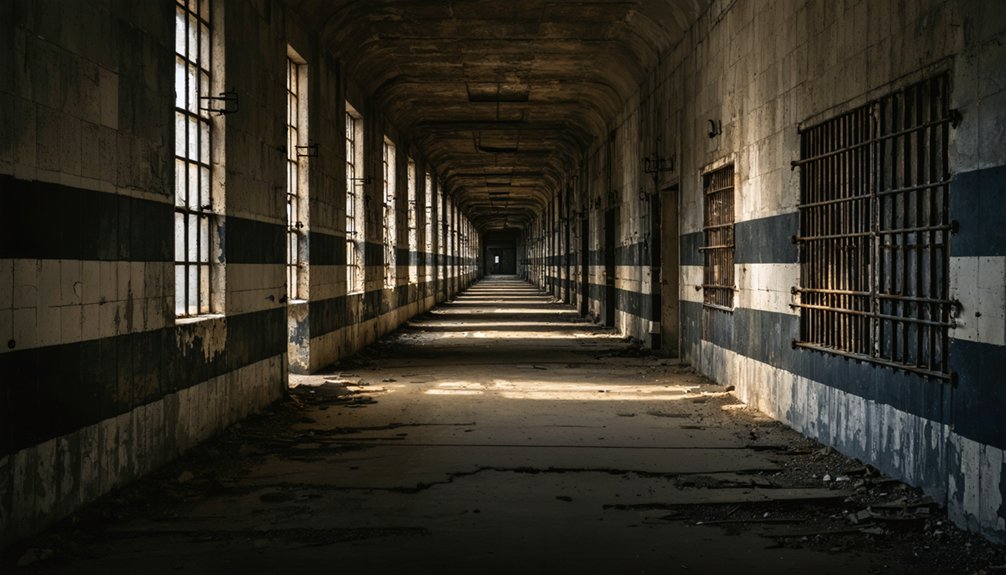
You’ll find the Old Montana Prison’s 24-foot sandstone walls and crenellated towers have anchored five film productions, from Mickey Rourke’s “The Last Ride” to atmospheric horror shoots.
The facility’s authentic cellblocks and enclosed exercise courtyard eliminate set construction costs while delivering period-accurate backdrops for both action sequences and psychological thriller scenes.
Production teams can access the complex at 1104 Main Street in Deer Lodge, coordinating shoots through Powell County Chamber of Commerce at 406-846-2094.
Five Films Shot Here
Since its closure in 1979, the Old Montana State Prison in Deer Lodge has served as a filming location for five distinct productions that span action, drama, and thriller genres. You’ll find authentic confinement structures that attracted productions seeking real-world grit over Hollywood sets.
The facility’s cinematic portfolio includes:
- Fast-Walking (1982) – James Woods’ action vehicle utilized cell blocks and yards for intense sequences.
- Runaway Train (1985) – Jon Voight’s escape thriller employed both interior corridors and exterior walls.
- Diggstown (1992) – Woods returned for this boxing drama, transforming prison spaces into fight venues.
The location also hosted The Real Things (1996) starring James Russo and Pellett featuring Isabel Glasser.
This ghost town preservation effort maintains wild west legends while providing filmmakers unrestricted access to historically significant architecture unavailable in operational facilities.
Architecture Evokes Historical Confinement
When filmmakers step onto the Old Montana State Prison grounds, they’re confronted with limestone and sandstone walls several feet thick—structures that prisoners quarried and erected themselves beginning in 1871. This prison architecture delivers authentic oppression without set dressing.
The 1892-1893 stone wall enclosure, complete with crenellated towers and sally port, provides medieval fortress visuals. Guard towers positioned for maximum sightlines create natural camera angles for surveillance scenes.
Confinement design speaks through windowless cells, heavy iron gates, and concrete tunnels with narrow slits—originally built for tear gas deployment.
A-Block’s Romanesque Revival darkness contrasts with later cellblocks, offering production teams multiple eras of punitive philosophy within one location.
Directors leverage these layered constructions spanning 1896 to 1912, each expansion revealing how confinement evolved while remaining fundamentally brutal.
Horror and Action Potential
Those oppressive stone structures that once warehoused Montana’s most dangerous criminals now serve double duty—they’ve starred in gritty action sequences and transformed into spine-chilling horror backdrops. You’ll find a location that’s defied typical urban decay through modern redevelopment as a working film set and museum.
The prison’s production versatility comes from:
- Action credentials: Hosted *Fast Walking* (1980), *Runaway Train* (1984), and *Diggstown* (1990), leveraging 24-foot sandstone walls and enclosed courtyard for chase sequences
- Horror atmosphere: Maximum-security cells, medieval-style turrets, and riot-scarred history create authentic dread for *Terror in the Cellhouse* events
- Logistical advantages: Six towers, sally port entries, and oversight tunnels provide multiple camera angles and dramatic staging options
You’re filming where genuine confinement meets commercial opportunity—no set construction required.
Additional Ghost Town Locations Across Montana
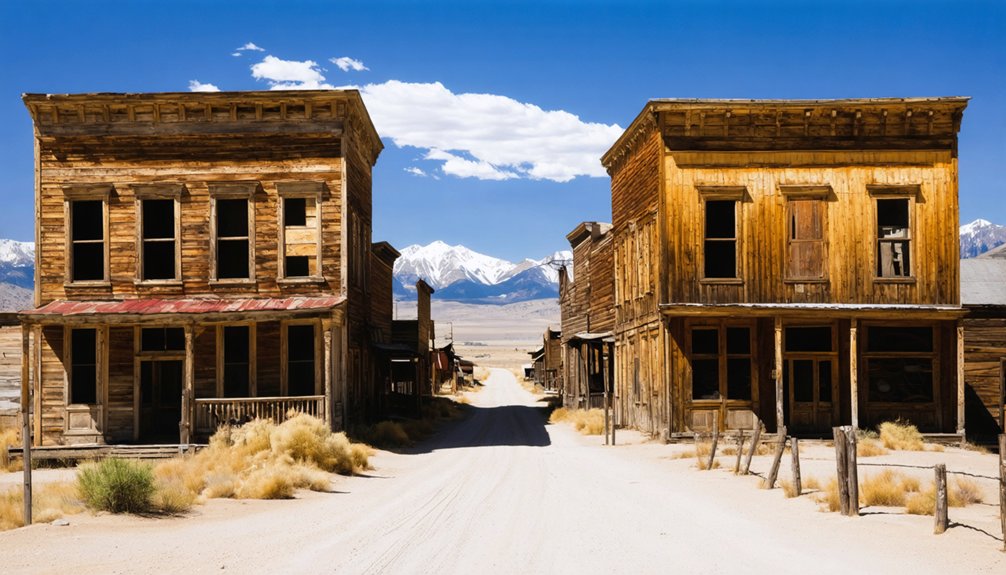
Preservation efforts vary markedly across these sites, affecting your production logistics. Some sites maintain National Registry buildings with structural integrity, while others present advanced decay.
You’ll need detailed location scouts to assess accessibility, structural safety, and permit requirements before committing resources to these remote filming opportunities.
Why Ghost Towns Create Authentic Western Film Settings
Montana’s ghost towns deliver unmatched historical authenticity that transforms your Western productions from staged recreations into visceral period experiences. You’ll capture 1800s structures—saloons, churches, general stores—that mirror actual gold rush settlements, eliminating costly set construction while maintaining period integrity.
Montana’s ghost towns replace expensive set construction with authentic 1800s structures that deliver genuine Old West atmosphere for period productions.
These locations provide three critical production advantages:
- Zero modern amenities interference: No electrical lines, contemporary signage, or architectural compromises disrupting your shots
- Ready infrastructure: Functional interiors, preserved main streets, and authentic prison facilities like Old Montana Prison’s 1870 sandstone walls
- Natural isolation: Remote positioning creates abandoned frontier atmospheres without tourist attractions infiltrating your frame
You’ll find swinging saloon doors, weathered liveries, and Victorian-era buildings frozen in time—backdrops that immerse audiences in genuine Old West environments without digital manipulation or expensive period dressing.
Frequently Asked Questions
Do Film Productions Need Special Permits to Shoot at Montana Ghost Towns?
You’ll need permits depending on ownership—federal land requires BLM authorization, while private ghost towns need owner permissions. Historical preservation rules and community permissions often apply. Always verify local requirements and secure proper insurance before filming these atmospheric locations.
What Are Typical Rental Costs for Using Ghost Town Locations in Montana?
You’ll find cost variations from $3-$10 daily at Garnet Ghost Town to private ranch rentals in Livingston. Location accessibility determines pricing, with permit-free public lands offering budget freedom while equipped backlots command premium rates for production-ready infrastructure.
Are Accommodations Available Near Remote Ghost Town Filming Locations?
You’ll find accommodations within 20-40 miles of most ghost towns, balancing historical preservation requirements with production needs. Local community impact remains positive, as nearby towns offer hotels, cabins, and rentals supporting your crew’s logistical freedom during remote filming.
Which Montana Ghost Towns Allow Overnight Filming or Extended Production Schedules?
Virginia City, Bannack, and Garnet accommodate extended production schedules, with Virginia City hosting 50+ annual local community festivals while maintaining film-ready infrastructure. You’ll find historical preservation standards support overnight shoots, though you must coordinate crew logistics through state park officials beforehand.
How Do Productions Handle Modern Infrastructure Needs at Abandoned Ghost Town Sites?
You’ll install temporary generators, portable water systems, and removable electrical networks while charting historical preservation concerns and completing environmental impact assessments that protect authentic structures, ensuring you leave no trace after wrapping production.
References
- https://z100missoula.com/the-last-best-place-to-film-a-horror-movie-in-montana/
- https://mtbeyond.com/culture/montana-movies/
- https://destinationfilmguide.com/film-in-southwest-montana/
- https://www.youtube.com/watch?v=tZmA_VF6cm8
- https://www.explorelivingstonmt.com/filming
- https://film.glaciermt.com/films
- https://visitmt.com/things-to-do/ghost-towns
- https://fwp.mt.gov/binaries/content/assets/fwp/stateparks/bannack-state-park/bannack-preservation-plan.pdf
- https://montanastateparksfoundation.org/parks/bannack-state-park/
- https://prairiepopulist.org/bannack-montana-state-park/