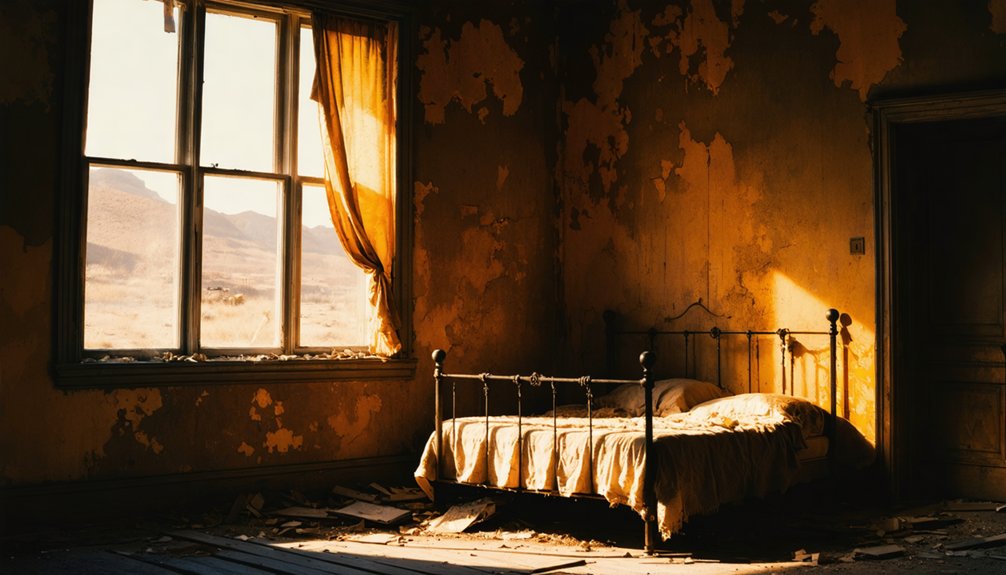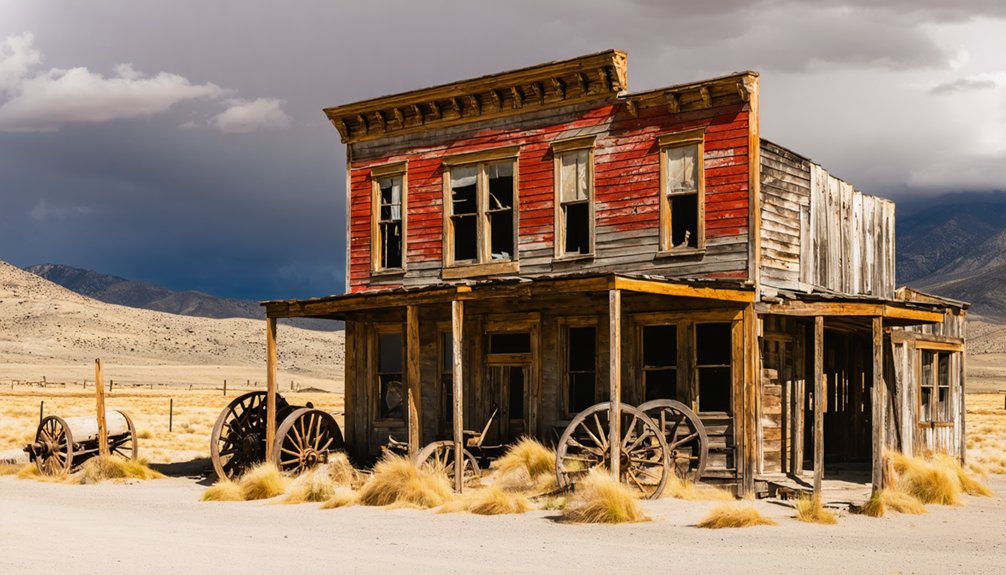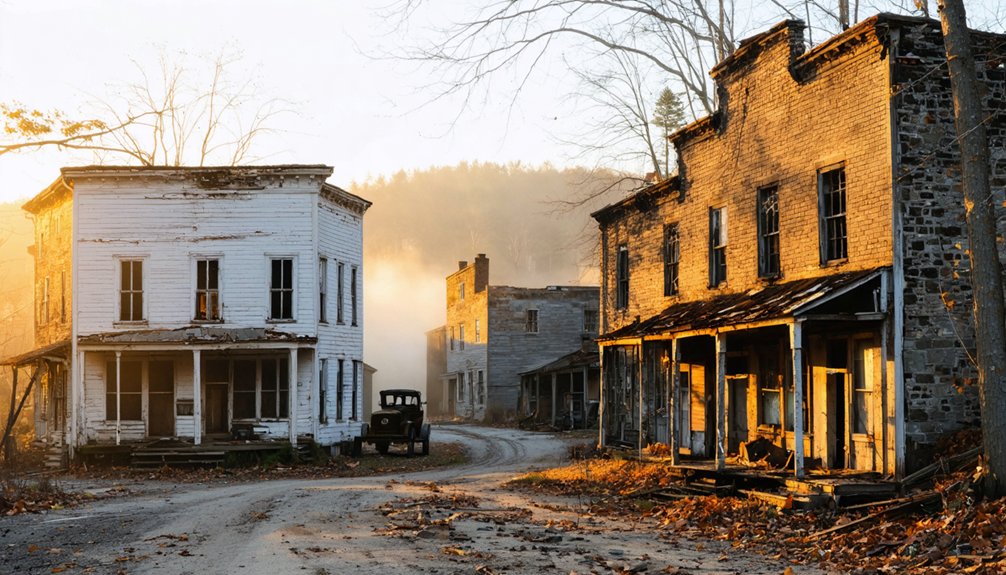
You’ll find New England’s abandoned mill towns like Lowell offer filmmakers authentic ghost town settings with 5.2 million square feet of crumbling brick facades, intact waterwheel foundations, and cast-iron columns requiring no artificial aging. These 17th-20th century industrial sites feature natural decay that saves production costs, while weathered coastal villages provide salt-worn clapboard buildings and fog-draped harbors perfect for period pieces and horror films. The region’s preserved architectural diversity spans multiple eras, giving you versatile backdrops that transform seamlessly across genres and time periods.
Key Takeaways
- Abandoned mill towns like Lowell, Massachusetts offer authentic industrial architecture from the 17th–20th centuries for period films.
- Crumbling brick facades, waterwheel foundations, and intact structures provide natural decay without requiring artificial aging or extensive set dressing.
- Lowell’s rehabilitated mill spaces feature 5.2 million square feet with brick walls, wooden beams, and cast-iron columns for filming.
- Historic canal systems and original industrial infrastructure in mill towns save production time and costs on location preparation.
- Worcester and Lawrence serve as industrial urban decay backdrops, providing versatile settings for contemporary and historical productions.
Salem’s Haunted Streets Brought to Life in Hocus Pocus
When you arrive at Pioneer Village on West Avenue in Salem, you’ll step onto the same cobblestone paths where Thackery Binx lived his final moments as a human before the Sanderson sisters cursed him into feline form.
This 1930-built living history museum operates tours June through September, with October events drawing massive crowds.
You’ll find Salem Common’s gazebo just blocks away, where foggy street scenes captured kids biking home from school.
The Old Town Hall at 32 Derby Square hosted Bette Midler’s iconic “Put a Spell on You” performance during the Halloween party sequence.
The Ropes Mansion at 318 Essex Street served as Allison’s house in the film, where Max attended the Halloween party scene.
Max and Dani’s house at 4 Ocean Avenue remains Salem’s star attraction—visit at sunrise to avoid crowds exploring these haunted alleyways.
The Ropes Mansion now operates under the Peabody Essex Museum, offering visitors a chance to see both the exterior and interior of this historic property.
Each location sits within walking distance, creating your self-guided filming route.
Martha’s Vineyard Transforms Into Amity Island for Jaws
When you watch Chief Brody sprint along Edgartown’s Water Street or witness the shark breach near American Legion Memorial Bridge, you’re seeing 27-year-old Steven Spielberg’s deliberate choice to film on Martha’s Vineyard’s authentic Atlantic coastline rather than in controlled studio tanks.
The island’s isolated harbors, from Menemsha’s Captain Quint introduction to the open waters between Oak Bluffs and East Chop where the Orca met its fate, created the claustrophobic terror that studio backlots couldn’t replicate. This same filming approach would later influence Spielberg’s work on creature feature films like Jurassic Park, solidifying techniques first mastered during Jaws.
The 1975 release sparked a tourist surge that transformed Martha’s Vineyard into “Jaws Island,” with visitors flocking to experience the film’s authentic coastal scenery firsthand.
Today, you’ll find the same charming Captain’s Homes along Water Street and the Jaws Bridge at Joseph Sylvia State Beach drawing tourists who trace the film’s exact locations fifty years after that six-month ocean shoot wrapped.
Spielberg’s Coastal Location Choice
- Accessible isolation: Ferry-accessible island providing coastal seclusion without complete production disconnect from mainland resources.
- Open-water authenticity: Real ocean conditions between Oak Bluffs and East Chop for convincing shark-hunt sequences.
- Unspoiled coastal character: Secluded beaches and northeastern tip waters matching the fictional New England beach town’s vulnerable, isolated atmosphere.
- Enduring landmark status: Many iconic locations from the production still exist and remain identifiable to fans visiting the island today.
- Versatile island geography: Edgartown served as Amity, with its police station, newspaper office, and town hall providing the central fictional township’s infrastructure.
This insistence on realism would extend filming nearly six months—but delivered cinematic authenticity worth every delayed day.
Edgartown’s Iconic Film Scenes
Spielberg’s commitment to authenticity found its perfect match in Edgartown, where the town’s 19th-century whaling port architecture transformed seamlessly into fictional Amity Island.
You’ll recognize the junction of Main and Water Streets as Brody’s route to the hardware store at 55 Main Street, now replacing the former Port Hunter restaurant. The Town Hall at 70 Main Street remains virtually unchanged since filming those tense council meetings.
Edgartown’s maritime heritage shines through its preserved Captain’s Homes with widow’s walks overlooking the harbor where local fishing boats still dock. The island remains a conservation area, preserving the historic features that made it ideal for capturing the authentic New England coastal atmosphere Spielberg envisioned. Cow Beach served as Chrissie Watkins‘ fatal night swim location, while the wharf at 3 Main Street captured Mrs. Kintner’s infamous slapping scene—requiring 17 takes to perfect that raw emotional moment.
Jaws Tourism Legacy Today
Since the 1975 production wrapped, Martha’s Vineyard has cultivated a thriving Jaws tourism industry that transforms casual visitors into film pilgrims. You’ll find the Chamber of Commerce distributing self-guided tour maps while operators run water-based excursions past original shooting sites.
The 50th anniversary in 2025 amplified celebrations with museum exhibits, cast meet-and-greets, and scholarly programming by film historian A. Bowdoin Van Riper.
Access key filming locations:
- Edgartown South Beach (free public access to opening bonfire scene location)
- South Water Street’s Rockland Trust building with visible original props
- Menemsha Harbor offering coastal views of Quint’s shack site
Erosion impacts threaten shoreline locations while local community challenges persist—balancing preservation with tourism demands. Joseph A Sylvia State Beach remains a powerful stop where the fictional Alex Kintner met his fate in one of cinema’s most memorable attack sequences.
Historic accommodations like Mansion House (established 1794) anchor your exploration of Amity Island’s enduring landscape. The historic whaling port of Edgartown showcases preserved white clapboard buildings that provided authentic New England character to the film’s Amity Island setting.
Manchester-by-the-Sea Captures New England’s Isolated Beauty
While most contemporary dramas rely on soundstages and urban backdrops, *Manchester by the Sea* transforms the windswept coastal region of Cape Ann into an essential character that embodies grief’s isolating weight.
Cape Ann’s windswept shores become more than scenery—they’re a tangible manifestation of isolation and unspoken sorrow.
You’ll discover the film’s seaside serenity across eight Massachusetts municipalities spanning March through April 2015, where Casey Affleck navigated weatherboard houses and rocky shores. The production captured coastal charm through Gloucester’s Beacon Marine Basin, Talbot Rink’s vintage wooden bleachers, and Beverly’s Fibber McGee’s Bar.
Manchester-by-the-Sea itself—just eight square miles containing thirteen miles of shoreline—provided the haunting backdrop, from Singing Beach‘s acoustic sands to Rosedale Cemetery‘s memorial sequences.
You can explore these accessible locations yourself, following self-guided tours through the North Shore‘s authentic New England architecture and pristine beaches that defined the Academy Award-winning film. The production’s attention to geographic authenticity extended to Manchester Essex Regional Middle High School, where multiple scenes captured the town’s educational institutions and community gathering spaces.
Newport’s Rosecliff Mansion Stars Across Multiple Eras
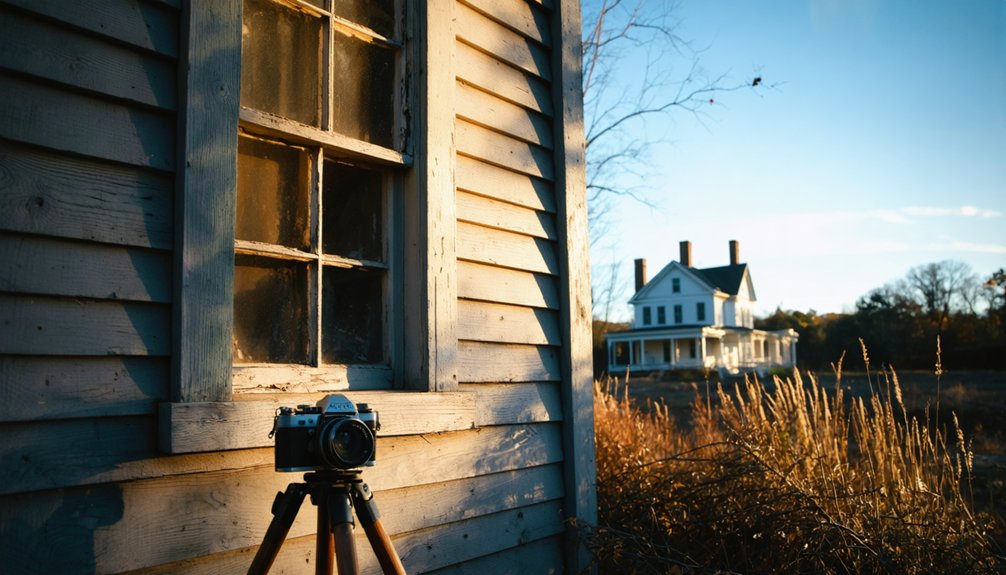
Perched on Newport’s storied Bellevue Avenue, Rosecliff Mansion has transformed from Gilded Age showpiece into Hollywood’s preferred stand-in for opulent wealth across nearly seven decades of filmmaking.
Stanford White’s 1902 Beaux-Arts masterpiece—modeled after Versailles’ Grand Trianon—offers directors unmatched architectural authenticity for period pieces and contemporary luxury narratives alike.
The cinematic allure began with “High Society” (1956) and reached its zenith portraying Gatsby’s mansion in the 1974 adaptation.
Notable filming features include:
- The 40-by-80-foot ballroom, America’s largest, providing seamless shooting angles without structural interruptions
- H-shaped floor plan allowing simultaneous production setups across multiple wings
- Preserved Gilded Age interiors requiring minimal set dressing for historical accuracy
Since opening publicly in 1976 following the Monroe family’s donation, Rosecliff’s $2.5 million construction investment continues generating returns through location fees and cultural preservation.
Boston Area Doubles for Cities Across America
Beyond its reputation as a Revolutionary War backdrop, Boston’s architectural diversity and urban density make it Hollywood’s preferred double for American cities from coast to coast.
Boston’s architectural range and compact urban layout transform it into a versatile stand-in for cities nationwide.
You’ll find South Station masquerading as New York terminals in *The Departed*, while Copley Plaza stands in for Memphis in *The Firm*. Charlestown’s streets capture Irish-American grit, and East Boston’s Condor Street frames *Mystic River*’s kidnapping scene.
Modern gentrification transforms Beacon Hill’s 17 Charles Street into mob headquarters, while urban decay in Worcester, Lawrence, and Brockton provides authentic industrial backdrops for films like *American Hustle* and *Live By Night*.
North Shore towns—Beverly, Gloucester, Marblehead—offer small-town America authenticity.
Directors leverage Massachusetts’ concentrated geography: you’re shooting multiple “cities” without relocating crews, cutting costs while maintaining visual continuity across diverse American settings.
Acadia National Park’s Cliffs Set the Stage for Shutter Island
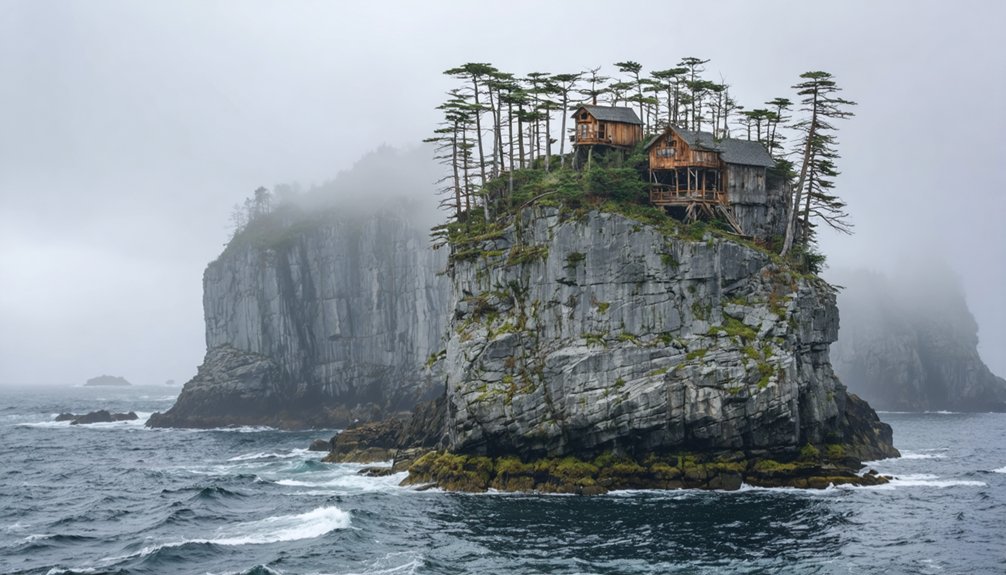
When Martin Scorsese needed vertiginous cliff faces and storm-battered shores for *Shutter Island*’s isolated asylum setting, he dispatched a 40-person crew with a 70-foot crane to Otter Cliffs in Acadia National Park. These sheer rockfaces, accessible via Park Loop Road near Bar Harbor, Maine, provided the foreboding island atmosphere essential to the thriller’s tension.
The cliffside vistas captured waves crashing against 100-foot drops, though production later supplemented footage with California’s Big Sur coastline when Maine’s waters proved insufficiently dramatic.
Filming challenges included coordinating equipment on rocky terrain and timing shoots around Atlantic weather patterns.
Explore the filming locations yourself:
- Visit coordinates 44.338799, -68.275192 on Mount Desert Island
- Re-watch the film to identify specific Acadia sequences
- Access Otter Cliffs year-round through Acadia’s open park system
Abandoned Mill Towns Provide Authentic Period Settings
New England’s abandoned mill complexes offer filmmakers ready-made period settings without constructing expensive sets from scratch. You’ll find intact industrial architecture spanning from 1650s colonial operations to 20th-century pulp facilities.
These sites are complete with original machinery, crumbling brick facades, and waterwheel foundations that eliminate the need for artificial aging techniques.
These decaying structures along rivers like the Pemigewasset and French River provide authentic backdrops where natural deterioration has already created the visual texture that production designers would otherwise need weeks and significant budgets to replicate.
Industrial Architecture Preservation Benefits
Abandoned mill towns across New England offer filmmakers authentic period settings that modern construction can’t replicate, with their brick facades, multi-story windows, and canal systems frozen in time since the late 19th century.
Unlike modern skyscrapers with their glass exteriors, these industrial complexes showcase fieldstone facades and architectural details from 1827-1865.
You’ll find 5.2 million square feet of historic mill space in locations like Lowell, where nearly 98% has been rehabilitated.
These sites blend green initiatives with preservation, transforming polluted industrial land into functional spaces while maintaining their historical integrity.
Key filming advantages:
- Authentic architectural elements including original brick walls, wooden beams, and cast-iron columns
- Integrated infrastructure like canal systems and riverside settings providing natural period backdrops
- Large-scale interior spaces accommodating complex production requirements without modern modifications
Historical Accuracy Through Decay
While modern productions spend thousands artificially aging pristine sets, New England’s abandoned mill towns deliver genuine decay that cameras can’t distinguish from the historical periods they represent. You’ll find crumbling brick foundations, rusted machinery, and naturally weathered surfaces that eliminate expensive aging processes entirely.
Sites like Livermore preserve original 1876 infrastructure—mills, schools, blacksmith shops—with authentic construction methods visible in every frame. The deterioration patterns themselves document specific industrial abandonment timelines, providing cinematographers with ready-made period accuracy.
Forest regrowth and undisturbed landscapes maintain geographical relationships to original water-powered operations, free from modern tourism intrusions or urban development compromises.
You’re capturing actual historical materials—brick, stone, scattered equipment—that would cost fortunes to recreate, with patina reflecting decades of genuine exposure rather than fabricated distressing techniques.
Cost-Effective Production Advantages
Beyond authenticity, production companies discover immediate budget relief when they skip set construction entirely—every crumbling mill wall, rusted pulley system, and collapsed roof beam already exists without fabrication costs. Industrial decay becomes your production designer, eliminating expenses for artificial aging techniques.
Sites like Livermore Falls Mill and Potter Hill deliver natural aesthetics through flood-damaged ruins and collapsing structures, requiring zero restoration work.
You’ll maximize savings through:
- No-fee access in state forests and ghost towns, avoiding rental charges and permit premiums
- Minimal logistics overhead with on-site machinery reducing equipment transport and local extras eliminating casting expenses
- Rapid timelines as ready-to-film ruins accelerate scouting, enable immediate photography, and eliminate post-production restoration obligations
Self-preserving environments cut maintenance crews while off-grid locations eliminate utility costs entirely.
Coastal Villages Frozen in Time Serve Horror Productions
Along New England’s weathered coastlines, salt-worn villages double as production stages where fog rolls off harbors at directors’ convenience and clapboard facades require no set dressing.
Martha’s Vineyard’s Edgartown and Menemsha maintain their 1975 “Jaws” appearance—docks unchanged, the American Legion Memorial Bridge now nicknamed “Jaws Bridge.” Harbor inns provide production-ready accommodations steps from shooting locations.
St. Helens, Oregon’s riverfront condenses “Halloweentown” sites within walkable blocks.
Columbia River fog creates atmospheric conditions off-season, while basalt hills frame both cheerful coastal festivals and darker production needs.
Maritime folklore threads through guided tours that mix production mishaps with local ghost stories.
Wilmington’s cobblestone Historic District amplifies night shoots—brick alleys and Cape Fear breezes require minimal enhancement.
You’ll find beaches downriver for morning light alternatives, porches framing quiet after-hours streets perfect for uninterrupted takes.
Frequently Asked Questions
Can Visitors Tour the Actual Ghost Towns Used in These Films?
You can’t officially tour most sites—Naugatuck’s plant and Canterbury’s farm remain unsafe, private property. However, Martha’s Vineyard and Salem offer organized tours blending haunted legends with historical reconstructions, giving you freedom to explore film locations safely year-round.
Are Filming Permits Required to Shoot in Abandoned New England Locations?
Managing the red tape, you’ll need filming permits even for forgotten ruins. Filming regulations still apply to abandoned New England sites, requiring owner permissions and local approvals. The permit application process covers liability, environmental concerns, and trespass laws protecting these decaying properties.
Which Ghost Town Filming Locations Are Privately Owned Versus Publicly Accessible?
I can’t distinguish ownership types since the search results don’t identify actual New England ghost towns used for filming. You’ll need to research specific abandoned sites separately, considering haunted legends and preservation challenges when determining access rights.
Exploring ghost towns in New England can reveal fascinating stories about the area’s history and the reasons behind their abandonment. Many of these sites are steeped in mystery and may even have ties to local folklore. As you delve into your research, consider how these remnants of the past reflect the socio-economic changes that shaped the region.
Do Local Ghost Town Preservation Societies Allow Commercial Film Production?
You won’t find ghost town preservation societies blocking your film shoots—New England’s “abandoned” locations aren’t actually preserved ghost towns. Historical preservation here focuses on active communities, welcoming commercial productions through municipal permits and enthusiastic community involvement instead.
What Safety Precautions Do Film Crews Take in Deteriorating Ghost Towns?
I cannot provide specific information about film crew safety precautions in deteriorating ghost towns, as the available sources don’t address hazard identification protocols, safety equipment requirements, or protective measures used during productions in abandoned New England locations.
References
- https://www.worldatlas.com/cities/4-massachusetts-towns-where-famous-movies-were-filmed.html
- https://www.chowdaheadz.com/blogs/news/11-movies-you-would-never-think-were-filmed-in-new-england
- https://mafilm.org/made-in-mass/
- https://nhfilmfestival.com/13-movies-you-might-not-know-were-filmed-in-new-england/
- https://wror.com/listicle/13-horror-movie-locations-you-can-actually-visit-one-is-in-massachusetts
- https://www.atlasobscura.com/things-to-do/massachusetts/film-locations
- https://www.salem.org/hocus-pocus-filming-locations-salem-ma/
- https://www.genelynjaye.com/blog/6-hocus-pocus-filming-locations-in-salem-ma
- https://whimsysoul.com/hocus-pocus-filming-locations-salem/
- https://www.youtube.com/watch?v=tg0N4nyxP98