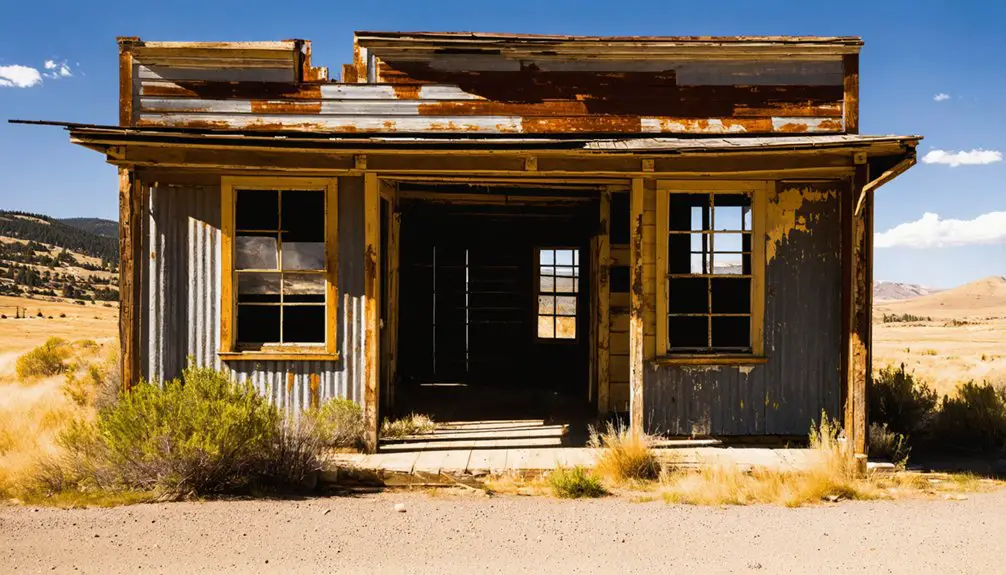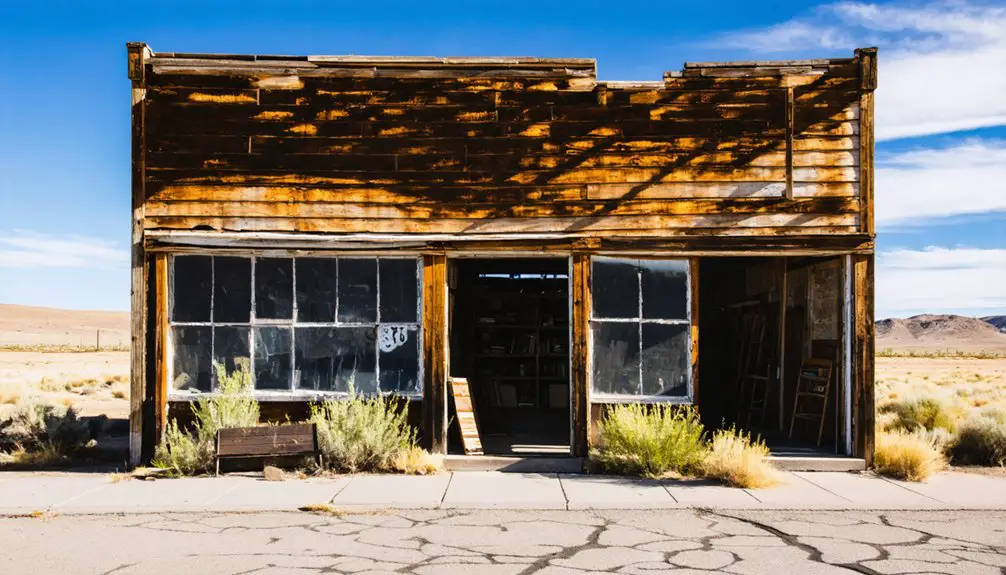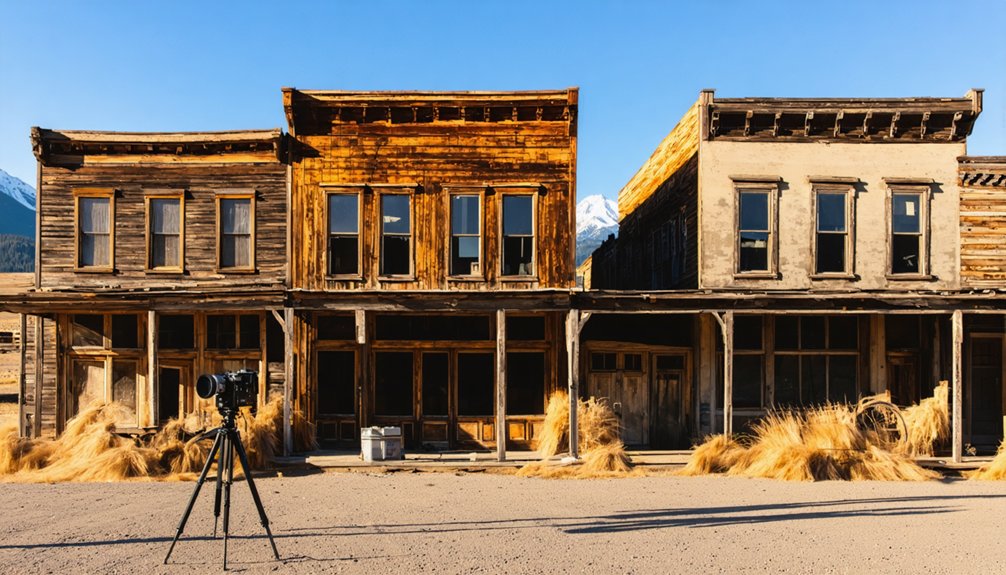
You’ll find Oregon ghost towns like Shaniko, Golden, and Granite serving as authentic filming locations for Westerns and period pieces. These sites feature preserved 19th-century storefronts, saloons, hotels, and weathered structures that eliminate costly set construction. Shaniko’s Italianate brick buildings and Golden’s mining camp architecture have attracted productions seeking frontier realism, while locations like Sumpter offer dredge machinery and tailing piles for industrial backdrops. Their remote settings and minimal modern development create immersive historical atmospheres, and the specific features of each town reveal why filmmakers repeatedly choose these locations.
Key Takeaways
- Shaniko features preserved 1900s-era structures including the Italianate Shaniko Hotel, storefronts, saloons, and schoolhouse ideal for authentic Western frontier productions.
- Golden, an Oregon State Heritage Site since 2011, offers 1890s mining settlement buildings and has appeared on paranormal shows like Ghost Adventures.
- Granite showcases weathered 19th-century buildings, historic cemetery, and nearby mining sites, preserving gold rush-era authenticity for period filmmaking.
- Multiple ghost towns maintain minimal modern development with authentic period architecture including general stores, churches, jails, and residential structures from 1860s-1950s.
- Most locations are accessible via major highways with preserved gravel roads and primitive routes that eliminate modern elements while supporting production logistics.
Shaniko: The Abandoned Wool Capital Featured in Western Films
After gold was discovered in Canyon City in 1862, European American settlers began carving a 190-mile route from The Dalles through what would become Shaniko’s boundaries. You’ll find this former Wool Capital of the World—once shipping millions of pounds annually—transformed into Oregon’s premier ghost town filming location.
From gold rush waypoint to wool empire, Shaniko evolved into Oregon’s most authentic ghost town—a perfectly preserved frontier film set frozen in time.
The Italianate brick Shaniko Hotel, built between 1900 and 1902, stands as your Wild West backdrop alongside weathered storefronts that survived devastating fires in 1910-1911.
When rail lines bypassed Shaniko in 1911, the town’s population collapsed from 600 to today’s 23 residents. You’re free to explore this Ghostly Heritage from April through September, when seasonal businesses operate.
The preservation guild maintains authentic structures that attract filmmakers seeking untouched frontier aesthetics. The town’s original infrastructure included banks, saloons, and a schoolhouse that served sheep ranchers driving herds from the Cascades and desert regions. Wastewater limitations actually preserve the town’s isolated, cinematic character. From Shaniko’s elevation of 3,343 feet, you can spot five Cascade peaks including Mount Hood and Mount Jefferson on clear days.
Golden: The Mining Town That Became a Hollywood Set
While Shaniko served filmmakers seeking frontier authenticity in central Oregon, you’ll discover Golden tucked into Josephine County’s Coyote Creek canyon near Wolf Creek—a preserved 1890s mining settlement that’s drawn both Hollywood productions and paranormal investigators.
You’ll find four National Register buildings still standing: the 1892 Campbellite church, Ruble family house, 1904 general store with post office, and various outbuildings.
This mining history generated $210 million in gold by 1910 before the town faded into abandonment. The town’s mines recovered approximately one and a half million dollars through hydraulic mining techniques that characterized the era’s gold extraction methods. Ghost town preservation efforts earned it Oregon State Heritage Site status in 2011.
Ghost Adventures featured Golden’s allegedly haunted church, putting it on supernatural enthusiasts’ maps.
You can access the site via I-5 near Wolf Creek, where interpretive signs explain the settlement’s evolution from Rev. William Ruble’s 1890 vision into today’s atmospheric filming location. The cemetery served as a filming location for a 1972 “Gunsmoke” episode, though it contains no actual residents’ graves.
Antelope: Small Town Backdrop for Independent Cinema
Unlike Golden’s remote canyon location, Antelope sits directly along State Highway 218 in Wasco County—a semi-ghost town where 1897-era structures frame a street grid scarred by patchy development from the 1898 fire that destroyed most original buildings.
Antelope’s weathered 1897 structures and fire-scarred street grid offer filmmakers authentic small-town decay absent Hollywood’s polished artifice.
You’ll find the United Workmen Hall and surviving hose houses standing as practical filming backdrops for independent productions seeking authentic small-town decay without Hollywood polish.
The Rajneesh controversy of the 1980s adds layered narratives: followers renamed the city in 1984, committed the nation’s first bioterror attack, then vanished after their leader’s 1985 deportation.
Antelope’s revival came through residents who voted 34-0 to reclaim their town’s name.
The town’s roots trace back to the 1860s as a stagecoach and freight stop, named after the pronghorn antelope that symbolized the endurance required to survive in Oregon’s high desert.
Antelope sits at an elevation of 2,685 feet, surrounded by scenic open fields where the same wildlife that gave the town its name still roams.
This history provides filmmakers with locations embodying resilience against authoritarian takeover—themes resonating with audiences valuing autonomy and community self-determination.
Granite: Historic Gold Rush Settlement in Film Productions
When you film in Granite, you’ll find an authentic gold rush town established in 1862 along Granite Creek, where weathered 19th-century structures line the main road. The population hovers at just three dozen residents.
The town’s physical layout preserves its boom-era past—crumbling commercial buildings, the historic Granite Cemetery with headstones documenting frontier deaths, and nearby mining sites like the Cougar-Independence mine create ready-made period backdrops. At its peak, the settlement attracted up to 5,000 residents within a decade of the initial gold discovery. The Grand Hotel, built with 42 rooms, once served as the town’s central feature before its demolition in 1943.
You’ll access this location 60 miles west of Baker City via Highway 410 from Sumpter, where the Granite Outback general store and Lodge at Granite provide minimal modern infrastructure for production crews.
Granite’s Gold Mining History
On July 4, 1862, prospectors struck gold along Granite Creek, and Albert G. Tabor named his claim Independence. You’ll find the original settlement 1.5 miles west-northwest of today’s site, renamed Granite in 1878 to avoid postal confusion.
The economic impact transformed this high-altitude locale at 4,695 feet from humble crossroads to incorporated city by 1900, swelling to 5,000 residents.
Mining evolved from simple placer operations to sophisticated hard rock extraction through 12 miles of underground tunnels. You can still explore the Cougar-Independence mine near town.
World War II ended operations when gold mining was outlawed for war materials. The town’s population peaked at 86 miners by 1940, reduced after WWII due to government-mandated mining shutdowns. Preservation efforts gained momentum after electricity returned following a 40-year absence, though population remains modest at 24-38 residents supporting the Granite Outback store and Lodge.
The town’s main road features crumbling 19th-century buildings that include the old schoolhouse, church, general store, and town hall from its mining heyday.
Authentic Ghost Town Setting
Granite’s authentic gold rush architecture and remote wilderness setting create an ideal filming location for productions requiring period-specific Western or horror atmospheres.
You’ll find original late 1800s structures—drug stores, saloons, livery stables—standing in various preservation states that eliminate costly set construction. The town’s three dozen residents won’t interfere with your shoots, while maintained infrastructure like Granite Outback and The Lodge at Granite support crew logistics.
You’ll access nearby mining operations, including the Cougar-Independence mine, plus the Cabell City cemetery for additional authentic backdrops. The forested Blue Mountain wilderness provides natural isolation at 5,864 feet elevation.
When planning shoots, you’ll need wildfire preparedness protocols given the remote forest location. The community encourages sustainable tourism practices that preserve these historical resources for future productions.
Film Production Location Details
Located 45 miles west of Baker City in Oregon’s Blue Mountains, Granite sits at 5,864 feet elevation along Highway 410, the primary access route that remains passable through most winter months.
You’ll find approximately a dozen weathered structures scattered across this 1862 gold rush settlement, offering filmmakers authentic backdrops without restrictive studio constraints.
The accessible Cougar-Independence mine provides underground production opportunities, while abandoned homes present varying deterioration stages for period-specific shoots.
Modern restoration efforts haven’t erased the town’s weathered character—The Lodge at Granite and Granite Outback general store maintain functionality without compromising visual authenticity.
You can coordinate logistics through remaining residents while accessing nearby North Fork John Day River locations.
Tourism development remains minimal, preserving the isolated atmosphere that attracts independent productions seeking ungoverned, historically-accurate Western settings.
Sumpter: Dredge Town Landscapes Captured on Screen
Nestled thirty miles west of Baker City in Baker County, Sumpter emerged from South Carolina prospectors’ 1862 gold discovery to become a semi-ghost town where 120 year-round residents share space with preserved mining history.
Television crews selected this location for their multi-episode series, capturing the Sumpter Valley Gold Dredge‘s massive machinery and surrounding tailing piles.
The dredge operated as a ship on dry land, unearthing the valley and creating altered landscapes that now attract filmmakers seeking authentic mining relics for ghost stories.
What You’ll Find at Sumpter’s Filming Locations:
- Preserved gold dredge with internal cables and steel framework at 575 SW Dredge Loop Rd
- Dredge ponds along Powder River offering dramatic backdrops
- Historic buildings converted for tours throughout town
- Cemetery featuring dated headstones from mining era
- Elkhorn Mountain Range vistas accessible via scenic byway
Lonerock: Remote Ghost Town in Oregon Film History
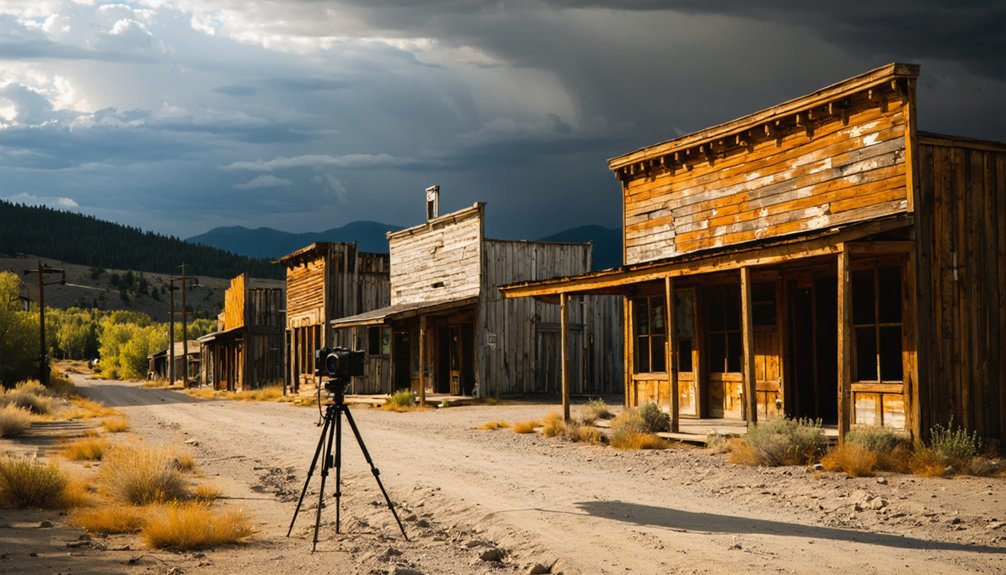
You’ll find Lonerock’s 1898 Methodist church and turn-of-the-century storefronts scattered across 1.01 square miles of valley terrain.
The town’s namesake 35-foot rock formation provides a dramatic natural backdrop for Western film productions.
The settlement’s authentic period architecture—including an 1888 schoolhouse, original jail, and buildings that survived the 1896 fire—has attracted location scouts seeking undisturbed frontier atmospheres.
To reach this remote Gilliam County location, you’ll navigate winding rural roads through Eastern Oregon rangeland.
The town’s isolation has preserved both its structures and the surrounding landscape’s cinematic potential.
Lonerock’s Historic Western Architecture
Standing sentinel over the remote settlement, a distinctive 35-foot rock formation defines Lonerock’s skyline and serves as the geological anchor that gave this ghost town its name when settlers platted it in 1882.
You’ll discover exceptional historic architecture throughout this well-preserved community, where preservation efforts maintain structures spanning from 1878 to the 1950s.
The white wooden Methodist church, built in 1898 by Reverend Deuse, stands beside the iconic rock and occasionally hosts services.
Despite a devastating 1896 fire that destroyed the entire business district, surviving buildings showcase authentic Western frontier character.
Notable Historic Structures:
- 1878 two-room schoolhouse with final graduation in 1932
- 1891 jail building available for exploration
- 1898 Methodist church holding occasional services
- Operational post office established in 1875
- Meticulously maintained grounds without graffiti or debris
Films Shot at Location
Despite Lonerock’s authentic Western architecture and isolated high-desert setting, no documented evidence confirms its use as a filming location for major motion pictures. You won’t find this ghost town listed in Oregon’s film databases or production records.
While Utah’s Grafton became a filming hub after Harry Sherman’s 1940s purchase—hosting “Butch Cassidy and the Sundance Kid”—Lonerock remains absent from similar documentation. Oregon’s filming patterns favor Portland and Columbia River Gorge locations over remote eastern sites.
However, Lonerock’s cinematic potential shouldn’t be dismissed. Its architectural preservation includes an 1800s jail and original church structures. The town’s isolation could serve western or horror productions seeking undisturbed period aesthetics.
You’ll find genuine frontier elements here, though they’ve yet to attract documented feature film production.
Visiting This Isolated Town
Reaching Lonerock requires commitment—the town sits 15 miles southeast of State Highway 206, accessible via a rural route that winds five miles east from Condon through rolling wheat country and high-desert terrain.
You’ll discover a remarkably preserved settlement spanning 1.01 square miles where preservation efforts by the local community have maintained both turn-of-century structures and tidy 1950s homes.
Winter access presents challenges, but the tranquil lifestyle rewards adventurous visitors.
What You’ll Encounter:
- The iconic 35-foot solitary rock behind the 1898 Methodist-Episcopal Church
- Original 1800s jail and two-story 1888 schoolhouse still standing
- Slot canyons and creek views along surrounding roads
- Mowed grass, well-maintained buildings—no garbage or graffiti
- Rustic post office serving the handful of residents who’ve reversed ghost-town status
Hardman: Weathered Structures That Drew Film Crews
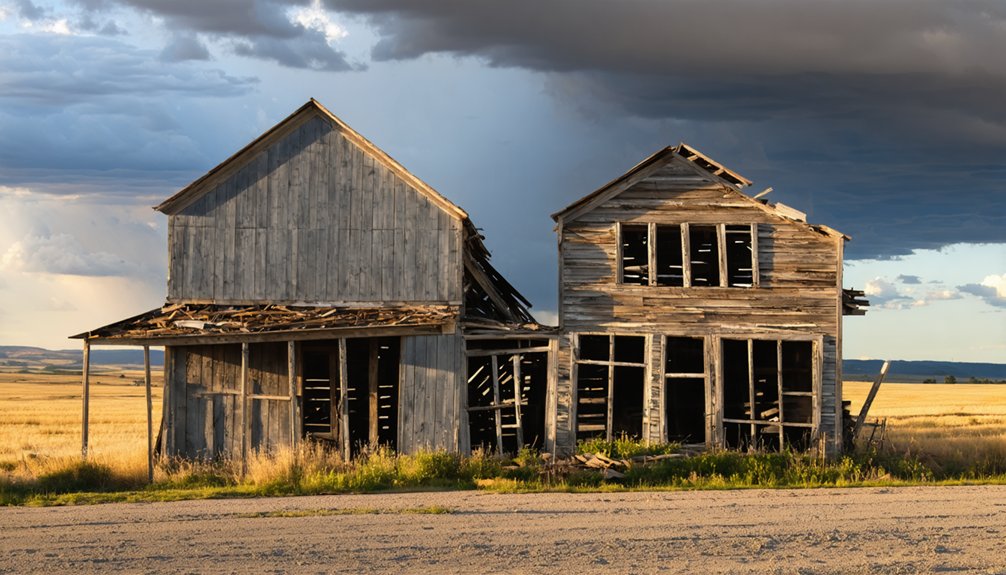
Weathered clapboard buildings line the quiet streets of Hardman, their silvered wood and sagging porches creating the authentic frontier atmosphere that attracted film crews to this remote eastern Oregon location.
You’ll find the old lodge—listed on the National Register of Historic Places—alongside a couple dozen surviving structures that haven’t required Hollywood set dressing.
The town’s refurbished hall, restored through state-funded historic preservation efforts, contrasts with genuinely deteriorating buildings, offering filmmakers both maintained interiors and exterior decay.
Antique wagons, vintage vehicles, and period remnants scattered throughout create ready-made 1800s commercial scenes.
Located nine miles south of Ruggs on SH 207, this golden ghost town provides production crews immediate access to unchanged prairie landscapes.
Town revitalization through community events maintains just enough life to support filming logistics while preserving Hardman’s photogenic abandonment.
Whitney: Preserved Mining Camp Used for Period Pieces
Tucked into Whitney Valley thirty-five miles west of Baker City, this preserved logging camp offers filmmakers a collection of late 1890s wooden structures that require minimal set modification for period authenticity.
You’ll find natural log preservation has kept several buildings intact since the Nibley Lumber Company’s sawmill operations. Town accessibility demands planning—navigate Highway 7 over Larch Summit at 5,082 feet, then turn onto North Fork Burnt River Road’s gravel surface.
Reach this authentic 1890s logging camp via Highway 7’s mountain pass, then follow gravel roads into Oregon’s remote Whitney Valley.
Production crews gain access to weathered homes, outbuildings, and scattered artifacts like rusted mattress springs and glass bottles that enhance historical accuracy.
- Forest Service signage marks the entrance from Highway 7
- Gravel road conditions accommodate equipment transport with preparation
- Private property boundaries require filming permission from current occupants
- Peak population of 150 provides believable scale for mining-era narratives
- Remote location eliminates modern infrastructure from camera shots
Buncom: Jackson County Ghost Town in Movie Scenes
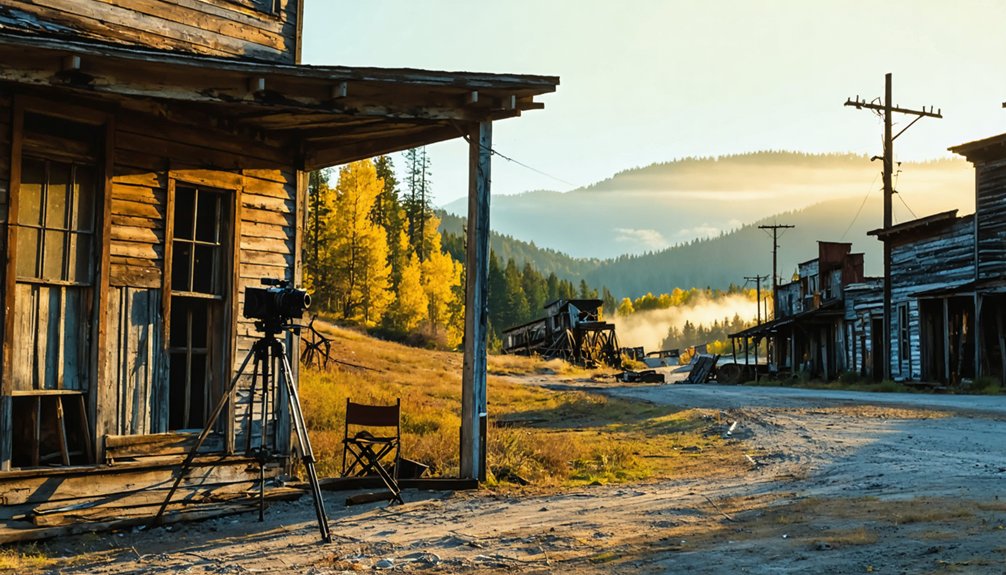
At the confluence of Little Applegate River and Sterling Creek, twenty miles southwest of Medford, Buncom‘s three surviving structures present filmmakers with authentic early 1900s architecture against a backdrop of remote valley terrain.
You’ll find the 1910 post office, bunkhouse, and cookhouse positioned at Sterling Creek Road’s intersection with Little Applegate Road, accessible via private land with designated parking areas.
The Buncom Historical Society’s local preservation efforts since 1991 have maintained period-accurate roofing, porches, and intact window glass—essential elements for capturing genuine frontier atmosphere.
Their community engagement through annual Buncom Day fundraising ensures these structures remain production-ready without excessive restoration that compromises authenticity.
At 1,783 feet elevation, you’re filming Oregon’s designated southwest ghost town, where original positioning and remote location deliver uncompromised historical settings.
Frequently Asked Questions
What Permits Are Required to Film at Oregon Ghost Town Locations?
You’ll need permits from county Real Property Managers for unincorporated ghost towns, meeting filming regulations and historical preservation requirements. Submit applications 30 days ahead with liability insurance, workers’ compensation coverage, and certificates documenting your production’s compliance.
Are Oregon’s Ghost Towns Accessible Year-Round for Location Scouting?
Most Oregon ghost towns function as tourist attractions with seasonal limitations—winter snow blocks remote sites. You’ll find summer offers unrestricted access for scouting weathered buildings and local legends, while spring mud and fall rains create logistical challenges worth considering.
In contrast, the ghostly history of Wyoming’s towns reveals tales of bustling communities that once thrived on the frontier. As you explore these remnants, you’ll encounter stories of resilience and loss, each telling a unique part of the state’s heritage. These sites often inspire curiosity and reflection, inviting visitors to connect with the past in a way that breathes life into their long-forgotten stories.
Which Ghost Towns Offer Nearby Accommodations for Film Production Crews?
You’ll find limited crew accommodations near vintage ghost towns—most historic filming sites require you to base operations in nearby active towns like Baker City for Sumpter or Prineville for Shaniko, typically 15-45 minutes away.
How Do Filmmakers Protect Fragile Historic Structures During Ghost Town Filming?
You’ll employ preservation techniques like protective sheeting over floors and scaffolding for structural reinforcement. Drone cameras minimize foot traffic, while barriers prevent equipment contact with original timbers, letting you capture authentic visuals without compromising these historic sites.
What Insurance Coverage Is Needed When Filming in Abandoned Oregon Towns?
When shooting in Shaniko’s crumbling mercantile, you’ll need liability insurance covering third-party injuries and property damage, plus historical preservation riders protecting fragile structures. Oregon mandates workers’ comp and permits requiring proof of coverage before you’re cleared to film.
References
- https://www.reedscrossing.com/the-latest/blog/posts-by-date/2024/july/oregon-on-screen-8-classic-films-shot-in-the-beaver-state/
- https://www.worldatlas.com/cities/5-oregon-towns-where-famous-movies-were-filmed.html
- https://giggster.com/guide/movie-location/where-was-homeward-bound-the-incredible-journey-filmed
- https://traveloregon.com/things-to-do/culture-history/filmed-in-oregon/find-favorite-oregon-film-location/
- https://www.youtube.com/watch?v=tbYHXA46Bdg
- http://www.thennowmovielocations.com/2025/01/oregon.html
- https://www.historicoregonfilmtrail.com/historicoregonfilmtrail.html
- https://thejournaloflosttime.com/stories/shaniko-oregon-high-desert-empire
- https://en.wikipedia.org/wiki/Shaniko
- https://www.oregonencyclopedia.org/articles/shaniko/