You’ll find South Dakota’s most authentic movie locations at 1880 Town near Murdo, where salvaged buildings from actual prairie ghost towns created the sets for *Dances with Wolves* and over 50 other productions. Fort Sedwick’s sod house, blacksmith shop, and storefronts remain intact with original props including wagons, harnesses, and period relics. The Black Hills region has hosted 40+ films using locations like Spearfish Canyon and Badlands wilderness areas. These preserved film sets now function as living museums where you can walk through Oscar-winning movie history while exploring genuine frontier architecture.
Key Takeaways
- Okaton Ghost Town, founded in 1906, later became a filming location after restoration efforts in the 1980s included tourist attractions.
- 1880 Town originated from a 1970s failed Western film project and features salvaged authentic frontier buildings from abandoned prairie settlements.
- Fort Hays from *Dances with Wolves* (1990) remains accessible as a film relic, displaying artifacts from over 50 productions at the site.
- Spearfish Canyon, Mount Rushmore, and Badlands locations served as backdrops for over 40 films including *Armageddon* and *Into the Wild*.
- Authentic structures like sod houses, Fort Sedwick sets, and period props attract filmmakers seeking genuine Old West landscapes and imagery.
Okaton: From Railroad Stop to Roadside Attraction and Film Set
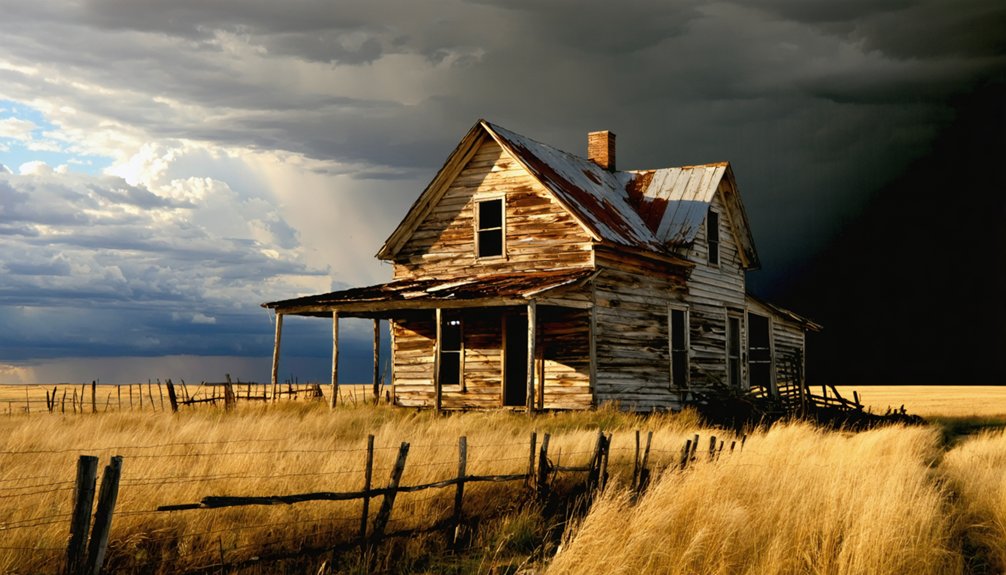
When the Chicago, Milwaukee & St. Paul Railroad pushed westward in 1906, Okaton emerged as a workers’ camp destined for transience. You’ll find this South Dakota settlement’s history mirrors countless frontier towns—boom, then bust.
Climate challenges including brutal winters and Depression-era hardships drove residents cityward, leaving homesteaders’ dreams weathered into ruins. The railroad’s departure in the mid-1980s, combined with I-90’s bypass route, sealed the town’s fate as a modern ghost settlement.
The 1980s brought unexpected revival when Robert and Evelyn Westlake transformed abandonment into “Westlake’s Ghost Town,” complete with relocated authentic structures and tourist amenities. Their preservation efforts attracted highway travelers to explore five dusty streets lined with collapsing schoolhouses and rusting equipment. The Westlakes stocked a rock shop and operated a petting zoo alongside the general store that served sandwiches and drinks.
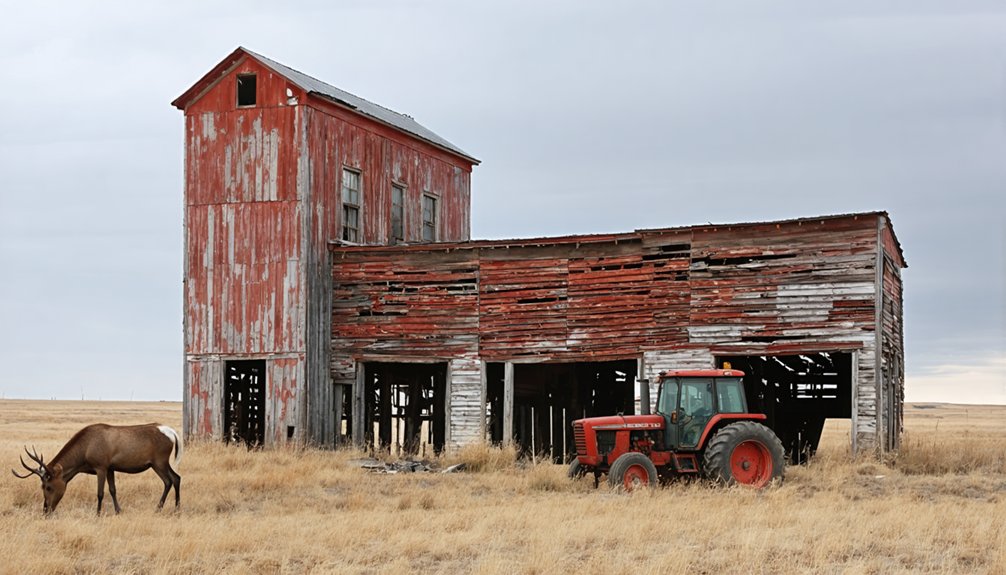
Filmmakers discovered Okaton’s cinematic potential—the grain elevator received a “Bingo Grain Co.” repaint for an unreleased production, while *Dances with Wolves* utilized nearby locations.
Today, these filming remnants stand among genuine decay, offering photographers freedom to document authentic Western abandonment.
The Origins of 1880 Town: When a Failed Western Production Became Something Greater
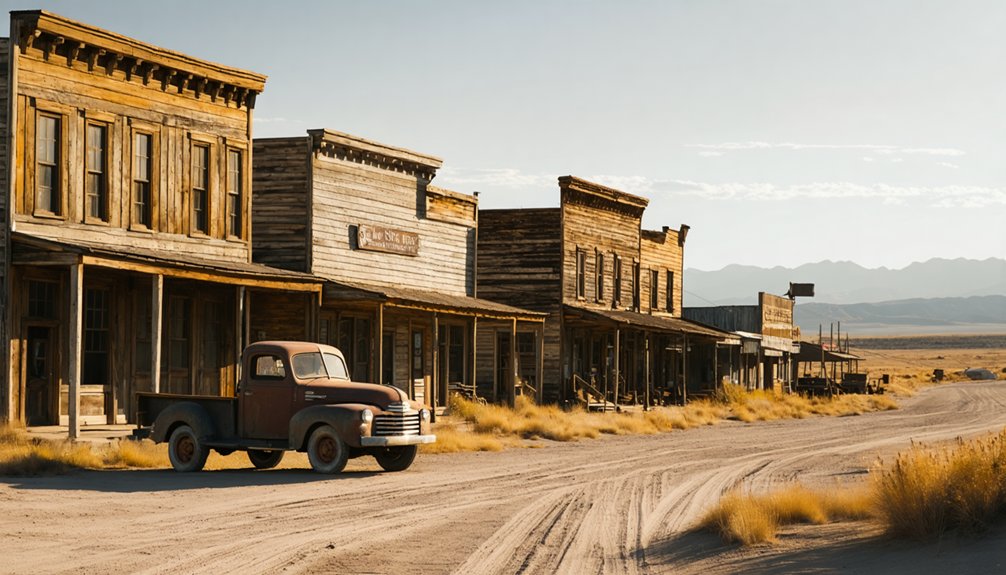
A failed Western production‘s remnants line Interstate 90 near Murdo today, though their origins trace to an early 1970s film deal that never materialized. When a production company abandoned their western shoot, they left behind a saloon and shop on Clarence Hullinger’s land—structures he and his son Richard relocated to birth 1880 Town.
What started without grand vision evolved through cultural preservation instincts rather than commercial calculation. The New York Times spotlighted the attraction, triggering donations of Dances with Wolves props including Kevin Costner’s horse Cisco and freight wagons. Scott Key, working since 1979, has moved buildings, photographed each piece during disassembly, and guided reconstructions using those images to ensure historical accuracy.
You’ll find thirty-plus authentic buildings transported from across South Dakota, each filled with period relics that demonstrate storytelling techniques through spatial arrangement rather than plaques. Among the displays, visitors encounter props that recreate the Lakota Sioux encampment from the film, offering contextual connection to frontier life. This accidental museum proves authenticity doesn’t require planning—just commitment to keeping history accessible.
Building an Authentic Prairie Town From Salvaged Ghost Town Structures
You’ll find 1880 Town’s buildings didn’t arrive in a single construction phase—Clarence Hullinger pieced together the weathered structures from abandoned prairie settlements throughout the early 1970s.
These salvaged ghost town remnants, including a saloon and shop fronts, formed the nucleus of what became visible from I-90, twenty-two miles west of Murdo.
The failed western film production left behind an accidental frontier main street that Hullinger would expand over decades with additional period structures like Saint Stephen’s church, a post office, and water towers. The site later served as a filming location for The Last Hunt, a 1956 western that explored themes of buffalo hunting regrets after the depletion of the great herds. The attraction today houses official props from Dances with Wolves, including film set artifacts and a director’s chair used during the production.
Salvaging Buildings Across Plains
Located 22 miles west of Murdo along Interstate 90, 1880 Town stands as a confirmation to prairie preservation through architectural salvage.
You’ll find authentic structures dragged from abandoned settlements across the northern plains, creating a dreamlike roadside attraction that captures genuine frontier architecture.
The Hullingers pioneered this cultural preservation effort in the early 1970s, initially supplying antiques for a failed western film production. When that shoot left behind an ersatz saloon and shop, they expanded the vision by salvaging real buildings from ghost towns.
This approach *guarantees* community engagement with authentic Old West experiences rather than Hollywood facades.
Each structure—from the 14-sided barn housing relics to tiny historic houses like Lillian Walker’s—tells stories of abandoned prairie communities finding new purpose. Buildings feature pressed-tin ceilings, ornate woodwork, and authentic tin fronts collected from nearby auctions, enhancing the historical accuracy throughout the town. The authentic architecture provided classic Western town settings that attracted filmmakers throughout the 1940s who sought genuine frontier backdrops for their productions.
Organic Development Over Time
When Clarence Hullinger’s antique-supply deal collapsed in the early 1970s, he faced a choice: demolish the ersatz saloon and shop left behind by the failed western production, or transform these Hollywood facades into something more substantial. He chose expansion, acquiring authentic prairie structures from across the northern plains rather than constructing replicas.
Each relocated building carried its own history, creating layered authenticity that distinguished 1880 Town from manufactured theme parks.
The *Dances with Wolves* connection accelerated this organic growth. Kevin Costner’s horse Cisco grazed on-site until death, while Jim and Jake—the film’s freight mules—became living exhibits. The seven Oscar wins brought international attention to the region’s filmmaking potential and historical preservation efforts.
The Fort Sedwick sod house joined salvaged saloons and general stores, forming a settlement where culinary traditions and daily frontier routines could’ve unfolded naturally. Unlike space exploration’s forward trajectory, this project reconstructed past landscapes through careful curation.
From Film Set Failure
The salvage operation began with a film production company’s broken promise. When a western production canceled in the early 1970s, Clarence Hullinger was left with an ersatz saloon and shop on his Murdo property—structures he’d accepted in exchange for supplying antiques.
Rather than demolish these highway-visible remnants, the site evolved through strategic acquisition of authentic prairie buildings dragged from abandoned northern plains settlements.
You’ll find genuine structures here, not Hollywood facades:
- Fort Hays set relocated from Clint Jones’s great-great grandfather’s homestead
- Original Fort Sedgwick sod house where Kevin Costner filmed
- Freight wagons and mules Jim and Jake from the production
- A 14-sided barn housing Dances with Wolves props upstairs
This wasn’t silent film trickery or underground tunnels—just real buildings creating an unplanned monument to preservation. The collection of authentic filming locations now attracts both filmmakers and tourists seeking to experience where cinematic history was made.
How Dances With Wolves Transformed South Dakota’s Film Tourism Legacy
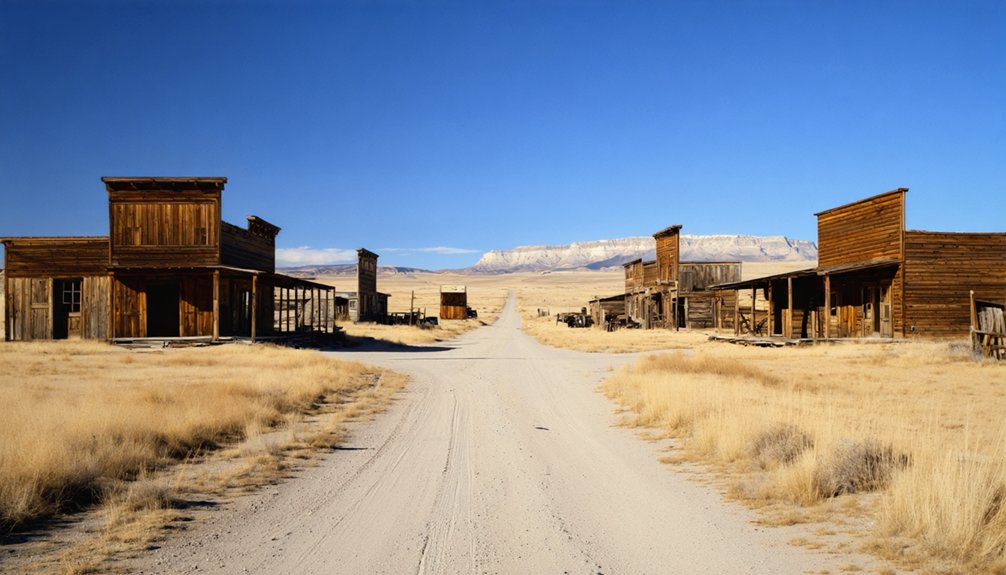
Kevin Costner’s 1990 Best Picture winner didn’t just sweep the Oscars—it fundamentally reshaped South Dakota’s tourism landscape by transforming remote filming locations into must-see destinations.
You’ll find Fort Hays, built four miles south of Rapid City, now operates as a living museum with original storefronts and blacksmith shops preserved from production. The site draws thousands annually seeking authentic Western experiences without commercialized constraints.
Triple U Buffalo Ranch, where eight days captured those iconic chase sequences, became a wildlife conservation powerhouse after Ted Turner’s 2015 purchase—maintaining the world’s largest private herd at 3,500 head.
Film industry influence sparked over 50 subsequent productions statewide, generating dedicated infrastructure like the South Dakota Film Museum. You can explore Spearfish Canyon’s exact winter camp viewpoints or photograph Badlands wagon routes independently.
Fort Sedwick’s Sod House and Other Relocated Movie Set Treasures
Although Fort Sedgwick never actually existed in South Dakota, you’ll discover its cinematic counterpart’s weathered sod structures preserved four miles south of Rapid City at Fort Hays Old West Town. These relocated buildings from the 1990 production stand as testament to aboriginal history intersecting with frontier mythology, while demonstrating minimal ecological impact through their authentic sod construction methods.
Your exploration includes:
- Headquarters Building housing the South Dakota Film Museum with artifacts from 50+ productions
- Blacksmith Shop displaying original film equipment and weathered storefronts
- Seasonal access mid-May through mid-October, 7:00 a.m. to 7:00 p.m. daily
- Free admission to walk through preserved sets where Native American extras from Rosebud, Pine Ridge, and Eagle Butte Reservations once filmed
Additional set pieces await at Deadwood’s Tatanka Museum and 1880 Cowboy Town near Murdo.
The Famous Mules and Horses That Called 1880 Town Home
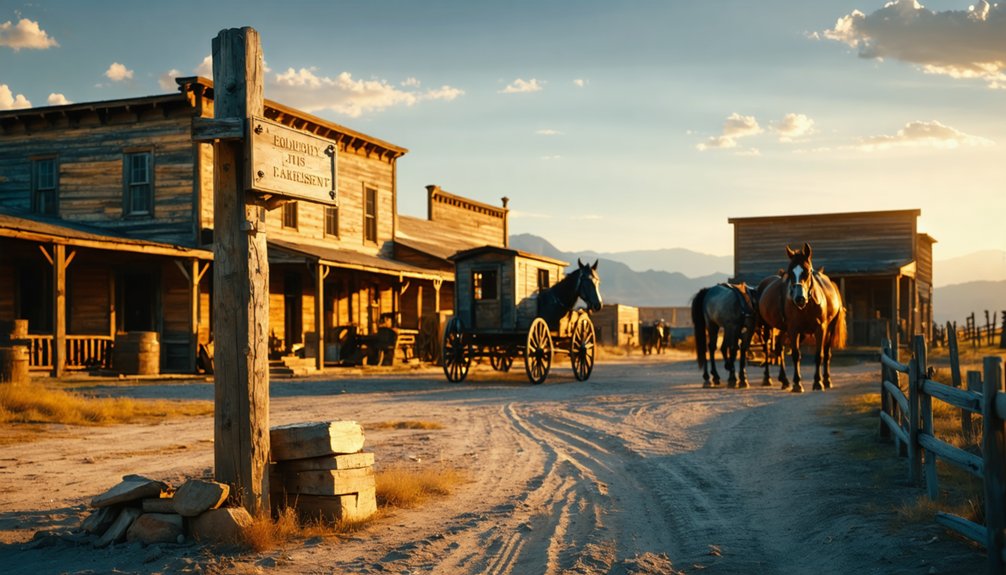
Beyond preserved buildings and storefronts, 1880 Town’s connection to *Dances with Wolves* extends to the four-legged cast members who’ve made their home quarter-mile east of the main street since filming wrapped.
You’ll find freight mules Jim and Jake—named directly in the wagon driver’s dialogue—still housed in the corrals alongside the original wagons they pulled from Fort Hayes to Fort Sedgwick.
Cisco, Kevin Costner’s mount, lived here until 2008, reaching age 33 under the Hullinger family’s animal care practices. His memorial marker draws fans to the burial site, while the mules remain visible near the playground and schoolhouse.
This wildlife conservation approach transforms movie props into living history, maintaining authentic Black Hills filming connections that boost visitor numbers beyond typical ghost town attractions.
Original Props and Wagons From Academy Award-Winning Productions
You’ll find authentic freight wagons from the 1990 Academy Award-winning film Dances with Wolves displayed throughout 1880 Town.
The primary collection is housed in the facility’s distinctive 14-sided barn.
These original props transported Kevin Costner’s character John Dunbar from Fort Hayes to Fort Sedwick in memorable scenes.
In these scenes, the wagon driver named his lead animals Jim and Jake.
The preserved wagons stand alongside the actual sod house from Fort Sedwick.
This creates a tangible connection to the film’s production over three decades after cameras stopped rolling.
Dances With Wolves Artifacts
Physical remnants mark key locations:
- Triple U Buffalo Ranch’s 50,000 acres near Pierre hosted the eight-day buffalo hunt with 3,000 animals.
- Spearfish Canyon preserves teepee sites and a snapped-off pine tree from filming.
- Fort Hays maintains the blacksmith shop and storefronts you can photograph.
- Sage Creek Wilderness Area provided Badlands backdrops for wagon journey scenes.
You’re free to explore these sites mid-May through mid-October.
Freight Wagons and Equipment
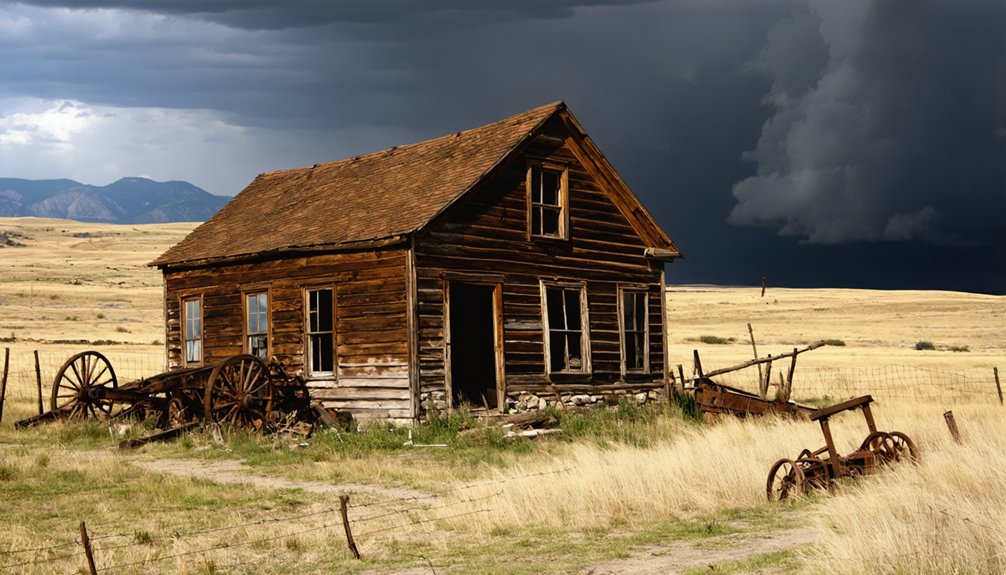
At 1880 Town, the original freight wagons from *Dances with Wolves* sit in an old corral just past the playground and one-room schoolhouse. These wagons carried John Dunbar and Timmons across South Dakota’s scenic vistas from Fort Hayes to Fort Sedgwick in the Academy Award-winning film.
You’ll find the two lead mules from those sequences—Jim and Jake—still housed on-site, their names called out by the wagon driver on screen. The mules lived here for over twenty years after the 1990 shoot.
Horse harnesses, Buck’s horseshoes, and bridle remain as authentic props. Additional artifacts fill the 14-sided barn’s upstairs hay loft.
Behind-the-scenes photos and a filming location map document the production’s prairie transport equipment.
The Black Hills as a Cinema Destination: Over 40 Films and Counting
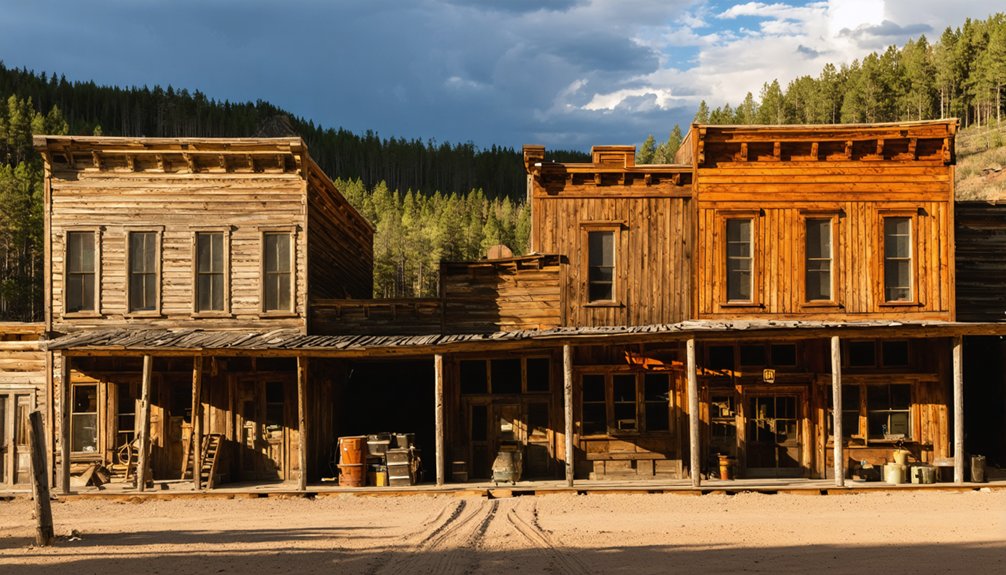
Since the early days of Hollywood, the Black Hills region has attracted filmmakers seeking authentic Western landscapes, resulting in over 40 major productions that have used its dramatic terrain as a backdrop. The area’s Wild West scenery and Historical Preservation efforts have created an ideal filming environment where directors can capture untamed frontier aesthetics without modern intrusions.
You’ll find the region’s cinematic portfolio includes:
- Dances with Wolves (1990) – Twelve Academy Award nominations, with Fort Hays set still accessible off Highway 16
- Armageddon (1998) – Utilized Black Hills’ rugged geology for action sequences
- Into the Wild (2007) – Shot at Black Hills Wild Horse Sanctuary near Hot Springs
- Thunderheart (1992) – Featured Badlands National Park’s distinctive formations
Badlands National Park alone hosts over 20 documented productions, while Mount Rushmore‘s granite faces have anchored multiple blockbusters.
From Remote Homestead to Highway 16: Making Film Sets Accessible to Tourists
When the *Dances with Wolves* production wrapped in 1990, the Fort Hays set remained standing on a great-great grandfather’s remote homestead managed by cousins—picturesque but practically unreachable for the tourists who wanted to visit. Bus tours failed within a year.
The family nearly dismantled everything until one father recognized the value in relocation rather than demolition. He purchased the authentic building sets and hauled them to Highway 16, transforming ranch liability into accessible film history.
You can now stand where John Dunbar’s posting orders hung, experiencing native storytelling without traversing endless gravel roads. This wasn’t urban signage pointing toward manufactured nostalgia—this was genuine frontier architecture repositioned for your convenience, proving accessibility doesn’t require sacrificing authenticity when you’re willing to move mountains of prairie lumber.
Economic Impact of Preserving Movie Locations as Historical Attractions
- Ardmore’s 4.5/5 rating attracts explorers despite urban decay challenges like weather damage.
- Spokane Ghost Town’s Black Hills accessibility supports seasonal guiding opportunities.
- Film props preserved in Murdo structures maintain community engagement through heritage tourism.
- Budget-friendly attractions counter railroad disuse impacts from 1980s decline.
However, vandalism and infrastructure neglect threaten long-term sustainability without consistent private investment.
Frequently Asked Questions
Can Visitors Stay Overnight at Okaton or 1880 Town?
You can’t stay overnight at either location due to limited visitor accommodations and history preservation restrictions. Okaton’s private property bars access, while 1880 Town lacks confirmed lodging. You’ll find hotels in nearby Murdo instead.
How Much Does Admission to 1880 Town Cost?
Step back in time affordably: you’ll pay $14 for regular adult admission at 1880 Town, where history preservation meets practical visitor amenities. Group rates start at $12, and children five-and-under explore free daily through October.
Are Guided Tours Available at These Ghost Town Film Locations?
You’ll find self-guided exploration at these locations rather than formal guided tours. While 1880 Town and Fort Hays offer independent viewing of sets and props, there’s no mention of haunted legends tours or filming permits for visitor access.
What Months Are Okaton and 1880 Town Open to Visitors?
You’ll find Okaton impossibly atmospheric year-round from public roads, though summer’s best for comfortable exploration. However, limited visitor amenities and history preservation efforts mean buildings stay closed. 1880 Town’s operational schedule requires direct contact for current access information.
Can Independent Filmmakers Rent These Locations for New Productions?
You’ll need to contact property owners directly about filming permits and location accessibility. Both sites welcome independent productions, though 1880 Town’s established infrastructure and Fort Hays’s highway-accessible position offer practical advantages for your shoot.
References
- https://photobyjohnbo.com/2021/01/26/okaton-south-dakota/
- https://www.youtube.com/watch?v=uCaj6m8TXv4
- https://mountrushmoretours.com/5-must-see-film-locations-in-the-black-hills/
- https://www.southdakotamagazine.com/1880-town
- https://b1027.com/how-many-movies-have-been-set-in-south-dakota/
- https://www.travelsouthdakota.com/shows-films-shot-south-dakota
- https://sdvisit.com/film-south-dakota/filmography
- https://www.legendsofamerica.com/sd-okaton/
- https://www.atlasobscura.com/places/okaton-ghost-town
- https://www.abandonedspaces.com/towns/okaton-south-dakota.html