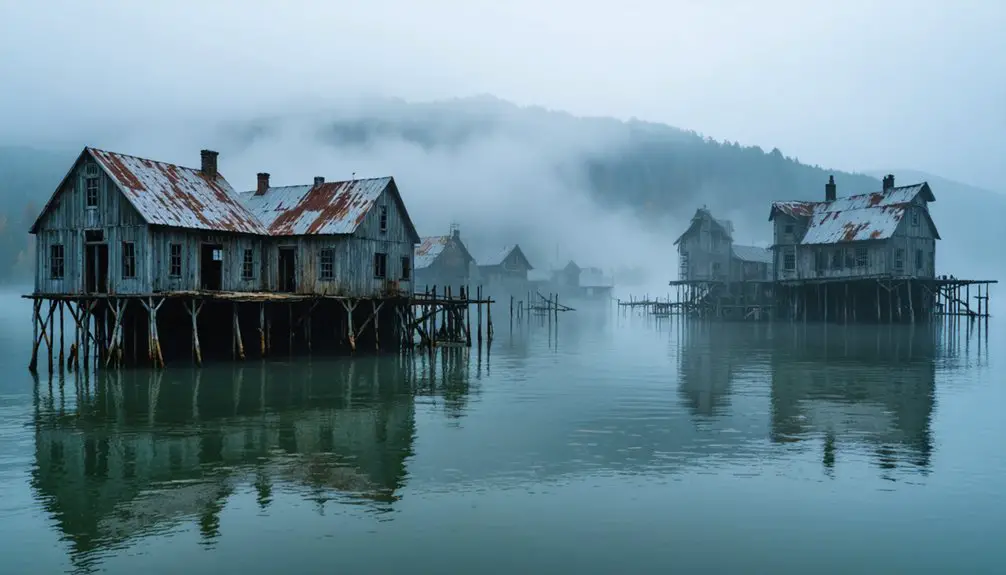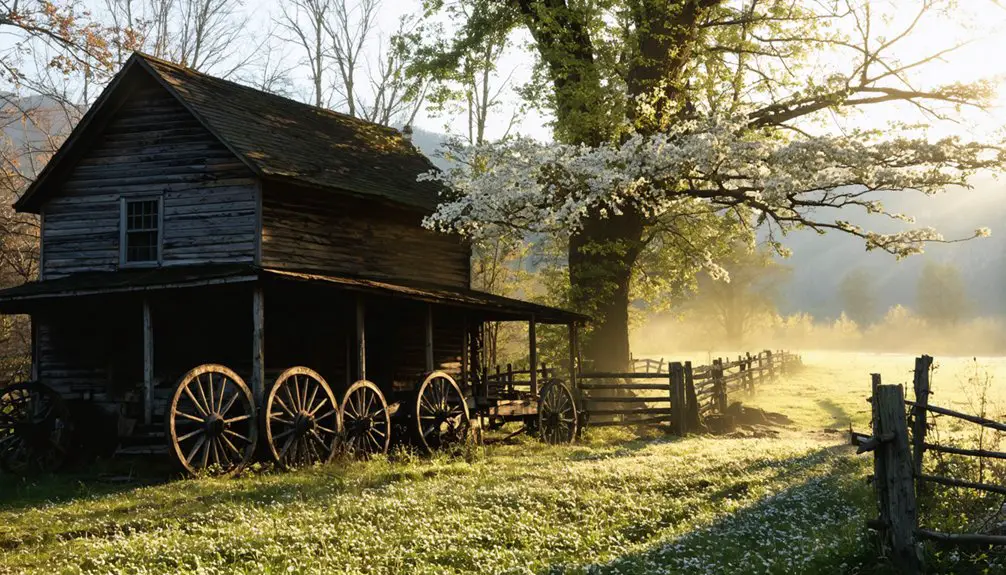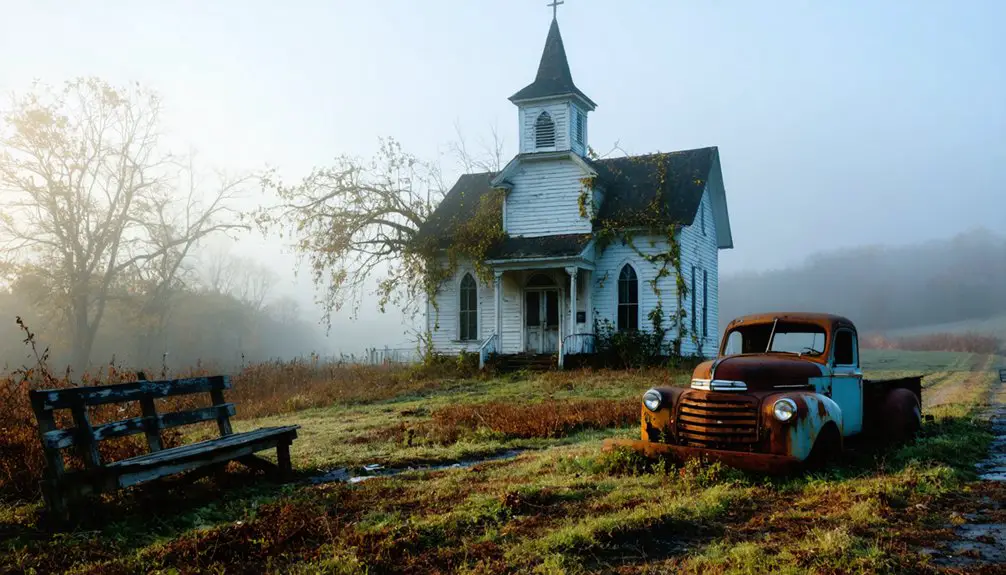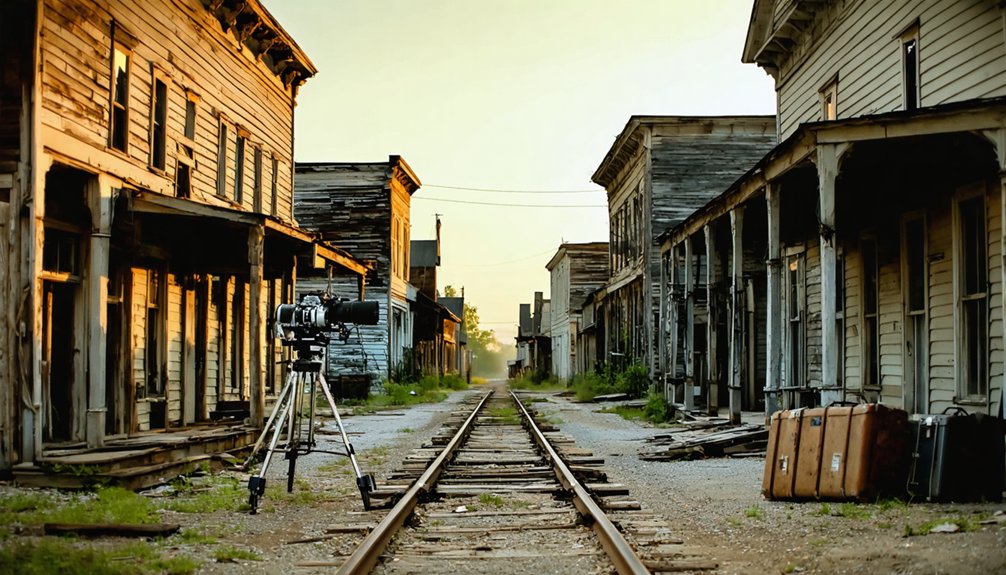
You’ll find Tennessee’s most filmed ghost towns include Henry River Mill Village, which doubled as District 12 in *The Hunger Games* and now offers guided tours of its preserved textile-era buildings. Tennessee State Prison in Nashville has appeared in *The Green Mile* and *Walk the Line*, though structural damage prevents interior access. The Evil Dead cabin near Morristown exists as foundation ruins on private property, while Elizabethton’s remote mountain locations have hosted multiple action sequences. Each site maintains distinct preservation statuses and access restrictions worth understanding before visiting.
Key Takeaways
- Henry River Mill Village served as District 12 in *The Hunger Games*, featuring restored worker cottages and the iconic Mellark’s Bakery building.
- Tennessee State Prison’s abandoned Gothic facility hosted films like *The Green Mile*, *Walk the Line*, and *The Last Castle* after closing in 1992.
- Elkmont’s ghost town contains 70+ deteriorating buildings with restored cabins, offering atmospheric settings for haunted and period productions.
- The Evil Dead cabin ruins in Morristown remain on private property, attracting cult film enthusiasts despite minimal preservation and restricted access.
- Lost Cove’s remote abandoned schoolhouse and Shakerag’s overgrown foundations provide authentic Appalachian ghost town backdrops for rural film projects.
The Evil Dead Cabin Ruins in Morristown
Deep in the woods past Martin Road in Morristown, Tennessee, you’ll find what’s left of the original Evil Dead cabin—though “cabin” overstates what remains. Sam Raimi’s 1979 production largely destroyed the 1960s hunting structure, and trespassers burned what survived shortly after the 1981 release.
Today you’ll see only foundation stones and partial chimney ruins, with a tomb-sized depression marking the infamous trapdoor cellar. Fans continuously dismantle the fireplace for souvenirs, accelerating its disappearance despite minimal history preservation efforts. The chimney has shrunk from roughly 8 feet in 2004 to approximately 3 feet tall by 2021.
The quarter-mile trail behind a barbed-wire fence crosses private property where owners actively discourage visitors. The 21-year-old director maneuvered a dirt bike through these woods to capture the film’s unsettling POV shots. This folklore legends site exists in legal limbo—accessible yet forbidden, preserved only through its cult status rather than any formal protection as encroaching development threatens final erasure.
Henry River Mill Village: From Textile Hub to District 12
- The company store (Mellark’s Bakery in the film)
- Worker cottages lining the river gorge
- Original dam remnants providing visual authenticity
You can explore through guided tours or overnight stays in restored cabins like house #12. The site earned National Register designation in 2019.
While dangerous interiors remain closed, Saturday visits let you experience both textile-era architecture and cinematic legacy firsthand. Scenes from the movie were filmed throughout the village grounds. The village is monitored by security cameras throughout to prevent vandalism and ensure preservation.
Tennessee State Prison’s Role in Hollywood Productions
You’ll recognize this West Nashville facility from *Walk the Line* (2005), *Last Dance* (1996), and *The Last Castle* (2001).
The abandoned condition delivered unmatched authenticity without operational restrictions.
The Tennessee State Penitentiary operated from 1898 until its closure in 1992, just six years before *The Green Mile* filming began.
The facility sits on Cockrill Bend Boulevard in Nashville, where director Frank Darabont captured the prison scenes for the 1999 film.
Though you can’t enter—tornado damage and structural concerns keep it closed—you’ll spot the imposing Gothic entrance from Cockrill Bend Boulevard, where occasional 5K runs offer closer proximity.
Action Films Shot in Elizabethton’s Rural Landscapes
- Roan Mountain – Mountain-based confrontations featuring Billy Drago’s antagonist role.
- Buck Mountain – High-intensity tactical sequences in rugged terrain.
- Bee Cliff – Daring escape maneuvers utilizing dramatic cliff elevations.
You’ll find these locations remain accessible, preserving unchanged backdrops from the production.
The film showcased Tennessee’s rural filming capabilities, offering freedom-seeking fans tangible action footprints across Northeast Tennessee’s diverse wilderness landscapes. Similar to the Tennessee State Prison, which has been closed for decades yet frequently appears in prison-themed films, these remote locations provide authentic settings for cinematic storytelling. Production utilized The Orpheum Theatre among other Memphis locations to capture additional interior sequences for the film.
Haunted Locations Across Northeast Tennessee’s Abandoned Sites
Beyond the action-packed filming locations, Northeast Tennessee’s abandoned settlements harbor darker atmospheres where decay and isolation merge into unsettling exploration experiences.
You’ll find Elkmont’s 70+ deteriorating buildings where mysterious sounds and apparitions emerge from 1910-era resort cabins—16 now restored by the Park Service.
Lost Cove’s decaying schoolhouse sits remote in Unicoi County’s mountains, embodying classic Appalachian legends through its haunting isolation.
The James Walker Historical House near Rutledge connects you to Crockett family history while social media groups document its paranormal activity.
Wheat Community’s intact George Jones Memorial Baptist Church stands witness to 1940s Manhattan Project displacement.
Navigate Shakerag‘s wooded overgrowth to discover stone foundations marking 19th-century life, where abandoned structures require determined hiking to locate their hidden histories.
The site’s overgrown paths wind past abandoned homes where whispers of former residents fuel enduring ghost stories.
Tennessee State Prison’s Gothic architecture from 1898 earned it featured roles in *The Green Mile* and *The Last Castle* before its 1992 closure left the Nashville site largely abandoned.
Frequently Asked Questions
Are Ghost Town Filming Locations in Tennessee Open to the Public?
Tennessee lacks documented ghost town filming locations open to you. The Evil Dead’s Morristown cabin sits on fenced private property—trespassing territory. You’ll find haunted legends elsewhere, but historic preservation doesn’t include accessible abandoned film sites here.
Do Filmmakers Need Special Permits to Film at Abandoned Tennessee Sites?
Yes, you’ll need permits. Even at the infamous Evil Dead cabin site, filming permit requirements apply—abandoned site access demands landowner permission for private property or state approvals for public lands, regardless of deterioration or vacancy status.
Which Tennessee Ghost Town Location Attracted the Most Film Productions?
None of Tennessee’s ghost towns attracted multiple major productions. Morristown hosted *The Evil Dead*, while Spencer featured *The Jungle Book*. You’ll find Elkmont focuses on historical preservation and tourist attractions rather than filmmaking, offering visitors unrestricted exploration instead.
How Do Property Owners Profit From Ghost Town Filming on Their Land?
Your crumbling walls become silver screen gold through location fees and guided tours. Revenue opportunities flow from film crews renting access, while historical preservation grants arrive when productions spotlight your forgotten spaces, transforming trespassing headaches into profitable tourist destinations.
What Safety Measures Exist When Filming at Decayed Tennessee Structures?
You’ll find hazard assessments and safety equipment requirements vary by production, but Tennessee lacks formalized protocols for decayed structures. Crews typically conduct their own site evaluations, installing temporary supports and protective gear when traversing unstable foundations and collapsed frameworks.
References
- https://www.bookofthedead.ws/website/the_evil_dead_locations.html
- https://wbkr.com/tennessee-film-locations/
- https://www.atlasobscura.com/places/the-evil-dead-cabin-morristown-tennessee
- https://www.smokiesadventure.com/movies-filmed-in-the-smoky-mountains/
- https://northeasttennessee.org/23-productions-made-in-northeast-tennessee/
- https://www.tnentertainment.com/location-database
- https://evildead.fandom.com/wiki/The_Knowby_Cabin
- https://easttennessean.com/2021/10/29/whats-lurking-in-the-woods-of-morristown/
- https://www.youtube.com/watch?v=0uZxXSnQlfc
- https://www.artofabandonment.com/2022/03/henry-river-mill-village-the-hunger-games-district-12-hickory-nc/