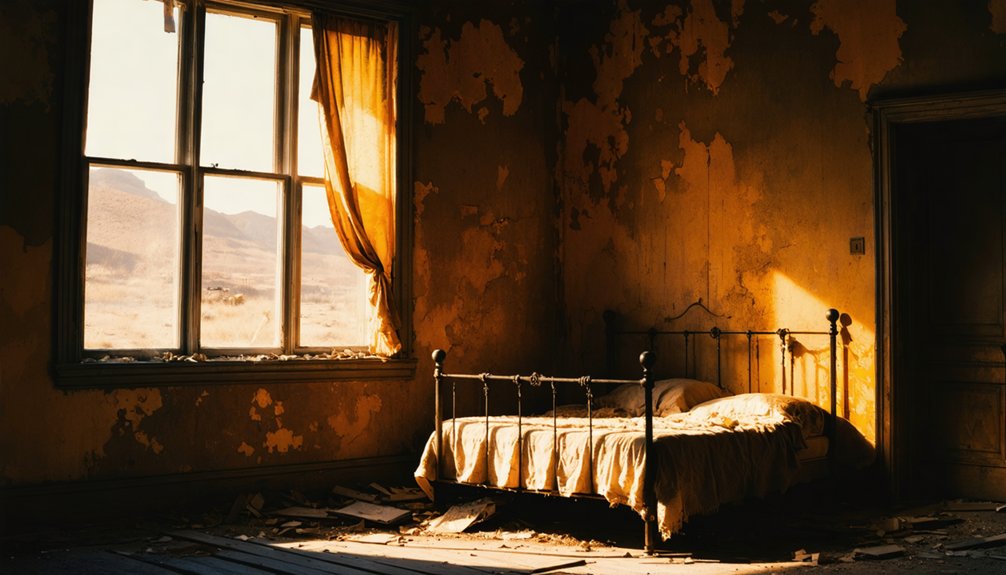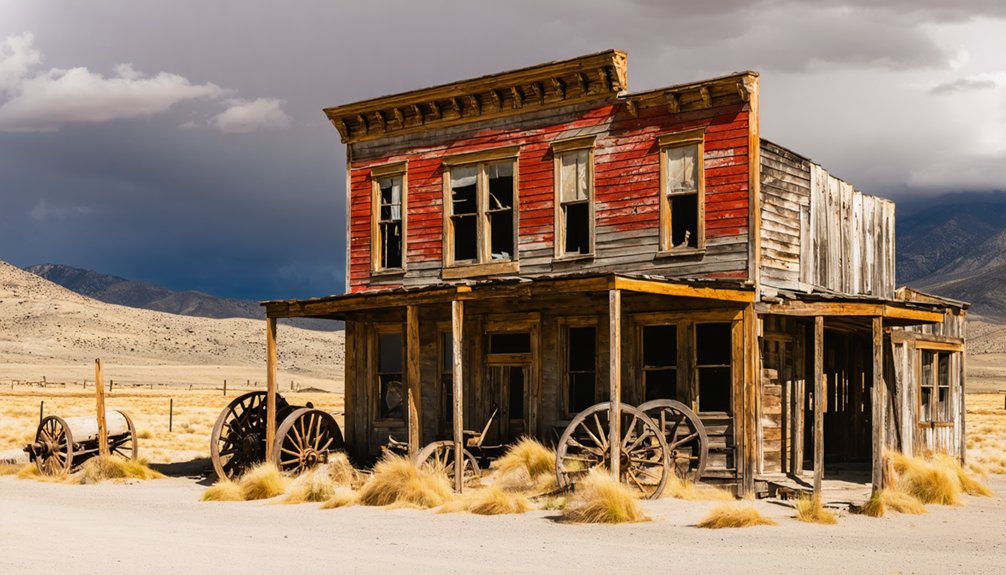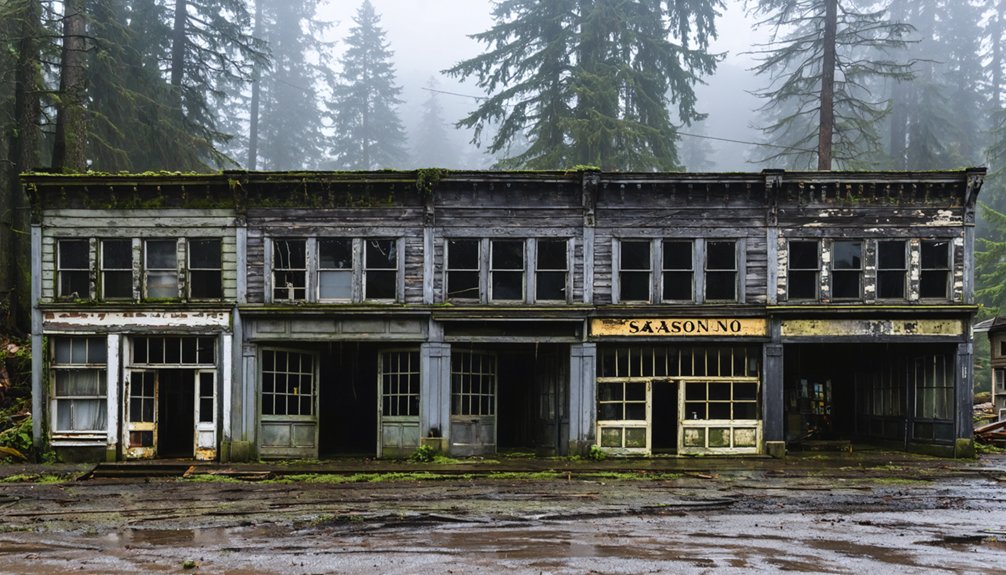
You’ll find Pacific Northwest ghost towns like Monte Cristo, WA, and Sumpter, OR, offering authentic 1890s mining infrastructure with minimal set dressing required. Abandoned railroad corridors near Metaline Falls and Brownsville provided atmospheric backdrops for productions like *Stand By Me*, while coastal settlements such as Astoria became iconic through *The Goonies*. These locations feature decaying structures, rusted machinery, and weathered architecture that eliminate costly studio construction, though you’ll face logistical challenges including seasonal access limitations, equipment transport over deteriorated roads, and approximately 20% production delays that the following locations illustrate.
Key Takeaways
- Monte Cristo, Washington features authentic 1890s mining ruins accessible via an 8-mile hike, providing period-accurate backdrops with minimal set dressing needs.
- Brownsville, Oregon served as Castle Rock in “Stand By Me,” utilizing abandoned railroad corridors and authentic deteriorating infrastructure for filming.
- Sumpter, Oregon offers preserved mining town infrastructure including the Valley Dredge Area, showcasing historical operations with minimal modern intrusions.
- Blue Heron Paper Mill and Nighthawk Mill display rusted machinery and early 1900s structures, creating atmospheric settings for period productions.
- Remote Washington communities like Metaline Falls and Usk provide authentic railroad camp settings with abandoned trestles for realistic period storytelling.
Abandoned Mining Settlements That Became Cinematic Backdrops
When prospectors first carved settlements into the Pacific Northwest’s mountainsides during the late 1800s, they unknowingly created Hollywood’s future filming locations. Monte Cristo, Washington stands among the most documented, featuring prominently in “The Postman” (1997) with its intact Bleichert tramway system and underground miner shelters from the 1890s. These mining relics provide authentic period backdrops you won’t find on studio lots.
Golden and Sumpter, Oregon join this network of abandoned settlements, offering mountain terrain and preserved infrastructure that filmmakers actively seek. Town preservation efforts vary—Burke, Idaho’s structures cluster around original railroad tracks, while Bayhorse’s stacked architecture follows mountain contours within Yankee Fork State Park. The region’s arid northern areas naturally preserve wooden structures and mining equipment better than humid coastal zones. Shaniko’s well-preserved frontier architecture earned recognition from historic preservation organizations, making it particularly appealing for period film productions.
You’ll discover these locations balance accessibility with historical authenticity, creating cinematically viable alternatives to constructed sets.
Deserted Railroad Towns Transformed Into Film Sets
You’ll find Pacific Northwest filmmakers consistently choosing abandoned railroad corridors where decaying trestles and overgrown rights-of-way provide authentic period settings without modern infrastructure intrusions.
Productions like *Train Dreams* salvaged actual Milwaukee Road remnants near Metaline Falls, while *Stand By Me* transformed Brownsville’s historic rail-dependent streetscape into fictional Castle Rock, complete with Chamber of Commerce mapping for crew logistics. The Pend Oreille Valley Railroad corridors near Usk offered additional abandoned trestles that production designers incorporated into custom set construction. Brownsville now celebrates its cinematic legacy with annual “Stand By Me” day festivities each July, deepening the town’s identity beyond its original railroad heritage.
These locations present significant access challenges—remote trestles near the Canadian border require equipment transport over deteriorated logging roads, and river-carved canyons demand specialized rigging for camera crews working around unstable wooden structures.
Railroad Creek Filming History
How did filmmakers transform forgotten railway corridors into cinematic landscapes that captured early 1900s railroad life? You’ll find Train Dreams utilized abandoned Milwaukee Road sections near Metaline Falls, where crews rescued authentic trestle remains from remote properties near the Canadian border.
They constructed fire watch towers on High Serenity Ranch’s elevated ridges while incorporating derelict infrastructure throughout Pend Oreille Valley’s forgotten rail lines.
Historical preservation met creative vision when relocated structures like St. Michael Mission’s 1860s chapel provided period-accurate settings.
The production team ventured into untamed forest corridors around Usk, staging practical burns inspired by Tarkovsky’s techniques. Ghost Town Village in North Carolina served as the filming location for “Dean Teasters Ghost Town,” which featured original 1961 gunfighters who had performed at the park since its opening.
Wildlife conservation zones surrounding Riverside State Park’s Bowl and Pitcher formations offered geological authenticity, proving you can capture railroad history’s essence through strategic location scouting and adaptive reuse of vanishing infrastructure. Producer Harry Sherman purchased Grafton ghost town in the 1940s specifically to create an authentic Western filming location.
Abandoned Tracks Meet Cinema
As Pacific Northwest railroad towns faded into obscurity, Hollywood scouts discovered their weathered infrastructure held untapped cinematic potential.
You’ll find Sumpter’s deserted railroad tracks became the haunting backdrop for Ghost Mine’s 2013 series, where producers leveraged the Crescent Mine’s authentic decay.
The actual filming at Buckeye Mine near Bourne captured genuine abandoned mining structures that production designers couldn’t replicate on sound stages.
Eastern Oregon’s ghost towns offered what studios craved: real deterioration, rusted rails threading through collapsed buildings, and locations free from modern intrusions.
Oregon’s diverse landscapes have supported over 450 films and TV projects, with ghost towns providing the same versatile backdrops that range from coastlines to wilderness areas.
These sites eliminated costly set construction while delivering atmospheric authenticity.
The Pacific Northwest’s mystical and haunting qualities have made the region particularly effective for horror and supernatural productions seeking authentic regional atmosphere.
You’re witnessing railroad infrastructure that once transported ore and timber now serving Hollywood’s vision, transforming forgotten corridors of commerce into compelling visual narratives that resonate with audiences seeking untamed, unscripted landscapes.
Remote Access Challenges Production
While Hollywood’s discovery of these railroad relics solved aesthetic needs, the physical reality of reaching them presents formidable obstacles.
You’ll encounter environmental obstacles that strand crews when mountain passes snow-block seasonal access windows. Technology challenges compound when generators fail miles from civilization, forcing helicopter resupply missions that drain budgets. Productions near Wenatchee National Forest traverse:
- Overgrown rails requiring ATV convoys for equipment haulage
- Unmaintained access roads demanding pre-scouting through decay
- 24/7 security protocols against urban explorer intrusions
- Federal permit delays in ghost town jurisdictions
Statistics reveal 20% of production delays stem from isolation factors, with fuel costs triggering 15% budget overruns. You’ll need chartered bush planes for crew rotations and local guides steering unmarked routes. Wildlife disruptions on deserted paths add unpredictability—freedom from studio constraints demands rigorous survival logistics. Films like Harry and the Hendersons capitalized on the Cascade Mountains backdrop to blend ghost town atmosphere with Pacific Northwest wilderness mythology. The remote Timberline Lodge demonstrates how Mount Hood’s elevation creates additional logistical hurdles for productions requiring mountain settings approximately 90 minutes from Portland’s resources.
Forgotten Logging Communities Captured on Camera
You’ll find Pacific Northwest logging camps offering filmmakers authentic timber-era backdrops where concrete foundation chunks, rusted railroad grades, and weathered equipment create ready-made period sets.
These abandoned mill towns—scattered across Washington’s mountain valleys from Melmont to Rayonier’s Green Creek camp—require minimal set dressing since decaying vehicles, culvert remnants, and hillside structures remain frozen in their 1900s-1960s operational states.
Location scouts target these remote sites because their natural forest encroachment and deteriorating infrastructure deliver the visual authenticity that constructed sets can’t replicate.
Abandoned Mill Town Sets
- Blue Heron Paper Mill provides rusting machinery, echoing hallways, and dark tunnels across wide-open factory floors at Willamette Falls.
- Nighthawk Mill Remains features original 1903 structures including an operational hotel, schoolhouse, and mining office from the 1860s.
- Monte Cristo Industrial Ruins delivers authentic 1890s equipment and buildings accessible via an 8-mile roundtrip hike.
- Sumpter Valley Dredge Area showcases mining operations within a town once supporting 16 saloons and multiple newspapers.
These locations eliminate construction costs while delivering genuine atmospheric depth unreplicable through studio fabrication.
Railroad Camp Film Backdrops
Since railroad camp locations demand both historical authenticity and logistical accessibility, the 2024 production of *Train Dreams* transformed Washington’s forgotten logging communities into functional film sets across a six-week April-to-May shooting schedule.
Tekoa anchored operations as the primary filming hub, while Metaline Falls and Colville delivered railroad camp elegance through weathered infrastructure and century-old tracks.
The Northwest Railway Museum in Snoqualmie provided operational rolling stock for pivotal sequences, connecting historic logging rail networks to contemporary cinematography.
Forest backdrop significance emerged at Rattlesnake Lake, where submerged remnants of 1900s Moncton created post-fire landscapes with skeletal tree trunks.
Production supervisor Marc Dahlstrom confirmed Spokane’s narrative authenticity complemented these remote sites.
Art director John Lavin’s Chattaroy ranch set—built on former High Serenity Ranch property—combined fire watch towers with practical cabin structures, earning the film’s Best Cinematography nomination at the 2025 Oscars.
Decaying Timber Settlement Scenes
- Astoria’s Clatsop County Jail became the Oregon Film Museum after *The Goonies* filming.
- Bella Swan’s house in St. Helens opened for visitor bookings, generating sustained tourism revenue.
- St. Helens established the Spirit of Halloweentown festival, creating annual economic activity.
- Film partnerships funded building maintenance that communities couldn’t otherwise afford.
You’ll find these settlements leveraging their authentic logging-era architecture as permanent attractions, escaping economic decline through cinematic reinvention.
Remote Coastal Villages Preserved Through Hollywood Productions
Remote coastal villages throughout the Pacific Northwest have found unexpected preservation through their selection as film and television locations, transforming economically struggling communities into recognizable cinematic landmarks.
You’ll discover Astoria, Oregon, where *The Goonies* immortalized the County Jail—now the Oregon Film Museum—and the Flavel House Museum. Fort Langley, British Columbia, portrayed Antonio Bay in *The Fog*, capitalizing on haunted legends and coastal folklore surrounding Pacific Northwest maritime history.
Tofino’s striking beaches captured atmospheric water scenes, while its peninsula geography provided authentic coastal cinematography.
St. Helens, Oregon, doubled as Port Angeles in *Twilight* and hosted Disney’s *Halloween Town*. These productions brought sustained economic activity to remote locations, preserving historic architecture and streetscapes that might’ve otherwise deteriorated without Hollywood’s intervention and ongoing tourist interest.
Desolate Mountain Outposts Featured in Western Films
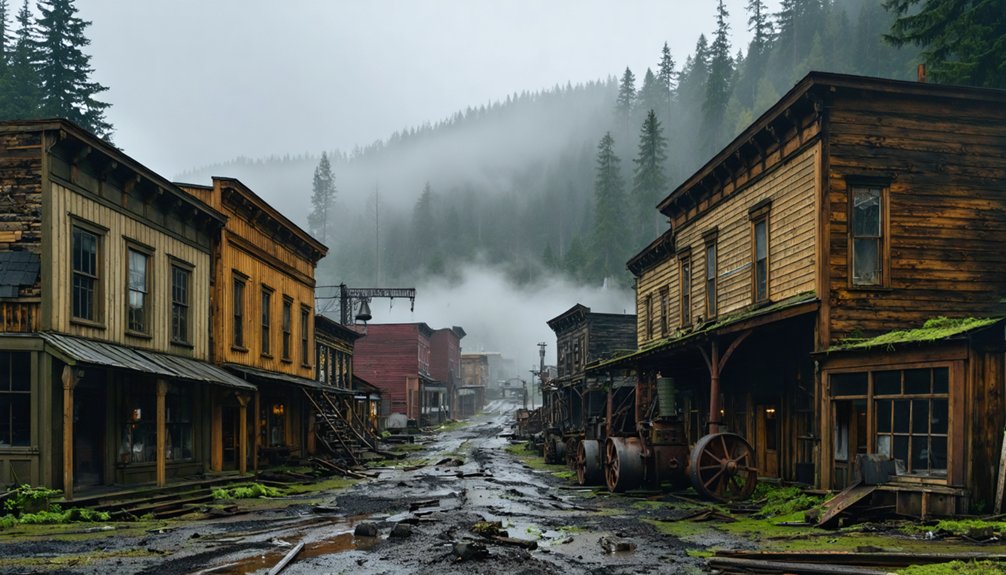
High-elevation ghost towns and abandoned mining settlements across the Pacific Northwest’s Cascade and Rocky Mountain ranges offered filmmakers the weathered authenticity that studio backlots couldn’t replicate for western productions.
You’ll find these mountain fortresses transformed harsh terrain into cinematic gold, where directors captured genuine isolation and frontier desperation.
These wilderness hideouts provided essential filming advantages:
- Authentic deterioration – Decades of weather damage created naturally distressed structures without prop department intervention
- Geographic isolation – Remote locations minimized modern intrusion into period shots
- Dramatic elevation changes – Vertical landscapes enhanced chase sequences and standoff compositions
- Seasonal versatility – Snow-covered peaks alternated with summer accessibility for varied storytelling needs
Production crews accessed these outposts via horseback and helicopter, hauling equipment through narrow mountain passes to capture the rugged independence that defined western cinema’s most memorable frontier conflicts.
Vanished Homestead Locations Immortalized in Cinema
Scattered across Oregon’s valleys and coastal plains, forgotten farmsteads and rural settlements transformed into Hollywood’s vision of frontier domesticity long after their original inhabitants departed. You’ll discover Bella’s house in St. Helens—a functional homestead turned *Twilight* landmark where fans book overnight stays in rooms once occupied by film crews.
The structure embodies Hollywood’s fascination with isolated domesticity, its weathered exterior perfect for conveying small-town America. Haunted legends surround St. Helens’ transformed City Hall, where *Halloweentown’s* supernatural aesthetic merged with existing architecture.
Ghostly apparitions reportedly inhabit filming locations along Astoria’s Riverwalk Trail, where abandoned maritime structures frame *Goonies* sequences. These preserved homesteads offer unrestricted access—you’re free to explore cinematic history without tour guides or barriers constraining your discovery.
Frequently Asked Questions
Do Film Crews Need Special Permits to Shoot in Pacific Northwest Ghost Towns?
You’ll need permits depending on location ownership. Federal ghost towns require special use permits with insurance. Unincorporated areas like Waldo lack formal processes, but you should address local community concerns and respect any spiritual significance these abandoned places hold.
Which Ghost Town Filming Locations Are Accessible to Tourists Year-Round?
You’ll find virtually zero authentic ghost towns with year-round access in Pacific Northwest film locations. Most lack tourist accommodations and historical preservation infrastructure, existing on remote private land. Instead, visit operational towns like St. Helens offering unrestricted filming site access.
For those interested in cinematic history, exploring abandoned filming sites in Washington can provide a unique glimpse into the past. While these locations may not be well-preserved, they often hold captivating stories and visuals that enthusiasts cherish. Additionally, the state’s diverse landscapes can serve as stunning backdrops for your own creative projects.
How Do Production Companies Protect Fragile Historical Structures During Filming?
You’ll find production companies employ structural reinforcement like steel bracing and temporary scaffolding to support fragile buildings. They prioritize historical preservation through non-invasive techniques—green screens, drone shots, and clamps rather than nails—protecting your access to authentic locations.
Are Any Pacific Northwest Ghost Town Film Sets Still Standing Today?
Like time capsules frozen mid-scene, you’ll find Sumpter’s Crescent and Buckeye Mines still standing from Ghost Mine. These abandoned structures welcome urban exploration while historical preservation efforts maintain their authentic decay for future adventurers seeking cinematic remnants.
What Safety Precautions Are Required When Filming in Abandoned Locations?
You’ll need FFP3 masks for hazardous materials like asbestos and mold, plus thorough structural instability assessments before entering. Pack GPS trackers, headlamps, and emergency gear while informing others of your location and timeline.
References
- https://www.knkx.org/the-best-horror-movies-set-in-the-pacific-northwest
- https://www.theamericanroadtripcompany.co.uk/blog/pacific-northwest/top-5-movie-locations-pacific-northwest/
- https://www.youtube.com/watch?v=tZmA_VF6cm8
- https://www.historicoregonfilmtrail.com/historicoregonfilmtrail.html
- https://www.cascadeloop.com/filmed-on-the-cascade-loop
- https://www.islands.com/2063968/five-best-abandoned-ghost-towns-visit-pacific-northwest/
- https://www.rvoutwest.com/episodes/13-ghost-towns-across-the-pacific-northwest
- https://www.youtube.com/watch?v=SPQCs-4Mb6E
- https://bestofthenorthwest.com/16-westerns/
- https://giggster.com/guide/movie-location/where-was-the-postman-filmed