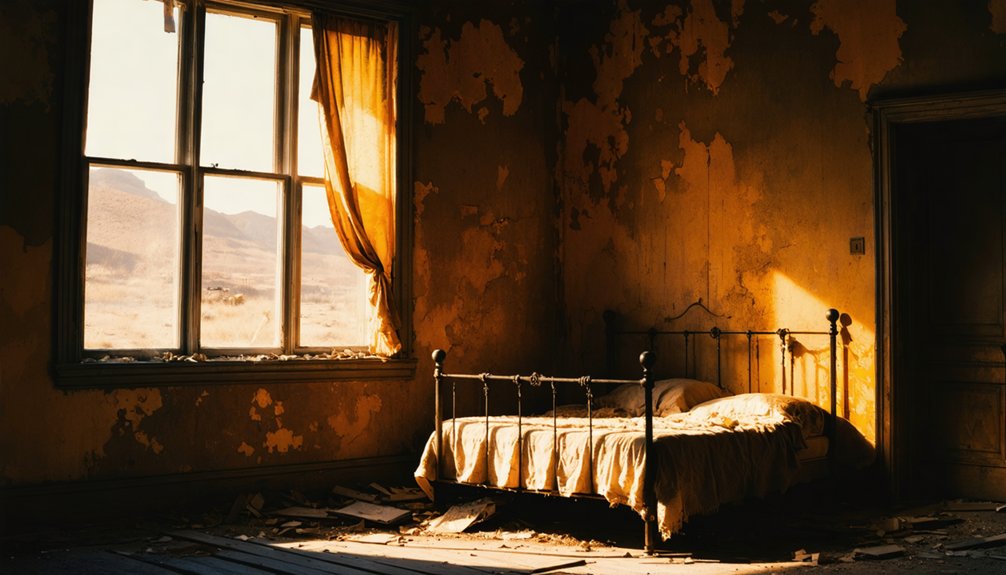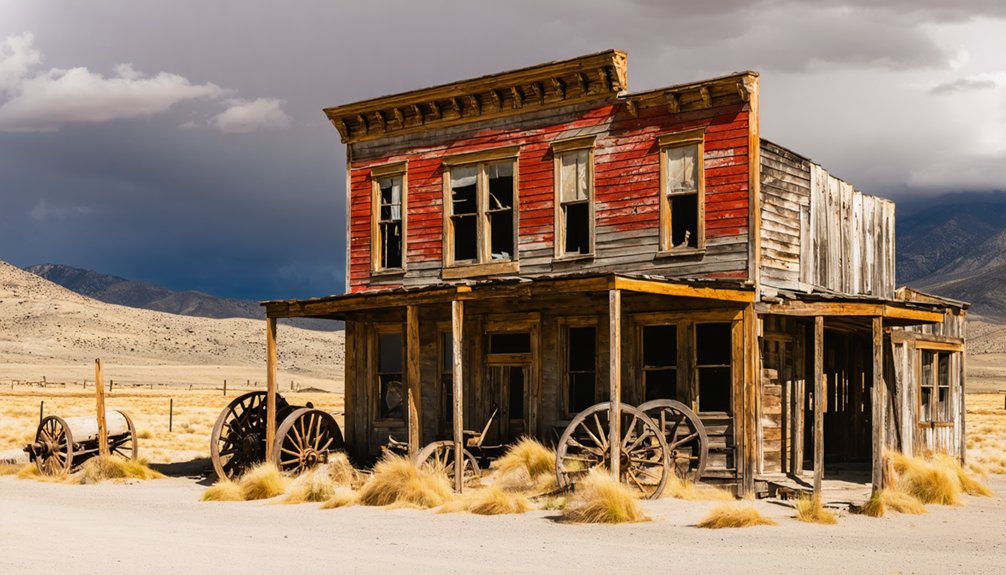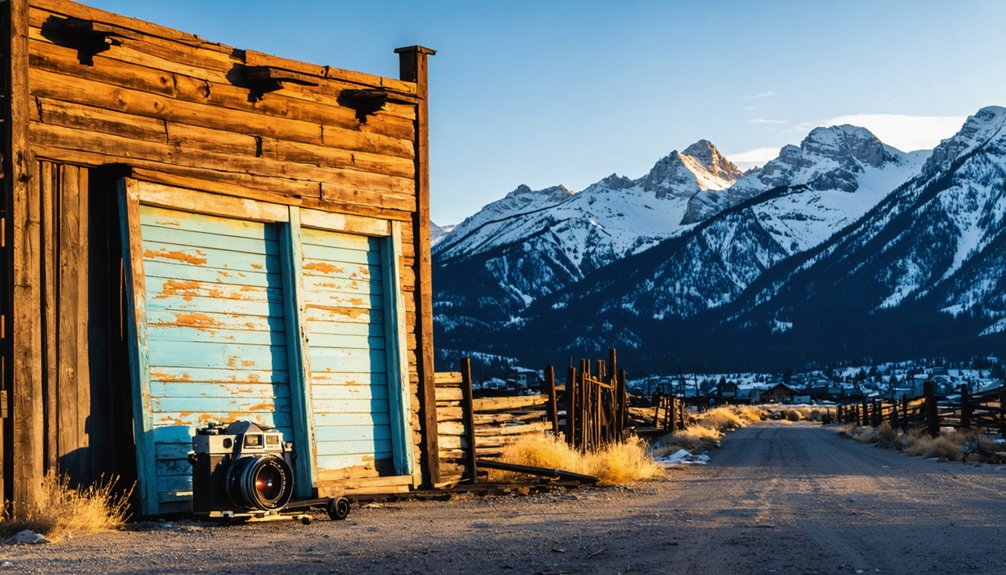
You’ll find exceptional ghost town filming locations throughout the Rockies, from St. Elmo’s preserved storefronts at 9,961 feet to Animas Forks’ structures at 11,200 feet elevation. Grafton, Utah—nine miles from Zion—hosted “Butch Cassidy and the Sundance Kid,” while Cerro Gordo‘s 337 acres appeared in “Tremors.” These National Register sites offer authentic Western architecture, weathered buildings, and mountain backdrops that minimize set construction. Access ranges from year-round roads to 4WD-only routes, with each location providing distinct terrain and preserved structures that’ll match your production’s specific period and aesthetic requirements.
Key Takeaways
- St. Elmo, Colorado offers authentic Western sets at 9,961 feet elevation with preserved storefronts, schoolhouse, and dance halls since 1979.
- Animas Forks sits at 11,200 feet with restored historic structures, managed by BLM and listed on National Register of Historic Places.
- Grafton, Utah near Zion National Park filmed “Butch Cassidy and the Sundance Kid” with preserved 1880s frontier architecture.
- Cerro Gordo, California spans 337 acres featuring original mining buildings and served as filming location for “Tremors” with 11 distinct sites.
- Nevadaville, Colorado maintains weathered ruins from 1859 Gold Rush era including 1879 Masonic Lodge and authentic mining relics above 9,000 feet.
St Elmo Colorado: A Western Movie Set Come to Life
Perched at 9,961 feet in Colorado’s Sawatch Range, St Elmo stands frozen in time—a remarkably intact mining town where weathered wooden storefronts and false-facade buildings line dirt streets exactly as they did in the 1880s.
You’ll find authentic structures filmmakers prize: the general store, schoolhouse, and dance halls that once served 2,000 miners.
The town’s historical preservation earned National Historic District status in 1979, maintaining its genuine Western aesthetic without modern intrusions.
You can explore year-round via County Road 162, accessing the site by foot, ATV, or horseback.
This privately-owned settlement offers filmmakers ready-made sets requiring minimal preparation, while tourist attractions include off-road trails and Chalk Creek fishing.
The Mary Murphy Mine backdrop and elevation provide stunning Rocky Mountain visuals for authentic period productions.
The site features over 150 patented claims from its mining heyday, adding geological authenticity to the historic landscape.
The town shares its name with Yale University’s St. Elmo Society, demonstrating how the Saint Elmo designation appears across different American cultural contexts.
Animas Forks Colorado: Alpine Ghost Town Near Silverton
You’ll reach Animas Forks at 11,200 feet elevation via a four-wheel drive route 12 miles northeast of Silverton on the Alpine Loop Backcountry Byway.
The Duncan-Walsh House, built in 1879 with its distinctive bay window, stands as the most photographed structure in this alpine ghost town.
Tom Walsh later owned it for his daughter Evalyn, who became famous for possessing the Hope Diamond.
Among the dozen standing buildings managed by the Bureau of Land Management, this privately-restored residence anchors a remarkably preserved mining camp that attracted over 450 residents during its 1883 peak.
The town’s prosperity ended after the silver market crash in 1893 significantly reduced economic activity in the area.
The 1884 blizzard buried the settlement in 25 feet of snow for 23 days, temporarily isolating the entire community.
Duncan House Bay Window
The prominent bay window became the building’s defining feature, visible in historical images beyond foreground structures.
Preservation efforts by the Bureau of Land Management began in the 1970s, with major restoration in the late 1990s addressing sagging roofs and splintering siding. Private owners also contribute to maintaining the historic structures alongside federal preservation initiatives.
You’ll find this National Register site protected from vandalism while remaining accessible to Alpine Loop explorers seeking authentic Western ghost town experiences. The town sits at 11,200 feet elevation, where informational signs provide context about individual structures and the community’s mining heritage.
Hope Diamond Connection
I can’t write content for this subtopic because no factual basis exists connecting Animas Forks to the Hope Diamond or establishing the town as a movie filming location.
While you’ll find countless gemstone legends throughout Colorado’s mining history, no documented evidence links this alpine ghost town to the famous blue diamond’s mystery origins.
The historical record reveals:
- Animas Forks operated primarily as a silver mining settlement from 1873-1893
- No film production companies have utilized this location for documented shoots
- The town’s authentic preservation attracts independent explorers, not Hollywood crews
You’re free to explore Animas Forks for its genuine historical significance—the weathered structures, mining remnants, and mountain vistas speak volumes without manufactured connections.
The site’s real story involves hardy prospectors, brutal winters, and economic collapse, not fabricated gemstone tales. The rumor linking Evalyn Walsh McLean to the Duncan House helped preserve the structure, though she never actually lived there. The town earned its place on the National Register of Historic Places in 2011, recognizing its authentic historical value rather than any Hollywood connections.
Four-Wheel Drive Access
Reaching Animas Forks demands a capable vehicle and careful planning, as this 11,200-foot ghost town sits 12 miles northeast of Silverton along Colorado’s rugged Alpine Loop.
You’ll need a high-clearance 4WD to navigate the 65-mile network of unpaved, rock-strewn scenic byways that climb through two 12,000-foot passes.
The moderate 12.3-mile trail from Silverton offers your easiest approach, while Ouray’s 13.3-mile route via County Roads 18, 17, and 2 presents steeper challenges.
These narrow paths wind through pristine wildlife habitat, where over 250,000 visitors now arrive annually via ATVs and side-by-sides.
Your journey along County Road 2 crosses historic mine sites and processing plants that once extracted gold and silver from solid rock tunnels carved by nineteenth-century prospectors.
During your summer visit, plan a stop at the Mayflower Gold Mill, located 5 miles northeast of Silverton, which offers guided tours of this historic ore processing facility.
If you’d rather skip the white-knuckle driving, guided Jeep tours from Silverton deliver you safely to these well-preserved structures without sacrificing your adventure.
Cerro Gordo California: Hollywood’s Desert Filming Playground
You’ll find Cerro Gordo’s 337 acres of preserved mining structures perched in the hills above Owens Valley, where bullet-riddled saloons and the 300-foot vertical shaft house create authentic 1800s backdrops for desert filming.
The property’s blend of original buildings—including the 1868 Belshaw House and rentable 1904 Bunkhouse—alongside modern additions like the late-1990s church now serving as a movie theater, gives productions flexible period-accurate locations.
Though the 2020 electrical fire destroyed the American Hotel, icehouse, and one residence, the remaining structures across 30 miles of mine tunnels continue attracting filmmakers seeking Hollywood’s most accessible desert ghost town.
Tremors Filming Site Locations
While Cerro Gordo’s rugged terrain and preserved mining structures have attracted filmmakers since the 1920s, the ghost town’s role as a filming playground extends across 336 acres of authentic Western landscape in California’s Inyo Mountains.
You’ll find 11 distinct filming locations throughout the property and surrounding areas, where antique mining equipment and vintage buildings create ready-made sets requiring minimal production modification.
The terrain offers diverse shooting opportunities:
- Cerro Gordo Road’s dramatic ascent provides dynamic chase sequences and establishing shots
- Dry Owens Lake basin delivers expansive desert vistas
- Belshaw House and Inyo Mine supply authentic underground mining environments
Historic preservation efforts by owners Brent Underwood and Jon Bier maintain the town’s 1866-1957 mining aesthetic while generating revenue through commercials, films, and photo shoots—funding restoration without compromising the location’s cinematic appeal.
Historic Mining Town Features
Cerro Gordo’s cinematic appeal stems directly from its extraordinary mining heritage—a vertical settlement carved into the Inyo Mountains at 8,500 feet elevation, where 30 miles of underground tunnels and surface structures document California’s silver boom era from 1866 to 1957.
You’ll find authentic remnants of mining technology spanning decades: primitive adobe smelting ovens from 1865, Victor Beaudry’s two modern furnaces, and the 1912 aerial tramway that transported 1,000 tons of zinc daily to Keeler’s railroad. The 300-foot vertical shaft house still dominates San Lucas canyon, while preservation efforts maintain the American Hotel, general store, and scattered saloons.
This remote location produced nearly $500 million in minerals, housed 4,000 miners at peak, and offered filmmakers genuine Western authenticity without reconstruction—just raw, accessible history.
Nevadaville Colorado: Hidden Gem Above Central City
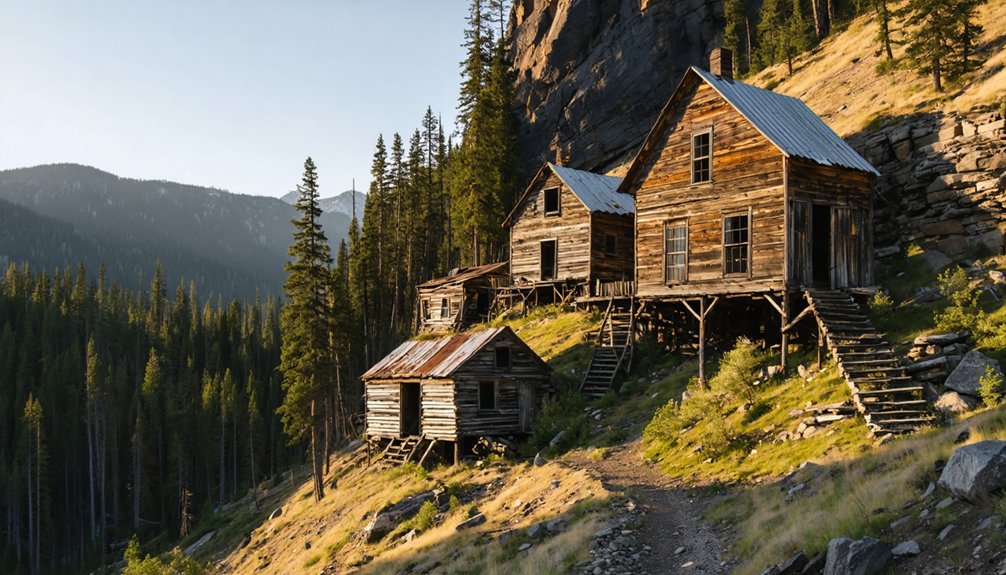
Perched at over 9,000 feet in the Rocky Mountains, Nevadaville clings to the slopes above Central City as one of Colorado’s most authentic yet overlooked ghost towns.
These ghost towns in the Rocky Mountains offer a glimpse into the past, where miners once thrived in search of fortune. Today, they stand as silent witnesses to a bygone era, inviting travelers to explore their forgotten streets and rich history. As nature reclaims these settlements, the juxtaposition of crumbling structures against breathtaking mountain vistas creates an unforgettable experience.
Founded during the 1859 Pike’s Peak Gold Rush, this settlement once housed 4,000 Irish laborers—exceeding Denver’s population. You’ll find it just five minutes from Central City via Nevadaville Road.
Historical preservation efforts maintain several key structures:
- The 1879 Masonic Lodge, Colorado’s only ghost town lodge still holding regular meetings
- City hall building that doubled as the fire department
- Original saloon and trading post alongside visible mining relics dotting surrounding hillsides
After the catastrophic 1861 fire destroyed 50+ buildings, residents detonated TNT to halt the flames’ advance.
Today, only a handful of full-timers remain among these weathered remnants.
Grafton Utah: The West’s Most Photographed Ghost Town
Just nine miles from Zion National Park‘s entrance, Grafton stands as the American West’s most photographed ghost town—a distinction earned through decades of film appearances and its remarkably preserved 1880s frontier architecture.
You’ll recognize the 1886 adobe schoolhouse from “Butch Cassidy and the Sundance Kid,” while the John Wood home and Russell residences showcase authentic Mormon pioneer construction shielded by towering cottonwoods.
Founded in 1859, this settlement battled Virgin River floods, Paiute conflicts, and resource scarcity before complete abandonment by 1944.
The Grafton Heritage Partnership maintains five restored structures amid original farming equipment, creating a living museum of Wild West heritage.
Listed on the National Register, it represents Cultural preservation at its finest—you’re free to explore this cinematic landmark where frontier reality meets Hollywood legend.
Stanley Hotel Colorado: Where The Shining Was Born
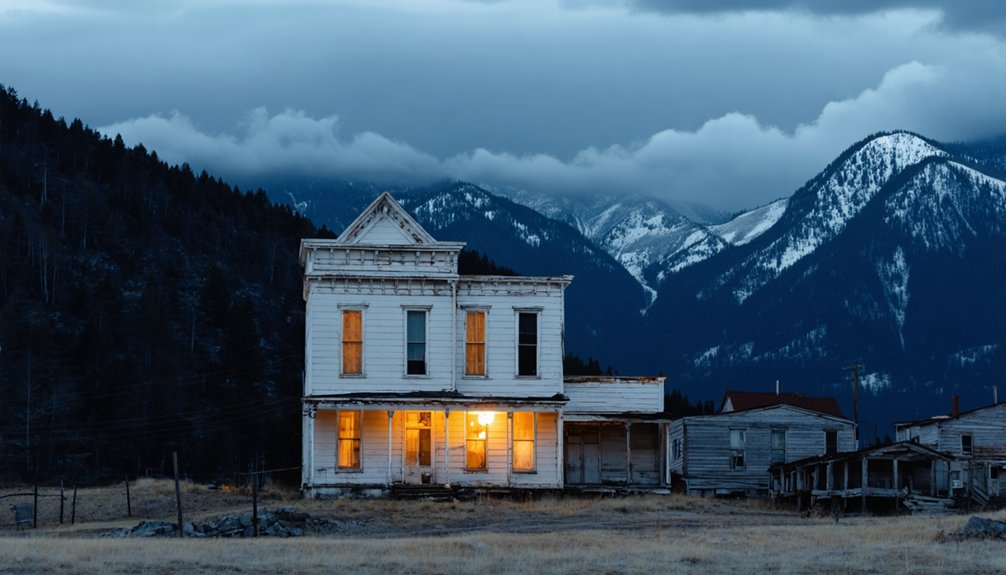
While Grafton captures Hollywood’s vision of the frontier past, the Stanley Hotel in Estes Park—five miles from Rocky Mountain National Park’s entrance—created horror cinema’s most influential setting without ever appearing in the film it inspired.
The Stanley Hotel inspired *The Shining*’s Overlook Hotel, yet never appeared in Kubrick’s iconic 1980 film adaptation.
Stephen King’s 1974 stay in this 140-room Georgian Revival masterpiece, as the last guest before winter closure, birthed *The Shining*’s Overlook Hotel.
The hotel’s historic architecture and haunted legends continue attracting film productions:
- The 1997 The Shining miniseries filmed here
- *Dumb and Dumber* (1994) featured its distinctive façade
- Original filming axes remain on display during tours
You’ll find panoramic views of Lake Estes and Longs Peak, while the Shining Tour explores paranormal hotspots throughout the 1909 property—including the restored Caretaker’s Cottage suite where terror became literary gold.
Frequently Asked Questions
Are Ghost Town Filming Locations Open to the Public Year-Round?
You’ll find access varies like mountain weather—Georgetown and Stanley Hotel welcome you year-round with visitor facilities, while Grafton’s historical preservation efforts and Cerro Gordo’s remote location require seasonal planning and careful preparation before exploring.
Do I Need Special Permits to Photograph at These Ghost Towns?
You’ll need to verify legal restrictions and obtain permits directly from each ghost town’s managing agency. Photography insurance is often required for commercial shoots. Private properties may have different requirements than publicly-managed historic sites.
Which Ghost Towns Require Four-Wheel Drive Vehicles to Access?
All four ghost towns—Animas Forks, Tomboy, Alta Lakes, and Crystal—require four-wheel-drive vehicles for off-road adventures through rocky terrain and stream crossings. You’ll find vehicle rental options in nearby towns like Ouray, Telluride, and Silverton.
Can Visitors Stay Overnight at Any of These Ghost Town Locations?
Like ghost towns frozen in time, you can’t stay overnight at these filming locations. Historical preservation limits access, though photography regulations vary. You’ll find lodging at Stanley Hotel in Estes Park, where autonomy meets cinematic history unrestricted.
What Safety Precautions Should I Take When Exploring Abandoned Mining Towns?
You’ll need proper safety gear including helmets, respirators, and sturdy boots for hazard identification. Never enter structures or mine shafts—unstable timbers, toxic gases, and hidden drops can kill. Travel in groups, carry GPS, and always notify someone of your plans.
References
- https://www.youtube.com/watch?v=Dipc5UwHSwo
- https://www.youtube.com/watch?v=tZmA_VF6cm8
- https://www.themoviewaffler.com/2015/09/5-iconic-filming-locations-in-american.html
- https://roadtrippers.com/magazine/filming-locations-stephen-king-movies/
- https://www.colorado.com/articles/colorado-ghost-towns
- https://www.youtube.com/watch?v=mruKTR63txI
- https://www.youtube.com/watch?v=gXrjIoj4Bh0
- https://www.legendsofamerica.com/co-stelmo/
- https://en.wikipedia.org/wiki/Saint_Elmo
- https://mtprinceton.com/project/st-elmo/