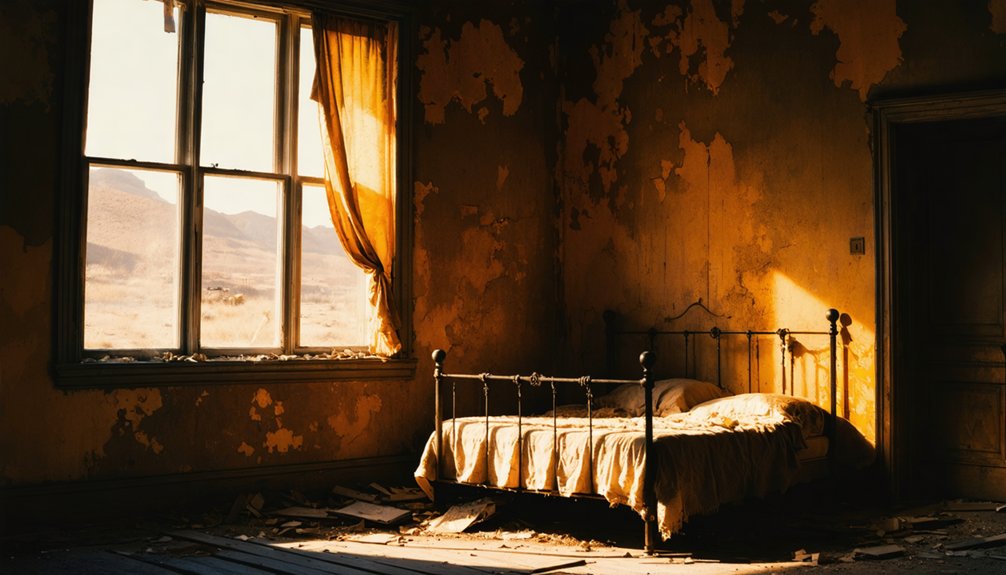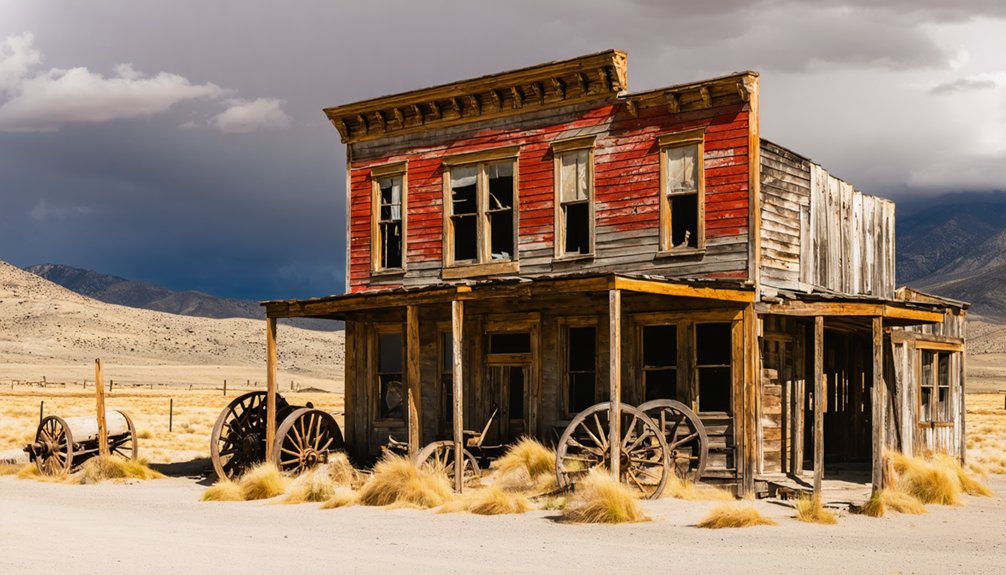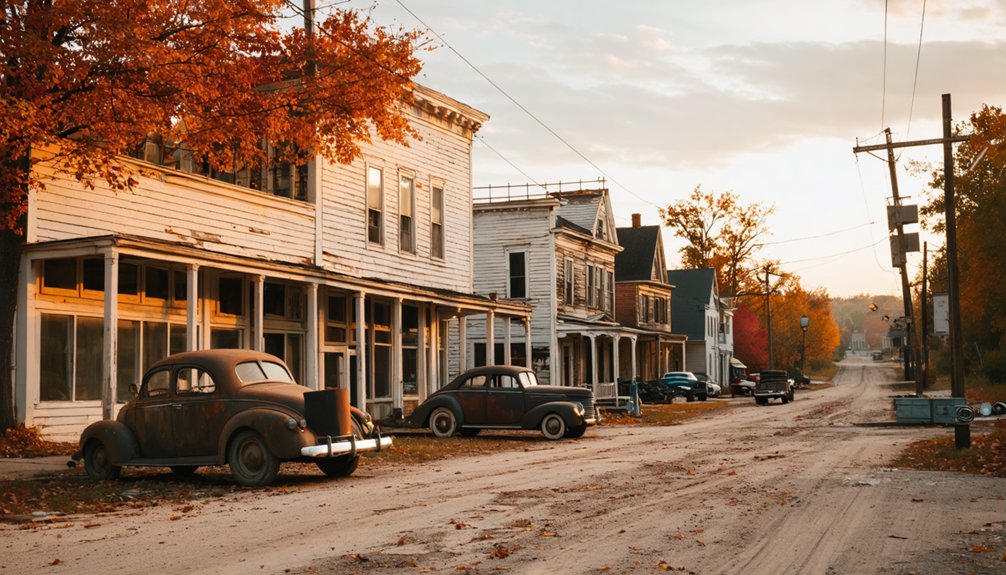
You’ll find New England’s abandoned settlements offer production-ready authenticity: Dogtown’s boulder-marked cellar holes and witch-legend atmosphere suit horror narratives, while Monson’s preserved 1730s Gould House and colonial foundations provide period-accurate backdrops for historical dramas. Livermore’s decaying railroad infrastructure and New Hampshire’s Gothic brick chimneys deliver industrial-wilderness settings for supernatural thrillers, and Connecticut’s textile mill ruins—like Willimantic’s concrete shells—require minimal permits for mystery series. These sites eliminate extensive set construction while Maine’s Bureau of Parks and labeled trails streamline logistics, though specific production considerations vary considerably by location type.
Key Takeaways
- Dogtown near Gloucester offers eerie cellar holes and witch-legend atmosphere but lacks documented TV productions despite horror-friendly features.
- White Mountain ghost towns like Livermore and Zealand provide authentic industrial decay and wilderness settings for supernatural narratives.
- Pioneer Village’s reconstructed colonial structures served as filming locations for “Hocus Pocus” and “Castle Rock” TV series.
- Connecticut’s abandoned textile mills offer freely accessible, permit-friendly industrial ruins for mystery and crime productions.
- New Hampshire’s Gothic industrial ruins along Sawyer River Road create ready-made supernatural thriller backdrops without artificial aging.
Dogtown’s Eerie Landscapes Attract Horror Productions
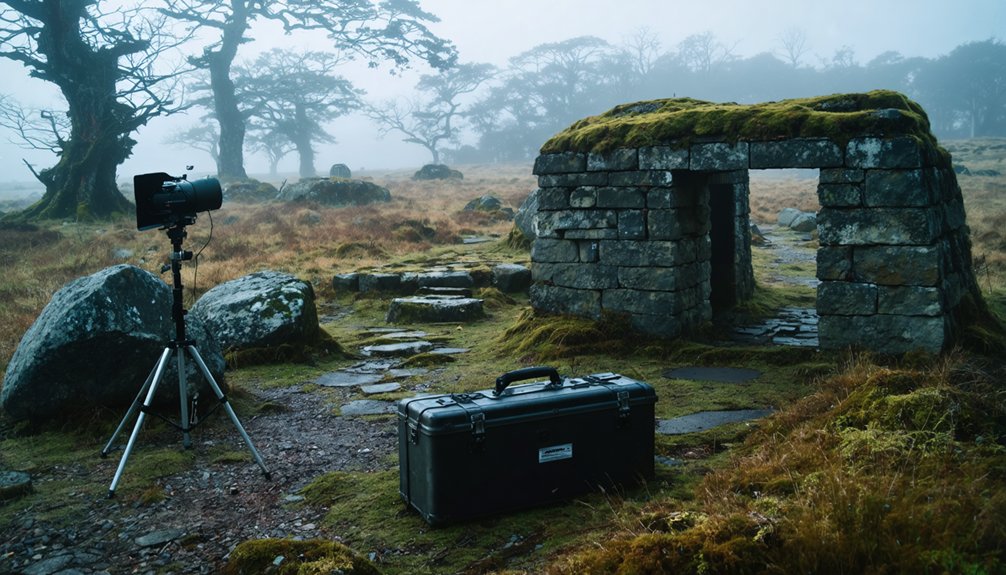
Although Dogtown‘s reputation as a filming location for horror productions lacks documented evidence, the abandoned settlement’s inherent atmospheric qualities make it theoretically suitable for such productions.
You’ll find the Massachusetts ghost town’s landscape contains deteriorating cellar holes, scattered boulder markers, and dense woodland that could provide practical filming infrastructure.
The site’s historical association with alleged witches and its complete abandonment by 1830 have generated urban legends that align with horror genre requirements.
While no verified television productions have utilized Dogtown, its proximity to Gloucester’s production services and existing haunted tours demonstrate community engagement with its eerie heritage.
Production teams seeking authentic New England abandonment aesthetics could leverage these existing atmospheric elements without requiring extensive set construction or digital enhancement.
The settlement’s darker history includes the 1984 murder of a young teacher in the region, which further fueled supernatural speculation and reinforced the location’s ominous reputation.
The area’s rugged terrain features dangerous formations like Lambs Ledge moraine and Granny Days Swamp, creating naturally hazardous settings that enhance its foreboding atmosphere.
Monson’s Preserved Colonial Architecture for Period Dramas
When you’re scouting New England locations for 18th-century productions, Monson’s archaeological preservation presents documented colonial-era foundations and the partially restored Gould House from the 1730s settlement period.
The site’s abandonment in 1770 means you’ll find structures that terminated at a specific historical moment, providing temporal authenticity without Victorian-era modifications common to continuously inhabited towns. The narrow house footprints, measuring approximately 15’5″ by 39.1′, offer authentic dimensional references for period-accurate set construction and camera blocking.
Production logistics benefit from Maine Bureau of Parks and Lands oversight, which has maintained accessible trails and cataloged building remnants since the 1998 preservation initiative. The 200-acre historic park encompasses fields and forests with labeled cellar holes and stone walls that provide multiple filming environments within a contained location.
Gould House Restoration Features
Since its construction in 1756, the Gould House has stood as Monson Center’s sole surviving colonial structure. Maintaining its architectural integrity through 200 years of abandonment, it underwent careful restoration in 1998.
You’ll find restoration techniques employed by preservation leaders Russ and Geri Dickerman prioritized authentic colonial details while establishing a functional museum space. The Society for Protection of New Hampshire Forests partnered with the State Division of Historical Resources and Inherit New Hampshire to acquire this threatened site from luxury development plans.
The building’s historical significance extends beyond architecture—you can access trail maps outside, directing you to seven labeled cellar holes connected by original stone walls. Inside, the museum displays a replica of a 1760s Union Jack flag that reflects the colonial period before the town’s charter was revoked.
The structure flies a British flag, acknowledging its colonial-era origins, while biographical markers identify original settlers, including Gould and Wallingford families, across the 200-acre preserved landscape. The village was disbanded in 1770 following territorial changes, when original roads and stonewalls were left to mark the settlement’s boundaries.
Colonial Era Authenticity
Beyond the Gould House itself, Monson Center’s 200-acre expanse maintains an intact colonial settlement pattern rarely found in modern New England. Seven home sites along the 3-mile trail system highlight original stone foundations from the late 1700s, creating an authentic village cluster that rivals European medieval reenactments in historical integrity.
The maintained stone walls and open fields eliminate modern intrusions that typically compromise period filming.
Production teams benefit from:
- Preserved cellar holes and sunken dwelling areas at Wallingford, Nevins, and Bayley homesteads providing authentic 18th-century architectural evidence
- Mountain laurel blooms in June transforming the landscape into fairy tale settings without artificial enhancement
- Minimal signage and undisturbed terrain spanning 17,000 acres, offering filmmakers unrestricted colonial-era backdrops
The site’s isolation since 1770 guarantees genuine archaeological features rather than reconstructed approximations. Monson’s colonial heritage extends to its narrow gauge railroad infrastructure, originally built to transport slate from the 1870 quarries, which adds industrial-era authenticity for productions requiring 19th-century transportation elements. The Shaw Block, constructed in 1893, provides another layer of historical architecture that can serve as a backdrop for late Victorian-era scenes.
Accessible Film Production Site
Unlike reconstructed historical villages requiring constant set dressing, Monson Center delivers production-ready colonial infrastructure through its single standing structure—the fully restored Gould House—which operates as an on-site museum with coordinated caretaker access.
You’ll find an accessible filming environment with established parking areas near the Hollis/Milford town line, eliminating remote location transport complications.
The 3-mile trail system provides camera crew mobility between seven marked homestead foundations, while stone walls and plaques authenticate period settings without additional construction expenses.
On-site visitor facilities include the museum’s operational infrastructure and caretaker coordination services available through online scheduling.
This 1735-1737 settlement—New Hampshire’s first inland European town—offers multiple foundation sites across open fields, allowing simultaneous multi-angle shooting while maintaining authentic mid-1700s visual continuity throughout your production schedule. Productions benefit from Maine’s creative communities with their established filming infrastructure, similar to Camden and Rockport’s support for major studio projects. Film permits detail location rules and provide access to heritage site resources, ensuring compliance with preservation standards while facilitating efficient production workflows.
Livermore’s Industrial Ruins as Supernatural Thriller Backdrops
Livermore’s concrete and massy remnants function as purpose-built locations for supernatural thrillers requiring authentic industrial decay within dense woodland settings. You’ll find the brick power plant’s round chimney rising through the forest canopy like a Gothic monument, while moss-covered sawmill foundations at Log Pond provide textured surfaces that cameras capture with minimal set dressing.
Industrial ruins pierce New Hampshire’s forest like ready-made film sets, offering Gothic atmosphere without Hollywood’s aging techniques.
The maze-like cement mill structures near Sawyer River create layered compositions for pursuit sequences.
Key filming advantages include:
- Graffiti-covered stanchions and precarious masonry establish ominous atmosphere without artificial aging techniques
- Railroad bridge ruins spanning wilderness gaps frame isolated thriller backdrops inaccessible to modern infrastructure
- Gray stone foundations emerging from undergrowth suggest buried secrets and supernatural ambiance
Production teams access these sites via Sawyer River Road, minimizing equipment transport challenges while maintaining authentic remoteness that horror narratives demand.
Connecticut’s Abandoned Mills Featured in Mystery Series
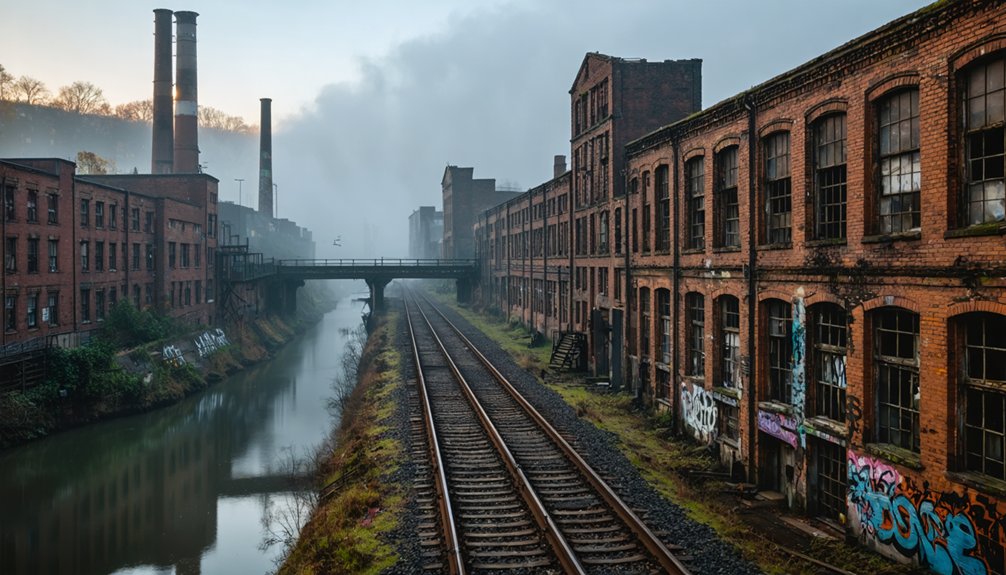
Connecticut’s Thames River corridor concentrates three abandoned American Woolen Company mills that mystery series producers utilize for industrial-era crime narratives requiring authentic textile manufacturing architecture.
You’ll find these hulking concrete shells constructed between 1916-1921, offering unrestricted access for filming logistics without operational constraints. The structures’ industrial decay—featuring exposed frameworks, deteriorating masonry, and riverside positioning—provides atmospheric backdrops production teams can’t replicate on soundstages.
Manchester’s Adams Mill dams present alternative hydropower-era settings, where abandoned brick stations along Hockanum River enable period-specific investigations.
Willimantic’s Thread Mill compounds this aesthetic with graffiti-marked interiors and caved-in sections that cinematographers exploit for gritty procedural sequences.
These Connecticut locations eliminate permit complications associated with functioning facilities while delivering the raw industrial authenticity that distinguishes regional mystery programming from sanitized studio productions.
New Hampshire’s White Mountain Ghost Towns for Wilderness Narratives
- Livermore’s abandoned railroad bed provides equipment transport routes without new road construction.
- Thornton Gore’s remote elevation eliminates modern infrastructure interference in background shots.
- Zealand’s deteriorating structures require no-touch documentation methods protecting archaeological integrity.
You’ll find these sites offer authentic decay aesthetics unavailable in maintained historic parks, appealing to productions seeking untamed narratives without corporate oversight.
Massachusetts Cellar Holes and Foundations in Regional Film Projects
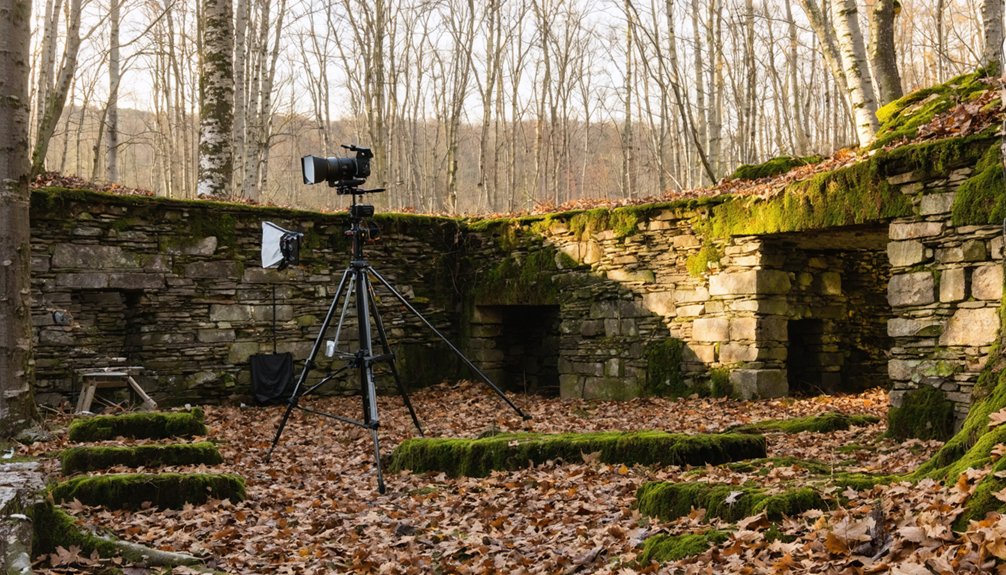
While Massachusetts lacks the remote wilderness characteristics of New Hampshire’s mountain ghost towns, its cellar holes and colonial foundations serve distinct production needs through authenticated period architecture rather than pristine abandonment.
Massachusetts trades New Hampshire’s wild abandonment for carefully preserved colonial foundations that deliver historical authenticity filmmakers can actually access and control.
Pioneer Village in Salem exemplifies this approach—built in 1930 on forgotten foundation ruins to commemorate the city’s 300th anniversary, it’s provided filmmakers controlled access to 17th-century structures.
Hocus Pocus utilized the Governor’s Faire House and surrounding woodland for 1693 sequences, while Castle Rock season 2 employed the site’s ancient cellar sites for Stephen King-inspired atmospherics.
Mass Hysteria incorporated these foundations alongside active Salem locations.
You’ll find Massachusetts productions favor reconstructed colonial remnants over genuine abandonment, offering period accuracy without traversing restricted historical sites or decaying infrastructure challenges.
Frequently Asked Questions
Do Film Productions Need Special Permits to Shoot in New England Ghost Towns?
You’ll need permits if ghost towns sit on state or municipal land, requiring historic preservation reviews and environmental impact assessments. However, privately-owned abandoned sites let you bypass bureaucratic restrictions entirely—no permits, insurance requirements, or government approval needed for your production.
Which Ghost Town Filming Location Is Closest to Boston or Major Cities?
Dogtown in Gloucester, MA sits just 40 miles from Boston, offering you abandoned scenery with forest-bound cellar holes and haunted legends. You’ll find accessible trails through 1643 settlement ruins, providing authentic atmospheric backdrops without extensive travel logistics.
Are Ghost Town Filming Locations Accessible to Visitors Year-Round?
You’ll find most New England ghost town filming locations accessible year-round, though historical preservation efforts may limit certain areas. Tourist accessibility varies by site—maintained locations like Monson offer consistent access, while remote sites depend on trail conditions and weather.
Exploring ghost towns in New England films provides a unique glimpse into the region’s historical narratives. Many filmmakers have chosen these eerie settings to enhance their stories, capturing the haunting beauty of abandoned structures and the stories they tell. As you venture into these locales, you might feel transported back in time, experiencing the remnants of the past that once thrived in these hidden gems.
What Safety Precautions Do Film Crews Take in Abandoned Structures?
Like explorers charting uncertain territory, you’ll assess structural integrity before entry, wear mandatory safety gear including FFP3 masks and hard-soled boots, avoid basements entirely, and establish daily disinfection protocols while securing perimeters against unauthorized access.
How Do Production Companies Find These Lesser-Known Ghost Town Locations?
You’ll find these locations through state film office databases, urbex YouTube channels, and specialized preservation blogs that document historical sites. Production scouts cross-reference filming logistics like accessibility and structural integrity before securing permits for remote ghost towns.
References
- https://magazine.northeast.aaa.com/daily/life/spooky-season/northeast-halloween-movies/
- https://www.youtube.com/watch?v=jPneYGJR4-o
- https://www.youtube.com/watch?v=mFBYIdURBvQ
- https://www.youtube.com/watch?v=7X7TXuB8Pk4
- https://ghostofnewengland.com
- https://www.youtube.com/watch?v=wS8Gs3Zndm0
- https://historyofmassachusetts.org/the-witches-of-dogtown/
- https://www.thedacrons.com/eric/dogtown/story_dogtown_gloucester.php
- https://travelnoire.com/abandoned-town-in-northern-massachusetts
- https://historicipswich.net/2021/01/23/dogtown-its-history-and-legends/