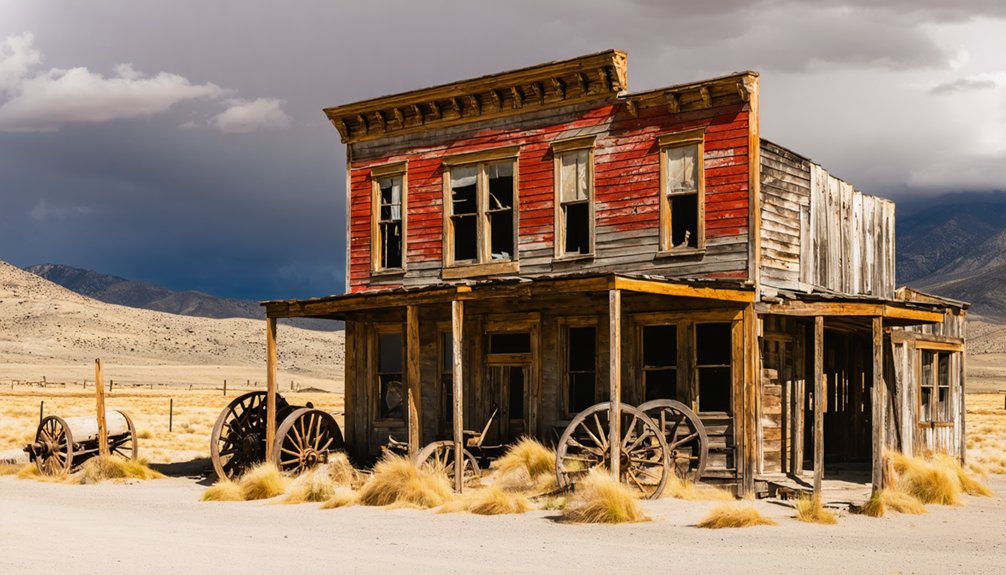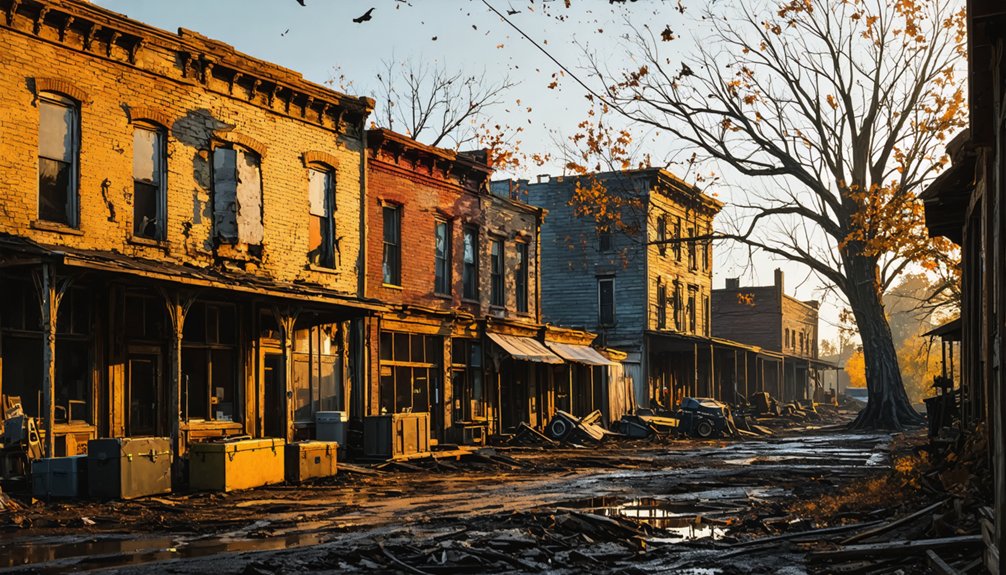
You’ll find Northeast ghost towns like Henry River Mill Village and Dogtown serving as authentic backdrops for supernatural TV productions, offering weathered 18th and 19th-century architecture without expensive set construction. These locations—including Maine’s Lakeview mill ruins, abandoned Connecticut resorts, and Massachusetts’ forest-bound villages—provide ready-made post-apocalyptic visuals with genuine decay patterns that CGI can’t replicate. Productions benefit from minimal permits, isolated shooting environments, and atmospheric authenticity that elevates horror narratives while preserving regional history through the lens of compelling storytelling.
Key Takeaways
- Northeast ghost towns like Henry River Mill Village and Dogtown provide authentic, preserved historical architecture ideal for horror and supernatural TV productions.
- Industrial ruins featuring collapsed structures, rusted equipment, and overgrown machinery offer ready-made post-apocalyptic and dystopian filming environments.
- Abandoned institutions like Westboro State Hospital and South Carolina’s Babcock Building deliver atmospheric settings for psychological horror narratives.
- Ghost towns reduce production costs by eliminating extensive set construction while providing isolated locations for uninterrupted filming.
- Authentic decay patterns and weathered facades in locations like Ulster County mansions create immersive storytelling impossible to replicate artificially.
Salem Village Set: A Temporary Ghost Town Built for Television
When WGN America greenlit *Salem* in June 2013, the production team faced an ambitious challenge: constructing an entire 17th-century Massachusetts village from scratch in just two months. Outside Shreveport, Louisiana, they built over 20 structures replicating period-accurate Village Architecture, with 13 buildings featuring fully furnished interiors.
The set included a church, cemetery, pub, gallows, and the Sibley mansion—modeled after Salem‘s House of Seven Gables.
Filming commenced November 8, 2013, bringing the Witch Trials era to life through three seasons. The series portrayed themes of witchcraft and devil worship, reflecting the dark superstitions of early colonial life. The cast included Janet Montgomery, Shane West, Steven Lang, Lucy Lawless, and Marilyn Manson in prominent roles.
After cancellation in 2017, producers abandoned the village near Grand Cane in Louisiana’s marshland.
You’ll find it accessible through the woods today, free to explore, though weather’s decimated many props and structures over the years.
Lakeview: Maine’s Authentic Mill Town Turned Filming Opportunity
Unlike Salem’s temporary television set, Lakeview offers filmmakers something far more authentic: a genuine Northeast mill town frozen in industrial decay. You’ll find concrete foundations and brick walls sprawling along Lake Schoodic’s shore—remnants of the American Thread Company factory that shuttered in 1925.
The town’s population crashed to just 16 residents by 1970, leaving symmetrically laid streets lined with modest worker homes, many still structurally sound.
What makes Lakeview compelling for production isn’t manufactured atmosphere—it’s real abandonment. The factory ruins provide a scenic backdrop that’s impossible to replicate on soundstages.
With 150 current residents and proximity within 50 miles of Bangor, you’ve got accessible infrastructure without losing that desolate mill town aesthetic. Maine’s landscape holds similar stories of submerged communities, like Flagstaff’s underwater foundations visible beneath the state’s largest man-made lake during clear water conditions. The villages of Flagstaff and Dead River were deliberately flooded for hydroelectric development after their final community gathering on July 4, 1949. No permits for fake deterioration needed here.
Abandoned Locations That Double as Fictional New England Settings
For television producers scouting authentic New England atmospheres, five genuinely abandoned locations offer ready-made historical settings without construction budgets. Dogtown’s witch-legend forest and crumbling structures provide 1643-era authenticity you can’t fabricate.
Monson delivers the region’s best-maintained ghost town experience—its restored 1756 Gould residence and preserved cellar holes create period scenes without permits strangling your production.
Livermore’s scattered sawmill ruins and railroad bridge establish White Mountains logging history across accessible wilderness. The site’s foundation walls and artifacts including metal scraps and an old bathtub provide authentic period details for historical productions. The rapidly flowing Sawyer River adds natural ambiance and scenic value to period productions requiring water features.
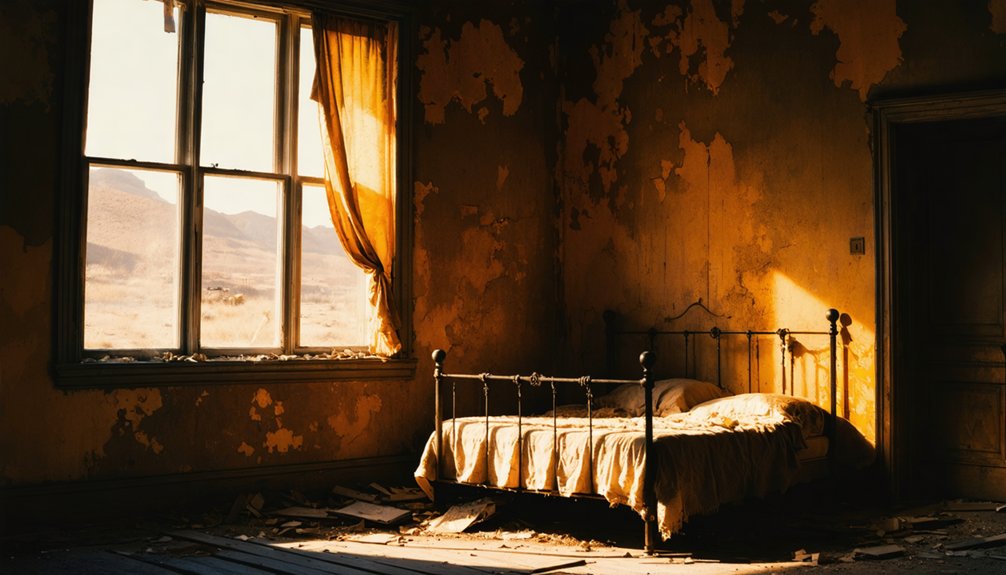
Westboro State Hospital’s aerial-worthy grounds showcase urban decay perfect for dystopian narratives, while Connecticut’s time-frozen resort—complete with made beds and hanging curtains—delivers eerie preservation that set designers dream about.
Each site balances historical preservation with filming accessibility, offering production teams immediate visual storytelling without bureaucratic roadblocks typical of protected landmarks.
Why Ghost Towns Appeal to Horror and Supernatural Productions
Ghost towns deliver production-ready horror atmospheres that would cost hundreds of thousands to fabricate on soundstages. Industrial decay provides instant post-apocalyptic visuals—collapsing mine structures, overgrown logging camps, and rust-covered machinery create authentic dread without demolition budgets.
You’ll find supernatural legends already embedded in these sites, from Centralia’s underground inferno to drowned villages beneath reservoirs. Submerged ghost towns rest beneath Pennsylvania and Ohio reservoir waters, offering underwater cinematography opportunities for ambitious productions.
These locations offer three critical production advantages:
- Zero set construction costs for dilapidated buildings and eerie vegetation
- Minimal filming permits on abandoned public lands
- Unrestricted night shoots in depopulated areas
Remote Northeast ghost towns eliminate urban logistics while delivering natural isolation that amplifies on-screen tension. Singapore’s Neo Tiew Estate, evacuated in 2002, later served as a filming location before uncertain future plans, demonstrating how abandoned sites transition into production assets.
Historical tragedies—mining disasters, hurricane destruction, Civil War sieges—provide narrative depth that resonates with audiences seeking stories rooted in real events rather than manufactured scares.
Preserving Historical Atmosphere Through Location-Based Filming
Beyond their cost-saving production advantages, Northeast ghost towns function as time capsules that cameras capture without digital enhancement. You’ll find abandoned mill villages like Henry River maintaining original decay patterns that production designers can’t replicate artificially.
Northeast ghost towns serve as authentic time capsules, preserving decay patterns that no production designer could artificially recreate for film.
Historical authenticity emerges through weathered facades, intact period artifacts, and natural deterioration spanning decades. These locations require minimal modifications—directors leverage existing urban decay rather than constructing elaborate sets.
Ulster County’s deserted mansions near High Falls preserve 19th-century architectural details without modern intrusions. When you explore forest-bound villages frozen mid-abandonment, you’re accessing genuine historical backdrops that CGI budgets can’t match.
Film crews exploit these unaltered environments, where natural weathering provides seamless period accuracy for supernatural narratives requiring believable historical settings without restrictive permits or contemporary contamination. Former mental health facilities like South Carolina’s Babcock Building, which operated until 1990, demonstrate how institutional architecture enhances psychological drama through authentic period settings. Pennsylvania locations like Phoenixville have hosted classic horror productions, demonstrating how authentic small-town settings enhance supernatural storytelling without extensive set construction.
Frequently Asked Questions
What Permits Are Required to Film at Abandoned Locations in Northeast States?
You’ll need landowner permission, liability insurance, and local permits based on potential damage. Historical preservation rules and community access restrictions vary by state, so contact municipal offices early to secure necessary approvals before filming.
How Do Production Companies Ensure Safety When Filming in Deteriorating Ghost Towns?
You’ll conduct thorough hazard assessments before shooting, identifying structural weaknesses and environmental risks. Then implement extensive safety protocols including reinforced shoring, protective gear requirements, designated safe zones, on-site medics, and real-time monitoring to protect your crew’s autonomy.
Are There Tax Incentives for Filming in Abandoned Northeast Locations?
Like treasure maps without X’s, Northeast tax incentives don’t specifically reward abandoned locations. You’ll capture New York’s 10% upstate bonus in qualifying counties, supporting historical preservation and community impact while maintaining creative freedom through standard state programs.
Can the Public Visit Ghost Town Filming Locations After Production Wraps?
You’ll find many ghost town filming locations accessible post-production, though private access permissions and seasonal restrictions often apply. Check property ownership status and weather-dependent road conditions before visiting—some sites require advance coordination with landowners or preservation societies.
Among these intriguing spots are abandoned movie sets in New York, where remnants of cinematic magic linger among the overgrown grass and crumbling facades. Photographers and urban explorers flock to these locations, drawn by the stories they tell and the unique aesthetic they offer. However, be prepared for occasional confrontations with nature reclaiming these once-bustling sites, which only adds to their mystique.
Which Northeast Ghost Towns Are Most Popular With Location Scouts?
Like magnets for cameras, Ulster County’s preserved estates draw scouts seeking haunted legends without Hollywood’s grip. You’ll find Thurmond’s coal-town authenticitysolves preservation challenges while offering period-perfect facades—freedom from artificial sets, real history under your creative control.
References
- https://www.youtube.com/watch?v=yeTVfoQxqJc
- https://magazine.northeast.aaa.com/daily/life/spooky-season/northeast-halloween-movies/
- https://www.motionpicturevideo.com/top15locations
- https://www.youtube.com/watch?v=fwYTXeP3hf4
- https://hudsonvalleycountry.com/ghosts-tv-show-town-new-york/
- https://www.newmexico.org/places-to-visit/ghost-towns/
- https://www.youtube.com/watch?v=953z1FKXOG0
- https://www.geotab.com/ghost-towns/
- https://www.youtube.com/watch?v=dKoA9UkwhLU
- https://www.youtube.com/watch?v=rhxsKAdRqDw