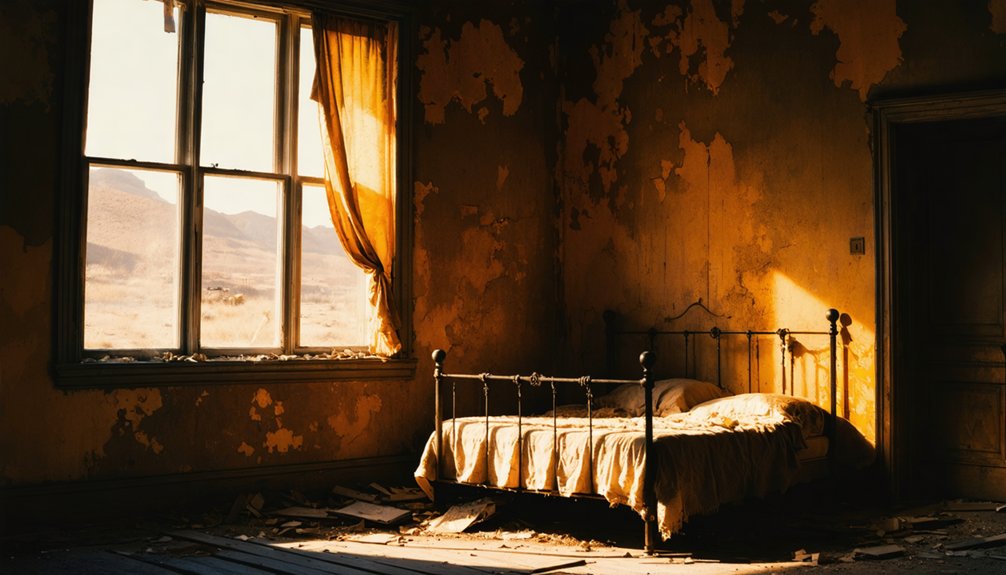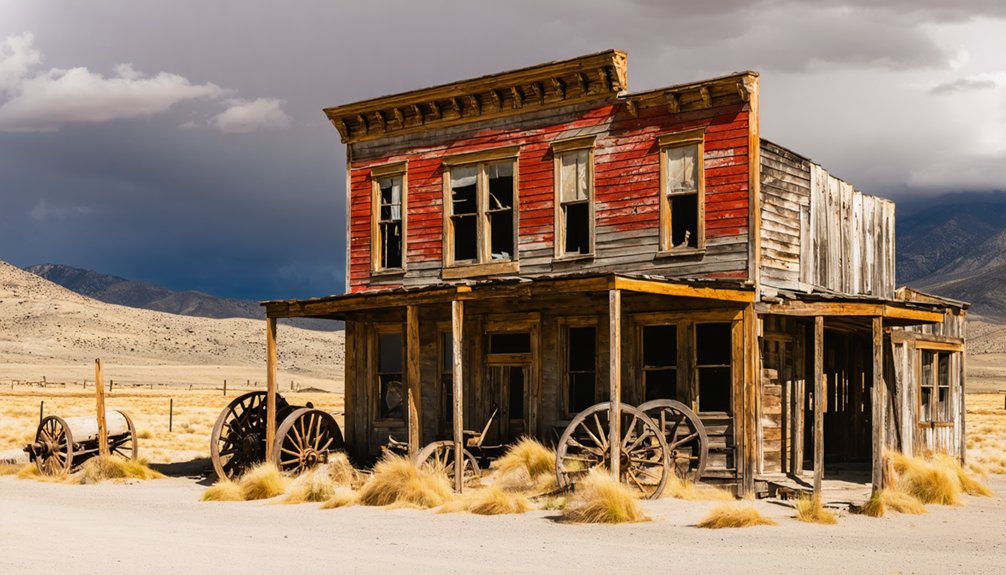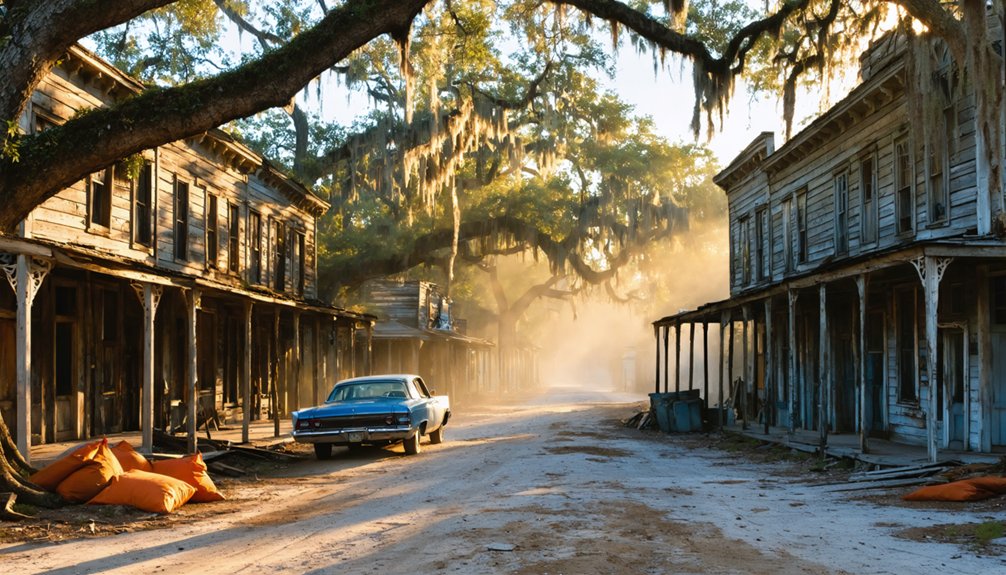
You’ll find several Southern ghost towns transformed into recognizable filming locations, including Henry River Mill Village in North Carolina, which served as District 12 in *The Hunger Games* with its 20 remaining worker cottages from 1904. Covington, Georgia’s abandoned structures doubled as Mystic Falls throughout *The Vampire Diaries*’ eight seasons, while South Carolina’s deteriorating Babcock Building—a 254,000-square-foot former asylum from 1821—attracted production crews before fire damage. These locations demonstrate how Hollywood budgets preserve crumbling architecture while generating tourism revenue that extends well beyond production schedules.
Key Takeaways
- Henry River Mill Village, a former textile community, served as District 12 in *The Hunger Games* film series.
- Covington, Georgia functioned as Mystic Falls throughout all eight seasons of *The Vampire Diaries* television series.
- Senoia and Wilmington revitalized economies by hosting *The Walking Dead* and *One Tree Hill* productions respectively.
- Charleston and Beaufort serve as recurring Southern backdrops for major streaming services and film projects.
- Film productions preserve historic architecture through documentation while generating tourism revenue and employment opportunities.
Henry River Mill Village: From Gold Rush to Hunger Games Fame
When Michael Erastus Rudisill surveyed a 1,500-acre tract along the Henry River in 1904, he wasn’t looking for gold—he was chasing the power of rushing water. He built a 30-foot dam, a three-story brick mill, and 35 worker cottages that housed 450 laborers producing fine cotton yarns for embroidery and lace.
The mill ran 4,000 spindles on pure waterpower until 1914, expanding to 12,000 by the 1960s.
Industrial decline from overseas competition shuttered operations in the late 1960s. Lightning destroyed the mill in 1977. This community transformation from thriving textile hub to abandoned village caught Hollywood’s attention—you’ll recognize it as District 12 from The Hunger Games.
Twenty cottages still stand, earning National Register status in 2019. The village included a two-story brick company store that doubled as a school and church from 1907 to 1917. Workers paid for goods using “doogaloo” currency, which was accepted exclusively at the company store.
Babcock Building: South Carolina’s Abandoned Asylum Turned Film Set
The South Carolina General Assembly established the South Carolina Lunatic Asylum in 1821, making it one of America’s earliest public psychiatric hospitals.
You’ll find the Babcock Building in Columbia’s Bull Street District, where its Italian Renaissance Revival architecture spans 254,000 square feet across north and south wings.
Despite its Historical Significance and 1981 National Register listing, this facility became notorious for unconstitutional conditions before closing in 1994.
Two major fires in 2018 and 2020 challenged Architectural Preservation efforts, with the second collapsing the distinctive cupola.
However, developers secured funding to convert the structure into 208 apartments within the redeveloped district.
The Mills Building, designed by Robert Mills, stands as the nation’s oldest surviving mental hospital structure and earned designation as a National Historic Landmark.
The Babcock Building opened in 1885, establishing a four-story central structure with specialized floors for medical operations and staff housing.
The building’s atmospheric decay and documented past attract filmmakers seeking authentic period settings for productions exploring institutional history.
Covington’s Decaying Locations: The Vampire Diaries’ Georgia Home
Located just 45 minutes from Atlanta’s sprawling film infrastructure, Covington has transformed into a pilgrimage site for fans of The Vampire Diaries. The show used the town’s historic architecture to create the fictional Mystic Falls throughout its eight-season run.
You’ll find the iconic Clock Tower at 1134 Clark Street SW anchoring the main square, with the Mystic Grill directly opposite at 116 Clark St. Key residences like Elena Gilbert’s house (2104 Floyd Street NE) and Lockwood Mansion remain private properties. However, Vampire Stalker Tours grants $10 porch access.
The Visitor Center at 1143 Oak St SE distributes location maps and houses exhibits including Damon’s car display and the Salvatore Mansion Cellar replica. Beneath Mystic Grill, The Alley Shop sells TVD-themed souvenirs including replica daylight rings and items from actors’ wardrobes. While these aren’t authentic historic decays, the filming facades convincingly doubled as supernatural backdrops.
Self-guided exploration works for public squares; private sites demand tour coordination.
Lakeside Inn: Florida’s Haunted Hotel With Presidential History
Since 1883, Mount Dora’s Lakeside Inn has collected layers of history that extend far beyond its role as Florida’s oldest continuously operating hotel—it’s accumulated documented paranormal encounters that draw ghost hunters alongside travelers seeking Victorian-era charm. President Calvin Coolidge stayed here in 1930, cementing its place in American history before preservation efforts secured its National Register designation in 1987.
You’ll find the paranormal history most concentrated around the back stairwell, where staff report spectral figures in late-19th-century clothing. Six-year-old Amy disappeared near Lake Dora 130 years ago, and guests claim her presence lingers by the fireplace.
Original proprietor John Alexander reportedly watches over his establishment, while phantom phone calls originate from unoccupied rooms. Independent doors, flickering lights, and cold spots manifest throughout this wooden structure that’s survived financial collapse and demolition threats. Staff members have encountered unexplained sensations including floral perfume and cigar smoke in areas where no guests are present. One housekeeper refused to clean a specific second-floor room alone due to repeated paranormal experiences.
Preserving Southern Ghost Towns Through Film and Television
When television crews transform Southern ghost towns into production sets, they inadvertently create economic lifelines for communities facing abandonment while generating permanent visual records of disappearing architectural heritage.
You’ll find examples throughout the region—Senoia, Georgia leveraged *The Walking Dead* filming to establish themed businesses and walking tours, while Wilmington, North Carolina sustained nine years of production activity through *One Tree One*.
These projects deliver immediate economic revitalization through local hiring and service contracts, then generate lasting tourism revenue as fans visit authentic locations.
Film production creates dual economic impact: immediate jobs and vendor contracts followed by sustained tourism as fans pilgrimage to authentic shooting locations.
Productions simultaneously document cultural heritage through professional cinematography, capturing historic structures and landscapes before deterioration. Nashville’s Ryman Auditorium provided authentic concert venue backdrops for music-themed productions like *Coal Miner’s Daughter*, preserving the venue’s historic character on film.
Charleston-area locations and Beaufort’s coastal settings now serve major streaming platforms, ensuring these Southern communities maintain visibility and viability beyond their original industries. The South’s ghost towns join locations across all 50 U.S. states that contain at least one abandoned settlement, with some particularly film-friendly states housing hundreds of potential production sites.
As filmmakers seek unique backdrops for their stories, abandoned movie sets in the South provide an alluring canvas for creativity. These sites, rich with history and character, often spark inspiration, drawing filmmakers to capture the essence of the region. Additionally, their picturesque decay makes for striking visuals that resonate on screen, further enhancing the allure of Southern landscapes.
Frequently Asked Questions
Can Visitors Explore These Ghost Town Filming Locations on Their Own?
You’ll find tourist access readily available at these locations. Historical preservation efforts haven’t restricted your freedom to explore independently. You can walk downtown Senoia, hike Elkmont’s trails, and visit Beaufort’s filming sites without guided tours or barriers.
What Permits Are Required to Film at Abandoned Southern Locations?
You’ll need Bureau of Land Management permits, state park authorizations, and local film commission approvals. Historic preservation rules govern protected sites, while local regulations determine insurance requirements ($2M aggregate), monitor fees, and 30-day processing timelines before filming.
How Do Production Companies Find Suitable Ghost Town Filming Locations?
You’ll scout through film commission databases tracking 550+ Texas ghost towns, verify land ownership via county records, then assess sites for historical preservation status and accessibility—ensuring crumbling facades meet your creative vision while respecting legal boundaries.
Are There Safety Concerns When Filming at Abandoned Southern Buildings?
You’ll face collapsing floors, you’ll navigate hazardous structures with rotting support beams, and you’ll encounter environmental hazards like asbestos exposure and mold growth. These abandoned Southern buildings demand thorough safety protocols, structural assessments, and protective equipment before cameras roll.
Do Ghost Town Owners Receive Payment When Locations Are Used?
Yes, you’ll find ghost town owners negotiate direct payments through location agreements, typically daily rates or flat fees. Productions often fund historical preservation work and engage local communities, creating tourism revenue opportunities that extend beyond initial filming compensation.
References
- https://www.motionpicturevideo.com/top15locations
- https://californiathroughmylens.com/paramount-ranch-old-movie-town/
- https://www.businessinsider.com/abandoned-places-used-in-movies-tv-shows-2020-9
- https://www.youtube.com/watch?v=fuMDtg5mVmc
- https://www.youtube.com/watch?v=-9fLOIsaz6M
- https://www.youtube.com/watch?v=l_ogVgvyw7Y
- https://www.youtube.com/watch?v=o9MTF3S_-Uk
- https://www.geotab.com/ghost-towns/
- https://en.wikipedia.org/wiki/Henry_River_Mill_Village
- https://roadtrippers.com/magazine/henry-mill-river-hunger-games-district-12/