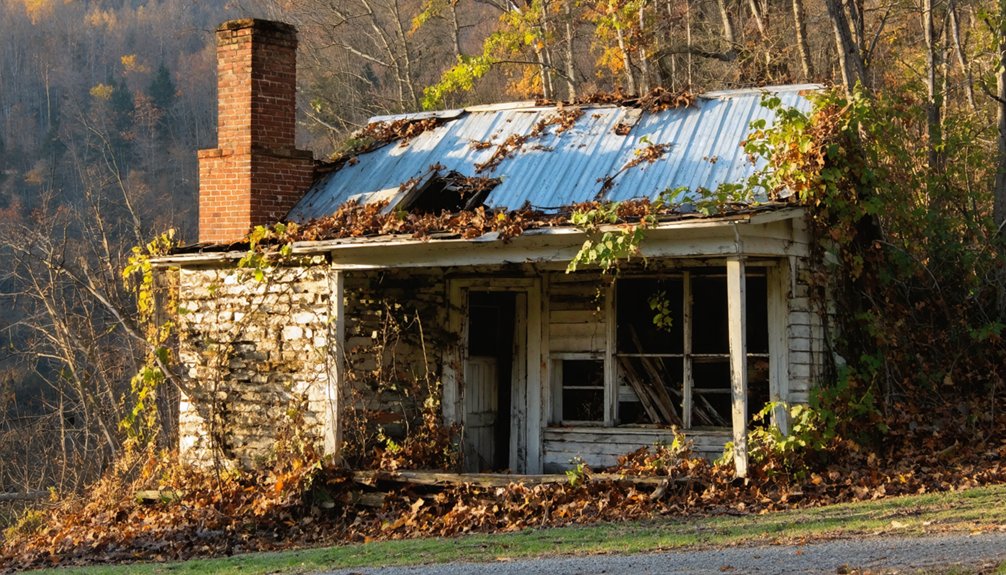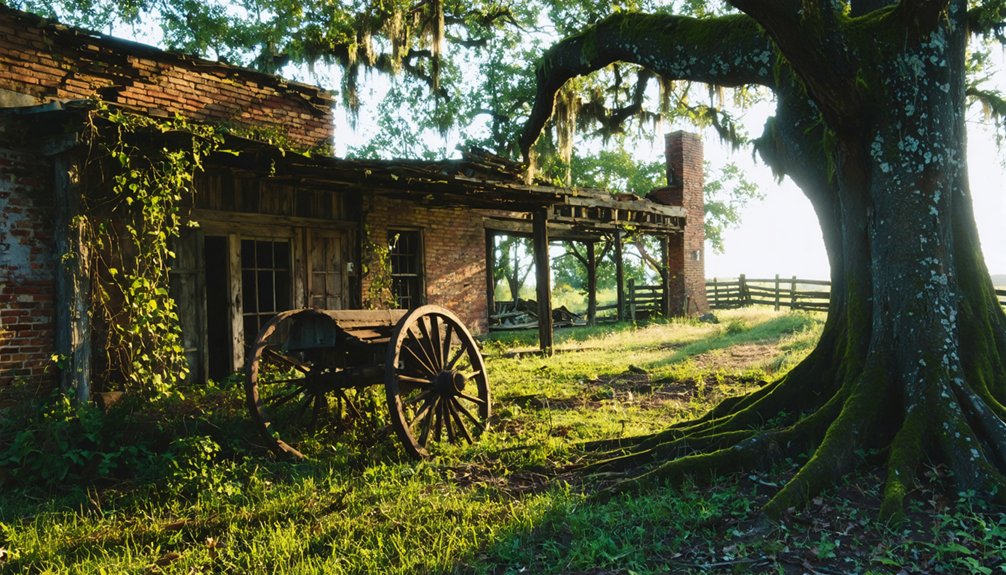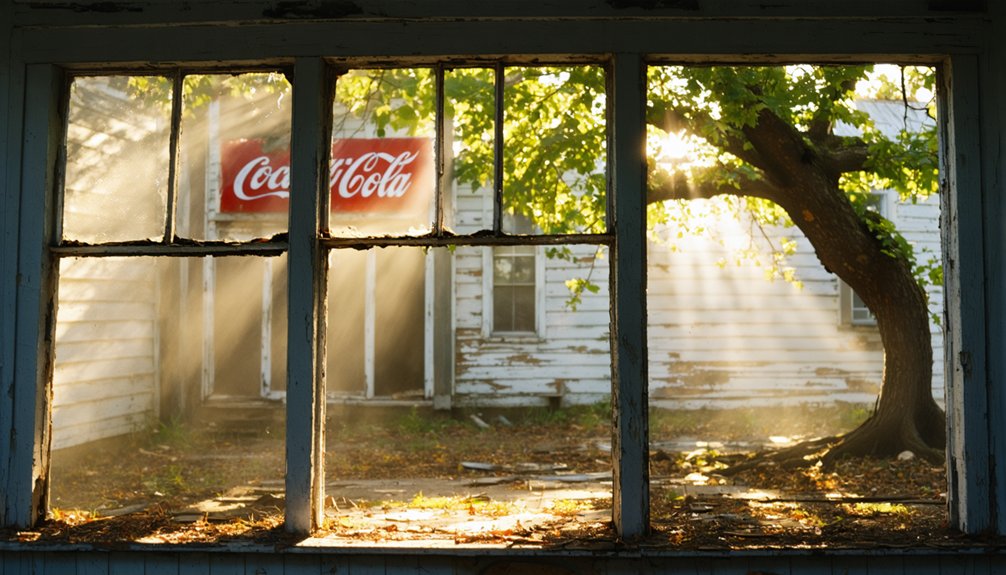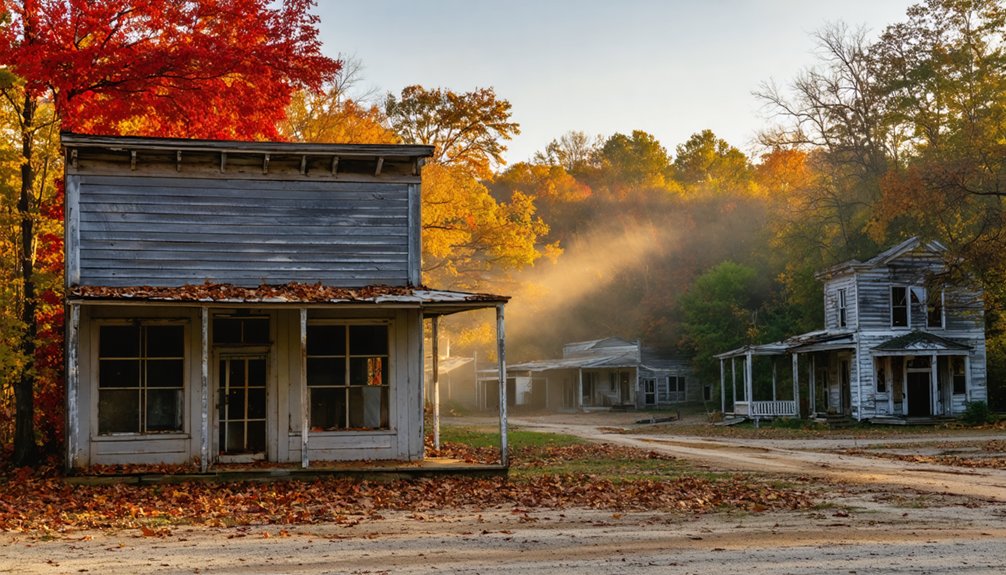
You’ll discover Arkansas’s most mesmerizing ghost towns amid peak fall colors from mid-October through early November, when fiery maples frame Rush’s zinc mining ruins along Buffalo River and crimson foliage surrounds Peppersauce’s abandoned six-block district. The Ozarks’ abandoned settlements—from Monte Ne’s submerged concrete remnants to Old Davidsonville’s 4,000-year-old archaeological sites—transform into photographer’s paradises as golden hickories and blazing sumacs accent weathered stone foundations and crumbling retaining walls. Your autumn exploration gains depth through understanding ideal routes, lighting conditions, and the fascinating histories behind these decaying monuments.
Key Takeaways
- Arkansas ghost towns like Peppersauce and Calico Rock feature abandoned 1800s-1920s buildings surrounded by vibrant fall foliage from mid-October through early November.
- Rush Ghost Town in the Ozarks offers zinc mining ruins, stone foundations, and ore mills framed by blazing hardwoods along Buffalo River trails.
- Monte Ne’s submerged concrete ruins beneath Beaver Lake become visible during droughts, revealing abandoned hotel and amphitheater foundations amid seasonal scenery.
- Old Davidsonville State Park combines Native American artifacts and 1830s settlement ruins with elevated Ozark Plateau views of fall colors.
- Peak foliage occurs around October 30th in northern Arkansas, with a six-week window extending into early November in southern regions.
Rush Ghost Town: Mining Ruins Among Autumn Colors
When autumn transforms the Ozark Mountains into a tapestry of amber and crimson, the abandoned zinc mining settlement of Rush emerges from its narrow valley like a monument to forgotten fortune. You’ll discover stone foundations and crumbling retaining walls scattered beneath blazing hardwoods, where 2,000-5,000 prospectors once pursued zinc during the World War I boom.
The Morning Star Mine‘s skeletal remains stand against forested bluffs, while ore mill ruins punctuate trails winding through flame-colored foliage. A massive zinc nugget weighing 13,000 pounds from this mine earned awards at the 1892 Chicago World Fair, testament to the exceptional quality of minerals extracted from these hills. This ghost town preservation effort within Buffalo National River offers you unrestricted exploration along three hiking routes.
Mining history materializes through interpretive signs explaining the 1880s discovery through the post-war collapse. The isolated mountain setting remains unchanged since Rush’s 1972 abandonment, creating an atmospheric autumn destination. Nearby Crooked Creek provides additional recreation as a Blue Ribbon Smallmouth Bass stream with multiple access points for anglers.
Historic Rush Township: Fall Reflections on Buffalo River
You’ll find Rush’s crumbling stone foundations and weathered log cabins scattered along the Buffalo River’s edge, where limestone bluffs tower above the water like silent witnesses to the zinc boom that once drew thousands.
The river mirrors October’s transformation—crimson maples and golden sycamores creating double portraits on its glassy surface as you walk past the Morning Star Mine’s remnants.
At the valley’s center, stone retaining walls frame what remains of the Hicks family property, their prominent structure still visible from the access road after more than a century.
Here, autumn doesn’t just decorate the landscape; it illuminates a century of stories etched into every moss-covered wall and rusted mining artifact.
Between 1880 and 1940, thirteen separate mines operated across this 1,316-acre district, making Rush the beating heart of North Arkansas’ lead and zinc production.
Mining Ruins Among Bluffs
Along the limestone bluffs where Rush Creek meets the Buffalo River, weathered mine shafts and crumbling stone foundations emerge from forests ablaze with October color.
You’ll discover the Morning Star Mine among these cliffs, where miners once extracted massive zinc deposits—including a 13,000-pound smithsonite chunk shipped to Chicago’s 1893 World Fair.
Walking trails wind past skeletal ore mills and forgotten equipment, their rusted frames contrasting sharply against crimson sumac and golden hickory.
During World War I’s peak, ten companies operated thirteen mines here, drawing thousands seeking prosperity.
The mining history speaks through every abandoned shaft and overgrown foundation.
Rush became Arkansas’s largest zinc producer, dominating the state’s output for decades while supporting communities throughout the Buffalo River Valley.
Without nearby railroad access, horse and mule teams hauled zinc ore along rough dirt roads connecting Rush to distant shipping points.
Today’s town preservation by the National Park Service lets you wander freely through this industrial ghost town, where autumn’s brilliance softens a century of hard-rock history.
River Reflections and Foliage
Where else can you witness an entire mountainside of crimson and gold duplicated perfectly in mirror-still waters? Buffalo River’s clear flow creates nature’s mirror during peak fall, doubling the spectacle of Historic Rush’s autumn display.
You’ll find river reflections transforming ordinary paddling trips into surreal passages through doubled landscapes—fiery sumacs and black gums flanking limestone bluffs above, then repeating beneath your canoe.
The foliage contrast intensifies along these banks where sassafras glows orange against darker hickories, while maples blaze red beside golden ash. Multiple tree species change colors at different times throughout the season, creating an extended display along the river corridor.
Clear waters amplify every shade from late September’s first sumac flames through November’s final beech leaves. The transformation begins around the second week of October, with colors intensifying as the month progresses toward the river’s most spectacular displays.
Early mornings offer glass-calm surfaces before breezes ripple your doubled world, making dawn your prime viewing window for this ghost town’s most breathtaking natural feature.
Old Davidsonville State Park: Archaeological Treasures in Seasonal Splendor
The stillness at Old Davidsonville State Park feels almost sacred, as if Arkansas’s first surveyed town refuses to surrender its secrets to time. You’ll walk paths where Native history stretches back to 4,000 BC, where ancient artifacts like wampum beads emerge from soil that’s remained undisturbed since the 1830s.
Unlike rebuilt cities, this 163-acre site preserves everything—foundations, streets, the 1822 courthouse constructed atop a pre-1100 AD Indian mound.
Autumn transforms your exploration into something transcendent. Black River winds past wooded blocks where fall color frames excavated ruins, and high ground trails deliver overlooks where foliage mingles with archaeological treasures. The park’s position at the edge of the Ozark Plateau creates dramatic elevation changes that make fall colors even more spectacular as you explore the historic grounds. Spanish explorers left their mark here in the late 1600s, with coins and other artifacts discovered alongside Native American relics.
You’re free to discover 95,000 years of human passage, from nomadic camps to Arkansas’s first federal land office, all beneath the Ozark Plateau’s seasonal canopy.
Calico Rock Ghost Town District: Where Past Meets Present
Perched above White River’s bend, East Calico’s weathered storefronts cling to hillsides like autumn leaves refusing to fall.
You’ll discover America’s only ghost town residing within city limits—twenty abandoned buildings from 1903-1924 standing sentinel against time’s erosion.
Walk freely through streets where railroad prosperity once roared, where the 1923 fire‘s fury birthed sturdy brick replacements.
Historical preservation keeps these structures accessible; no gates restrict your exploration of the Ozark Theatre, blacksmith shop, and stone mercantiles that Edward Nicholas Rand built.
The architectural styles tell stories—early twentieth-century craftsmanship against blazing fall maples.
Since 1985’s National Register listing, this district invites wanderers seeking authentic decay without staged tourism.
You’ll experience genuine abandonment where 900 souls once thrived, now surrendered to October’s golden transformation.
Peppersauce Ghost Town: Pioneer Life Recreated
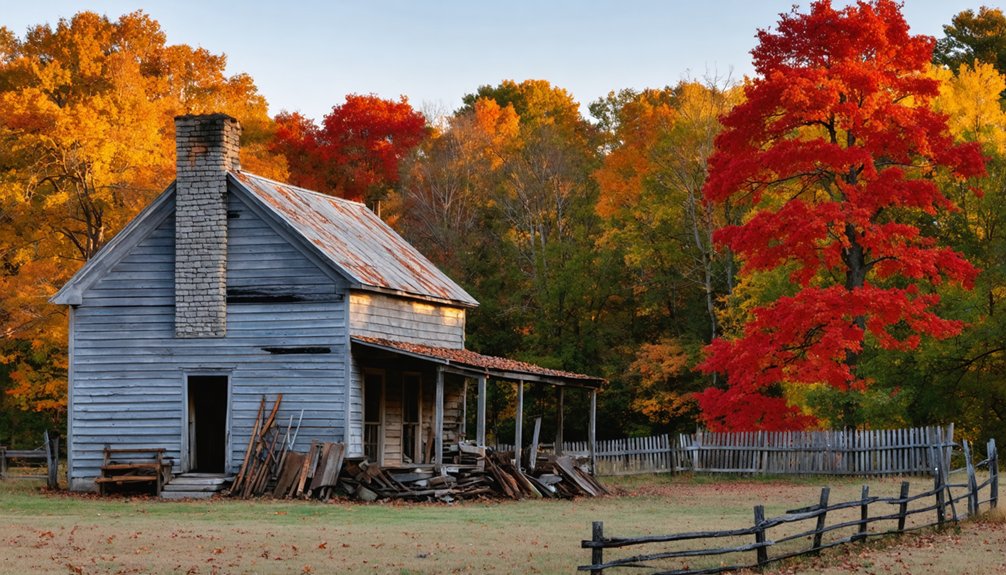
Along Walnut Street, where Calico Creek whispers through the eastern edge of town, Peppersauce’s skeletal remains sprawl across six blocks of America’s most notorious ghost district.
Six blocks of skeletal ruins stretch along Calico Creek—America’s most notorious ghost district frozen in forgotten history.
You’ll cross the bridge near the old steamboat landing into wild history—where moonshine-fueled brawls once echoed through shanty taverns and frontier lawlessness ruled.
Twenty abandoned structures stand frozen: a funeral home still clutching its forgotten relics, a movie theater surrendering to vines, hotels where timber barons and zinc traders once slept.
The 1800s trading post evolved into rail-river prosperity, then collapsed under floods, fires, and prohibition’s grip when Izard County went dry in 1943.
Self-guided placards reveal each building’s story while fall colors frame the decay—but respect the warning signs.
These abandoned structures remain private property, monuments to freedom’s rowdy edge.
Monte Ne: Nature’s Reclamation in Fall
Beneath Beaver Lake’s shifting waterline, William Hope “Coin” Harvey’s utopian dream resurfaces like a ghost when autumn droughts pull back the reservoir’s curtain.
You’ll discover concrete ruins emerging from receding waters, framed by blazing Ozark hardwoods that transform ghost town architecture into unexpected beauty.
What You’ll Experience:
- Oklahoma Row’s weathered concrete walls rising above autumn foliage like a drowned civilization awakening
- Amphitheater foundations revealing Harvey’s unfinished monument to human achievement
- Missouri Row’s skeletal remains breaking the surface during seasonal low water
- Five miles of forgotten railway corridors now swallowed by forest and lake
- Hotel Monte Ne’s foundation stones appearing when nature permits access
Navigate carefully—these vandalized structures hide beneath unpredictable depths, materializing only when seasonal conditions align with your wanderlust.
Harrison Maplewood Cemetery: Autumn’s Vibrant Canvas
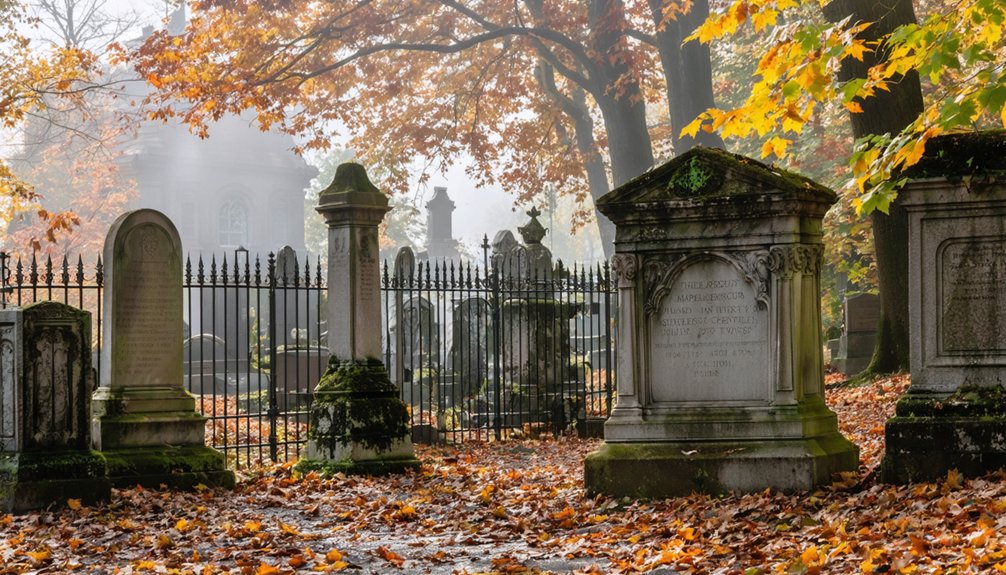
When sugar maples ignite across Harrison’s historic burial grounds each October, you’ll find yourself walking through corridors of crimson and gold that transform this 1868 cemetery into an unexpected autumn masterpiece. The fallen leaves crunch beneath your boots as you explore pathways connecting Civil War veterans’ graves to monuments honoring former Governor James Henderson Berry and Congressman John Paul Hammerschmidt.
Tree symbolism runs deep here—these maples stand as living memorials, their annual transformation mirroring cycles of remembrance.
Cemetery preservation efforts maintain both marble headstones and surrounding landscape, with Arkansas Historic Preservation Program conducting restoration workshops on-site.
You’re free to wander among 7,000+ documented graves, tracing genealogical threads through arkansasgravestones.org while autumn’s palette paints history in spectacular seasonal hues.
Best Time to Visit Arkansas Ghost Towns for Fall Foliage
You’ll find Arkansas ghost towns transform into their most photogenic state during mid-October, when frost-kissed mornings accelerate the Ozark Mountains’ shift from green to gold.
Rush and other Buffalo National River remnants demand your arrival when temperatures dip into the 30s—the precise trigger that ignites maples and oaks into their fiery autumn display.
Plan your exploration for early morning light, when low-angle sun illuminates weathered structures against peak foliage and trails remain navigable before seasonal rains soften the hollows.
Peak Foliage Timing Windows
Timing your visit to Arkansas’s abandoned settlements requires understanding how fall sweeps across the state’s varied elevations and microclimates. You’ll witness the autumn harvest of colors cascading southward, transforming forgotten structures into photographic treasures.
Regional Peak Windows for Ghost Town Exploration:
- Northern Arkansas ghost towns (Ozark National Forest, Scenic Byway 7) reach peak leaf color during October’s final two weeks.
- Western Arkansas abandoned sites (Buffalo River area, Queen Wilhelmina vicinity) display maximum vibrancy from late October through early November.
- Central Arkansas ruins (Ouachita Mountains) showcase ideal colors from late October into mid-November.
- Eastern and Southern Arkansas settlements (Russellville, Clinton, Batesville regions) peak during early to mid-November.
- Statewide viewing window spans October 19 through November 4, with weather variations shifting timing by one to two weeks.
Monitor daily-updated foliage maps starting September 1 for precise planning.
Weather and Trail Conditions
As October’s crisp air settles over Arkansas’s forgotten settlements, the state’s diverse microclimates create dramatically different hiking experiences across ghost town territories.
You’ll find northern Ozark sites like Rush demanding sturdy boots on rocky paths after rainfall, while southern Ouachita trails near Cane Creek maintain stable footing through humid conditions.
Dawn fog rolls through valleys, perfect for wildlife observation tips—watch for elk in Boxley Valley during early morning hikes.
Pack seasonal snack pairings of local pecans and dried fruit for energy on longer treks to Whitaker Point.
Target mid-October for moderate 50-70°F temperatures in ghost town areas, avoiding post-front winds that strip leaves prematurely.
Southern trails extend your color window into late November when northern sites fade.
Photography Light Considerations
When dawn breaks over Arkansas’s abandoned settlements, photographers discover their most potent ally—soft, angled light that transforms rust-colored leaves into glowing embers against weathered timber frames.
Historic preservation sites like Historic Rush gain dramatic depth during golden hour, when low-angle illumination carves shadows across crumbling foundations. Seasonal weather patterns in mid-to-late October deliver those crisp, clear mornings essential for capturing ghost towns framed by peak foliage.
Optimize your abandoned-site photography:
- Position yourself with backlighting to create luminous halos around translucent leaves
- Exploit early morning fog rolling through hollow structures for ethereal atmosphere
- Avoid midday’s harsh overhead glare that flattens dimensional details
- Use HDR mode for balancing bright foliage against dark, decaying architecture
- Scout overcast conditions for even exposure on complex textures
Golden hour sunset shoots offer equally compelling opportunities, saturating autumn colors against skeletal buildings.
Photography Tips for Capturing Ghost Towns in Autumn
Frame through broken windows and doorless thresholds, letting fall colors bleed into darkened interiors. Your tripod becomes essential for 30-second exposures inside powerless buildings, revealing textures flash would destroy.
Scout sunrise angles beforehand—optimal light vanishes quickly across these remote sites.
Focus on details: rusted tools against orange leaves, peeling paint contrasting with maple brilliance. Wide lenses exaggerate the otherworldly relationship between nature’s vibrancy and human abandonment.
Planning Your Arkansas Ghost Town Fall Foliage Tour
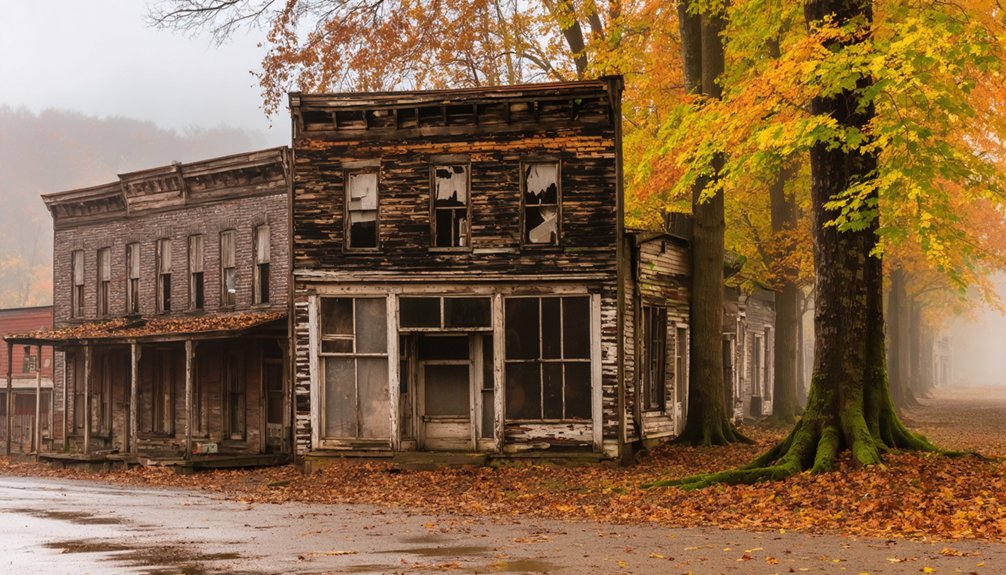
You’ll want to launch your Arkansas ghost town adventure in mid-October, when Rush’s abandoned zinc mining structures glow against blazing hardwoods and the Ozarks reach their chromatic peak. Pack your wide-angle lens to capture the stark contrast of weathered wooden facades against crimson maples. Bring a tripod for low-light shots inside moss-covered ruins.
String together a multi-day circuit starting from Eureka Springs, winding through Buffalo National River’s valley overlooks, then south to Calico Rock’s riverside bluffs and the maple-dense trails of Old Davidsonville.
Best Time to Visit
Timing your ghost town exploration requires understanding Arkansas’s distinct fall color zones, where elevation and geography create a staggered autumn spectacle across the state.
The Ozarks reach peak vibrancy around October 30th, while Central Arkansas and the Ouachita Mountains blaze by late October. Hot Springs delivers a month-and-a-half window, with peak intensity lasting two weeks—ideal for fall photography expeditions.
Optimal Visiting Windows:
- Mid-October through early November captures the statewide progression as colors shift from north to south
- Weekday mornings provide solitude among abandoned structures draped in autumn gold
- Late afternoon light creates dramatic shadows across decaying buildings and vibrant foliage
- October 15th-November 3rd offers Jasper’s prime leaf-peeping window for northern ghost towns
- Seasonal festivals throughout regions add cultural dimension to your ghost town adventures
Cool nights and sunny days intensify the display you’ll witness.
Essential Photography Gear Tips
While abandoned homesteads and weathered structures provide compelling subjects year-round, autumn’s dramatic lighting and vibrant backdrops demand specialized equipment to capture Arkansas’s ghost towns at their visual peak.
You’ll want a mirrorless camera like the Sony a6000 for mobility through overgrown paths and crumbling doorways. Pack a versatile 18-45mm kit lens for interior shots, then switch to a wide-angle Tamron 17-28mm f/2.8 to emphasize sprawling landscapes framed by crimson foliage.
Camera settings matter—bring a sturdy Manfrotto tripod for those golden-hour long exposures when light filters through broken windows.
A circular polarizer like B+W’s XS-Pro cuts glare from autumn leaves, intensifying their saturated oranges and golds. Don’t forget extra batteries; these remote locations offer no second chances.
Proper lens selection transforms forgotten structures into unforgettable compositions.
Multi-Site Route Recommendations
Arkansas’s ghost town foliage routes reward meticulous planning, as the state’s geological diversity creates distinct autumn timelines across its mountain ranges and river valleys.
You’ll maximize your seasonal tourism experience by combining historical preservation sites with peak color zones.
Top Multi-Site Routes:
- Northern Ozarks Loop – Start at Harrison’s maple-filled Maplewood Cemetery, wind through Buffalo National River’s colorful bluffs, explore Rush ghost town’s mining ruins, cruise Scenic 7 Byway, and finish at Blanchard Recreation Area’s caverns.
- Buffalo River Path – Connect Rush Historic District, Whitaker Point overlooks, and riverside reflections in one streamlined journey.
- Western Ouachita Extension – Link Mount Magazine’s high-elevation vistas with Queen Wilhelmina State Park’s panoramic lodge views.
- Southern Delta Circuit – Trace Crowley’s Ridge Parkway through hardwood forests to Calico Rock’s preserved 1800s riverfront.
- Cross-Region Connector – Follow Arkansas Scenic Byways between Ouachita and Ozark mountains for continuous color.
Frequently Asked Questions
Are These Ghost Town Sites Safe to Explore With Children?
You’ll find most sites safe for families thanks to preservation efforts maintaining trails and infrastructure. However, hidden dangers like unstable structures and uneven terrain demand your vigilance. Stay on marked paths, supervise closely, and respect weathered buildings from safe distances.
Do I Need Special Permits to Visit Arkansas Ghost Towns?
You don’t need permits for state parks or National Register sites—they’re preserved yet accessible. However, respect private property ownership boundaries. Historical preservation protects these ruins while keeping trails open, letting you wander freely through Arkansas’s autumn-draped ghost towns.
Are There Guided Tours Available for These Historic Locations?
You’ll find self-guided exploration at these sites rather than formal tours, giving you freedom to discover historical preservation efforts at your pace while capturing photography opportunities among autumn-draped ruins and weathered structures.
What Wildlife Might I Encounter While Exploring These Abandoned Sites?
You’ll likely spot white-tailed deer, wild turkeys, and various songbirds during your explorations. Wildlife sightings increase during dawn and dusk, while animal encounters with armadillos, squirrels, and occasional black bears remain possible in remote Arkansas wilderness areas.
Can I Camp Overnight Near Any of These Ghost Towns?
You’ll find dispersed camping opportunities in Ozark St. Francis National Forest near Blanchard’s ghost town sites. Practice campfire safety among the autumn-draped hollows, but check parking restrictions first—Old Davidsonville’s state park prohibits overnight stays despite its accessible trails.
References
- https://onlyinark.com/places-and-travel/10-spots-for-gorgeous-arkansas-fall-photography/
- https://everafterinthewoods.com/forgotten-ghost-towns-in-arkansas-that-are-eerially-scenic/
- https://www.youtube.com/watch?v=DSwT-EmfJEc
- https://aymag.com/arkansas-backstories-ghost-towns/
- https://www.uaex.uada.edu/environment-nature/musings-on-nature-blog/posts/ghost-towns.aspx
- https://www.youtube.com/watch?v=wUDlizy2-Ww
- https://en.wikipedia.org/wiki/List_of_ghost_towns_in_Arkansas
- http://silvergypsytravel.blogspot.com/2021/07/rush-historic-mining-district-arkansas.html
- https://encyclopediaofarkansas.net/entries/rush-ghost-town-marion-county-1270/
- https://www.barefoottraveler.com/rush.html